Do You Believe A False Gospel?
True or False?
- Jesus died for all of our past, present, and furture sins.
- Jesus obeyed the law perfectly so that His righteousness can be imputed to us.
- Christians are “sinners saved by grace”.
If you answered “True” to any of the above questions, you believe a false gospel.
But how can this be?
Let’s examine each of these statements one at a time.
Question 1: Jesus died for all of our past, present, and furture sins.
FALSE
The Reformation gospel of Protestantism teaches that Jesus’ death on the cross and the shedding of His blood is an “atonement” or “covering”, not only for past sins, but for any sin a believer may commit in the future. According to this gospel, this “covering” is necessary so that when God looks on the believer, He doesn’t see sin, He sees the righteousness of Christ.
Here is why this is false:
The New Testament makes no reference anywhere of Jesus’ death being a “covering”.
The “atonement” is an Old Testament concept and refers to the Law’s function as a “guardian” until the “Promise” came. (Galatians 3:22-24) That Promise is Jesus Christ! When Jesus died, He ended the Law and with it, its ability to condemn. Believers are born of God; new creatures who are not “under law”. The apostle Paul taught that where there is no law there is no sin. (Romans 5:13) Since believers are no longer “under law”, they can no longer sin. There is no law to condemn them. Because the law is ended for believers, we no longer need a guardian. (Galatians 3:25)
Jesus died for your past sins only!
For the believer, there are no present or future sins. There is no condemnation for believers! (Romans 8:1)
Question 2
Jesus obeyed the law perfectly so that His righteousness can be imputed to us.
FALSE
The Reformation gospel of Protestantism teaches that the standard of righteousness is perfect law-keeping. According to this gospel, because of man’s metaphysical depravity he is unable to keep the Law. But because of Jesus’ perfect law-keeping, His righteousness is imputed to believers. Therefore, believers are not righteous as a state of being, they are simply “declared righteous” (forensic justification).
Here is why this is false:
The Bible teaches that righteousness is apart from the Law (Romans 3:21, 28). To say that believers are “declared righteous” by virtue of some vicarious imputation of Jesus’ righteousness is an attempt to make Law the standard for righteousness. This is not righteousness apart from the Law. Furthermore, the Bible never states that believers have the righteousness of Christ.
The standard for righteousness is the New Birth!
When a person believes on the name of the Lord Jesus Christ, he is born again, literally “born from above”. When that happens, a believer inherits his very own righteousness from God because the old man who was “under law” has died, and in his place is a new creature who is the righteous offspring of the Father!
And since this new creature is born of the Father, he is not under law. And since he is not under law, he CANNOT sin (1 John 3:9), because where there is no law, there is no sin!
Question 3
Christians are “sinners saved by grace”.
FALSE
The Reformation gospel of Protestantism teaches that Christians are still sinners. Martin Luther referred to this as simul justus et peccator – “simultaneously saint and sinner.” According to this gospel, because Christians are still sinners, they are in need of perpetual forgiveness of sin. In other words, Christians are still metaphysically depraved.
Here is why this is false:
This statement is a contradiction. It is an impossible reality for man to exist in two different states at once. The Bible says that man is either “under law” OR “under grace”. “Under law” is the Biblical definition of an unsaved person. A person who is “under law” is under condemnation. Only those who are “under law” are sinners. So to say that a Christian is a sinner means to consider him still “under law”. The Protestant gospel makes Christians no different than the unregenerate.
Such a statement is a patent denial of the reality of the New Birth. The New Birth is an existential change in a person’s state of being. A believer is literally reborn as the righteous offspring of the Father. He is no longer a “sinner” because the law is ended for him. Where there is no law there is no sin.
Christians are righteous children of the Heavenly Father!
The New Birth has freed us from sin. It no longer has any power over us.
What Is the True Gospel?
Man does NOT have a sin problem.
That is a scandalous statement and one that contradicts everything you have probably heard in church your whole life. It would seem to be a logical conclusion that the Bible teaches that man’s problem is sin, but let us reconsider two primary assumptions:
- Does man indeed have a problem?
- Is that problem sin?
The Bible teaches that there are only two kinds of people in this world; those who are “under law” and those who are “under grace”. To be “under law” means to be subject to the Law’s condemnation, which is death, and ultimately the Lake of Fire. Every person ever born into this word is “under law” and is therefore condemned because at some point in his life he has broken the Law in one way or another.
Even if a person has no knowledge of God’s Law from scripture, the Bible tells us that every man has the Law of God written on his heart, which is the conscience (Romans 2:14-15). The conscience is what gives man knowledge of right and wrong. One day, every person “under law” will be judged by God according to the Law, whether that be God’s law as recorded in scripture or by his own conscience. So clearly, man does indeed have a problem.
What about Sin?
The Bible describes Sin as an entity which seeks to wield control over others. (Genesis 4:7) Sin’s desire for control is manifest in man’s subsequent desire to wield control over others. Ironically, Sin obtains its power of control over others through the Law (1 Corinthians 15:56). Sin uses the Law to control others by provoking man to break the Law through desires. Once there is a law that governs some behavior, Sin uses that same law to provoke a desire to rebel against what that law requires (Romans 7:7-8).
Without the Law, Sin has no power. Therefore, where there is no Law, there is no Sin. Any person who is “under law” is not only provoked by Sin to break the Law, but he is condemned if he does.
So the problem then is not with Sin, rather it is the reality that any man “under law” is under condemnation. The solution then is that man needs a way to get out from under the Law’s condemnation. Man needs a new relationship to the law.
Man’s New Relationship to the Law
When the Philippian jailer asked Paul and Silas how to be saved, their response was, “Believe on the Lord Jesus Christ and thou shalt be saved…” Belief means faith. Faith comes by hearing, and hearing by the word of God. A person is born again (literally “born from above”) when he hears about Jesus and believes what he hears. Hearing implies a cognitive process of allowing oneself to be persuaded by a reasonable argument. So we understand then that “faith” is more than just an assenting to the facts, but it has to do with being thoroughly convinced in your mind that something is true.
God made it possible for man to get out from under the Law’s condemnation through the New Birth. When a person believes in the name of the Lord Jesus Christ, the “old man” who was “under law” dies. Laws have no jurisdiction over dead people. Dead people cannot be condemned.
When the “old man” dies, a new creature is reborn in his place. This new creature is born of God. He is the literal offspring of the Father. This new creature is not born “under law”. The Law has no jurisdiction over him. This means the Law CANNOT condemn him. And since there is no Law to condemn this born again new creature, there is no Sin. The one who is born of God CANNOT sin!
“Whosoever is born of God doth not commit sin; for his seed remaineth in him: and he cannot sin, because he is born of God.” ~ 1 John 3:9
Notice, the apostle John does not say the believer “won’t sin” or “chooses not to sin”. He says he CANNOT sin. He is not ABLE to sin. Why is the one who is born again not able sin? Because sin has to do with Law. You cannot condemn one of sin when there is no Law under which to accuse someone. Think about it; if there was no 55 mph speed limit on the highway, and you were driving 56, would a patrol officer be able to write you a citation for speeding? Of course not. Why not? What law could he use of which to accuse you? There would be none. So it is with the one who is born again. The believer is no longer “under law,” therefore there is no Law than can be used to condemn. The believer has a new relationship to the Law.
Since the Law can no longer condemn, the Law’s original intent can now be realized: to show love to God and to others!
This is why believers strive to obey. It is not a means to merit some right standing with God. The believer is already righteous because he is God’s offspring. The believer obeys because he wants to show love to God and love to others. Love is the fulfillment of the Law.In fact, the Bible teaches that those who love God have a natural love for the Law as well.
“O how love I thy law! it is my meditation all the day.” ~ Psalm 119:97
“I hate vain thoughts: but thy law do I love.” ~ Psalm 119:113
“I hate and abhor lying: but thy law do I love.” ~ Psalm 119:163
“Great peace have they which love thy law: and nothing shall offend them.” ~ Psalm 119:165
Even if there was no speed limit on the highway, would you still drive as fast as you possibly wanted? Hopefully not, because you would recognize the inherent danger, not only to yourself by driving recklessly, but also to the other drivers on the road. You would drive in such a way as to preserve your own life and the lives of others. You would be functioning according to the Law of Love.
“For the law of the Spirit of life in Christ Jesus hath made me free from the law of sin and death.”~ Romans 8:2
This new relationship to the Law through the New Birth is offered as a free gift to any who believe on Jesus’ death on the cross for the forgiveness of their sins.
How does Jesus’ death on the cross forgive sin?
In Old Testament times, when God codified the Law for Israel with Moses, the Law took Old Testament saints into protective custody. During this time, believers were preserved from condemnation upon their death because sin was imputed to the Law. This was the “covering” aspect of the Law, and the ceremonial observation of the “Day of Atonement” was a recognition of Israel being under the Law’s protective custody. (Galatians 3:22-24)
This protective custody was in effect up until the time of Jesus’ death on the cross. Jesus’ death was the fulfillment of a promise made to Abraham. When Jesus died, He ended the need for the Law’s protective custody. When the Law ended, all sins that had been imputed to the Law were taken away with it.
The picture of the “scapegoat” in Leviticus 16:21-22 describes what Jesus’ death on the cross accomplishes. The priest would lay his hands upon a live goat, a symbol of sins being imputed to the Law. That goat would then be delivered into the hands of a strong man who take that goat into the wilderness and release it. Jesus is that “strong man” who took away the sins imputed to the “scapegoat” of the Law.
“…Behold the Lamb of God which taketh away the sin of the world.” ~ John 1:29
In essence, Jesus is both the “Lamb” and the “strong man”. He is the Testator of the Old Covenant, the One of whom the Law speaks, the One to whom sin is imputed. The death of the Testator brings an end (fulfillment) to that covenant, thereby taking with Him all sins which had been imputed to Him.
Since the Promise of Christ has come, there is no longer a need for a guardian. The “covering” aspect of the Law is no longer needed. (Galatians 3:25-26) This is true for every person who believes in Jesus Christ for salvation. The New Birth puts the old man to death. All those past sins are forgiven. They were taken away when the Law was ended for him upon his New Birth. There is no ongoing need of forgiveness for “present” or “future” sins because the believer CANNOT sin. There is no Law to condemn him, therefore there is no sin.
Why do Christians still “sin”?
Man is and always will be a free-will agent. His behaviors are governed by choices that are the logical conclusions of his assumptions. Man was created by God to be a rational, thinking, creature. It is how man is made is God’s image. In this way, man is good. To say that man is “good” means to be good existentially, or that which is intrinsic to the nature of his existence. It means man has the capacity to act in accordance to the purpose for which he was created: to think, to reason, to live, to BE.
That a man may make a choice to do evil does not mean that he IS evil. Conversely, that man may make a choice to good is not what MAKES him good. Man’s ability to even make a choice at all is what makes him “good”. He is functioning according to how God designed him to be. Do not misunderstand – “goodness” should not be conflated with “righteousness”.
It is not a man’s choosing to do evil deeds (or lack of good deeds) which condemns him, no more than it is a believer’s choosing to do good deeds (or lack of evil deeds) which saves him. Unregenerate man is condemned because he is “under law”. A believer is saved because he is born again and NOT “under law”. Therefore, because one who is born again is not “under law”, there is no such thing as “sin” for the believer.
Nevertheless, this does not preclude the fact that a believer can still choose to not obey the Law. At the same time, this does not give a believer license to ignore the Law. While failure to obey the Law no longer condemns the believer, it is still a failure to show love. Children of the Heavenly Father ought to behave in a manner that is consistent with their righteous nature.
The Bible says the flesh is “weak”. Weakness does not mean evil. The apostle Paul said that the treasure of our righteous new creature-hood is contained in “clay pots”. So even though a believer is righteous, Sin still seeks to control him through the weakness of his flesh. And because man is a moral agent capable of free-will decisions, a believer can still choose to give in to fleshly desires provoked by Sin. But it is important to understand the distinction; such an action does not condemn! It is a failure to show love.
Perfection is not the issue here. This is why it is so important to understand that righteousness has nothing to do with law-keeping. There is a reason Paul and the other apostles bent over backwards to make this case throughout the New Testament. Believers are righteous because they have been born again and are no longer “under law”. Whether or not a believer obeys the law “perfectly” is irrelevant because there is no more condemnation for those who are in Christ (Romans 8:1)
This reality is incredibly freeing, because now a believer can aggressively pursue love without fear!
“There is no fear in love; but perfect love casteth out fear:” ~ 1 John 4:18
A believer no longer has to worry about what laws he has kept or hasn’t kept because the threat of condemnation has been removed. That possibility is no longer hanging over his head like some impending doom. Now he is free to focus on just loving God and loving others, and the way he shows love is by striving to obey the Law.
“Master, which is the great commandment in the law? Jesus said unto him, Thou shalt love the Lord thy God with all thy heart, and with all thy soul, and with all thy mind. This is the first and great commandment. And the second is like unto it, Thou shalt love thy neighbour as thyself. On these two commandments hang all the law and the prophets.” ~ Matthew 22:36-40
“Owe no man any thing, but to love one another: for he that loveth another hath fulfilled the law.” ~ Romans 13:8
“For all the law is fulfilled in one word, even in this; Thou shalt love thy neighbour as thyself.” ~ Galatians 5:14
“If ye love me, keep my commandments.” ~ John 14:15
A Misunderstanding of the Law
During Jesus’ earthly ministry, the Jewish religious leaders had come to believe that keeping the statutes in the Torah was what made a person righteous. But because they made the assumption that man was metaphysically evil, this assumption meant that man was disqualified from being able to understand the Law’s requirements. This is turn meant that if man could not understand the Law then man could not keep the Law.
The Jewish leaders believed it was necessary for some mediator to dictate to man the requirements necessary for righteousness. To accomplish this, they crafted their own interpretation of the Torah for man to follow. Since man could not understand the Law, he could obtain righteousness by following the interpretations of the Jewish leaders. This interpretation is what was known as their “traditions” or “orthodoxy”.
There are a number of problems with this, not the least of which is that the Bible teaches that righteousness is apart from the Law. As already mentioned, the apostles went to great lengths to make this point clear. For the Jewish religious leaders to hold this perspective, it was indicative of their egregious misunderstanding of the Law’s purpose. The Law was never intended to be for the purpose of obtaining a righteous standing with God.
“I do not frustrate the grace of God: for if righteousness come by the law, then Christ is dead in vain.”~ Galatians 2:21
“Is the law then against the promises of God? God forbid: for if there had been a law given which could have given life, verily righteousness should have been by the law.” ~ Galatians 3:21
“Therefore by the deeds of the law there shall no flesh be justified in his sight: for by the law is the knowledge of sin.” ~ Romans 3:20
“Knowing that a man is not justified by the works of the law, but by the faith of Jesus Christ, even we have believed in Jesus Christ, that we might be justified by the faith of Christ, and not by the works of the law: for by the works of the law shall no flesh be justified.” ~ Galatians 2:16
The Law is the means by which man shows love to God and others, but making the Law the standard for righteousness actually circumvents love. How does this happen?
The Jewish religious leaders replaced the Law with their orthodoxy. The people were taught that since they could not keep the Law, it was pointless to even try. By replacing the Law with orthodoxy, the Jewish leaders effectively took away man’s only means of showing love to God and others. Rather than striving to show love to God through obedience, they became preoccupied with adhering to Jewish orthodoxy. Their lives were no longer characterized by love but fear.
When the standard for righteousness is perfect law-keeping, fear is always the result. Fear is the result of condemnation. Condemnation comes from being “under law”. Any system that makes Law the standard for righteousness keeps man “under law”. The Jewish system of perfect law-keeping by adherence to orthodoxy kept the people “under law” and took away their means of showing love.
This is exactly what Jesus accused the Pharisees of doing.
“… Thus have ye made the commandment of God of none effect by your tradition [orthodoxy].” ~ Matthew 15:6
“And he said unto them, ‘Full well ye reject the commandment of God, that ye may keep your own tradition [orthodoxy].’” ~ Mark 7:9
“Making the word of God of none effect through your tradition [orthodoxy], which ye have delivered: and many such like things do ye.” ~ Mark 7:13
“And because iniquity shall abound, the love of many shall wax cold.” ~ Matthew 24:12
The word translated “iniquity” in Matthew 24:12 is the Greek word ανομια (anomia). It literally means “no law”. This is the Biblical definition of antinomianism. It means to take away the law. Jesus said Himself that taking away the Law would result in love growing cold. And why wouldn’t it? If you take away the Law, you take away the only means man has to show love to God and others.
Jesus spoke these words as a prophesy, but the end result of this logical progression of thought is always the same: taking away the Law results in a lack of love and lives characterized by fear. Be sure to understand the distinction. The Jewish religious leaders misunderstood the Law’s purpose. They thought it was for the purpose of meriting righteousness. But righteousness is apart from the Law. Righteousness comes through the New Birth. The Law is used as a means to show love to God and others.
What was true of first century Judaism is also true of every religion that ever existed or still exists today: it makes some form of law-keeping as the standard for righteousness. Every religion begins with the same root assumption: that man is metaphysically evil, making him disqualified from being able to understand truth. Since he cannot understand truth he must have truth interpreted for him. Religious orthodoxy is nothing more than truth repackaged for mass consumption. It is therefore adherence to this interpretation of truth that brings righteousness.
Protestantism is no different! But Protestantism’s version of orthodoxy is obfuscated under the pretense of “faith alone”. On the one hand, it will acknowledge that righteousness is apart from the Law; that man does not merit righteousness by keeping the Law. Then on the other hand, it will insist that Jesus keeps the law for us. In other words, since man cannot keep the Law, Jesus must do it instead.
How is it proposed that man is able to benefit from this so-called perfect law-keeping of Jesus? By living by “faith alone”. You see, if at any time you find that you are performing a work of obedience to the Law “in your own efforts”, you are attempting to rely on your own strength to merit salvation instead of “resting” in Christ to do the work for you. (Notice that the assumed motivation is to merit salvation instead of showing love.)
It should be blatantly obvious that regardless WHO is keeping the law, even if it is Jesus keeping the Law in our stead, it is still a righteousness that is based on perfect law-keeping. This is NOT a righteousness apart from the Law. Moreover, to rely on Jesus doing the works of the Law for us so that His righteousness can be imputed to us is nothing more than works-based salvation.
For over 500 years, Protestantism has been perpetrating a fraud and a contradiction of epic proportions! Like every other religion that has come down the pike since the beginning of time, Protestantism is based on a faulty assumption that results in a willful misunderstanding of the Law. It is a religion of antinomianism that circumvents a believer’s ability to show love through obedience. It makes obedience nothing more than a subjective experience that Christ supposedly performs through the believer. It defies the believer’s natural inclination to love God’s Law. It defines righteousness as perfect law-keeping. This unwittingly puts the believer right back “under law”, the Biblical definition of an unsaved person. Protestantism views believers no differently than the unregenerate.
Most importantly, the false gospel of Protestantism robs the believer of assurance. The Christian life becomes one of constant introspection of whether one is living by “faith alone” or not. Protestantism’s single perspective on the Law means the believer is in constant fear that he might come under condemnation. He is not free to love others. He is not free to love his Heavenly Father. He can never know for sure if he really is saved.
Dear Christian brother, know this. The Bible says that we CAN know for sure that we are saved. When we understand that our righteousness comes by virtue of the fact that we are the literal offspring of the Father, everything becomes so simple. It doesn’t matter if we fail. Perfection is not the point. There is no condemnation for those who are in Christ Jesus! Believers are no longer “under law”. Where there is no law there is no sin. This is a wonderful reality!
This is the Gospel news that believers need to bring to a world that needs to be reconciled to God.
The world is full of unsaved people who do very good deeds. Whether he realizes it or not, every time man shows love to another, he is fulfilling the Law. It does not matter if the person is saved or not. Unsaved man has the ability to show love to others just as much as one who is saved. But it is not that expression of love that saves. It is not a fulfilling of the Law that saves. For even though an unsaved man might obey the Law of Love, he is still condemned because he is still “under law”. That is the whole point.
Man does not have a “sin problem”. He has a relationship to the Law problem. This is why Jesus said to Nicodemus, “Ye must be born again.” The exhortation to you, dear brother in Christ, is this: Go out this day and show forth your love to God and others. You are God’s righteous child. Pursue obedience and fulfill the Law of Love!
Please feel free to share this article with friends and loved ones.
This information is also available at
http://3questions.weebly.com
From the Reformation to the Third Reich: Protestantism’s Impact on Western Culture – Conclusion
The following is the conclusion of a nine-part series.
Taken from John Immel’s sixth session
at the 2014 Conference on Gospel Discernment and Spiritual Tyranny
~ Edited by Andy Young
Will the New Calvinist movement produce political indifference?
 Throughout history, the masses at some point realize that the fruits of these ideas wreak havoc on humanity. Then humanity rises up and pushes back, but for the most part in human history, it is a vicious cycle. The ideas that produce the fruit have never really been dealt with at the root. People just start picking up guns because they know it’s bad. And then something a little better rises from the ashes that fixes the immediate problem (for a little while at least) that started all the shooting.
We need to realize then that the founders of the American government were one of the few in history, if not the first ones that said, “Wait a minute here. We are going to deal with the ideas that lead to this tyranny.” That is why the United States of America is the only country ever founded on philosophy. They actually understood that the ideas behind tyranny were the problem, and they understood that the ideas behind liberty were the source of genuine political liberty. They went through great pains to try to craft a government that prevented the madness that had washed across the face of the globe for the whole of human history, and they succeeded.
The problems that we have had are the same problem that Christians are confronted with every time you see this cycle or the resurgence of the Calvinist movement. After the initial pushback, there remains no full philosophical statement. There is no fortress to fall back to and use as rebuttal to these ancient doctrines, and that is because most people do not know them. They just accept them.
I am confident there are people reading this right now holding their breaths saying, “How can he possibly reject the whole of Christianity?” And they are scandalized that I have been so bold, but the realities are what they are. Christians need to get their heads wrapped around this. Christianity as it is currently taught has always been on the forefront of tyranny. It has always been a competitor in tyranny or the leader in tyranny.
So, will the New Calvinist movement produce political indifference?
This is not an issue of political indifference. The issue is that Calvinism advocates self-sacrifice and submission to authority as an ideal. The Dark Ages were dominated by Augustine’s dogmatism, the assumption that select men have the moral authority to define intellectual content. the modern version  of this is the doctrine of submission and authority. The only fundamental difference in the modern age is by contrast; Augustine had the power of the state to use violence to compel intellectual compliance.
Modern Neo-Calvinists are only barely restrained from claiming the right to violence to enforce church doctrine. Mark Driscol once made reference to putting people “in the wood chipper”. Now I’m not sure how exactly that metaphor passes muster on any level, but nonetheless what he is ultimately saying is he believes that the church authorities should have the right to use violence for disagreement.
(Editors Note: consider this article recently published on Paul’s Passing Thoughts.)
The pious preacher will object, “But I don’t believe that.” But neither are you running those preachers out on a rail for saying it. If you won’t take action when it is merely talk, how will you take action when it is actually the government-endorsed violence? I suggest, preacher, that you are a fraud. You say your job description is to protect the flock, and yet you do nothing. You take no action. All preachers who demand submission for protection are frauds. If they cannot intellectually defend their right to exist, they cannot hope to defend against tyranny.
And here is the central question of this theological shell game. If men cannot correctly judge ideological outcomes after the fact, if they cannot see the impact of Lutheran doctrine and its shaping of National Socialist Germany, how can they be defenders of the flock in our time?
Christianity’s growing abuse problems are no accident. The truth is before our eyes. This is Christianity in its infancy, the doctrine in action minus real civil power. And the reality is the blogosphere is already reeling from the stories. Today’s Christian national leaders are bold and clear about their ultimate goals, yet people reject the doctrine as irrelevant. They wipe out the universe to choose to call that action wisdom. For you pew-sitters, no matter how the preacher wants to hedge and caveat and smile, when they are asking for your submission to their authority, they are claiming the unique qualification 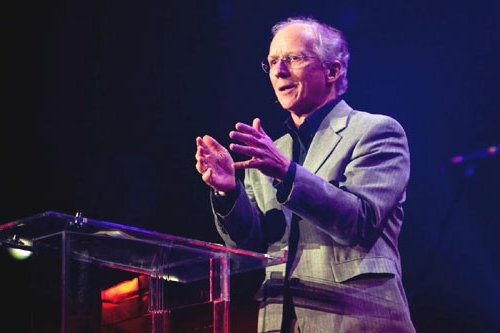 to rational superiority. They are saying it is their moral right to define all intellectual conclusions. So if you submit to their authority, you cannotmake a claim to your own mind. You cannot utter the word “I” before the word “think.”
It is important to understand that authority is merely force. So whenever you hear some preacher thumping the Plexiglas podium, no matter how polite his words demanding your submission to his authority, you must realize he is really demanding your submission to his force. It does not matter how nice he makes it sound. He is overtly declaring his right to use force against your unrepentant body.
And I want to make one amended comment here. When I say right, I mean prerogative, just like in the divine prerogative of kings. Rights are specific and delimited exactly as John Locke described them. Individuals have rights. Groups, collective states do not have rights. All states, all just states, all moral states are created at the behest of the individuals and given delimited powers.
Pastors do not have rights. They do not have the right to compel. And make no mistake, the modern New Calvinist movement is just as politically motivated as the Evangelical Lutherans were in the 1920s. They are motivated by the exact same themes. They condemn individuality and egoism. They advocate sacrifice and statism. They condemn freedom as license. They advocate socialist economic policies, and above all else, they condemn capitalism. And the condemnation of capitalism is the condemnation of the individual. There is no such thing as liberty without capitalism.
American Christians are under the delusion that they can have Enlightenment reasoning, Enlightenment liberty, Enlightenment property, Enlightenment prosperity, Enlightenment government, and Enlightenment freedom together with medieval Christianity. It is not possible. These are mutually exclusive philosophical expectations. America, you must pick.
“But, John, no one is out there preaching medieval Christianity.”
Oh yes, they are. It is called orthodoxy. American Christians like the sound of orthodoxy. It sounds good to them, but that is only because the average pew-sitter has no clue what orthodoxy really means. Orthodoxy means they must abandon reason, which is the root of all Enlightenment beliefs. Under orthodoxy, there is no such thing as, “but I believe,” or, “but this is what I believe.” So every time you want to object to my broad generalizations about this brand of Christianity, you do not have the right to your objections. You have already abandoned your rational capacity to somebody else’s authority.
The American church is, unfortunately, under the delusion they are entitled to make up their own minds. This, unfortunately, is a condition that affects the college crowd quite a bit. They think their opinion matters, and it really does not. College kids are only allowed to hold their own opinions inasmuch as they pose no challenge to leadership, and the definition of challenge is constantly moving. There is no such thing as a little bit of subordination. It is kind of like being a little bit pregnant. You either are or you are not. Once you concede the premise that you must submit your rational faculties to authority, the only question left is how much subordination, and as far as the Neo-Calvinist leadership is concerned, it must be in toto. You are lying to yourself if you think otherwise.
Here is my challenge. I double dog dare you. Walk into any New Calvinist church and object to their doctrine. And then, you bold man, go tell everybody that you did. And then, you really bold man, keep telling everybody you did. Tell everybody that they have the right to make up their own mind about which one is right, the preacher or you. And after you do, and after the cuts and bruises heal, and after you finally put your head back on straight (because they will wreck you in the process), come to me, and I will tell you how to handle it.
 I submit that the current church leadership is eroding the church’s intellectual base at the root. This is in direct answer to what Paul asked me at the beginning of this series. The top tier of the Calvinist leadership are mostly old men. The younger generation are typically young men, and despite their aspirations to leadership, they are picked to be part of the super spiritual crowd only because they are intellectually compliant. Intellectual strength and insular communities do not go together. Most of the Neo-Calvinist churches are very insular, and the intellectual limitations that are imposed by the leadership on the parishioners can do nothing but erode the intellectual rigor. The more a group isolates itself, the more the intellectual energy stagnates. The leadership is selecting a subsequent generation of church leaders because they are not independent thinkers. They run independent thinkers out on a rail as fast as they can get it done.
Make no mistake. New Calvinist movement is deliberately eroding the foundations of church intellectual base. I predict that within a generation, the church will be intellectually helpless. We are talking about 30 to 40 years. Without independent thought, man has no choice but to turn to the collective for his intellectual content. If you have made a habit of deferring thought to other men under pressure, you will default to what you have practiced.
Tyrants create intellectual dependency the same way they create the welfare state. The welfare state erodes self-sufficiency by robbing people of the opportunity to work. By grooming intellectual subordinates and advancing those specific mentalities to leadership, they are creating the same environment of dependency. Tyrants and despots always find ideas threatening, not because they fear ideas specifically. Most of them ignore ideas on principle. Tyrants find ideas threatening because men who can think are by definition individuals. There is no such thing as collective thinking. Only individuals think.
 Achievement is the foundation of self-confidence. So the thinking man grasps his achievement. Rational independence is directly proportional to self-confidence. And you see this in children all this time. The better they do in school, the more happy they are about themselves. The more they demonstrate the ability to reason correctly, the more satisfaction they get in their life and their own happiness. This is a function of human existence. Men are thinking machines. It is the means by which we engage the world on the broadest levels, and our ability to master our own environment and our own minds and our own rational faculties are directly tied to our sense of happiness and well-being.
I give you a challenge for those of you who I know are out there reading and paying atention. If you are suffering from fear and doubts and unbelief, go put your brain to work. Go do something. Go achieve something. Do not worry about what anybody says. Go achieve. And I guarantee you that the day after you achieve, you will wake up happy. And for many of you, you will be scared that you are happy because you have been told you should not be happy with yourself. This is how much this doctrine is wrecking you.
You cannot tyrannize a self-confident man because he will never concede the premise of a tyrant’s right to make him a slave. A self-confident man will not crumble under moral assault. A self-confident man will not internalize moral criticism. A self-confident man understands his moral worth.
But the rationally subordinate man can never have rational confidence because he must defer all thoughts to someone in authority. This man has no rational success, so he is incapable of self-confidence. The rationally subordinate man will always crumble under moral assault. The rationally subordinate man will always internalize moral criticism. The rationally subordinate man will always abandon his moral worth.
This is why ad hominem attacks are so prevalent in the New Calvinist movement against all opponents. The leadership is taking advantage of the moral weakness of those who submit. They are habituated to condemning the man. They do not recognize rational arguments on principle. They do not recognize rational arguments as such. There is no rational appeal. There is only submission to authority.
Therefore, the only argument they must win is why the user of reason is morally condemned for his objection. If a New Calvinist cannot win a proof text exchange in the first three minutes, he will immediately switch to a personal attack. They will morally condemn their adversary. The moment they are confronted with ideas with reason and with logic, they quit the field. I see this with stunning consistency.
We must recognize where we are in American history. I told you that the assault against the Enlightenment came almost immediately after Locke. The assault against the Western way of life that was born from the Enlightenment and the liberties that we enjoy, the assault against reason, the assault against the individual have been unrelenting, and if you banish reason from human interaction, the only thing left to deal with men is force. We are at the very tail end of and the Age of Reason and the Enlightenment, and we have a crucial choice to make about what comes next.
If you banish reason, the only thing left is the Dark Ages.
 Now you look around and you consider the technology and you see the developments of this modern day and age, and you have a hard time picturing a return to the Dark Ages. But the farther and farther away we get from reason in our culture, the more the cultural descent into violence because it will be the only way to deal with your neighbor. So when I say that we are going to lose Western society, I mean a society that upholds the primacy of existence, the effectiveness of reason, the political sovereignty of the individual, man’s inviolate right to private property, a secular state founded on delimited government whose sole purpose is to defend the individual in his life, property and liberty.
Our generation, my generation, this generation is presiding over the destruction of the single greatest political achievement this world has ever seen. The collectivist long knives have been hacking away at the foundations of the Western society almost from its inception. The collectivist doctrines have finally succeeded in uprooting the foundations of political liberty.
When I have these conversations in public, somebody will say to me, “But, John, we need to get to the next generation. We need to teach these kids.” And I have to stop them. It is not the kids’ job to save the world. It is your job. If you are my age, I guarantee you, if we lose this battle for reason and liberty, when the history books are finally written about this generation, they will hold us responsible. They will say, “What in the heck did they do? How could they have done this? They had it, and yet they let the collectivists, the socialists, the communists, and the Christian orthodox wreck it in the name of brotherly love and kindness and heaven and worker’s utopia. How?”
This is not optional. It is not a 15-year-old’s job to save the world. It is the 15-year-old’s job to be 15. This is the adult’s job. We inherited this world from men who had an enormously capable opinion of humanity, and it is our job to live up to their expectations. It is our job to make sure the ideas to defend liberty, the rights of men, prevail. And if we don’t succeed, it will be our fault and nobody else’s. Far too many people are quiet. They hear political leftists, communists, socialists, and collectivists speak, and they refuse to raise a challenge. Shaking your head and wringing your hands over the state of the world is not a rebuttal. You have a moral obligation to speak out against the collectivist ideologies.
Collectivist ideologies only win because proponents of liberty quit the arena of ideas. Offer a better argument. At the very least, Christians need to understand that a proof text is not an argument. A proof text is nothing more than an appeal to authority. The easiest way to defeat such an argument is to  reject the source of authority. Christians do this to Muslims all the time. A Muslim quotes his Quran, and Christians go, “Well, I don’t believe that.” Well, the reciprocal is equally valid. You point to your proof text, and your audience goes, “I don’t care.” Using a proof text really means that you really have nothing else to say.
You need to gain some self-awareness about the nature of your own arguments. How many things do you have to accept at the base level to arrive at “but the Bible says”? All of that background goes into your conviction that this is something you should believe, but if nobody else holds that, then the proof text has no rational effectiveness. If your audience does not accept any of those things, then you have not made an argument. Proof texts only persuade – and I use that word loosely – those who (a) accept the interpretive methods and (b) accept the interpretive conclusion. If at the end of the argument you are left with “I will pray that God reveals it to you,” then what you have really said is you had nothing to say.
Neo-Calvinists like to pretend they are the only intellectual and theological game in town. I should hope after the last three years of these conferences that you know that is just flat untrue. Over the last three years, I have given you the scope of Western thought. They are not the only game in town. They reflect a mere thimble-full of thought in the intellectual game. Most of them in the modern age are fourth-rate thinkers at best. They would be lost without the giants upon whose shoulders they are standing or clinging desperately to their knees. The broader intellectual perspective that I have tried to bring to you is a powerful tool to combat the errors implicit to the Neo-Calvinist movement.
And so here we have it, ladies and gentlemen. The only thing necessary for evil to triumph is for men to change the definition of good. Until you can defend that it is good for men to exist for his own sake, evil will always triumph. Ladies and gentlemen, I have given you the basics. Now go forth and defend Man.
Thank you.
~ John Immel
Ten Principles: Contrasting Protestantism with Biblicism
This article is published in response to the following comment on a previous post from “Susan”.
“Do you have a ten point counter comparison somewhere? I am thinking a side-by-side chart of: This is the false Protestant gospel and this is the true gospel of Jesus Christ. I might (in my spare time) make something up like that to better see truth and error side by side. Just a thought.”
As you requested, Susan!
Protestantism |
Biblicism |
| 1. Justification as a “forensic declaration” is a righteousness defined BY the law | Justification is righteousness APART from the law. |
| 2. Justification is only a declaration. | Justification is a state of being that results from being the born again offspring of the Father. |
| 3. The Protestant goal of magnifying grace in the Christian life demands more sin so that grace may abound. | “What shall we say then? Shall we continue in sin, that grace may abound? God forbid. How shall we, that are dead to sin, live any longer therein?” ~ Romans 6:1-2
“What then? shall we sin, because we are not under the law, but under grace? God forbid.” ~ Romans 6:15 |
| 4. The promise of joy resulting in magnifying ongoing grace (salvation) as a result of “deep repentance” is a rejoicing in evil. | “Love…thinketh no evil; rejoiceth not in iniquity, but rejoiceth in the truth.” ~ 1 Corinthians 13:5,6 |
| 5. Fulfillment of the law by Christ which is then imputed to the “believer” makes the law a co-life-giver with God, but “God is one.” | The fulfillment of the law does not make believers righteous. Believers are righteous FIRST through the New Birth. The law is then fulfilled in believers because a single act of love fulfills the whole law. (Romans 8:4, 13:8, Galatians 5:14, 6:2, James 2:8) |
| 6. A law that can only condemn and lead one back to the cross cannot be utilized to love. Hence, the “believer’s” ability to love is circumvented. | A believer has a new relationship to the law which allows him to aggressively pursue obedience and show love to God and others without fear of condemnation. |
| 7. It makes salvation a reward for perpetually returning to the cross rather than a gift. | There is a distinction between the gift of salvation and rewards, the wages paid to believers (distributed at the Bema Judgment) for good works done in this life. (1 Corinthians 3:8, 14; 2 Corinthians 5:10; Colossians 3:24; Hebrews 11:6) |
| 8. The so-called “believer” necessarily remains a slave to unrighteousness in order to magnify the cross. | Believers are no longer enslaved to the Sin-master because the old man has died. The new creature is a bond-slave to righteousness (his new nature) but, because of the weakness of the flesh, might fail to show love through obedience (still without being condemned). |
| 9. The “believer” is unable to obey the biblical command to put sin to death; that would circumvent a “greater sense of one’s sin” which supposedly magnifies grace. | Sin only has power over someone when there is a law to empower it. The believer is freed from the power of sin (and to obey its lusts) because the law’s power to condemn has been ended. The believer co-operates with the Holy Spirit in sanctification to “mortify” the members of his body so as to use them for holy purposes. |
| 10. Sanctification is the “growing” part of salvation that must also be lived by “faith alone” in order to maintain justification. Believers do not perform works of love but only subjectively “experience” Jesus doing works of love through them. | Sanctification is the process of cleansing for the purpose of making a place or thing distinct from that which is common, ordinary, or just like everything else.1 The biblical goal of sanctification is to utilize one’s body for making holy sacrifices of love to God and others. |
From the Reformation to the Third Reich: Protestantism’s Impact on Western Culture – Part 8
The following is part eight of a nine-part series.
Taken from John Immel’s sixth session
at the 2014 Conference on Gospel Discernment and Spiritual Tyranny
~ Edited by Andy Young
Christianity’s Solidarity with Socialism
 There has been observation that the Founding Fathers were Christians and that a lot of the impetus for the American Revolution came from their Christian perspective. Certainly any reading of George Washington makes it almost impossible to turn him into a deist. While it is true that many of the Founding Fathers were Christians and considered themselves Christian, they were primarily sons of the Enlightenment, and they held man as an effective, potent, rational creature.
This is in absolute defiance of historical orthodoxy. There is no way you can massage historic Augustinian/Lutheran/Calvinist orthodoxy into rational, competent, successful men. The practical outworking in the United States was that man’s exposure to the Dark Ages was directly centered around the Puritan doctrine, and it was that same Puritan doctrine that the Founding Fathers made an overt effort to separate from government and, in many instances, to defeat.
The reason Americans get so fussy about their right to define their own religion is not because they are emulating orthodox Christian doctrines. It is because they are children of the Enlightenment. It is the Enlightenment that told you that you had the rational capacity to read the Bible for yourself and understand it for yourself. That is entirely an Enlightenment conclusion.
And let me expand this a little further. One of the best contrasts to do is to look how Luther reasoned. He would make an assertion, and then he would stick a reference to a Bible quote. At one point in time, systematic theology was called the “queen of the sciences”, because it was this ability to be able to rattle off every scripture that was supposed to have been somehow designated to any of the main disciplines within theology.
Now if you actually look back through Bible interpretation from effectively Augustine forward, the dominant means by which the Bible was interpreted was by allegory,typology, and metaphors. It was not something that was rationalized. It was nothing more than putting one’s finger on a verse and saying, “Because it says this, that necessarily means God means this.”
Of course, my degree was in systematic theology, and this is why I eventually abandoned systematic theology because it is really an interpretive methodology. It is not indicative of what the Bible says. The ability to take passages and verses of scripture and somehow cut and paste them together to arrive at doctrines is not reflective of audience, purpose, and intent of author.
That process of learning to identify audience and context are all concepts that came out of the Enlightenment. Once the Church lost control of the universities, men could start inquiring about the truth behind the doctrines in question that had been held for so long because the force of government could be brought to bear from descent. Men finally started to go out and do research, and the vast percentage of that research is actually very recent. Most biblical scholarship has been done probably within maybe the last 80 to 90 years.
All of these scholastic elements are born from the process of higher critical methodology, and most of the men who advanced these higher critical methods were considered outcasts by the Orthodox Church. One such individual who comes to mind is a guy by the name of Friedrich Schleiermacher. He insisted that you have to learn to identify context, audience, speaker, and context for the writer of the  book. Now here in 2014, finding some guy on the computer that can actually do a word study and start parsing out Greek verbs in an effort to recover, at least in his mind, an intent or meaning behind the text, is reflective of Enlightenment thought.
This is not the historic orthodox position, and you will notice in most of the Neo-Calvinist movement, they abhor higher critical methodology with impunity. They demagogue the moral high ground, and then they employ an interpretive methodology. It is the manipulation of interpretive methodologies that gives them all the power to create any doctrine they want. And the moment you try to pause them and say, “Wait a minute. How can you just arbitrarily say, ‘Oh, Galatians here, Romans here and Genesis here and let’s all put this together,'” they become indignant.
Typically throughout the medieval times, other types of orthodoxy never had any ability to gain any traction because ultimately, you would be condemned for heresy and penalized by government. But in the United States those types of ministries had the opportunity to rise up. And more specifically, the men who actually carried them were either largely uneducated or not seminary-educated, which meant they were not Harvard or Yale graduates, which meant they were not indoctrinated into the Calvinist construct. They were committed to their own rational understandings of their own individual reading of the Bible. And this is crucial to understand.
The problem, however, is that such movements usually had nowhere to go because they had no intellectual framework. It turns out that that is exactly like Christianity back in the 1st century. It did not have a framework. It needed a framework, and unfortunately Christianity became attached to Platonism. Its abiding and enduring capacity is within that overarching philosophical statement. In philosophy the most consistent formulation wins, and as of right this minute in 21st century America, the only overarching full-formulation of Christian thought – and trust me, I have read thousands of pages from lots of different people – is the reformed Augustinian/Lutheran/Calvinist construct.
So having said all of that, let us revisit what inspired my part of this conference.
“The idea that freedom of man is a practicality is a pipe dream because he is enslaved to his own desires spiritually; hence, at the very least, indifference to political freedom on a social level. So will the New Calvinist movement cause political indifference in American society among Christians?”
That the idea of “freedom for the masses” is called a “pipe dream” is the political premise of collectivist governments. Such governments presume man’s nature precludes liberty because man can never control his impulses. Therefore, man’s true freedom is found in subordination to the state. The belief is that the state is a definer of morality, and individuals are at their highest and best when looked after by a paternalistic government.
Of course, we know where this logic leads because history gives us two absolute examples: the Soviet Union and National Socialist Germany. The fundamental political premise of Augustine/Lutheran/Calvinist doctrine is that Christians are to accept whatever government comes to power. This means that Christians must submit to any thug with a gun.
 Socially and politically, the most disastrous part of the current New Calvinist movement is the doctrine that demands submission to authority. They do not teach indifference. They teach an intentional servitude. Intentional servitude is far, far worse because it is a doctrine of deliberate capitulation. Such a doctrine demands that Christians presume that any man claiming authority is ordained of God. This means that it does not matter how bad the oppression gets. People must assume that righteous action is submission. “Righteous” action is therefore non-action.
Political indifference can be ignited into political fervor in a blink if social pain becomes too great. But by contrast, people choosing to be passive in the name of “righteous” action is by definition already expressed in passion. It is simply a passion for doctrinal submission.
The Lutheran Church gutted the Christian will to resist the rise of National Socialism. To be sure, the Evangelical Church was on the forefront of ushering in Hitler’s rise to power, and this is exactly what the historic doctrine will do today here in America. It will demand that people accept any thug with a gun who acts in behalf of the people, who acts in behalf of righteousness, who acts to establish God’s kingdom, to help usher in tyranny here.
Now you know the contrast between the philosophical foundations for collectivist tyranny and individual liberty. You have seen the root ideas of Augustinian and Calvinist theology. You have seen that this ideology sees no conflict with socialist economic doctrines. This ideology sees no conflict with a totalitarian state. Germany could make no distinction between Hitler’s socialism and Luther’s Christianity. I’m going to say that again…
The German people could make no distinction between Hitler’s socialism and Luther’s Christianity.
- Augustine, Luther, and Calvin said, “Man is nothing. The Church is everything.” The Nazis said Du bist nichts; Dein Volk ist alles. “You are nothing. The people are everything.”
- Augustine, Luther, and Calvin denounced reason. The Third Reich denounced reason.
- Augustine, Luther, and Calvin had a doctrine that demanded submission to church authority. Church authority demanded submission to the state. The Nazis demanded submission to the state authority.
- Augustine, Luther, and Calvin said the only real world was the transcendent, heavenly world. The Nazis said the only real world was the transcendent world created by the German people’s state.
- Augustine said the material world was immoral. The Nazis fought the perceived Jewish materialistic spirit within and around them.
- Augustine, Luther, and Calvin condemned men’s private interest, which meant they condemned private property. The Nazis condemned private interest which means they condemned private property.
- Augustine demanded sacrifice. The Nazis demanded sacrifice.
- There were no individual rights during the Dark Ages. There were no individual rights during the rise of National Socialism.
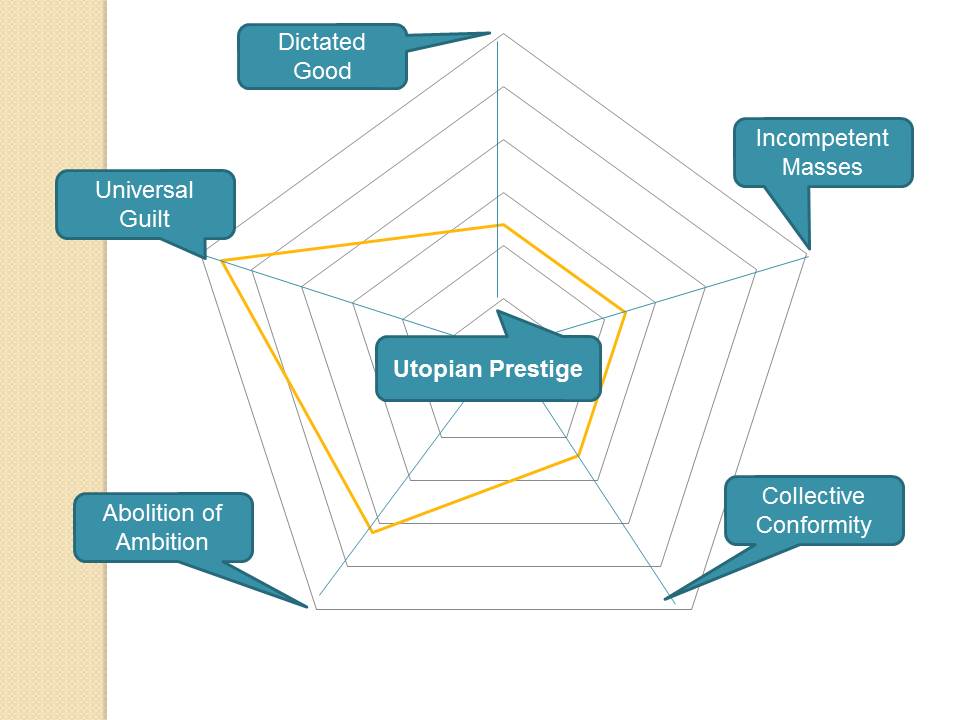 The Church and the National Socialists agreed in the fundamentals of human existence. From metaphysics, to epistemology, to ethics, to politics, to art, the Church and the National Socialists agreed that man is corrupt and egoistic – incompetent masses. Individualism is evil – universal guilt. Dogmatism is the only acceptable intellectual standard – abolition of ambition. The highest moral virtue is self-sacrifice to the state – collective conformity. Government is synonymous with providential divine will, and evil must be banished with force of government – utopian prestige. The method is dictated good.
The Gospel According to John Immel, chapter 3:1-3
- All people act logically from their assumptions.
- It does not matter how inconsistent the ideas or insane the rationale. They will act until that logic is fulfilled.
- Therefore, when you see masses of people taking the same destructive actions, if you find the assumptions, you will find the cause.
I have outlaid to you all of the assumptions, and now you can understand why people take the same mass action; why 40 to 65 million Germans remained complicit with the actions that went on within Nazi Germany. They all accepted the exact same premise. They held the exact same assumptions, and  they followed those assumptions to the logical conclusion. When someone says to me that the state can dispose of man’s property at will, he has conceded the premise that the state owns man totally. So if they can take your money, they can take your life. If they can take your stuff, they can stick you in an oven. The moral justification does not change.
Sacrifice is the collectivist mantra, and it ends with tyranny. Once you establish the moral standard of submission to authority, there is no argument to be made for independent action. Once you accept the premise that it is immoral to take self-appointed action, all self-appointed actions are immoral. Once you accept the premise that personal inclinations are immoral, then all inclinations are immoral, and this includes your inclination to stand against tyranny. The same argument that shuts your mouth when the preacher says something you disagree with is the same argument that keeps your mouth shut when the tyrant starts shooting people in the head.
People blithely condemn self-interest as immoral, but if self-interest is immoral, then so is self-preservation. Self-interest and self-preservation are inseparable. So if you wipe out self-interest as a moral standard, you will existentially wipe out self-preservation. If you wipe out self-preservation, how then can you justify fighting against a tyrant who seeks your destruction? If you won’t fight for your own liberty, how can you live to fight for someone else’s liberty? If you don’t hold liberty as an ideal for your own existence, how can you advocate liberty for Jews, for African-Americans, for rich white people?
Hear me now.
Tyrants know this truth. If they can talk people out of self-interest, they have talked them out of life itself. Tyrants know that if your moral standard is sacrifice, you are already dead. All they have to do is hand you the knife. You will cut your own throat seeking to be moral. National Socialist Germany showed this history. The marriage of the Third Reich with the church doctrine of self-sacrifice brought the Western world within a hair’s breadth of returning to the Dark Ages. This is no accident. The doctrines at the root are the same.
 In 21st century America, we are once again rolling through a philosophical cycle that has been repeated over and over in history. We are intentionally moving towards socialism. We have bought into the lie that socialism is a kinder, gentler economic organization. America’s root philosophy is the antithesis of all collectivist ideologies. Communism, socialism, Catholicism, and Calvinism, these are all collectivist ideologies. The Founding Fathers believed in the rational, effective, motivated individual man. They organized a government around the defense of the individual. The defining shape of government was to defend the sovereign individual against all encroachments.
We are sprinting headlong down the path of despotism. The slogans have only changed in name. A century ago, a fundamental transformation was done in behalf of the volk. Hope and change were done in behalf of the German people. Now the move towards socialism is done in the name of grandma’s healthcare. Christian grandma would never dream of walking next door with a gun and demanding her neighbor pay for her doctor visit, but she will think nothing of electing a politician who will hold a gun for her. Christian grandma insists that her politics are compassion, but never mind that compassion and compulsion are mutually exclusive. Never mind that compelling someone to provide an ability or a skill or an expertise at the point of a gun is slavery. Christian grandma, and everyone else who votes with her, handed the keys of the doctor’s office to men with guns. And if they can compel doctors to work for free, they can compel people to stay away from doctors for free.
Ladies and gentlemen, there is nothing hidden here. This is not any different than 1926. The documents have been written, and all you have to do is read. All you have to do is listen. There is nothing mysterious happening in modern American politics. History has repeatedly proven that  socialist countries will slaughter millions to sustain the power of a select few. The moment you concede that seizing a man’s property is a moral government action, you have conceded that man is property of the state. The moment that man is property of the state, man can be disposed of as the state sees fit.
This is, of course, why Christians, with ever-increasing manifestation, are confronted with the abuse and tyrannies that our forefathers tried to resist. People wail about human depravity, moan that their leaders have the wrong form of church government, mumble feebly that the parishioners should pray more for their pastors, and demand that people sacrifice more in behalf of the church. The church is impotent to stop the problem because the church refuses to diagnose the problem.
I tell you the truth that the answer as to why this is happening is as easy to diagnose as the common cold, but the first thing you must do is dare to take responsibility for the content of our own minds. Mystic despots have ruled the world with portents of disaster for anyone with the ambition to challenge the traditions of power. Autocrats rely on being able to compel outcomes because no one opposes their arguments. Tyrants can only succeed when we refuse to think.
To be continued…
From the Reformation to the Third Reich: Protestantism’s Impact on Western Culture – Part 7
The following is part seven of a nine-part series.
Taken from John Immel’s fifth session
at the 2014 Conference on Gospel Discernment and Spiritual Tyranny
~ Edited by Andy Young
The Rise of National Socialism and the Assault on Capitalism, Continued…
 Capitalism has become a byword in the United States, actually a byword globally. Rarely do you hear anyone speak openly about being a capitalist, and that is because there is an-all out assault to destroy capitalism. And that assault is largely led by the fact that most people have no clue what it is. No one has ever explained it to them. Capitalism is not specifically economics, and most people are only vaguely aware of what economics are.
There is a common mis-conception that there are forms of capitalism and that various governments practice various forms of capitalism. This is actually not true. There is only one form of capitalism. In the 18th century, a group of French economists called the Physiocrats identified that wealth was the product of individual production. John Locke arrived at a similar conclusion – that property was the product of human labor; his reasoning power and his action to organize whatever his substance is.
The Physiocrats said that the nature of production is the source of wealth, and they came up with the term “laissez-faire capitalism”, which literally means “let them do as they please.” They identified correctly that individuals will solve their own problems with their own production and that the government should not be anywhere close to it. This was a profound contrast to the traditional explanation of a nation’s wealth, e.g., it was either the wealth of kings, the country’s gold reserves, the country’s arable land. They were the first to formulate that government should keep their hands off of economic transactions.
This is where the issue of “forms” of capitalism comes into play. Capitalism is like the definition of water. The chemical formula of water is H2O. Now you can add a lot of things to H2O, and you can add some tasty things to H2O. You can add some sugar and some Kool-Aid, and you still have water, but you also have now Kool-Aid. And you can drink it. But if you are in the Jim Jones cult and you add something else, suddenly water becomes poison. And my metaphor is apt with capitalism. As John Locke correctly identified, it is a man’s labor that produces prosperity. A man produces to advance and sustain his life, and that production is his property alone. There is no distinction between the man and that which he produces.
 When you start out as a farmer in a basic economy, you have a seed of corn, you plant a seed of corn, and you have to wait 12 weeks for that seed of corn to come up and actually have a harvest. Now if you are only planting one seed and getting one ear of corn out of your cornstalk, you are going to be hungry.
But let us assume you have the ability to produce thousands of seeds of corn and then have a specific harvest. Now you spend all of your time planting that corn and then specifically getting that harvest. But corn is not shoes, and it is not shirts, and it is not beef. So you have to have a means by which to get these other things. The only peaceable way to get those other things is to trade, and the nature of trade means without force.
There is no compulsion in a free economic transaction. The parties are willing, and the parties decide on the values that they want to trade. That’s it. This concept is only possible in a politically free environment. Capitalism is the product of liberty, and this is crucial to understand. It is the individuals who enter into social contracts, and it is the government that is given the limited permission to act. It is only within that environment that people are free to trade. There is no compulsion, and when I say compulsion, I mean force. I mean violence. Just because you want to eat, your necessity is  not the guy who has food. You do not get food from him by compelling him to give it to you. If you were by yourself out in the middle of nowhere and you were hungry, you would still have to work to feed yourself.
Conversely, just because you would go to a guy who already has the food does not mean he compels you to come to him to get food. The responsibility of your survival, of individual survival, is the responsibility of the individual. The peaceable way to make that happen is to exchange value for value. In a social context, there are many people offering value into this environment, and you have the ability to pick whatever you want or not. The absence of compulsion, the absence of violence, is the central theme.
There are only two kinds of markets: compulsory or free. In a compulsory market, you have no choice about what can be bought or sold. There is no choice about the disposal of property, and there is no recognition of private property. In the United States we do not have a capitalism economy. We have a mixed economy because we have compulsion. We have to ask the government permission to take action to exchange our goods and services. This is not a capitalist economy.
The other kind of market is a free market. This presumes private property. The definition of private property is the right to an action, the right to dispose of that property or the right to retain that property. A free market then is simply two people willingly exchanging values. A free market is never present when there is fraud, which is a misrepresentation of reality, where you have specifically  deceived the other party about the nature of reality. A free market is never present when there is force or implied force, which is extortion.
So a free market only exists where there is private property and free individuals. Free individuals produce value, and they must be entitled to their private property, and private property by definition means they can dispose of it as they see fit.
Next we have to have a root discussion of money. You have to understand what money is and what money is not. You don’t work to get money. You work to create money. Consider once again the seed planting example. After you harvest your field you now have a big sack of corn. Your neighbor may need corn to feed to his herd of cows so he is willing to trade you a sack corn for one cow. The problem is you may not need a cow, what you need are new tires for your tractor. Obviously, cows are not tires.
In this situation, trade becomes an inefficient means of exchange. In addition, payment in kind is impractical at a distance. What is needed is the creation of a medium of exchange, and this was the emergence of money. You needed a means by which you could represent a bag of corn or a cow or tires for the tractor.
Furthermore, when you are done harvesting your corn you now have tens of thousands of seeds. What you do not eat between the end of harvest and the beginning of next season is your excess. This is work (production) that is now stagnant. It is not doing anything. It is not producing anything. This excess prosperity is called capital. You need that excess prosperity to continue through time which allows you to plan for your next action of prosperity, your work to produce more.
Well, in an agricultural environment the distance on your production is your growing cycles, maybe a year. But the more industrialized you get, the longer your production cycle, your sight line, has to be, so you need larger and larger holds of production held in store. This is the root of capital. It is production held in a static state that you have the ability to then distribute down through time so you can produce your next action.
 Well, of course, for lots of reasons, gold and silver became the standard means by which you could actually take a cow and exchange it for corn, and that coin then began to hold value. Over time, a particularly productive person might accumulate lots of coin. That coin represents capital, but that accumulation of capital is not producing anything. At the same time, this productive individual has no reason to give up this capital unless he has some incentive to put his gold at risk. In a capitalist society there is a fundamental need to take capital (static production) and then give it the opportunity to be put into production either by the holders of the capital directly or by other people who want to take the risk. This is the basis for interest or usery.
Now in a free market, in a capitalist culture, you have no guarantees. The government is not there to penalize you, and it is not there to advantage you. If at any point the government enters in and compels or restrains economic action, we are no longer talking about capitalism.
The single greatest expansion of prosperity occurred between the 18th century and the 19th century. And the reason the greatest expansion of prosperity occurred is precisely because John Locke correctly defined the exact requirements for government. The United States of America, and for a very brief time Great Britain, put into practice the logical result which was “laissez-faire” capitalism. This time period is called the Industrial Revolution. Man set out to solve his own problems, and wealth exploded.
 There is a common misconception then when someone gains wealth it is because he took it from someone else, as if there is a giant pie, and every time someone takes a piece there is less for everyone else. There is no pool out there somewhere called “wealth” from which people partake. Wealth is created when individuals produce. Therefore when production increases, so does wealth. Man creates his own level of prosperity. He creates it every day he applies his work product.
The assault against liberty and capitalism and the production of wealth started almost immediately. It specifically started with doctrines that were designed to:
- Eradicate reason from man
- Place man back in state control
This two-fold philosophical assault against wealth is what led to the rise of Hegel and then Karl Marx. These men crafted an immoral justification for the destruction of capitalism. But here is the thing. You cannot destroy capitalism without destroying liberty, and you cannot destroy liberty without destroying capitalism. Since capitalism is merely free individuals acting to exchange values willingly, the moment you put the government in charge of either side of the equation, either production or person, you are destroying liberty. This is exactly what happened at the turn of the 19th century.
Even though the First World War did not go well for Germany, it still became an enormously successful industrial nation. They had some totally inept leadership. The Weimar Republic was a joke. In their minds they were still Prussian. They were still sort of under monarchy and tried to throw that off somewhat.
Following WWI the rest of Europe decided to pile on the German people and really make them pay for it. Over time that began to wear on them. With economic collapse right on the horizon, you can begin to understand why the German people consistently discussed the issue of greed. They resented other people’s prosperity, and this is central to the rise of National Socialism.
Here are some excerpts of what became the National Socialist platform, originally published in 1920. This will give you some sense of what they are after. As you read through these, pay close attention to what they advocated, and contrast that with John Locke, and liberty, and the United States.
“12. In view of the tremendous sacrifices in property and blood demanded of the nation by every war, personal gain from the war must be termed a crime against the nation. We therefore demand the total confiscation of all war profits.”
Now think of what this really means. They are saying sacrifice is an ethical ideal, and because some sacrificed, anybody who prospered from their sacrifice, equating their profit with sacrifice, must necessarily have all of what they created confiscated. This completely eliminates the reality that the government is what went to war. The government is what caused the death and destruction, and in order to fight the war, the government asked businesses to create this production. Now they are blaming profit for their problems when in actual fact it was the government’s fault.
“13. We demand the nationalization of all enterprises converted into corporations.”
“14. We demand profit sharing in large enterprises.”
Where have you heard that in modern American culture? The endless determination to denounce big business as if the people who do not work have a moral right to the product of somebody else’s work?
“15. We demand a large-scale development of old age pension schemes.
“16. We demand the creation and maintenance of a sound middle class, the immediate communalization of large department stores which are to be leased at low rates to small tradesmen.
 “17. We demand the most careful consideration for the owners of small businesses in orders placed by national, state, or community authorities.”
This is the absolute eradication of private property. For people who have been successful, the nature of their success necessarily means that the government should somehow penalize them for their success. The communalization of large department stores. The reason that large department stores appeared is because they became better at delivering the best quality products for the best price to the most people. How many times have you heard people say that Walmart is somehow fundamentally evil? Yet everybody benefits because Walmart gets you the products you are willing to pay for at some of the best prices anywhere. Your life is better, and yet somehow because Walmart cannot be fleeced every five minutes for its money there is something fundamentally evil about that.
“18. We demand land reforms in accord with our national needs and a law for expropriation without compensation of land for public purposes, abolition of ground rents and prevention of all speculation in land.”
This is talking about the seizing of property.
“19. We demand ruthless battle against those who harm the common good by their activities…”
Now watch what they define as harm.
“…persons committing base crimes against the people, usurers, profiteers, etc., and are punished by death without regard to religion or race.”
In other words, bankers. Bankers were Jews. Jews had capital. Profiteers, people who made money. Give over your profits or we are going to kill you.
 When it came right down to it, they could declare anybody they wanted to be a profiteer, and that is exactly what they did. That was the real focus of the Jewish hatred, centralized in their ultimate covetousness. They wanted prosperity, but in their view the way to get prosperity was to seize it from most people who had created it or to kill them. The presumption was that if somebody else has it, if I do violence to them, I can get it.
“The Party as such stands for positive Christianity, without associating itself with any particular denomination. It fights against the Jewish-materialistic spirit within and around us, and is convinced that a permanent revival of our nation can be achieved only from within, on the basis of Public Interest before Private Interest.”
Take note of that: “Public interest before Private interest.” Man is first and foremost the property of the State. You have no private interest. Your only interest is your specific responsibility to the collective. These are the founding ideas that brought forth Adolf Hitler. He is not the cause. He is merely the extension of a logical body of ideas. And at the root, what causes good men to do nothing? Change the definition of good.
I just produced for you from start to finish how they defined good. At the root, they said man is not entitled to his own life. He is not entitled to his work product. He must sacrifice his life on behalf of the collective. They changed the definition of good.
“You didn’t build that.”
That is not your property. The government has to give you permission. You want to understand what actually happened in the rise of National Socialism? You want to understand why the Church was so specifically involved in the rise of socialism? Because the Church fundamentally believed the exact same things. They ultimately believed that man had no business with himself.
The reality is that socialism is not a kinder, gentler economic organization, and I frankly don’t care how you parse it up. I don’t care whether you say it is communism, socialism, or fascism. Ultimately, the end result is about who owns man? As long as the state owns man, there is no liberty. And if there is no liberty, there is no production, and if there is no production, there is no prosperity.
To be continued…

 Paul's Passing Thoughts
1 comment