The Philosophy of the Rich Young Ruler
Originally published January 25, 2017

“…he went away sorrowful…”
“And, behold, one came and said unto him, ‘Good Master, what good thing shall I do, that I may have eternal life?’ And [Jesus] said unto him, ‘Why callest thou me good? There is none good but one, that is, God…’” ~ Matthew 19:16-17
To say that something is “good” is to refer to its intrinsic value or worth. When God said in proclaiming His creation “good” was that it had value, and not just value to Him, but value in and of itself.
That doesn’t mean that something that is “good” cannot be used for evil intent, and even if it is used for evil, that doesn’t change its intrinsic goodness.
Now contrast this with every philosophy, from Plato to Immanuel Kant, where the chief aim is the destruction of man. Such a philosophy was held by Philo who had a great influence on the Pharisees and Jewish religion, incorporating it into Jewish orthodoxy.
Given this understanding it is easy to see why Jesus would say what He said to the rich young ruler, who would have been a student of this philosophy under the Jewish orthodoxy of that time. Jesus was not making a definitive existential statement about man. He was sardonically pointing out the rational inconsistency of the rich young ruler in calling Jesus “good master” when his own philosophy taught that man is not good.
Nevertheless, unregenerate man is not under condemnation because he has somehow lost his value in being “good.” He is condemned because he is under law. The reality that God made a way for man to be reconciled to Himself is evidence of God recognizing man’s continued “goodness”, his value. That man in the weakness of flesh from time to time may break the law is not somehow indicative of his lack of “goodness”. This is why the Bible states that righteousness is apart from the law. Any attempt to define righteousness by some standard of law-keeping (even if Jesus “keeps the law for us”) is placing man right back under the very same law that can only condemn. The only way for man to escape condemnation is for him to get out from under the law.
This is exactly what the new birth accomplishes. It makes man a truly righteous being who is the literal offspring of God the Father, and one who is no longer condemned by the law because he his a new creature that is not made under the law. The old man who was under the law is dead, and you can’t condemn a dead man. This is the very reason why the apostle John can state unequivocally and without contradiction:
“Whosoever is born of God doth not commit sin; for his seed remaineth in him: and he cannot sin, because he is born of God.” ~ 1 John 3:9
~ Andy
“Cross-Centered” Living Keeping “Christians” Under Law

Yup, we’re all just filthy scum…Now go have a happy “cross-centered” day!
Originally published January 5, 2017
Focusing on sin is all the rage among “christians” today. Is it any wonder? The “cross-centered” orthodoxy teaches that the more one gains a deeper understanding of their sinfulness, the more they gain a greater understanding of God’s holiness and a realization of what a great price was paid for their salvation, making the cross bigger.
So are you bothered by the realization that you continue to screw up in life? Well, you should be. After all, you are just a dirty, rotten, totally depraved sinner. But don’t worry, the Bible is full of dirty, rotten, totally depraved sinners, and it worked out for them just fine!
That should make us feel better right? Yet the number of “christians” who lack assurance of their salvation is pandemic. However, the problem is not that “christians” don’t focus enough on their sin. The problem is not that they are not living “cross-centered” lives enough. In fact, such behavior is only going to exacerbate the problem. Constant introspection on sin only produces fear. Most christians’ lives are characterized by a fear of whether or not they are living “cross-centered” at any given moment. Rather than showing love to God and others by aggressivly pursuing obedience as the Bible commands, they are paralyzed in their continual self-enslavement to sin.
Protestants like to go around saying “Man has a sin problem”. My counter to that is, no, the problem is not man’s sin, the problem is his realtionship to the law!
Careful study of scripture reveals that there are two perspectives on sin and the law instead of the single-perspective that has been propagated by protestant orthodoxy for over 500 years. For an unbeliever who is “under law” (the biblical definition of an unregenerate person), the law is used to judge a person to eternal condemnation. Romans 8:2 calls this “the law of sin and death.”
But for the person who is born again, the law can no longer condemn (Romans 8:1) because the old man has been put death (you cannont condemn a dead man). In his place is a new creature who is the literal righteous offspring of the Father. The law has a new purpose. Romans 8:2 calls this “the law of the spirit of life.” The law is now used as the means by which the believer shows love to God and to others.

Yeah, I know, it’s that pesky cross chart again.
Dwelling on sin leads to fear of condemnation because sin uses the law for that purpose. So when we dwell on sin, we are willingly empowering a Sin master from whom we were freed when we were born again. But this is exactly what protestant orthodoxy does; it keeps a believer under law and under constant fear of condemnation. Is it any wonder why “christians” constantly function like the unregenerate?
A born again believer does not sin. Not only that, he CANNOT sin (1 John 3:9). Sin has to do with condemnation, and the believer is not condemned because there is no law to condemn him. Since there is no law to condemn, there is no sin! To the extent that he obeys the law or not is irrelevant. He is no longer condemned. His motivation is not one of seeking to merit righteousness. He already IS righteous. His motivation is a desire to express his love for God and others. At worst, he simply fails to show love as he should. It does not affect the reality of his righteous state as God’s child!
~ Andy
Holy Schmoly…Who Needs Holiness When You Have Authority?

Originally published January 5, 2017
Afshin Ziafat holds the title of “lead” pastor and “elder” of Providence Church in Frisco, TX. He was part of a panel discussion along with Conrad Mbewe, John Folmar, and moderated by Kevin DeYoung at the 2016 Cross Conference in Indianapolis, IN. The clip below is an excerpt from that discussion. It happens pretty early on. There are several examples I could have used, but this particular exchange really caught my attention.
Here is a transcript of the above video clip.
KEVIN DEYOUNG: So let’s talk about some of these terms that are often given to describe church. This is sort of Ecclesiology, the study of Church 101. So sometimes there is a reference made to the four attributes of the church. One, holy, catholic, apostolic church. So just jump in who wants to just, 30 seconds, what does it mean, “one church”?
JOHN FOLMAR: Unified in the gospel. United to Christ by the power of the Spirit, and thus united to one another.
DEYOUNG: Okay. So Ephesians 4, there is one spirit, one body, one Lord, one baptism. What about “holy”? Afshin?
AFSHIN ZIAFAT: Um, I’m not sure exactly what you’re wanting from that.
STOP RIGHT THERE! HUH?
I’m not the smartest person in the world, and granted, as I go back and read the transcript, DeYoung doesn’t do a very good job at articulating what he’s asking, but even I understand the question. DeYoung wants to know what it means when we say the church is holy.
Yet here is a man who is supposed to have an academic and theological pedigree which supposedly qualifies him to sit on this panel of “experts”. Here is a man who is supposedly responsible for the “sheperding” of hundreds if not thousands of people every week. Here is a man to whom a room full of young people are looking for guidance and direction, a man whom people are supposed to submit to his “authority”. And yet Ziafat says he’s not sure what DeYoung is wanting? Does he mean he does not know what it means to say the church is “holy”, or does he not even know the definition of holy? I am beyond incredulous!
Like I said, I am not the smartest person in the world- I didn’t go to seminary, and I am not the pastor of a church of thousands. I did however give a session on the definition of holiness back at the 2014 TANC conference. Perhaps Mr. Ziafat might find it useful. Here are the links to those sessions.
TANC 2014 – Andy Young, Session 1
TANC 2014 – Andy Young, Session 2
TANC 2014 – Andy Young, Session 3
Now let’s look at the remainder of the transcript:
(ZIAFAT CONTINUING) But I would say just, you know, the fact that, if I may couple with what [FOLMAR] just said, the need for you to be in the church to be shepherded, because, as I see, you know, one catholic church, but yet there’s a need for the local church that you are involved in actually being cared for. Because from the very beginning God is known as a shepherd and His people the sheep of His pasture and Jesus taught His disciples how to shepherd and Peter tells fellow elders that you are to shepherd the flock of God among you. So all that to say, I would tell [the audience] that if they are not in a local church, that’s God’s setup for how He as the shepherd is gonna shepherd them through under-shepherds. And so I think that they need to be in that local church.
Ziafat never answers the question with respect to holiness. Instead he does what politicians do when there is a question they don’t want to answer. They try to distract you by rambling on and on over talking points that you would want to hear, hoping to impress you with their verbosity, all the while saying nothing of any substance (something at which politicians are very adept).
But notice what he does choose to talk about: the authority of the church in the lives of Christians. “…the need for you to be in the church to be shepherded…”, “…need for…actually being cared for…”, a local church is how God is “gonna shepherd them through under-shepherds…”, “…they need to be in that local church.” Authority, authority, authority.
I am not the only one who notices that Ziafat doesn’t answer the question. DeYoung realized it too. But rather than put him on the spot, he bails him out by actually answering the question for him. I mean, these guys have to stick together, right?
DEYOUNG: Right, for the accountability, for, you know, if the leaders of the church are accountable before God for their people you need to have some kind of membership, or to whom or for whom are they accountable, and that holy aspect is called out ones out from the world into this fellowship, shepherded, guided…
This is just one example of how these guys perceive themselves and you. You need to be shepherded for your own good. I am reminded once again of what John Immel said at the 2012 TANC conference regarding the metaphysical assumptions of reformed theology – man is fundamentally incompetent to be able to comprehend truth and know good; he therefore needs have good dictated to him; that dictated good is accomplished by the institutional church through divine mediators who presume to stand in God’s stead. And this is all done under the pretense of being done for your own good, since you poor schlubs don’t know any better.
This was the tenor of this entire panel discussion, that we should just be so thankful that we have these “godly” men to guide us poor incompetent masses though our ignorance, and we should just listen to them so that we don’t screw up our lives. I find such arrogance and condescension appalling, especially since these men are such intellectual pinheads who couldn’t come up with an original thought among the four of them to save their lives. They are simply regurgitating what they themselves have been taught. That much is obvious from this example.
~ Andy
The Philosophy of the Reformation and Its Historical Impact, by John Immel – Part 1
Taken from John Immel’s first session at the 2012 Conference on Gospel Discernment and Spiritual Tyranny
Published with permission
~ Edited by Andy Young
Click here to read Part 2
Click here to read Part 3
Click here to read Part 4
I was listening to the radio and a song by one of our modern philosophers came on.

Steven Tyler, lead singer, Aerosmith
“There’s something wrong with the world today.
I don’t know what it is.
Something is wrong with our eyes.
We’re seeing things in a different way.
And God knows it ain’t His.
It sure ain’t no surprise.”
This is from a song by Aerosmith, “Living on the Edge.” The song’s refrain says over and over that we can’t help from falling.
It is true: there is something world with the world today. But I contend that it is not inevitable that we fall.
Throughout my life I have been involved in various flavors of Christianity, and I continually found myself running up against the same interaction over and over and over. And, of course, for the longest time the easy criticism was, “It’s you. You’re the problem.” There are a lot of doctrines within Christianity that affirm that – yeah, it’s probably you. If there is a problem, you are probably the problem.
But then I began to realize that the same problem exists whether I’m involved in the social dynamic or not.
How is that possible? How is it possible that I can go from denomination to denomination to denomination – from Word of Faith to Charismatic to Baptist to Methodist – and it didn’t matter?
After much thinking I arrived at what I believe is the root of all failed human actions.
The Gospel According to John Immel, chapter 3:1-3
- All people act logically from their assumptions.
- It does not matter how inconsistent the ideas or insane the rationale. They will act until that logic is fulfilled.
- Therefore, when you see masses of people taking the same destructive actions, if you find the assumptions, you will find the cause.
The words “logic” or “logically” in this context refers to the consistent progression of a given set of ideas. That does not mean the ideas are logical in the sense that it is accurate thinking. I am talking about how Idea “A” through Idea “Z” go together to create an entire perspective. What I realized was that when the same people take the same action, they will produce the same outcome.
Let me break this down by section.
Verse 1 says: assumptions + logic = action.
Verse 2 says: faulty logic or erroneous rationalizations = ideas that flow from one to the next to the next.
Verse 3 concludes: mass action + destructive outcomes = common premise.
Something is wrong with the world today, but I submit that the error is imbedded in common faulty root assumptions. When I surveyed history and I saw men taking the exact same steps, coming to the exact same conclusions generation after generation, millennia after millennia, I realized they all held similar root assumption about man and about life.
Typically, when I start talking like this is people say something like: “Well, people just need Jesus.” What they mean to say is that ideas are irrelevant unless the mystical solution of “Jesus” is applied to the problem. But that can’t be right because other people might say: “Well, people just need Buddha,” and still others might say, “Well, if Islam ruled the world, all the problems would go away.”
And here is why “people just need Jesus,” is no answer to the world’s problems: bromides are not solutions. Bromides never address the forces driving the problem.
The problem with faith is people tend to take their own faith very personally and very seriously . . . and very uncritically. They tend to assume that faith equals a license to subjectivity; that they are entitled to believe whatever they happen to believe just because they believe it.
So the challenge that I have forever run up against is that when I start talking about digging into the roots of our assumptions, the reaction is, “You know what? That’s complicated. That requires me to think. And I don’t really care to do that too terribly much.”
I am sympathetic on many levels to that frustration. We would like to say to ourselves, “The declaration of God’s love is so simple. Why on earth does this have to be complicated?” I understand that frustration. It seems that if something is so simple, the process of believing should be left to that simplicity. But here is the challenge – I contend that theological bumper stickers are not simple because thinking is at no point simple.
Let us use the following metaphor to try to illustrate this complexity. Throwing a ball seems like a very rudimentary process. You let it go. It goes from point “A” to point “B”. Yet no matter how many times you throw a ball from point A to point B, it consistently drops to the earth. Now consider the question, why does the ball always hit the ground? Some very smart people put together the physics of throwing a ball.
D = (Vo ˟ sinθ ˟ t) + (½A ˟ t2) + h
where:
D = distance
Vo = initial velocity
θ = initial arc angle
t = time
A = acceleration
h = initial height
Since I am no math wizard, I could not begin to explain to you the details of this equation. But that’s okay. I don’t have to. What I want you to understand is that a child throwing a football on the beach is engaging in the above formula. This formula details the level of complexity that is involved in throwing a ball from point “A” to point “B” even though a child can perform the action.
Now back to the issue at hand: thinking about what we believe and why.
Thinking is hard because thinking is also complex. It is just as complex as, if not more so, than throwing a ball because thinking is the mechanics of human action. This is where we get our energy to act in life. From the time when we are old enough to recognize our own consciousness to start motivating ourselves through life, the thing that dominates us every waking moment of our lives are the thoughts that we specifically put into action.
Here is the beauty of my metaphor – ideas are just as calculable as the mechanics in throwing the ball.
People want simplicity but it is in the details that we find the root problems. You may read articles on discernment blogs discussing the issue of “New Calvinism” or a resurgence of Calvinism and Reformed theology. Most people will conclude that denouncing the doctrines of those movements is grand conspiracy. The real solution is if a few “misled” souls would just get on the right path then all will be well with the church.
But the reality is conspiracy as an explanation does not satisfy the discussion of New Calvinism any more than liberation theology describes why America is treading down the path of Marxism, or why Marxism has dominated the whole of the western world, or why Islam is on the rise throughout the globe.
 People prefer conspiracies. “Christians” would rather hear people say it is the Illuminati or the Bilderbergers or some dastardly mastermind twirling his mustache in a hideaway, spending lots of money to compel people to do things and take mass action. People prefer conspiracy and world masterminds because that is easy. Conspiracies are easy. Thinking is hard.
I contend that the issue driving the world towards the edge is ideas, and ideas are hard. Ideas demand that individuals invest a stunning amount of personal discipline. You must bring your “A” game every minute of every day to be about ideas.
Consider once again the metaphor of throwing a ball. There is a specific problem with that metaphor. It is the issue of gravity. When you throw a ball, of course, the ball at the end of its trajectory hits the ground. It is the existence of gravity within that equation which leads people to believe that the ball must hit the ground every time it is thrown. Because of that gravity, my metaphor tends to break down because in the grand scheme of ideas, I am overtly saying that we can control what we think. If we can understand the progression and the mechanics of our thinking, then we can arrive at a different outcome. But historically, the inevitability of the “gravity” of human action is the observation that man tends down the path of his own self-destruction over and over and over. It is this very observation which has been used as a case in point to say that man is in effect “depraved.”
So how do I remedy the weakness of my metaphor? How do I integrate the immutability of “gravity” with the power of choice and the ability of man to set his own course?
The answer is, change the beginning assumption.
The formula for throwing a ball assumes that you are in an environment affected by gravity. The formula for throwing a ball assumes that your desired outcome is to propel the ball from point “A” to point “B.” Yet with the right amount of velocity, acceleration, and arc, it would be possible to put a ball into orbit or escape gravity altogether. Therein lies the consistency with the metaphor.
I contend that when you challenge the assumptions that have dominated the whole of the western world, you can arrive at a new set of assumptions, and those assumptions can defy the “gravity” that has driven men down to self-destruction.
 So now let’s discuss Calvinism, New Calvinism, and Reformation theology. The question is: why within this emergent movement do we see such consistent actions, such consistent outcomes, such consistent stories of oppression and domination and coercion? Why, from one congregation to the next, do you see the exact same outcomes?
To answer these questions, we must first find the assumptions, and that means we are going to have to take on ideas. It takes enormous effort to fully evaluate the content of ideas. This is the process of education and expertise. One must be specifically aware of one’s own thoughts. This is intentional consciousness. From the time, you are old enough to say, “I want a cookie,” to the day you read, “For God so loved the world that He gave His only begotten Son,” and every day after and in between, when you crack open a book and you read an equation and you determine to understand what the variables within that equation mean . . . all of these are examples of intentional consciousness.
It takes enormous discipline to order one’s thinking, to evaluate the progression from “A” to “Z.” It takes enormous effort to arrive at real logic, or non-contradictory thinking. Real reason is the determination to understand the over-arching mechanics of your own individual consciousness. By order I mean non-contradictory logic. It is what happens when you can follow the progression of thought from “A” to “B” to “C” to “D,” and you do not find any inconsistencies in that progression. Such a process takes enormous self-definition, that is, an absolute trust in one’s own rational faculties. And this requires self-esteem.
Bookmark the concept self-esteem.
My root assumption is that man is rationally competent. This assumption defies almost all historic Christian doctrine. Now the term “self-esteem” in American culture has been so utterly corrupted that I hesitate to use it, but it still captures what I’m after; an identification of the effectiveness of self. But you cannot get to self-esteem by someone holding your hand, patting you on the back, and telling you that you are okay. You can only get to self-esteem by doing the work, overcoming challenges, and succeeding.
The definition of human consciousness and self-esteem comes from the ability to successfully prevail over challenges. By contrast “New Calvinism” or Reformed theology is designed to undermine this ability at the root. It is designed to undermine man at his most fundamental level. It is designed to eradicate his specific ethical egoistic self. Most people don’t understand that every argument you encounter in Calvinist doctrinal debate, whether it is the distinction between sanctification and justification, or whether it is your moral right to keep the substance of what you have, are all moral arguments designed to de-legitimize your self-esteem. The doctrines fueling the argument are designed to condemn you at your root: to prevent you from having the right to your own self and your moral responsibility for the sum and substance of your own life.
What I am describing is the study of philosophy. In the western world since Immanuel Kant, philosophy has been utterly corrupted, and thus most people have a negative impression of philosophy. And Christians are particularly fond of flipping the page over to Paul’s consternation with what he called “vain philosophies” in order to de-legitimize discussing ideas. But regardless of how you feel, since philosophies exist, you need figure out how to deal with “vain philosophies.” So despite Paul’s anxiety over “vain” philosophies, it follows that understanding good philosophies is important.
Here’s the reality: the ideas we encounter are no accident, and the outcomes are not happenstance. The source of all world evil can be found in evil ideas, or evil philosophies. The outcomes of those ideas have been displayed over and over and over, so we know they are evil. Christians are then confronted with this reality: if the world remains evil then the solutions we have been offering do not work. So one more sermon, one more frothing-at-the-mouth preacher, one more guy pounding his ESV will not fix the problem.
Instead we must have the courage to think, or maybe better said: rethink. Unless people are willing to turn on their minds and challenge their deepest-held beliefs, finding the solution is impossible. Nothing will change. It won’t matter how much we dissect sanctification and justification or the centrality of the cross. It won’t matter how many scriptures we stack up in service to pet doctrines. It won’t matter how much we rail against misplaced church government (Is it presbytery? Is it democracy? Is it papacy? et al). That has already been done over and over and over, council after council, synod after synod, inter-Nicene fight after inter-Nicene fight. For the first time in history, men must rethink the historical fight from its roots.
 Mystic despots have always ruled over the masses with portents and disasters for those who dared to live life beyond the mediocre. Tyrants can only succeed when men refuse to think. Autocrats rely on being able to compel outcomes because no one opposes their arguments. This is the challenge that I have as a man who is passionate about thinking: to inspire people to engage in understanding and scrutinizing the complex ideas that drive tyranny.
So here’s my challenge: do not be seduced into believing that righteousness is retreat from the world. Do not be seduced into believing that spirituality is defined by weakness and that timid caution for fear of committing potential error is a reason to be quiet. Do not be intimidated by vague, hazy threats of failure. Do not let yourself believe that faith is a license to irrationality. Do not mistake the simple nature of God’s love as a justification for simple-mindedness. Do not deceive yourself with the polite notion that you are above the fray, that your right to believe is sufficient to the cause of righteousness. There is no more stunning conceit. Do not pretend that your unwillingness to argue is the validation of truth.
Know this: virtue in a vacuum is like the proverbial sound in the forest – irrelevant without a witness. Character is no private deed. To retreat is nothing more than a man closing his eyes and shutting his mouth to injustice. Virtues are not estimates to be wafted gently against evil. Virtues are not to be withheld from view in the name of grace. Virtues are not to be politely swallowed in humble realization that we are all just sinners anyway. Love is not a moral blank check against the endless tide of indulgent action. Love is not blind to the cause and effect of reality. Love is not indifference to plunder and injustice and servitude.
The time is now, you men of private virtue, to emerge from your fortress of solitude and demonstrate that you are worthy of a life that bears your name. The time is now, you men of private virtue, to answer Steven Tyler of Aerosmith and all the nihilists that insist we are living on the edge and we cannot help but fall. It is time for you men of private virtue to take up the cause of human existence and think.
~ John Immel
Click here to read Part 2
Click here to read Part 3
Click here to read Part 4
A Historical Survey of the First Century Christian Assembly – Part 4
The following is part four of a four-part series.
Taken from Andy Young’s fourth session at the 2017 Conference on Gospel Discernment and Spiritual Tyranny
< Part 1 • Part 2 • Part 3
What Does Giving Look Like?
Drive down just about any street in any town or city in any state in this country and it doesn’t take long for you to drive past a church building. If you made it a point to count the number of churches you see any time you are out driving about, I daresay you would be shocked at the number. I am reminded of the apostle Paul when he first arrived in Athens, and he wept when he saw the city wholly given over to idolatry. I can imagine the scene was similar. Imagine Paul walking down the road and over  here is a temple to this god and over there is a shrine to that goddess, and another temple here, and another temple there. Is it any different with churches? Can we not also say the same thing about the proliferation of churches in our cities? Are our cities too not given over wholly to idolatry, the idolatry of institutionalized religion; the idolatry of selling salvation?
It used to be that you could tell a Protestant church from a Roman Catholic church. Catholic churches were these grand ornate structures with arches and stained glass. While protestant churches on the other hand were more subdued. They might have a steeple with a cross on top, but they were often much smaller and more humble looking. But that is not the case today.
 Protestant churches today are building massive steel structures with large capacity auditoriums, high-tech sound and stage lighting, multimedia displays, coffee bars, multi-purpose rooms for banquets and sports activities, book stores, and more. And church ministries are no longer limited to the spiritual growth and edification of its members. You can now find churches involved in community services, free clinics, day care, even aerobics classes and yoga.
Now, none of these things are necessarily wrong in and of themselves. These are noble endeavors. But any person who does an honest evaluation of what passes for church today can come to the conclusion that church is big business. There is much money to be made in doing church, especially in the area of Christian education. It is not unusual for most protestant churches to have some kind of Christian day school, which of course requires its own infrastructure, its own building program, its own budget, its own system of authority.
There was a time when I bought in to all of this. I diligently put my hard-earned money in the offering plate when it was passed. I would be racked with guilt on weeks when I didn’t put in any offering because I was short on cash, and then I wondered how God was going to get me for not giving Him anything that week. I gave not just with my wallet but with my own hands and my time. How many hours did I volunteer helping with the construction of the new school building and gymnasium? How many hours had I invested in painting walls, running cable, working the sound system and stage lights for the school programs, and giving and giving and giving. It wasn’t just me but scores of others in that church who did the same, all so they could have a brand new 2 million dollar gymnasium and high school classrooms.
This is one of the things that hurt the most when we finally decided to leave that church. I remember that last Sunday vividly. I was filing away my choir music after the service that Sunday, and I began to weep. I looked around and thought about the 17 years of my life I had invested in that place, and it hurt deeply and profoundly. I wasn’t aware then of all I know now – that’s been a six year journey for me – but I knew something was wrong. It tore me apart to have to leave because I felt like I was leaving part of myself behind (in a sense I was), but I knew I couldn’t stay there any longer.
 I believed that church was supposed to be about winning people to Christ. But that’s not for lay-people like you and me. That’s for people like pastors and missionaries; you know, people who have special training and went to school to understand theology and stuff. People are slow to answer the call to evangelism, but they sure are quick to plunk their money in the offering plate for a cause. That way they don’t have to work, they can just put their offering in and let someone else do the heavy lifting and feel good about it the whole time. Churches are spending millions and millions of dollars on infrastructure, meanwhile millions and millions of people are on their way to an eternity in hell.
Did you hear what I just said?
Churches are spending millions and millions of dollars on infrastructure, meanwhile millions and millions of people are on their way to an eternity in hell!
But that’s ok; you just think about how good you feel because you went to church this Sunday and gave to the building fund.
Church infrastructure is all about authority, and authority is all about control. One of the best ways a church can control people is through the offering plate. Giving in the institutional church centers around the tithe. Keep in mind, many of us are already familiar with a lot of what I’m going to say, but I’m setting up the argument. Plus this will be good for the benefit of those who have never heard any of this before.
Now what is the tithe? Tithe is an Old English word that means to pay a tenth. It may actually be a transliteration of the Greek word τιθετω (tie-THEH-toh) which actually means to lay in store or to reserve. What is interesting is that the English word “tithe” is used in only two places in the New Testament.
“Woe unto you, scribes and Pharisees, hypocrites! for ye pay tithe of mint and anise and cummin, and have omitted the weightier matters of the law, judgment, mercy, and faith: these ought ye to have done, and not to leave the other undone.” ~ Matthew 23:23
“But woe unto you, Pharisees! for ye tithe mint and rue and all manner of herbs, and pass over judgment and the love of God: these ought ye to have done, and not to leave the other undone.” ~ Luke 11:42
In these two references, the Greek word is not “titheto” but the word αποδεκατουω (a-po-dek-ah-TOO-oh) which means to pay a tenth from. Why does this number, tenth, mean so much? How did we ever decide on this amount? In Malachi 3:8 we read the following:
“Will a man rob God? Yet ye have robbed me. But ye say, Wherein have we robbed thee? In tithes and offerings.” ~ Malachi 3:8
The Hebrew word translated “tithes” is the word המעשר (ma-asar) and it means “a tenth.” So the prophet Malachi is bringing a message from God to Israel or some group of people in Israel and apparently this group has not been paying tithes and offering. Implicit in this passage then is the notion that the tithe is a requirement or commandment. Now I will get to the specifics of this in a minute, but suffice it to say that Protestantism has engaged in a type of replacement theology, and they point to this proof text here as evidence that the church is supposed to continue paying tithes. That seems like it might be a reasonable assumption, and if you agreed with that assumption you would be wrong. Here is why.
The question we have to ask is this: Is there any place in scripture where God gave a specific commandment to pay a tithe? And the answer is yes. The very first place we see the mention of tithe is Leviticus 27:30.
“And all the tithe of the land, whether of the seed of the land, or of the fruit of the tree, is the LORD’S: it is holy unto the LORD.” ~ Leviticus 27:30
So here we see indeed that God is requiring a certain percentage of what the people produce. The next usage of the word tithe appears in Numbers 18:26.
“Thus speak unto the Levites, and say unto them, ‘When ye take of the children of Israel the tithes which I have given you from them for your inheritance, then ye shall offer up an heave offering of it for the LORD, even a tenth part of the tithe.’” ~ Numbers 18:26
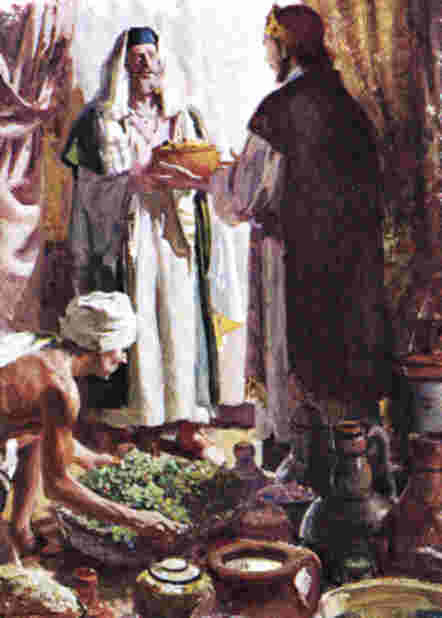
“But the Levites shall do the service of the tabernacle of the congregation, and they shall bear their iniquity: it shall be a statute for ever throughout your generations, that among the children of Israel they have no inheritance. But the tithes of the children of Israel, which they offer as an heave offering unto the LORD, I have given to the Levites to inherit: therefore I have said unto them, Among the children of Israel they shall have no inheritance.” ~ Numbers 18:23-24
Now what do we mean by inheritance? When Israel finally gets to the promised land, after they drive out all the Canaanites they will divide the land among the twelve tribes. And you will recall that Joseph gets a double portion. His inheritance is divided between his two sons, Ephraim and Manassah. The reason then that we don’t have 13 tribes is because Levi is special. Levi is consecrated unto God. God told them Levi doesn’t get an inheritance because He was to be their inheritance. Their inheritance is service to God through the temple. Since Levi doesn’t get any land, God provides for Levi through the tithe. So all the other tribes are required to bring a tenth of what they produce to the Levites as a means of providing for them.
We also learn by reading the Pentateuch that the Levites had specific cities assigned to them. In these cities were storehouses which stored all the tithes for the Levites and then they took from the stores as they needed. I think this is where the notion of the Greek word “titheto” associated with “tenth” originated. It seems as if in the Old English they took the Hebrew word for tenth, “ma-asar,” with the understanding that it referred to gathering the offerings into the storehouses, and they associated it with the Greek word “titheto” which means to lay aside or reserve, and that’s how we come to understand tithe meaning tenth.
Now, let me throw in one more little wrinkle. The Levites were to tithe as well. They were to bring what was called a heave offering to the temple. This heave offering was a tenth of all they collected from the other 12 tribes, and it went to Aaron and his direct descendants, basically anyone who was serving directly in the temple in Jerusalem. So not only did God provide for the Levites, but he provided for the priests as well.
Now if you go back and look at these passages that deal with the tithe there is no mention of money or currency. The tithe concerns grains, cattle, and fruits. You see the things that the people have produced from the ground. This does not include clothes, this does not include furniture, this does not include cars or tractors or weapons or shoes or anything else that a skilled craftsman might make. So obviously there was some kind of economy for the Levites, some market they could engage in and trade for or produce for themselves.
The point I’m making here is that the tithe only deals with agricultural products, and it was a means to provide for the Levites. The Levites were to in turn tithe to the priests. And that brings us back to what is happening in Malachi 3. What God is saying in Malachi 3 about tithes and offerings is directed specifically at Levi and the priests. Look at the rest of the chapter following verse 8.
“Will a man rob God? Yet ye have robbed me. But ye say, Wherein have we robbed thee? In tithes and offerings. Ye are cursed with a curse: for ye have robbed me, even this whole nation. Bring ye all the tithes into the storehouse, that there may be meat in mine house, and prove me now herewith, saith the LORD of hosts, if I will not open you the windows of heaven, and pour you out a blessing, that there shall not be room enough to receive it.” ~ Malachi 3:8-10
To understand Malachi 3:8 you need to understand the purpose of the tithe as we’ve just seen in Leviticus and Numbers, and it ought to be clear that this is a rebuke specifically towards the tribe of Levi. They had failed to tithe their own offerings to the priests, the heave offering that they were to bring to the temple which was the way God had provided for the priests. And God said you have robbed me because you have robbed the priests of what is theirs. The entire book of Malachi is a rebuke of Levi. The tithe is only one item in a laundry list of offenses throughout Malachi.
Now I suppose one could make the case that this rebuke of the tithe is a rebuke to all Israel. So for argument’s sake let’s assume it is. Does that really change anything? Does that change the fact of what the tithe is specifically; it’s purpose? Does that give us any liberty to take a commandment regarding the Levites and lay it over top of the church and say this includes the church now? Are we really beginning with the assumption that pastors and elders are the theological equivalent to the tribe of Levi?
And for what purpose? Is it to make sure that the pastors and elders have a living? Ok, I might give you that, but then why do we need building projects and missions budgets and expense accounts? That wasn’t what the tithe was for in the Old Testament. Remember what I talked about in part one about the rabbinical Jews pointing to a verse in Deuteronomy and claiming that was evidence for the command to build synagogues? They took that verse out of context and gave it an application for which it was not intended. Hasn’t Protestantism (and really it began with Catholicism), hasn’t the church done the same thing here with the tithe? For what? All to maintain some notion of authority that they do not have, because like Paul Dohse has said frequently here at TANC, buildings speak to authority, and what price won’t people pay for their salvation?
So what you have then is a system, tithing, tied to an institution for the purpose of maintaining control and authority.
Is there a better way or a right way? What should we be doing with our money? If we are meeting together in home fellowships, what about this issue of offerings? Should we even take offerings?
I want to focus on one particular passage here. We’re going to look at 2 Corinthians chapters 8 and 9. Now don’t worry, I am not going to take the time to exegete the whole of these two chapters. What I want to do is establish context by providing some historical background. Chapter’s 8 and 9 teach us about giving. So by way of introduction let’s just take a look at the beginning of chapter 8 and then I’ll give some exposition.
“1Moreover, brethren, we do you to wit of the grace of God bestowed on the churches of Macedonia; 2how that in a great trial of affliction the abundance of their joy and their deep poverty abounded unto the riches of their liberality. 3For to their power, I bear record, yea, and beyond their power they were willing of themselves; 4praying us with much intreaty that we would receive the gift, and take upon us the fellowship of the ministering to the saints. 5And this they did, not as we hoped, but first gave their own selves to the Lord, and unto us by the will of God.” ~ 2 Corinthians 8:1-5
Take notice of the words I’ve emphasized. These are key. If you are familiar with the book of Acts you should remember that Paul first visited Corinth on his 2nd Missionary Journey. So now Paul is writing ahead to these assemblies at Corinth and he’s letting them know that he’ll be coming through that area again. This is probably what will become the 3rd Missionary Journey. At this same time, there is a lot of persecution happening to the believers back in Jerusalem…
…by the way, let me throw this into the mix: Study the Book of Acts carefully and notice where the majority of persecution comes from. Do the believers experience persecution from secular sources? Do they experience it from the Roman government? I can think of one instance in Acts 19 with the guys who made the statues of Diana. But 99% of persecution comes from institutional religion. It is Jewish religious leaders who are the primary source of persecution against believers in this middle part of the 1st century.
 So back to our text. So apparently during his 2nd Missionary Journey Paul must talk about this persecution going on in Jerusalem because at some point the Macedonians decide they’d like to take up a collection. Think of it as a sort of “care package.” They get word to Paul that they have this relief package they want to send back to their persecuted brothers and sisters in Jerusalem. Doesn’t this sound an awful lot like what we saw happening with the early believers in Acts 2 and 4.
Now what is truly remarkable about this is that the Macedonians are experiencing tremendous persecution themselves. Think about the major cities in Macedonia: Philippi, Thessalonica, Berea. If you go back to Acts chapters 16 and 17, you can read all about the persecution Paul and Silas experience during that leg of their journey. They had this group of Jews following them around making trouble for them whenever they came into a new city. And the trouble didn’t stop after they left. We can read about all the trouble that there was in Thessalonica especially. And Paul even makes mention of that again in his letters to the Thessalonians.
So the believers in Macedonia are experiencing all this persecution from the Jewish establishment there. And notice the words Paul uses to describe them to the Corinthians. “Great trial of affliction.” “Deep poverty”. What I find remarkable is that despite their own persecution they have this desire to send a relief package to Jerusalem. They’re not thinking about themselves. They are thinking, “What can I do to help my brothers and sisters suffering in Jerusalem?”
Notice that nobody prompted them to do this. Nobody compelled them. Verse 3 say they were willing of themselves. They got no tax break under charitable deductions. They weren’t led to believe it was a means of grace. They weren’t worried about being brought up on church discipline if they didn’t give their 10%. No, this was a spontaneous response to a need that they saw. And out of genuine love and concern for their brothers and sisters in Christ, they gave, and many of them gave when they themselves had little to nothing to give. And Paul commended them for this.
There was an anecdote going around a few years back. I have no way of knowing if it is true or not or just one of those feel-good stories that people like to circulate. This is before the time when the Internet became as widespread as it is today. This would have been before Facebook and Myspace and Instagram. People would forward things like this around through email and share it that way. But it was this story about this woman and her young children. I believe she was a widow. And their church was taking up a special Christmas offering for the poor and needy so that they could have a Christmas meal and presents and things. So the children come to the mother and they decide they want to contribute to this collection. And they know that they don’t have a lot of money themselves, but at the same time they don’t view themselves as poor and needy.
So the mom and the kids talk about how they can save money, what things can they do without so that they can have a little extra left over and give that money to this collection. And I think the mom offers to clean houses and the kids sell some toys and they go though trash looking for things they can fix up and resell. And all the time they focus on the poor needy families who will get to have a nice Christmas.
So the Sunday before Christmas this family goes to church. They put the money in the offering, and they just have all this joy because they were able to give to help a needy family. And I think you know where this is going. Christmas morning comes, and there’s a knock at the door, and they open the door and there is the pastor and his wife and a few other people from church, and they have a beautiful Christmas dinner for them and presents for the kids. And so the irony is that they got back what they gave. It’s a nice story. Like I said I don’t know if it’s true. It probably isn’t.
But I tell you this because I can speculate something similar happening in Macedonia. These people, out of love for the believers in Jerusalem figure out a way to give something to this collection going to Jerusalem, even when they have very little themselves. And apparently word of this collection gets around. Word gets to the believers in Corinth, and they decide that they want to add to this collection. They let Paul know, and Paul says, ok I’ll be back in about a year. Have your collection ready when I come back. In fact I believe Paul alludes to this at the end of his 1st letter to the Corinthians. Look at 1 Corinthians 16, he gives them specific instructions about how to take up this collection.
“Now concerning the collection for the saints, as I have given order to the churches of Galatia, even so do ye. Upon the first day of the week let every one of you lay by him in store, as God hath prospered him, that there be no gatherings when I come. And when I come, whomsoever ye shall approve by your letters, them will I send to bring your liberality unto Jerusalem.” ~ 1 Corinthians 16:1-3
Notice the expression “lay by him in store”. Paul is telling the Corinthians that whatever they decide they want to contribute to this collection for Jerusalem, set it aside, and then when they all get together on the first day of the week, bring together what they set aside. They were to do this each week so that it is already collected and they are not scrambling around at the last minute trying to get all this organized.
Paul uses this Greek word “titheto” that I told you about earlier. I want to point out that this is not a command to give a tenth. This is not the word “apodekatoo” that means “to pay a tenth”. Here we see “titheto” used in its correct context to mean to lay something aside in store for later. Nowhere in these verses is there a command to bring a tenth of what they earned. He says you bring as God has prospered you. And the word “God” isn’t even in the manuscript. The word he uses for prospered means to succeed in business. So the idea is, you lay aside what you think you can spare of your surplus, or whatever you decide you are able to bring. We’ll see a similar sentiment in just a little bit, so file this away for just a second.
Fast-forward to where Paul is on his 3rd Missionary Journey, and everywhere he goes he’s telling people about what the Corinthians want to do in regard to this collection that the Macedonians started. And that’s what we read about in chapter 9.
“1For as touching the ministering to the saints, it is superfluous for me to write to you: 2for I know the forwardness of your mind, for which I boast of you to them of Macedonia, that Achaia was ready a year ago; and your zeal hath provoked very many. 3Yet have I sent the brethren, lest our boasting of you should be in vain in this behalf; that, as I said, ye may be ready: 4lest haply if they of Macedonia come with me, and find you unprepared, we (that we say not, ye) should be ashamed in this same confident boasting.” ~ 2 Corinthians 9:1-4
Now Corinth was a prosperous city. It was a major trade route. So because of this constant flow of goods there was opportunity for people to make a lot of money in Corinth. Consequently, it is likely that many of the believers in Corinth were wealthy. So Paul commends them for their generosity. We don’t know the extent, but it must have been significant because Paul talks about it everywhere he goes. And their generosity inspires other people throughout the province of Achaia to give as well.
So Paul says that they had a year to get this collection gathered up, and since he was going to be there soon he was going to send some of his helpers on ahead (and one of them was probably Titus, because he’s mentioned in this passage) to make sure they have everything ready. It would be really embarrassing if when Paul got there that he found that they didn’t have everything they said you were going to have, especially since he’s bragged about them everywhere he went. He doesn’t want them to end up looking bad.
So this is the context. Once you have this background, then this next verse makes abundant sense. And it is a familiar one.
“7Every man according as he purposeth in his heart, so let him give; not grudgingly, or of necessity: for God loveth a cheerful giver.” ~ 2 Corinthians 9:7
And of course any time the pastor gives a sermon about giving he undoubtedly points to this verse and then proceeds to mangle it to pieces. This verse sums up everything there is to know about giving among the assembly of believers.
“As he purposeth in his heart”
Look at how Paul described this with regard to the Macedonians. Back in chapter 8 verse 2 he refers to the “abundance of their liberality.” In Acts chapter 2 verse 45 we saw that the believers there in Jerusalem:
“…sold their possessions and goods, and parted them to all men, as every man had need.” ~ Acts 2:45
And in Acts 4 we are told again:
“Neither was there any among them that lacked: for as many as were possessors of lands or houses sold them, and brought the prices of the things that were sold, And laid them down at the apostles’ feet: and distribution was made unto every man according as he had need.” ~ Acts 4:34-35
I will stress once again that this was a spontaneous response of these people out of the love they had for others in their family. They were not compelled to do this. And that leads us to this next point.
“Not grudgingly our out of necessity”
If your church says you need to tithe your 10%, is that giving as every man purposes in his heart or is that out of necessity? Is it a genuine demonstration of love when it is expected of you to give? How are we supposed to give without grudge when the compulsion of the church for its members to give brings about bitterness and resentment, and can I even say, fear?
Any time you see the Body of Christ giving in the NT, what is it for?
What did James, the brother of Jesus, say regarding giving to the church? Did he say:
- It is your religious duty to give to the church to help spread the gospel.
- It is your duty to give to the church to help build our new elementary school wing.
- It is you duty to give to the church so we can give our pastor a much-deserved raise in salary.
- It is your duty to give to the church so we can make sure the pastor has an expense account so he can take prospective members out for coffee at Starbucks.
- It is your duty to give to the church so we can meet our missions budget this month.
- It is your duty to give to the church so we can remodel and modernize our “worship center”
- It is your duty to give to the church…and you fill in the blank.
On the contrary, James says the following:
“Pure religion and undefiled before God and the Father is this, To visit the fatherless and widows in their affliction, and to keep himself unspotted from the world.” ~ James 1:27
Notice that in all of those example I just listed, what is blatantly missing? There is no mention of widows and orphans. There is no mention of those who are in need. There is no mention of someone who is 3 months behind on his mortgage. There is no mention of someone who can’t afford her medication. There is no mention of someone who is going hungry. Are we so deluded to think that there can’t possibly be people like that in our own church? Or is it more likely that even if there are such people, the expectation is that they are still required to give their 10%. “But pastor, they don’t have anything.” It doesn’t matter, you give any way, how, “by faith”, and God will provide. Bring it into the storehouse like in Malachi 3, and God will bless you abundantly! Because if you don’t you’re going to get a visit from Bob the elder.
“But Andy,” you say, “What about the Macedonians? They were poor and they still found a way to give.” Yes, they did. But what is the difference? Was it out of a cheerful heart or out of necessity? Even in Corinth, Paul said, you give as your purpose in your heart. That means, if you are filthy rich and you don’t want to give, you don’t have to. And at the same time you don’t judge and condemn others over what you perceive they should be giving.
I am echoing much of what John Immel talked about in his third session at last year’s TANC Conference. John talked at length about Immanuel Kant and this notion of sacrifice. Kant basically said that what made sacrifice moral was when you did it out of a sense of duty, and even then it was only truly out of a sense of duty when it caused you soul-crushing pain.
What does church tell us? Give until it hurts. It’s a wrong application of the widow’s mite. The poor schlub in your church who finds a way to put something in the offering plate each week is somehow more moral and holy than the rich business owner who tithes regularly, because he’s not experiencing any pain in doing so. That rich person needs to give until it hurts. It’s his duty.
No!
Not grudgingly. Not out of necessity. But every man as he purposes in his own heart.
Think about this: In the institutional church, how much money that goes into the offering place each week gets to people who have an actual genuine need?
I said at the beginning of this session that church is big business. Consider this. In 2 Peter chapter 2, Peter is talking about false teachers and he says this.
“But there were false prophets also among the people, even as there shall be false teachers among you, who privily shall bring in damnable heresies, even denying the Lord that bought them, and bring upon themselves swift destruction. And many shall follow their pernicious ways; by reason of whom the way of truth shall be evil spoken of. And through covetousness shall they with feigned words make merchandise of you: whose judgment now of a long time lingereth not, and their damnation slumbereth not.” ~ 2 Peter 2:1-3
 Peter said that with feigned words (these guys are nothing more than pretenders) they will use you for their own benefit. They will “make merchandise” out of you. How many building programs, how many pastors’ salaries, how many books will you buy because you think these guys have the answers to life? Are you stupid? They are using you! In fact this expression “make merchandise” is actually a word that means to trade like a commodity. They will trade you like a commodity. You are nothing more than corn or soy beans or pork bellies to them. The implication is that you will be their slave. Did you hear what I said? You will be their slave. With feigned words they will pretend to be something that they are not, and they will enslave you, and they will buy and sell you like so much chattel on the open market, and the worst part is you make yourself a slave willingly!
In a home fellowship assembly, what need is there of infrastructure? What need is there of paying a salary? What need is there of an expense account? What need is there of a missions budget?
In such an intimate family setting, what is the likelihood that the people in that fellowship will be keenly aware of the needs of the brothers and sisters in that fellowship? And when you gather together for your fellowship meal, how hard is it to say, “There’s a basket over there on the counter. Bill needs some help paying his electric bill this month. If anyone wants to, feel free to drop a few dollars in that basket so we can help Bill keep the lights on in his house.” ” Mike and Sarah just had a baby. If anyone has some old baby clothes they no longer need, I am sure Mike and Sarah would be grateful if you passed them on to them.” “Jim is recovering from surgery. Is there anyone that would like to bring him a meal this week?”
This is what a family does. This is what it means when we say that the Body of Christ is a family and not an institution.
~ Andy

 Paul's Passing Thoughts
3 comments