God Rewards Our Efforts!
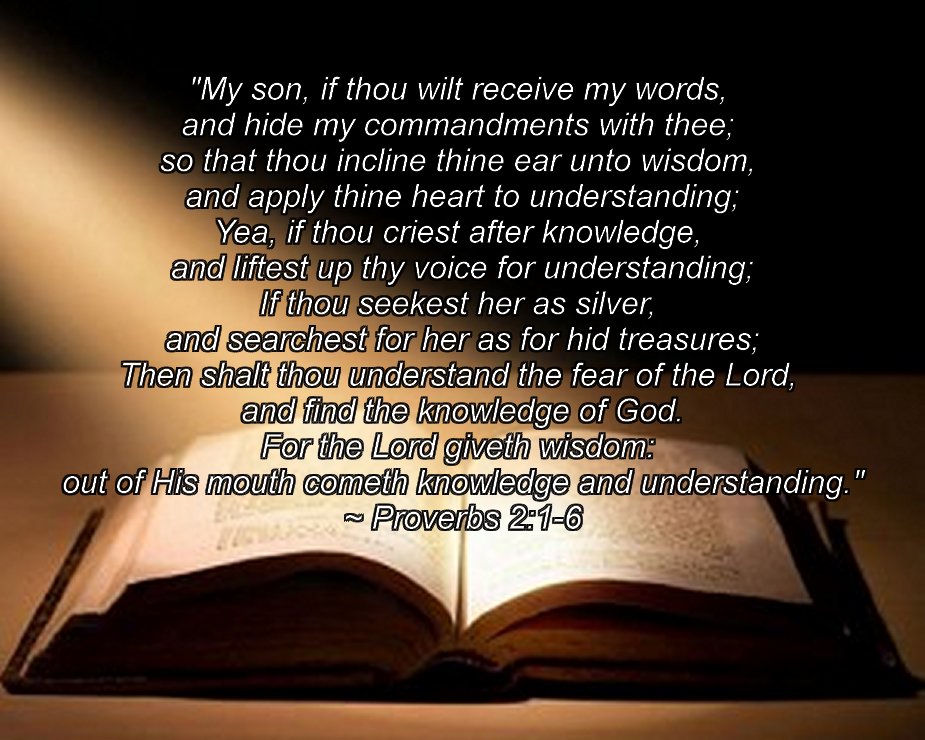
The Bible makes it clear that man CAN attain knowledge by seeking to understand and obey God’s commandments. Moreover it is clear that God rewards them who seek Him and who have a desire to show love to Him through obedience. One of the many problems with Protestant orthodoxy (aside from a woeful misunderstanding of the law) is conflating merit with salvation.
~ Andy
Preaching the Gospel to Ourselves: The Devil is in the Details

Originally published April 17, 2013
After nearly six years of research on the Reformation I have come to the conclusion that like all cults, its proponents deliberately deceive by changing the definition of familiar terms and using subtle verbiage. They condone this because they don’t think we are “ready” for the hard truth of the authentic Reformed gospel. John Piper said that outright during an interview while answering the question, “What would you say to the Pope if you had two minutes with him?”
A good example of this subtle deception is a recent article posted on SBC Voices. Here it is:
If you search through the blogosphere, you’ll see some who advocate Christians “preaching the gospel to ourselves” daily, and you’ll see others who are staunchly against “preaching the gospel to themselves.” I think some who speak against “preaching the gospel to ourselves” misunderstand and/or misrepresent what we mean. Here is why I preach the gospel to myself. Out of the gospel flows both justification (being declared righteous by Christ alone) and sanctification (the immediate positional adoption by Christ into God’s kingdom, and the progressive setting apart of our lives from the Devil’s kingdom into God’s kingdom). The gospel is the source of both, but the two are separate acts of the Spirit’s work in our lives. If you repent and have faith in Christ, trusting in His life, death, and resurrection for your salvation, you are immediately justified and sanctified, and you will be progressively sanctified as God works out salvation in you. Christ, the gospel, is the source of the Spirit’s work through faith alone.
This is a little less subtle than what followed in the same article, but the goal by the writer of said post is to sound biblical while trying to sell us Calvin’s progressive justification. The Devil is in the details. Like all cults, Calvinism distorts the Trinity by overemphasizing one member over the others. The Jehovah Witnesses overemphasize God the Father and destroy the role of Christ while others overemphasize the Spirit’s work to the exclusion of Christ and the Father. Calvinists overemphasize Christ and exclude the Father’s role in justification. Notice he states that Christ is THE gospel: “Christ, the gospel.” The definite article “the” is ever so subtle, and completely untrue. The Trinity is the gospel, not just Christ. Notice that he also states,
If you repent and have faith in Christ, trusting in His life, death, and resurrection for your salvation, you are immediately justified and sanctified, and you will be progressively sanctified as God works out salvation in you.
According to the post, we have to trust “in His life” as well as His death for our salvation. Did you catch that little subtle statement? That is the belief that Christ lived a perfect life on earth so that His obedience can be imputed to our sanctification while we are justified by His death. This comes from Calvin who believed that Christians are still under the jurisdiction of the law and it must be obeyed perfectly until we get to heaven where our final justification is verified. As long as we live by faith alone in sanctification, Christ’s perfect obedience is applied to our sanctification which prevents “making sanctification the ground of our justification,” a truism often uttered by John Piper.
This is where all of this living by the same gospel that saved us and preaching the gospel to ourselves comes into play. If we live by the same gospel (faith and repentance only) that saved us in sanctification to prevent our sanctification from being the ground of our justification, the perfect obedience of Christ to the law will continue to be imputed to our Christian walk. This promotes the idea that it is alright for Christians to remain under the law as long as Christ keeps it for us. This is why they say justification is “distinct” from sanctification but “never separate” because Calvin saw sanctification as a process that completes justification. That’s a VERY problematic gospel. Note:
Christ, the gospel, is the source of the Spirit’s work through faith alone.
The Spirit’s work? Is he talking about the Spirit’s work in justification or sanctification? Yes, because they believe they are both the same. And here is the kicker: if you don’t live your Christian life by faith alone (the same gospel that saved you) resulting in Christ’s obedience being imputed to your sanctification, you lose both justification and sanctification. So, you have to keep your salvation by living by faith alone in sanctification. Remember, you have to trust in Christ’s life, not just His death and resurrection. Note the following statement by New Calvinist Michael Horton:
Where we land on these issues is perhaps the most significant factor in how we approach our own faith and practice and communicate it to the world. If not only the unregenerate but the regenerate are always dependent at every moment on the free grace of God disclosed in the gospel, then nothing can raise those who are spiritually dead or continually give life to Christ’s flock but the Spirit working through the gospel. When this happens (not just once, but every time we encounter the gospel afresh), the Spirit progressively transforms us into Christ’s image. Start with Christ (that is, the gospel) and you get sanctification in the bargain; begin with Christ and move on to something else, and you lose both.
Much more could be said, but I think you get the picture. The author of the post furthers his position by referring his readers to seven elements pertaining to the same subject by a Rick Phillips. Phillips is much more subtle, but his first element reads as follows:
1. Justification and Sanctification are twin benefits that flow from union with Christ through faith. Christ is himself the center of the gospel, and through faith we are saved in union with him (Acts 16:31; Eph. 1:3). Justification and Sanctification are distinct benefits flowing through union with Christ by faith alone.
Regardless of whatever else these guys say, this is the bottom line: if we remain in union with Christ by faith alone, justification and sanctification continue to flow by “faith alone.” What did James say about that? John Piper:
We are kept by the power of God through faith [emphasis mine].
It’s works salvation by living by faith alone in sanctification; i.e., the same antinomianism they claim to refute. Because we are supposedly still under the law, Christ must keep it for us so His perfect obedience to the law will cover us at the judgment day. But the only obedience of Christ that is part of the atonement is His obedience to the cross—we don’t need obedience to a law that we were justified apart from. We are now enslaved to the law and its righteousness, but it can’t judge our justification. It has no jurisdiction over our justification, period.
The Devil is in the details.
paul
What Is The “It”?
“When Jesus therefore had received the vinegar, he said, It is finished: and he bowed his head, and gave up the ghost.” ~ John 19:30
τετελεσται (teh-tel-es-tai) – verb; indicative mood, perfect tense, passive voice, 3rd person singular. It is derived from the Greek noun telos which is used to refer to something set out as a goal or an aim, or the conclusion of an act or state.
All Churchians most likely at some point in their life have heard the explanation that when Jesus uttered these words that He meant that he had finished what He had come to earth to accomplish. And what was it that Jesus accomplished? The orthodox interpretation of that would be that Jesus accomplished the forgiveness of sins. Moreover, it would be that Jesus lived a perfect life of obedience. Now having demonstrated perfect obedience to the Law, Jesus could fulfill his purpose as the perfect sacrifice for sin. His job was done.
It is true that Jesus did accomplish the forgiveness of sin with His death on the cross. But how exactly did this happen? Furthermore, Reformed orthodoxy would have us believe that Christians need to preach the gospel to themselves every day. They must daily return to the cross to continually have Jesus’ obedience imputed to their lives as a covering. This is accomplished by “faith alone” works through the “means of grace” administered by the local church. If Christians need an ongoing imputation of righteousness from Christ through His obeying the law for us in our stead, how exactly can one say that Jesus’ work is “finished”?
Lest I be accused of setting up a “straw man” argument, consider that after almost nine years of research here at TANC ministries, all of the problems with Protestant orthodoxy and the institutional church can be boiled down to one thing: a misunderstanding of the Law. Reformed orthodoxy keeps Christians “under law” (the Biblical definition of an unsaved person) by making perfect law-keeping the standard for righteousness. Because Protestantism’s metaphysical assumption of man is “total depravity”, man cannot keep the law, so he must rely on Jesus to keep the law for him.
But the Bible says that righteousness is apart from the law (Romans 3:21, 28). If Jesus must keep the law for us, not only does that make Jesus’ work not “finished”, but it is also not a righteousness apart from the law. What could Jesus have possibly meant when He said, “It is finished”?
It is important to note the grammar of that phase, which is only one single word in Greek. First of all, it is in the “passive voice”. That means the subject is the recipient of the action. Jesus did not say I have finished something. Some subject “it” received the action of being finished, and Jesus’ death accomplished that.
Second, the word “tetelestai” is in the “perfect” tense. The perfect tense is a verb form that indicates that an action or circumstance occurred earlier than the time under consideration, often focusing attention on the resulting state rather than on the occurrence itself. Although this gives information about a prior action, the focus is likely to be on the present consequences of that action. In fact, the King James rendering of this verb is incorrect. The correct rendering of this phrase in the perfect tense would be, “It has been finished.” Jesus declared that His death produced a resulting state of something that now exists that is different from an earlier state.
Third, “tetelestai” is in the singular third person. The subject is not Jesus and something He did. The focus is on some third party subject that was the recipient of some action being performed upon it. Therefore, the statement, “It is finished” could not be a reference to Jesus finishing His work of perfect obedience to the Law. Something else had the action of “finished” performed upon it.
The question then remains, when Jesus said, “It is finished”, what exactly then is the “it”?
For one thing, the Law was actually a living will or “testament”, a covenant made between God and Israel that was ratified with Moses by the sprinkling of blood (Hebrews 9:18-21). This covenant of the Law acted as a guardian until the promise made to Abraham and his “seed” was fulfilled. (Galatians 3:16, 22-24). The Law took Old Testament saints into protective custody, protecting them from the Law’s condemnation upon their death. All sin was imputed to the Law. This was the “atoning” or “covering” aspect of the Law.
The Law’s testament pointed to the coming “promise” to Abraham that all the nations would be blessed. There would come one who would “take away” sin once and for all. This was so clearly symbolized by the picture of the “scapegoat” in Leviticus 16. The high priest would lay his hands on the head of a goat, signifying the imputation of sin to the Law. The goat would then be delivered into the hands of a strong man who would carry that goat into the wilderness and release it, signifying the taking away of sin as far as the east is from the west.
Jesus was the promised “seed” of Abraham. He was the “testator” of which the Law’s covenant spoke. Just as with any will, it could not be in force until after the death of the testator (Hebrews 9:16-17). It would seem reasonable then that the perfect tense of the verb “tetelestai” would put focus on the Law, its testament, and its role as guardian. The initiating of the Law was an event or circumstance of the past, but Jesus’ death now causes us to focus on its resulting change of state. The passive voice indicates that the Law is the recipient of this change of state. What is now changed?
- The testament of the Law is finished. Jesus’ death now allowed its promises to be fulfilled; that is, sin would be ended because the Law was ended. All sin that was imputed to the Law would be taken away forever. The Law can no longer condemn.
- The Law’s role as a guardian is finished. Since the “promise” had been fulfilled, believers are now the righteous offspring of the Father. There is no Law to condemn them, and where there is no law there is no sin. And since there is no sin there is no longer any need of a guardian. The covering aspect of the Law is ended.
- The distinction between Jew and Gentile is finished. Now every born again child of God would be baptized into one Body. This is the mystery that Paul spoke of in Ephesians. He called it the New Man. Every person who is a member of the Body is given a gift to exercise to the edification of the Body and to demonstrate love to God and others. The Law is the means by which believers show love through obedience.
One could say that because of Jesus’ death to end the Law, there is now a new relationship to the Law. There is a change of state; not only of the law but the state of the believer as well!
It was God’s plan to reconcile every man to Himself by putting to death the “old man” who is “under law” and replacing him with a new creature who is the literal offspring of the Father. In this way sin is ended because the Law is ended for those who are born again. The Law is fulfilled in us, every believer, each time we show love to another.
Sin sought to bring death by condemnation and alienate man from God. God defeated Sin by providing a way to make man part of His own family!
Andy
Dear Reformed Brother, Was Jesus Righteous Before He Kept the Law?
Wait, Believers Fulfill The Law?
Do You Believe a False Gospel?
So Far, This Is What I Know…
Originally Published February 11, 2015
So far, this is what I know:
- Belief in Jesus = belief in God (Matthew 10:32-33; Mark 8:38; Luke 9:26; John 5:23, 24, 38-47; 6:29; 8:19, 42, 49, 52; 10:25, 38; 14:7 [actually, just about all of John 14!]; 15:23; 16:3, 27)
- Belief in God = righteousness = justification (Romans 3:21-26; Romans 4:3, 5, 11, 20-22; 9:30; 10:4, 10; Galatians 3:6; Philippians 3:9; Hebrews 11:4, 7; James 2:23)
- Righteousness = justification = new birth (John 5:24; 1 John 2:29, 2 Corinthians 5:17; Galatians 6:15; Colossians 3:10, 1 Peter 1:23, 1 John 3:9)
- New Birth = ending of the law (John 5:24; Romans 6:14; 10:4)
- Ending of the law = no condemnation (John 3:18; 5:24; Romans 4:15; 5:13; 8:1)
- No condemnation = freedom to show love by obedience to the law in sanctification. (John 13:34; 15:12; 15:17; Romans 8:2; 12:10; 13:8, 10; 14:13; Galatians 5:1, 13, 22-26; 6:2; Ephesians 4:1-2, 28-32; Colossians 3:10-17; Titus 3:7-8; Hebrews 10:22-24; James 1:22-25; 1 Peter 1:22; 2:13-16; 1 John 3:11, 14, 22; 4:7; 2 John 5)
There may be a few more steps in there (and these references are by no means exhaustive), but that’s pretty much the gist of it.
~ Andy

 Paul's Passing Thoughts
2 comments