


The Potter’s House: Sunday, October 14, 2012
Introduction to the Book of Romans: “What’s in the Word, ‘Obedience?’” Romans 1:5
Once again, in Paul’s opening portion of his letter to the Christian’s in Rome, we have a powerful, and astounding sentence in chapter one, and verse 5:
Through him we received grace and apostleship to call all the Gentiles to the obedience that comes from faith for his name’s sake.
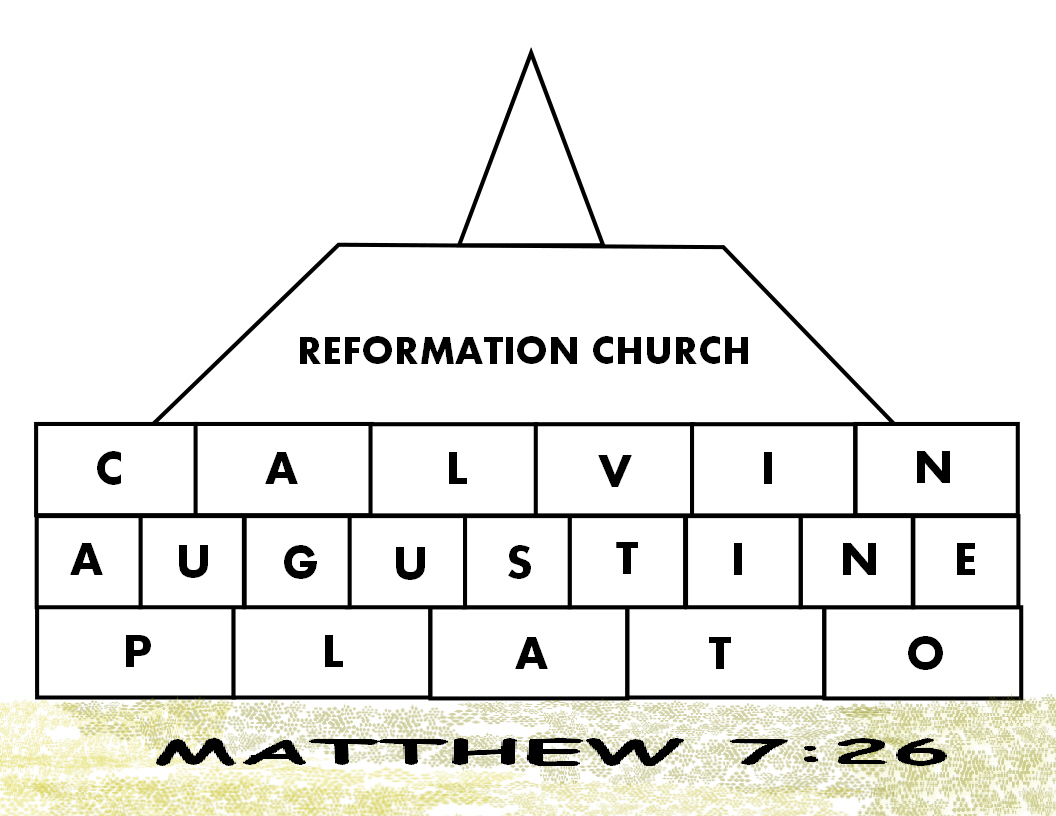
Paul was the apostle to the Gentiles. The fact that he was a Jew’s Jew and greatly respected among the Pharisees factors into that in a big way. We must remember that the “church” was predominantly Jewish for several years after Pentecost. The “church” was a splinter group from historic Judaism that recognized Christ as the Messiah. One of the greatest myths of our day is the idea that the “church” is uniquely Gentile and replaced Judaism. Nothing is further from the truth, and the Reformers are mostly responsible for eradicating Jewish heritage from the “called out ones” translated “church” in the New Testament.
Paul delves into this issue in great detail in his gospel treatise to the Romans, and further along in this study, as free Bereans, we will see for ourselves what God would have us to know about it. The Gentiles were the outcasts in the church; as can be seen clearly in Acts chapters 10 and 11, they were received into the church with much consternation. Therefore, Paul’s introduction to them begs their understanding of why he didn’t come to them sooner, and the fact that he was obligated to them before God:
1:5 – Through him we received grace and apostleship to call all the Gentiles to the obedience that comes from faith for his name’s sake. 6 And you also are among those Gentiles who are called to belong to Jesus Christ.
8 First, I thank my God through Jesus Christ for all of you, because your faith is being reported all over the world. 9 God, whom I serve in my spirit in preaching the gospel of his Son, is my witness how constantly I remember you 10 in my prayers at all times; and I pray that now at last by God’s will the way may be opened for me to come to you.
11 I long to see you so that I may impart to you some spiritual gift to make you strong— 12 that is, that you and I may be mutually encouraged by each other’s faith. 13 I do not want you to be unaware, brothers and sisters, that I planned many times to come to you (but have been prevented from doing so until now) in order that I might have a harvest among you, just as I have had among the other Gentiles.
14 I am obligated both to Greeks and non-Greeks, both to the wise and the foolish. 15 That is why I am so eager to preach the gospel also to you who are in Rome.
16 For I am not ashamed of the gospel, because it is the power of God that brings salvation to everyone who believes: first to the Jew, then to the Gentile.
Yes, the Gentiles were called to the gospel as well, but there is a dire need in our day to note what Paul calls the gospel in Romans 1:5; “the obedience.” This designation, as well as many others, is used interchangeably throughout the Scriptures in referring to the gospel and tenets of the gospel. The death, burial, and resurrection is a wonderful tenet of the gospel, but “the gospel” is also a designation for the full counsel and callings of God to man. Hence, man is called on to “obey the gospel”:
2 Thessalonians 1:8
He will punish those who do not know God and do not obey the gospel of our Lord Jesus.
Hebrews 4:2
For we also have had the good news proclaimed to us, just as they did; but the message they heard was of no value to them, because they did not share the faith of those who obeyed.
1 Peter 4:17
For it is time for judgment to begin with God’s household; and if it begins with us, what will the outcome be for those who do not obey the gospel of God?
John 8:51
Very truly I tell you, whoever obeys my word will never see death.”
John 14:23
Jesus replied, “Anyone who loves me will obey my teaching. My Father will love them, and we will come to them and make our home with them.
John 14:24
Anyone who does not love me will not obey my teaching. These words you hear are not my own; they belong to the Father who sent me.
I think God has taught me something new in this study. In our 2012 TANC conference, there was much discussion about how the “first gospel wave (circa 1950-1970)” emphasized getting people saved and deemphasized discipleship. Of course, people were saved by believing in “the gospel”; ie, that Jesus died for our sins and rose again on the third day, and that we are saved by faith alone in this truth.
However, as you know, I am a why guy. Why did this happen? Whatever happened to discipleship? Why are troubled Christians sent en masse to the secular world to solve their problems? Do we really worship a God that saves our souls, but can’t save us from trouble in this life? I have been haunted by the why since the conference. The reason this happened is one of those truths that is missed because it isn’t hiding. Basically, two reasons. The gospel was (and still is) presented as, “Christ died for our sins”; ie, the infamous five word gospel.
But that’s not the whole gospel. The gospel that was preached, and still preached today, yields the results of the message. We are saved, Jesus is therefore wonderful, please pass the fish. That gospel is a calling to be saved, not a calling to obey the whole counsel of God. It is a calling to salvation only, not a calling to discipleship. When you call people to be saved, all you get is saved people and not disciples. This point is driven home in our minds when we consider Christ’s very own official mandate to the church to proclaim the gospel:
Matthew 28:18 – Then Jesus came to them and said, “All authority in heaven and on earth has been given to me. 19 Therefore go and make disciples of all nations, baptizing them in the name of the Father and of the Son and of the Holy Spirit, 20 and teaching them to obey everything I have commanded you. And surely I am with you always, to the very end of the age” (emphasis added).
The gospel call MUST be a call to discipleship if we want disciples. If we only call people to be saved, that’s all we will get, and frankly, is what we have accordingly.
Secondly, the other reason is also clarified via two additional words in Romans 1:5; “from faith.” Not only was Paul’s apostleship designed specifically to “bring about the obedience,” the obedience is faith. The two can’t be separated. Faith is obedience. If faith is alive, and it is, its inclination is to be concerned with obedience. The gospel call is to believe and demonstrate that belief; first by baptism, which is also recognizing the call to the full counsel of God. Obedience to baptism is our first declaration of the heart that we have also answered the call to be Christ’s disciples. Like marriage, it is a public proclamation of love and commitment in the unseen heart. Why we don’t do that perfectly—why it is our direction and not our perfection, is explained by Paul in other parts of his gospel treatise to the Romans.
This second point is driven home by the Lord Himself:
John 3:36
Whoever believes (pisteuo) in the Son has eternal life; whoever does not obey (apeitheo) the Son shall not see life, but the wrath of God remains on him.
Therefore, the cursed mantra from the five word gospel, “The same gospel that saved you also sanctifies you,” must be traded in for, “The same obedience to the gospel that saved you, also sanctifies you.” A partial gospel leads to a partial spiritual life. This is the power of God’s word: the world lays crippled because of a disregard for a few of God’s sentences.
But what is the nature of this obedience from faith that saves us? The commitment of faith saves us. One is not married by being committed and carrying out the commitment as a spouse. The commitment determines whether one is married or not. The wedding ceremony announces the commitment, or covenant, and calls on the gathered friends and family to help the couple stay faithful to the commitment. Of course, in our culture, that aspect of the marriage ceremony has been completely lost in both secular and Christian circles. But moreover, what we do in our marriage doesn’t make us married, the heart commitment is what married us, and the ceremony was the public proclamation thereof.
Though this example breaks down at some point—its close. As we shall see in our study of Romans, our spirit of obedience to the gospel saves us, but not the obedience in our Christian life because God separates the two. The commitment is a settled issue and announced by the ceremony, but the carrying out of the commitment is separate. The ceremony is the first act of an already settled issue in the heart. A married couple doesn’t get remarried every day, but rather invests effort in the commitment. That investment doesn’t make them any less or more married. Whether good or bad, they are still married.
Married life can have an element of overemphasizing romance over commitment. Initially, God infuses the couple with an emotional jump-start in the same way that He does in our salvation:
1Thess. 1:5
Insomuch as our message of good news came to you not only in the form of discourse but also in the sphere of power and of the Holy Spirit and in much certainty and assurance (Wuest: New Testament Expanded Translation).
That’s the marriage. That’s our initial infusion of power when we are saved. But in our Christian life, we are exhorted to add things to our faith/commitment/ obedience to the gospel that make our calling and election sure (2Peter 1:5-11), stir up our gifts (2Tim. 1:6), beat our bodies into subjection (1Cor. 9:27), do “more and more” in the way of obedience (1Thess. 4:1), and not lacking in zeal (Romans 12:11). Adding love to our marriage (investment and often hard work) does not make us married, it determines how we experience marriage, and obedience in salvation does not save us, but likewise, determines how we experience our salvation—whether in power and assurance, or in weakness and doubt.
This flies in the face of today’s gospel that seeks a honeymoon every day; a romantic gospel that equates feelings with every act of “sincere love.” Since our love for Jesus should be easy for us it must flow from a contemplation regarding how wonderful His personhood is. Searching the Scriptures for an understanding of who Jesus is rather than what He commands us to do makes our “obedience” flow from our appreciation for Him. Supposedly. Since we often recoil in response to biblical commands, jumping from the imperative to action could not be true loving obedience; it must come from knowing more of Jesus. As one reader of my blog commented:
It’s not what the word supposedly tells us to do, Jesus is the word….It’s not a precept—it’s a person.
Problem there would be, in Luke 11:28, we have Jesus calling Himself, “it”:
But he said, “Blessed rather are those who hear the word of God and keep it!”
This was Jesus’ reply to a person who was in the midst of worshiping who he was.
The nature of biblical obedience is to die to self. The very word “obedience” itself implies necessity. Often, the level of disdain determines the level and depth of self-sacrifice; a denial of self in exchange for pleasing God. Christ was “obedient” to the cross (Phil.2:8)—“despising its shame”(Heb.12:2). This was the paramount act of love in all human history. The Hebrew writer encouraged the saints that they had not resisted sin to the point of blood (Heb.12:4). Biblical obedience indeed hears the word of God and “puts it into practice” (Matthew 7:24).
The fact that God gives us the will to obey isn’t the point here (Philippians 2:12,13); that just means we have no excuse. God working in us doesn’t equal let go and let God. Sanctification is like traveling around the world in a rowboat. We will experience all of the exertion and fears associated it: the giant waves in the midst of storms and huge sea creatures harassing the small vessel. And if we give up, the trip will not be completed. But at the end of the trip we know full well that no person can completely circle the world in a rowboat. God obviously enabled us, but we are no less fully involved in the experience. Let us also remember that God expects a return on His gifts. Those who think they enter the kingdom life as “lazy wicked” servants are no true servants at all (Matthew 25:14-30).
Another thing I think I am learning here is that applying God’s word to our own lives and teaching others to do the same is really the essence of what we think of as “biblical counseling”:
Therefore whoever relaxes one of the least of these commandments and teaches others to do the same will be called least in the kingdom of heaven, but whoever does them and teaches them will be called great in the kingdom of heaven.
Having a life built upon a rock by learning God’s word and “putting into practice,” and teaching others to do the same has great reward. It is interesting that throughout the New Testament incentives are given for our obedience to the full-orbed gospel—God’s truth; the word.
This brings us full circle to a major theme of Romans that will require the determined obedience of the gospel that Paul calls for: there was a formidable caste mentality between the Jews and the Gentiles. Caste systems dissect the bodies various parts in their contribution to the whole (1Cor. 12:12-26), thus crippling the body. We are naturally inclined to be uncomfortable with those who are different. Left unchecked, those feelings will lead to intentional preferences. This is another area where feelings must yield to the will of God leading to true love from the heart:
Romans 1:14, 15
I am obligated both to Greeks and non-Greeks, both to the wise and the foolish. 15 That is why I am so eager to preach the gospel also to you who are in Rome.
Romans 12:9-16
Let love be genuine. Abhor what is evil; hold fast to what is good. Love one another with brotherly affection. Outdo one another in showing honor…. Contribute to the needs of the saints and seek to show hospitality….Live in harmony with one another. Do not be haughty, but associate with the lowly.
Genuine love follows right doing. Through our obedience to the gospel, we can choose what God calls good and shun what is evil. This is learn and practice in what we think, say, and do. By this our love is genuine, and we have peace with God (Phil. 4:9).
This completes the introduction to our study in Romans. Next week we begin Paul’s gospel presentation to the Romans.

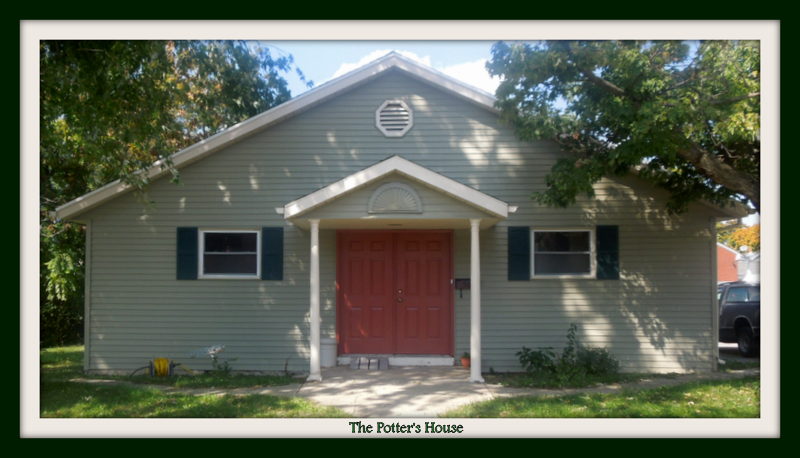
Susan Dohse: The History of Our Potter’s House
 Arise, and go down to the potter’s house, and there I will cause thee to hear my words. Then I went down to the potter’s house, and behold, he wrought a work on the wheels. And the vessel that he made of clay was marred in the hand of the potter; so he made it again another vessel, as seemed good to the potter to make it. And then the word of the Lord came to me saying, O house of Israel, cannot I do with you as this potter? Saith the Lord, Behold, as the clay is in the potter’s hand, so are ye in mine hand, O house of Israel. Jeremiah 18:2-6
As some of you loyal blog readers have noticed, my husband, Paul, has been posting our family Bible studies on his blog under the sidebar icon Potter’s House. Many of you do not know my/our history and I thought I would take this opportunity to give you a short history lesson.
My beloved Paul is a gift from God, sent to our family to help us, heal us, and keep us spiritually healthy. My first marriage to Wayne, the father of my three sons, Tim, Ben, and Philip, lasted 36 years. Wayne passed away three years ago on December 17th due to health complications that were directly related to his alcoholism. Those 36 years were marked by good times, and not so good times. I married Wayne in 1973, and our intent was that we would go into full time Christian service. He was a Pre-Seminary student, and I was an Education major at Cedarville College, now University. During our three year engagement, Wayne was drafted into the Army, sent to serve as a Military Policeman in South Korea, and was introduced to the world of drugs and alcohol. These choices were kept secret from me because Wayne knew I would not marry him with these life-style choices. He kept his double life a secret from me for the first five years of our marriage; and I facilitated this by my naiveté, denial, easy believe-ism, and later willingness to keep his secret my secret.
Over the course of 30 years, I kept his double-life from the church and the Christian world of which I was a part. It was an embarrassment to me, and I wanted/needed to keep my job teaching at the Christian School. Those last years before his death, when our pastor knew about his struggles and what his choices were doing to our family, were horrific years! No spiritual help, no godly counsel, no mentoring my sons to help them in their struggles to respect their father, and deal with their anger issues. Hindsight being 20/20, I should have continued to keep the philosophy: No one should know what goes on behind closed doors.
Thousands of dollars were lost in the purchase of drugs and alcohol, in court costs and lawyer fees. Wayne’s goal was to discover the ‘perfect high’. By God’s grace and mercy he did not self-destruct. In 1998, the police and the court system put a halt to his pursuit and locked him in the Greene County Jail with an 18 month sentence and a $25,000 cash bond. It was there in the “glass house” that Wayne allowed God to work in his heart and life. Sobriety and a desire to help others caught up in addictions replaced his former goals.
At the New Year’s Eve service in 1999, our church made a specific prayer request concerning the selling of the old Calvary Baptist Church. I turned to Wayne and said, “Wouldn’t it be something if we had the money to move into the old church. I would finally have room for all my teaching stuff.” At the end of the service Wayne asked the pastor for the key so we could look around.
We purchased the old Calvary Baptist Church, invested the money we borrowed from Fannie Mae to remodel it and I named it the “Potter’s House.” The passage in Jeremiah 18 seemed appropriate—go down to the potter’s house and behold the potter working at his wheels. The marred vessel he made again to another vessel, one that seemed good to the potter. Wayne held weekly Bible Studies with men struggling with addictions following the Right Start Right Step Program. Hopeless people were calling the church hearing about the help they could get, and the church had no idea what to do. Wayne was there to offer the church ideas and wisdom on how to help and counsel addicts. Wayne stayed sober for two years. I thought hope had returned to our family, but only grim reality moved back in. He secretly and silently began drinking again. Can you imagine my heartbreak when Ben, then 12 years old, brought me a six pack of beer he had found hidden in the basement and with tears said, “Mommy, I knew it was too good to be true.”
Wayne gave his family three reasons for returning to drinking. They were: 1) He wanted to see if AA was right—you pick up where you left off. 2) It’s all right for Christians to drink as long as you don’t get drunk. And 3) He returned to drinking (and the other addictions) because I was not the wife to him that I should have been. He lost his Bible Study, was placed on church discipline, stopped going to church there, and increased his drinking to dangerous amounts. Over the course of the 6 years before his death, he lost three very good jobs directly related to his alcoholism, medicated his failing health with more alcohol, and developed congestive heart failure, diabetes, cellulitis, and kidney issues. His doctors implored him to stop drinking, his family begged him with tears to stop, but he chose to ignore all the request, warnings, and pleas. He died at home, at the Potter’s House, as a result of a diabetic coma and heart failure. Wayne went down to the Potter’s house, but tried to tell the Potter how to shape the clay instead of being malleable in the Potter’s hands.
Our Heavenly Father brought Paul into our lives June 23, 2010. Through Paul’s love, prayers, and gentle use of God’s Word, he co-labored with the Master Potter to reshape the marred pots that lived at 58 West Harbine Avenue. The house, now a home, has returned to its original intent—a home where we co-labor with the Potter to reshape lives to be vessels of honor and of use in the kingdom, beginning with our family.
So, go down to the potter’s house, and let the Master Potter cause you to hear His words. Join us as we study the book of Romans.

 Paul's Passing Thoughts
1 comment