Are Babies Saved?
 “And by the way, if the absence of law leaves no sin, that means particular redemption is erroneous…. All of the Reformed brain trust together is no match for babyology.”
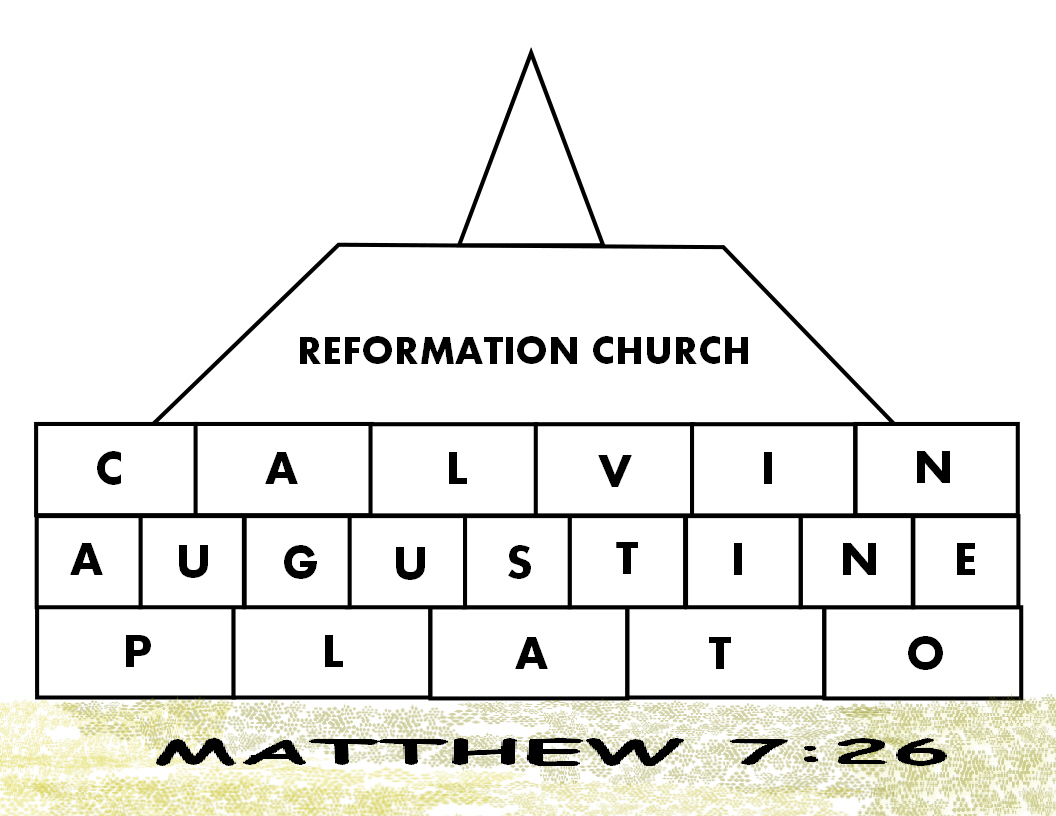
What is “orthodoxy”? Unfortunately, it is Protestant traditions of men that have wreaked havoc on the American church. As a former Reformed pastor, I was part of conversation directly and indirectly regarding the counseling of parents who lost an infant or toddler. One thing that was avoided like the plague was a promise that their baby was in heaven with the Lord. This is due to Augustine’s view of original sin and the authority of the church to forgive sin. The Reformed view on this can be observed in the Calvin Institutes: 2.1.8, 4.16.1, 4.16.17.
Long story short, only babies baptized in the Reformed church have their sins forgiven by the authority of the church. The more I study Reformed theology, the more I understand that assurance is not found in any individual belief or experience, but rather an obedient allegiance to the formal church. This is really a mentality that cuts deep into the Protestant psyche of all stripes and explains indifference to injustice and abuse within. The vehicle may have some rust spots and nasty stains on the upholstery, but it be goin’ to heaven anyway. Also, that’s where you go if you want your totally depraved baby to be saved. I myself used to call them, “little vipers in sanctified diapers.”
It has often been thought that the Bible is ambiguous on this subject save Jesus insisting that the little children be allowed to come to him and King David’s proclamation about the infant that he lost. But biblical answers don’t always come from direct subject material, and in this case, we find comfort in theology. That shouldn’t surprise us, but I am afraid it does. Many mourn in hopelessness because a comforting answer could not be found on a Christian bookstore placard.
The definitive answer is found in Romans. All who are not guilty of sin are not under condemnation and will go to heaven. That’s because those who are not under law are under grace by default. And where there is no law, there is no sin:
Romans 3:19
English Standard Version (ESV)
19 Now we know that whatever the law says it speaks to those who are under the law, so that every mouth may be stopped, and the whole world may be held accountable to God.
Romans 4:15
English Standard Version (ESV)
15 For the law brings wrath, but where there is no law there is no transgression.
Romans 5:13
English Standard Version (ESV)
13 for sin indeed was in the world before the law was given, but sin is not counted where there is no law.
Romans 7:8
English Standard Version (ESV)
8 But sin, seizing an opportunity through the commandment, produced in me all kinds of covetousness. For apart from the law, sin lies dead.
The next question is when humans, who admittedly bear natural sin, are “under law.” And by the way, if the absence of law leaves no sin, that means particular redemption is erroneous. It means the death of Christ also covered the sins of those who are not under law. But who are they? The apostle Paul will tell us:
Romans 2:12-16
English Standard Version (ESV)
12 For all who have sinned without the law will also perish without the law, and all who have sinned under the law will be judged by the law. 13 For it is not the hearers of the law who are righteous before God, but the doers of the law who will be justified. 14 For when Gentiles, who do not have the law, by nature do what the law requires, they are a law to themselves, even though they do not have the law. 15 They show that the work of the law is written on their hearts, while their conscience also bears witness, and their conflicting thoughts accuse or even excuse them 16 on that day when, according to my gospel, God judges the secrets of men by Christ Jesus.
Paul is talking about two different kinds of law here: the Old Testament, and the law of God written on every heart of every person born into the world. As an aside, note that this doesn’t bode well for total depravity. Those who have never heard of the Bible will be judged according to the law written on their hearts as administrated by their conscience—either accusing or excusing. Those who have heard of the Bible will be judged by both. Christ was born under the law as well, but that wasn’t a problem for him because he never violated His conscience and could keep the law perfectly. At issue for all others is the development of the conscience that at some point brings the individual under the law. At that point, they need salvation.
So, the natural person does not come under the law written on their heart until they have a developed conscience that knows right from wrong. Where there is no law, there is no sin, and besides that, the death of Christ paid the penalty for natural sin:
Romans 5:19
English Standard Version (ESV)
19 For as by the one man’s disobedience the many were made sinners, so by the one man’s obedience the many will be made righteous.
So, there are some pastors out there who have a good baby message: the hope of heaven and the exhortation for those under the law to accept the one who is the end of the law: Jesus Christ (ROM 10:4).
All of the Reformed brain trust together is no match for babyology.
paul
Dear Jane, I Don’t Know About NT Wright, But I do Know Phil Johnson is a Heretic
Paul,
What do you think about this video about NT Wright being called a heretic by Phil Johnson? Phil says Apostle Paul warns in Galatians about the heretic belief that denies imputed righteousness of Christ.
I think Phil is a puffed-up talking head, but curious on your take of this.
Jane.
Jane,
Thanks for this. Phil Johnson is a hardcore proponent of authentic Calvinist (AC) Reformed doctrine. It holds to the double imputation of Christ’s righteousness being imputed to our justification and sanctification. The Bible emphasizes that the righteousness of the Father was imputed to us APART from the law before the foundation of the world. For AC, it is important that it is specifically stated that it is Christ’s righteousness that was imputed to us because He is the only member of the Trinity that would have “kept the law” as a man. And that’s the crux of the heresy, it advocates a righteousness that is NOT APART from the law. It fuses WORKS with grace.
The cute little Calvinist end-around on that is the idea that it is alright that justification is based on perfect works because Jesus keeps the law in our stead. IF we live by the same faith-alone gospel that saved us, the perfect obedience (Christ’s righteousness) of Christ will be perpetually applied to our life and we will be found covered by the righteousness of Christ at the ONE final judgement where the law must be satisfied. The problem here is that a satisfaction of the law is in view, and that is completely antithetical to the point that the apostle Paul strives to make in the Scriptures about grace being apart from the foundation of works. WHO DOES THE WORKS IS NOT THE POINT–WORKS PERIOD IS THE POINT.
But in this false doctrine a practical problem arises. We have to keep our salvation by faith alone so that perfect works will be perpetually applied to our account in sanctification so that we can remain justified. Because of this fusion of justification and sanctification and the fusion of grace and works, our Christian life becomes focused on the ambiguous endeavor of living by faith alone apart from works. The standard for what saved us is now the same standard for our Christian life. “It is [NOT] finished.” If our justification was not finished at the cross, what was Jesus talking about? Plainly, justification is not finished, we have to maintain it by faith alone. This is merely works salvation by proxy; ie., our faith alone in sanctification is a rectifier that imputes works to grace.
Furthermore, it requires a complicated theological system that defines what IS A WORK in sanctification versus what IS NOT a work in sanctification. Critical to the AC construct therefore is the Redemptive Historical hermeneutic that rectifies biblical commands to a faith-alone construct. Simply put, it is a way to only EXPERIENCE obedience rather than to be the actual DOER of the law in sanctification lest it become, “the GROUND of our justification.” Hence, interpreting our Bible grammatically leads to works salvation because it necessarily implies “a leap from the imperative to obedience” rather than the imperative being rectified by the progressive imputation of Christ’s obedience.
It’s backdoor works salvation.
Moreover, it makes sanctification exactly what the Reformers themselves called it: “subjective.” That’s their words exactly, not mine. The power in our sanctification is subjective because we only experience obedience and do not participate in it. We are to meditate on the OBJECTIVE gospel and passively observe the SUBJECTIVE results by faith alone. Hence, “the subjective power of the objective gospel.” John Immel would say that this is all about control; it makes sanctification an ambiguous and fearful endeavor that beckons the saints to depend on God’s annointed to guide them through the tricky and treacherous waters of Christian living by faith alone. Of course, James addressed this very problem in his epistle.
And Immel is absolutely correct about the control issue. That’s why Phil Johnson advocates this doctrine: he is a despicable tyrant filled with lust for the need to control people. Like Calvin, he advocates this false doctrine so as the apostle Paul said, let them both be accursed.
paul






 Paul's Passing Thoughts
7 comments