Absolutely Critical to Effective Ministry: Knowing the Two Realities of Protestantism

If we are to accomplish anything in contemporary Christianity, we must begin to live by a basic hard-fast rule: our actions must be guided by the knowledge that there are two realities in contemporary Christianity – grammatical-historical and redemptive-historical.
These are usually discussed as methods of Bible interpretation, but they are really much more than that according to Protestant tradition. These are two different ways of interpreting reality itself.
We will begin by defining the redemptive-historical interpretation of reality along with this caution: one of the most powerful influences that this view of reality has is the dismissal of its basic premise as mere mysticism held by fringe elements of Protestantism. Those who dismiss it out-of-hand then proceed to function by its tenets unawares. The who’s who of Protestantism care little that the masses understand this ideology, just so they function by it.
In fact, Protestant leaders assume most parishioners are unable to grasp its tenets. Therefore, redemptive-historical reality must be explained in a way that will enable congregants to apply it to their lives and function a certain way within church culture. Redemptive-historical reality is primarily the crux of Protestant orthodoxy and its spiritual caste system.
In mythology, we often link the bizarre narratives to the philosophy itself, but that’s a mistake. Roman, Greek, and Babylonian culture was not developed by superstitious idiots. What we fail to understand is the narratives are stories that convey principles to the spiritual underlings so they can apply principles of higher knowledge to their lives. They cannot understand the higher knowledge, but those who can need to tell the underlings how to live in order to obtain the best possible society.
“Orthodoxy” can be likened to mythological narratives that teach those of lesser spiritual understanding how they should live, but they are based on well thought out metaphysical (state of being) systems of knowledge. We shouldn’t be surprised that what seems to be superstition has ruled the greatest empires on earth. This is because the core ideology is always a succinct system of thought that is greatly underestimated. The ancient philosophers were not idiots. Democritus (circa 400 BC) was the originator of atomic theory. The sophist class of philosophers were the first to apply philosophy to sociology in an in-depth way (circa 500 BC). ALL present-day psychologies are founded on the basic theories of that day. For example, the basic ideology that drives the theory of rehabilitation in our modern-day prison systems came from Socrates.
Let’s now define redemptive-historical reality. I will be using a quote from Graeme Goldsworthy who is considered to be the contemporary father of redemptive-historical hermeneutics:
If the story is true, Jesus Christ is the interpretative key to every fact in the universe and, of course, the Bible is one such fact. He is thus the hermeneutic principle that applies first to the Bible as the ground for understanding, and also to the whole of reality (Graeme Goldsworthy: Gospel-centered Hermeneutics; p.48).
This is a pretty straight forward statement and accurately depicts what Protestantism is really founded on; not a theology per se, but a way to interpret reality itself. How in the world does one interpret all of reality through the one person Jesus Christ? You MUST understand: Martin Luther articulated the answer in the foundational treatise of Protestantism, the Heidelberg Disputation.
The Heidelberg Disputation is a concise systematic ideology that explains how all of reality is to be interpreted through redemption, or if you will, the man of redemption, Jesus Christ. Again, the power of this ideology is a dismissal of it out-of-hand by those who proceed to sit under its “theology.” The theology of the metaphysics redefines biblical terms, and uses them to lead the masses into a functioning Christocentric view of reality.
We will not plunge the depths of the Heidelberg Disputation in this writing, but the principles will be outlined and their inevitable functionality among Christians. Before we move forward, let’s examine additional statements that confirm this approach among Christians. This testimony was given in a recent email to me:
An old acquaintance of ours (Presbyterian as they get) has said more times than I can remember something like this: “Every verse in the Bible, from Genesis 1 through Revelation, is talking about Jesus.” Years ago that sounded so intellectual, holy; today it sounds like hogwash. I mean, are we really expected to believe that the passages talking about incestuous rape are talking about Jesus? Come on, really?
Well, as ridiculous as it sounds, the answer is, “yes.” Many function according to the theology that is predicated on this foundational interpretive method for not only the Bible, but reality itself.
Pause: keep in mind that those who function according to this interpretation of reality without understanding its premise will reflect back the resulting interpretation of Scripture. They repeat pulpit talking points without ever investigating the source of them, or the logical conclusions of the talking points. Sometimes, such people are referred to as “useful idiots.” But again we need to be cautious: people who blindly follow others do not do so for the sake of following blindly—they are functioning according to some sort of ideology that leads to the blind following.

Let’s look at some more examples from proponents of New Covenant Theology:
New Covenant Theology insists on the priority of Jesus Christ over all things, including history, revelation, and redemption. New Covenant Theology presumes a Christocentricity to the understanding and meaning of all reality (1st tenet of NCT according to the Earth Stove Society, a NCT think tank).
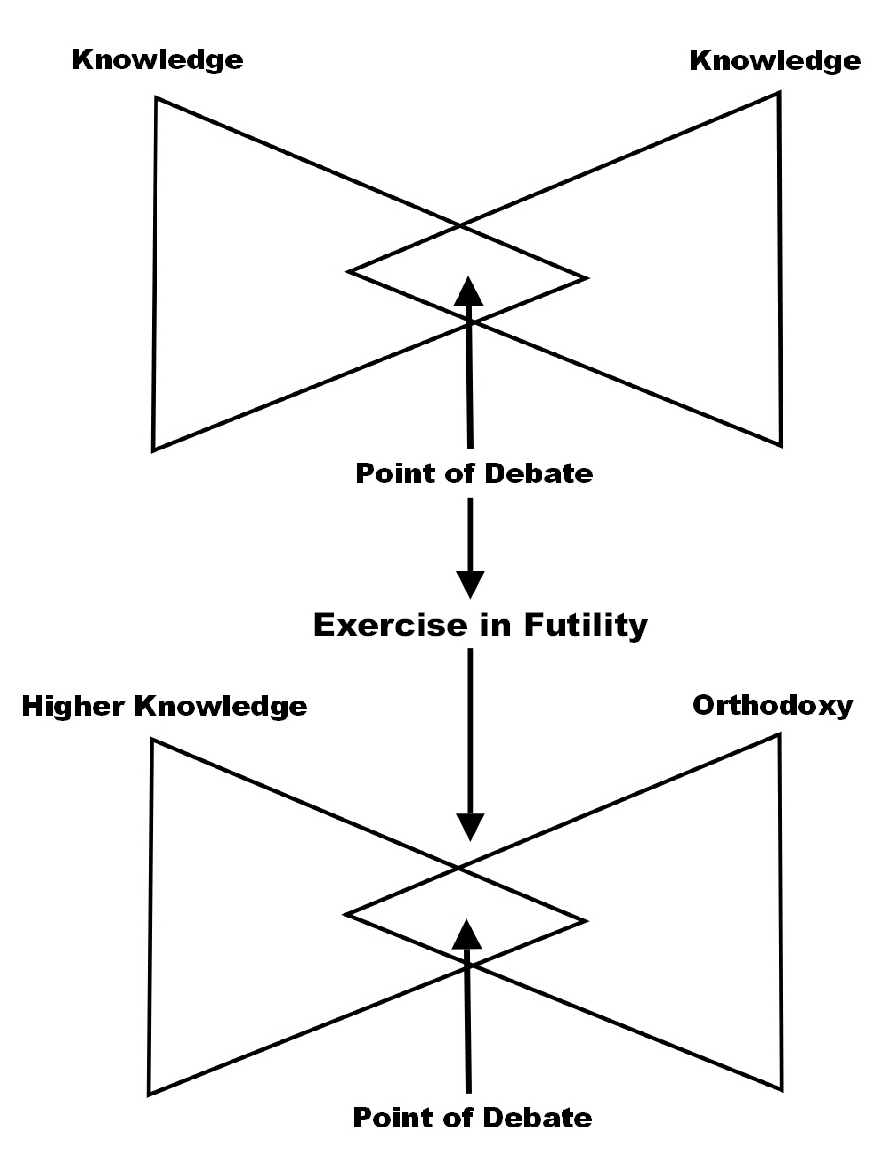
Not much ambiguity in that statement. Pretty clear on its face except for how one would apply it to real life. Again, many might scratch their head in regard to that statement, but proceed to let the theological orthodoxy that flows from it shape their life and thinking. At the point of debate with such people, their orthodoxed talking points will reflect the metaphysical premise. They will absolutely not be swayed in their thinking because they concede that they cannot understand the higher knowledge, and the authority of the higher knowledge is part of the orthodoxy.
Pause: I used to be involved in a ministry that evangelized Jehovah Witnesses. Debating the Bible with them led nowhere because their orthodoxy reinterprets all biblical terms and phraseology. When Christ is referred to, it is assumed that their presuppositions regarding Christ are the same, and they are not. Instead, we challenged their orthodoxy, i.e., the Watchtower publication. Likewise, let me reveal a concluding theme of this study: never debate the Bible with a Protestant; instead, bring their authority into question. Refuse to discuss anything else for it will be futile for reasons yet to be examined.
Let’s look at another statement from the New Covenant Theology camp:
At this time, resist the temptation to utilize subsequent passages to validate the meaning or to move out from the immediate context. Remembering that all exegesis must finally be a Christocentric exegesis.
Look for Christ even if He isn’t there directly. It is better to see Christ in a text even if He isn’t, than to miss Him where He is (The Biblical Theological Study Center: A Christo-Presuppositional Approach to the Entire Scriptures; Max Strange. Online source: http://goo.gl/5sGjP).
The question quickly becomes, “How can you see Jesus in every verse in the Bible?” This is where the Bible becomes a “meta-narrative.” That can mean, “grand narrative,” but in this case it means “metaphysical narrative.” The Bible is a narrative, or story that depicts redemptive reality. You will get confused unless you understand that the theory also posits the inclusion of multi-purpose perspectives into the metaphysical story (a story that depicts true reality). The text grammar doesn’t determine the perspective resulting in a particular objective outcome, but the assumed outcome determines the perspective. So, can “passages talking about incestuous rape” say something about redemption? Of course. In this example, the passage is not talking about Jesus specifically, but denotes why His redemptive works are needed. In some way, according to the prism, the verse always speaks of Jesus and His redemptive works.
This approach to interpreting reality (state of being, or metaphysics), what we call epistemology, plugs into the basic ancient philosophy of total inability. This proffers the idea that man cannot know or comprehend reality. The metaphysic follows: man dwells in a realm apart from true reality that he cannot comprehend. Secondly, somehow, usually via a theory of predeterminism, there are a select few that can ascertain truths from the other realm. Usually, the delineation of the realms is the material versus invisible with mankind residing in the material realm.
The Reformers recognized a reality that man functions in, but deemed it “subjective,” or shadowy. Focusing on this shadowy realm leads to despair. In the aforementioned foundational document of Protestantism, Luther contended that man’s material realm only feeds “the glory story,” or the story of man.
In Luther’s construct, ALL reality is interpreted through two stories: the glory story (the story of man), and the cross story (the story of redemption). Giving any credence to the material world or the belief that man can know the material world empirically only contributes to the story of man and his glory. Yes, man functions in this world, but it does not possess any objective wisdom that can bring true well being. Only an ever-clearer understanding of the cross story can bring well being.
What then is the cross story specifically? It is twofold: it is the holiness of God as set against the sinfulness of man. This is the only objective truth and reality that can bring well being. The goal is a deeper and deeper understanding of how inept we are in every category of life as set against the glory and holiness of God.
Pause for main point: according to this philosophy, the sole purpose of the Bible is to lead us in seeing the cross story with more and more clarity. To the extent that we do that, we will have well being. AND, to the extent that each individual lives according to the cross story, the well being of society as a whole will increase. When Reformed folks talk about “transforming society with the gospel,” this is exactly what they are talking about. To the extent that the populous embraces the doctrine of inability, society will be transformed.
One reason for lauding this epistemology is unified agreement on interpretation. If every verse is about Jesus, there is no division in opinions. Secondly on this point, it gives Christianity a pass on defending inerrancy; e.g., narratives are not meant to be technical systems of theology that require consistency in logic. Thirdly on this point, if some sort of Christocentric conclusion is drawn from the text—it can’t be wrong. If the interpretation of the text somehow demeans man and exalts God, error is impossible.
Before we address the grammatical-historical approach to interpreting reality, let me add some thoughts to the redemptive-historical perspective. This perspective now dominates the institutional church. Just yesterday, I participated in a conversation on a social media site in which the following statement was made about Proverbs chapter 8:
The Old Testament reveals shadows of what Jesus Christ will be in the New Covenant. I can easily say that wisdom personified in Proverbs 8 is Jesus Christ.
If one reads Proverbs 8, the assertion that it is about Christ is beyond presumptuous at best. It is a complete rejection of the plain sense of the grammar; even in lieu of the personification being in the female gender.
Also, these two perspectives on reality are a salvific issue with the Reformed. A denial of total inability equates with the grammatical-historical view of reality which is supposedly an attempt by man to glorify himself by writing his own story. By believing that you can understand reality, you are in essence making yourself God.
The most common question is the issue of biblical imperatives that are clearly directed at mankind. This assumes that man is able to obey because grammatically, the commands are directed at him with a demand for obedience. But again, addressing these commands with the presupposition of total inability that equates with the redemptive-historical prism, the commands are supposedly meant to deliberately frustrate man and “drive him to despair of self-righteousness.”
The Reformed continually concede that the Bible states things in grammatical form, but that is always followed with the proper “gospel context” according to the redemptive-historical interpretation of reality. The classic example is this quotation from Neo-Calvinist Paul David Tripp:
….and the Bible does call us to change the way we think about things. But this approach again omits the person and work of Christ as Savior. Instead, it reduces our relationship to Christ to “think his thoughts” and “act the way Jesus would act.” (How People Change 2006, p.27).
Notice that Tripp concedes that the Bible calls us to do things according to the grammatical context, but goes on to say that is a denial of the gospel (omits the work of Christ as savior). On page 26 of the same book, Tripp calls obedience to the word of God a “behavioral approach” that “separates the commands of Scripture from their Christ-centered gospel context.”
Lastly before we move on, when one is able to wrap their minds around the redemptive-historical approach to interpreting reality, it will be recognized that this approach now saturates the Protestant institutional church.
What is the grammatical-historical approach to interpreting reality? As with the other prism, I am not going to elaborate on the “historical” part except to say that the redemptive-historical hermeneutic makes history part of the prewritten gospel narrative. History is simply the redemptive story playing out as scripted by God.
The political commentator Rush Limbaugh often notes that “words mean things.” This is a good working definition of grammatical-historical interpretation; it draws conclusions from a technical evaluation of the words in a sentence whether spoken or written. The many categories of language that give meaning are considered also, which speaks to the “historical” part of the term. Does the sentence mean the same thing today that it meant then? For instance a sentence written in 1940 might say, “Bob is gay.” History informs us of the meaning in that day: Bob is happy. Today that means Bob is a homosexual. The etymology of words and many other factors weigh-in, but all have this in common: they are empirical tools.
This interpretive method also assumes mankind is able to comprehend the realty he dwells in according to empirical observation and can draw conclusions on his own. Man has ability.
Pause: how did Luther get away with denying that mankind had any kind of ability at all? He chalked-it-up to man’s self-perceived ability that can accomplish things in the material world. These accomplishments are of no worth and only accomplish one thing and one thing only: they serve man’s lust to glorify himself. Luther believed that satisfaction from accomplishment was nothing more than sinful pride. To Luther, the only redeeming thing about the world was that heaven manifested its works on earth according to God’s sovereign will. If man lives life subjectively and professes that his evil “good” works cannot be distinguished from heavenly manifestations “experienced subjectively,” that is venial sin that can be forgiven. In accordance with authentic Reformed tradition, Luther believed the following: the belief that any man, including Christians, can perform a good work is mortal sin.
Therefore, the Reformed often define wisdom/knowledge according to two categories: “worldly knowledge” and “wisdom from above.” Sure, man can obtain worldly knowledge that improves his circumstances, but it is all prideful according to Luther. Wouldn’t this approach propagate a lot of death and misery due to a lack of science? Yes, but that was exactly Luther’s point. Many are perplexed by the embracing of ideologies that result in third world cultures, but those who are perplexed make the point for those in the other camp: what is the perplexity of the detractors? Answer: they are perplexed that other people do not lust after materialism as they do. Hence, third world cultures are often seen as being virtuous by the Reformed.
This is why Luther introduced suffering as a hermeneutic that interprets reality. There is true wisdom in the cross story because according to Luther, “all wisdom is hidden in suffering.” According to Luther, many reject this interpretation of reality and dub it the “foolishness of the cross.” Luther also stated that men call the good evil (suffering), and evil good (anything that prevents suffering). This is why Luther called reason an “ugly whore who should have dung rubbed in her face.”
The grammatical-historical perspective of reality assumes man can interpret his own reality, and the material world is not inherently evil. Believers and unbelievers share common realities that are simply practical and not evil.
Here is the challenge: to bring biblical knowledge to bear on grammatical-historical reality when the prevailing view of Protestantism has been the redemptive prism for hundreds of years.
But there is good news as well: the grammatical prism is what man utilizes intuitively. People assume they can interpret their own reality. Of course, the Reformed see this as the very problem.
Does this mean that grammatical-historical Christians should evangelize the lost world and forgo debate with Protestants? Yes it does, because it is a futile endeavor. You are trying to reach people who define reality itself differently. Protestants are redemptive-historical religionists.

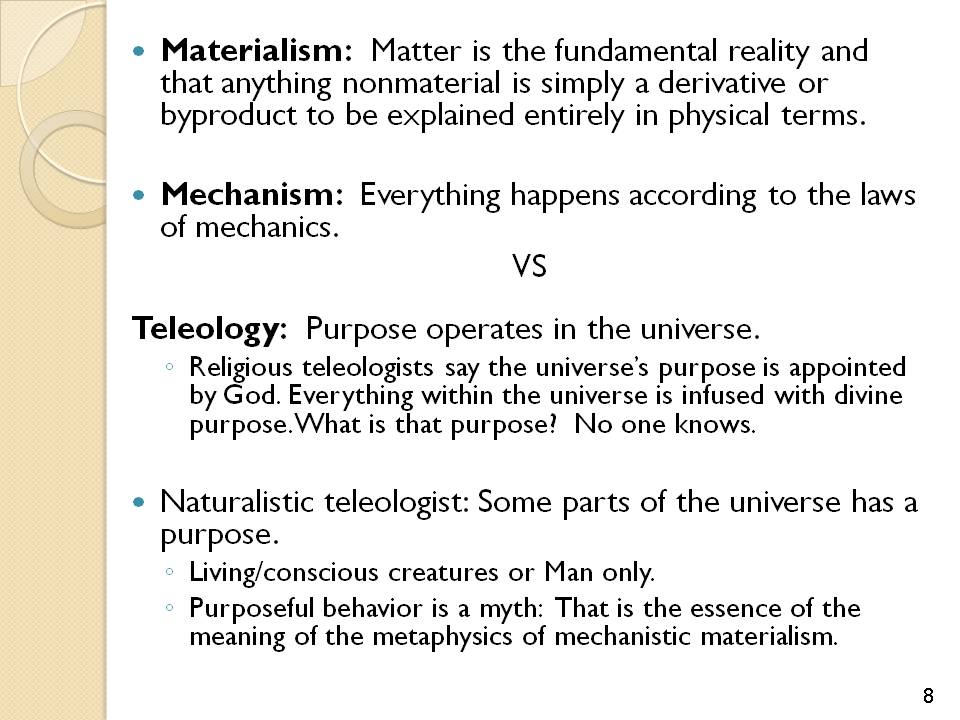
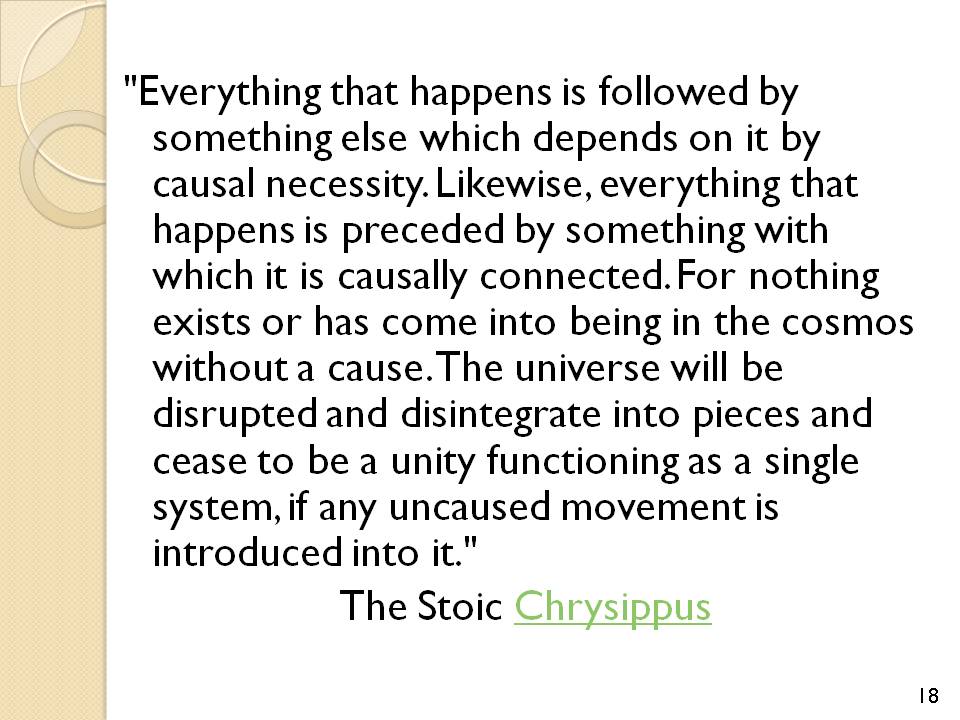
TANC 2015, John Immel, Session 1: Examining the Historical Perspectives and Evolution of Determinism






Identity
 TANC Ministries is presently working on a book project leading up to our 2016 conference in August. I guess my name will be on the book as the author, but the book is really a group project. Maybe the author should be “TANC Ministries.”
Why this project? I will cite some excerpts from the project objective:
“Those who are disillusioned with Christianity, but haven’t given up on God and are looking for answers, often ask, ‘Where do I start?’ Such people who come to PPT, and are overwhelmed by the mass of information often ask, ‘Where is the best place to start?’ Andy Young recently remarked about the multiple layers of misinformation and the question of where this ministry should start with people on our end of the question…The target audience are those looking for real and truthful answers amongst the confusion; they are those trying to make sense out of life in the confusion of Christianity as we know it in our day. The book will have a theological and philosophical bent. Protestants and Catholics alike are dumbed-down by design, think that the Reformation was a theological debate, are confused about basic elements of metaphysics and being, and need a place to start on their truth journey. Those who buy the book will have this in common: they assume reason is a necessary pathway to finding truth.”
At first, it looked like the project was off to a fast start, but what seemed like great ideas were shot down by the group, so it was suggested that I start submitting free-writing articles to the group based on the usual ministry themes, and this will result in an articulation of objectives that the group agrees with. This article is one such submission to the group.
I am not crazy about Facebook, but on the other hand, it is valuable to our ministry, and yesterday was no exception. I am not going to copy and paste the whole debate here between myself and a couple of Catholics, but I am very tempted to think that it will be the crux of our project. The excerpt that encapsulates the main point follows:
“You act as if the Pope speaking ex cathedra or the council of Bishops as an authority of truth is so absurd. I understand that you disagree with it, and you are entitled to the right to disagree. But the concept in and of itself is certainly not absurd. I have to say, if it comes down to which is less absurd, a church authority instituted by Christ is much more plausible than Jesus giving us a Bible and telling everyone they can discern truth completely (error free) by themselves. (Not saying we are completely void of discerning truth, but we will never be perfect at it). Look around you: if everyone could perfectly discern truth for themselves, then why do non-catholic churches continue to split up each and every day? I think there are like over 30,000 denominations now? We are not trying to attack you, Paul M. Dohse Sr. We are just trying to get to the truth. And I have felt misrepresented by your points, so I have to ask the tough questions.”
To me, this absolutely says it all; perhaps the project group will agree. It boils down to man’s (mankind) identity and his ability to interpret reality. Universally, the goal is man’s well-being. Is the key to well-being a proper identity? What does man’s identity have to do with evaluating truth? EVERYTHING. Suppose you identify man as a being that cannot know truth? I think that makes the point.
Now, this necessarily involves a discussion about philosophy and its four major tenets: metaphysics (state of being), epistemology (how we know), ethics (the moral application of how we perceive reality), and politics (how the ethics are communicated). But what about the Bible? From my own perspective, I see the Bible as God’s philosophical statement to mankind. If you are able to defend God’s truth, or the Gospel, you must know what the Bible states about these four tenets of philosophy. No? Really? Consider the following fact: this stream of conversation on Facebook was extremely long, and complete with Scripture stacking and citation wars, but to no avail. Why? Because truth is interpreted through the philosophical prism. A Chinese person might as well be attempting to convince an English person that Chinese is better (anything Chinese) while arguing in their perspective languages. The example that astounds me the most follows: people who seek counsel and assume the counselor shares their view of reality. No wonder so few people are helped by counseling accordingly. Another example makes its own point because few Christians will even know what I am talking about. Pastors in our day view reality from two different perspectives, redemptive or grammatical, and most parishioners are clueless in regard to where their pastors stand on that issue. They assume they know what the pastor is teaching from the pulpit, but really they are clueless.
What is the philosophy of the person that I was having the discussion with? Metaphysics: man cannot know truth PERFECTLY. Epistemology: “ex cathedra or the council of Bishops as an authority of truth.” Ethics: prevention of chaos. Politics: expected obedience to authority. Words mean things, so lets examine his words carefully. The issue with man, according to this person, is he cannot know truth “perfectly.” That’s key. So then, what is the ethic? Christ has appointed an authority on earth to prevent chaos because no man can know the truth perfectly.
But wait a minute, neither can the men whom Christ appointed as an authority; likewise, they cannot know the truth perfectly because they are also men, so what gives? This is what gives: authority for the sake of UNITY is the goal, not truth per se. In fact, UNITY defines truth itself. And where does that come from? Yep, P-l-a-t-o. Among most of the classic sophists, unity itself was truth. At least in Plato’s case, this was the definition of social justice as well. Does that ring any bells in regard to churchianity, or Western society in general? Let me further the point. What was this person’s primary argument for the authority of the Catholic Church? Right, to prevent the chaos of “30,000 denominations” the inevitable result of men being free to discern truth for themselves.
But it gets better when one considers biblical metaphysics. Again, via this person’s own words, the issue is INDIVIDUAL interpretation. But wait a minute, I thought a believer is a totally new creature indwelled by the Holy Spirit? What a minute, I thought the Bible said that the Spirit will lead us in ALL truth. So, why would members of one body with one mind in Christ, and striving for that one mind in Christ be lacking in unity? Why is such a notion “absurd.” Answer: because Catholics and Protestants both fundamentally deny the new birth, that’s why. And consequently, we also hear things from Protestant pastors such as Mark Driscoll saying, “Just keep your damn mouth shut and obey.” As Pastor Chad Bresson is fond of saying, Whether an elder is right or wrong is irrelevant to unity. For those who have the audacity to question an elder, Pastor James MacDonald suggests that they be tied to a catapult and “launched into the next county.” Why are they so passionate about being agreed with? Because obedience to authority is what unifies, not truth—authority is truth.
Moreover, with Believers, “perfection” is not the issue, but LOVE is the issue. Law as condemnation versus law as love is also the difference the new birth makes, but enough said for now. I will see if any of this gets some traction with the project group.
paul
TANC 2015 Live, John Immel, Session 3: Examining the Historical Perspectives and Evolution of Determinism
 Live Video via Google Hangouts
Recommended reading:
Transcript of lecture given by John Macarthur at the T4G 2008 conference
Augustine and Pelagius by R. C. Sproul
Welcome to the Problem of Universals
Blog TalkRadio Podcasts:

 Paul's Passing Thoughts
3 comments