Paul's Passing Thoughts

Faith and Authority

Posted in Uncategorized by Paul M. Dohse Sr. on July 22, 2015

PPT Moderation Policy

Posted in Uncategorized by pptmoderator on July 22, 2015

PPT HandleOriginally published May 11, 2015

Here at PPT, discussing how we should moderate comments is an ongoing discussion. While being strong believers in the arena of ideas, it’s not an arena of platforms supplied to every theological ragamuffin that comes down the pike.

However, as you know, PPT/TANC also values knowledge about world philosophy because we think it lends greatly to the historical aspect of grammatical-historical interpretation of reality. So, we may very well allow comments from someone who could care less about the religious dogfight, but has something informative to add in areas that we deem to be important information.

But I have decided to drive a stake on something regarding the issue of moderation. Anybody aware of my writing style is also aware that my posts usually encompass four or five points based on research of some sort accompanied by citations. This brings me to the point.

Since the conception of this blog in 2009, I have noticed a marked pattern in how Calvinists comment. They rarely address the specific points made in the post, but instead make some sort of broad statement concerning my supposed cluelessness in regard to what Calvinism is really about. That’s always first in this construct, followed by some residual concern about a grammatical error, “name calling,” or something that points to some sort of personal flaw.

I have noticed this pattern for a long time, but have never stopped to really think about it. That is, until we received another such comment today. Regardless of the fact that the post made specific points backed up with specific data, all of that was ignored and…

“This displays an absolutely stunning ignorance concerning the actual teachings of Calvinism and a truly disgusting level of name calling, personal insults. However, all that is truly acceptable given that you know everything there is to know about everything you rail against.”

This is a Calvinist protocol that I have seen time, and time again since 2009. What’s going on? How can they just bypass the main propositions of the post all together and make these twofold blanket statements?

First of all, from now on, this Calvinist protocol will be rejected at PPT. Objections that do not address the main points made in the post will not be passed through moderation.

With that said, what do I think is behind this approach? Something is, it’s been too consistent, too many times, and for too long; some sort of logic drives it. Have you read any of my recent posts about the two contrary interpretations of reality within evangelicalism? If these people think my literal interpretation of reality disqualifies me from understanding Calvinism, wouldn’t that explain this approach? Wouldn’t they have to present a grammatical-historical argument to refute the specific points made in these posts?

Also, it’s obvious that they wouldn’t want to address my perception of reality as being the crux of my error. That’s a rabbit they want to keep in the hat.

paul

Sinners?

Posted in Uncategorized by Paul M. Dohse Sr. on July 15, 2015

Throw the Baby out with the Bathwater

Posted in Uncategorized by Paul M. Dohse Sr. on June 29, 2015

Rom 5.19One accusation we all want to avoid is partaking in “throwing the baby out with the bathwater.” So, when I set out on my journey of discovery, I assumed there was much to salvage from what I had invested in. The goal was to discover the following: after I had wholeheartedly invested 25 years of my life to being a good Baptist Protestant, why would an esteemed group of men set out to utterly destroy my life because I wanted answers about the confusion they had brought into my life? I just wanted to know why all of the rules were suddenly changed. I wanted to know why they were saying things that made no sense to me. No, I didn’t get any answers to straightforward questions. Instead, I chose to believe they were not really saying what they said; what they were teaching was a “radical departure” from the norm, and I had a long way to go before I would even begin to understand it. Therefore, I needed to shut up and obey, or I would be dealt with. Yes, the long lost and true Reformation gospel had been rediscovered, and they were among those blazing the new trail resurgence.

Basically, I assumed they were full of it, and were propagating some sort of false gospel with a new twist. I also assumed that my “friends” in Reformed circles would not stand by and let them destroy my life. When I was shown to be woefully wrong on the latter along with everything else, I had to know why. And, by golly, I would find the answers, expose them, and many Protestants would arise and vindicate me for the sake of God and love for the truth.

Wow, was I ever clueless. What did I think was going on all of my Protestant life which was like living in Peyton Place? Eventually, I discovered the answer to that whispering question in the back of my mind that started soon after I became a Protestant: “There is something not right here; is it me, something with the church, or a little of both?” And though I professed many tenets of the Protestant faith, something never felt right about it. The eventual answer was always too simplistic to be accepted: a false gospel.

Nevertheless, for most of my journey, I functioned on the idea that those rascally New Calvinists are misrepresenting “true” Calvinism and the hallowed traditions of the Reformation. A great example is this resolution I submitted to the SBC convention in 2011. For the most part, it strikes the core problem, but becomes blurred when I cite the 2000 Baptist Faith and Message Statement.

Sanctification is the experience, beginning in regeneration, by which the believer is set apart to God’s purposes…

Sanctification is not a mere experience. It is not something that is merely “done to us rather than something we do.” You can go back to the oldest Baptist confessions and find this same nuanced language that really boils down to the idea that the Christian life is a mere EXPERIENCE and NOT something we DO. And as I point out in this post, your sanctification doctrine determines your justification doctrine.

In my naivety, I further cited the 2000 confession:

Justification is God’s gracious and full acquittal upon principles of His righteousness of all sinners who repent and believe in Christ.

I have never been comfortable with the idea that justification is a mere forensic declaration by God. But you know, good Protestants confess such things anyway because it’s tradition—that’s what Protestants do. However, the truth follows: justification is a state of being, not a mere declaration. We are not merely declared righteous, we are righteous. Christ not only died for our justification, the Spirit raised Christ from the dead so that we could also be raised from the dead to a truly justified state of being…APART from the law (Romans 4:23-25).

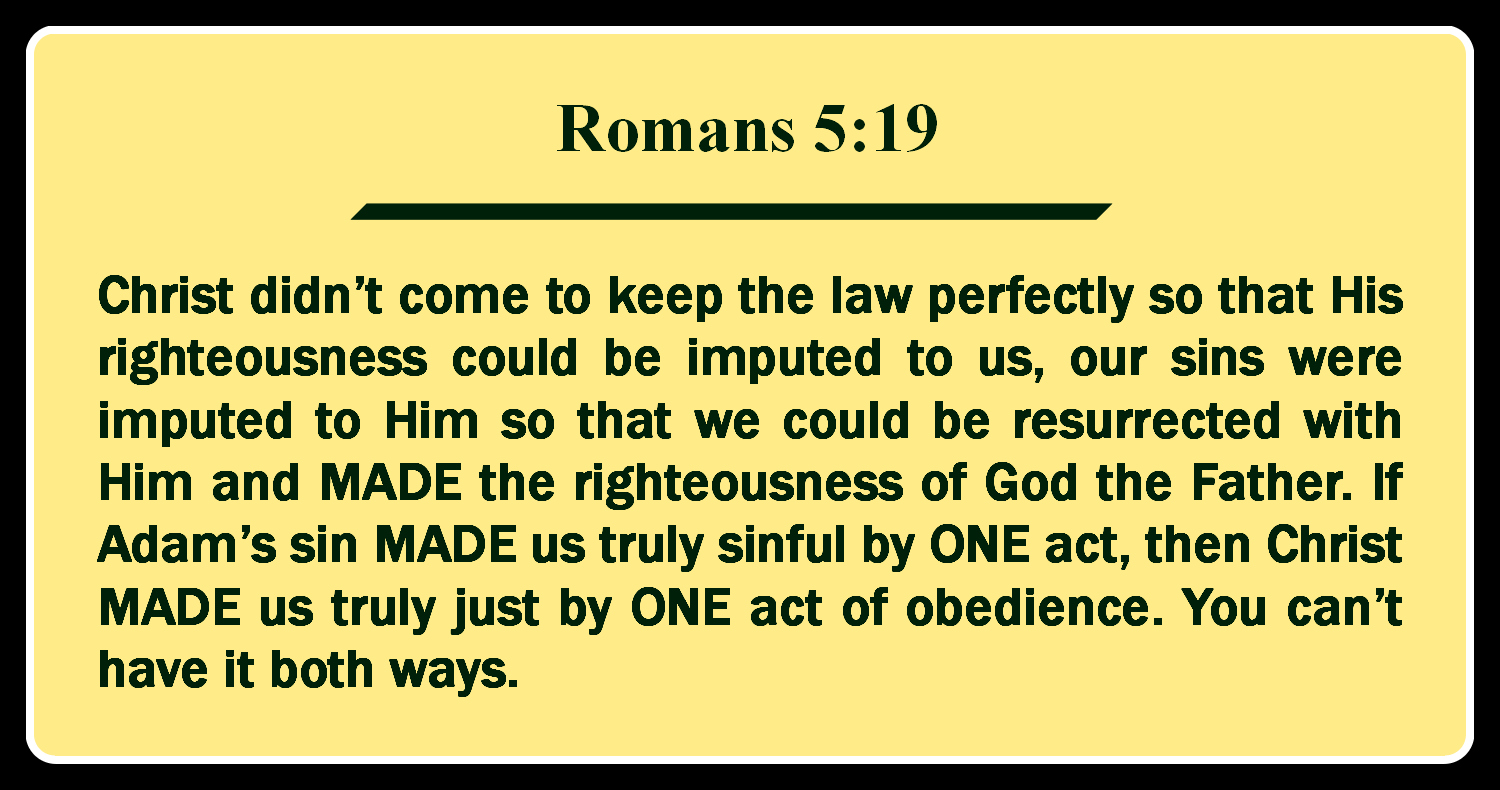
Christ didn’t come to keep the law perfectly so that His righteousness could be imputed to us, our sins were imputed to Him so that we could be resurrected with Him and MADE the righteousness of God the Father. If Adam’s sin MADE us truly sinful by ONE act, then Christ MADE us truly just by ONE act of obedience. You can’t have it both ways.

Nice guys don’t always love the truth as they should because they are too nice to throw out the baby with the bathwater. But it’s a bad Protestant baby.

paul

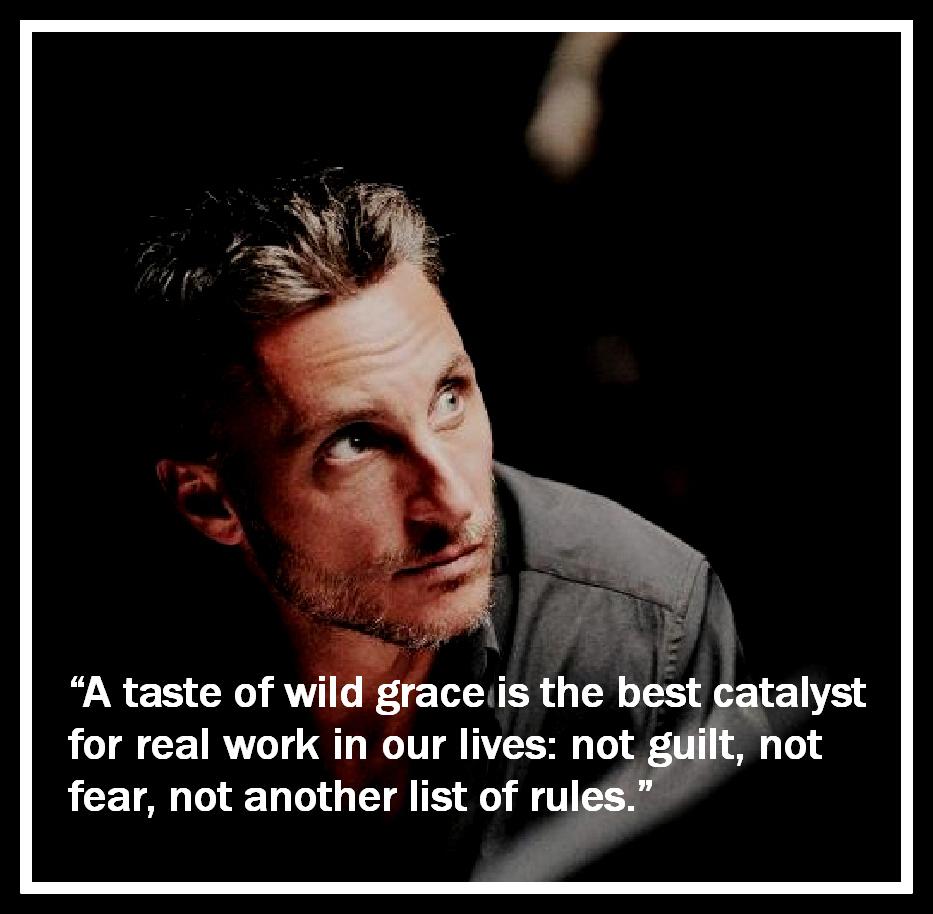
Connecting the Dots: Tullian Tchividjian and Luther’s Theologian of the Cross
Posted in Uncategorized by Paul M. Dohse Sr. on June 24, 2015

TT6The Magnum Opus of the Reformation: Martin Luther’s Heidelberg Disputation; Part 5

The Reformed community will hardly shed a tear in regard to the recent demise of Tullian Tchividjian. A consummate theologian of the cross in accordance with Martin Luther’s Heidelberg Disputation, his lack of nuance drove other Reformed leaders to distraction.

Tchividjian is the premier example of the authentic Reformed gospel applied in our day. His life and teachings will be compared to what we have learned thus far from the foundational doctrinal statement of the Reformation.

Join the discussion @ 7pm on Friday, 6/26/2015. Program link:

http://www.blogtalkradio.com/falsereformation/2015/06/26/the-magnum-opus-of-the-reformation-martin-luthers-heidelberg-disputation-p5