The History of Western Philosophy and Its Societal Impact on the Church – Part 8
The following is the final part of an eight-part series.
Taken from John Immel’s third session
at the 2013 Conference on Gospel Discernment and Spiritual Tyranny
~ Edited by Andy Young
| Click here for part one Click here for part two Click here for part three Click here for part four |
Click here for part five Click here for part six Click here for part seven |
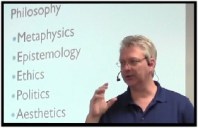 The Concept of the “Common Good”

The “common good” is a collectivist myth designed to achieve the outcome of subordinating the individual to the majority. The collective well-being is the supreme measure of ethics. The phrase implies that if the individual acts for the “good” of the group, the individual is taking moral action. Notice the equation; action for the group = morality. However, there are three primary problems with the concept of the “common good”
1. It is deception.
By definition, “common” is a synonym for a generalization, and by definition a generalization does not have a specific definition. So when a person speaks of the “common good”, they are appointing themselves the spokesman for some loosely defined group. In conversation, the “common good” is used to refer to the good of the public or the community or society or the tribe. However, each of these words is merely a poor label for the intangible sum of individual interaction. The point is, such “groups” do not really exist.
- “The public”: an adjective describing individual conduct exposed to general view.
- “The community”: little more that the interaction of individual people in close proximity.
- “Society”: The aggregate actions of many “sub-groups” within a geographic location.
- “The Tribe”: A “group” based on genetic similarities. A religious denomination is merely a tribal preoccupation shifted from genetic pedigree to doctrinal pedigree.
 So the thing that is “common” is not really common at all. There is no “thing” that is the direct recipient of good, because there is no specific object to receive the “good”. The work you do doesn’t benefit the good of the group, it benefits the good of individuals within the group.
The purpose of the deception is to conceal the root presumption that the collective stands supreme to its individual members, for the “common good” is really the good of the group at the expense of the individual members. Or said another way, the individual is a sacrificial animal to the will of the collective. Any individual who is perceived as a threat to the survival of the group must be sacrificed.
Every time I hear somebody talk about altruism and the “common good”, the conceit in this means that if my life is to be sacrificed to you, the necessary presumption is that your life in turn should be sacrificed to me. I own your life by default, and you think that’s morality? You think that’s just and good? So we’re reduced to moral cannibalism?
2. It poses as morality
The “common good” is really a moral subterfuge because it is an indefinable, elastic concept that can be shaped to apply to any outcome for any political whim. Since the group is elastic based on momentary standards of inclusion, the definition of “good” constantly changes. There is really no constant “yardstick” of measurement but rather a thick syrup that clouds the eyes and ears of its victims and makes them abandon morality rather than cling to it.
The “common good” inspires people to lay down values in service to a select few who claim to be spokesmen for the majority. We see this in political conversation all the time. The outcome is that the spokesmen have a moral blank check that every individual is obligated to cash.
You wonder why you hear stories of molestation coming out of church groups and Christian universities and missionary organizations, where the leadership and authority specifically tried to conceal the crimes against the children and members and students. This is the moral blank check that parents are supposed to cash in behalf of the child who was molested. This is EVIL, fundamental evil!
3. It masquerades as good.
 If taken literally, the error within the expression “common good” itself becomes glaringly obvious. When people advocate for the “common good”, they think they are saying the “good” of all individuals admitted to the group. Or maybe if they paused to consider more deeply, they are saying the “good” of the majority. This doesn’t yet sound too scandalous because “good” is what is done numerically for the greatest amount of individuals. People do a loose moral calculus and decide that the greater the sum, the more moral the action.
But here is the result of that rationale: moral action is quantifiable by statistical outcome. If morality is nothing more than statistics then it is a trivial exercise to justify the Holocost. Stalin created a famine and killed 7 million people, but by the standard of the “common good” his actions are “moral” because the mathematical formula benefits 100 million faithful communists. The “common good” is used to justify taking enormous sums of money from individuals in order to pay for other people’s medical care, or whatever your favorite government program happens to be.
Having identified the three problems with the notion of “common” good, let us examine how this is all used at the root of tyranny.
We now know that the “common good” does not exist because the concepts of group do not exist, and they are never the recipient of any action. Only individuals receive good. Only individuals receive value. It is a false morality designed to subordinate all people to the collective, but who defines the collective?
At the root of all collectivist organizations there is usually only one person holding the yardstick of group inclusion. This person surrounds himself with a gang to defend against any interloper. He is the voice of the people, the voice of community, the voice of society, the voice of the tribe, the voice of the church.
 What people fail to grasp is the “good” of the people is really subterfuge to justify the violation of individual rights. The function of this expression is designed to violate individual rights, and when you violate individual rights you are really abolishing all rights. Groups do not have rights. When you tell me I must subordinate my rights to the group, the group does not gain them by proxy. They have been forfeited.
If there is no such thing as “rights”, the thug, surrounded by his gang, is free to use force (government) to achieve whatever outcome they fancy.The collectivist thug is at once empowered to force people to conform to the collective and shielded against all outcomes. It doesn’t matter what happens next.
This is why you have the brutal absurdity of Soviet Russia. The USSR was built in service to the “common good”, yet the only people who prospered were the tiny gang who surrounded the bloodiest despot in history, Joseph Stalin. The rest of the population lived in sub-human misery for almost three generations.
This is why you have the mystical tyranny of the medieval Catholic church. The Catholic church portrayed itself as the greatest proponent of human good on the planet, yet from effectively 600AD to almost 1500 AD the church leadership lived a comparatively lavish lifestyle, and the serfs existed generation after generation in squalor.
 In the modern age, think of any social program that is said and done for “the people,” for “the society,” for “the community”. Now define exactly what the program does; give money for college, pay for medicine, feed the hungry. If you look at the actual event, only a select number of individuals actually receive the benefit, and all of the authority (force) is invested in a bureaucrat whose sole function is to weed out those who never receive the “good”.
Some of you are squirming because I have placed “community” in the same pot of condemnation. You long for community. You conceptualize your local church as a community. You think this is a social ideal. You think that the community does good. And you like the fact that you vicariously participate in the moral reputation, the prestige, of the group. You want the prestige plus you long for an inter-personal connection, and you yearn to find friends and have “relationships.” You pine for an indescribable thing that is a cross between a Norman Rockwell painting and the television sitcom, “Cheers”, where everybody knows your name. For the life of you, you struggle to see how this is the same seedbed of evil that I have been talking about.
Unfortunately, I am about to tell you that Santa Clause does not exist.
Look closely at the real social dynamic of your community. The connectedness, the relationships that you seek is really the exchange of individual value on an inter-personal level. You long to live in Mayberry R.F.D., filled with “Aunt Beas” baking apple pies waiting on the porch, never once realizing that the safety and security and fraternity that you want cannot happen if the highest moral standard is sacrifice of personal desires and personal values for the “common good.”
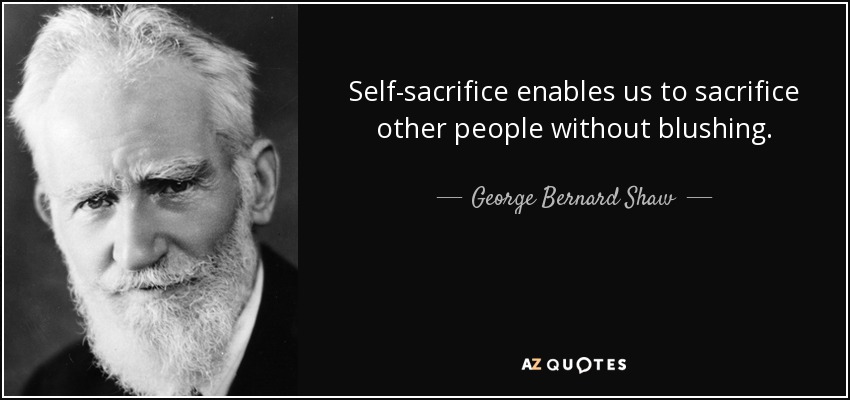 The price of admission to the community is the very self that you must surrender for public consumption. Think about that. To participate in community means that you must get rid of the very thing that makes you unique. This is why most communities (read “churches”) are petty, and gossipy, and back-stabbing, and cliquey. Everyone in the community is constantly vying for some piece of the “common good.” In the end, you realize that the mindless hoards sitting in the pews are there to graze over you like a buffet table.
Now let’s back up to the 10,000-foot view. Now you can see why metaphysics and epistemology are so important. Now you can see how everything revolves around a specific body of ideas that begins with Thales and evolves all the way down to the Cynics and the Stoics, formalized and systematized by Plato, and eventually shape Augustine, Calvin, and Luther. Inasmuch as you continue to accept their premises, you will continue to achieve the same outcome.
If you think the Neo Calvinists are ugly now, you wait and see what happens when you give them just an ounce of civil authority. There will be bloodshed. I know you think that’s scandalous, I get that. It may not even be the guys in the pulpits right this minute. But if you let this construct get hold of civil government, if you have the marriage of faith and force, they will make John Calvin look like a choir boy and Geneva look like a day at the beach. Make no mistake, at the root of this doctrine lie death and destruction.
When you separate man from his mind and his mind from reality, the only thing he has left to deal with another man is a club. The moment we have a club in our hands we are no longer offering an argument. And these guys don’t offer arguments. They have to bail on the conversation every single time they are pressed on the points of their doctrine. They must punt into the grand “mystery” of God. They don’t have a choice.
 Once they are finally confronted with the dead end of their logic, all they can do next is attack and posture and threaten. Inasmuch as you fear that retaliation and extortion, you will willingly shut your mouth. This is why you see such enormous fear coming out of the pews. The discernment blogs and survivor blogs start discussing how they were treated. Everybody online is anonymous, not because they are trying to be deceitful, but because they are terrified!
They have accepted the premise.
What made me specifically so dangerous to them is that I rejected the premise. And that will make you dangerous. When you reject the premise, they will become terrified of you. They do not have the power, and if they ever get close to civil government, resist them with all of your might!
All collectivist cultures are tyrannies.
The philosophy of collectivism claims that there is a mystical, supernatural, social organism that embodies the highest moral values. Of course, only a few elite people with special insight can fully grasp this truth. Somehow they have access to special source knowledge that transcends the average man’s mind. Average men are incompetent, helpless, mindless creatures, depraved and unworthy of social interactions. So they must be purified to serve the collective organism.
Men cannot deal with other men voluntarily because they have no peaceful means to settle disputes. They have no means to act as contractual beings because they are metaphysically incapable of doing good. Human salvation always boils down to an elite clique endowed with some mystical insight, and that insight qualifies them to rule men. They are dictators of an omnipotent, benevolent state, doing what is best for the “common good.”
 All collectivist ideologies hold the same political assumption. All collectivist doctrines seek the exact same end – subjugation of the individual. Man must be chained to the collective. Man is property of the state. Statism is always implemented by force.
The measure of social slavery is directly proportional to how much the slogan of “common good” is embraced. Conversely, the measure of civil liberty is directly proportional to how much the same slogan is overtly rejected. Our Founding Fathers rejected this notion of “common good”. They recognized that the legitimate role of government was specifically to defend the individual and his life, his liberty, and his pursuit of happiness. These are notions contrary to “common good.”
It is an easy slogan to reject because there is no such thing as a generalized good, because only individuals receive values. As soon as you realize it is a hoax it becomes a matter of course to refuse to pay homage to the fraud. Good is not being done. The reality is that people are enslaved to the fancies of others. No man has a moral obligation to subjugation to another man.
The Longing for Revival
We erroneously believe that a return to God will naturally be a return to morality. A return to morality is really a return to a belief in divine extortion. When morality is the product of divine command, the fight becomes about which divine we follow. What the Platonist/Augustian/Calvinsit version of Christianity has shown is that it has nothing to offer as a counter to militant ideologies.
Their first test was Islam. The eastern church showed itself impotent to stop the ideological tide of Islam. Christianity had so gutted the intellectual rigor of intellectual thought, that when confronted with a totally irrational ideology based on war, it could offer no counter.
Of course, Protestants like to push these things off as “those dastardly Catholics.” But Protestants have not fared any better. The Southern Presbyterian Church was in the forefront of slavery within the United States. Of course, Presbyterianism has a direct pedigree line with ties to the reformed tradition.
The reformed tradition’s next test would be National Socialist Germany. It failed miserably. Lutheran churches, with almost no exception, joined “the party” and remained committed to National Socialism until the collapse of the Third Reich.
Christianity has shown itself impotent to offer any intellectual defense against Marxism, National Socialism, and Islam, and that’s just in the modern day.
But they cannot lay claim to mere impotence. It isn’t “God’s will.” Christianity has with far too much consistency been connected to the tyranny. This is not a new observation.
 “7. Because experience witnesseth that ecclesiastical establishments, instead of maintaining the purity and efficacy of Religion, have had a contrary operation. During almost fifteen centuries has the legal establishment of Christianity been on trial. What have been its fruits? More or less in all places, pride and indolence in the Clergy, ignorance and servility in the laity, in both, superstition, bigotry and persecution.”
~ James Madison, “A Memorial in Remonstrance Against Religious Assessments”, 1786
“In every country and in every age, the priest has been hostile to liberty. He is always in alliance with the despot, abetting his abuses in return for protection of his own.”
 ~ Thomas Jefferson
“Millions of innocent men, women, and children, since the introduction of Christianity, have been burned, tortured, fined, and imprisoned, yet we have not advanced one inch towards uniformity. What has been the effect of coercion? To make one half the world fools, and the other half hypocrites; to support roguery and error all over the earth”
~ Thomas Jefferson
“I could never join Calvin in addressing his god. He was indeed an atheist, which I can never be, or rather his religion was demonism. If ever a man worshipped a false god!”
~ Thomas Jefferson, in a letter to John Adams, April 1823
 Here is the absolute conclusion of all we have studied in this series. For anyone with intellectual integrity, these things should be fully and entirely unacceptable. This should compel you to evaluate the content of Christianity for what it has said for the whole of its history. It is not an accident that the same tyranny abetted by the church has occurred over and over and over.
And now, having heard where all this is rooted, you are without excuse. Now you have seen where the core of Protestant doctrine comes from. The intellectual pedigree goes as far back as Heraclitus and the Pythagoreans. It finds its full philosophic formation in Plato, it is welded into Christian thinking by Augustine, and it is put into practice by Luther and Calvin – from Augustine to Luther to Calvin to the Synod of Dort to the Westminster Confessions to the Puritans to the local pastor pounding the pulpit.
The dots are all connected, and now it rests on you to resist the disaster.
~ John
| Click here for part one Click here for part two Click here for part three Click here for part four |
Click here for part five Click here for part six Click here for part seven |
Holy Schmoly…Who Needs Holiness When You Have Authority?
 Afshin Ziafat holds the title of “lead” pastor and “elder” of Providence Church in Frisco, TX. He was part of a panel discussion along with Conrad Mbewe, John Folmar, and moderated by Kevin DeYoung at the 2016 Cross Conference in Indianapolis, IN. The clip below is an excerpt from that discussion. It happens pretty early on. There are several examples I could have used, but this particular exchange really caught my attention.
Here is a transcript of the above video clip.
KEVIN DEYOUNG: So let’s talk about some of these terms that are often given to describe church. This is sort of Ecclesiology, the study of Church 101. So sometimes there is a reference made to the four attributes of the church. One, holy, catholic, apostolic church. So just jump in who wants to just, 30 seconds, what does it mean, “one church”?
JOHN FOLMAR: Unified in the gospel. United to Christ by the power of the Spirit, and thus united to one another.
DEYOUNG: Okay. So Ephesians 4, there is one spirit, one body, one Lord, one baptism. What about “holy”? Afshin?
AFSHIN ZIAFAT: Um, I’m not sure exactly what you’re wanting from that.
STOP RIGHT THERE! HUH?
I’m not the smartest person in the world, and granted, as I go back and read the transcript, DeYoung doesn’t do a very good job at articulating what he’s asking, but even I understand the question. DeYoung wants to know what it means when we say the church is holy.
Yet here is a man who is supposed to have an academic and theological pedigree which supposedly qualifies him to sit on this panel of “experts”. Here is a man who is supposedly responsible for the “sheperding” of hundreds if not thousands of people every week. Here is a man to whom a room full of young people are looking for guidance and direction, a man whom people are supposed to submit to his “authority”. And yet Ziafat says he’s not sure what DeYoung is wanting? Does he mean he does not know what it means to say the church is “holy”, or does he not even know the definition of holy? I am beyond incredulous!
Like I said, I am not the smartest person in the world- I didn’t go to seminary, and I am not the pastor of a church of thousands. I did however give a session on the definition of holiness back at the 2014 TANC conference. Perhaps Mr. Ziafat might find it useful. Here are the links to those sessions.
TANC 2014 – Andy Young, Session 1
TANC 2014 – Andy Young, Session 2
TANC 2014 – Andy Young, Session 3
Now let’s look at the remainder of the transcript:
(ZIAFAT CONTINUING) But I would say just, you know, the fact that, if I may couple with what [FOLMAR] just said, the need for you to be in the church to be shepherded, because, as I see, you know, one catholic church, but yet there’s a need for the local church that you are involved in actually being cared for. Because from the very beginning God is known as a shepherd and His people the sheep of His pasture and Jesus taught His disciples how to shepherd and Peter tells fellow elders that you are to shepherd the flock of God among you. So all that to say, I would tell [the audience] that if they are not in a local church, that’s God’s setup for how He as the shepherd is gonna shepherd them through under-shepherds. And so I think that they need to be in that local church.
Ziafat never answers the question with respect to holiness. Instead he does what politicians do when there is a question they don’t want to answer. They try to distract you by rambling on and on over talking points that you would want to hear, hoping to impress you with their verbosity, all the while saying nothing of any substance. (Donald Trump did this very effectively during the last election campaign.)
But notice what he does choose to talk about: the authority of the church in the lives of Christians. “…the need for you to be in the church to be shepherded…”, “…need for…actually being cared for…”, a local church is how God is “gonna shepherd them through under-shepherds…”, “…they need to be in that local church.” Authority, authority, authority.
I am not the only one who notices that Ziafat doesn’t answer the question. DeYoung realized it too. But rather than put him on the spot, he bails him out by actually answering the question for him. I mean, these guys have to stick together, right?
DEYOUNG: Right, for the accountability, for, you know, if the leaders of the church are accountable before God for their people you need to have some kind of membership, or to whom or for whom are they accountable, and that holy aspect is called out ones out from the world into this fellowship, shepherded, guided…
This is just one example of how these guys perceive themselves and you. You need to be shepherded for your own good. I am reminded once again of what John Immel said at the 2012 TANC conference regarding the metaphysical assumptions of reformed theology – man is fundamentally incompetent to be able to comprehend truth and know good; he therefore needs have good dictated to him; that dictated good is accomplished by the institutional church through divine mediators who presume to stand in God’s stead. And this is all done under the pretense of being done for your own good, since you poor schlubs don’t know any better.
This was the tenor of this entire panel discussion, that we should just be so thankful that we have these “godly” men to guide us poor incompetent masses though our ignorance, and we should just listen to them so that we don’t screw up our lives. I find such arrogance and condescension appalling, especially since these men are such intellectual pinheads who couldn’t come up with an original thought among the four of them to save their lives. They are simply regurgitating what they themselves have been taught. That much is obvious from this example.
~ Andy
12 Reasons Why…
Originally Published August 17, 2015
With football season upon us there is a new meme that has been circulating Facebook recently. You might have seen it.

Obviously, this is meant to be a passive/aggressive criticism of those who use these same excuses for not going to church. And as usual, it gets its share of “likes” and positive comments and “amens” all around.
So, with one of our topics being all the issues wrong with the institutional church, and with our focus being that of home fellowships, and because I have a tendency to be a trouble-maker, I decided to take the above idea and run in a different direction with it. For your consideration, I am pleased to present to you:
12 reasons why attending a sporting event is better than attending church.
- The coach isn’t going to kick you out of the stadium for being critical of his play-calling.
- The only people asking you for money are the workers at the concession stand, and at least you get a snack and a cold beverage in return.
- You are surrounded by total strangers, but most people will interact with you like you’ve been lifelong friends.
- Those same people won’t judge you for what you’re wearing.
- There’s no “fan covenant” to sign where you agree to support the team no matter what.
- Nobody is going to question your team loyalty if you show up to the stadium late or not at all.
- Group participation is not only allowed but encouraged!
- You don’t have to worry about the coach showing up at your house the next day asking you why you weren’t at the game.
- You don’t have to worry about the coach getting on the P.A. system to bad mouth the season ticket holders who missed last week’s game.
- If you get to the stadium early, that’s ok. There’s most likely several parties already going on in the parking lot, and they won’t mind if you crash in, even if you didn’t bring a dish to pass.
- If there is ever a team scandal, the coach doesn’t blame the fans for it.
- You can be fairly certain that no one will ever tell you that the outcome is pre-determined!
Of course, if you have any others that you care to add, you are welcome to do so!
Andy
Protestants: Willing Participants in a Truman Show Reality.
 Truman Burbank lived a seemingly normal life. He was just your regular, ordinary kind of guy. Everybody liked Truman. He had a pretty wife, a nice house, a good job. He had everything anybody could ask for. His life was perfect. Or so it seemed.
Of course, Truman Burbank isn’t a real person. He is the titular fictional character in the 1998 film The Truman Show. Those of you who are familiar with the film well know that while Truman’s story is fictional, the reality of his world in that fiction was fiction as well; a fiction engineered specifically for him. The problem was, Truman did not realize that his reality was fake. Unfortunately, just like Truman Burbank, 99% of Protestants don’t realize that their reality as they know it is just as fake, yet they willingly accept it. Truman Burbank offers a perfect philosophical metaphor, so I am using him to illustrate my point.
At the time we meet him in the movie, Truman is approximately 30 years old. From the time he was born, his entire existence has been in the world of Seahaven, FL. It is the only reality he has ever known. And up until now he has never questioned the truth of his reality. What he does not know is that this world is a carefully crafted façade, and every other person in his reality is nothing more than an actor playing a role. Their sole purpose is to make Truman believe that everything he sees around him and everything that happens to him is real. And as he goes about his daily life, hundreds of tiny hidden cameras capture his every move and broadcast his life to the world 24 hours a day. You could say that Truman was the first reality TV star.
How is it that a person can live his entire existence and not realize that his reality is fake? Because Truman’s reality consists of a very deceptive hermaneutic. Everything that happens in his life is carefully interpreted for him so that his understanding of reality remains consistent with what he observes. On this scale you can be sure that this is a very complicated feat to pull off for thirty years.
Such a task can only be maintained for so long, and eventually, unexpected “glitches” begin to occur. For example, one day a strange object falls from the sky and smashes on the ground just feet from where Truman is standing. It happens to be a stage light that is labeled, “SIRIUS (9 Canis Major)”. On another day, while listening to the radio in his car, his radio suddenly begins broadcasting the director’s instructions to the cast, and Truman realizes that the voice on the radio is describing every turn he makes in his car. Yet another time, Truman enters an elevator only to realize when the door opens that no elevator is there but instead he sees a group of stage hands on break around a snack table.
Obviously, such events would be out of the ordinary in Truman’s reality. Here is a conflict between what Truman thinks to be true about his world and what he observes, and he has no idea how to reconcile these contradictions. At this point a mediator is needed to reinterpret what Truman has observed to reconcile the contradiction and convince him that nothing is wrong, everything is as it should be. No, that wasn’t a stage light that fell from the sky, it was a part that fell off an airplane flying overhead. No, you didn’t really hear a guy on the radio announcing your every move. Our station accidentally picked up police frequencies, ha ha, sorry it sometimes happens. Oh did you hear? There was a freak elevator accident in the building next to yours, and a woman was critically injured- no you didn’t really see a stage crew taking their break where an elevator should have been.
The producers went to great lengths to discourage Truman from leaving Seahaven, because as a boy, Truman had a longing for exploring. They posted subtle messages around town with outrageous warnings about the dangers of travel. Sometimes, drastic intervention was required. They even created a scenario one day where Truman was out on a boat with his father, and a sudden storm swept his father overboard, never to be found again. Of course, it was all an act, but to Truman it was very real, and it made quite an impression on him as a small boy. So much so that Truman developed an acute fear of the water and never thought twice about leaving Seahaven by boat, or even crossing a body of water. But as things progress, Truman’s suspicion grows. He begins to ask serious questions of those around him, who continue to simply play along with their roles in a vain attempt to deflect his suspicions.
But despite all these obstacles, Truman was determined to find answers to his questions. He discovered that he could make unusual things happen anytime he was unpredictable. Those involved with the show could not react fast enough to his spontaneity, and this would give them away, only furthering his resolve. Truman knew something was not right about his world, but he did not know why. He could not explain it, but he was no longer willing to accept the explanations given to him by those around him.
We could summarize the salient points about Truman’s reality this way:
- Truman’s understanding of the world was based on a false assumption.
- From time to time Truman would encounter contradictions in his reality that he could not reconcile.
- Truman needed mediators in his life to interpret reality for him.
In much the same way, the way that Protestants understand reality is based on a false assumption. Doctrines such as total depravity (total inability), determinism and God’s sovereignty, election, and many others present man with a view of reality where man is evil and therefore cannot know truth. Believers go to church week after week so that they can be told not just what to think but also HOW to think about not just what the Bible says but also how the world itself works.
Invariably there will come a time when a believer will encounter a contradiction. It may be that he comes across passages of scripture in his Bible that seem to contradict each other. It may be that he encounters something in life that runs counter to what he was taught from the pulpit. Something that he cannot explain, like how can man have a free will if God is sovereign? “Well, you know God’s ways are higher than man’s ways, so we just have to accept that there are some things we just can’t understand and accept as true because God says so.”
Most often, contradictions are handled from a matter of interpretation. This is where the mediator steps in and reinterprets scripture for the believer in its proper “gospel context”. You see, because man is unable to know truth, he needs the authority of a mediator to explain it to him. This is the role of pastors, elders, deacons, bishops, et al.
For Truman Burbank, his mediators were not just a select few in positions of authority. It was the entire cast of characters from the crew behind the scenes, to the actress who played his wife, to the guy who sold him his daily paper at the newsstand. Every person in Truman’s life was a willing participant, regardless of how much they were aware of their overall impact in shaping his life. Extras in the cast, for example, would dutifully play their part all while being totally ignorant of the ultimate level of control the producers sought to wield over Truman’s life.
Truman himself was a willing participant in this ruse. One could argue that he was simply an innocent victim in the whole matter, but consider how much he was willing to overlook in his life for such a long time just so that he could go on living the only life he ever knew. That fact was a major point in the film, when a disgruntled viewer called the show and told the show’s creator just how wrong she thought it was the way they were using Truman for their own ends. The creator’s response was profound and powerful. He said that if Truman REALLY wanted to discover the truth, he would find a way, and that when that happens, there would be nothing they could do to stop him. The point being of course was that the mere fact that Truman lived this life for so long was a statement to the reality that he really didn’t want to know the truth.
How much can the same be said of Protestants? To what extent are Protestants willing participants in their own “Truman Show” existence? How much are we willing to overlook just so that we can be comfortable in our lives? How much abuse and evil are we going to tolerate just so that we can have some sense of security in where we think our salvation lies? Do we blame the cast of mediators who create this charade for us? Their role is obvious, and they play their parts well, wittingly or unwittingly. But the laity are playing a role as well. They shoulder just as much of the blame as those under whose self-appointed authority they have placed themselves. And they will dutifully pay their tithes and offerings each week, and they will warm their spot on the pew every time the church doors are open, and they will sing when told to sing, and they will stand when told to stand, and they will pray when told to pray, and they will outsource their minds to someone standing before them who will tell them what to think about life. And they will never ask a hard question, even when a stage light falls from the sky.
But there is hope! Because if Protestants really want to know the truth, they will find it. If they really want to find a way out of the nightmare that is the institutional church, they will discover it. And when they are determined to do so, there isn’t a thing the church can do about it!
Andy

 Paul's Passing Thoughts
8 comments