The Utter Folly and Anti-Gospel of Bible as Story/Narrative: Christian Academia is Making Fools of the Laity
 All of the rage in our day is Bible as redemptive narrative. Yes, the story, or narrative that gives us the “big picture” of God’s redemptive story. This concept is packaged in feel-good truisms like “History is ‘His story.’” The Bible is about a person, Jesus Christ; so, would you make an instruction manual out of a person’s life story? Would you systematize a person’s life story? The idea is to be wowed by who God is personally, and He invites you into His story. “It’s a person—not a precept.”
This is all disingenuous because we are still dealing with hermeneutics. We are still dealing with exegesis verses eisegesis. The question of the day is still epistemology: how we know what we know. For you who want to romanticize our faith—it doesn’t work.
If the Bible is God’s revelation to man, and it is, be sure that he will also reveal how he wants his word to be interpreted. Fact is, the Bible has built-in rules for interpretation throughout. ANYrules of interpretation for a text must be validated by the Bible itself. So, what about Bible as story or narrative? After an exhaustive study on what the Bible would state about this interpretive model, it begs the question: where is it?
On that note, let’s start with a blog named “Istoria Ministries” by Reformed teacher/pastor Wade Burleson. The subtitle reads as follows:
Istoria is a Greek word that can be translated as both story and history. Istoria Ministries, led by Wade and Rachelle Burleson, helps people experience the life transforming power of Jesus Christ so that their story may become part of His story.
Burleson is right, it is a Greek word, but is it in the Greek New Testament? After hours of research, I cannot find it anywhere. In fact, Hebrew or Greek canon words that project the English idea of history, narrative, or story are either extremely scarce or nonexistent. The closest idea is the word “parable” which is a story that helps define truth. It’s a teaching tool. But in every case where a parable is implemented as a teaching method, the Bible plainly introduces it as such beforehand. It doesn’t appear that parables in the Bible are meant to be stories that explain the story.
The Greek word historia came about around 500 BC and means, “Inquiry, knowledge acquired by investigation.” Prior to that, mythology ruled the day. Mythology is “Ideology in narrative form.” The word, “historia” was introduced into the English language as “story” in 1390 AD and had the same meaning as its Greek origin. But prior to that between 180 AD and 553 AD, particularly among European theologians, the concept of mythology as sacred narrative/novel was integrated into the concept of historia for the purposes of interpreting the Bible:
Melitios of Sardis who died in 180AD read the Old Testament as a typology – it is a preparation for the Messiah in a similar way that a sketch or a model is the preparation that an artist, sculpture or architect does before making the reality represented in the preliminary sketch or work. Theodore of Mopsuestia who died in 428AD gives us some sense about how Christians in the 5th Century approached the Scriptures. For though Theodore was condemned for his teachings long after his death by the 5th Ecumenical Council in 553, his methods in interpreting Scriptures were shared by St. John Chrysostom and others in the Antiochian tradition of interpretation.
“In this work (Commentary on the Psalms) it is evident, first, that Theodore is almost entirely concerned with the istoria of the biblical text rather than its theoria. By istoria I mean the narrative meaning of the text, not its literal or historical meaning. On the other hand, theoria refers to the spiritual meaning of the Scripture in Antiochene theological circles. Thus the istoria of any given text may also provide the theoria, since the narrative meaning on occasion can and does supply the spiritual sense.” (Harry Pappas in SACRED TEXT AND INTERPRETATION, Ed. Theodore Stylianopoulos, p 59-60).
Later in history, istoria became a term that referred to story painting or history painting:
History paintings usually depict a moment in a narrative story, rather than a specific and static subject, such as a portrait. The term is derived from the wider senses of the word historia in Latin and Italian, and essentially means “story painting”, rather than the painting of scenes from history in its narrower sense in modern English, for which the term historical painting may be used, especially for 19th century art. Paintings almost always contain a number of figures, often a large number. The genre includes depictions of moments in religious narratives, above all the Life of Christ, as well as narrative scenes from mythology, and also allegorical scenes. These groups were for long the most frequently painted; works such as Michelangelo’s Sistine Chapel ceiling are therefore history paintings, as are most very large paintings before the 19th century. The term covers large paintings in oil on canvas or fresco produced between the Renaissance and the late 19th century, after which the term is generally not used even for the many works that still meet the basic definition.
All in all, istoria is the integration of mythology and history as a way to interpret and communicate truth.
At the very least, to accept istoria in our day, one must assert that a Greek hermeneutic was accepted into an interpretive method grounded in Hebraic roots: this is extremely unlikely. But beyond that, the notion that the Bible should be interpreted in narrative form, even partially, eradicates the significance of the gospel. Throughout Scripture, the Bible is presented as LAW, and this is critical to the gospel. “Law,” “gospel,” “word,” “law and the prophets,” “Scripture,” “holy writ,” etc. are all used interchangeably to refer to the full counsel of God; ie., His full philosophical statement to man including metaphysics, epistemology, ethics, and politics.
The objective law of God is intrinsic to gospel and eternal life. This is because eternal life and death are defined by being under the law or under grace. The linchpin of this is obedience. In an Old Testament passage that Peter alludes to (1Peter1:1, 2 → Exodus 24:7, 8) we read the following:
Then he took the Book of the Covenant and read it in the hearing of the people. And they said, “All that the Lord has spoken we will do, and we will be obedient.” 8 And Moses took the blood and threw it on the people and said, “Behold the blood of the covenant that the Lord has made with you in accordance with all these words.”
Based on a commitment to understand and obey God’s law, they were sprinkled (splattered) with blood. The apostle Paul then explains what the results of that are:
Romans 8:1 – There is therefore now no condemnation for those who are in Christ Jesus. 2 For the law of the Spirit of life has set you free in Christ Jesus from the law of sin and death. 3 For God has done what the law, weakened by the flesh, could not do. By sending his own Son in the likeness of sinful flesh and for sin, he condemned sin in the flesh, 4 in order that the righteous requirement of the law might be fulfilled in us, who walk not according to the flesh but according to the Spirit. 5 For those who live according to the flesh set their minds on the things of the flesh, but those who live according to the Spirit set their minds on the things of the Spirit. 6 For to set the mind on the flesh is death, but to set the mind on the Spirit is life and peace. 7 For the mind that is set on the flesh is hostile to God, for it does not submit to God’s law; indeed, it cannot. 8 Those who are in the flesh cannot please God.
Throughout the book of Romans, Paul describes two relationships to the law: under the law in regard to those who are hostile to it, but while under it see their need for Christ constantly. They see objectively where they fall short of the law. On the other hand, those who are under grace delight in the law and are able to please God by obeying it.
To take away from this construct by making the Bible a narrative rather than objective law is to drive a stake through the essence of the gospel. To put ourselves into a narrative rather than a seeking to understand God’s word for life application, and to beckon the lost to enter into a narrative rather than to repent and obey the gospel is antithetical to the true gospel.
paul
Romans Chapter 8:1-13; Why Christians Are Presently Holy and Righteous
In Romans 8:1, we read the following:
There is therefore now no condemnation for those who are in Christ Jesus.
The word, “condemnation” means a guilty verdict. Christians are presently not guilty. Not only are we guiltless, we are a “holy nation” (1Peter 2:9). Paul precedes this statement with the word “therefore” which means for that reason, consequently…. So, we must back up to the previous verses:
Romans 7:25 – I thank God through Jesus Christ our Lord. So then with the mind I myself serve the law of God; but with the flesh the law of sin.
This is the construct of the new creature in Christ. We serve the law of God with our minds, but with our flesh we serve the law of sin. Literally, our minds are slaves to the law of God. “Serve” is the word douleuo which comes from the word doulos meaning slave. One of the few translations that get this right is the NIV:
Thanks be to God, who delivers me through Jesus Christ our Lord! So then, I myself in my mind am a slave to God’s law, but in my sinful nature a slave to the law of sin.
Paul calls this the “law of my mind” in Romans 7:23. “Law of sin” (also Romans 7:23) is the same as “under the law” as opposed to being “under grace.” When we are transformed, we “delight in the law of God IN my Inner being” (Romans 7:22). We are enslaved to the law, delight in the law, and serve the law with our minds in the inner being. BUT, the part of us that died with Christ (Romans 6:1-4) was enslaved to sin in the inner being (Romans 6:6-8) and was raised to new life by Christ’s resurrection (Romans 6:4). So, Christians are to consider ourselves both dead and alive. Do Christians have two natures? Absolutely, a dead one and a living one—one dead to sin and one alive to God in Jesus Christ:
Romans 6:11 – So you also must consider yourselves dead to sin and alive to God in Christ Jesus.
The old mind was enslaved to sin; now our new mind is enslaved to the law of God as evidenced by our delight in it. The “inner man” is renewed. Previously, both our inner man and our members were enslaved to sin, but now our mind is enslaved to the law and we do not have to obey sinful desires:
6:12 – Let not sin therefore reign in your mortal body, to make you obey its passions. 13 Do not present your members to sin as instruments for unrighteousness, but present yourselves to God as those who have been brought from death to life, and your members to God as instruments for righteousness. 14 For sin will have no dominion over you, since you are not under law but under grace.
Romans 6:17-19 elaborates further:
17 But thanks be to God, that you who were once slaves of sin have become obedient from the heart to the standard of teaching to which you were committed, 18 and, having been set free from sin, have become slaves of righteousness. 19 I am speaking in human terms, because of your natural limitations. For just as you once presented your members as slaves to impurity and to lawlessness leading to more lawlessness, so now present your members as slaves to righteousness leading to sanctification.
As Paul states, this is in human terms that we can understand, but it is still a construct that informs our sanctification; in fact, I think it is the apex of sanctification. Understanding this is paramount to spiritual wellbeing and proper functioning in the Christian life. Last week, we discussed how obedience to this construct builds life upon life while disobedience builds death upon death. If we see life being increased in our life, we have confidence that eternal life will be our end; if we see mostly death in our lives, assurance of eternal life is shaken. And remember, this is regardless of circumstances. Circumstance can never take away our ability to obey unto life. Paul states it this way:
Romans 6:19 – For just as you once presented your members as slaves to impurity and to lawlessness leading to more lawlessness, so now present your members as slaves to righteousness leading to sanctification.
This is why we are indeed righteous in the here and now. We are new creatures who desire to love God by obeying His law. We have righteousness within us (1John 2:28,29, 3:10, 5:18)—in the “inner man.” Yes, we sin, but that doesn’t go against the righteousness that has been imputed to us. The penalty has been paid, and it can’t be judged as sin because we are under grace and not under law (Romans 3:21,22), and where there is no law, sin lies dead (Romans 7:8). Besides, the part of us that is guilty of sin is dead and cannot be judged (Romans 7:1-4, 20).
Therefore, there is NOW no condemnation for those who are in Christ Jesus. Paul continues:
Romans 8:2 – For the law of the Spirit of life has set you free in Christ Jesus from the law of sin and death.
We see the difference of relationship between the law of sin (under the law) and the newly introduced “law of the Spirit.” Before salvation, we were enslaved to sin by the law because our mind was hostile towards it. But now that we are in Christ, because we died with Him and are now raised with Him—the “law of the Spirit” (the word of the Spirit; ie., the Bible) SET US FREE from sin and death. This isn’t the only time that the word of God is referred to as setting us free:
James 1:22 – But be doers of the word, and not hearers only, deceiving yourselves. 23 For if anyone is a hearer of the word and not a doer, he is like a man who looks intently at his natural face in a mirror. 24 For he looks at himself and goes away and at once forgets what he was like. 25 But the one who looks into the perfect law, the law of liberty, and perseveres, being no hearer who forgets but a doer who acts, he will be blessed in his doing.
Let’s also take this opportunity to reiterate that when we are speaking of “law” we are speaking of the “word” or the full counsel of God. Notice that James refers to the “word” as “law” in this particular text. To the unbeliever it brings forth bondage and death—to the believer in Christ it brings forth freedom and life. We also learned in the beginning of our study that “gospel” is also the full of counsel of God.
Romans 8:3 – For God has done what the law, weakened by the flesh, could not do. By sending his own Son in the likeness of sinful flesh and for sin, he condemned sin in the flesh, 4 in order that the righteous requirement of the law might be fulfilled in us, who walk not according to the flesh but according to the Spirit.
The law cannot do anything with unbelievers because their minds are hostile to it. The flesh propagates death in response to the law, so God sent Christ to put the fleshly, hostile mind to death. He bore our sins, and died so that we could die with Him. Paul then states the purpose for this:
in order that the righteous requirement of the law might be fulfilled in us, who walk not according to the flesh but according to the Spirit.
This is a shocking statement by Paul: a primary purpose of redemption is for fulfilling the righteous requirement of the law in us. Obviously then, we have been enabled to do so. This also lends understanding to what Christ stated in the Sermon on the Mount:
Matthew 5:17 – “Do not think that I have come to abolish the Law or the Prophets; I have not come to abolish them but to fulfill them. 18 For truly, I say to you, until heaven and earth pass away, not an iota, not a dot, will pass from the Law until all is accomplished. 19 Therefore whoever relaxes one of the least of these commandments and teaches others to do the same will be called least in the kingdom of heaven, but whoever does them and teaches them will be called great in the kingdom of heaven. 20 For I tell you, unless your righteousness exceeds that of the scribes and Pharisees, you will never enter the kingdom of heaven.
It becomes apparent that Christ was referring to the fulfillment of righteousness in us. The particular Greek word used for “fulfill” can mean “replete.” Verse 19 follows with “Therefore.” The relationship between what precedes “Therefore” and what follows is the idea that those who relax the law are not participating in the fulfillment of it. Those who don’t practice righteousness have not died to the law (Romans 7:4). Therefore, the law provokes them to sin; so they will not enter the kingdom of heaven. Furthermore, Christ could not have come to fulfill the law for us instead of in us because as we have noted, law, word, and gospel all pertain to the full counsel of God and the New Testament had not been written yet. Hence, the idea that He came to fulfill the law in our place so His obedience could be imputed to our sanctification is not plausible—there was no completed law to fulfill at that point, and additional revelation had been added—especially the book of Revelation.
Hence, Paul states the following:
8:5 – For those who live according to the flesh set their minds on the things of the flesh, but those who live according to the Spirit set their minds on the things of the Spirit. 6 For to set the mind on the flesh is death, but to set the mind on the Spirit is life and peace. 7 For the mind that is set on the flesh is hostile to God, for it does not submit to God’s law; indeed, it cannot. 8 Those who are in the flesh cannot please God.
Said another way: those who are under the law are subject to the law of sin, and their minds are in bondage to sin leading to death upon death and final death. Those who are under grace delight in the law of God (the law of their mind) in the inner man and their minds are in bondage to righteousness leading to life, peace, and eternal life. Note that the unregenerate are unable to submit to God’s law, and unable to please God, but the saved are obviously able to do both. This is why Paul said that we make it our goal in life to please Him (2Corinthians 5:9). We can also conclude that the law is the “standard of teaching” for pleasing God.
Paul continues:
Romans 8:9 – You, however, are not in the flesh but in the Spirit, if in fact the Spirit of God dwells in you. Anyone who does not have the Spirit of Christ does not belong to him. 10 But if Christ is in you, although the body is dead because of sin, the Spirit is life because of righteousness. 11 If the Spirit of him who raised Jesus from the dead dwells in you, he who raised Christ Jesus from the dead will also give life to your mortal bodies through his Spirit who dwells in you.
This somewhat answers the question of how our mortal bodies can still have life though dead while the inner man is a new creature. Paul states that the Spirit gives our mortal bodies life for the sake of the inner man fulfilling righteousness. I believe in regard to justification, our mortal bodies are dead and maintained by Christ. Our inner man in no way contributes to the finished work of justification, and the old us is dead. Our inner man only contributes to the sanctified life. I believe this is Paul’s point in Galatians 2:20; a verse that is often applied to sanctification:
I have been crucified with Christ. It is no longer I who live, but Christ who lives in me. And the life I now live in the flesh I live by faith in the Son of God, who loved me and gave himself for me.
This does not mean that we don’t live in sanctification. Obviously, from what we just learned in Romans 8, that’s not the case at all. Moreover, preceding verses and verse 21 following make it clear that the context is justification. But in regard to being justified, we had to die with Christ and stay dead. It’s our death with Christ that justified us. We were not raised to fulfill the law for justification because that is a finished work—we were raised to fulfill the law in sanctification, and thereby destroy the deeds of the devil as well:
1John 3:4 – Everyone who makes a practice of sinning also practices lawlessness; sin is lawlessness. 5 You know that he appeared in order to take away sins, and in him there is no sin. 6 No one who abides in him keeps on sinning; no one who keeps on sinning has either seen him or known him. 7 Little children, let no one deceive you. Whoever practices righteousness is righteous, as he is righteous. 8 Whoever makes a practice of sinning is of the devil, for the devil has been sinning from the beginning. The reason the Son of God appeared was to destroy the works of the devil. 9 No one born of God makes a practice of sinning, for God’s[b] seed abides in him, and he cannot keep on sinning because he has been born of God. 10 By this it is evident who are the children of God, and who are the children of the devil: whoever does not practice righteousness is not of God, nor is the one who does not love his brother.
We have learned yet another valuable principle to implement in our presentations of the gospel: to ask God for salvation is to also recognize that he will transform our hearts to be slaves to his law. Anyone who does not want to be a slave to righteousness will not receive the Spirit. This does not mean that we will obey perfectly because the law of sin still wages war against the law of our minds. But the fact remains that we have the seed of God within us and are therefore righteous and able to please God with our life.
paul
Calvinism and Urine Technology
Calvinists often intimidate us with oceans of ink left behind by the brilliant, spiritual, educated children spawned by John Calvin: the Puritans. Calvinists like John Piper display their spiritual swagger by quoting the Puritans and making everyone aware that they read them daily. Of course, this plays on the utter ignorance of present-day Christians. Their authority is no longer the really thick pamphlet dropped down from heaven called the Bible—its orthodoxy. Orthodoxy is an analysis of God’s mass publication to people indwelt by His illumining Spirit by the church’s “Divines” of whom many were Puritans. They repackaged God’s word for consumption for the unenlightened masses.
So, when these brainiacs took the urine of accused witches and made cakes from it, and then fed the cakes to dogs in order to watch their reaction for a verdict, we need to understand that what the Divines do at times is the “foolishness of the cross.” We wouldn’t understand. This is activity that is on another spiritual plane; so, recite Luther’s Small Catechism and keep your mouth shut. The Small Catechism is one of Voddie Baucham’s recommendations for use in family devotions. He is really big on husbands being the “family shepherd” and leading the family Bible studies with….orthodox creeds, not anything that would come from their own brains.
Much could be discussed in regard to the lovely traditions that the Puritans brought with them when they were driven out of Europe as political refugees. But let’s talk about urine. Actually, urine tasting was the state of the art research born of European theocracies during Medieval times. How the urine of the subject tasted was used to determine what ailed them. Several examples of medical charts are displayed below for your educational enjoyment. Click to enlarge them, but if you are a Calvinist, don’t try this at home—it’s not orthodoxy!
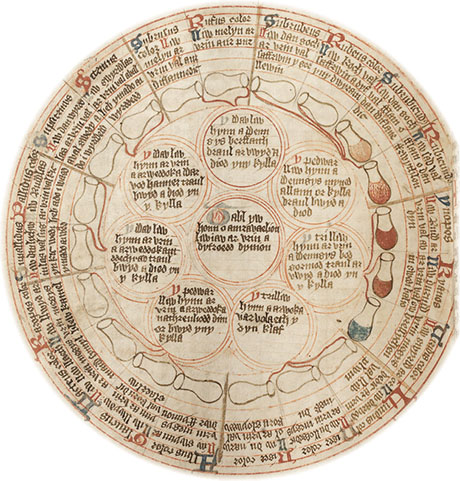
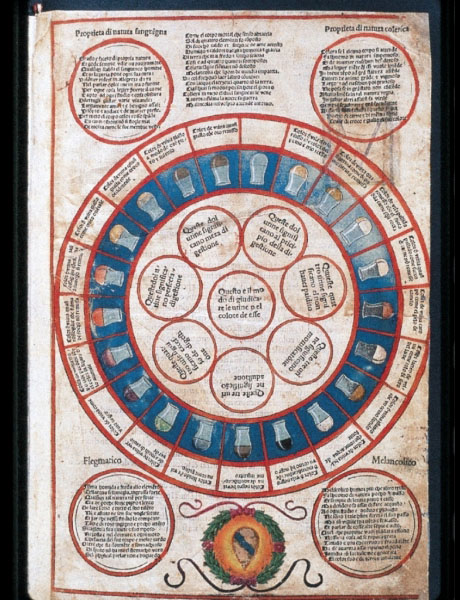
“But Paul, didn’t the Puritans have a lot of awesome things to say about God? Isn’t there much to be learned from them?” No, not in the long run because of their flawed logic. Notice that they aren’t around anymore. Why not? Because Puritanism cannot function without theocracy. Their logic led to the persecution of the Quakers via hanging etc., and when society had enough, an end was forced in regard to their theocracy. No theocracy—no Puritanism. And frankly, the same goes for authentic Calvinism. Calvinism exists today because their logic had to be adjusted for survival. Here at TANC, we call them, “sanctified Calvinists.” Yes, they have done the church some good because they don’t share the same logic.
I really wonder if this latest resurgence of authentic Calvinism will put an end to it because of the Information Age that we are in. Nobody calls themself a “Puritan” in our day. Will the day come when few will call themselves a Calvinist? Authentic Calvinism doesn’t work, and people will only use a clock that doesn’t work for so long; the fact that it is useful twice a day does not end up being enough. Once again, the same old superstitions of authentic Calvinism are showing themselves in the contemporary church. The basis is the idea of spiritual caste: the idea that preordained enlightened mediators should rule over the unenlightened masses. Theocracy comes part and parcel with that logic.
“But Paul, Neo-Calvinism is thriving right now in America and America doesn’t allow theocracies.” Oh really? Many New Calvinist “ministries” in our day are nothing less than Little Geneva. They have their own in-house police stations, and control parishioners by almost every means of the past save the death penalty alone. This ministry is compiling a list of various means that these ministries are using to control people through first-hand testimony. Other than the intimidation of armed in-house security forces, they are using “biblical counseling” to compile information on people that can be used to control them. That angle can be seen in living color via the public transcript of CJ Mahaney telling the cofounder of SGM that confidential counseling records would be made public if he left SGM for doctrinal reasons. Let there be no doubt: this is standard protocol in New Calvinist churches. And if they don’t have the dirt on you, they will fabricate it. That’s just fact.
Getting back to superstition—that is also the inevitable result of caste logic. Many blogs document the weirdness in this movement that gets crazier each month. And dismissal of comparisons due to medieval ignorance doesn’t cut it. Sure, urine isn’t used in counseling today (at least not yet), but instead we have rapists counseling their own victims in the church office!
It’s the logic. And in the Information Age, what happens in Salem doesn’t stay in Salem.
paul
Immelism
Know this: Virtue in a vacuum is like the proverbial sound in the forest–irrelevant without a witness. Character is no private deed. To retreat is nothing more than a man closing his eyes and shutting his mouth to injustice.
Virtues are not estimates to be lofted gently against evil.
Virtues are not to be withheld from view in the name of grace.
Virtues are not to be politely swallowed in humble realization that we are all just sinners anyway.
Love is not a moral blank check against the endless tide of indulgent action.
Love is not blind to the cause and effect of reality.
Love is not indifference to plunder and injustice and servitude.
~John immel: Excerpt from the 2012 Conference on Gospel Discernment and Spiritual Tyranny
A Day to Remember Those Lovable Puritans: International Religious Freedom Day
Mark it on your calendar: October 27th; International Religious Freedom Day (IRFD). PPT and TANC will start commemorating this day on October 27, 2013 on an annual basis. Actually, we are going to make a really big deal out of it. We are talking pig roast galore at the Potter’s House with a shameful array of food and drink, games, and drama plays. Our inaugural IRFD will feature a reenactment of Anne Hutchinson’s trial.
The day commemorates the execution of three Quakers in Boston for being, well, Quakers. They were hung by those lovable Puritans that came over on the Mayflower, also known as the Pilgrims. Being a Quaker in the Puritan theocracy of the Massachusetts Bay Colonies was a capital crime. Two men and one woman, a friend of Anne Hutchinson named Mary Dyer were scheduled to hang on October 27th 1659. Dyer received a last second reprieve, but returned to Boston and was hanged the following year. Quakers believed that the average Christian could interpret the Bible by themselves without the help of clergy. One of the two men hanged on October 27th thought it fit to preach exactly that to the crowd before he was executed:
The execution day was Thursday 27 October (the usual weekly meeting day for the Church in Boston) 1659, and the gallows stood on Boston Common. They spoke as they were led there, but their words were drowned out by the sound of drums. After they had taken leave of one another, William Robinson first ascended the ladder. He told the people it was their day of visitation, and desired them to mind the light within them, the light of Christ, his testimony for which he was going to seal with his blood. At this the Puritan minister shouted “Hold thy tongue, thou art going to die with a lie in thy mouth.” The rope was adjusted, and, as the executioner turned the condemned man off, he said with his dying breath, “I suffer for Christ, in whom I live and for whom I die.” Then Marmaduke Stephenson stepped up the ladder and said “Be it known unto all this day that we suffer not as evil-doers, but for conscience sake.” He was turned off the gallows, saying ” This day shall we be at rest with the Lord.” In memory of this, October 27 is now International Religious Freedom Day to recognize the importance of Freedom of religion (Wikipedia: Boston Martyrs).
paul



1 comment