WadeWatch Continues to Foster Burleson Nonsense
 “Deb and Dee, that cold one is for you. That’s what you promote when you give credence to the likes of Wade Burleson.”
I believe Deb and Dee over at WadeWatch are Southern Baptists. As a Southern Baptist myself, I take great comfort in knowing that we are too doctrinally dumbed down to be completely take over by the New Calvinist movement. Wade Burleson, a kinder, gentler New Calvinist like Joseph Prince, may not be as much of a threat as I once feared in that venue.
The thing that drives me batty about Burleson is his make it up as you go theology. This ministry has already called him out on forming a theology based on a post-biblical Greek word. He shortly thereafter changed the subtitle on his blog that was the focus of our criticism. His former subtitle was a lame attempt to make a case for Redemptive Historical hermeneutics which is not just a mode of biblical interpretation, but Martin Luther’s epistemology for interpreting reality itself. Luther rejected the idea that reality is interpreted grammatically, but rather through redemption. This leads to a Gnostic indifference to human suffering and a devaluing of a sense of justice. Though Burleson’s behavior is un-Neo-Calvinist like, he shares their ideology.
Apparently, to the orgasmic delight of WadeWatch, Burleson actually posts comments on that blog from time to time and I was sent a particular one the other day. In regard to the usual burloney, it did not disappoint:
God makes His love for us so captivating, so alluring, so charming, so dazzling, so enthralling, so mesmerizing, so spellbinding (gospel comes from “good spell”), so magnetizing, so enrapturing, so gripping, so compelling, so hypnotizing, and so absolutely “sweep me off my feet” enamoring that I cannot, I must not, and I will not refuse, though I have the power to do so.
Where to start? Burleson makes salvation some road to Damascus event instead of a belief in the simple facts of the gospel. His kinship to the despicable John Piper is seen here in that Piper teaches that one is not saved unless he/she experiences Christ as an immense “treasure chest of joy.” I once knew a young man that I witnessed to who was being counseled by a certified NANC counselor who held to this view. This young man was living in the very bottom of human depravity. I later heard that he prayed on his knees for hours, begging God to save him while waiting on some ultra-joy experience. Deb and Dee, that cold one is for you. That’s what you promote when you give credence to the likes of Wade Burleson.
Much could be discussed in regard to this excerpt, the excellent points made by the reader notwithstanding, but I tend to have a special hankering for Burleson in regard to his make it up as you go theology. In this case, the idea that the “gospel” carries the idea of being put under a spell. Really? Am I here right now? Somebody google, “Gospel, Burleson, Cupid” and see if we get lucky.
The fact that Burleson would assign “gospel” a meaning from the spelling of the word long after the Bible was written, and on top of that not even the meaning of it at the time it was spelled that way to make a point speaks for itself. This is the same type of shenanigans that we have called him out on before. Here is the citation from Online Etymology Dictionary:
gospel (n.)
Old English godspel “gospel, glad tidings announced by Jesus; one of the four gospels,” from god “good” (see good) + spel “story, message” (see spell (n.)); translation of Latin bona adnuntiatio, itself a translation of Greek euangelion “reward for bringing good news.”
The first element of the Old English word had a long “o,” but it shifted under mistaken association with God. The word passed early from English to continental Germanic languages in forms that clearly indicate the first element had shifted to “God,” e.g. Old Saxon godspell, Old High German gotspell, Old Norse goðspiall. Used of anything as true as the Gospel from mid-13c. Gospel-gossip was Addison’s word (“Spectator,” 1711) for “one who is always talking of sermons, texts, etc.”
The first element of the Old English word had a long “o,” but it shifted under mistaken association with God. The word passed early from English to continental Germanic languages in forms that clearly indicate the first element had shifted to “God,” e.g. Old Saxon godspell, Old High German gotspell, Old Norse goðspiall. Used of anything as true as the Gospel from mid-13c. Gospel-gossip was Addison’s word (“Spectator,” 1711) for “one who is always talking of sermons, texts, etc.”
“Spel,” even when it was spelled that way long after the Bible was written, meant “story” or a “message,” not like a magic spell of some sort. Good grief. Now, true, I allow the Burlesons of the world to comment on PPT, but that’s for comparison and contrast, not endorsement.
And this is a great Segway into my idea for Deb and Dee. They could get rid of Burleson over time and not lose credibility. See, I don’t dislike them at all, just trying to help here. All they have to do is start disagreeing with him here and there when he comments on WadeWatch. Everybody disagrees with each other from time to time, right? So, they could ratchet this up slowly over time. They could eventually start treating him like Alex Guggenheim.
paul
The New Calvinist Manifesto: Road to Tyranny

1. The New Calvinist movement is a lean, mean dominion machine. The Calvin Institutes are the primary authority. If you are one who reads the Calvin Institutes daily, you know that it is their modus operandi. It is clearly their authority, and their authority is granted from such along with the historic precedent that the Reformers concocted. They have always sought to rewrite the rules from which reality is interpreted. If you control how Christians interpret history and reality, you control the result.
2. New Calvinist national leaders see themselves in the big picture. Their vision is a Calvinistic world theocracy. They not only desire this, they are actively involved in an attempt to make it happen. Pastors are merely Kool-Aid drinking followers who serve the big picture.
3. New Calvinist national leaders are involved in the political process. Their political agenda is against any construct that does not facilitate the union of church and state. While John Piper has said that he is against the union of church and state, he stated the opposite in a video promotion filmed in Geneva.
4, 6. New Calvinist organizations target pastors. Conferences are indoctrination sessions. And the parishioners blindly pay for it. The PRIMARY role for national leaders is the indoctrination of pastors.
5. Seminaries are targeted and have become, for the most part, pre-indoctrination. Pastor’s conferences are post-indoctrination.
7. This results in covert and hostile takeovers of local churches. Protestants are doctrinally ignorant to begin by ecclesiastical design. This is a tradition that goes back to the Reformation. Hence, most churches have no defense except those who are too doctrinally ignorant to be deceived. There are also books/manuals written on how to take over evangelical churches covertly. New Calvinists have dubbed this, “The Quiet Revolution.”
8. “Ministries” like Peacemaker Ministries are New Calvinist organizations that indoctrinate pastors and make damage control possible. Chilling, is the “peacemaker teams” that are forming in churches, and are trained by Ken Sande’s organization. Sande’s European oligarchy mindset will make the hair stand up on your head. While at times I struggle to take most of these guys seriously, Sande actually frightens me. I consider him to be one of the most formidable threats to the church in our day.
9. “Nicolaitan” means power over the laity. This was a huge Gnostic movement that wreaked havoc on the apostolic church. The roots of this movement are easily traced back from the Reformers to Plato and his Republic construct. To see present-day control structure within the local assemblies as designed by the “Quiet Revolution,” go here: https://paulspassingthoughts.com/2013/03/01/new-calvinist-procedure-for-controlling-parishioners/
10. As New Calvinist Doug Wilson said, it is the agenda of Calvinism to take over every inch of the world. That’s pretty much it in a nutshell.
Why New Calvinist Church Discipline is Against American Laws
 There is something that everybody is missing in regard to so-called “Redemptive Church Discipline.” The New Calvinist movement is a return to authentic Calvinism. I read the Calvin Institutes almost daily, and I can tell you that the New Calvinists are making every effort to conform to every detail thereof. It is almost as if the Calvin Institutes are a higher authority than the Bible.
But there is a problem. Whether the Calvin Institutes or the Westminster Confession, those documents were prepared for a church/state venue. American laws are based on the separation of church and state. During the time that European government was in bed with the Reformation, the church could compel individuals to do certain things under threat of government force.
While seeking to have that same authority in the lives of American parishioners without government force, they are improvising through other means resulting in the violation of American civil liberties. When it gets right down to it, according to American law, you can’t restrict a person from the commission of a legal act by threatening to defame them publically. Church covenants with articles stating that parishioners cannot leave a church without the permission of the elders may be a violation of the law in and of itself. It’s a threat regarding loss of reputation if you exercise your legal right to leave a church. New Calvinist elders routinely tell parishioners that they cannot leave a church for doctrinal reasons. That’s against the law.
Furthermore, the so-called “Matthew 18 process” almost always ends up in excommunication if someone vacates their membership in-between one of the steps. I understand that they may be avoiding the issue in that way, but you absolutely can’t humiliate them publically for refusing to stay in the process. Leaving a church is not illegal; therefore, you can’t disparage them publically. Threatening to publically humiliate a person if they vacate membership (or any other legal act) is considered to be coercion under the kidnapping statute in most states.
I am presently doing research in preparation for a home church model. I am amazed to see how the New Testament model has a peaceful solution for almost every scenario. But in regard to this subject, the crux is fellowship versus authority. If a person leaves a church in the midst of a church discipline issue (for lack of a better term), they have merely vacated fellowship with the assembly on their own. That’s the only end result anyway if you’re in America, no? Trying to have authority over that person without government backing is where things get iffy.
Moreover, in many situations, the elders of a church really have no legal authority to ban a person from church property unless they are causing a disturbance. This has led to many ugly confrontations and legal challenges. A private home is different. If a home fellowship doesn’t want a person there for whatever reason, the homeowner can have the person removed by the local police if necessary. This is just one of many examples where home fellowships don’t find themselves in legal dilemmas.
The primary reason is that home fellowships are based on, well, fellowship and not authority. Breaking fellowship versus having some sort of authority over the person are two very different things, and the former circumvents a lot of unnecessary drama.
paul
Addendum:
“Telling it to the church” would only involve telling it to the home fellowship of maybe 20 people. Somebody showing up at another home in that network is probably going to incite a phone call to the original fellowship anyway. Secondly, it cannot be restated enough that if a “member” leaves in the middle of the Matthew 18 process, the same result of no fellowship is accomplished anyway. The institutional church creates a bunch of unnecessary drama because of its penchant for authority.
The Book of Life: Another Lost Biblical Doctrine
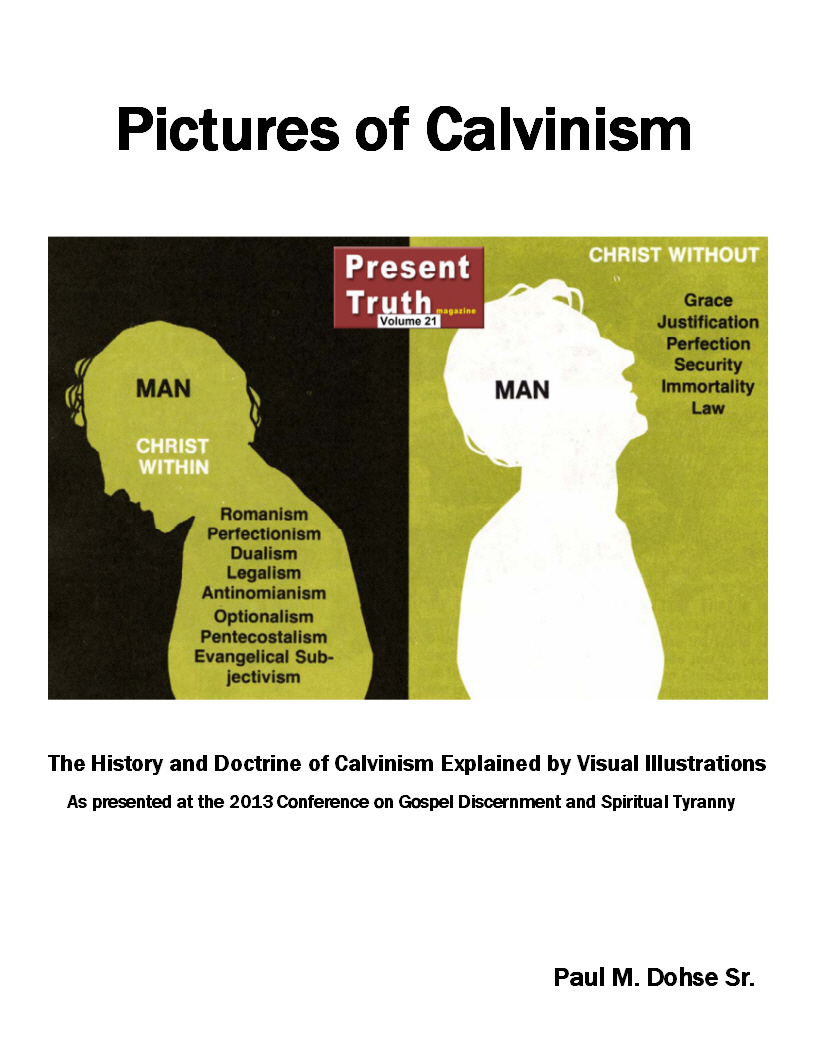 “Whether Protestants know it or not (that’s you), we all either believe this directly or we function that way. We are all good theologians of the cross. Luther would be proud of all of us. It’s a family tradition… Like Luther, we delight in the ‘simplicity of faith.’ Like Luther, we believe that thinking, reasoning, etc. is a filthy whore who should ‘have dung rubbed in her face to make her ugly’…. Hope of an objective future, and life wisdom, assumes that we are able to think through those things and apply them to our lives. To the Protestant, that is an ugly whore.”
Protestantism, which includes Baptists et al, is dumbed down by ecclesiastical design. On April 25, 1518, Martin Luther declared war on the priesthood of believers and sanctification via his declaration of Reformed theology in Heidelberg, Germany. The 95 Thesis was a moral treatise against Rome six months prior, but the Heidelberg Disputation was the very foundation of Reformed ideology. It called on theologians to interpret all of reality from a dual perspective: the glory story or the cross story.
True theology (the cross story) would look at man as worthless and empty with eyes of faith that can only see outward to the glory of God. This made all reality good as the sum equation of God’s goodness and man’s evil. So, tragedy only reflects man’s worthlessness and his deserved plight and the glorification of God following. The glory story was anything that recognized anything IN man at all. No goodness or grace is infused into man. True theology is a purely outward look, and only looks within to find reason for repentance that then glorifies God (“deep repentance”). Luther believed that man can experience the grace of God, but cannot participate in it. That would be works salvation. Man must empty himself to be saved and remain empty till the final judgment.
Hence, any notion that man could become good through salvation was deemed heretical, and a damning false gospel. In many ways, it was predicated on the Platonist idea that all matter is evil, and that would of course include man. The first sentence of the Calvin Institutes (CI 1.1.1) is based on Luther’s dual construct, and then the rest of the Institutes build a full metaphysical statement on the foundation of that first sentence. Pretty impressive. In that sentence, Calvin states that all wisdom is derived from a knowledge of us and knowledge of God. The two opposites define each other. Both Calvin and Luther were followers of Augustine who was the undisputed first and foremost integrationist in Western culture. Plato integrated Eastern mysticism with Western science, and Augustine integrated Platonism with the Bible. A cursory observation of world history makes this plain.
Therefore, the good Luther/Calvin cross theologian heartily agrees with, “study to show thyself approved, a workman that need not be ashamed.” But in the Protestant construct that redefines sanctification (and actually rejects it totally), what does “study” mean? What does “approved” mean? And what does “workman” mean? The Reformers did not believe anybody is approved. They believed work in sanctification (the Christian life) was equivalent to works salvation. Augustine, Luther, and Calvin believed baptism replaced circumcision, and sanctification replaced the Old Testament Sabbath Rest. Working on the Sabbath would bring death, and in the same way, working in sanctification also brings death (John King: The Complete Bible Commentary Collection of John Calvin; Genesis, Ch.2 sec.3, Ch.17 sec.13. Ibid: The Harmony of the Law, Due. 5:12-15, sec. 15).
So, “study” is really a focus on what ANY Bible text says about mankind’s wretched, sinful existence as opposed to God’s holiness. When the equation is seen, a steady flow of Christ’s obedience is imputed to our account and we remain justified. These manifestations may, or may not be experienced, but if they are, it is in the realm of the subjective where even the experience cannot be somehow attributed to us. This selfless, daily bearing of the cross and dying to self will lead to joy, but we do not know if this joy is directly linked to a Christ manifestation. The gospel is objective and remains outside of us, but is experienced subjectively. Any inward focus leads to inward subjectivity and as John Piper stated it, “imperils the soul.” See post illustration. It is merely an application of Eastern Mysticism to make sanctification by justification possible.
This is why Luther despised reason and called it a prostitute that should have “dung” rubbed in her face to “make her ugly.” Reason is the glory story. Our ability to reason has to do with an inner ability apart from God. Our “study” is limited to seeing the cross more by a greater and greater realization of our God unlikeness. Our “work” is this study and contentment in the ruin that God has sovereignly placed us in. But of course, “Contentment with godliness is great gain.” That is knowing our own place in the caste system which is sovereignly determined by birth. Supposedly, working hard at being content in our own wretched station of life is not work—it’s faith. Problem is, Luther et al considered that to be saving faith as long as it is practiced in sanctification. You do the math. There is a standard for what isn’t work in sanctification and what is work in sanctification for the purpose of remaining justified.
That is why we argue That justification must be a finished work separate from our Christian life.
But this finally brings me to my point. Whether Protestants know it or not (that’s you), we all either believe this directly or we function that way. We are all good theologians of the cross. Luther would be proud of all of us. It’s a family tradition. Look around, that’s why few Christians know theology or doctrine. In fact, such ignorance in American church culture is a Lutheran badge of honor. Like Luther, we delight in the “simplicity of faith.” Like Luther, we believe that thinking, reasoning, etc. is a filthy whore who should “have dung rubbed in her face to make her ugly.”
Meanwhile, Christians do not know the difference between sanctification and justification, covenants, promises, prophecy, and things like “the book of life.” Why would they? If every verse in the Bible is about how wicked we are as set against God’s holiness, why would we know about those actual BIBLE WORDS. Those aren’t theological words; those are words that are in the Bible.
There is a kind of Christianity in our day that has become extinct. It presumes that if you want to have peace, you have to plan for it. They believe that plan is found in biblical wisdom. Gaining wisdom + planning + applying = peace/happiness. This is opposed to the traditional Christianity of our day that assumes the Bible is not for that purpose. The assumption is that the Bible is a tool for salvific contemplationism that results in subjective manifestations of happiness.
Hope of an objective future, and life wisdom, assumes that we are able to think through those things and apply them to our lives. To the Protestant, that is an ugly whore.
The Book of Life is a massive untapped biblical subject that is a major Segway to additional understanding. For you election buffs, you might be interested in knowing that a cursory study of the subject seems to indicate that EVERYONE born into the world is initially written in the book of life. If that is true, that has major theological implications.
One of the myths about the Reformation is that it made the printed Bible available to the masses. That’s true to a point, but along with increased availability came a distorted purpose in describing its use. This protestant tradition of keeping congregants dumbed down in our day with Lutheran epistemology is exemplified by projects like BibleMesh. These programs find their roots in the Lutheran tradition.
This is why after contemplating the counsel of many different people, I have decided to not screen comments on this blog while I realize that I need a moderator desperately. While the Potter’s House may be a different story, this blog does not seek to protect people from having to stand on their own two cranial hemispheres. People who come here challenge my readers to study new concepts for themselves. The Book of Life issue was in fact brought up by one of those visitors, a doctrine rarely heard of in the church. That’s what inspired this post.
Those who come to the Potter’s House are great thinkers, but yet, the Bible is clear that a local assembly is not an acropolis. There are some who come to PPT that offer strengths that Protestants lack by design: knowledge. It is then up to my readers to show themselves approved.
Moreover, I think the time is nearly upon us when the problem is clearly seen: anti-biblical sanctification. The formal institutionalized church is never going to deal with that because its construct was designed to serve that purpose to begin with. And I don’t think censorship on this blog is a solution by any stretch of the imagination. The solution is to come out from among them while not turning our backs on assembling and fellowshipping with other Christians. An environment where what we learn from the Scriptures is not dictated. A place where we are free to explore EVERYTHING that is in the Scriptures, not just what Luther thought we should know.
Blogs serve to fill that gap until Christians become solution oriented. Leaving church is not the issue, no longer letting control freaks dictate what church is—is the solution, and then acting on it for God’s glory.
paul

Are House Churches the Biblically Prescribed Model?
It is irrefutable that the early church met in homes. It is also irrefutable that apostolic epistles were written to groups of home churches designated by an area, primarily cities. The letters were written for specific purposes unique to those churches, which clearly demonstrates a fellowship and unity among them.
In Acts 20, Paul called for a meeting with the Ephesian elders. Those elders represented the home churches in Ephesus—this is evident. Churches were separated by geographies made up of home assemblies and led by a particular group of elders. Once you see this construct, massive amounts of biblical data begins to fall into place. And once again, we find that we have been fed a load of boloney on another issue by the institutionalized church: “New Testament church models are ambiguous.” Not so.
Question is, was this a transitional model or intended to be the norm? I think it was intended to be the norm for a couple of reasons. First, several of the home churches were hosted by believers with significant financial means. Even though the New Testament spans several years and the church was endowed with wealthy people to some degree, we see no other model in regard to a central meeting place. Secondly, according to my wife Susan who has studied Reformation history extensively, it was Augustine who normalized the central meeting place concept. That means the initial model was in practice for at least 300 years.
The New Testament describes the leadership, the worship, and general activities of the early church in detail. There is no ambiguity here, a prescribed model is apparent. But home church does not mean the organization thereof is loosey-goosey. Far from it. Structure and organization is described in detail. Key to a successful home church network like that of the early church is paid, fulltime leaders. It is a structure within a free atmosphere. Administration and procedure are critical. Things are to be done, “decently and in order.”
As you can see, I am only putting forth a general thesis here for the time being. But in the near future I will be writing a detailed explanation of the New Testament model. Basically, I think it is a model that combines the casual and free atmosphere of the home with sound administration.
Also, there is leadership, but no polity (government), and fellowship versus authority. Sound administration can be mutually exclusive from government and authority. Unity is the goal, not control. It’s a “household of faith” not an institution. Unity comes from following the one mind in Christ; i.e., TRUTH.
1. Leadership, not government.
2. Fellowship, not authority.
3. Unity, not control.
4. A household of faith, not an institution.
Time to think out of the box on this. Time to rethink all of our presuppositions.
paul



16 comments