TANC Strategic Plan: From Identification to Solution; a Thesis on the New Testament Church Model
TANC (Truth About New Calvinism) is a research organization that seeks to thoroughly understand Reformed theology and its effect on the church and culture. We believe that enough information has been accumulated to draw conclusions, and there are enough conclusions to begin the formulation of solutions.
It is our conclusion that Reformed theology is an ill-advised doctrinal construct for the church and has had a detrimental effect on culture in general. Currently, American church culture is in upheaval (note innumerable discernment/abuse blogs); yet, the new resurgence of Reformed theology began in 1970 and has dominated the American church for the past twenty years. Where are the results that supposedly always spring forth from the Reformation’s Post Tenebras Lux (After darkness….light)?
Though research will continue on the WHAT, there is enough information on the WHY to begin setting the solution in motion. The solution is the New Testament church model. The assumption has always been that the New Testament model was transitional, informal, and deliberately ambiguous to allow morphing for changing times. We now think that this is not the case at all. We think the Bible sets forth a specific model in detail. We think this model is the answer for the present condition of the American church.
1. The general form.
The New Testament church was made up of home fellowships and each church was designated by a geographical area, usually a city. Perhaps the clearest example of this is Acts 20:
17 Now from Miletus he sent to Ephesus and called the elders of the church to come to him. 18 And when they came to him, he said to them:
“You yourselves know how I lived among you the whole time from the first day that I set foot in Asia, 19 serving the Lord with all humility and with tears and with trials that happened to me through the plots of the Jews; 20 how I did not shrink from declaring to you anything that was profitable, and teaching you in public and from house to house, 21 testifying both to Jews and to Greeks of repentance toward God and of faith in our Lord Jesus Christ. 22 And now, behold, I am going to Jerusalem, constrained by the Spirit, not knowing what will happen to me there, 23 except that the Holy Spirit testifies to me in every city that imprisonment and afflictions await me. 24 But I do not account my life of any value nor as precious to myself, if only I may finish my course and the ministry that I received from the Lord Jesus, to testify to the gospel of the grace of God. 25 And now, behold, I know that none of you among whom I have gone about proclaiming the kingdom will see my face again. 26 Therefore I testify to you this day that I am innocent of the blood of all, 27 for I did not shrink from declaring to you the whole counsel of God. 28 Pay careful attention to yourselves and to all the flock, in which the Holy Spirit has made you overseers, to care for the church of God, which he obtained with his own blood. 29 I know that after my departure fierce wolves will come in among you, not sparing the flock; 30 and from among your own selves will arise men speaking twisted things, to draw away the disciples after them. 31 Therefore be alert, remembering that for three years I did not cease night or day to admonish every one with tears. 32 And now I commend you to God and to the word of his grace, which is able to build you up and to give you the inheritance among all those who are sanctified. 33 I coveted no one’s silver or gold or apparel. 34 You yourselves know that these hands ministered to my necessities and to those who were with me. 35 In all things I have shown you that by working hard in this way we must help the weak and remember the words of the Lord Jesus, how he himself said, ‘It is more blessed to give than to receive.’”
It was ONE “church” in Ephesus made up of several households. Paul taught the Ephesian church (singular) from “house to house.” “Public” doesn’t necessarily mean a building where they met corporately. In fact, in all cases where epistles are addressed, it would have to assume that each geography or city only had one church building—this is unlikely.
There were a group of elders who led the home churches in a particular city. This is who Paul calls together to give his last charge before his departure. One of the qualifications of an elder is “given to hospitality,” probably because many of the house fellowships were the homes of elders.
While many point to the seven letters in Revelation for proof regarding one pastor/ one church, again, this assumes there was only one place of gathering in each city. The “messenger” of each city was probably just that: a messenger responsible for delivering letters and other correspondence to each home fellowship in a given geography or city. In the case of Revelation, this could have been an actual angel assigned to each city church as well given the apocalyptic nature of the book.
Remember also that Titus was given the responsibility of appointing elders in “every town.”
2. Leadership structure and purpose.
The New Testament model combines strong structure with free fellowship. It rejects institutional authority while implementing strong planning and order. It focuses on the gifts of believers in order to execute the Lord’s strategic plan for the ages. We see this in Ephesians 4:
11 And he gave the apostles, the prophets, the evangelists, the shepherds and teachers, 12 to equip the saints for the work of ministry, for building up the body of Christ, 13 until we all attain to the unity of the faith and of the knowledge of the Son of God, to mature manhood, to the measure of the stature of the fullness of Christ, 14 so that we may no longer be children, tossed to and fro by the waves and carried about by every wind of doctrine, by human cunning, by craftiness in deceitful schemes. 15 Rather, speaking the truth in love, we are to grow up in every way into him who is the head, into Christ, 16 from whom the whole body, joined and held together by every joint with which it is equipped, when each part is working properly, makes the body grow so that it builds itself up in love.
I am not sure what could be clearer. There is equipping gifts and ministry gifts given to every believer for the building up of Christ’s body. Institutions, by virtue of their very nature begin to devalue individual gifts. Posit the idea if you will, that an institution can function like a body, but it has never been done. That is because caste systems and a body of believers are mutually exclusive concepts. The fellowship of the saints is focused on a purpose that requires all parts to be well equipped and functioning properly while building each other up in love.
Teachers equip an army of ministers with innumerable categories of ministry, love and good works. The floodgates of possibllity are opened. Administration and organization would be the focus of deacons and deaconesses. One must get past the present cultural conditioning that dichotomizes structure and fellowship. It is the same mentality that sets different standards for the church and homes. We act different in each setting; e.g., many would not attend a church that functions like their own home. But in contrast, “an elder must order his household well, for if he cannot manage his own household, how will he manage the household of God?” Homes are as informal as you get, but they need order. Instead of keeping homes separate from church, the New Testament model brings church to the home. In the book of Ephesians, Paul starts with the fellowship in 4:1, addresses the home, and then behavior in the secular realm.
This is not some weird communal concept; it merely puts strong emphasis on planning and order for the informal fellowship of the church. The unique concept is the fusion of informal fellowship with strong planning while eliminating the caste system inherent in institutions.
3. Expected problems.
Where humans are involved in any model, even born again creatures in mortal bodies, problems will arise. That is exactly what the letters to Corinth are about. When you have numerous fellowships led by teachers, the whole FAVORITE TEACHER thing arises followed by competition between the households. In a Reformed church where I was one of the pastors, we had midweek home fellowships as a replacement for Wednesday night services. I saw these Corinth-like problems develop firsthand. The congregants would gravitate to the households where the charismatic teachers taught, leaving the rest of the fellowships to their humble little huddles.
Of course, being ignorant Protestants, we fixed the problem through authority. Rather than not being jaded by tradition and correcting the problem by example and a study of Paul’s letters to Corinth, we implemented a rule that each congregant had to attend the home group in their vicinity. That is not how Paul dealt with the same exact problem at Corinth. By the way, note that the baptisms Paul mentions were unique to the home fellowships where their favorite teachers taught. These epistles shouldn’t be read as if the church at Corinth met together corporately. The problems were inherent throughout many of the home fellowships save a few. Apparently, a fellowship in the home of a woman named Chloe (literally, “them of Chloe”) sent word to Paul about what was going on in the other fellowships at Corinth. The following has also been suggested:
There are three interesting names to consider that come up in the closing of Paul’s letter: Stephanas, Fortunatus, and Achaicus were from Corinth and visiting Paul (who was in Ephesus at the time) when he wrote this letter containing Chloe’s name. It seems very plausible that Stephanas, Fortunatus, and Achaicus were “Chloe’s people.” It is also possible that these three returned to Corinth to deliver Paul’s letter to the Christians there (Theresa Doyle Nelson: Chloe and the Corinthians).
At any rate, the letters to the church at Corinth supply a painstaking detailed account concerning Christian living within the church and the procedure of it as well.
4. Authority and Fellowship
The only authority is Christ and His word recorded in the Bible. This guides the fellowship of believers whose unity is determined by the “one mind in Christ” found in the Bible. Churches have been given authority as Christ’s ambassadors on earth. We represent the kingdom that is presently in heaven and we have been given authority to make disciples on behalf of that kingdom. However, there is no authority among the ambassadors, only fellowship. The assemblies function in a fellowship construct. Elders are to lead by example and equip. The purpose of this treatise is to lay a basic thesis, so I am not going to take room here to build this case, but will touch on the most popular argument for authority in the church:
Hebrews 13:17 – Obey your leaders and submit to them, for they are keeping watch over your souls, as those who will have to give an account. Let them do this with joy and not with groaning, for that would be of no advantage to you.
The word for “obey” in this verse is πείθω (peithō) which means to persuade by argument. The word “submit” is ὑπείκω hypeikō which means “to surrender.” Here is the best rendering according to a heavy paraphrase:
Be persuaded by your leaders’ arguments from Scripture and don’t be stubborn in regard to the truth for this is no advantage to your own spiritual wellbeing. Besides, they have to give an account for how they led you, and let that account be a joyful recital to the Lord rather than a sorrowful report.
There is no authority, but rather fellowship modification in specified instances; for example,
A. We can’t hang out with you if you won’t let us help you with this problem.
B. You’re my brother in Christ, but I can’t have you over for dinner if you won’t work.
There would be no formal membership role. You either fellowship with the group or you don’t. You either recognize your gift and apply it within the body or you don’t. You identify with the group by fellowship, service, and obedience to the word of God, not church leaders.
I might add that almost all of the New Testament epistles are addressed to the church as a whole and not just the elders. Apostolic authority was a charge mandated to the whole assembly—that’s where the authority is, not with the elders.
5. Gatherings
The examples are consistent throughout the New Testament. The saints met in homes for a meal, general fellowship, a time of teaching, a time of encouraging others unto good works, the singing of hymn’s, and an informal breaking of bread and drinking of the cup to remember the Lord’s return. In the house churches of Corinth, the aristocracy that didn’t work were eating all of the food before the slaves got there. So, the salves were showing up hungry and tired after work and there was no food left. This is one of the issues Paul addressed.
6. Practical Considerations
The Protestant Reformation was predicated on a false gospel with a Gnostic application and has no authority. No Protestant linage of authority can be traced back to the apostolic church. Moreover, the father of the Reformation, St. Augustine, never repented of being a Catholic and never vacated the Catholic Church’s spiritual idolatry or murderous ways. The tyranny of Catholicism and Protestantism is only tempered by the rule of law spawned by the Enlightenment Era. The remnants of its tyranny in our day only has use for threatening to withhold absolution. Its authority model mires the so-called church in all sorts of legal red tape required of institutions in a secular society. In church state societies, its construct does little more than spawn civil wars and inquisitions.
The fellowship model focuses on strong sanctification and wise living. Practically, this New Testament model could begin with one fellowship in a city. This is what we have done here at the Potter’s House. The church is “The Fellowship in Xenia,” and we consider the Potter’s House the first household of faith thereof. Others who would like to join this movement could simply begin by joining us here, or start their own fellowship. The two groups would then work together to refine the movement’s mode of operation moving forward. The applications are without end.
There is no room here to list all of the controversies in the formal church that would become non-issues in the fellowship model. Controversy among fellowships would be resolved within each city. The successful model would then be duplicated in other cities, but issues within those fellowships would be resolved within that geographical fellowship. Of course, the evangelism angle here has deep ramifications.
7. Conclusion
This model is based on the authority of God’s word and fellowship. The authority is vertical, not horizontal. Its focus is aggressive sanctification leading to a natural outflow of evangelism, and a strong emphasis on individual gifts.
Calvinism: The Root of All Evil in the American Church
 Show me the Money.
Why has New Calvinism taken the American church by storm? Because the American church was already primed for it. Before authentic Calvinism was rediscovered by a Seventh-Day Adventist in 1969, America was, and always has been half-pregnant with the Puritan form of Calvin’s Geneva.
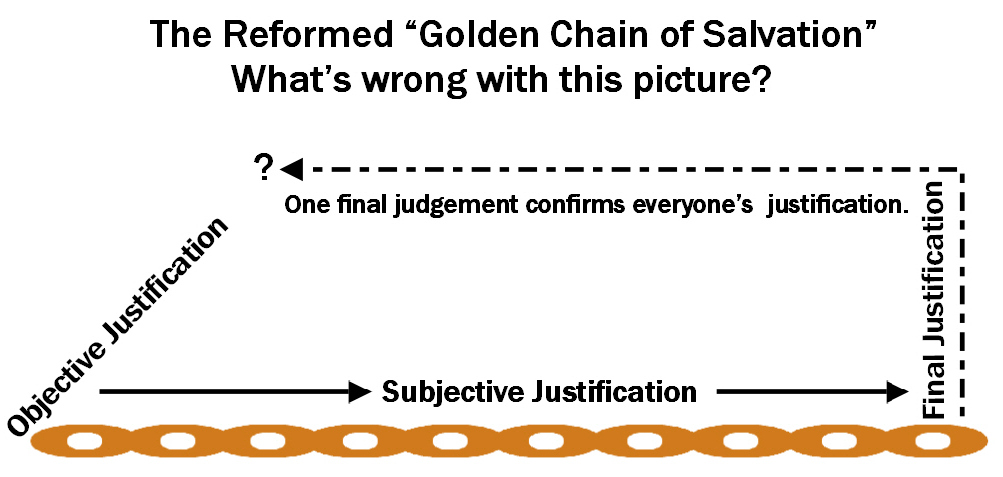
Calvinism makes everything about justification while excluding sanctification for a very simple reason: control. If justification is a finished work, and all that is at stake is eternal rewards in heaven, the church would not be nearly the institution that it is today. Why is there big money in religion? Why is there a church every two miles in America with a 500,000 dollar annual budget? Why did 3,000,000 people show up on a beach to see the new Pope? Why does the Catholic Church have so much power? Because salvation is big business my friend. If salvation is found in an institution, it will all but rule the world.
Plain and simple: the Reformers taught that the same forgiveness for sin that saved you needs to be continually sought out to maintain salvation (justification), and that forgiveness can only be found in the Protestant church. Sola Fide indeed, there is no money in sanctification; the big bucks are in justification. From a worldly perspective, Christ had a horrible business plan:
Go therefore and make disciples of all nations, baptizing them in the name of the Father and of the Son and of the Holy Spirit, teaching them to observe all that I have commanded you. And behold, I am with you always, to the end of the age.
There is no money or power in making disciples; the money is in making saved people and requiring them to be faithful to the institution in order to stay saved. In business, we call that RMR (reoccurring monthly revenue).
A finished justification and focus on discipleship empowers the individual, not the institution. Who the Master is—is a settled issue and the focus is preparing for His return by making maximum use of the individual talents given by grace. But when keeping our justification is the focus, individual responsibility to the Master is relegated to the closets. Come now, let’s be honest, how many Christians in the American church even know what their spiritual gifts are? How often do we see church “services” where we “encourage each other unto good works” as opposed to being there to “receive more Jesus.”
The Parable of the Talents is teaching about a servant who sought to only give back to the Master what he had originally received. And that is exactly what the Reformers promoted. Calvin et al believed that sanctification replaced the Old Testament Sabbath. We will make it to heaven if we “rest” in our salvation.
Enter a conversation I had with a brother not but two days ago:
Ya know Paul, this New Calvinism stuff is supposedly so great, but I have been a member of this church for ten years now, and what? Maybe five people have been saved in that time.
Exactly. Let’s face another fact, people aren’t being saved, if anything, they are just being shuffled around or convinced they were never saved to begin with. The reason for this is simple: Christ said to let our good works shine before men so that our Father in heaven would be glorified. That concept was anathema to Calvin. The fact that sanctification is a Sabbath rest should speak for itself.
The double myth of Arminianism.
Arminianism is another Protestant myth. It centers on the election debate, a doctrine that Calvinists don’t even believe to begin with. The Arminian/Calvinist debate is a double myth. Start thinking for crying out loud, what power and control would there be in election? There is no money in election either. Election portends a settled eternal destiny. If there is election, what do we need the institutional church for? “Election” only gets you into the race for “final justification,” but the race must be run in the church so that you can get your perpetual forgiveness that keeps you in the race. My friend, always follow the money. Always.
While arguing for free will versus total depravity, Arminians have always functioned like Calvinists. Since the Pilgrims Puritans landed on our Eastern shores, we have had Calvinism Lager and Calvinism Light. Arminianism is closet Calvinism. Both devalue sanctification. Calvinism completely rejects sanctification as “subjective justification.” Arminians give tacit recognition to sanctification while completely rejecting it by the way they function. The lager form proudly shows forth Calvin’s doctrine of ecclesiastical justification while Arminians live by John Calvin bumper stickers:
We are all just sinners saved by grace.
This is Calvin’s view of Christians remaining totally depraved while receiving justification in the present-continuance tense.
Just this week, I saw the following John Calvin bumper stickers posted by people who would vehemently deny that they are Calvinists:

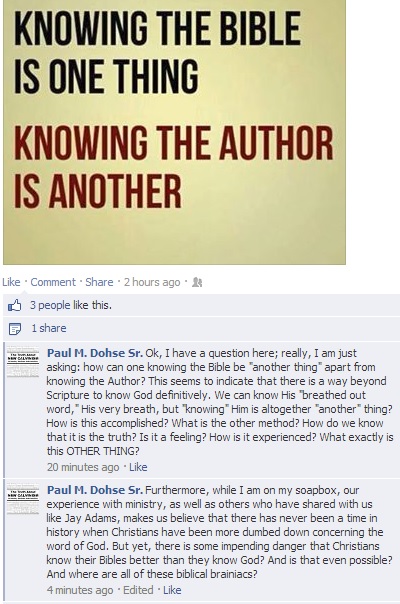
This is based on Calvin’s Redemptive Historical hermeneutic and Luther’s Cross Story epistemology. The idea is that the Bible was not written for the purpose of grammatical exegesis, but rather to contemplate the redemptive narrative only leading to subjective, perpetual justification that is necessary to achieve “final justification.” Knowing the Bible factually is Luther’s Glory Story, knowing the Author is Luther’s Cross Story. In other words, every verse in the Bible is about justification and not wisdom for sanctification, the proverbial, “living by lists” and “do’s and don’ts.”
And….

Right, because sanctification is “subjective justification.” Any concern with our outward behavior is, as Calvinist hack Dr. Michael Horton states it, “trying to BE the gospel rather than preaching the gospel.” This fosters the very thing that makes Christianity contemptible to the world—preaching the gospel and not living it. It is the Sabbatical sanctification fostered by John Calvin himself and promoted by Arminians wholesale.
Calminianism is the real reality.
Sanctification?
So ok, the Bible has much to say about justification by faith alone, but where is this standalone subject of sanctification that is a different matter of Christian living altogether? One place among many would be 1Thessalonians 4:3ff:
3 For this is the will of God, your sanctification: that you abstain from sexual immorality; 4 that each one of you know how to control his own body in holiness and honor, 5 not in the passion of lust like the Gentiles who do not know God;
Obviously, sanctification is all about KNOWing HOW to control our bodies. And even more obvious is the fact that justification has nothing to do with that at all. And also obvious is the fact that the two aforementioned Calminian metaphysical bumber stickers totally reject this biblical definition. Let’s have another moment of honesty. How many Christians know more about controlling their body today than they did yesterday? And does that affect how the world sees us, and God?
Fusion and dichotomy.
Sanctification is a continued endeavor to learn more and more how to control our bodies from the Scriptures. Calvinism rejects that as the Glory Story. A focus on controlling our own bodies makes life about us and “eclipses the Son.” It fuses justification and sanctification together while dichotomizing anthropology. The opposite should be true in regard to both categories. Calminianism is an upside down Christian life.
Anthropological concepts; i.e., what makes people tick, are deemed pragmatic and unspiritual. Rather than seeing these subjects as wisdom where Christians ought to be outdoing the world, they are rejected as “living by lists” and “living by do’s and don’ts.” I like what one pastor had to say about those truisms:
They are telling us the following: “Don’t live by do’s and Don’ts.”
A prime example is something that everyone is born with: a conscience. The only Psychiatrist in history that really had a track record of helping people was O. Hobart Mowrer. The main thrust of his therapy was an emphasis on keeping a clear conscience. He believed that most mental illness was caused by a guilty conscience. He cured people by insisting that they deal with unresolved issues of guilt. Mowrer, once the President of the APA along with a long list of distinguished awards and appointments, wrote The Crisis in Psychiatry and Religion. The book rejected the medical model of Psychology and fustigated Christianity for relegating the care of the “mentally ill” to Freudian Psychology. Mowrer was not a Christian.
Nevertheless, he is the one who most inspired the father of the contemporary biblical counseling movement, Dr. Jay E. Adams, who applied Mowrer’s practical approach to biblical counseling. Adams did this because he observed Mowrer’s astounding results while doing an internship with him in the summer of 1965.
This only makes sense. The apostle Paul instructed Christians to “keep a clear conscience before God.” The Bible has much to say about the subject of conscience. Christians should use the Bible to be wiser in all areas of human practicality and should excel at it far beyond those who live in the world. Let’s have another honesty moment: how many sermons do we hear on the importance of practicality in the Christian life? Subjects such as, planning, accountability, etc. Unfortunately, these biblical subjects are dichotomized from the “spiritual” and deemed pragmatic.
At the same time, justification and sanctification are fused together in an effort to live out a Sabbatical sanctification; i.e., sanctification by faith alone. This is nothing new, James rejected the concept in his epistle to the 12 tribes of Israel that made up the apostolic church. It is also a Gnostic concept that sees the material as evil and only the spiritual as good. Therefore, since anthropology is part of the material realm, any practicality thereof cannot benefit the spiritual. Supposedly.
Another concept, along with conscience, is that of habituation. Through discipline, habit patterns can be formed that lead to change, ask anyone who has been in the military. People who inter the military come out as changed people. Because of our Protestant heritage and conditioning, these concepts seem grotesquely pragmatic. But according to the Bible, we are to make use of them.
Sanctification is a many-faceted colaboring with the Holy Spirit, and the Spirit’s power is unleashed through wisdom and obedience (James 1:25). We must know assuredly that justification is a finished work, and absolutely nothing that we do in sanctification can affect it for better or worse. This is what purifies our motives in our love for Christ in sanctification. “If you love me, keep my commandments” has absolutely nothing to do with our justification. It’s for love only, not a working for justification. We are thankful for our justification, but that thankfulness doesn’t save us or keep us saved. Only Christ saves—the new creature now loves Christ because that’s who he/she is. Christ’s love made it possible for us to love Him in sanctification, but nothing in sanctification keeps us saved. Sanctification looks not for a “final justification,” but readies itself for the Master’s return and longs to hear the words, “Well done faithful servant!”
When I was a young boy, I often lived with my grandparents during the summer. My grandfather was a real-life John Wayne type. He worked as a construction foreman for a large company. And he was my hero. Before he left for work in the morning, I would sheepishly await for him to depart before beginning a flurry of tasks around their small farm. I would always have the tasks done well before his arrival home and waited at the end of the drive to hear his truck’s humming wheels come down State Route 125. I would then take him around the property and show him the finished tasks. His smile and compliments were my reward. These are tasks that I didn’t have to do; our love for each other was always something totally different from those tasks. I knew assuredly that he would love me whether I did those tasks or not because I was his grandson—his pride and joy. Some idea that the withholding of serving him in order to elevate the reality of his love for me would have been a ridiculous notion.
Justification and sanctification must be separate. Anthropology and the spiritual must be fused. Our bodies must be controlled and set apart for good works. This will lead to the showing forth of our good works and the glorification of the Father leading to salvation for others, not sheep redistribution.
Spiritual abuse and disdain for justice.
A devaluing of our own holiness for fear that it will eclipse the holiness of God, coupled with salvation being sought in the institutionalized Calminian church, has led to the same indecencies seen in the mother of the Reformers; the Roman Catholic Church. Rome has never repented of its abject thirst for blood, and the fruit does not fall far from the tree.
The family split for the time being, but the Reformers never departed from Rome’s ecclesiastical justification found through absolution by church leaders. When this is the case, any vehicle going to heaven will suffice for heaven’s sake alone. The institution will never be threatened for the sake of the few. To the leaders, their existence and power is threatened, to the parishioners, their salvation is threatened. The institution must be preserved.
This is no new thing, in the minds of the Jewish leaders; Jesus Christ was sacrificed to preserve the Jewish religious system. If even Christ Himself was expendable in this mentality, what will be of the molested and raped? Besides, we are all just sinners saved by grace anyway, right? Is justice therefore anywhere on the radar screen in this discussion? Hardly. Besides, the raped and spiritually abused should be thankful because what they deserve is hell anyway, right? Once this is understood, the landscape we see today in the American church should be no surprise whatsoever.
What is the answer?
The church is a sanctified body and not an institution for final justification. We are in the business of making disciples and not keeping people justified by faith alone in sanctification. The sanctified body doesn’t justify, it is God who justifies. Men must stop worshiping at the altar of ecclesiastical justification. Justification is free to us and finished, sanctification isn’t. Sanctification is where we show our love to the savior as servants, not leaches. Evil men like Paul David Tripp who posit the idea that the Christian’s whole duty is to “rest and feed” and wait for “new and surprising fruit” because Christians only “experience” fruit and don’t participate in it must be rejected with extreme prejudice. Their evil seed was spawned in 1970, but they have been in firm control of the American church for 25 years while proclaiming each year a “resurgence.” What do we have to show for it?
It is time for men and women to recognize their calling, their new birth, their indwelling counselor, their gifts, and the authority of Christ and His word alone. There is NO traceable lineage back to the apostolic church like the genealogy documents burned by Titus. Murdering mystic despots have no claim on any authority of the church.
Godly authority is continued wherever a spirit-filled Christian picks up a Bible and obeys its words. A church is a sanctified, obedient fellowship, not a justified institution drunk with its own visions of grandeur.
paul
What is it About that Song?
I was recently introduced to a song performed by the rap duo Dani and Lizzy. The song was inspired by the passing of people close to them in recent years. Though I do not know for certain, I would say the song was not written from a Christian perspective.
I found myself captivated by the song, but didn’t know why. After some thought, I concluded that I am drawn to the song by its hopeful questions. I will never be persuaded that there is any other biblical message than that of hope for the living.
I think the song also strikes a chord in my heart because of the ministry that I am in. It is my job to understand the hopeless metaphysics of Gnostic fools dressed in priestly garb. In a life that constantly dogs us with tragedy and death, I see the resurrections in the Bible performed by Christ and the apostles as shattering this world’s paradigm with the blinding light of hope while my subjects see it as a statement on mankind’s worthlessness and possible winning ticket in the lottery of election. I think I am drawn to the song’s yearning for hope, a hope that can always be found in God and His word.
But more than anything, I think I am drawn to the song because of it’s hopeful, intelligent questions about what really matters. This is striking to me because in our day Christians don’t know how to ask questions. Not only are Christians theologically dumbed down, they don’t even know what questions to ask, much less how to answer any. So, the song asks questions that most Christians can’t answer.
That needs to change. We should be able to adorn the gospel with beautiful answers to these beautiful questions.
Enjoy:
Lyrics:
The original:
paul
Sanctification: Romans 12:1,2; Introduction

What is the gospel? The “gospel” means “good news.” All of God’s word is “good news.” This became a term that was used interchangeably with, “truth,” “word,” “law,” etc. (Paul Dohse: The Gospel; Clarification in Confusing Times pp. 9-39 Online source: http://wp.me/Pmd7S-1Jn lessons 1-4).
The gospel includes the gospel of first importance (1COR 15:3) which is the death, burial and resurrection of Christ, and the full counsel of God (Acts 20:20, 27, 32) which includes justification and sanctification.
When Paul stated that he wanted to come to Rome in order to preach the gospel to them (ROM 1:15), he was speaking of the whole counsel of God, not the gospel of first importance that they had already received. Paul was hindered from coming there to do so, and was afraid that would reflect a bias on his part because the church at that time was predominately Jewish (ROM1:13-14). We see the same mindset also that likens to the apostle John that prefers face to face teaching rather than letters (2JN 12). That is why 2John is so short, John hoped to teach them face to face. Paul couldn’t wait any longer to teach the Romans the full counsel of God, so he begins to do so in Romans 1:16, that’s why his letter is so long!
Romans is an in-depth treatise concerning God’s plan for reconciling mankind to Himself. The first eleven chapters concern justification, or how God justifies mankind which makes reconciliation possible. This is mostly informative and wisdom based as opposed to sanctification which is mostly instructive and imperative based. And knowing the will of God for the Christian is very easy:
1Thessalonians 4:3 – For this is the will of God, your sanctification: that you abstain from sexual immorality; 4 that each one of you know how to control his own body in holiness and honor, 5 not in the passion of lust like the Gentiles who do not know God; 6 that no one transgress and wrong his brother in this matter, because the Lord is an avenger in all these things, as we told you beforehand and solemnly warned you. 7 For God has not called us for impurity, but in holiness. 8 Therefore whoever disregards this, disregards not man but God, who gives his Holy Spirit to you.
9 Now concerning brotherly love you have no need for anyone to write to you, for you yourselves have been taught by God to love one another, 10 for that indeed is what you are doing to all the brothers throughout Macedonia. But we urge you, brothers, to do this more and more,
This is the clear definition of sanctification (a setting apart for holy purpose). We call it progressive sanctification. Definitive sanctification is the initial setting apart at justification. Context will determine which of these is being spoken of in any given Bible text. Progressive sanctification entails gaining wisdom on “how to” “control” our bodies in “holiness and honor.” Sanctification is a how to endeavor; get over it. It is about a bunch of do’s and don’ts—get over it. It is about living by lists—get over it. Sanctification is the science of controlling our bodies to God’s honor. Proverbs 18:4 and 20:5 state that the issues of life are deep waters—the gospel of first importance is simplistic, but the gospel of sanctification is far from it. Listen to how the book of Proverbs begins:
Proverbs 1:2 – To know wisdom and instruction, to understand words of insight, 3 to receive instruction in wise dealing, in righteousness, justice, and equity; 4 to give prudence to the simple, knowledge and discretion to the youth—5 Let the wise hear and increase in learning, and the one who understands obtain guidance, 6 to understand a proverb and a saying, the words of the wise and their riddles. 7 The fear of the Lord is the beginning of knowledge; fools despise wisdom and instruction.
Wisdom does not pertain to justification per se, Justification is the beginning of knowledge, but mark it, those who despise wisdom and understanding for sanctification are fools. Those who park on salvation are also fools—they despise wisdom and instruction. A prime example are those who request prayer “for patience.” Prayer is easy, “Lord, give me patience!” But what does Proverbs say about obtaining patience?
Proverbs 19:11 – A man’s wisdom gives him patience; it is to his glory to overlook an offense (NIV).
It takes wisdom to obtain patience. Prayer alone will not bring you patience. Justification is free by faith alone; sanctification is not free; if you get any, you will work for it. As I said yesterday in a conversation, “People want to be happy, but they don’t want to do anything to get happiness. The Bible promises that we can be happy, but unlike justification, happiness in sanctification is not unconditional—there are conditions. Paul made it clear, especially in Chapters 9-11 that justification is completely unconditional, but that is not what we see in the first verse of Chapter one:
Romans 12:1 – I appeal to you therefore, brothers, by the mercies of God, to present your bodies as a living sacrifice, holy and acceptable to God, which is your spiritual worship.
The word for “mercies” is literally (oiktirmos) “compassion.” A call to obedience is not burdensome, it is the compassion of God. Paul is making his appeal on behalf of God according to His compassion. It is the antithesis of depraved indifference. God is not the parent that lets a child grow up without wisdom and in the way that he/she would naturally go. Knowing this wisdom is a good start for patience. Like God, we should compel people to obey because it is the way of life, and not because we are inconvenienced by their wayward ways. I am not saying that it is never about us, because what is simply right and just does matter, but it should mostly be about caring for others. Our appeal should be by God’s mercy. Therefore, remember this: silence can qualify as depraved indifference. Our appeals should be with compassion, but no appeal at all is far from such—it is often depraved indifference.
The appeal to present our bodies as a living sacrifice harkens back to God’s acceptable sacrifices in the Old Testament. They had to be sacrifices without blemish. Our sacrifice is living, and the sacrifice is our service. Let’s reread Romans 12:1 without the added words that make it flow in the English translation:
Romans 12:1 – I appeal to you therefore, brothers, by the mercies of God, to present your bodies as a living sacrifice, holy and acceptable to God, which is your spiritual worship.
“Worship” (latreia) carries the idea of service to God according to the Levitical law. It also has the idea of service for hire. We serve God by continually presenting ourselves to Him as blameless. This harkens back to the definition of sanctification in 1Thessalonians 4:4. We are to control our bodies in holiness and honor. We are to be vessels fit for the Master’s use:
2Timothy 2:20 – Now in a great house there are not only vessels of gold and silver but also of wood and clay, some for honorable use, some for dishonorable. 21 Therefore, if anyone cleanses himself from what is dishonorable, he will be a vessel for honorable use, set apart as holy, useful to the master of the house, ready for every good work. 22 So flee youthful passions and pursue righteousness, faith, love, and peace, along with those who call on the Lord from a pure heart.
One way this is to be performed is to change the way we think as opposed to the way the world thinks. Agreeing with the world makes you like the world. This would be regarding, “life and godliness” (2Peter 1:3). There is the wisdom of the world and the wisdom of God. Hence, the “Christian” idea of “plundering the Egyptians” which came from Augustine is a really bad idea. What we believe makes us who we are:
Romans 12:2 – Do not be conformed to this world but be transformed by the renewal of your mind, that by testing you may discern what is the will of God, what is good and acceptable and perfect
Sanctification is God’s will. By transforming our mind according to God’s wisdom we become more like Him. By His word we discern sanctification and how to apply it to our lives. This is what leads to change: transforming our ways of thinking from the worldly to the truth. Only truth sanctifies (John 17:17). Christians are to serve the law with their minds (ROM 7:25). The word “heart” in the Bible is more often than not an idiom for the mind (ZECH 8:17, MATT 9:4, MATT 13:15, MK 7:21). We are to guard our minds with all vigilance because it is the wellspring of life (Proverbs 4;23). Paul brings this issue into clarity in 2Corinthinas 10:5;
We destroy arguments and every lofty opinion raised against the knowledge of God, and take every thought captive to obey Christ,
To say that Christians play fast and loose with ideas is an understatement. They simply don’t understand that ideas make us who we are (PROV 23:7). Every thought is to be taken captive and brought into conformity to the word of Christ. An exchange Susan and I had last week is indicative of where Christians go astray on this issue:

The Pauline approach to sanctification is an affront to contemporary Christianity. That’s the dilemma we face. Protestantism, which includes Baptists et al, is dumbed down by ecclesiastical design. On April 25, 1518, Martin Luther declared war on the priesthood of believers and sanctification via his declaration of Reformed theology in Heidelberg, Germany. The 95 Thesis was a moral treatise against Rome six months prior, but the Heidelberg Disputation was the very foundation of Reformed ideology. It called on theologians to interpret all of reality from a dual perspective: the glory story or the cross story.
True theology (the cross story) would look at man as worthless and empty with eyes of faith that can only see outward to the glory of God. This made all reality good as the sum equation of God’s goodness and man’s evil. So, tragedy only reflects man’s worthlessness and his deserved plight and the glorification of God following. The glory story was anything that recognized anything IN man at all. No goodness or grace is infused into man. True theology is a purely outward look, and only looks within to find reason for repentance that then glorifies God (“deep repentance”). Luther believed that man can experience the grace of God, but cannot participate in it. That would be works salvation. Man must empty himself to be saved and remain empty till the final judgment.
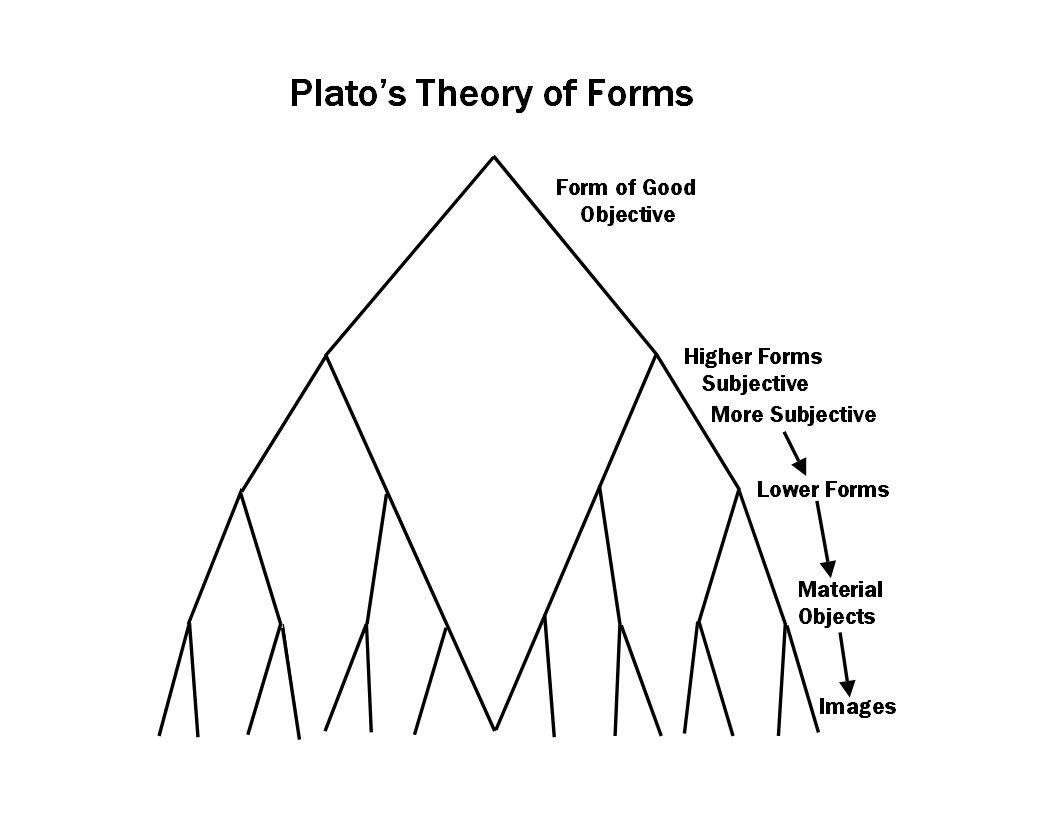
Hence, any notion that man could become good through salvation was deemed heretical, and a damning false gospel. In many ways, it was predicated on the Platonist idea that all matter is evil, and that would of course include man. The first sentence of the Calvin Institutes (CI 1.1.1) is based on Luther’s dual construct, and then the rest of the Institutes build a full metaphysical statement on the foundation of that first sentence. Pretty impressive. In that sentence, Calvin states that all wisdom is derived from a knowledge of us and knowledge of God. The two opposites define each other. Both Calvin and Luther were followers of Augustine who was the undisputed first and foremost integrationist in Western culture. Plato integrated Eastern mysticism with Western science, and Augustine integrated Platonism with the Bible. A cursory observation of world history makes this plain.
Therefore, the good Luther/Calvin cross theologian heartily agrees with, “study to show thyself approved, a workman that need not be ashamed.” But in the Protestant construct that redefines sanctification (and actually rejects it totally), what does “study” mean? What does “approved” mean? And what does “workman” mean? The Reformers did not believe anybody is approved. They believed work in sanctification (the Christian life) was equivalent to works salvation. Augustine, Luther, and Calvin believed baptism replaced circumcision, and sanctification replaced the Old Testament Sabbath Rest. Working on the Sabbath would bring death, and in the same way, working in sanctification also brings death (John King: The Complete Bible Commentary Collection of John Calvin; Genesis, Ch.2 sec.3, Ch.17 sec.13. Ibid: The Harmony of the Law, Due. 5:12-15, sec. 15). A good example how this demonstrates itself in the contemporary mindset follows. It was sent to me by a reader of the PPT blog:

Of course, as we have discussed many times, statements like this make no distinction between sanctification and justification.
So, “study” is really a focus on what ANY Bible text says about mankind’s wretched, sinful existence as opposed to God’s holiness. When the equation is seen, a steady flow of Christ’s obedience is imputed to our account and we remain justified. These manifestations may, or may not be experienced, but if they are, it is in the realm of the subjective where even the experience cannot be somehow attributed to us. This selfless, daily bearing of the cross and dying to self will lead to joy, but we do not know if this joy is directly linked to a Christ manifestation. The gospel is objective and remains outside of us, but is experienced subjectively. Any inward focus leads to inward subjectivity and as John Piper stated it, “imperils the soul.” It is merely an application of Eastern Mysticism to make sanctification by justification possible.
This is why Luther despised reason and called it a prostitute that should have “dung” rubbed in her face to “make her ugly.” Reason is the glory story. Our ability to reason has to do with an inner ability apart from God. Our “study” is limited to seeing the cross more by a greater and greater realization of our God unlikeness. Our “work” is this study and contentment in the ruin that God has sovereignly placed us in. But of course, “Contentment with godliness is great gain.” That is knowing our own place in the caste system which is sovereignly determined by birth. Supposedly, working hard at being content in our own wretched station of life is not work—it’s faith. Problem is, Luther et al considered that to be saving faith as long as it is practiced in sanctification. You do the math. There is a standard for what isn’t work in sanctification and what is work in sanctification for the purpose of remaining justified.
That is why we argue that justification must be a finished work separate from our Christian life. The conclusion of Paul’s treatise on justification in chapters 1-11 should lead to a free and aggressive sanctification. Though the Scripture has much to say about the colaboring of the Holy Spirit with us in sanctification and the reality that He makes it possible, I think the following quote by RC Sproul during a moment of sanity sums up the point well:
Sanctification is cooperative. There are two partners involved in the work. I must work and God will work. If ever the extra-biblical maxim, “God helps those who help themselves,” had any truth, it is at this point. We are not called to sit back and let God do all the work. We are called to work, and to work hard. To work something out with fear and trembling is to work with devout and conscientious rigor. It is to work with care, with a profound concern with the end result” (RC Sproul: Pleasing God p. 227).
If I am not mistaken, this is the only citation from Christian academia in this whole series on Romans, but again, I think it is worth getting in for the way it is stated. Though Paul was no less dependent on the power of the Spirit than anyone who has ever lived, he at times was brutally practical:
2Corinthians 9:1 – Now it is superfluous for me to write to you about the ministry for the saints, 2 for I know your readiness, of which I boast about you to the people of Macedonia, saying that Achaia has been ready since last year. And your zeal has stirred up most of them. 3 But I am sending the brothers so that our boasting about you may not prove empty in this matter, so that you may be ready, as I said you would be. 4 Otherwise, if some Macedonians come with me and find that you are not ready, we would be humiliated—to say nothing of you—for being so confident. 5 So I thought it necessary to urge the brothers to go on ahead to you and arrange in advance for the gift you have promised, so that it may be ready as a willing gift, not as an exaction.
Much can be learned from this passage about sanctification—not least of all in regard to the issue and application of accountability. Sanctification is a many-faceted, aggressive endeavor. It is full of practical and wise life application, and the Holy Spirit is ever willing to aid us accordingly.



14 comments