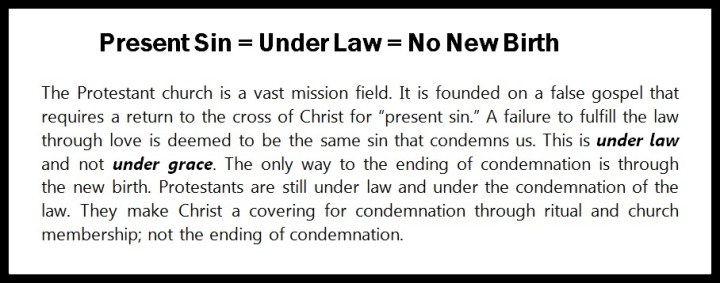
Before Protestantism There Was Happiness
While attending recent training under the tutelage of a registered nurse, she was compelled to make the following statement invoked by the part of the training that focused on physiology: “Obviously we were created by God.” Yes, physiology alone proves God, but it then beckons the question of the ages…
Who is He?
Here at TANC ministries, we contend that every person is culpable before God to answer that question for themselves. We also contend that God has made the answer to this question obtainable to those who seek THE truth not A truth.
Though Protestantism claims historical uniqueness, it is just another version of ancient mythology which is grounded in the same basic construct. When you think in terms of mythology, do not think of a people shrouded in superstition and ignorance. In contrast, mythology sees reality as a metaphysical narrative written by God, gods, or some cosmic force. Because reality is a narrative (story) written by a god, of course, all events in the narrative are predetermined. The source of all determinism is narrative metaphysics.
Second, the gods, or a god, always write the story for their own self-love and glory. The created metaphysical story is always for the self-actualization of the gods.
Third, those in the story, the created beings, ONLY experience reality but do NOT participate in reality. The created beings don’t DO reality—reality is done to them. The experience of doing is really just an experience only; you are not really doing the doing. Martin Luther, like any other good swami, articulated this via the active/passive construct. Only God is active, the material world is strictly passive. What does that mean?
Take water for example. Until it is acted upon by an outside force, it remains in a normative state. Gravity causes it to move, and environmental temperature changes its normative state of being.
This is why Protestant scholars are so fond of the biblical story of Christ resurrecting Lazarus. This supposedly represents God’s action upon the passive material world. Likewise, they are equally endeared to a twisting of Christ’s discourse with Nicodemus; the material world is passive until the Spirit acts upon it like a blowing wind moves passive tree limbs. In regard to what Nicodemus did regarding the death of Christ, evangelical John MacArthur once said, “the wind blew.” Viz, Nicodemus didn’t really do the work of his own volition, like the rest of the material world he was a passive character in the narrative being acted upon by the author writing the story.
Protestantism is just the same old mythological song and dance that was hatched in the garden by the serpent and has spawned innumerable variants. It is the knowledge of good and evil: the material world is evil—only the invisible is good. Sure, sure, of course the Bible is inerrant according to Protestant mystics; it is a prototype of God’s “grand narrative” of redemption. If it is an instruction book for love that makes you active in the narrative…that is the quintessential false gospel according to Protestantism and every other garden variety religion, pun intended.
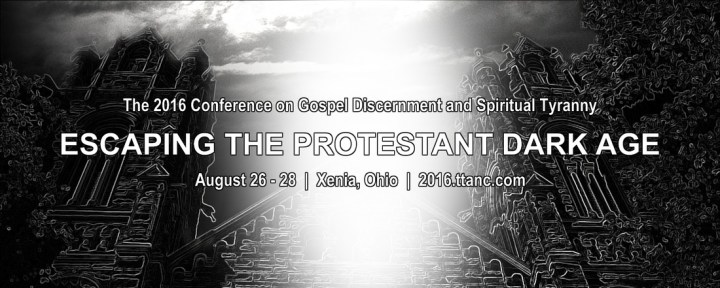
This is why the theme of this year’s 2016 TANC conference is so apt. We need an exodus that seeks the truth about who God really is. He is love, and He probably created mankind for the express purpose of propagating happiness. The God of happiness intends to put happiness on display and wants it to be experienced in unlimited proportions for eternity.
We invite you to be challenged. We invite you to question the presuppositions of ancient mythology.
paul
The Desire for and Qualifications of an Overseer – Part 1
Originally published on October 2, 2014
 As I began to put my thoughts down on “paper” (I don’t actually use paper, I jot everything down in a Word document and then fill in the blanks) it soon became apparent that the nature of this topic would be too unwieldy to limit to a single article. Therefore I have decided to address this topic in two parts.
I was inspired to write this article after viewing Paul and Susan’s latest edition of Gnostic Watch Weekly (9/26/2014). At the end of the video, Susan made reference to the qualification of an elder found in 1 Timothy 3, and used that in contrast to the alleged qualifications that reformed bloggers feel one should have in order to be qualified to post a comment on their blogs. I wanted to expand on each one of those qualifications of an elder in detail. But before I do that, I think it is necessary to first make sure we have an understanding of what an elder is. And before we do that, we first need to discuss the definition of an “overseer”.
What is an “Overseer”?
The word translated as “bishop” in the King James comes from the Greek verb επισκεπτομαι (ep-ee-skep-toh-my). It is made up of the words “epi”, meaning “over”, and “skopos”, meaning to peer about or referring to a watch or sentry or lookout. Taken together, we get the idea of “over-seer”. The word “supervisor” has the same meaning: “super”, meaning over, and “visor”, having to do with vision, seeing, or watching. So an overseer is basically a supervisor. Interestingly enough, a supervisor is a secular role and not specifically a religious one. So Paul is referring to a role that is not inherently a religious one but has a counterpart in the secular world.
How is this different from an “elder”?
While “overseer” has more to do with the role itself, the term “elder” refers more to the individual filling the role. The word “elder” is the Greek word πρεσβυτερος (pres-byoo-ter-os). It comes from the word “presbus” meaning “elderly”. In the Jewish religious/political system, the Sanhedrin was made up of elected representatives of the people called “elders” or πρεσβυτερος. Typically, these representatives were elderly men who were well respected and honored by the people.
The Jewish “synagogue” teaching model was also usually supervised by an “elder”. So with the advent of the New Testament assemblies, followers of Christ (who at the beginning were all converted Jews) simply continued to follow the synagogue model. And each fellowship selected an elder (πρεσβυτερος) to supervise/oversee (επισκεπτομαι) them.
When we come to 1 Timothy 3, Paul is addressing the qualification for the role of overseer, thus the use of the word επισκεπτομαι rather than the πρεσβυτερος. Although, granted, the significance is minor, and in general the words could be used interchangeably to refer to the same thing.
However, there is a significant difference between the forms of the word “overseer”. Please notice the difference between the words in verse 1 and verse 2:
Verse 1 επισκοπη (ep-ee-skope-ay) – noun: oversight; supervision
Verse 2 επισκοπος (ep-ee-skope-os) – noun: overseer; supervisor
Notice, that the words come from the same root, but the words are different! Even though they are both nouns, the first refers to the function, the second refers to the role. Why is this important? Let me explain.
Disclaimer: I am about to say something extremely controversial. Now consider yourself warned.
I believe that Paul is NOT addressing the issue of someone who desires TO BE an overseer. GASP! “How can you say that?” you might ask. Because of the way this reads in the Greek. While the King James renders this verse this way:
“If a man desire the office of a bishop”
This is how it appears in the Greek:
ει τις επισκοπης οργεται
if any (of) oversight is craving
This is where the difference in the words used is important. It does not say, “if anyone desires to be an overseer.” Literally it reads, “if any is desiring of oversight”. The question we must ask then is to whom or what does the indefinite pronoun “any” refer? Remember the context of 1 Timothy. Paul has gone ahead to Macedonia and has left Timothy behind in Ephesus to act as his proxy. The purpose of the letter to Timothy is to advise him on how to handle certain issues within the various assemblies there. So the “any” in verse 1 of chapter 3 must be referring to the assemblies. Paul is saying, if any of the assemblies desire oversight, they desire a good thing.
Two things should become immediately apparent here. First, that there were some assemblies that did not have an overseer. And second, the implication here would be that an overseer is optional. That’s huge! And that flies in the face of 500 years of orthodoxy. But when you consider the context and the grammatical structure of the text, it fits together perfectly. Paul is telling Timothy, if there are any assemblies that want oversight, that’s a good thing. He then proceeds to instruct Timothy on what the job requirements are for an overseer.
This is very similar to what happened in Acts chapter 6 when the Hellenistic Jews were being left out of the daily distribution to the needy, and the ethnic Jews were getting preferential treatment. The assemblies came to the apostles to solve this problem. But instead, the apostles instructed them to look to themselves for the solution. They gave them a set of criteria for deacons and told them to find men who meet these criteria and have them manage it. The apostles could have very easily said, “Ok, we appoint so and so, and such and such, and they have the authority.” But instead, they believed that those in the assemblies had the ability to select their own deacons. Likewise in this instance, Paul did not instruct Timothy to appoint specific men to the positions of overseer. He left it up to the assemblies to select their own if they so desired.
So, having then examined the relationship of elders and overseers, in part two we will study in detail each of the qualifications of an overseer. You can think of this as a job description. If you were seeking a candidate to fill a role, think about what kind of attributes you would want. What are the attributes that make for a good overseer for a home fellowship?
Andy
What’s Wrong with Church? According to the Church; They Aren’t About Morals
 I am becoming reacquainted with the characters who plied their evil trade along the blessed broken road that led me to my present life. One such evil character is now plying his trade as a church elder in Texas. Like another former elder at Clearcreek Chapel in Springboro, Ohio, the real stories behind their departures are aloof.
At any rate, Chad Bresson’s Facebook page is a treasure trove of Protestant bumper stickers indicative of what finally brought me to an ultimate standoff with institutional salvation or salvation by institutional religion in general. The first meme takes the errant Protestant view of total depravity (any good work of any person only appears to be good but is really evil) and uses it to propagate James’ contention against faith without works. Why do the masses continue to be faithful to an institution that blatantly contradicts the plain sense of Scripture? The answer is too simple: salvation comes through obedience to the authority of the institution. Viz, note the second meme.
Are you perplexed by the evil you see in church? Why? They openly proclaim that moralism is supposedly a biblical anomaly.

The Potter’s House 12/2/2012: Calvinism’s Election Only Selects Some for a Chance to Obtain Heaven
We have taken a short interlude in the book of Romans in order to launch “False Reformation: Four Tenets of Luther and Calvin’s Egregious False Gospel.” Of course, this still relates closely to the…
Source: The Potter’s House 12/2/2012: Calvinism’s Election Only Selects Some for a Chance to Obtain Heaven

 Paul's Passing Thoughts
leave a comment