The Neo-Protestant Happy Death Culture
TANC Ministries is presently in the middle of a book project that will hopefully produce a finished product by our 2016 conference in August. In the midst of the grind, one is reminded of why somebody has to do this. What is the this? And what reminds me of the why?
TANC Ministries attempts to supply a service to people searching for the truth. It’s a valid service because the Bible states that something comes part and parcel with the new birth (salvation); a love for the truth. That is the tie that binds, a mutual love for the truth.
When I was young I didn’t think truth could be known, and therefore, life looked futile to me and I lived it out according to that attitude. But life brings challenges resulting in a search for meaning, and I thought I found it in the Baptist church. I did find God, and then spent 32 years trying to make sense of church. Finally, the right church folk came along and ruined my life, and as a result, unwittingly set me free to pursue truth without their presuppositions. I was so thoroughly betrayed by the church that everything I had ever learned there was not salvageable for any use in the new journey.
Paul’s Passing Thoughts is the blog for TANC Ministries. There are over 2000 articles posted here. They are pieces of the journey. Presently, several people are scouring these articles trying to make their own sense of church. Some keep in regular contact with this ministry, others don’t for whatever reason. It’s painful to watch as I can track their process; some are up to 400 articles.
This is why I am working on this project with the help of other TANC associates; I want a book that I can hand these people and say, “Here, this will explain it.” That’s what I want. I want to be able to summarize the most important things I have learned in the past eight years and hand it to them on a silver platter. I want them to know in one month what it took me eight years to learn. That’s my joy, that’s what I live for.
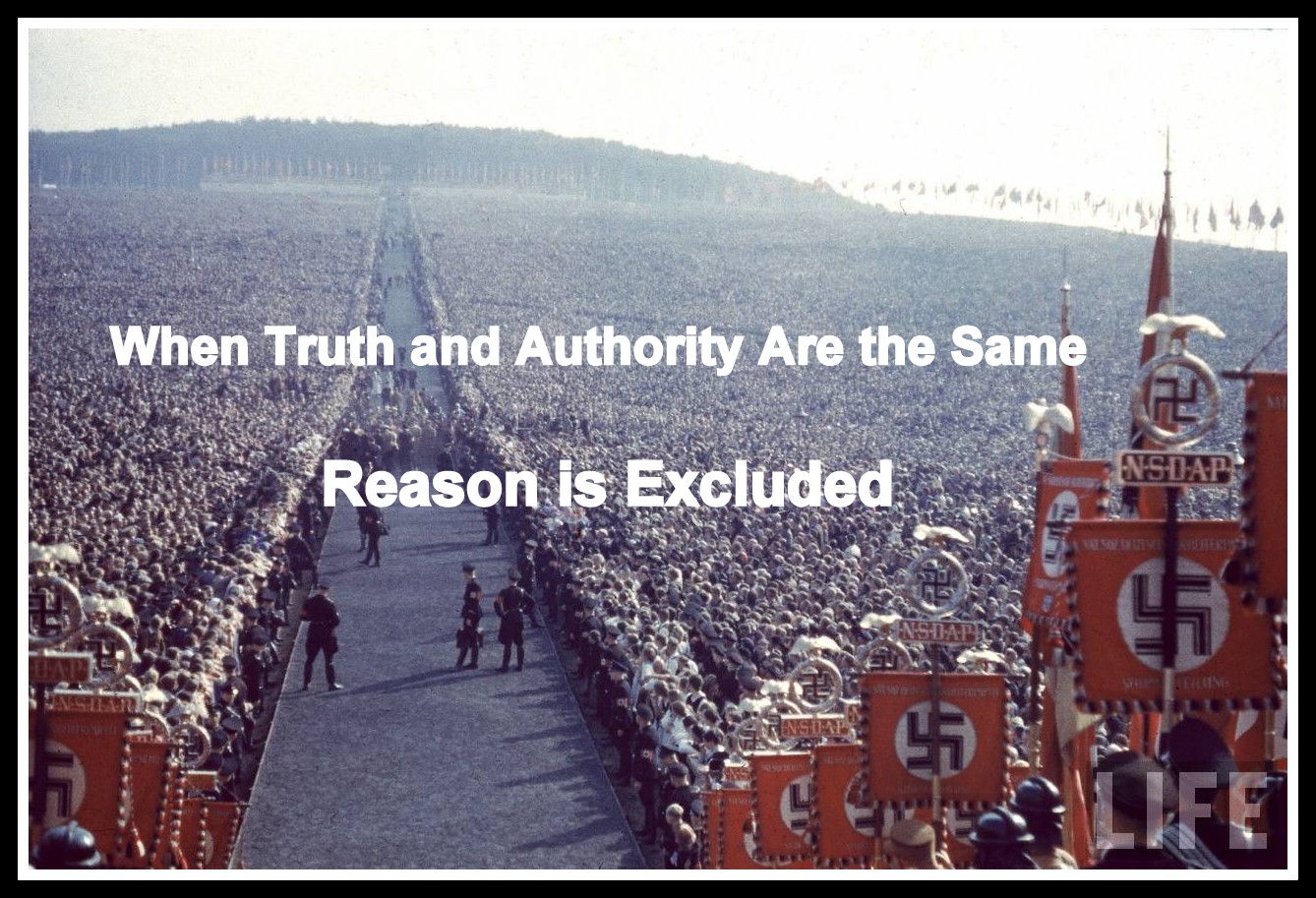
What is the most important message that people must get in this book? Answer: the Reformation was NOT founded on an exegetical interpretation of the Bible. Yes, that is the filthy lie of the Protestant Reformation, sola scriptura, and behind that lie is the reality of the Reformation: it was founded on a worldview that finds happiness in hating life. When we see a picture of a Middle East terrorist holding up a head without a body with a big smile on his face, we don’t see a Protestant, but we should. Is that an outrageous statement? Get over it…I can prove it.
In my book, no pun intended, standing up at your father’s funeral and proclaiming him a “wicked sinner” with a proud look on your face is barely less honorable. You can add to that idea that Protestantism holds the keys to your salvation through membership in their local churches. No, no, a Protestant won’t cut off your head because of American jurist prudence, they will merely have your name removed from the book of life for daring to refute their authority. Gee, no terrorism there in the least.
This brings me to the post sent to my email yesterday that reminds me of why I have to do this project, and with the help of our wonderful associates, it must be done well. The post came from a typical New Calvinist mommy blog. The article is indicative of how the original Reformation ideology of death is manifested in our present day. On the one hand, the author of the blog is, “a wife, mom, & seeker of joy!” And what is the worldview that brings this happiness? The same worldview she prescribes for her children: “…feel less than. Esteem not yourself. Feel lonely. Feel unworthy. Feel unaccomplished. Feel small. Feel lost. Feel broken. Feel least. For if you believe you are greater than, your father and I have failed miserably. Among the broken you will find Christ. My prayer for you is that you see Him everywhere.”
Well, there you have it. Imagine laying on a hospital gurney, prepped for major surgery, and hoping that the surgeon performing the operation is a Christian. And in fact he is. And so he comes in and introduces himself with a big, big smile on his face: “Hi! My name is Bob! I am no better than Adolf Hitler, unworthy, and unaccomplished; praise God!” Also, per the normal, the article includes at least one snarkey reference to America because this ideology disdains individualism; their nuanced word for everyday “freedom.” Neo-Protestantism is no friend of liberty, and the original article never was.
What kind of havoc will this worldview wreak in the lives of people? I have seen it for 32 years. Many have struggled in the milieu of this ideology for years and are looking for answers in order to know whether to stay or go, and where to go if leaving is the answer. That’s what this project is about: answers for truth-lovers.
And in regard to the researchers coming to PPT, we could use you. If the book fills your needs, that’s the proof that’s in the pudding. If you are a typical dumbed-down Protestant looking for answers—you are perfect. Join the editing committee. If you have interest in that regard, email the PPT moderator, Pearl, at mail@ttanc.com
What you are looking for, what you understand, and what you don’t understand would be invaluable information.
paul
Election and the Real Golden Chain of Salvation, Part 3: The Potter and the Clay of Romans 9
Tonight (9/25/2015) @ 7pm. Live program link: Election and the Real Golden Chain of Salvation: Part 3; The Potter and the Clay of Romans 9 Call in and join the discussion!
Election and the Real Golden Chain of Salvation: Part 3; The Potter and the Clay of Romans 9
Welcome truth lovers to Blog Talk radio .com/False Reformation, this is your host Paul Dohse. Tonight, Election and the Real Golden Chain of Salvation: Part 3; The Potter and the Clay of Romans 9. Greetings from the Potters House and TANC ministries where we are always eager to serve all of your heterodox needs. Our teaching catalog can be found at tancpublishing.com.
If you would like to add to our lesson or ask a question, call (347) 855-8317. Remember to turn your PC volume down to prevent feedback over your cellphone. If you choose to use Skype to listen to the show, my advice is to just dial direct from your Skype account without using any of the Blogtalk links. 347-855-8317.
Per the usual, we will check in with Susan towards the end of the show and listen to her perspective.
Remember, you may remain anonymous. When I say, “This is your host; you are on the air, what’s your comment or question”—just start talking.
If you would like to comment on our subject tonight, you can also email me at paul@ttanc.com. That’s Paul @ Tom, Tony, Alice, Nancy, cat .com. I have my email monitor right here and can add your thoughts to the lesson without need for you to call in. You can post a question as well.
Introduction
Christ said that salvation is of the Jews (Jn 4:22). That’s what election is; it is God’s chosen means of salvation that includes the Son of God, the nation of Israel, administering angels, the adoption, the glory, the covenants, the giving of the law, the worship, the promises, and the patriarchs (Rom 9:4,5). The unregenerate are “alienated from the commonwealth of Israel” (Eph 2:12).
Those of the Reformed tradition who define election as the preselection of individuals for either salvation or damnation deny the biblical definition of election through Replacement theology and Supersessionism. They must insist that the church replaced Israel in order to redefine election as individual rather than promises made to all that they can reject or receive. This far exceeds theological quibbling; the redefining of election is the propagation of a false gospel.
In this propagation, one of their proof texts of choice is Romans 9; specifically, Paul’s analogy concerning the potter and clay. Supposedly, Paul is driving home the point that God creates people beforehand as either vessels of glory or vessels for wrath, and He is glorified by both. Furthermore, God loved Jacob and hated Esau before they were born or had done anything good or bad.
Also note: this view has even become known as the “gospel of sovereignty.” This is the idea that salvation must be all of God without any participation by man; the ability to believe, be persuaded, or choose God is a work. This is also known as “total inability.”
Let’s examine this proposition carefully. First, in the initial text of Romans 9 Paul makes it clear that the means of salvation belong to national Israel. It’s beyond obvious and pointless to make the case farther. Paul states that if national Israel has lost its election status, the word of God has failed. Paul’s point is that salvation comes through faith in “the promise” apart from anything man can do. More specifically, salvation comes through the promise of miraculous new birth beyond the control of anything human beings can do.
Romans 9:9 – For this is what the promise said: “About this time next year I will return, and Sarah shall have a son.”
Backdrop of Romans 9: The New Birth, and Law/Gospel
This is the subject in context: God elected miraculous new birth as the standard for righteousness. The giving of the law is part of that process, but the ruling class of the Jews made the law the standard for righteousness, and not the new birth. And frankly, this is exactly what Protestantism does as well which is why they have to interpret Romans 9 as individual preselection. One thing you should note about the election process follows: Sarah was already saved. She was used in the development of the election process after being a believer. Likewise, God used unbelievers in the process as well, but that doesn’t mean that they had no choice in the matter. Pharaoh was one of those individuals, and is discussed by Paul in Romans 9. Old Testament believers were saved by believing in the promise (election) and looking forward to it, New Testament believers are saved by believing in a righteousness obtained by new birth that has been fully revealed. The process is totally separate from anything human beings can affect, but they can obtain it by faith alone. Again, the law is part of that process, but the ruling class of the Jews made the fulfillment of the law the standard, and not miraculous new birth.
Let’s also interject some additional things here. EVERYTHING apart from the new birth is works; even a libertine or antinomian stance is a work because it perceives the so-called saved person as still under law, that is, the law of sin and death that condemns. So, in order to not be condemned by the law, you have to avoid any effort to keep it because that would be works salvation. But here is the problem: the avoidance is a work. Abstaining from something is doing something even if you aren’t doing the something. Here is some weird Pauline theology that you will understand as we progress: the new birth enables a person to obtain the law apart from the law. And something else; right now, let’s define “works salvation.” This NEVER means that someone is trying to earn their salvation by keeping the true intent of God’s law. Works salvation is ALWAYS an attempt to fulfill the righteous demands of the law through some shortcut, ritual, tradition, or obeying man rather than God. This is what happens when the law is the standard for righteousness rather than the new birth. The new birth results in a different perspective on the same law.
This is why the Jews, that is, the ruling class, rejected Christ; He was elected to make righteousness apart from the law possible. The law was established for the imputation of sin:
Galatians 3:21 – Is the law then contrary to the promises of God? Certainly not! For if a law had been given that could give life, then righteousness would indeed be by the law. 22 But the Scripture imprisoned everything under sin, so that the promise by faith in Jesus Christ might be given to those who believe. 23 Now before faith came, we were held captive under the law, imprisoned until the coming faith would be revealed. 24 So then, the law was our guardian until Christ came, in order that we might be justified by faith. 25 But now that faith has come, we are no longer under a guardian, 26 for in Christ Jesus you are all sons of God, through faith. 27 For as many of you as were baptized into Christ have put on Christ. 28 There is neither Jew nor Greek, there is neither slave nor free, there is no male and female, for you are all one in Christ Jesus. 29 And if you are Christ’s, then you are Abraham’s offspring, heirs according to promise.
This is why Christ died on the cross to end the law (Rom 10:4). But, this is the law that condemns the unbeliever, and to which all of his/her sins are imputed because “all sin is against the law” (1Jn 3:4). So, when Christ died on the cross, He ENDED sin:
1John 3:5 – You know that he appeared in order to take away sins, and in him there is no sin. 6 No one who abides in him keeps on sinning; no one who keeps on sinning has either seen him or known him. 7 Little children, let no one deceive you. Whoever practices righteousness is righteous, as he is righteous. 8 Whoever makes a practice of sinning is of the devil, for the devil has been sinning from the beginning. The reason the Son of God appeared was to destroy the works of the devil. 9 No one born of God makes a practice of sinning, for God’s seed [OFFSPRING] abides in him, and he cannot keep on sinning because he has been born of God. 10 By this it is evident who are the children of God, and who are the children of the devil: whoever does not practice righteousness is not of God, nor is the one who does not love his brother.
This is why THE PROMISE was also to Christ (Gal 3:16). He died to end the law and all sin imputed to it, and was resurrected by the Holy Spirit as the first fruits of all of those who would be resurrected to new life by faith alone. The law held sin captive until “faith came.” Old Testament believers were held captive by the law in Sheol until Christ was resurrected by the Spirit; He then led them to heaven in triumph. During the three days He was in the grave, he preached to the captives in Sheol which was divided between believers and unbelievers. The unbelievers remain there and will be judged by the law at the white throne judgment at the end of the ages. To the unbeliever, the law can only bring death, condemnation, and judgment to varying degrees, but to the one who has died with Christ and has been resurrected, the new way of the Spirit (Rom 7:4-6) brings life through the same law:
Galatians 3:10 For all who rely on works of the law are under a curse; for it is written, “Cursed be everyone who does not abide by all things written in the Book of the Law, and do them.” 11 Now it is evident that no one is justified before God by the law, for “The righteous shall live by faith.” 12 But the law is not of faith, rather “The one who does them shall live by them.” 13 Christ redeemed us from the curse of the law by becoming a curse for us—for it is written, “Cursed is everyone who is hanged on a tree”—14 so that in Christ Jesus the blessing of Abraham might come to the Gentiles, so that we might receive the promised Spirit through faith.
Only those who have been resurrected with Christ by believing in the promise of the Spirit can find life more abundantly in the law. To the unbeliever, the Bible is the LAW OF SIN AND DEATH. To the believer, it is the LAW OF THE SPIIRT OF LIFE (Rom 8:2). The law cannot give life; ie., righteousness, only the new birth can (Gal 3:21), but once a person has received the Spirit, he/she can have life more abundantly through obeying the law. An unbeliever can only have more or lesser death through the law while a believer can only have more or less life through the law. BUT, the difference is obtained by faith alone in the promise of the Spirit that resurrected Christ from the grave. The unregenerate can only find death in the law while the saved can only find life in the law, but righteousness is not obtained by the law, but only the new birth. Life is obtained by faith alone in the promise of the new birth executed by the Spirit. The food for growth once life has been obtained is the law. For the believer, the law did not obtain life; only the new birth can do that, but we grow by the milk of the word:
1Peter 2:1- Wherefore laying aside all malice, and all guile, and hypocrisies, and envies, and all evil speakings, 2 As newborn babes, desire the sincere milk of the word, that ye may grow thereby (KJV).
Translations of stouter Reformed tradition such as the ESV leave out, “word” because of the implications that the law can give life to the believer. This disrupts their single perspective on the law as the standard for righteousness. But the bigger point follows: when Moses called on the Israelites to choose life or death, he was calling on them to choose the promise by faith alone resulting in life or death as set against the law of God. The law of God could only mean life or death to them, and the difference is by faith alone in the promise. Hence…
Romans 10:1 – Brothers, my heart’s desire and prayer to God for them is that they may be saved. 2 For I bear them witness that they have a zeal for God, but not according to knowledge. 3 For, being ignorant of the righteousness of God, and seeking to establish their own, they did not submit to God’s righteousness. 4 For Christ is the end of the law for righteousness to everyone who believes. 5 For Moses writes about the righteousness that is based on the law, that the person who does the commandments shall live by them. 6 But the righteousness based on faith says, “Do not say in your heart, ‘Who will ascend into heaven?’” (that is, to bring Christ down) 7 “or ‘Who will descend into the abyss?’” (that is, to bring Christ up from the dead). 8 But what does it say? “The word is near you, in your mouth and in your heart” (that is, the word of faith that we proclaim); 9 because, if you confess with your mouth that Jesus is Lord and believe in your heart that God raised him from the dead, you will be saved. 10 For with the heart one believes and is justified, and with the mouth one confesses and is saved.
What Moses stated follows: it is impossible for the one who has not believed in the promise by faith alone to obtain life by law-keeping. However, this is not true for the believer:
Romans 8:1 – There is therefore now no condemnation for those who are in Christ Jesus. 2 For the law of the Spirit of life has set you free in Christ Jesus from the law of sin and death. 3 For God has done what the law, weakened by the flesh, could not do. By sending his own Son in the likeness of sinful flesh and for sin, he condemned sin in the flesh, 4 in order that the righteous requirement of the law might be fulfilled in us,who walk not according to the flesh but according to the Spirit. 5 For those who live according to the flesh set their minds on the things of the flesh, but those who live according to the Spirit set their minds on the things of the Spirit. 6 For to set the mind on the flesh is death, but to set the mind on the Spirit is life and peace. 7 For the mind that is set on the flesh is hostile to God, for it does not submit to God’s law; indeed, it cannot. 8 Those who are in the flesh cannot please God.
9 You, however, are not in the flesh but in the Spirit, if in fact the Spirit of God dwells in you. Anyone who does not have the Spirit of Christ does not belong to him. 10 But if Christ is in you, although the body is dead because of sin, the Spirit is life because of righteousness. 11 If the Spirit of him who raised Jesus from the dead dwells in you, he who raised Christ Jesus from the dead will also give life to your mortal bodies through his Spirit who dwells in you.
All of this is the backdrop for Romans 9. The religious Jews insisted on obtaining righteousness through the law of Moses rather than believing on Christ who came to “end the law FOR righteousness.” They chose the law as a means of salvation rather than the promise illustrated by the miraculous new birth of Isaac, Christ, John, and eventually all who believe in the promise. But wait a minute. The religious Jews never intended to obtain righteousness by obedience to the truth as they knew, like all false gospels by works, that such is impossible. This was also Moses’ point: only the righteous can live by the law once they obtain righteousness through the new birth made possible by Christ and the promise of the Spirit. Therefore, by seeking a righteousness of their own in the name of the law they fell short of the law (Gal 4:21, Rom 10:3,11:30-32). What they did follows: They first made the law the standard for righteousness instead of Christ, and then they sought to fulfill the righteousness of the law through some ritual or tradition; primarily, circumcision:
Galatians 5:2 – Look: I, Paul, say to you that if you accept circumcision, Christ will be of no advantage to you. 3 I testify again to every man who accepts circumcision that he is obligated to keep the whole law. 4 You are severed from Christ, you who would be justified by the law; you have fallen away from grace.
Notice that the religious Jews thought that circumcision and the “recognition of days” (Gal 4:10) fulfilled the righteous demands of the law. Paul said no, the righteous demands of the law can only be fulfilled in Christ, not the traditions of men. The true fulfillment of the law has nothing to do with being saved, but is a natural result of the new birth. Protestantism is really guilty of the same exact thing; except they insert Christ into the process. The law is still the standard for righteousness, and through traditions of men and ritualism, the so-called perfect obedience of Christ that fulfilled the law is imputed to us IF we participate in certain traditions. It is still a righteousness by the law apart from the new birth; except Christ keeps it for us IF we persevere in the Protestant traditions of men. Of course, this removes any ability by the Protestant to exhibit a faith that “works through love” (Gal 5:6), and replaces it with circumcision-like rituals.
Back to Romans 9
So, because the religious Jews refused to obey the promise, and sought to establish a righteousness of their own, God judged them by hardening their hearts. But at the same time, he sought to make them jealous by also offering the new birth to the Gentiles. The word of God has not failed, and Israel remains God’s elect according to His foreknowledge (Rom 11:2). God’s elect plan includes foreknowledge about everything (Eph 1:8). He lavished grace upon the Jews according to election regardless of knowing they would rebel, and in fact, used their rebellion to save more people including Gentiles.
Romans 9:30 – What shall we say, then? That Gentiles who did not pursue righteousness have attained it, that is, a righteousness that is by faith; 31 but that Israel who pursued a law that would lead to righteousness did not succeed in reaching that law. 32 Why? Because they did not pursue it by faith, but as if it were based on works. They have stumbled over the stumbling stone, 33 as it is written, “Behold, I am laying in Zion a stone of stumbling, and a rock of offense; and whoever believes in him will not be put to shame.”
As an aside, Israel didn’t succeed in “reaching the law” because they did not pursue it by faith, not because God had preselected some over others. Just a thought. Nevertheless, God did judge Israel by hardening their hearts:
Romans 11:7 – What then? Israel failed to obtain what it was seeking. The elect obtained it, but the rest were hardened, 8 as it is written, “God gave them a spirit of stupor, eyes that would not see and ears that would not hear, down to this very day.” 9 And David says, “Let their table become a snare and a trap, a stumbling block and a retribution for them; 10 let their eyes be darkened so that they cannot see, and bend their backs forever.”
Romans 11:11 – So I ask, did they stumble in order that they might fall? By no means! Rather through their trespass salvation has come to the Gentiles, so as to make Israel jealous. 12 Now if their trespass means riches for the world, and if their failure means riches for the Gentiles, how much more will their full inclusion mean!
13 Now I am speaking to you Gentiles. Inasmuch then as I am an apostle to the Gentiles, I magnify my ministry 14 in order somehow to make my fellow Jews jealous, and thus save some of them. 15 For if their rejection means the reconciliation of the world, what will their acceptance mean but life from the dead? 16 If the dough offered as firstfruits is holy, so is the whole lump, and if the root is holy, so are the branches.
Romans 11:23 – And even they, if they do not continue in their unbelief, will be grafted in, for God has the power to graft them in again. 24 For if you were cut from what is by nature a wild olive tree, and grafted, contrary to nature, into a cultivated olive tree, how much more will these, the natural branches, be grafted back into their own olive tree.
Romans 11:25 – Lest you be wise in your own sight, I do not want you to be unaware of this mystery, brothers: a partial hardening has come upon Israel, until the fullness of the Gentiles has come in. 26 And in this way all Israel will be saved, as it is written, “The Deliverer will come from Zion, he will banish ungodliness from Jacob”; 27 “and this will be my covenant with them when I take away their sins.” 28 As regards the gospel, they are enemies for your sake. But as regards election, they are beloved for the sake of their forefathers. 29 For the gifts and the calling of God are irrevocable. 30 For just as you were at one time disobedient to God but now have received mercy because of their disobedience, 31 so they too have now been disobedient in order that by the mercy shown to you they also may now receive mercy. 32 For God has consigned all to disobedience, that he may have mercy on all.
Notice in Romans 7:11 that the elect obtained righteousness, but the rest were hardened. The elect are the ones who answer the call and accept the gift of salvation (Rom 11:29, Matt 22:1-14). At issue is who God CALLS, not who He chooses. The means of salvation is chosen; all people are called, and in this case, both Jew and Gentile. Those who believe become part of the elect group whether Jew or Gentile.
Romans 9, 10, and 11 are the Book of Acts
When did this hardening take place, and when did the religious Jews stumble over the “stumbling block”? When they rejected Christ. When this happened precisely is arguable, but here are some possibilities:
Matthew 25:16 -Now the eleven disciples went to Galilee, to the mountain to which Jesus had directed them. 17 And when they saw him they worshiped him, but some doubted.18 And Jesus came and said to them, “All authority in heaven and on earth has been given to me. 19 Go therefore and make disciples of all nations, baptizing them in the name of the Father and of the Son and of the Holy Spirit, 20 teaching them to observe all that I have commanded you. And behold, I am with you always, to the end of the age.”
Acts 1:1 – In the first book, O Theophilus, I have dealt with all that Jesus began to do and teach, 2 until the day when he was taken up, after he had given commands through the Holy Spirit to the apostles whom he had chosen. 3 He presented himself alive to them after his suffering by many proofs, appearing to them during forty days and speaking about the kingdom of God.
4 And while staying with them he ordered them not to depart from Jerusalem, but to wait for the promise of the Father, which, he said, “you heard from me; 5 for John baptized with water, but you will be baptized with the Holy Spirit not many days from now.”
6 So when they had come together, they asked him, “Lord, will you at this time restore the kingdom to Israel?” 7 He said to them, “It is not for you to know times or seasons that the Father has fixed by his own authority. 8 But you will receive power when the Holy Spirit has come upon you, and you will be my witnesses in Jerusalem and in all Judea and Samaria, and to the end of the earth.”
Acts 13:46 – And Paul and Barnabas spoke out boldly, saying, “It was necessary that the word of God be spoken first to you. Since you thrust it aside and judge yourselves unworthy of eternal life, behold, we are turning to the Gentiles.
Acts 18:6 – But when they opposed and insulted him, he shook out his garments and told them, “Your blood be on your own heads! I am innocent of it. From now on I will go to the Gentiles.”
Acts 22:17 – “When I had returned to Jerusalem and was praying in the temple, I fell into a trance 18and saw him saying to me, ‘Make haste and get out of Jerusalem quickly, because they will not accept your testimony about me.’ 19And I said, ‘Lord, they themselves know that in one synagogue after another I imprisoned and beat those who believed in you. 20And when the blood of Stephen your witness was being shed, I myself was standing by and approving and watching over the garments of those who killed him.’ 21And he said to me, ‘Go, for I will send you far away to the Gentiles.’
The Potter and the Clay
As far as the time of the partial hardening of Israel until the fullness of the Gentiles have come in (Rom 11:25), we are in that time right now. The hardening took place during the ministry of the apostle Paul. However, God has retained a Jewish remnant for Himself until the day that all of Israel is saved. And this is the hypothetical objection that Paul addresses in Romans 9. The objection accuses God of being unfair for hardening the hearts of the Jews as a judgment; how can He then find fault with them? Paul’s hypothetical analogy has nothing to do with a plenary preselection of individuals for salvation, but rather God’s right to Judge Israel for rejecting their Christ and showing mercy to the Gentiles instead. Yet, God even does this to make the Jews jealous in order that some would be saved. Furthermore, the focus of God’s mercy is His calling according to election, not a preselection of individuals. His focus in our day is the calling of the Gentiles—that doesn’t mean no one has an ability to choose.
And what is it that they had the ability to choose? Christ and the new birth.
Romans 9:6 – But it is not as though the word of God has failed. For not all who are descended from Israel belong to Israel, 7 and not all are children of Abraham because they are his offspring, but “Through Isaac shall your offspring be named.” 8 This means that it is not the children of the flesh who are the children of God, but the children of the promise are counted as offspring. 9 For this is what the promise said: “About this time next year I will return, and Sarah shall have a son.”
“Children of the flesh” are the descendants of Abraham who have not been born again through believing in Christ… “You must be born again.” God’s plan of salvation is founded on miraculous new birth demonstrated by Sarah, Rebekah, Mary, Elizabeth, and now those who believe. In the case of Rebekah, God broke tradition and gave the birthrights of the firstborn to Jacob.
Romans 9:10 – And not only so, but also when Rebekah had conceived children by one man, our forefather Isaac, 11 though they were not yet born and had done nothing either good or bad—in order that God’s purpose of election might continue, not because of works but because of him who calls— 12 she was told, “The older will serve the younger.” 13 As it is written, “Jacob I loved, but Esau I hated.”
A popular notion among the Reformed, based on this passage, is the idea that God decided to hate Esau and love Jacob, in a saving way, before they were born. But God’s position on the two prior to their birth was, “The older will serve the younger,” not a salvific preselection. The Reformed continually cite this text with no mention of, “The older will serve the younger,” but rather cut that out and insert God’s hatred of Esau and love for Jacob, supposedly prior to their birth. However, if you note carefully the passage that Paul cites the latter is based on Esau’s behavior and subsequent judgment:
Malachi 1:2 – “I have loved you,” says the Lord. But you say, “How have you loved us?” “Is not Esau Jacob’s brother?” declares the Lord. “Yet I have loved Jacob 3 but Esau I have hated. I have laid waste his hill country and left his heritage to jackals of the desert.”4 If Edom says, “We are shattered but we will rebuild the ruins,” the Lord of hosts says, “They may build, but I will tear down, and they will be called ‘the wicked country,’ and ‘the people with whom the Lord is angry forever.’” 5 Your own eyes shall see this, and you shall say, “Great is the Lord beyond the border of Israel!”
The point here is God’s judgment on Israel in regard to the descendants of Esau, or as some argue; God allowing the descendants of Esau to persecute the descendants of Jacob. On any wise, the topic is not individual selection, but the fact that God’s word has not failed in regard to God’s election of national Israel… “For not all who are descended from Israel belong to Israel.”
And from a grammatical perspective with the fewest assumptions, an interpretive question must be asked: was God’s statement to Rebecah a prediction, or instruction due to God’s foreknowledge regarding the two? Rebecah’s manipulation of Isaac is often seen as less than honorable sibling favoritism, but was she in fact following God’s instruction?
Genesis 25:19 – These are the generations of Isaac, Abraham’s son: Abraham fathered Isaac, 20 and Isaac was forty years old when he took Rebekah, the daughter of Bethuel the Aramean of Paddan-aram, the sister of Laban the Aramean, to be his wife. 21 And Isaac prayed to the Lord for his wife, because she was barren. And the Lord granted his prayer, and Rebekah his wife conceived. 22 The children struggled together within her, and she said, “If it is thus, why is this happening to me?” So she went to inquire of the Lord. 23 And the Lord said to her, “Two nations are in your womb, and two peoples from within you shall be divided; the one shall be stronger than the other, the older shall serve the younger.” 24 When her days to give birth were completed, behold, there were twins in her womb. 25 The first came out red, all his body like a hairy cloak, so they called his name Esau. 26 Afterward his brother came out with his hand holding Esau’s heel, so his name was called Jacob. Isaac was sixty years old when she bore them. 27 When the boys grew up, Esau was a skillful hunter, a man of the field, while Jacob was a quiet man, dwelling in tents. 28 Isaac loved Esau because he ate of his game, but Rebekah loved Jacob.
So, you have this miracle to begin with because she was barren, and then God tells her that the older will serve the younger. And per the usual, the Patriarchs favor the guy that God doesn’t, right? With Abraham, it was Ishmael, and then Isaac favors Esau, and apparently, God had to use Rebekah to get things on track. You know, we read our Bibles and wonder why we have to suffer through all of the concubine drama. The verses prior to Genesis 25:19 is an example. But past getting hung-up on why God allowed all of that drama, it certainly establishes the fact that the problem wasn’t with the fathers, but God chose barren women to bear the righteous offspring, and everyone but them were having the babies until God intervened, and the point is this: miraculous new birth, miraculous new birth, miraculous new birth, and more miraculous new birth, and for good measure; miraculous new birth. “You must be born again.” That’s the point. The righteous line ends with Christ who then makes it possible for the Gentiles to become the offspring of Israel through the same miraculous birth made possible by the Holy Spirit.
The Purpose of the Hardening
And let’s remember, the partial hardening of Israel while maintaining a remnant, and refocusing the call towards the Gentiles to make the hardened Jews jealous for purposes of saving some of them (Rom 11:13,14), was in response to steroidal rebellion and outright rejection of plain truth. Paul uses Pharaoh as an example, and a close observation of the historical event in Exodus reveals that God hardened his heart after Pharaoh willfully hardened his own heart against God. We also see an example of this in Romans 1:18ff. God not only made sure that the Jews understood the difference between the promise and righteousness based on the law, he prophesied/warned them that they would rebel against it:
Romans 10:14 – How then will they call on him in whom they have not believed? And how are they to believe in him of whom they have never heard? And how are they to hear without someone preaching? 15 And how are they to preach unless they are sent? As it is written, “How beautiful are the feet of those who preach the good news!” 16 But they have not all obeyed the gospel. For Isaiah says, “Lord, who has believed what he has heard from us?” 17 So faith comes from hearing, and hearing through the word of Christ.
18 – But I ask, have they not heard? Indeed they have, for “Their voice has gone out to all the earth, and their words to the ends of the world.” 19 But I ask, did Israel not understand? First Moses says, “I will make you jealous of those who are not a nation; with a foolish nation I will make you angry.” 20 Then Isaiah is so bold as to say, “I have been found by those who did not seek me; I have shown myself to those who did not ask for me.” 21 But of Israel he says, “All day long I have held out my hands to a disobedient and contrary people.”
In addition, at least in Israel’s case, the hardening does not exclude the possibility that the hardened will yet believe. Paul states clearly that making the Gentiles equals in the commonwealth of Israel was designed to make the Jews jealous with the anticipated result of saving some of them (Rom 11:13,14). So, the hardening was not to solidify some individual preselection by God, but rather to facilitate the salvation of many. Note what the apostle Paul wrote:
Romans 11:23 – And even they, if they do not continue in their unbelief, will be grafted in, for God has the power to graft them in again. 24 For if you were cut from what is by nature a wild olive tree, and grafted, contrary to nature, into a cultivated olive tree, how much more will these, the natural branches, be grafted back into their own olive tree.
In conclusion, do a test. Read Romans chapters 9,10, and 11, and wherever there is a cause and effect statement, or purpose transition, or reference to the calling, and where also the word “choose” would fit into the sentence grammatically, take note of it, and see how many times the word “choose” is missing when that is supposedly the crux of these chapters. The theme is the “purpose of election,” and then the purpose is stated throughout these chapters. And conspicuously missing is the idea that God preselects certain individuals for salvation and others for damnation. In these passages, the clay pots refer to people groups; namely, the offspring of Abraham, the hardened, the remnant, and the Gentiles.
Also, Paul states that these groups come from “one lump of clay.” I think the one lump of clay is Israel, and symbolizes God’s purposes in uniting Jew and Gentile into one body. I think election is God’s means of working all things together for those who love him according to foreknowledge. Israel was God’s elect through foreknowledge as Romans 11:2 states which means He devised His plan of salvation according to all wisdom and knowledge of future events (Eph 1:8), including Israel’s rebellion. He worked all of this foreknowledge together into His election purpose for the goodwill of all men (Lk 2:14).
Let’s go to the phones.
Overcoming the Protestant Divorce Mill
The unregenerate normally do life better than the religious because they believe God made the world to work in certain ways. In contrast, if much of life is self evident, what do we need witch doctors for? Most religions are predicated on the idea that reality is not self evident to the masses.
Catholicism gave birth to the second great super-cult of the ages: Protestantism, and like most cults, marriage is seen as something that contributes to the control strategy. As Protestantism comes more into its own through the Neo-Calvinist movement in our day, the rearranging of marriages for the benefit of the institution will become more and more evident. In Neo-Protestant speak, it sounds like this: “We want marriages that look like the gospel.”
Over the past couple of years, Susan and I have had opportunity to counsel several people in regard to their marriages of misery as well as some premarital counseling. It’s interesting, they want to talk to us regardless of our confession that as recovering Protestants, we know little about living for the kingdom. In regard to premarital counseling, we focus on the few things that we have learned and are certain of, and after that they are on their own. They need to be pioneering disciples and teach us a few things.
Here is what we know through God’s word and what we have learned through counseling others stuck in a marriage of misery: the marriage is miserable because of sin, but don’t miss the main point of such crass simplicity. One must consider a primary essence of sin. Sin seeks to control others through condemnation, and if others don’t supply enough ammo for condemnation, the controller will make some up, usually through assumptions or outright slander. But in almost every counseling situation involving a horrible marriage, both spouses come with their condemnation lists. If only he or she would do this or that, or believe this or that, our marriage would be healed. Nope.
“Christians” stuck in a bad marriage because there is no biblical premise for divorce are indeed stuck, unless they go to a Neo-Calvinist church, and since Neo-Calvinism has completely taken over the American church, they probably do. The movement, through its para-church counseling industrial complex, is dolling out sanctified divorce right and left. But even the world knows that divorce does not reduce life’s misery scale. While the church is rearranging marriages through sanctified divorce and remarriage, the unregenerate are finding happiness in their marriages through state sponsored marriage workshops. This ministry endorses such because we do not believe that happy unbelievers are necessarily blinded to the gospel. Protestants, like all cults, feel threatened by happiness outside of their realm of belief. As the Protestant Gnostic Paul David Tripp asserts, happy unbelieving spouses are simply “feeding each others’ idols.”
Really? Or are they simply wiser about life? This is the crux: the world will only begin to listen to our gospel if it looks like we know more about the life our Father supposedly created than they do. Beware of the whole deep things of God routine which often translates into… “I understand things that you cannot understand so you need to let me control you.” Or, “Since God spoke to me in a dream/vision, and he doesn’t speak to you directly, you need to submit to me.” Or, “Since I completed the seminary test course that validates philosopher kings, you need to obey me, and if you do, it proves that you are saved.”
This is the true reality: believers, or Christians stuck in a bad marriage have three choices: divorce your spouse and find someone more compatible, stay married and remain miserable in the marriage, or stay married and be happy in the marriage. The Bible is explicit about how the third option is obtained. And this is important to know because it is the same principle for unity in home fellowships. Basically, you allow your spouse to live according to their own conscience, and also allow time for them to be convinced in their own minds about life and truth in general. This doesn’t mean persuasion is excluded, but it does mean control as an agenda is excluded.
What about “submission”? Same deal. The Bible states that it is of no benefit to individuals when they refuse to obey truth, and they need to be given room to figure that out on their own. In a marriage counseling situation where the husband is obsessed with the “submission” of the wife, his words are often telling. He thinks she should “obey” him for what reason? Because God has ordained the husband as head of the wife, the woman sinned first, and therefore…etc., etc., etc. Apparently, in God’s grand scheme of things, the husband understands things that the wooooman cannot understand and she should therefore obey him. And since we are in America, he can’t beat her, or set her on fire for daring to disrespect his authority, so the next best thing is to get her into counseling where a philosopher king tells her to obey lest her salvation be revoked by John Calvin’s “power of the keys.”
This simply won’t work, unless for whatever reason the wife capitulates and becomes a living manikin in both life and the bed. For certain, control freaks (really sin freaks) embrace any sexual satisfaction perceived as a cut above masturbation in the same way they are aroused by the respect of others. The husband as head of the home is a goal—not a caste system. How convenient: Christ is the head of the man, and the man is the head of the woman, but when it comes to the man being dealt with by Christ, that’s of the invisible realm. Per the usual, in all caste systems, it’s a bitch being a serf, or in this case, the serf is the bitch.
So what is the answer? Lots of wisdom that we do not yet have in this Protestant dark age, but we must start someplace. Husbands must learn the art of leadership, and they must know that authority is a cheap shortcut. They must live with their wives according to knowledge, regardless of the wife, and remember, authority doesn’t need any knowledge other than one’s own brute instincts. Husband, if you are a believer, your wife is also your sister and joint heir in eternal life. If you have a bad marriage—you lack knowledge. And that’s a starting point in your miserable marriage: “We have a bad marriage because we both lack wisdom. And that lack of wisdom is presently being passed on to our children. I am going to do my best to fix this, and the judge will be our love for each other, or at least my love for you.”
Wife, likewise, your husband is not always going to get it. Unless you have biblical grounds for divorce, your goal is to live with him on common ground and in love. Simply refuse to discuss issues where you cannot find common ground. The more you master the art of respecting him for his truly good characteristics, and not dwelling on his faults, you will learn to love him. If he responds in a negative way, your conscience is clear, and that is where you are ultimately going to find peace.
The gospel? Your children are not stupid. If God can’t fix a marriage—He can’t fix a soul. Get it together. Your longstanding bad marriage is a living bad news of hopelessness to the world. God is bigger than your bad marriage—figure it out for the sake of the gospel. In some cases, that may mean sleeping in the same room again, which will get the attention of your children big-time. And when they ask, and they will, tell them that dad and mom don’t have all of the answers, but this one thing is what you both know: God is bigger than your bad marriage. That’s common ground even if nothing happens. That’s a beginning, and that’s the gospel. And if your spouse is a Protestant, you may even make him/her late for Sunday school, which is also helpful.
A beginning truce is fairly painless: “Is it all about us, or something bigger? And does that mean we do everything your way, or my way? Or is there another way?”
paul
The Problem With Protestant Election
Listen to the program or download audio file.
Welcome truth lovers to Blog Talk radio .com/False Reformation, this is your host Paul Dohse. Tonight, another Paul Dohse parenthesis in our Heidelberg Disputation series, “The Problem With Protestant Election.”
Greetings from the Potters House and TANC ministries where we are always eager to serve all of your heterodox needs. Our teaching catalog can be found at tancpublishing.com.
If you would like to add to our lesson or ask a question, call (347) 855-8317. Remember to turn your PC volume down to prevent feedback over your cellphone. If you choose to use Skype to listen to the show, my advice is to just dial direct from your Skype account without using any of the Blogtalk links. It’s the same number, 347-855-8317.
Per the usual, we will check in with Susan towards the end of the show and listen to her perspective.
Remember, you may remain anonymous. When I say, “This is your host; you are on the air, what’s your comment or question”—just start talking.
If you would like to comment on our subject tonight, you can also email me at paul@ttanc.com. That’s Paul @ Tom, Tony, Alice, Nancy, cat .com. I have my email monitor right here and can add your thoughts to the lesson without need for you to call in. You can post a question as well.
Before we get started tonight, I must implement our new policy here at False Reformation. I think as recovering Protestants, we must embrace our fears and failures. One example is the sin minefield. Whenever disciples endeavor to embark on some new project, deep introspection ensues. Could the project cause us to sin? Pray tell, what are our true motives? And overall, we deem it our duty to recognize the major weaknesses of the other disciples, and for me, that is, “going off on rabbit trails all the time.”
Therefore, as a recovering Protestant, I have decided to embrace this failure as one no longer under condemnation. Yes, whenever I go down a rabbit trail, I want to make it a memorial of remembrance that I am not condemned for going down that rabbit trail. Hence, from now on, just prior to going down a rabbit trail in this show, the rabbit trail will be introduced with the following song:
So basically, when you hear an excerpt of that song on the program, you know that it is a rabbit trail coming. The upbeat introduction is also a remembrance that I need not seek forgiveness for the rabbit trail least I be condemned. Ahmen.
What is the major problem with the Protestant view of election? It is tenfold. First, as thoroughly documented by TANC ministries, the Protestant Reformation is dead wrong on salvation. The second point exacerbates the problem: all positions on election come from Protestantism, and all positions are framed by Protestant scholars. In other words, Protestant academia controls the context in which the issue is debated. Think about the insanity of this: all arguments about election start with a Protestant context; the so-called 5 points of Calvinism. In the same way that a “Band-Aid” viz, a brand defines what something is, Protestants of the authentic Reformed tradition have completely co-opted the context and framework of the argument which virtually guarantees the outcome that they want; either capitulation, or confusion which only bolsters their worldview that mankind cannot comprehend reality.
Thirdly, while there are many verses in the Bible that seem to indicate an individual preselection for salvation and damnation, there are also many that indicate that mankind is able to choose or reject salvation. There is obviously a contradiction which is written off as paradox, BUT, with one side of the paradox being the engine of existence. What am I saying here? They claim paradox, but only one side of the paradox is applicable—the sovereign side.
Fourthly, Protestantism deliberately uses a process of assimilation based on allowing the saints to assume things about orthodoxy at its progressive points. As the saints are gradually assimilated into full blown Platonism dressed in biblical garb, they are allowed to assume that “faith alone” does not include sanctification, and that “total depravity” does not include the saints, and that God does not preselect people for eternal damnation. This is a 500 year-old system of assimilation that is evil genius. And they know exactly what they are doing. How do they condone it? Well, we must not teach things that the great unwashed masses are not yet “ready for.” Nevertheless, in the same way that pot leads to harder drugs, hardcore Protestant Platonists invariably move from a grudging soft determinism to soft determinism, ie., so-called 3 or 4 point Calvinism, but eventually become advocates of hard determinism.
Fifthly, we are allowing a religion that continually produces bad fruit to dictate the confines of the debate and define the interpretive terms and words. Protestant orthodoxy has effectively defined all of the biblical terms in which our reality is interpreted, and be sure of it, those who effectively define the definition of words control reality. We have allowed a religion that continually produces rotten fruit to co-opt the grammar. That’s a really, really bad idea.
Sixth, a casual reading of Scripture is tortured because of the overall biblical dialogue found by independent reading. If God preselects some for salvation and others for damnation for his glory and self-love, why do we have Christ weeping over Jerusalem, why do we have God saying, “come let us reason together saith the Lord,” why do we have the apostle Paul expending all kinds of energy to “persuade” people in regard to the gospel? If individual determinism is true, the Bible makes NO sense whatsoever. Let’s look at a specific example of this:
Luke 16:19 – “There was a rich man who was clothed in purple and fine linen and who feasted sumptuously every day. 20 And at his gate was laid a poor man named Lazarus, covered with sores, 21 who desired to be fed with what fell from the rich man’s table. Moreover, even the dogs came and licked his sores. 22 The poor man died and was carried by the angels to Abraham’s side. The rich man also died and was buried,23 and in Hades, being in torment, he lifted up his eyes and saw Abraham far off and Lazarus at his side. 24 And he called out, ‘Father Abraham, have mercy on me, and send Lazarus to dip the end of his finger in water and cool my tongue, for I am in anguish in this flame.’ 25 But Abraham said, ‘Child, remember that you in your lifetime received your good things, and Lazarus in like manner bad things; but now he is comforted here, and you are in anguish. 26 And besides all this, between us and you a great chasm has been fixed, in order that those who would pass from here to you may not be able, and none may cross from there to us.’ 27 And he said, ‘Then I beg you, father, to send him to my father’s house— 28 for I have five brothers—so that he may warn them, lest they also come into this place of torment.’ 29 But Abraham said, ‘They have Moses and the Prophets; let them hear them.’ 30 And he said, ‘No,father Abraham, but if someone goes to them from the dead, they will repent.’ 31 He said to him, ‘If they do not hear Moses and the Prophets, neither will they be convinced if someone should rise from the dead.’”
Ok, so, the guy asks Abraham to send Lazarus over to give him relief from his suffering, and Abraham’s answer includes nothing about preselection; why not? If the guy is over there suffering for God’s glory, what’s all of this other discussion about? And why do they discuss the best means of persuasion? If the point is preselection, how people might be best persuaded is certainly a mute point, no? What is problematic is the Bible’s constant passing on making the preselection angle the main point when such opportunities appear over and over again throughout the Bible. Let’s look at another example. Matthew 26:24.
The Son of Man goes as it is written of him, but woe to that man by whom the Son of Man is betrayed! It would have been better for that man if he had not been born.”
Well, doesn’t God always want what’s best? Consider this verse in context of what love is via 1Corinthians chapter 13. Love ALWAYS seeks what’s best for others. Bottom line: if preselection is true, the Bible is nothing more than a convoluted quagmire of confusion. But God is NOT a God of confusion.
Here is another thought. The Reformed love to talk about the potter and the clay deal in Romans 9. The potter has a right to make some vessels for wrath and others for salvation and He is glorified by both. But then there is this also…
2Timothy 2:20 – Now in a great house there are not only vessels of gold and silver but also of wood and clay, some for honorable use, some for dishonorable. 21 Therefore, if anyone cleanses himself from what is dishonorable, he will be a vessel for honorable use, set apart as holy, useful to the master of the house, ready for every good work. 22 So flee youthful passions and pursue righteousness, faith, love, and peace, along with those who call on the Lord from a pure heart. 23 Have nothing to do with foolish, ignorant controversies; you know that they breed quarrels.
Here, what kind of vessel you are is determined by “cleansing” yourself. We will not be discussing Romans 9 tonight, but it will be covered in a series of articles I am presently writing.
Seventh, Biblicism rejects plenary paradox as an interpretive method because of interpretive presuppositions demanded by Scripture itself: God is NOT a God of confusion. Though paradox is a biblical reality, it is rare, and always suspect. It is guilty until proven innocent.
Eighth, individual HOPE is an acid test for truth. If something lacks individual assurance or hope, it is extremely suspect. And regardless of Protestant squealing of denial in epic volume, the engine of its progressive salvation is predicated on the so-called Christian being under a greater awareness of condemnation and fear—not a soteriology that escapes the terrible-two.
Ninth, because of the way the Bible is written, Protestant paradox demands an inconsistent method of interpretation. In some verses paradox is employed while in others grammar is employed without any determinate principle whatsoever except orthodox presuppositions. In other words, interpretive methodology demanded by the context is ignored and exchanged for orthodoxy. I suppose the classic example of this is Romans 8:2 where the same word for “law” used twice in that verse is interpreted both as a written standard and a realm. Once you break an interpretive rule of that sort, anything goes; you can interpret the Bible any way you want to.
Lastly, the injection of chapters and verses into the Bible by the Protestant Reformers has made it possible to proof-text orthodoxy without considering the corpus of Scripture. Furthermore, it suits preaching and not the necessity of reading the corpus without elements being emphasized through a numbering system. It is incredible to consider that chapters and verses were deemed unnecessary until the 16th century. It should not only seem suspect, it should be deemed such. Chapters and verses make it possible to sell a doctrine with a collection of biblical one-liners.
Therefore, an alternative to the traditional view of election must be sought, and the traditional definition of the words used to discuss this issue must be traded for their biblical assessment.
Indeed, there are many verses in the Bible that seem to indicate that people are preselected for salvation; after all, the word “elect” is in the Bible, but there are just as many or more verses that seem to indicate people are able to believe or reject the gospel. You can understand why we are still at a stalemate 500 years later. But again, is this because we are constrained by Protestant rules of engagement? Unfortunately, for the most part, logic enters in based on subjective criteria rather than conclusions drawn from the objective definition of words. And again, if one buys into the paradox argument, they are merely on their way to being full-blown predeterminists.
Before we get into the meat of our study, let’s serve up a few appetizers. First, the word “elect” or often translated “chosen” does not always apply to people who need salvation or people at all for that matter. The word “election” sometimes applies to deity, ie., Christ, or the holy angels, or a thing such as the nation of Israel. The nation Israel spoken of as being elect is a major Old Testament theme.* Not only that, in Romans 11:2, Israel is spoken of in the exact same way that elected individuals are spoken of in Romans 8:29. This should alert us that something is up with all of this.
Secondly, the definition of “called” creates critical problems for the 5 points of Calvinism (TULIP) with the other points attempting to cover for the one fundamental flaw. Again, this has to do with the definition of “called.” God calls all people because Christ died for everybody. In the minds of the Reformers, if God preselected some for salvation and others for damnation, He could not have possibly died for the sins of the damned. If He died for their sins, they are forgiven, and only need to accept the pardon. If Christ died for all sin, this suggests a choosing by men rather than God. Hence, the Reformed called for a limited atonement (the “L” in TULIP) effected by an “effectual calling” (Irresistible grace [the “I” in TULIP]).
Herein is the problem: Christ died to end the law, and how many people are under the law? Right, everyone. So, Romans 10:4 alone completely blows up the leading authority on predeterminism; the 5 points of Calvinism. Or…
Colossians 2:11 – In him also you were circumcised with a circumcision made without hands, by putting off the body of the flesh, by the circumcision of Christ, 12 having been buried with him in baptism, in which you were also raised with him through faith in the powerful working of God,who raised him from the dead. 13 And you, who were dead in your trespasses and the uncircumcision of your flesh, God made alive together with him, having forgiven us all our trespasses, 14 by canceling the record of debt that stood against us with its legal demands. This he set aside, nailing it to the cross. 15 He disarmed the rulers and authorities and put them to open shame, by triumphing over them in him.
Instead of Christ dying for everyone, which throws a large monkey wrench into the 5 points of Calvinism, the Reformed merely keep the so-called “saints” under the law and its “legal demands.” This takes care of the problem of the law being ended because everyone remains under it while those who are preselected receive a perpetual forgiveness from Christ for their ongoing sin. This makes limited atonement possible. According to the Synod of Dort and the Canons of Dort in 1618 and 1619 which codified the 5 points of Calvinism:
For it was the entirely free plan and very gracious will and intention of God the Father that the enlivening and saving effectiveness of his Son’s costly death should work itself out in all his chosen ones, in order that he might grant justifying faith to them only and thereby lead them without fail to salvation. In other words, it was God’s will that Christ through the blood of the cross (by which he confirmed the new covenant) should effectively redeem from every people, tribe, nation, and language all those and only those who were chosen from eternity to salvation and given to him by the Father; that he should grant them faith (which, like the Holy Spirit’s other saving gifts, he acquired for them by his death); that he should cleanse them by his blood from all their sins, both original and actual, whether committed before or after their coming to faith; that he should faithfully preserve them to the very end; and that he should finally present them to himself, a glorious people, without spot or wrinkle. (Christ’s Death and Human Redemption Through It, Article 8)
Here is the point: the leading authority on Protestant election is the 5 points of Calvinism which is plainly wrong and defines the saints as unbelievers according to the biblical definition of under law versus under grace.
Verses that assume choice more or less speak for themselves—let’s examine verses that seem to indicate preselection, and we will start with the book of Ephesians:
1:3 – Blessed be the God and Father of our Lord Jesus Christ, who has blessed us in Christ with every spiritual blessing in the heavenly places, 4 even as he chose us in him before the foundation of the world, that we should be holy and blameless before him. In love 5 he predestined us for adoption as sons through Jesus Christ, according to the purpose of his will, 6 to the praise of his glorious grace, with which he has blessed us in the Beloved. 7 In him we have redemption through his blood, the forgiveness of our trespasses, according to the riches of his grace, 8 which he lavished upon us, in all wisdom and insight 9 making known to us the mystery of his will, according to his purpose, which he set forth in Christ 10 as a plan for the fullness of time, to unite all things in him, things in heaven and things on earth.
11 In him we have obtained an inheritance, having been predestined according to the purpose of him who works all things according to the counsel of his will, 12 so that we who were the first to hope in Christ might be to the praise of his glory. 13 In him you also, when you heard the word of truth, the gospel of your salvation, and believed in him, were sealed with the promised Holy Spirit, 14 who is the guarantee of our inheritance until we acquire possession of it, to the praise of his glory.
Let’s begin by defining who the “we” and the “us” are. In context, it is the Jews. When Paul wrote that “he predestined us for adoption as sons through Jesus Christ, according to the purpose of his will,” he is talking about the predestination of the Jews as a group, not individuals. Hence…
In him we have obtained an inheritance, having been predestined according to the purpose of him who works all things according to the counsel of his will, 12 so that we who were the first to hope in Christ might be to the praise of his glory. 13 In him you also, when you heard the word of truth, the gospel of your salvation, and believed in him, were sealed with the promised Holy Spirit, 14 who is the guarantee of our inheritance until we acquire possession of it, to the praise of his glory.
The first to hope in Christ and obtain an inheritance are the Jews. The “you also” are the Gentiles to whom Paul is writing. Keeping in mind that Christ is elect, note the following:
In love 5 he predestined us for adoption as sons through Jesus Christ, according to the purpose of his will, 6 to the praise of his glorious grace, with which he has blessed us in the Beloved. 7 In him we have redemption through his blood, the forgiveness of our trespasses, according to the riches of his grace, 8 which he lavished upon us, in all wisdom and insight 9 making known to us the mystery of his will, according to his purpose, which he set forth in Christ 10 as a plan for the fullness of time, to unite all things in him, things in heaven and things on earth.
It’s Christ and the plan of salvation that is in Christ, or the “mystery of the gospel”** that is preordained—not individuals. But, how do individuals obtain this “inheritance”?
13 In him you also, when you heard the word of truth, the gospel of your salvation, and believed in him, were sealed with the promised Holy Spirit, 14 who is the guarantee of our inheritance until we acquire possession of it, to the praise of his glory.
“You also” is the Gentiles in general, “when you heard the word of truth, and believed in him” is how the inheritance is obtained: by individual faith. At the time one believes they receive a “guarantee.” This is why Christ is elect, and why Israel is also elect: national Israel is also part of the salvation plan and the mystery of the gospel.
Ephesians 2:11 – Therefore remember that at one time you Gentiles in the flesh, called “the uncircumcision” by what is called the circumcision, which is made in the flesh by hands— 12 remember that you were at that time separated from Christ, alienated from the commonwealth of Israel and strangers to the covenants of promise, having no hope and without God in the world. 13 But now in Christ Jesus you who once were far off have been brought near by the blood of Christ. 14 For he himself is our peace, who has made us both one and has broken down in his flesh the dividing wall of hostility15 by abolishing the law of commandments expressed in ordinances, that he might create in himself one new man in place of the two, so making peace, 16 and might reconcile us both to God in one body through the cross, thereby killing the hostility.17 And he came and preached peace to you who were far off and peace to those who were near. 18 For through him we both have access in one Spirit to the Father. 19 So then you are no longer strangers and aliens, but you are fellow citizens with the saints and members of the household of God, 20 built on the foundation of the apostles and prophets, Christ Jesus himself being the cornerstone, 21 in whom the whole structure, being joined together, grows into a holy temple in the Lord. 22 In him you also are being built together into a dwelling place for God by the Spirit.
Other than the fact that this passage makes being part of the commonwealth of Israel synonymous with salvation, we see that “we both have access in one Spirit to the Father.” This speaks of two groups, not individuals who have access to the father through the Spirit. God’s clear purpose in election was to unite both Jew and Gentile into one body, not the preselection of some individuals over others.
There are many, many other verses we could discuss, but we will close with a couple of tough ones in this whole discussion. First, the dreaded Acts 13:48.
And when the Gentiles heard this, they began rejoicing and glorifying the word of the Lord, and as many as were appointed to eternal life believed.
First of all, as Andy Young aptly pointed out in his Acts series, the context of Acts 13 is a historical account of Romans 11 in full action. Second, many who contend against preselection of individuals quibble about the actual meaning of the word “appointed” or “ordained” in said verse. For example, here is what the late Dave Hunt said about it:
Some claim that the Dead Sea Scrolls, as well as comments from early church writers, indicate
that the first 15 chapters of Acts were probably written first in Hebrew. The Greek would be a
translation… going back to a “redacted Hebrew” version, based upon word-for-word Greek-Hebrew equivalents, would render Acts 13:48 more like “as many as submitted to, needed, or wanted salvation, were saved (Dave Hunt, What Love is This? 3rd Edition, 2006, page 264).
Perhaps, but I think there is a better explanation. Go with me to Romans 13:1ff.
Let every person be subject to the governing authorities. For there is no authority except from God, and those that exist have been instituted by God. 2 Therefore whoever resists the authorities resists what God has appointed, and those who resist will incur judgment. 3 For rulers are not a terror to good conduct, but to bad. Would you have no fear of the one who is in authority? Then do what is good, and you will receive his approval, 4 for he is God’s servant for your good.
See the word, “appointed” in this verse? It is the same word for “appointed” in Acts 13:48. In fact, I believe, if I am not mistaken, these are the only two places in the NT where the word is used in the exact same form (tense, voice, etc., etc.). It is the governmental authorities that are ordained for a specific purpose plainly stated in the context. Now, let me ask you a question: does that mean everyone who works in government didn’t have a choice to do so? Does this mean that everyone who works in government was preselected to do so and had no choice? Or, did their own decision to work in government make them the appointed authority? You see that God appoints the means to an end and not necessarily those who choose to be part of the means. Likewise, as many Gentiles who believed became God’s appointed heirs to the commonwealth of Israel in Christ. That doesn’t mean they had no choice in the matter.
Let’s look at this from yet another angle. If an appointed means necessarily means that all of the individuals that are a part of the means were also preselected, does that mean all government officials were chosen to be such by God? Did God choose Adolf Hitler for your good? That’s the stated purpose for governmental authorities, no?
But thirdly, why are the Reformed so keen on using this verse anyway? By their very doctrine, those who presently believe do not necessarily possess ETERNAL life. If you presently have eternal life, it’s eternal, right? Because of the doctrine of the perseverance of the saints (the “P” in TULIP), the jury is out on whether you get eternal life or not at “the tribunal” as Calvin called it.
In closing, what am I saying here? Am I saying that this proposition is the definitive answer to Protestant determinism? No, so what am I saying? I am saying that the purveyors of a false gospel have dictated the definitions and confines of the debate for 500 years, and the time for an honest discussion is now, and that discussion must be divorced from Protestant orthodoxy found egregiously wanting. I do believe that this proposition, ie., God preselects the means and not individuals, is a good starting point.
With that, let’s go to the phones.
________________________________________________________________
* Deuteronomy 7:6
“For you are a holy people to the LORD your God; the LORD your God has chosen you to be a people for His own possession out of all the peoples who are on the face of the earth.
Exodus 19:4-6
‘You yourselves have seen what I did to the Egyptians, and how I bore you on eagles’ wings, and brought you to Myself. ‘Now then, if you will indeed obey My voice and keep My covenant, then you shall be My own possession among all the peoples, for all the earth is Mine; and you shall be to Me a kingdom of priests and a holy nation.’ These are the words that you shall speak to the sons of Israel.”
Psalms 135:4
For the LORD has chosen Jacob for Himself, Israel for His own possession.
Isaiah 41:8-9
“But you, Israel, My servant, Jacob whom I have chosen, Descendant of Abraham My friend, You whom I have taken from the ends of the earth, And called from its remotest parts And said to you, ‘You are My servant, I have chosen you and not rejected you.
Isaiah 43:10
“You are My witnesses,” declares the LORD, “And My servant whom I have chosen, So that you may know and believe Me And understand that I am He Before Me there was no God formed, And there will be none after Me.
Isaiah 44:1-2
“But now listen, O Jacob, My servant, And Israel, whom I have chosen: Thus says the LORD who made you And formed you from the womb, who will help you, ‘Do not fear, O Jacob My servant; And you Jeshurun whom I have chosen.
Isaiah 45:4
“For the sake of Jacob My servant, And Israel My chosen one, I have also called you by your name; I have given you a title of honor Though you have not known Me.
Amos 3:2
“You only have I chosen among all the families of the earth; Therefore I will punish you for all your iniquities.”
** Ephesians 3:1 – For this reason I, Paul, a prisoner for Christ Jesus on behalf of you Gentiles—2 assuming that you have heard of the stewardship of God’s grace that was given to me for you, 3 how the mystery was made known to me by revelation, as I have written briefly. 4 When you read this, you can perceive my insight into the mystery of Christ, 5 which was not made known to the sons of men in other generations as it has now been revealed to his holy apostles and prophets by the Spirit. 6 This mystery is that the Gentiles are fellow heirs, members of the same body, and partakers of the promise in Christ Jesus through the gospel.


7 comments