Galatians Study #4 Sunday April 8 @ 10:30 am

Live Streaming Link on BOXCAST Galatians Study #4 April 8 @ 10:30am
Live Link for Blog Talk Radio Galatians Study #4 April 8 @ 10:30am
Opening conversation:
Acts Archives, and…
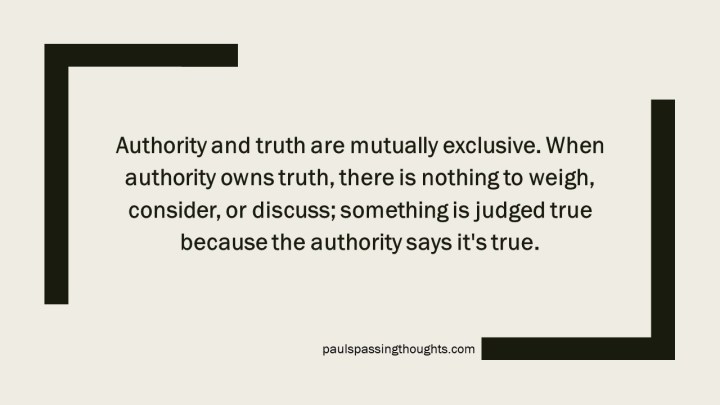
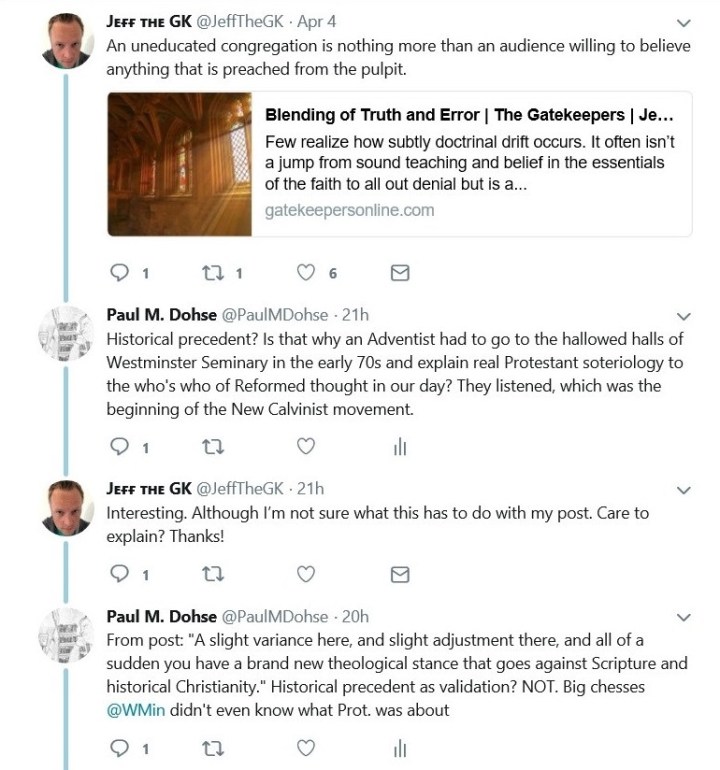
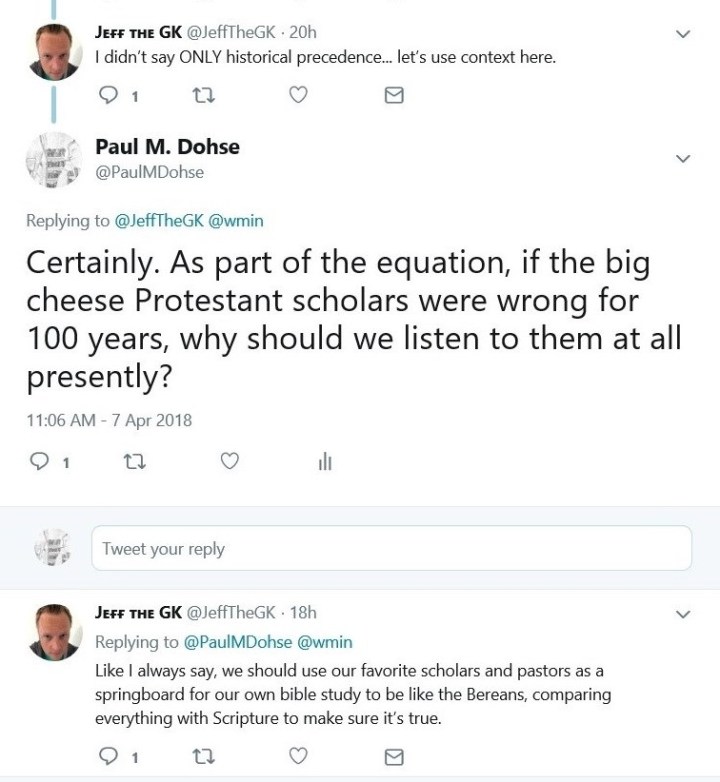
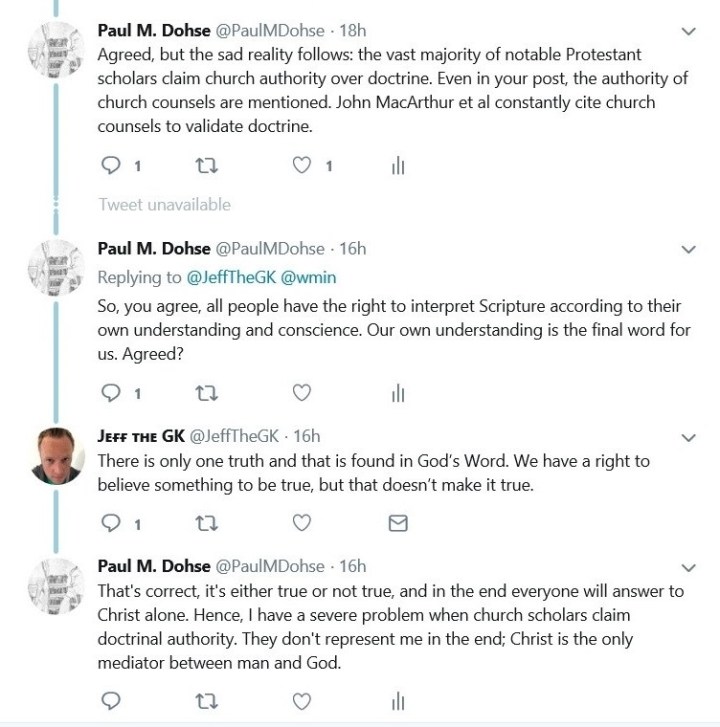
Bottom Line: Your Own Understanding of Scripture is the Final Authority…PERIOD
One of the staple truisms of the Protestant Reformation is “ecclesia reformata, semper reformanda” (the church reformed, always reforming). Logical conclusion? Truth is progressive. In essence, being right or wrong about anything isn’t the point, church authority is the point. What validates the church is its supposed appointment by God (though Christ never attended any church counsel to say so), and not truth because, hey, we are still reforming, and by the way, always will be.
Hence, the church doesn’t have to be right about anything including soteriology, and in fact, isn’t.
A cursory observation reveals the following: the church gets a pass for ill behavior of every sort, doctrinal chaos among thousands of denominations, enumerable doctrinal controversies, steroidal cognitive dissonance, and a history of torturing to death those who refute its orthodoxy until stopped by the American Revolution. Because, don’t you know, it’s still reforming. Yet, church authorities constantly bemoan the dangers of not submitting to church authority lest there be chaos of every sort. Really?
Moreover, this is no different from cultism’s “progressive light” doctrines. “Well, yes, we were wrong about vaccinations and blood transfusions and it’s a shame all of those children died accordingly, but don’t you know, revelation is progressive as determined by God” says the Watchtower and many like them, including Protestantism. John MacArthur’s message to the Young, Reformed, and Restless is; “Grow Up. Settle Down. Keep Reforming.” In the same article MacArthur states, “No one is truly Reformed who is not constantly reforming.”
And as history shows us, that even includes gospel truth. The present-day Neo-Protestant movement, or New Calvinism, or whatever you want to call it, touts its “gospel recovery” initiative. Why do we need a gospel recovery? Because the church lost the first one, but hey, we are still reforming, so no big deal.
Furthermore, punishment for slighting the church is always just depending on whatever light has been revealed to the church by God at that present time. Hence, we must remember, that Calvin and Luther were “men of their time.”
I have said it before and will keep saying it: if you join a church in formal membership, you are forfeiting all of your personal rights; authority is the issue, not right or wrong, and all bets are off. Defending yourself or others with the plain sense of Scripture will be answered with silent blank stares—it’s simply not the point at all.
Here is the point, and the bottom line; individual understanding of the Bible is the only authority and EVERY individual will answer to Christ alone. Christ alone is every person’s judge, and no one else. When Christ said all authority in heaven and earth was given to him, “ALL” means “all.”
paul

Understanding God’s Kingdom

There is no such thing as secondary biblical truths versus the “essentials.” This is just another church tool to obtain a pass for inconsistency and contradiction. Add this tool to symbolism, allegory, and “paradox.” ALL Bible subjects and categories are consistent and fit logically with the gospel of justification by new birth. The church gospel, justification by faith, is a morass of confusion and biblical contradiction.
The authentic Protestant position on God’s kingdom is Amillennialism. Few of the original founders of Protestantism were anything else. This propagates the idea that God’s kingdom is presently on earth. However, though logically inconsistent, most Premillennialists believe this as well. Out of this idea flows a river of bad theology and ideology that turns many away from the gospel. Supposedly, God conquered the world when Christ rose from the grave and the church is conducting, “mopping up operations.” Well, many are unimpressed with the progress of this operation and rightfully so.
Amillennialism also produces the following questions: “If God is in control, why does He allow”…fill in the blank. Forced to come up with answers to explain what flows out of the polluted river, we end up with ideas that make God the creator of evil and other deluge mythologies to name a few.
Fundamental or foundational to all manmade religion is the essence of sin: a desire or lust to control others. Sin seeks to enslave; therefore, freedom versus bondage is a dominate biblical theme. Individual ability doesn’t need to be ruled, so it pretty much starts there. If salvation not only enables an individual but seals him or her until the day their weak body is redeemed, the rulership and oversight of others, for a price supposedly worthy of expertism, is not needed. Hence, errant soteriology is always driven by an authority construct rather than mutual cooperation towards a common goal. And consequently, God’s kingdom not being presently on earth removes a pretense for church authority. Justification by faith, therefore, is not derived from biblical exegesis, but rather an authority eisegesis.
God’s kingdom being yet future presents a problem for those who want to control others. Again, there is no pretense for authority over others. Since God’s kingdom is supposedly here, but invisible, a “spiritual kingdom,” the next logical assumption is that God has ordained the visible church hierarchy to rule by God’s proxy. Added to this is the idea that individual salvation is not finished, and the church oversees the individual salvation process for God as well. This even extends to the church having authority to declare individuals saved or not saved, and God binding that declaration in heaven. And since salvation is a process necessarily requiring ongoing forgiveness for “present sin” in order to maintain individual salvation, it goes without saying that ongoing forgiveness can only be obtained through faithfulness to God’s earthy salvific overseer, the church.
The point to all of this follows: you can’t separate soteriology from ecclesiology or eschatology, and it all begins with presuppositions about mankind, or for all practical purposes, one’s worldview according to philosophy. All religions are based on metaphysical presuppositions about reality. However, the focus of this article is kingdom doctrine.
Logically, one’s gospel will determine beliefs about God’s kingdom. Typically, salvation as something finished within the believer will look to a future kingdom, and multiple resurrections with related judgements. Those who see God’s kingdom as present, will endorse one final resurrection and one final judgement where everyone’s salvation is finished and separation from the unsaved occurs. Additionally, with Amillennialism, this final judgement will be law-based. Whenever salvation is not finished, this necessarily includes a justification based on the law apart from separate judgements for rewards and salvation. In the latter, the reward is salvation.
In other words, eschatology (prophecy) is not a secondary doctrine, it will be dictated by one’s soteriology (doctrine of salvation).
Let’s look at an article regarding Amillennialism written in TABLETALK magazine, a publication of RC Sproul’s ministry and certainly representative of Protestant orthodoxy.
Of all the aspects of eschatology, the doctrine of the last things, perhaps none is more controversial than the millennium. Even in an era when many people do not devote much effort to studying theology, much time is spent trying to figure out the teaching on the millennium in Revelation 20:1–6.
The different millennial positions can be attributed in part to the highly symbolic nature of the language in Revelation. It can be difficult to know when to take the book figuratively and when to take it literally. Furthermore, Revelation 20:1–6 is the only passage in Scripture that deals with the millennial reign of Christ explicitly. Because the data is sparse, there is a greater propensity for divergence in interpretation because there is little else to directly confirm one’s view.
Where to start? First, the Millennium isn’t controversial for any of the reasons stated in the article; it is controversial because it centers on Israel. This is a time when Israel will be the head and not the tail. Though the Bible uses symbolism, it doesn’t take a rocket scientist to figure out the following:
Rev. 12:1 – Now a great sign appeared in heaven: a woman clothed with the sun, with the moon under her feet, and on her head a garland of twelve stars. 2 Then being with child, she cried out in labor and in pain to give birth. 3 And another sign appeared in heaven: behold, a great, fiery red dragon having seven heads and ten horns, and seven diadems on his heads. 4 His tail drew a third of the stars of heaven and threw them to the earth. And the dragon stood before the woman who was ready to give birth, to devour her Child as soon as it was born. 5 She bore a male Child who was to rule all nations with a rod of iron. And her Child was caught up to God and His throne. 6 Then the woman fled into the wilderness, where she has a place prepared by God, that they should feed her there one thousand two hundred and sixty days (NKJV).
Israel is hated by the world because it was elected by God to give birth to Christ who set mankind free from world bondage. In the Millennium, Christ will rule the world from David’s throne in Jerusalem. The Millennium is important because although salvation is a finished work, redemption is a process spanning many years. Christ came first to redeem the soul of man, two subsequent resurrections will redeem the bodies of men, the Millennium will redeem Israel and justice, and the new heavens and new earth will redeem creation. To deny Premillennialism is to deny the redemption process, and take away from Scripture. But again, the subject is controversial because of the world’s anti-Semitism spirit…not because biblical data is lacking concerning the Millennium—that notion is patently absurd. The massive amount of Old Testament passages concerning the subject aside, let’s look at a few examples. We read…
And I saw thrones, and they sat on them, and judgment was committed to them.
Who are these people? The Bible tells us:
And Jesus said unto them, Verily I say unto you, That ye which have followed me, in the regeneration when the Son of man shall sit in the throne of his glory, ye also shall sit upon twelve thrones, judging the twelve tribes of Israel (KJV).
Those who sit on the 12 thrones are the twelve apostles who judge the 12 tribes of Israel at the beginning of the Millennium. That makes perfect sense because this time deals with the redemption of Israel. TABLETALK continues,
The amillennial interpretation of Revelation 20 affirms a figurative view of the millennium. The entire period between the ascension and return of Christ is the millennium, which means that it is much longer than an actual one thousand years. Christ is ruling now over a spiritual kingdom that will be immediately consummated at His return, and the new heavens and earth will then be in place.
Actually, unlike Revelation 12, chapter 20 is pretty straight forward and doesn’t use any symbolism at all. And if 1000 years doesn’t mean 1000 years, what is supposedly symbolized by the number? Why would you use a number to symbolize an indefinite period of time? This take on Revelation 20 is completely illogical…because if God’s kingdom is future, precedent for authority is absent. Therefore, for the sake of making a case for church authority, they must make the Bible say what they need it to say.
In the conclusion of the article, 1 Corinthians 15:25 is used as a proof-text that Christ presently reins until his rein is “consummated.” One of many problems with this view is the biblical notation that when Christ reins He will rule with a “rod of iron.” Obviously, that is presently not the case. Certainly, Christ reins always; the question is, to what degree, and where does He apply His authority for God’s purposes?
Ultimately, it is God’s purpose to put away ALL authority, rule, and power (1Cor 15:24). Why? Because when the perfect thing comes, love, authority has no significance; authority is only necessary where love is not practiced.
paul


1 comment