Protestant View on Atonement Dies Hard
Originally published July 12, 2017
Most Facebook discussions aren’t pretty. Oh, they start out innocent enough, but they have a tendency to turn ugly in a hurry, especially when you challenge pet doctrines. It doesn’t take long for the name-calling and other ad hominem attacks to ensue. But every once in a while you encounter a group of individuals who express a mo (more…)
Follow-up: A Response to the Shapiro / MacArthur Interview

One of the salient points brought up by John Immel during our discussion this afternoon was Ben Shapiro’s woeful misunderstanding and mis-representation of the philosophy of Immanuel Kant and it’s resulting impact on western culture. In response to this, we have reposted a portion of John’s 2016 TANC Conference where he discusses sacrifice as the highest moral standard and Kant’s contribution to that ideology.
TANC Round Table Discussion with Paul Dohse, Andy Young, and John Immel
John Immel on Immanuel Kant from TANC 2016:
https://paulspassingthoughts.com/2017/07/20/the-disaster-of-sacrifice-as-the-ultimate-moral-standard-part-3/
How Most Protestants Respond When Orthodoxy Is Challenged
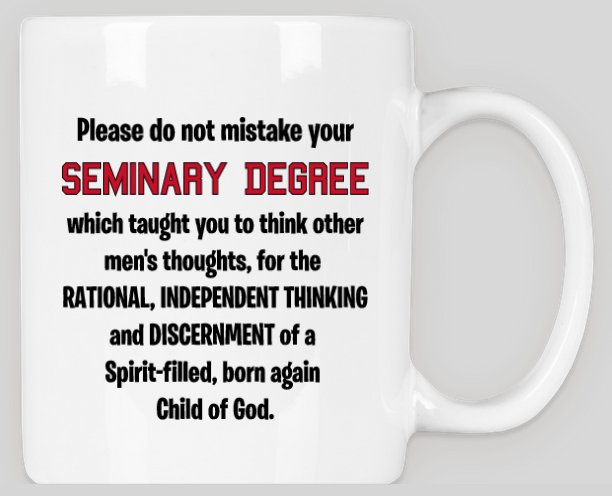 Any time one of us here at TANC engages someone in some debate over some tenet of Protestant orthodoxy, something major is always missing in these conversations that we don’t talk about nearly enough. Due to the research myself and others have done for this ministry over the past 10 years, we tend to ply our argument with objective points and expect counter-points in return.
That almost NEVER happens!
I am not even sure how I would frame this issue/observation, but the following may get close: it would seem that our objective arguments are not answered with counter-points, but vague statements of authority. It’s interesting, but we often converse with people who are not anybody important by religious standards, yet they answer us as if their pedigree of authority is to be assumed and we are wrong just because they say so. Responses are really nothing more than the usual talking points that we hear all of the time. I can only assume that folks think they speak with authority that is not to be refuted because they are repeating what the religious authorities tell them. In other words, no matter what objective argument we pose, it is going to be answered by some talking point that has been certified as “authoritative.”
Also telling in these conversations are answers that are unnecessarily wordy. For example, instead of simply saying “pursue love”, all kinds of stuff about “walking in the Spirit” is added as well as various and sundry Christo-centric verbiage.
Someone may make the observation that, “You have this attitude that someone is wrong because they don’t agree with you.”
Um, Yeah! After all, you can’t have opposing viewpoints and have both be right. And that’s the whole point. If I think you’re wrong, the burden is upon me to provide a rational argument for why my ideas are better. Likewise, the burden is upon you to provide a similar rational argument for why my ideas might be wrong.
But most people don’t argue this way. They don’t know how to provide rational arguments for their ideas. They only know how to rely on appeals to authority. In other words, their ideas are correct only because some authority (whatever that source may be) has deemed it so.
~ Andy
“Godly” Philosophy
Originally published March 14, 2015
 I used to be in the camp that views “philosophy” as “worldly”, “man-centered”, “evil”; all of those things as juxtaposed with “Biblical wisdom”, or “scriptural”, or “God’s Wisdom”. After all, it seemed to be a reasonable conclusion when confronted with verses of scripture like:
“Where is the wise? where is the scribe? where is the disputer of this world? hath not God made foolish the wisdom of this world? For after that in the wisdom of God the world by wisdom knew not God, it pleased God by the foolishness of preaching to save them that believe. For the Jews require a sign, and the Greeks seek after wisdom: But we preach Christ crucified, unto the Jews a stumblingblock, and unto the Greeks foolishness; But unto them which are called, both Jews and Greeks, Christ the power of God, and the wisdom of God. Because the foolishness of God is wiser than men; and the weakness of God is stronger than men. For ye see your calling, brethren, how that not many wise men after the flesh, not many mighty, not many noble, are called: But God hath chosen the foolish things of the world to confound the wise; and God hath chosen the weak things of the world to confound the things which are mighty; And base things of the world, and things which are despised, hath God chosen, yea, and things which are not, to bring to nought things that are:” ~ 1 Corinthians 1:20-28
What you choose to believe is a philosophical statement about what you believe about reality. Everyone has a philosophy whether they realize it or not. You cannot escape it. So to say that “philosophy is evil” is really a philosophy itself. It therefore unwittingly becomes its own metaphysical statement about man. If philosophy is evil, then man is evil because man has no relevance apart from his beliefs about reality. It should come as no surprise then that reformed theology holds such a metaphysical view of man with regard to its doctrine of total depravity. But that’s another topic altogether.
It is ironic that I had to get out of the church before I finally began to better understand just what the apostle Paul was addressing here with the Corinthians. Religious despots don’t see themselves as having “worldly wisdom”, but yet they are the very ones that Paul is criticizing. Religious orthodoxy is the epitome of “man’s wisdom”; crafted by the scholars and academics and elites who spend their years in seminary and other institutes of religious training for the so-called “right” that they think they have purchased for themselves in order to rule over the unenlightened.
I have come to realize that the notion of philosophy being evil is nothing more that organized religion’s attempt to keep man beholden to it; to keep him enslaved; to keep him from thinking. Those of us who call ourselves “Christians” must begin to shed this false notion of philosophy. Philosophy deals with things such as reality and the nature of existence. To believe God and what He tells us in His word is our own philosophical statement. It stems from our rational, thinking mind; a mind that is part of a creature made in the very image of God, made for the purpose of thinking and reasoning and coming to rational conclusions. I implore believers everywhere to consider what God Himself has told us: “Come, let us reason together.”
Andy
The “Lamb’s Wife” Revisited- Part 1
The following is taken from the transcript of Andy Young’s first session at the 2018 TANC Conference for Gospel Discernment and Spiritual Tyranny.
Both the Old and New Testaments use the metaphor of a marriage. Let me make that statement again.
Both the Old and New Testaments use the metaphor of a marriage.
A metaphor is a figure of speech that uses a familiar concept or object to represent some other abstract concept so as to make that abstract concept more clear or better understood. In the case of marriage, this was a concept that would have been familiar to the audience to which most of the Bible was written. Since most of the audience were Jews, the context here would be a Jewish wedding and the elements that were unique to a Jewish wedding ceremony.
The following video clip is actually a scene from Fiddler on the Roof. Now keep in mind while the setting is around mid to late 1800’s, the elements depicted here aren’t much different from what you might see in OT times. As you watch this clip I want you to pay close attention to the elements that make up this wedding and notice if anything seems familiar to you somehow.
Traditionally, Jewish weddings were arranged between the fathers of the proposed couple. Keep in mind there are many details here that I am leaving out because I am trying to be brief. After the parents have come to an agreement to the marriage, the couple is considered “espoused”. This is a formal legal contract into which the couple has entered, and for all intents and purposes, the couple is considered “married” even though the marriage has not yet been consummated. This espousal period can last for up to a year. During this time, the man returns home to make preparations for his bride, and the bride-to-be prepares herself for becoming a wife. Her fidelity to her bridegroom is on display during this period as well.
Now concerning the actual wedding day, what are some of the elements we saw in this clip?
- Bridegroom and a procession of friends.
- At sunset (i.e. “midnight”)
- Carrying of torches/candles/lamps
- Pomp and celebration during the procession
- Procession ends at the bridegroom’s house
- Wedding ceremony followed by feast.
On the actual wedding day, the bridegroom leads a procession of his friends through the streets of the village to go and meet the bride. This usually occurs at sunset (traditionally considered midnight). There is much pomp and celebration that occurs along the way, and as the procession continues, people exit their homes, bringing a torch or lamp along with them to help light the way, and so the “wedding party” grows larger and larger as more and more “guests” join in celebration with the bridegroom. The bridegroom then receives his bride, and the two, along with the entire party of friends and guests return to the bridegroom’s house where the wedding ceremony occurs with a grand feast and celebration following.
Elements of the Jewish wedding tradition are clearly visualized when Jesus described the “Kingdom of Heaven” in the parable of the wedding feast (Matthew 22), and the parable of the ten virgins (Matthew 25). Let’s begin with the parable of the wedding feast in Matthew 22. As we look at this passage I want you to once again take note of these wedding elements.
“And Jesus answered and spake unto them again by parables, and said, ‘The kingdom of heaven is like unto a certain king, which made a marriage for his son, and sent forth his servants to call them that were bidden to the wedding: and they would not come. Again, he sent forth other servants, saying, Tell them which are bidden, Behold, I have prepared my dinner: my oxen and my fatlings are killed, and all things are ready: come unto the marriage. But they made light of it, and went their ways, one to his farm, another to his merchandise: and the remnant took his servants, and entreated them spitefully, and slew them. But when the king heard thereof, he was wroth: and he sent forth his armies, and destroyed those murderers, and burned up their city. Then saith he to his servants, The wedding is ready, but they which were bidden were not worthy. Go ye therefore into the highways, and as many as ye shall find, bid to the marriage. So those servants went out into the highways, and gathered together all as many as they found, both bad and good: and the wedding was furnished with guests.’” ~ Matthew 22:1-10
The theme of this parable revolves around two particular groups of people. The first group is made of those who already had invitations to participate in the wedding feast. These were the King’s special invited guests. They received their invitations first. One would think that since these people have been given such a special invitation from the King that they would not hesitate to respond. But notice what happens. On the day of the feast, none of them show up. They reject the gracious invitation. They view it with an attitude of indifference and make all kinds of excuses why they cannot attend. Some even killed the servants who were sent to them to tell them that everything was ready for them to attend the feast.
But there is a second group mentioned in this parable. Since the King made all these preparations, it was his desire to have the feast furnished with guests. So he instructed his servants to go out and issue an invitation to anyone, as many as they could find. This second group represents the nations of the world, or the Gentiles, those whom God would redeem by the blood of the Lamb out of “every kindred, and tongue, and people, and nation.” (Revelation 5:9, 14:6) I think it is important to note that this second group would also include repentant individuals from the first group, or converted Jews.
The point to take from all of this is that neither of the two groups in this parable are the bride. They are guests, and this is important. What we have is a body of individuals that make up the “church”, or using the correct Biblical term, the εκκλησια (“ekklaysia”), the “called out” (invited) assembly that makes up the Body of Christ. In this parable they are not the bride, but they are clearly the guests at the wedding.
Take a look at the second parable in Matthew 25.
“Then shall the kingdom of heaven be likened unto ten virgins, which took their lamps, and went forth to meet the bridegroom. And five of them were wise, and five were foolish. They that were foolish took their lamps, and took no oil with them: But the wise took oil in their vessels with their lamps. While the bridegroom tarried, they all slumbered and slept. And at midnight (i.e. sunset) there was a cry made, Behold, the bridegroom cometh; go ye out to meet him. Then all those virgins arose, and trimmed their lamps. And the foolish said unto the wise, Give us of your oil; for our lamps are gone out. But the wise answered, saying, Not so; lest there be not enough for us and you: but go ye rather to them that sell, and buy for yourselves. And while they went to buy, the bridegroom came; and they that were ready went in with him to the marriage: and the door was shut. Afterward came also the other virgins, saying, Lord, Lord, open to us. But he answered and said, Verily I say unto you, I know you not. Watch therefore, for ye know neither the day nor the hour wherein the Son of man cometh.” ~ Matthew 25:1-13
Who are the “virgins” in this parable? It is unfortunate that the word “virgin?” is used here because that give the implication that we are talking about a young girl who has not had sexual relations with a man. It further adds to the argument that somehow these virgins are going to meet the Bridegroom to be married to him. Now that has to do with the question about the origin of this doctrine. I’m going to address that in another article.
So who are these virgins? They are wedding guests. Remember once again that this concept of a wedding is a metaphor, and in this metaphor they represent those who would go out to join the procession of the wedding party as the bridegroom goes to meet his bride and return with her to his father’s house for the wedding feast.
Notice also the elements that are mentioned in this parable. We have the lamps, and the cry to go join the procession at sunset. These young girls in the parable are not going to the wedding to marry the bridegroom. The bridegroom already has a bride. The young girls are simply guests at the wedding.
This is not the first instance that scripture posits this notion of wedding guests or alludes to the wedding metaphor. Matthew 9:15, Mark 2:19, and Luke 5:34 use the term “children of the bridechamber”, referring to Jesus’ disciples- those who were called by Christ to follow Him. That would include not only the Twelve, but all those who would be saved by faith in Christ, the “ekklaysia”. In John 3:29, John the Baptist referred to himself and any others “which standeth and heareth Him” as a “friend of the bridegroom”.
So in terms of the picture of a traditional Jewish wedding, all believers – members of the Body of Christ – are referred to as “guests” and “friends of the bridegroom”, but they are NOT the bride. They go out joyfully with the Bridegroom as He goes to receive His Bride. But clearly from a scriptural standpoint, the wedding guests cannot be the Bride.
So then if the church is not the bride, then what is? Is there even a bride? Most people are surprised to discover that the phrase “Bride of Christ” is nowhere to be found in the Bible. Now that in and of itself is not really a strong argument because there are many doctrines to which we hold that are not explicitly stated in the Bible. The doctrine of the Trinity is one example that comes to mind, but there are other scriptures when taken as a whole, when we evaluate them and compare them we can come to some rational conclusion about the Trinity. It’s like putting together pieces of a puzzle.
To some extent theologians and scholars have attempted to do the same with the Bride of Christ doctrine. They can point to various passages and say, “See, right here this means that the church is the bride.” But to this I say that such passages are either taken out of context or they have taken something that was a metaphor and have interpreted it literally for whatever motivation.
But all of those arguments can be quickly and easily dispelled because scripture plainly states who is the bride of Christ.
“And I John saw the holy city, new Jerusalem, coming down from God out of heaven, prepared as a bride adorned for her husband…And there came unto me one of the seven angels which had the seven vials full of the seven last plagues, and talked with me, saying, ‘Come hither, I will shew thee the bride, the Lamb’s wife.’ And he carried me away in the spirit to a great and high mountain, and shewed me that great city, the holy Jerusalem, descending out of heaven from God…” ~ Revelation 21:2, 9-10
Here in plain terms, the Bride is clearly and explicitly shown to be the New Jerusalem. The angel says, “I will show you the Bride”, and he shows John, not a body of people, but the New Jerusalem. Now we know for certain that the New Jerusalem is a literal city. The remaining verses of chapter 21 go on to give in great detail a description of what this city looks like. Notice that nothing is said about the inhabitants of the city. The focus of the chapter is the actual city itself. Also remember that in the book of Hebrews it says that Abraham looked for a city not made with hands whose builder and maker was God. This was always in view. One day there would be literal city that would come down from heaven, and God would dwell there with mankind. Think of that! Almighty God leaving heaven to make His permanent dwelling on Earth with man for ever and ever!
Now there is still an implication of a figure of speech being used here. At first John writes that the New Jerusalem was prepared “as a bride”. This is called simile. If we say someone is tight as a drum, that doesn’t mean they are a drum. It’s a figure of speech that means they are stingy. If someone is as cool as a cucumber, it doesn’t mean he is a cucumber or even has a low temperature. It means he is calm or not stressed out.
So even though later on in the passage the angel specifically calls New Jerusalem, “the bride”, we must still hold out the possibility that even this is a metaphor and not a literal bride. So it says the city is adorned as a bride. How is a bride traditionally adorned? White dress, veil, bouquet of flowers, long train; but the distinguishing characteristic is the white dress. White clothing. White is supposed to represent purity, cleanliness, holiness. Now look at this. This is gonna blow your mind here.
“Let us be glad and rejoice, and give honour to him: for the marriage of the Lamb is come, and his wife hath made herself ready. And to her was granted that she should be arrayed in fine linen, clean and white: for the fine linen is the righteousness of saints.” ~ Revelation 19:7-8
There are four keys I want you take out of this passage.
The bride made herself ready.
Now this goes back to what I said much earlier. Remember that during the espousal period the bride prepares herself. This is not just getting ready for the wedding. This is getting all her affairs in order. Getting ready to go be with her husband. This means the bride is not yet ready. If the church is the bride are we to assume then that the church is not ready?
The bride was dressed in fine white clothes.
This is as I mentioned, this is the distinguishing characteristic of a bride. It’s the first thing we think of when we think about a bride. It’s like on Family Feud. If you were one of the 100 people they surveyed about brides, the first thing people would say is white dress.
The bride is adorned in the righteousness of the saints!
Who are the saints? You and me. Born again believers. And that is important because it goes back to a major point that we have been making here for years at TANC:
The saints have their own righteousness.
The saints aren’t declared righteous. The saints aren’t covered with Jesus’ righteousness. The saints ARE righteous as a state of being. And that righteousness of the saints becomes the clothing; the wedding dress for the bride.
There is one other bride text I want us to look at, and this one is in the Old Testament, and it relates to Revelation 19:7-8.
“Lift up thine eyes round about, and behold: all these gather themselves together, and come to thee. As I live, saith the LORD, thou shalt surely clothe thee with them all, as with an ornament, and bind them on thee, as a bride doeth.” ~ Isaiah 49:18
In this context the audience is the nation of Israel in general and perhaps even Jerusalem specifically. The promise to Abraham was that all the nations would be blessed through Israel. And it looks like in this passage that God is pointing to a day in the future when all nations would gather around Israel. Now isn’t that a picture of the NT body of Christ? This New Man made up of Jews and Gentiles who are made literal children of God because of the blessing of the Promise that came through Abraham and the nation of Israel. The Promise of course is Jesus. And you get the picture here of every born again believer being hung like a trophy or a prize. Jerusalem being adorned with all of those who accepted the blessing of the Promise.
And then notice the end of the verse. What does it say? “as a bride doeth” Another simile. Another figure of speech. Not necessarily a literal bride, but similar to a bride putting on fine white clothes; the righteousness of all those born again believers. Folks this is exciting stuff!
Now some will ask, “Ok what about all those passages in the NT where Paul talks about husbands and wives and Christ and the church and such?” I am going to address that in the next article.
~ Andy

 Paul's Passing Thoughts
leave a comment