14 Basic Fundamentals of the True Gospel and 12 Anti-Gospel Presuppositions
I. Justification
Used synonymously with “righteousness.” It is the declaration and imputation of righteousness to the believer. This is the very righteousness of God. This is also the salvation of the soul. God NEVER declares anyone righteous unless He makes them righteous. This is not a position only, the person is actually made righteous.
II. The New Birth
Normally, sanctification would be discussed next, but it is important to understand how we are truly righteous—yet we still fall short of God’s standards in this life. The new birth takes place in time when we believe, and is a spiritual reality that lacks the experiential evidence that we would expect, yet the Bible is explicit about what takes place. Our old spiritual self dies a literal death “with Christ,” and we are born again with an incorruptible seed. This is pictured in water baptism. We are new creatures. We do NOT have two natures, we only have one nature.
III. Flesh
Is the human body. It is not inherently evil, what God created that was good originally became weak in the fall, like creation, but is not inherently evil. This is why we are actually righteous, but fall short of God’s glory: “The spirit is willing, but the flesh is weak.”
IV. Sin
Sin was found in Lucifer, an angel created by God. It is described in the Bible as a master. Sin masters those who are not saved, but is hindered by the conscience God created in every being. God also wrote His character traits on the hearts of all people because we are born in His image. Unbelievers are not completely mastered by sin because they are born in God’s image. Unfortunately, unbelievers often confuse the image of God with their own righteousness.
When a believer sins, it is a violation of the Bible, but is considered to be sin against God and His family directly or indirectly by bringing shame on God’s name. For the unbeliever, violation of the law leads to eternal condemnation while sin for the believer can lead to chastisement and loss of reward.
V. Sanctification
It means to be set apart for God’s purposes. The gospel is really a call to kingdom living. Escape from eternal judgment is a positive by-product. See Andy Young’s TANC 2014 sessions on sanctification.
VI. Kingdom
The earth is presently ruled by Satan. It is the kingdom of darkness. God’s kingdom is NOT on earth nor is the earth being gradually transformed from one kingdom realm to another via the collective Christocentric psyche of the church. We are ambassadors of God’s heavenly kingdom. Christ will return, destroy Satan’s kingdom, and set up His own. Christians are to make as many disciples as possible until that day. The church has no task in bringing forth God’s kingdom on earth. We display the will of the kingdom, and call people to it, but have NO task in bringing it to earth.
VII. Hell
Hell was not created for man, but for Satan and the demons who were never offered salvation. A loving God sends no one to hell, people merely choose what kingdom they want to belong to. The gospel is a call to escape the earthly kingdom and its slavery to sin, and be transformed into God’s kingdom of light.
VIII. The Bible
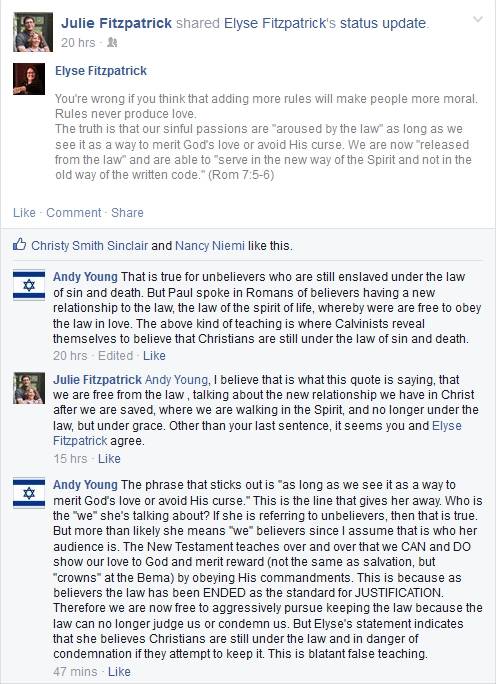
“Law,” “scripture,” “holy writ,” “the law and the prophets,” “the word,” “the law,” etc., are all interchangeable terms for the closed canon of scripture. The Bible is God’s law and wisdom for life and godliness. It is also a full-orbed metaphysical treatise. It defines reality.
IX. The Law of Sin and Death
It’s the Bible’s relationship to unbelievers. It describes how the unbeliever will be judged in the last day for every violation of conscience.
X. The Law of the Spirit of Life
It describes the believer’s relationship to the Bible. The transformed heart of the believer now desires to obey God, is no longer enslaved to sin, and cannot be condemned by the law. The Bible is a manual for our kingdom citizenship.
XI. Judgment
There are two: one of condemnation for those who chose the kingdom of darkness, known as the great white throne judgment, and a separate one for eternal rewards known as the bema judgment.
XII. Redemption
This is the other salvation. It is the redemption of the body at resurrection. This salvation is often confused with justification, or the salvation of the soul.
XIII. Justice
Justice is of paramount importance to God and He is angered when it is not practiced by people whether lost or saved. Fairness matters to God.
XIV. Rest
The Christian life is NOT a rest. John Calvin believed sanctification is the New Testament version of the Old Testament Sabbath rest. Because Protestantism only sees ONE application of the law, to judge/condemn, Christians must supposedly rest while Jesus fulfils the law for us.
Unwittingly, this defines Christians as “under law.” Who keeps the law is irrelevant, it can’t give life, and it can’t justify. Protestants must wrongly assert this because they reject the two applications of the law and make it strictly for condemnation only. In contrast, Christians can use the law lawfully because it can no longer condemn them. In Protestantism, the condemnation of the law is not removed for the Christian.
12 Anti-Gospel Presuppositions of Protestantism
1. God declares people righteous without making them righteous. “Sinner” is not past tense.
2. Perfection is defined as perfect law-keeping in this life.
3. The new birth is defined as a realm or ability to see/experience something that is not our own essence as believers.
4. “Flesh” is inherently evil, not merely weak.
5. “Earth” is not merely weak, but inherently evil.
6. “Sin” is the essence of the material world, and not a “master” separate from it.
7. Sanctification (the Christian life) is a rest. John Calvin believed New Testament sanctification is the Old Testament Sabbath rest. It is the belief that the Christian life is a rest from works because all works are still under law.
8. God’s kingdom is presently on earth.
9. Hell was also created for man.
10. A single relationship to the law for both believers and unbelievers.
11. One judgment.
12. Salvation of the soul and body happen at the same time.
14 Basic Fundamentals of the True Gospel

1. Justification
Used synonymously with “righteousness.” It is the declaration and imputation of righteousness to the believer. This is the very righteousness of God. This is also the salvation of the soul. God NEVER declares anyone righteous unless He makes them righteous. This is not a position only, the person is actually made righteous.
2. The New Birth
Normally, sanctification would be discussed next, but it is important to understand how we are truly righteous—yet we still fall short of God’s standards in this life. The new birth takes place in time when we believe, and is a spiritual reality which lacks the experiential evidence we would expect, yet the Bible is explicit about what takes place. Our old spiritual self dies a literal death “with Christ,” and we are born again with an incorruptible seed. This is pictured in water baptism. We are new creatures. We do NOT have two natures, we only have one nature.
3. Flesh
It is the human body. It is not inherently evil, what God created that was good originally became weak in the fall, like creation, but is not inherently evil. This is why we are actually righteous, but fall short of God’s glory: “The spirit is willing, but the flesh is weak.”
4. Sin
Sin was found in Lucifer, an angel created by God. It is described in the Bible as a master. Sin masters those who are not saved, but is hindered by the conscience God created in every being. God also wrote His character traits on the hearts of all people because we are born in His image. Unbelievers are not completely mastered by sin because they are born in God’s image. Unfortunately, unbelievers often confuse the image of God with their own righteousness.
When a believer sins, it is a violation of the Bible, but is considered to be sin against God and His family, directly or indirectly, by bringing shame on God’s name. For the unbeliever, violation of the law leads to eternal condemnation while sin for the believer can lead to chastisement and loss of reward.
5. Sanctification
It means to be set apart for God’s purposes. The gospel is really a call to kingdom living. Escape from eternal judgment is a positive by-product. See Andy Young’s TANC 2014 sessions on sanctification.
6. Kingdom
The earth is presently ruled by Satan. It is the kingdom of darkness. God’s kingdom is NOT on earth nor is the earth being gradually transformed from one kingdom realm to another via the collective Christocentric psyche of the church. We are ambassadors of God’s heavenly kingdom. Christ will return, destroy Satan’s kingdom, and set up His own. Christians are to make as many disciples as possible until that day. The church has no task in bringing forth God’s kingdom on earth. We display the will of the kingdom, and call people to it, but have NO task in bringing it to earth.
7. Hell
Hell was not created for man, but for Satan and the demons who were never offered salvation. A loving God sends no one to hell, people merely choose what kingdom they want to belong to. The gospel is a call to escape the earthly kingdom and its slavery to sin, and be transformed into God’s kingdom of light.
8. The Bible
“Law,” “scripture,” “holy writ,” “the law and the prophets,” “the word,” “the law,” etc., are all interchangeable terms for the closed canon of scripture. The Bible is God’s law and wisdom for life and godliness. It is also a full-orbed metaphysical treatise. It defines reality.
9. The Law of Sin and Death
It’s the Bible’s relationship to unbelievers. It describes how the unbeliever will be judged in the last day for every violation of conscience.
10. The Law of the Spirit of Life
It describes the believer’s relationship to the Bible. The transformed heart of the believer now desires to obey God, is no longer enslaved to sin, and cannot be condemned by the law. The Bible is a manual for our kingdom citizenship.
11. Judgment
There are two: one of condemnation for those who chose the kingdom of darkness, known as the Great White Throne Judgment, and a separate one for eternal rewards known as the Bema Judgment.
12. Redemption
This is the other salvation. It is the redemption of the body at resurrection. This salvation is often confused with justification, or the salvation of the soul.
13. Justice
Justice is of paramount importance to God and He is angered when it is not practiced by people whether lost or saved. Fairness matters to God.
14. Rest
The Christian life is NOT a rest. John Calvin believed sanctification is the New Testament version of the Old Testament Sabbath rest. Because Protestantism only sees ONE application of the law, to judge/condemn, Christians must supposedly rest while Jesus fulfills the law for us.
Unwittingly, this defines Christians as “under law.” Who keeps the law is irrelevant, it can’t give life, and it can’t justify. Protestants must wrongly assert this because they reject the two applications of the law and make it strictly for condemnation only. In contrast, Christians can use the law lawfully because it can no longer condemn them. In Protestantism, the condemnation of the law is not removed for the Christian.
Stop Saying That Jesus’ Righteousness Is Imputed to US Because it’s NOT True
 Christians ought to speak the truth and not throw around spiritual bumper stickers that are not true. Jesus’ righteousness is not imputed to us. Actually, the statement is a false gospel.
First, it’s Calvinism. Are you a Calvinist? If not, just stop saying that Jesus’ righteousness is imputed to us. It was God the Father’s righteousness that is imputed to us, not Christ’s. Does it really make that much difference? Yes, it makes a huge difference.
For the very much most part, the Bible attributes our righteousness to God the Father, a few verses could be cited to imply Jesus’ righteousness is imputed to us, but the arguments are weak. Nevertheless, why are we not emphasizing what the Bible clearly emphasizes and instead emphasizing the righteousness of Christ being imputed to us?
The reason is because the contrary emphasis is tied to the false gospel of Protestantism which hinges its gospel on the idea that Christ came to fulfill the law rather than end it. Fulfillment verses ending is the difference between a true gospel and a false gospel.
So, fulfillment posits the idea that Christ not only came to die for our sins, but also had to live a perfect life so His perfect obedience to the law could be imputed to us as well. This turns the true gospel completely upside down and rejects the new birth. The power of sin is death and condemnation, and any violation of the law is sin—that’s why Christ came to end that law, not fulfill it. There is no life in that law even if Christ did fulfill it, and if He did fulfill it for our justification, there is not one seed, but two. Christ came to end that law, there is therefore no condemnation for us and the power of death is broken.
I say “that” law, and not “the” law because there are two laws. John Calvin and his heretic buddies only recognized one law, and that is a huge problem. Yes, it is one law as far as the same words, but with two different relationships to life and death. For the unbeliever, it is “the law of sin and death,” for the believer, it is “the law of the Spirit of life.” When the Bible talks about fulfillment of the law, it is talking about the fulfillment of the law of the Spirit of life “through us” (Rom 8:4).
Also keep in mind that the law couldn’t be completely fulfilled to begin with because of future unfulfilled prophecy. Not only that, when Christ said He came to fulfill the law, the New Testament had not even been written, and most of it, actually all of it, was written after His ascension. Keep in mind that there is unfulfilled Bible prophecy in the Old Testament as well.
Here is where we get into a huge problem: the idea that there is one law and the atonement is two-fold; His death for sin, and obedience to the law by Christ because the one law of sin and death is the standard for righteousness. Think about this, if there is one law, the law of sin and death, and it is the standard of righteousness, then the perfect demands of that law must continue to be satisfied in order to keep us saved. That’s the crux of Protestant heresy—a one law that must be perpetually satisfied in order to keep us saved.
But when we believe, we are no longer under that law because it is ended for us. We are no longer “under law,” but “under grace.” That means that we are now under the law of the Spirit of life. When we sin, we cannot be condemned, but unfortunately, we grieve the Holy Spirt who has sealed us until the day that our bodies are redeemed.
This is where it is necessary for the Reformed heretics to say that Jesus’ righteousness (obedience) is perpetually applied to the law of sin and death in our stead. That law is not ended, it must be perpetually satisfied for us. This is what those heretics are talking about when they verbalize the truism, “Jesus 100% for us.” This keeps “Christians” under law and not under grace in regard to justification. Sanctification fulfills the law of the Spirit of life and is completely separate from Justification. This is why Protestantism calls for a sanctification by faith alone; if we live by faith alone in sanctification, the same way we were justified (“We must preach the gospel to ourselves every day”), the perfect obedience of Jesus will continue to satisfy the law of sin and death in our stead.
 The contra Reformation gospel frees the Christian to aggressively obey God in sanctification because the only possible motivation is love because the other law is ended and has nothing to do with our justification. That is a finished work that has nothing to do with our Christian life. We are free to aggressively love without fear instead of being afraid that we are not properly living by faith alone which supposedly circumvents the satisfaction of the law via Jesus.
Learn to interpret your Bible accordingly: “Is this a justification verse, or a sanctification verse, and which law is being addressed?”
paul

 Paul's Passing Thoughts
1 comment