Carte Blanche Forgiveness is NOT the Goodness of God that Leads Others to Repentance
 “With all of the talk about living in a way that ‘looks like the gospel,’ why is the order of the day forgiveness that really isn’t forgiveness in the same way we were forgiven?”
I suppose I should be patient because we have all lived in this Protestant Dark Age that began in circa 350 AD and became Dark Age Light in the 16th century. To name just a few; no, the church is not the bride of Christ. No, Christians are not sinners saved by grace. No, Christ did not die for the church. No, Christ did not die for the sins we commit as Christians. No, there is no such thing as “church discipline.” No, “legalism” is not a biblical concept. And no, we don’t forgive those who sin against us if they don’t repent.
We are the guests of the Bridegroom, not the bride. Christians are not sinners (a sinner sins as a lifestyle). Christ died for Israel (Acts 5:31, 13:23, 28:20)—we were grafted in to make the unrepentant Jews jealous (Rom 11:11). Christ is the end of the law, and where there is no law there is no sin; so no, His finished work on the cross does not have to be applied to the sins we commit as Christians. He may discipline us as sons, but that has nothing to do with salvation and the supposed need for a perpetual “covering.” The apostles wrote specifically about self-discipline, and the Lord’s discipline; if there is “church discipline,” why wouldn’t they have simply said so? “Legalism” is a word that is not found in the Bible, nor is the concept itself anywhere to be found in Scripture.
We could discuss many more Protestant traditions of men that skew a proper understanding of the gospel, but this post is about carte blanche forgiveness propagated early in church history for the purpose of control. The concept first appears in the Didactic Creed during the tension between bishops and lay elders circa 70 AD.ff. The Didactic posited the idea that blank check forgiveness eliminates having enemies while the Bible assures us that enemies will always be with us. The question is what to do with them? The Bible states that we are to forgive others the way God has forgiven us and that is very true to a “T.” That is exactly how we are to forgive others.
Someone sent me a link to an article that apes the worn-out Protestant truism of carte blanche forgiveness that is NOT the same way God forgave us. Or should I say, “the way God forgives us” which is in the present continuance tense. Does God presently forgive us as family members, or “sinners”? Are you saying that we should forgive others the same way God forgave us unto salvation, or as sons? And is there a difference? Are we sons or sinners, or both? Do we need our whole body washed daily, or just our feet? And how does this all relate to our forgiveness for others?
What are people saying when they say we are to “forgive others the way God forgave us”? I venture to say they don’t really know when it gets right down to it. Let’s start with the usual truisms taken from the aforementioned article:
Forgiveness is much more about YOU -than whoever hurt you.
What Christian victim hasn’t heard that one? So, when the pastor’s son dragged you into the janitors room while you were minding your own business and raped you, that’s more about you than it is the rapist? Really? Does the parrot who wrote that realize we write on the community board of the World Wide Web? I suggest that the Bible teaches that we make it more about the offender than the victim. That’s love: striving to make the individual come to grips with what he/she did. If they don’t make it right with us, neither are they right with God (Matt 5:23). We either believe in universal salvation or we don’t. Is God going to save everyone without repentance, or is repentance required?
I am very concerned about the sappy stories I hear in regard to Christians giving blank check forgiveness to those who have committed heinous crimes against them. This sends the message to the criminal that God forgives without repentance—that’s a false gospel. Is it not better to lead that person to repentance? And how do we do that? But first, let’s take another nugget from said article:
The act of forgiveness releases us from the wounding agent. I have witnessed countless people refuse to forgive. In turn, I have watched those same people repeatedly tear their own wounds open, time and again, right at the moment they begin to heal. -Forgiveness releases us from the wounding agent and allows the healing process to begin and continue. It is the well medicated bandage that is placed on a wound that has been properly cleaned and dressed.
Forgiveness is also the antidote for the infection of bitterness. I have witnessed bitterness eat people up like a vicious emotional and spiritual infection, causing even more damage than the initial wound.
Well, let me introduce you to some saints in heaven. Because they are in heaven praying, we must assume they are in pretty good shape spiritually and emotionally, no? Let’s listen to their prayer:
Rev 6:9 – When he opened the fifth seal, I saw under the altar the souls of those who had been slain for the word of God and for the witness they had borne. 10 They cried out with a loud voice, “O Sovereign Lord, holy and true, how long before you will judge and avenge our blood on those who dwell on the earth?” 11 Then they were each given a white robe and told to rest a little longer, until the number of their fellow servants and their brothers should be complete, who were to be killed as they themselves had been.
Justice is very important to God, and often you will hear victims say that justice brings “closure.” Only then can many victims move on. However, when the offender is repentant for what they have done, victims testify that this makes a huge difference in the healing process. Here is what I suggest the Bible teaches:
Seek to bring the person to repentance through love rather than forgiving without repentance.
How is that done? Well, we are to forgive like God forgives, right? If there is any truism that holds water, it is this one: “You have to get people lost before you can get them saved.” Likewise, people have to be your enemy before you can RECONCILE with them. I am going to keep on saying this:
Blank check forgiveness circumvents the need for reconciliation.
Let’s now take another excerpt from Pastor Parrot’s post:
In addition, forgiveness protects relationships.
You mean pretend relationships where no real reconciliation has taken place? And how important is reconciliation to the gospel?
We are therefore Christ’s ambassadors, as though God were making his appeal through us. We implore you on Christ’s behalf: Be reconciled to God (2Cor 5:7).
Furthermore, if God’s goodness to the unrepentant leads to repentance (Rom 2:4), why would it be any different with us? Why can’t our goodness towards the unrepentant bring them to repentance? Isn’t that better than pretending while leaving them out of sorts with God? Not to mention a continuation of their unrepentant behavior that will harm others. What about them? The Bible never tells us to forgive our enemies—it tells us to love them the same way God loves them. Whenever you are commanded to forgive….
REPENTANCE IS ASSUMED.
Let’s take another excerpt from said article to make this point:
This is exactly why Jesus responded “seventy times seven,” when he was asked how often we should be willing to forgive each other.
Ok, let’s go to the context of his citation:
If he sins against you seven times in the day, and seven times returns, saying, ‘I repent,’ you shall forgive him” (Luke 17:4).
Excuse me, but what in the Samhell does “IF” mean? Really, I find the whole notion of the Holy Spirit being a poor communicator very annoying. If means, “if.” This isn’t rocket science. God so loved the world that He made a way for reconciliation—that’s how we should love. With all of the talk about living in a way that “looks like the gospel,” why is the order of the day forgiveness that really isn’t forgiveness in the same way we were forgiven? In fact, why all the fuss in regard to Matthew 18? Why not just forgive everybody and be done with it?
Because love is better. Because it prescribes a process that does not call God’s justice into question. It does not put the burden on the abused so that pathetic excuses for pastors can push the easy button.
paul
Do New Calvinist Elders Believe They are Salvific Mediators Between Us and God?
 While some continually comment here at PPT that they can’t understand a thing John Immel and I write, they understand more than they realize. And some advice: not understanding a teaching A-Z doesn’t = “don’t understand it.” Focus on the elements that you do understand and add it to your knowledge. Those are building blocks used to build something; specifically, knowledge.
Also, say that John and I are diving way deep to look for sharks, and you see one swimming around the boat. That’s the experience I had yesterday when it was brought to my attention that New Calvinist elders are now plainly stating that they = “local church” and the “authority” of the local church. But the way the reader explained it was simple and profound:
“I thought there is only one mediator between God and man?”
Bingo. “But Paul, can we really say that New Calvinist elders think they are salvific mediators between us and God?”
ABSOLUTLEY.
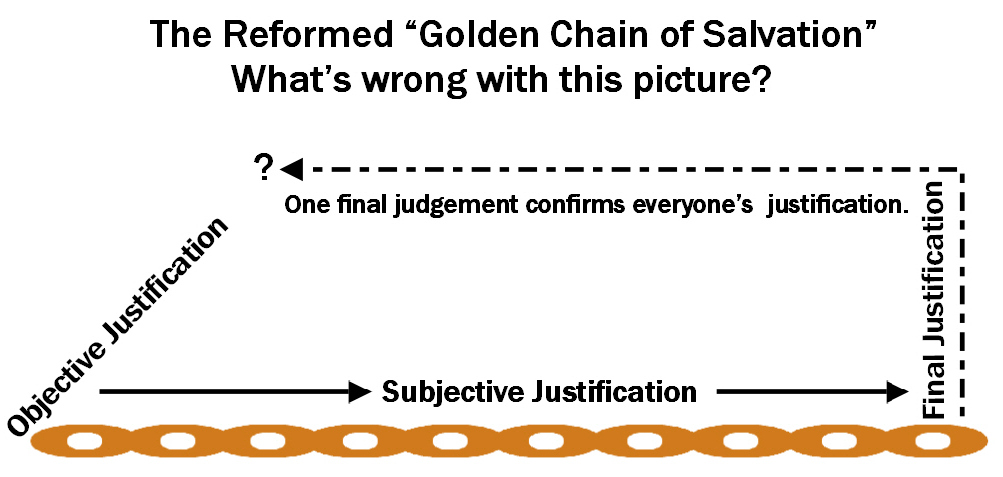
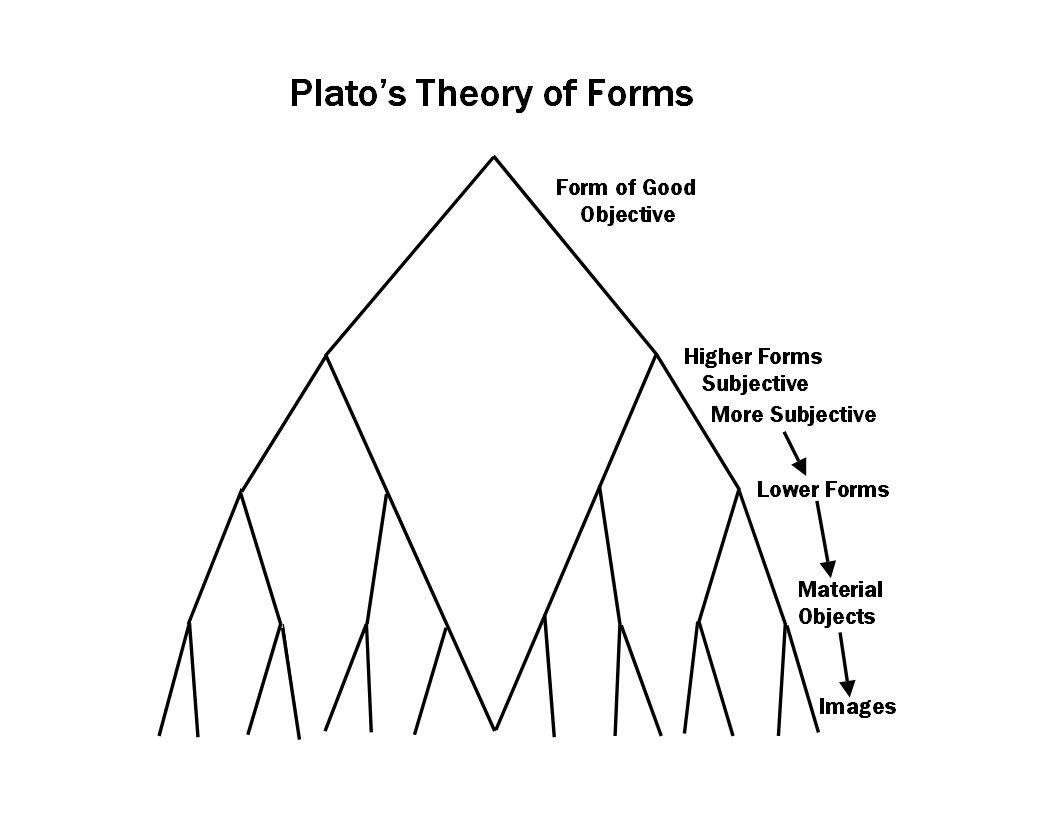
New Calvinism is a return to the authentic Reformed gospel. Because Augustine, Gregory, Luther, and Calvin were Platonists and didn’t interpret reality with the grammatical normative, Protestants migrate away from Reformed authenticity into a hybrid, or light form of the original. That is why today, you have historical grammatical Calvinists (Jay Adams et al), and historical redemptive Calvinists (John Piper et al). It all boils down to mystical (mystical doctrines are always married to tyranny because it presumes the masses cannot understand reality) Calvinism and objective Calvinism. The latter retains contradictory vestiges of the former; primarily, sound soteriology, combined with Augustinian eschatology. You don’t have to understand all of these terms; simply file the concept away in your mind. The concept is a simple one.
The Reformation was really nothing more than the same Gnosticism (Gnosis: secret or lofty knowledge) that has plagued God’s people from the cradle of civilization. The Catholic Church was born of the Gnosticism that wreaked havoc on the first century church. Much of the New Testament is written with Gnosticism as a backdrop. Augustine et al were always Catholics and never left the foundations of the Catholic Church. I believe the present-day landscape of the church is absolutely identical to what was going on in the first century except for the technology.
Part and parcel with Gnosticism is the idea of the spiritual elite mediating between the masses and God; in particular, the salvific part (because the masses cannot comprehend reality). Augustine believed that one could not know for certain if they were saved or not, but posited the idea that your best shot is obedience to the institutional church. This is deep within the psyche of Western thought, and why there is so much money in religion. The American landscape is saturated by churches with $500,000 yearly budgets because that is where salvation is found—no matter how you live. Give at the office, and live any way you want to during the week.
And that’s why the Reformation also distorts the Trinity. The Trinity is applicable truth. Sometimes we look at the Trinity as One for certain applications, and sometimes we make the separate distinctions for other applications. In regard to mediation, God must be Father and Son must be mediator. The Reformed gospel makes Father and Son the same and elders the mediators. But there is only “one” mediator.
Like I said, New Calvinism is a return to the authentic Reformed gospel. Calvin et al clearly believed in the authority of elders to forgive sins on earth in God’s behalf:
Wherefore, our initiation into the fellowship of the church is, by the symbol of ablution, to teach us that we have no admission into the family of God, unless by his goodness our impurities are previously washed away (20).
Nor by remission of sins does the Lord only once for all elect and admit us into the Church, but by the same means he preserves and defends us in it. For what would it avail us to receive a pardon of which we were afterwards to have no use? That the mercy of the Lord would be vain and delusive if only granted once, all the godly can bear witness; for there is none who is not conscious, during his whole life, of many infirmities which stand in need of divine mercy. And truly it is not without cause that the Lord promises this gift specially to his own household, nor in vain that he orders the same message of reconciliation to be daily delivered to them.
On the other hand, the Lord has called his people to eternal salvation, and therefore they ought to consider that pardon for their sins is always ready. Hence let us surely hold that if we are admitted and ingrafted into the body of the Church, the forgiveness of sins has been bestowed, and is daily bestowed on us, in divine liberality, through the intervention of Christ’s merits, and the sanctification of the Spirit.
22. To impart this blessing to us, the keys have been given to the Church (Mt. 16:19; 18:18). For when Christ gave the command to the apostles, and conferred the power of forgiving sins, he not merely intended that they should loose the sins of those who should be converted from impiety to the faith of Christ; but, moreover, that they should perpetually perform this office among believers. This Paul teaches, when he says that the embassy of reconciliation has been committed to the ministers of the Church, that they may ever and anon in the name of Christ exhort the people to be reconciled to God (2 Cor. 5:20). Therefore, in the communion of saints our sins are constantly forgiven by the ministry of the Church, when presbyters or bishops, to whom the office has been committed, confirm pious consciences, in the hope of pardon and forgiveness by the promises of the gospel, and that as well in public as in private, as the case requires. For there are many who, from their infirmity, stand in need of special pacification, and Paul declares that he testified of the grace of Christ not only in the public assembly, but from house to house, reminding each individually of the doctrine of salvation (Acts 20:20, 21). Three things are here to be observed. First, Whatever be the holiness which the children of God possess, it is always under the condition, that so long as they dwell in a mortal body, they cannot stand before God without forgiveness of sins. Secondly, This benefit is so peculiar to the Church, that we cannot enjoy it unless we continue in the communion of the Church. Thirdly, It is dispensed to us by the ministers and pastors of the Church, either in the preaching of the Gospel or the administration of the Sacraments, and herein is especially manifested the power of the keys, which the Lord has bestowed on the company of the faithful. Accordingly, let each of us consider it to be his duty to seek forgiveness of sins only where the Lord has placed it. Of the public reconciliation which relates to discipline, we shall speak at the proper place (Calvin Institutes 4.1.20-22).
In contrast, the apostle Paul said there is only ONE mediator, and made a clear distinction of terms between “mediator” and “teacher”:
1 Timothy 2:5 – For there is one God and one mediator between God and mankind, the man Christ Jesus, 6 who gave himself as a ransom for all people. This has now been witnessed to at the proper time. 7 And for this purpose I was appointed a herald and an apostle—I am telling the truth, I am not lying—and a true and faithful teacher of the Gentiles.
When is the discernment blogosphere going to hunker down on this simple concept and demand that those who play both sides of the fence clarify their position on this? And why is it important? Because the idea of mediators other than Christ always leads to tyranny. Mysticism is the mother because it presupposes a truth/reality beyond the five senses that the masses cannot understand. It is anti-grammatical, and posits a redemptive stargate. Grammatical rules are merely guardrails, and empirically hinder orthodoxy on God’s behalf. Grammatical interpretation empowers the individual.
This was the forte of the first century Nicolaitans, which means, “power over the laity.” And this is exactly where we find ourselves today—history repeating itself.
paul
What is it About that Song?
I was recently introduced to a song performed by the rap duo Dani and Lizzy. The song was inspired by the passing of people close to them in recent years. Though I do not know for certain, I would say the song was not written from a Christian perspective.
I found myself captivated by the song, but didn’t know why. After some thought, I concluded that I am drawn to the song by its hopeful questions. I will never be persuaded that there is any other biblical message than that of hope for the living.
I think the song also strikes a chord in my heart because of the ministry that I am in. It is my job to understand the hopeless metaphysics of Gnostic fools dressed in priestly garb. In a life that constantly dogs us with tragedy and death, I see the resurrections in the Bible performed by Christ and the apostles as shattering this world’s paradigm with the blinding light of hope while my subjects see it as a statement on mankind’s worthlessness and possible winning ticket in the lottery of election. I think I am drawn to the song’s yearning for hope, a hope that can always be found in God and His word.
But more than anything, I think I am drawn to the song because of it’s hopeful, intelligent questions about what really matters. This is striking to me because in our day Christians don’t know how to ask questions. Not only are Christians theologically dumbed down, they don’t even know what questions to ask, much less how to answer any. So, the song asks questions that most Christians can’t answer.
That needs to change. We should be able to adorn the gospel with beautiful answers to these beautiful questions.
Enjoy:
Lyrics:
The original:
paul

 Paul's Passing Thoughts
27 comments