“In The Name Of….” What Does it Mean?
 Christians throw around a lot of terms without knowing what they are really saying. “In the name of…,” fill in the blank, is no exception. The most common inference of the term used by Christians is the idea that what we do is in the name of Jesus because that sanctifies our good works which really are not our own. Everything we do must be “in the name of Jesus” to affirm that it is not really us doing the good work. When we pray, our prayer must be “in the name of Jesus” so that God will acknowledge it. Like everything else we do, if the work is not sanctified by Jesus’ substitutionary obedience, it will be deemed “filthy rags” by God. That includes your love for God and others. If it is really you doing the loving, it is not in Jesus’ name.
What does the term really mean? Primarily, it has family implications. This is a universal concept. Who you are reflects on your family. As a believer, you no longer function as a representative of your family name on earth, but rather your family name in heaven. Granted, definitive evidence for this in the Bible is somewhat lacking because it is such a given norm, but the idea is there, and gives sense to a plethora of scriptures.
John 1:11 – He came to his own, and his own people did not receive him.12 But to all who did receive him, who believed in his name, he gave the right to become children of God, 13 who were born, not of blood nor of the will of the flesh nor of the will of man, but of God.
This is literal. “You must be born again.” You are a literal child of God because you believed in the name of Jesus who is the “Son of God” and the “Son of man.” Salvation is a family affair in the most literal sense. The gospel goes far beyond restoring man to the garden standard, the gospel invites all of mankind to be part of God’s literal family. Christ came to make new birth into the family of God possible.
Ephesians 3:14 – For this cause I bow my knees unto the Father of our Lord Jesus Christ, 15 of whom the whole family in the heavens and on earth is named, (YLT).
The family name also includes kingdom royalty. Christ is the firstborn and the prince of God’s kingdom, so that figures in as well. To name the name of Christ is to say that you are part of His family and also have sonship with the Father.
“For both he that sanctifieth and they that are sanctified are all of one: for which cause he is not ashamed to call them brethren,” (Heb 2:11 ASV).
By the way, the sanctification spoken of here is definitive sanctification (to set apart) which is part of God’s elected plan of justification and does NOT mean that we have no part in progressive sanctification which is TOTALLY separate from justification. The four parts of the gospel are, definitive sanctification, justification, progressive sanctification, and redemption. These aspects are totally separate and serve different functions. The first two are a finished work, the third is progressive, and the fourth is future. Before the foundation of the earth, the Spirit set the elect (a classified group) apart for God’s righteousness (justification), and the progressive setting apart (colaboring with the Trinity in “putting off and putting on”) takes place during the believer’s life. The salvation of the body is future, and is NOT the salvation of the soul which is already a completed work through the new birth. A believer cannot be unborn, nor is one born progressively—birth is a onetime event. Churchianity makes all these aspects a process of progressive salvation found only in the institutional church as propagated by John Calvin in chapter 14 of book three in that Calvin institutes.
This is why we read the following in Matthew chapter 7:
21 “Not everyone who says to me, ‘Lord, Lord,’ will enter the kingdom of heaven, but the one who does the will of my Father who is in heaven.22 On that day many will say to me, ‘Lord, Lord, did we not prophesy in your name, and cast out demons in your name, and do many mighty works in your name?’ 23 And then will I declare to them, ‘I never knew you; depart from me, you workers of lawlessness.’
When these people make their case at the judgment, whether they know it or not, they are laying claim to being part of God’s literal family while their lives would have brought shame upon the family name. Christ replies that He never knew them intimately; in other words, He never knew them as family. However, more than likely, in the name of Jesus probably has a skewed meaning in their minds. While living a life of lawlessness (Greek: “anomia” or antinomianism), in the name of Jesus was some sort of religious formula dependent on the traditions of men and not biblical truth.
In contrast, “But God’s firm foundation stands, bearing this seal: ‘The Lord knows those who are his,’ and, ‘Let everyone who names the name of the Lord depart from iniquity.’”
God knows His own children and those who bear the name of His Son depart from iniquity because they understand the family to which they belong.
paul
Why Church is Bogus: Its Denial of New Birth Centrality
 What’s wrong with church? Let’s be honest; you have been going to church with the same group of people for years, but the spectacle of radical change is conspicuously missing. Failure is the big news, not amazing personal growth. Some of the kids who are growing up in your church turn out ok, others end up completely off the reservation. Week in, and week out, everything is about the gospel, the gospel, the gospel. Church community is really little more than sanctified secularism, and in many cases, indicative of things that are unspeakable among the Gentiles. Church drifts from fad to fad, and functions on a steady diet of new books from celebrity pastors and other guru types. Rather than immersing themselves in the word of God, most pastors just tap into whatever is trending in church culture. Those in denial can point to the “rich personal relationships,” but believe it or not, such relationships are found in abundance among the unsaved as well.
When it gets right down to it, the only difference between the secular world and the church is labeling. Oh, but the church helps the poor? So does the world. But the church has strong marriages? So does the world, and the divorce rate is the same to boot. And, the actual differences are not commendable; often, the secular world is far less tolerant of evil.
Why? Starting as early as the 4th century, the apostolic centrality of the new birth was rejected by the church. The reason is simple: new birth is about the individual. If your literal Father is God, and your Brother is the king of the world, and you are God’s literal offspring, you have something to bring to the table in your own right. Shortly after the passing of the apostles, the church usurped the organized body of God’s family and made it an hierarchical institution.
Gospel centrality became, “Christ died for your sins,” not, “You must be born again.” The new birth, as the standard for righteousness, was replaced with the law. Instead of Christ dying to pave the way for the new birth and true righteousness, He was made, not only the substitution for sin’s debt according to the written code, but also perfect law-keeper so that our righteousness can be according to law and not “apart from the law.” The law as written code therefore remains as opposed to the law’s purpose for sanctification among the born again. Christ alone must fulfill the law with love lest you have “a righteousness of your own.”
In the official soteriology of the church, the new birth is neither here nor there because being made better still doesn’t enable you to keep the law perfectly, so the new birth serves no soteriological purpose whatsoever in the church. For all practical gospel purposes, you remain unchanged, and that’s why church is bogus. The apostles fought this same justification by law tooth and nail while they were alive, and as they warned night and day with tears, it would launch an out-out offensive after their departure. It’s called, “the church.”
It’s not complicated; supposedly, we are no longer under law because Jesus keeps/kept the law for us. Note: we are no longer under the law because the old us that was under the law literally died, not because Jesus keeps the law for us. We are either under law or under grace; it’s one or the other—it can’t be both. And of course this leads to the last days religion of antinomianism because you don’t keep the law—Jesus keeps it for you. That’s why the love of many will wax cold in the last days; churchians don’t love God and others by keeping the law, Jesus supposedly keeps it for them lest it be works justification. This is the invariable formula when justification is not a finished work. Hence, we can expect the church to be divided into two primary groups: antinomians and those tolerant of antinomianism.
ANY gospel that proclaims a substitution for fulfilling the law necessarily denies the new birth outright, or at least redefines it in an other-than-biblical way. The often heard idea that Christ was resurrected to confirm His perfect law-keeping is an egregious false gospel that reflects the same justification by law that, and I will say it again, was the primary nemesis that plagued the apostles.
You see, God tried to make this point with all kinds of manifestations of the Spirit during the apostolic period. Unfortunately, these historical events found in the gospels and the book of Acts are relegated to all kinds of mysticism. Christ wasn’t deity in the flesh because of His perfect law-keeping, he was perfect because he was born into the world by the Spirit through the virgin Mary. Christ is the Son of God and the Son of Man, or the first fruits of many made righteous by the new birth—not law-keeping. You are righteous because you are born of the Spirit, not because Jesus kept the law for you. To doubt that a believer is literally reborn by the Spirit is to also doubt, or deny, the Spirit’s like work in the virgin Mary. That’s what the Spirit does, He gives new birth. This is why unbelievers push against salvation; intuitively, they understand that who they presently are will be vanquished resulting in an all new person recreated by God. That’s radical unpredictable change that people fear.
True Christians need to begin focusing on new birth centrality. I had an interesting conversation with my five-year-old grandson while running errands in my car yesterday. The following is my best remembrance of the words:
“Papa, why are you happy all of the time?”
‘Because I am born again.’
“What does that mean?”
‘It means I have been born again into God’s family, it means God is my literal Father and Jesus is my literal brother.’
“What about our family?”
‘When you are born again, you have two families; your earthly family and your family in heaven.’
“I was born by my mommy and daddy, I was in my mommy’s tummy.”
‘Indeed you were,’ but when you are born again, you have two fathers, and many brothers and sisters who are also born into God’s family.’
As I waited for the next reply, it didn’t come, but I could tell Blayne was in deep pondering about the conversation which found me totally off-guard and frankly, ill prepared. Of course, I could have made more of the conversation, and I could have worded my responses better, but it is a start. However, a foundation was laid that can now be invoked in more conversion as we go about life. When he sins, I can now use that to revisit our original conversion and build on it. We need to leave church and the foot of the cross behind, and talk much more about the empty tomb—the hope of future glory and present love.
But the church has little need for the resurrected, because the fellowship of the resurrected is a cooperative body under one truth that operates by individual gifts—not authority. The church is a kingdom of this world striving for its stake in world dominance, for the greater good of course. The kingdom of the resurrected is not of this world, our King and brother is in heaven sitting at the right hand of our Father. The church is just another conquest endeavor of this present world among many others. This requires the following of many men, not the one mediator who is Christ.
In conclusion, if you want to pursue new birth centrality, like me, and if you would be so fortunate, you may have to find you confirmation from the mouths of children. When my daughter Heather was Blayne’s age, she wrote an essay for a school assignment that follows:
“My Dad”
My dad has brown curly hair.
My dad talks about the Lord Jesus.
His voice is a happy voice.
My dad is very happy all the time.
My dad works on cars.
I love you dad.
Funny, this is a much different perspective than I have received from church folks most of my life. According to them, I am an “angry man,” “hateful,” “rude,” “opinionated,” “a know-it-all,” “intolerant,” “an abuser,” etc., etc., etc., etc. More recently, I have been dubbed a “cultist of death” and the leader of a “tyrannical regime.” This is what I have come to learn: children see you more for what you are, adults judge you according to how comfortable you make them. In my book, I will die much better with the testimonies of children. However, there may be some merit to the adult version as children really want to simply know while adults often want to protect an agenda which I find very annoying, and no doubt with rudeness following.
In the final analysis, churchians love death and the testimony of misery. If you are a propagator of life in that culture, do not expect things to go well. Like Christ, you will not be found in the tomb of sin and death, and your glory is not a perpetual gazing at the serpent lifted up in the wilderness. You looked upon it but once, and now your tomb is empty.
paul
Achieving Total Conquest Over Depression, Part 4: Paul and Susan Christian Living Series on Blogtalk Radio Program 6
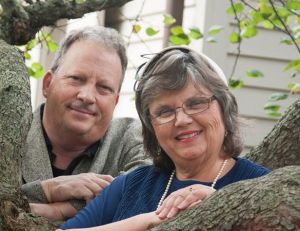
Live Broadcast link for tonight 2/5/2016 @ 7pm:
Links open in separate pages so you can view without going back and forth reopening pages.
Paul and Susan will have a conversation regarding practical ways to overcome depression. The conversation will focus on the article, “10 Small Steps You Can Take Today to Improve Bipolar Disorder” by Margarita Tartakovsky M.S. Paul will also comment on information sent to him by PPT readers and Blogtalk listeners.
http://psychcentral.com/lib/10-small-steps-you-can-take-today-to-improve-bipolar-disorder/
Of course, everything starts with a proper view of salvation. Assurance of salvation is foundational to “being much more than conquerors” (Romans 8:37). We want to start by discussing these documents sent to us.
1. Justification-Hyper Grace-Trinitarian %231 (1)
3. Justificaton-Hyper Grace-Trinitarian %232
4. Misused Scripture to Support Trinitarian Theology
5. Justification-Hyper Grace-Trinitarian %233
Also in regard to the gospel:
http://www.theologyforwomen.org/2011/01/gospel-defined-part-1.html
Fear and Depression:
http://wutbju.tumblr.com/post/137409149400/on-monday-september-28-2015-at-approximately
Marriage and Bipolar Disorder: 1Corinthians 7:12-14
Self Condemnation and Self Esteem.

Achieving Total Conquest Over Depression, Part 3: Paul and Susan Christian Living Series on Blogtalk Radio Program 5
Live Broadcast link for tonight 1/28/2016 @ 7pm:
Links open in separate pages so you can view without going back and forth reopening pages.
Paul and Susan will have a conversation regarding practical ways to overcome depression. The conversation will focus on the article, “10 Small Steps You Can Take Today to Improve Bipolar Disorder” by Margarita Tartakovsky M.S. Paul will also comment on information sent to him by PPT readers and Blogtalk listeners.
http://psychcentral.com/lib/10-small-steps-you-can-take-today-to-improve-bipolar-disorder/
Of course, everything starts with a proper view of salvation. Assurance of salvation is foundational to “being much more than conquerors” (Romans 8:37). We want to start by discussing these documents sent to us.
1. Justification-Hyper Grace-Trinitarian %231 (1)
3. Justificaton-Hyper Grace-Trinitarian %232
4. Misused Scripture to Support Trinitarian Theology
5. Justification-Hyper Grace-Trinitarian %233
Also in regard to the gospel:
http://www.theologyforwomen.org/2011/01/gospel-defined-part-1.html
Fear and Depression:
http://wutbju.tumblr.com/post/137409149400/on-monday-september-28-2015-at-approximately
Marriage and Bipolar Disorder: 1Corinthians 7:12-14
Self Condemnation and Self Esteem.
My Reply to Linda: Yes, I Am a Christian, But Not Sure You Are
I am presently in the process of eliminating my personal Face Book account. A ministry account will be maintained for the TANC blog, Paul’s Passing Thoughts .com, and overseen by Pearl the PPT moderator. I recommend people befriend that account if they want to stay connected to our ministry.
The reason is simple: I no longer have patience for the evangelical regurgitation of orthodox talking points. Protestants don’t own their own faith that they have seen in the Bible with their own study. What they think they see and understand is what Protestant academics have told them, including the idea that they have authority to tell them what to believe. So, what is wrong with church? Church is wrong with church because it is predicated on a false gospel. That’s right, the Protestant Reformation was a false reformation founded on a false gospel. And this is why Dr. James White and others have refused to debate me publicly; the Protestant gospel as stated in its orthodoxy is the biblical definition of a lost person…under law as opposed to under grace.
Martin Luther and John Calvin et al proffered a gospel that is under law, but that is supposedly OK because Jesus keeps/kept the law for us and that obedience is imputed to our Christian status. This is a perpetual covering of sin, or sometimes referred to as “atonement,” but not an ENDING of sin that requires no further justification. Hence, we must “preach the gospel to ourselves every day” to “keep ourselves in the love of God” (CJ Mahaney) etc. White and others know that this is a simple matter of theological math, and do not intend to address it until enough people catch on. The only case they can make presently is for a historical-redemptive interpretation of Scripture that interprets every verse as a justification verse. Sanctification is defined as progressive justification via Protestant talking points.
So, while in the process of eliminating my personal Face Book account, I noticed a comment to me by a “Linda.” It follows:
“Are you a Christian Paul? And secondly do you believe that the Bible is the inspired Word of God? That would be my two questions for you. Romans says, ‘There is none righteous, no not one.’ That includes you and me. This doesn’t mean that we never do a kind act or good deed. It means that we don’t and can’t do enough of them to be declared ‘RIGHTEOUS’ by God. We could never do enough good deeds and kind acts to get us into heaven. Therefore we need the righteousness of Christ imputed unto us in order to go to heaven. God imputes this kind of righteousness to those who believe and accept HIS son Jesus and his shed blood as atonement for their sins and their UNrighteousness. We are part of God’s family by adoption. Nothing can make us righteous enough to go to heaven. The righteousness that is applied to our never dying soul can only come from Christ. The ‘part and parcel’ of our own being is puny compared with what God demands. In one place in scripture our puny ‘part and parcel’ is described as ‘filthy rags.’ So our own human effort at righteousness is from our flesh. Our flesh is not saved from sin and unrighteousness. Only our soul is. We are not capable of learning and loving enough to be declared righteous enough for heaven. We could learn and love enough to help another person with a kind act or good deed. But that does not fit our soul for heaven. I don’t understand your third question……’Christ imputing sin’ ????”
Her comment was in reply to previous comments made in regard to a post. She was replying to a comment I made regarding her initial comment. Her initial comment follows, and afterward my reply:
“I am a never dying soul whom Christ died and rose for, approved of by God because I have HIS righteousness. Just by learning and loving we are different. Better means ‘improved in some way.’ Not hard questions for me.”
“Linda, where does the Bible say you have the righteousness of Christ? That’s the first question. The second: Are we only approved of God because we ONLY have the righteousness of Christ and none of our own? What about the new birth? If we are literally born of God and now part of His lineage, would that not make us righteous? Do you mean to say that we have a righteousness LIKE Christ’s because we are a member of the same family, or ONLY His righteousness and none that is part and parcel with our own being? Are we truly righteous, or only declared righteous? Third question: was Christ’s role in salvation an imputation of sin AND righteousness, or just sin? On the one hand, you seem to state that we only have the righteousness of Christ, but on the other, you say we learn and love. How exactly do we learn and love if we ourselves are not righteous people? So, I am not trying to be a jerk here, I am simply resolute that Christians should have a clear definition of who they are. Yes, I know exactly what the Reformers believed about our identity, but I would like to see your clarification.”
This is the extreme Protestant cognitive dissonance resulting in the train wreck we call “church” that I no longer have patience for. People who are serious about following Christ need to take their true gospel and leave the institutional church for home fellowship networks. The institutional church is part and parcel with the authority that demands a denial of the obvious. Authority has replaced truth. Nevertheless, I do believe evangelicals will have to eventually address their under law gospel.
I will make this as simple as possible as I am weary of addressing it. Much, much, thanks to Andy Young who is helping to carry the water on this as well. Linda’s response is pretty much the Protestant gospel talking points that we hear often, and pregnant with cognitive dissonance. All in all, her answers to my questions are, “NO.” Please start by noting that. This is where we discuss another disservice the Reformers performed: adding chapters and verses to the Bible. This circumvents the need to read all of Scripture in context. You can form a theological argument by using John Immel’s pet peeve: Scripture stacking. Basically, Linda is using the same verses to argue for the same Protestant talking points that she has received from Protestant academics. As a result, if one examines her statements, the blatant contradictions are stunning.
Where to start? ALL of our works are filthy rags (Isiah 64:6), yet, we can do some stuff that is good? So, “all” doesn’t really mean “all”? Per the usual, Protestants profess a double false gospel because they don’t rightly understand the gospel taught by the father of the Reformation, Martin Luther. In fact, Luther taught that EVERY deed of man is evil, even those that appear good because man’s “good” deeds always have a flawed motive. Calvin taught the same. Hence, if one believes that we can do a good deed, that is “mortal sin” and cannot be forgiven by the church. But, if one believes that every work we do, even works that appear good, are actually evil, all of our sin can be forgiven by revisiting the same gospel that saved us, and that revisitation is only valid under the auspices and oversight of the clergy. This is Luther, this is Calvin, this is the Protestant gospel. I have documented this backwards and forwards as those who follow TANC Ministries know.
Now, for the Protestant part of this that Linda got right, and in fact a mainstay of Protestantism, but still a false gospel. Luther and Calvin orthodoxy already condemns her to hell, but they would agree with her making the law the standard for justification. Biblically, there is NO law in justification. The Bible testifies about justification, but law and justification are mutually exclusive. It doesn’t matter who keeps the law, there is no law in justification. What determines justification is the new birth. The law is strictly for love in the Christian life. Again, the law informs us about justification, and here is the information: law is not the standard for justification, the new birth is. The apostle Paul wrote the epistle of Galatians to make this very point. Again, I predict that folks are going to start catching on to this in the future and the who’s who of evangelicalism are going to have to make a defense; good luck to them as that attempt will be interesting. The Protestant under-law-gospel, also stated by Linda, has Christ fulfilling God’s “demands” in our stead when God’s only demand regarding justification is that we be born again.
In order to make the law the standard for justification, the Reformers resorted to Saint Augustine’s Neo-Platonism, which later became Gnosticism and wreaked havoc on the first century church. We see this in Linda’s talking points about “the flesh.” ALL of our works come from where? Right, the flesh which, like the Reformers, she deems as inherently evil. That’s Gnosticism. The Bible teaches that our bodies, or members, are “weak” not inherently evil. When the Bible speaks of the “desires of the flesh” and the “deeds of the flesh,” that speaks of when our members are used for sinful purposes. Obviously, if Linda would stop long enough to read her own Bible with her own understanding given to her by God, she would see that our body, or “flesh,” can also be used for holy purposes (Romans 12:1 among many other passages). And, what is more obvious than the fact that our bodies are declared to be the temple of God? Actually, a word study reveals that the Holy of Holies is being referred to.
This brings us to Linda’s Protestant confusion in regard to the difference between salvation and redemption. The former is the saving of the soul, the latter is the saving of the mortal body which can be used for evil or good depending on which desires we are obeying. Christians, through the new birth, have the ability to obey the desires of the Spirit stated in the Bible and the ability to say “no” to evil desires that remain part of the body’s weakness and mortality. Because Christ ended the law through the new birth, sin has been stripped of its ability to enslave and condemn. If Christ obeys the law for us, we are still under it and enslaved to sin. The old us that died with Christ violated the whole law with every sin; the new us that was raised with Christ fulfills the whole law with one act of love. Christ didn’t come to obey the law for us—He came to END the law. Christ didn’t come to cover our sin—He came to END our sin.
A book could be written here, but time won’t allow it; nevertheless, let’s address Linda’s confusion, typical among Protestants, in regard to gift and reward. We cannot birth ourselves, but we can obtain the baptism of the Spirit by faith alone in “the promise” (see Galatians chapter 3). Once the gift is received, it is ours to utilize by loving God and others. Exercising the gift is not taking credit for the gift. The Bible states that God would be unjust to forget our good works and service to the saints (Hebrews 6:10). “Unjust”? Yes, because as those literally born of Him (1John chapter 3), and literally a part of His literal family, our reward is due us as siblings working for the Father. As a slave to the former master, we could only earn death wages—now we can earn true reward. Read the Parable of the Talents and see what the outcome is for those who fear and want to give God back only what was given and nothing more. It shows a fundamental misunderstanding of the new birth.
As a policy, I don’t judge the salvation of others. I believe that there are Protestants who are confused enough about Protestantism to be saved. So, yes Linda, I am saved, but I find your assurance that you are saved indicative of your confusion. Protestant orthodoxy CLEARLY states that the motor of sanctification moving justification forward is doubt of salvation because being under condemnation is part and parcel with being under law…the standard for justification according to Protestantism. In Calvin’s words, if “Christians” are not still under condemnation, what further need is there for Christ and His righteousness?
So Linda, I am saved, but I recommend that you start thinking for yourself. All of the Protestant academics you trust will not stand in your stead at the judgment. You will be standing there alone.
And you better have more than a covering with sin underneath it, you better be a literal child of God before Him.
paul

 Paul's Passing Thoughts
1 comment