The Calvinist Grand Quandary
 “At any rate, the very attempt by Calvinists to evangelize places them in a twofold grand quandary that requires the abandonment of rudimentary logic.”
“But in contrast, if God’s choice over our choice is the crux of the gospel, that crux must be explained in order for the presentation itself to be a true gospel.”
At the 2008 T4G conference, John MacArthur Jr. officially came out of the closet as a bonafide New Calvinist. He did this because he was convinced by John Piper and others that New Calvinism is Old Calvinism. MacArthur signed up because it’s true, and he was unwilling to reject Reformation tradition. Apparently, only other-than Anglo Saxon can be deceived en masse.
MacArthur’s keynote address was titled, The Sinner Neither Able Nor Willing: The Doctrine of Absolute Inability. MacArthur was converted from his Lordship Salvation escapades of the late 80’s by the New Calvinist camp. According to a pastor I knew at the time, Michael Horton and others challenged MacArthur to rethink the controversy he had started. The result is MacArthur still affirming Lordship, but as a manifestation rather than actions of new creaturehood. I recently completed a series explaining all of the confused controversy in regard to the Lordship Salvation issue.
At any rate, the very attempt by Calvinists to evangelize places them in a twofold grand quandary that requires the abandonment of rudimentary logic.
I have written before about the Gospel of Sovereignty. Any ability at all on the part of mankind is a slight against God’s sovereignty. This is the hypothesis of MacArthur’s aforementioned messages. Hence, the “good news” is man’s “absolute” inability and God’s sovereignty. MacArthur’s primary text was John 3:1-8…
Now there was a man of the Pharisees named Nicodemus, a ruler of the Jews. 2 This man came to Jesus by night and said to him, “Rabbi, we know that you are a teacher come from God, for no one can do these signs that you do unless God is with him.” 3 Jesus answered him, “Truly, truly, I say to you, unless one is born again he cannot see the kingdom of God.” 4 Nicodemus said to him, “How can a man be born when he is old? Can he enter a second time into his mother’s womb and be born?” 5 Jesus answered, “Truly, truly, I say to you, unless one is born of water and the Spirit, he cannot enter the kingdom of God. 6 That which is born of the flesh is flesh, and that which is born of the Spirit is spirit. 7 Do not marvel that I said to you, ‘You must be born again.’ 8 The wind blows where it wishes, and you hear its sound, but you do not know where it comes from or where it goes. So it is with everyone who is born of the Spirit.”
MacArthur stated during his messages that when the gospel is presented we must make it clear that people can only do one thing in response to the gospel: ask for salvation, and then wait to see if the wind blows or not. So, it is not a decision, often maligned in Reformed circles as “decisionism,” or a choice. Either suggests ability on the part of the individual to make a decision for God or to choose God; ability and God’s sovereignty are mutually exclusive. If man can choose, or make a decision, God ceases to be God.
This qualifies a fair challenge to all Calvinists: “Do you make it absolutely clear in your gospel presentation that people have no ability to choose God?” If they do not do this, if this is not qualified, they are presenting a false gospel by their own definition. Why? The truthfulness of their gospel must be verified by the certainty that the individual does not assume they have a choice or can make a decision.
Most Calvinists get around this by replying that people are being called on to believe only, not make a decision or a choice. However, it also stands to reason that belief itself is a choice. When we are presented with a proposition, we DECIDE to believe it or not believe it. In all fairness, according to their own definitions, Calvinists must make this distinction clear in their gospel presentation. Let’s face it; few do if they evangelize at all. In fact, when Calvinists are cornered with this question, they immediately start acting like a toddler who needs to use the bathroom. Basically, they know that the lack of this distinction in their actual gospel presentation is telling. Their presentation is supposedly purified by the absence of information.
On another wise, Calvinists are also admitting that they are asking for a mere mental assent to acknowledging that God saves people. The Bible states that part and parcel with belief is the acceptance that God exists and is a rewarder of those who seek Him. Obviously, among the unbelieving, there are those who reject the existence of God altogether, and those who believe in His existence, but don’t want anything to do with Him. Is the wind only blowing halfway in those cases? Are there three different wind advisories? None, moderate, and gale force? Furthermore, if people have no ability to choose, is a decision to choose Buddha over Allah made for them? The logic seems to be that man can indeed choose, but will only choose other gods unless God intervenes—if they understand that they have no ability to choose.
If we give this whole construct merit to this point, we further find that the definition of faith must be a mere mental accent to the facts of the gospel with an intentional non-response; any response must be from the blowing wind. MacArthur stated in the same messages that we know Nicodemus was saved because “the wind blew” referring to his righteous actions.
Hence, if the Calvinist gospel is not false by their own definition, it must be presented as follows:
“God saves people, and you may be one of them and you may not be one of them, but if you are able to choose, God is not sovereign, and you are trusting in your own ability to choose.”
Unwittingly, some Calvinists say it is alright if people initially think they are able to choose, but later understand that it wasn’t their choice. So, it is alright if they initially trust in their decision in order to receive the gift of salvation from God, but later realize this was not the case at all. So at what point were they really saved? And would not sooner be better than later? Why not tell them from the get-go? This implies a cult-like procedure that misrepresents the truth, and then slowly indoctrinates the individual to a just standing. Others suggest that the evangelist should never state that it is their decision, but rather cite Scriptures that imply such—that way, apparently, it is the Holy Spirit lying instead of you. But nevertheless, what the individual believes about choice is uncertain unless clarified.
In the final analysis, everyone but the recipient of the gospel knows they have no real choice, but thinking they have a choice might be necessary to get them into the kingdom. But in contrast, if God’s choice over our choice is the crux of the gospel, that crux must be explained in order for the presentation itself to be a true gospel.
Add to this the definition of “believe” in the Bible. In the Bible, “believe” is never defined as a mere mental assent to the facts of the gospel; it also involves a commitment to kingdom living. More than not, it was the “gospel of the kingdom” that was preached by Christ and the apostles. As I explained in the Lordship series, it is impossible for the execution of the commitment to save you because justification and sanctification are completely separate. But clearly, a response to the gospel must include a decision to leave life A for life B. The follow-through doesn’t save you, the decision saves you. Because of the weakness of the flesh, love for God’s ways will vary in application, but you are not only choosing a savior; He is also Lord.
Consequently, Calvinists insist that repentance be left out of the gospel presentation for this reason—it calls on the individual to choose a different way. In the book of Acts, Christianity is referred to as “The Way” in several places. This is more information that must be excluded from the Calvinist gospel in order to make it true by their own definition. Therefore, in order for their gospel to be truthfully presented by their own definition…
“God saves people. If He saved you, you will live differently. The wind will blow, but it’s not your choice, do you believe this? And by the way, don’t change your life to prove to yourself God saved you, that’s fruit stapling. If you believe, that’s great, but now you must wait to see if the wind blows. The Christian life is a Sabbath rest.”
Anything less than this in a Calvinist gospel presentation is a false gospel by their own definition.
And let us not forget, in Calvinist post salvation status, the wind keeps on blowing, or not. It is undeniable that Calvin himself believed in three classes of people: the non-elect, the called, and those who persevere. Said another way: no wind at all, those who are temporarily enlightened (the wind stops), and the ones who get a steady wind to the end.
There is only one way Calvinism can be feasible; logic must be completely divorced from the Bible.
paul
“Secular” Is NOT Synonymous with “Evil”
Gnosticism does not interpret reality in three dimensions. That’s why it is of the Dualism family of philosophy. EVERYTHING is good or evil, material or invisible. This is the “knowledge of good and evil.” ALL of reality is interpreted and defined by one or the other. This also involves Anti-Type epistemology as well: opposites define each other; we would not know light if not for darkness, and evil gives deeper understanding of good and vice versa.
This was the basic hypothesis of the Calvin Institutes (see 1.1.1.) and Protestantism in particular. Martin Luther interpreted ALL reality via the “glory story” and the “cross story.” The story of man and the story of redemption. Luther believed that man cannot reason or know reality, and God sent Christ to marry the invisible to the visible as the only gateway of wellbeing—the only gateway of understanding between the shadow world and the true forms through suffering. This IS the Redemptive Historical Hermeneutic so highly touted in Reformed circles. It is behind comments by the likes of John MacArthur Jr. that people doubt their salvation because they have not suffered enough as a Christian.
This worldview has seriously crippled Christianity’s ability to minister to the world because, among many examples, the secular is always defined as being evil. America was founded on secular principles: separation of church and state. The founding fathers saw the secular as a force for good that freed man to pursue life and happiness. This was the first time in history where faith and force were separated.
Other words that are unfortunate Christian synonyms for evil… “flesh,” and “leaven.” The latter often denotes influence whether good or evil; the former, like the secular, can be used for good or evil. The framers recognized that church and secular together, never turns out well. This is why movements such as the Moral Majority are egregiously misguided.
Here is an example of God using the secular for good purposes, and His call to Christians to support such:
Romans 13:1 – Let every person be subject to the governing authorities. For there is no authority except from God, and those that exist have been instituted by God. 2 Therefore whoever resists the authorities resists what God has appointed, and those who resist will incur judgment. 3 For rulers are not a terror to good conduct, but to bad. Would you have no fear of the one who is in authority? Then do what is good, and you will receive his approval, 4 for he is God’s servant for your good. But if you do wrong, be afraid, for he does not bear the sword in vain. For he is the servant of God, an avenger who carries out God’s wrath on the wrongdoer. 5 Therefore one must be in subjection, not only to avoid God’s wrath but also for the sake of conscience. 6 For because of this you also pay taxes, for the authorities are ministers of God, attending to this very thing. 7 Pay to all what is owed to them: taxes to whom taxes are owed, revenue to whom revenue is owed, respect to whom respect is owed, honor to whom honor is owed.
paul
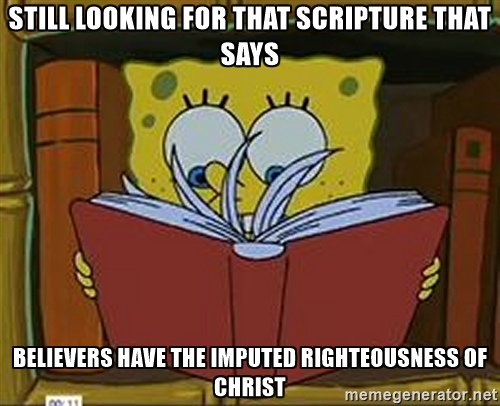
Stop Saying That Jesus’ Righteousness Is Imputed to US Because it’s NOT True
 Christians ought to speak the truth and not throw around spiritual bumper stickers that are not true. Jesus’ righteousness is not imputed to us. Actually, the statement is a false gospel.
First, it’s Calvinism. Are you a Calvinist? If not, just stop saying that Jesus’ righteousness is imputed to us. It was God the Father’s righteousness that is imputed to us, not Christ’s. Does it really make that much difference? Yes, it makes a huge difference.
For the very much most part, the Bible attributes our righteousness to God the Father, a few verses could be cited to imply Jesus’ righteousness is imputed to us, but the arguments are weak. Nevertheless, why are we not emphasizing what the Bible clearly emphasizes and instead emphasizing the righteousness of Christ being imputed to us?
The reason is because the contrary emphasis is tied to the false gospel of Protestantism which hinges its gospel on the idea that Christ came to fulfill the law rather than end it. Fulfillment verses ending is the difference between a true gospel and a false gospel.
So, fulfillment posits the idea that Christ not only came to die for our sins, but also had to live a perfect life so His perfect obedience to the law could be imputed to us as well. This turns the true gospel completely upside down and rejects the new birth. The power of sin is death and condemnation, and any violation of the law is sin—that’s why Christ came to end that law, not fulfill it. There is no life in that law even if Christ did fulfill it, and if He did fulfill it for our justification, there is not one seed, but two. Christ came to end that law, there is therefore no condemnation for us and the power of death is broken.
I say “that” law, and not “the” law because there are two laws. John Calvin and his heretic buddies only recognized one law, and that is a huge problem. Yes, it is one law as far as the same words, but with two different relationships to life and death. For the unbeliever, it is “the law of sin and death,” for the believer, it is “the law of the Spirit of life.” When the Bible talks about fulfillment of the law, it is talking about the fulfillment of the law of the Spirit of life “through us” (Rom 8:4).
Also keep in mind that the law couldn’t be completely fulfilled to begin with because of future unfulfilled prophecy. Not only that, when Christ said He came to fulfill the law, the New Testament had not even been written, and most of it, actually all of it, was written after His ascension. Keep in mind that there is unfulfilled Bible prophecy in the Old Testament as well.
Here is where we get into a huge problem: the idea that there is one law and the atonement is two-fold; His death for sin, and obedience to the law by Christ because the one law of sin and death is the standard for righteousness. Think about this, if there is one law, the law of sin and death, and it is the standard of righteousness, then the perfect demands of that law must continue to be satisfied in order to keep us saved. That’s the crux of Protestant heresy—a one law that must be perpetually satisfied in order to keep us saved.
But when we believe, we are no longer under that law because it is ended for us. We are no longer “under law,” but “under grace.” That means that we are now under the law of the Spirit of life. When we sin, we cannot be condemned, but unfortunately, we grieve the Holy Spirt who has sealed us until the day that our bodies are redeemed.
This is where it is necessary for the Reformed heretics to say that Jesus’ righteousness (obedience) is perpetually applied to the law of sin and death in our stead. That law is not ended, it must be perpetually satisfied for us. This is what those heretics are talking about when they verbalize the truism, “Jesus 100% for us.” This keeps “Christians” under law and not under grace in regard to justification. Sanctification fulfills the law of the Spirit of life and is completely separate from Justification. This is why Protestantism calls for a sanctification by faith alone; if we live by faith alone in sanctification, the same way we were justified (“We must preach the gospel to ourselves every day”), the perfect obedience of Jesus will continue to satisfy the law of sin and death in our stead.
 The contra Reformation gospel frees the Christian to aggressively obey God in sanctification because the only possible motivation is love because the other law is ended and has nothing to do with our justification. That is a finished work that has nothing to do with our Christian life. We are free to aggressively love without fear instead of being afraid that we are not properly living by faith alone which supposedly circumvents the satisfaction of the law via Jesus.
Learn to interpret your Bible accordingly: “Is this a justification verse, or a sanctification verse, and which law is being addressed?”
paul
The Truth about TULIP and the 5 Solas
TULIP and the 5Solas are the Reformed bumper stickers that solidify the Reformed gospel as a given truth. They are the, “Give me liberty or give me death,” and “Remember the Alamo” of Americanism. The major difference in this analogy is the fine print. Patriotic bumper stickers are pretty straight forward; Reformed bumper stickers have a lot of fine print. In fact, with TULIP and the 5Solas, the devil is literally in the details.
T: Total Depravity. The assumption is that this only pertains to mankind in general and not the family of God. No, it is also the total depravity of the saints.
U: Unconditional Election. This isn’t an election for salvation. The elect qualify for a race of faith alone; viz, Augustine’s Sabbath Rest doctrine. If one lives by faith alone as a Christian, the reward is salvation. This is the already and not yet Reformed bumper sticker.
L: Limited Atonement. Only in regard to those chosen to enter the race of faith, not everyone “elected.”
I: Irresistible Grace. Also known as the effectual calling. This only pertains to being called into the race of faith. According to Calvin, only the ones gifted with perseverance finish the race of faith alone. So, there is the non-elect, the elect, and those who persevere (CI 3.24.6).
P: Perseverance of the Saints. Not the idea that the chosen will persevere as a result of election, but the chosen must finish the race by faith alone in order to receive the prize of salvation. The race of faith is not for rewards as workmen for the kingdom—the reward is salvation.
I: Scripture Alone. As a narrative that only shows Christians their total depravity in a deeper and deeper way so that they can continually return to the same gospel that saved them.
II: Faith Alone. For both justification and sanctification.
III: Grace Alone. For both justification and sanctification. Justification is progressive; i.e., sanctification by justification.
IV. Christ Alone. Literally. All of reality is interpreted through Christ and His works in the gospel. EVERYTHING else is a shadow of Christocentric reality, including the other two members of the Trinity.
V. Glory to God Alone. Literally. EVERYTHING else recognized as having worth steals from the glory of God. Luther/Augustine/Calvin interpreted reality as everything being categorized as the glory story (man) or the cross story (Christocentric reality).
paul
An Answer for Lisa and Jane Doe
Noah’s wife must have been an interesting person. Imagine being married to one of the few men on earth who is right. If Noah wasn’t a compromiser, and I tend to think he wasn’t, Noah’s wife would have lived in isolation for the most part. I was surprised to find a significant amount of data on her. Though it is debatable, some think her name was Emzara, but that assertion is mostly tradition. Her major role in Noah’s ministry was behind the scenes, and apparently, she never did anything to rock the boat. Pun intended.
I will admit it, I have the best commenters here at PPT available on the internet. They are not many, but they are thinkers. They also love the truth. Some, like Lisa, are searching. Not for A truth, but for THE truth. That’s important. Lisa is an anti-type of the kind of “Christianity” that the apostles predicted would be prevalent in the last days. Here is her comment:
Hi, Paul-
I have been reading through your posts for a few months. I am on a truth quest, and have been awakening over the course of the last 15 months to the amazing amount if deception in the American church. I must say I am greatly dismayed–it seems that any teacher of note is a fraud of some sort. We spent years in the SBC, then went looking for something “real.”
After escaping the mindless crush of Stepford Christianity (seeker driven/church growth), and awakening to the underlying dogma (courtesy of Peter Drucker), I began looking into the various reformed denoms. Early on, we discarded the YRR/ Driscoll crowd. After some investigation and disappointment, Piper was out. Then, I began to look at the differences between Calvinism and Lutheranism.
That is about where I came across your blog. You make very compelling arguments against Luther, Calvin, Protestantism as a whole, and virtually every remaining pastor I hoped had something helpful to teach. I am not saying I think you are wrong, but I have a pretty good idea of what you DON’T believe, but no clue what you DO believe. What is left? Help!
Thanks!
Lisa
While writing this post, I received an email that echo’s Lisa’s concerns as well. The writer’s identity is protected by referring to her as “Jane Doe.”
Hi, I came across your blog while doing my own research on James MacDonald and his controversies. I have read through many of your past blogs and comments, in particular those relating to Calvinism.
Honestly, my head is spinning and my heart aching because I don’t know whether I am an even bigger fool than I thought for falling for MacDonald’s dog n pony show, or am I heading down another path of false teaching/opinions.
When I read your blog and others’ with your same opinions I realize that basically everything I listen to on Moody radio is essentially a farce. YIKES!.. I really thought I was headed down the right path but now I think I might be a Calvinist and I am alarmed by this.
I’m just a mom, raised in the [omitted] tradition. I attended a [omitted] university and over the last 20 years found myself clinging to Moody radio and my local congregation. I’m questioning Moody and am wary of most churches because they all seem to tout McArthur, Piper, Francis Chan, Rick Warren, Platt and guys lined up with JM.
I’m afraid I researched myself out of any affiliation with anyone. All I can hope for is to read my Bible with fresh eyes.
Sorry, you take the brunt of my sadness.
Jane Doe
Everybody just stop right now. Jane and Lisa are asking the same thing: “Where is THE truth???” When the truth is hard to find for truth-lovers, that’s a bad life. But Jane and Lisa are in a good place filled with hope. Jane and Lisa are experiencing what the apostles said would be taking place in the “latter part of the latter days.” This is twofold. First, “Christians” will be looking for A truth rather than THE truth:
2Timithy 4:3 – For the time is coming when people will not endure sound teaching, but having itching ears they will accumulate for themselves teachers to suit their own passions, 4 and will turn away from listening to the truth and wander off into myths.
Secondly, sound doctrine will not be tolerated.
Is this not descriptive of the day we are in?
As were the days of Noah, so will be the coming of the Son of Man.
This is in a manner of speaking, it won’t be technically as bad (the gates of hell will not prevail against the church), but why do thousands upon thousands of “Christians” pay 100-400 dollars each plus travel expenses to hear from mere men with a bunch of Plato Academy titles after their names? It’s insane. These men will not give an account for our lives before Christ, and Lisa-n-Jane know it. They are taking responsibility for the sum and substance of their own lives before God—the lives that bear their names. Good for them.
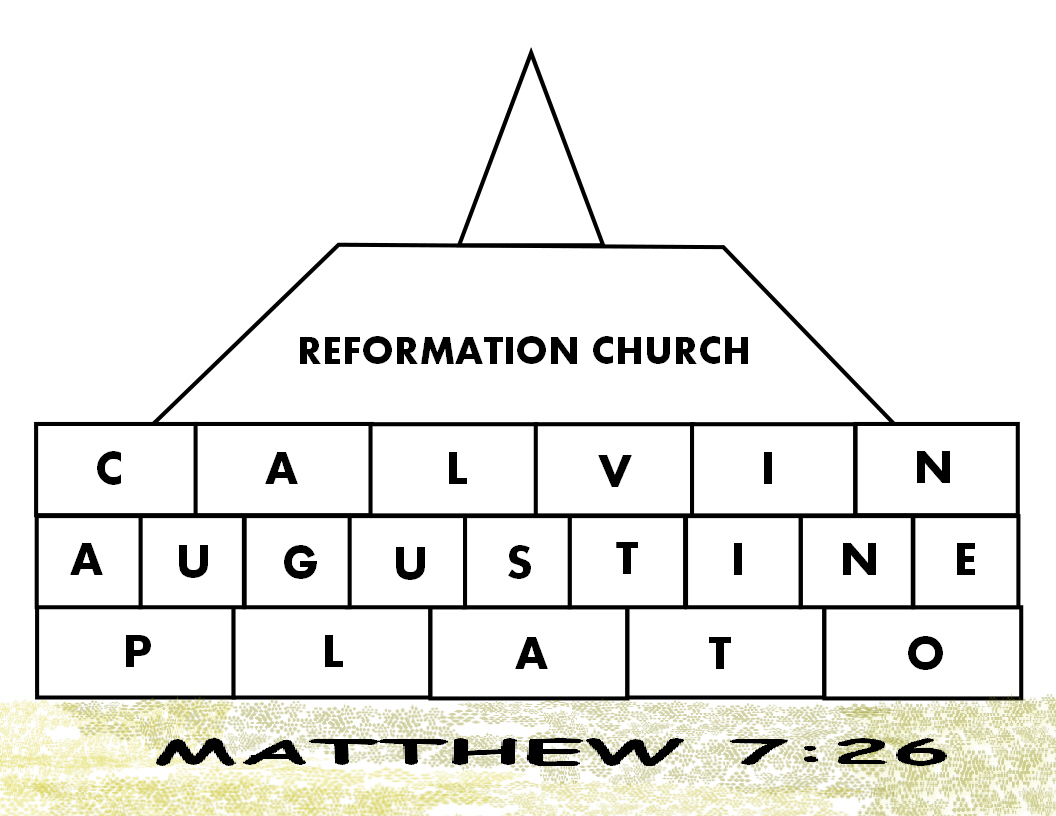
Salvation is NOT found in Augustine’s institutional church; Jane and Lisa know that also.
Now, we first address Lisa’s question:
…but I have a pretty good idea of what you DON’T believe, but no clue what you DO believe. What is left? Help!
What we do believe can be found here, here, here, here, and here. TANC is a research institute that is also offering alternatives to the false Protestant church. Like Lisa, we are on a “truth quest” as well. Welcome to the quest Lisa. Christ said that those who seek truth will find it. The quest’s end is assured. TANC is far from claiming to have all of the answers, but we are developing frameworks to help the priesthood of believers in their exodus away from the Augustinian church here, here. and here.
The alternative is the unpublicized massive home fellowship movement afoot in this country. Christians are figuring out that the authority of the church is found in the Scriptures, not an institution created by Platonists. TANC is trying to set the example with The Potter’s House Home Fellowship movement. This is not difficult. We meet every Sunday night at 6pm for a fellowship meal. At 7pm, we have a Bible lesson till 8pm, and then more fellowship.
“But where in the world would we start if we decided to do that?” Well, can you cook and talk? That takes care of the fellowship part. As far as the Bible study part, we have several key studies to help people get started. Our study through the book of Romans is very foundational in regard to a framework to start with. Some people merely print copies of our Romans series, read them, and have a group discussion. This is not a difficult start. Let the authority of God’s word guide you from there.
Have you been duped? I will only speak for my wife Susan and myself. Susan and I have 80 years of Christian experience between us, and we have learned more in the past year than we have in all of our Christian lives. Were we formally duped by the traditions of men?
Yes. Big time.
paul

 Paul's Passing Thoughts
8 comments