What God Does in Protestant Progressive Justification
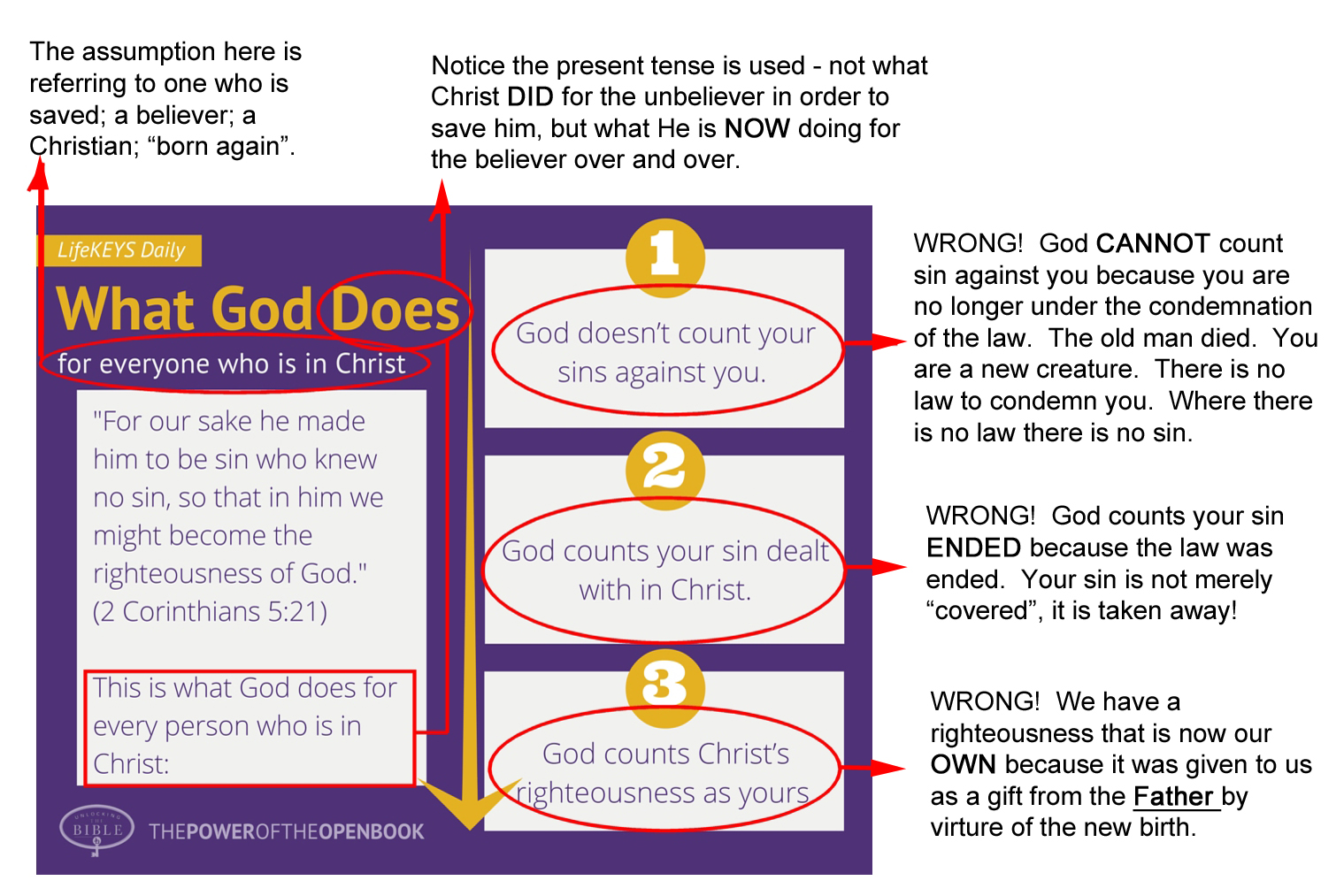
There was a meme in my Facebook news feed that caught my eye this morning. I felt compelled to make some corrections to it. If you still don’t believe that Protestantism teaches progressive justification, think again.
Andy
The Magnum Opus of the Reformation: Martin Luther’s Heidelberg Disputation; Part 1
 Listen to the show or download audio file.
Welcome truth lovers to Blog Talk radio .com/False Reformation, this is your host Paul M. Dohse Sr. Tonight, part 1 of “The Magnum Opus of the Reformation: Martin Luther’s Heidelberg Disputation.”
Greetings from the Potters House and TANC ministries where we are always eager to serve all of your heterodox needs. Our teaching catalogue can be found at tancpublishing.com
If you would like to add to our lesson or ask a question, call (347) 855-8317. Remember to turn your PC volume down to prevent feedback.
Per the usual, we will check in with Susan towards the end of the show and listen to her perspective.
Remember, you may remain anonymous. When I say, “This is your host; you are on the air, what’s your comment or question—just start talking.
If you would like to comment on our subject tonight, you can also email me at paul@ttanc.com. That’s Tom, Tony, Alice, Nancy, cat, paul@ttanc.com. I have my email monitor right here and can add your thoughts to the lesson without need for you to call in. You can post a question as well.
In the introductory primer for this series on the link page, I stated the following:
About six months after Luther posted his 95 Theses on the front doors of the Castle Church in Wittenberg, he presented his doctrinal disputation to the Augustinian Order in Heidelberg, Germany. This is a timeless document that laid the foundation for Protestant doctrine and its primary principles have never been altered. This document is the very roots of the Protestant tree. The Reformed tradition has never strayed from its major tenets. To understand the Heidelberg Disputation is to understand all of Reformed tradition.
Absolutely. The Heidelberg Disputation laid the foundational worldview/philosophy/ideology of the Reformation and everything taught from a Reformed perspective flows from this document in one way or another. The introduction of this document reads as follows from the Book of Concord which are the confessions of the Lutheran Church:
Following Luther’s proposal for a disputation on the subject of indulgences, the Augustinian Order, to which Luther belonged, was generally supportive of his views. The head of the order in Germany, Johannes Staupitz, called for a formal disputation to be attended by the leadership of the order, in which Luther would be provided a chance to expand upon his concern. The disputation took place at the meeting of the Augustinian Order, in Heidelberg, in April 1518. Luther’s opponents had been hopeful that Luther would be silenced, but Staupitz wanted to give Luther a fair hearing, since he was generally sympathetic with Luther’s views. At the meeting, Luther put forward a “theology of the cross” as opposed to a “theology of glory.” The disputation is, in many ways, more significant than the 95 theses, for they advanced Luther’s growing realization that the theology of late Medieval Roman Catholicism was fundamentally and essentially at odds with Biblical theology. As a result of the disputation, John Eck proposed a debate between himself and representatives of Luther’s views, which was held in Leipzig (lighp-sig) from June to July, 1519.
Ok, so let me tell you what I did in devoted service to the saints; I suffered through a lot of the Leipzig debate between Luther and Eck (as an aside: both were vehement anti-Semites). This is a huge consideration in all of this: what specifically where the divisive issues between Luther and the Catholic Church? Well, of course, initially, they were supposedly moral; i.e., the 95 Theses.
Now, Luther held a lot of people captive in the Catholic Church because there was agreement on the moral issues. I mean, what was going on with indulgences and so forth was pretty much in your face and totally ridiculous. But what were the actual doctrinal issues? So, once again, I sought to ascertain the answers to this question, and once again, I end up right back at what I wrote in the booklet, The Reformation Myth. It’s only about 30 pages, and nails down the doctrinal issues between Catholicism and Protestantism.
Let me give you the short version. In the aforementioned booklet, I focus heavily on the fact that both camps hold to a progressive justification gospel. Basically, salvation is a process that starts at point A, and progresses to point B, and the Mother Church oversees the progression via authority granted it by God. I cite a bunch of references in the booklet to make this point.
Take note: the Reformers were very strong advocates of the imputation of authority and apostolic succession. This is why they did not want to make a complete break with the Catholic Church. Luther and Calvin both were rabid followers of St. Augustine who is a Doctor of Grace in the Catholic Church. Till this day, Protestant Reformers proudly claim Augustine as the founding father of Reformation doctrine. The late David Hunt documents this fact thoroughly in his book, What Love is This? with much incredulation. And by the way, Johannes (yoh-hah-nis) Staupitz whom I mentioned earlier is one of many, like Augustine, who are recognized/claimed by both camps, viz, Protestants and Catholics both.
Why is this? It’s the authority issue. This is why both camps claim Augustine; he is the authoritative tie that binds. In the TANC Theological Journal, volume 2015 issues 4 and 5, I document the transition between home fellowships and the institution church and the warfare between the two. The home fellowships led by elders resisted the takeover of Christianity by the Gnostic church fathers who set up an apostolic succession authority in Rome.
The home fellowships rejected church hierarchy, and insisted that apostolic authority rested in the Scriptures alone and not men. They insisted on a cooperative body under one head, Jesus Christ. They insisted on ONE mediator between God and men—Jesus the Christ. In both Catholicism and Protestantism, the proffering of popes, priests, and pastors as additional mediators is absolutely irrefutable. You can read both of those issues online for free: http://truthaboutnewcalvinism.weebly.com/
So, what are the specific doctrinal contentions? It’s the same reason there are many, many denominations which are mostly predicated on progressive justification. The argument is always, “What is the correct way for people to get from point A to point B in the salvation process?
Catholics believe man has freewill and is able to participate in the process. Protestants believe man has no role in the salvation process at all. This is why much of the Leipzig debate was about election and the freewill of man, and a lot of haggling over what Augustine taught.
Both agreed on church authority, church hierarchy as sub-mediators, and progressive justification while the contention regarded man’s role in the process.
Again pause for a moment to take note: the argument regarding man’s role was argued from the standpoint of philosophy…PERIOD! Let me boil it down to the most common denominator: Plato versus Aristotle. Note the title of Luther’s 29th thesis in the disputation:
He who wishes to philosophize by using Aristotle without danger to his soul must first become thoroughly foolish in Christ.
In her excellent series on Plato, Augustine, and Calvin during the TANC 2013 Conference, my wife Susan stated the following about Plato:
He became acquainted with Ambrose of Milan, a bishop of the Roman Catholic Church who introduced him to the books of the Platonists. While in Milan, his encounter with Platonism provided the major turning point which reoriented his thought among the basic things that were consistent till his death. Augustine himself makes it clear that it was his encounter with the books of the Platonists that made it possible for him to view both the church and its scriptural tradition—the key word there is tradition—as having an intellectually satisfying and indeed resourceful content…
Augustine is referred to as one of the great Christian Platonists. And there’s that oxymoron again. In particular, Augustine’s interpretation of Plato dominated Christian thought for the next thousand years after his death in the 5th century. In his Confessions, Augustine openly describes the help he received from the Platonists. Platonism colored the whole future thought of Augustine, and thus this gift of Plato’s writing set a current in the thought of Western Christendom. Augustine believed that Plato lifted him to a true and almost worthy knowledge of God. And early in his Christian career he declared, “I am convinced that I shall discover among the Platonists nothing repugnant to our religion.” The Platonists are therefore the only serious antagonists just because they need so slight a change to make them Christians. Augustine’s physical, logical and moral philosophy, all this learned first and most thoroughly from Plato, and many a formula of Platonic ethics have been passed down through Augustine and Christian literature…
I’m going to quote Augustine from his writing on Christian doctrine. “If those who are called philosophers, and especially the Platonists, have said aught that is true and in harmony with our faith, we are not to shrink from it. We are to claim it for our own use from those who have unlawful possession of it.” Now I want you to know that looks good on the surface. You find something true, and you claim it. But I want you to note his phrase, “harmony with our faith,” the faith in the Roman Catholic Church, not in harmony with Scripture but harmony in the faith that he found in the Roman Catholic Church.
Getting back to Luther, notice that Luther equates philosophy with the condition of one’s soul in the cited 29th theses. And let me interpret this statement for you preemptively: Aristotle must be understood through Luther’s Platonist epistemology known as “the foolishness of the cross.” As we will see as we move along in the series, in medieval theology from which the Reformation gospel is grounded, the ancient sophists clearly were the authority. Clearly so. The theologians of this time who were little more than a brood of world philosophers, then went to the Bible to make their case; the Bible was clearly interpreted through ancient philosophy.
Apparently, Catholic theologians became “corrupted” with Thomism (the integration of theology with the philosophy of Aristotle by Saint Thomas Aquinas) after being primarily of Augustinian (Platonic) persuasion since the 5th century. Thomism made serious inroads into Catholicism. Consider what was said by Pope Pious X in the 20th century:
The capital theses in the philosophy of St. Thomas are not to be placed in the category of opinions capable of being debated one way or another, but are to be considered as the foundations upon which the whole science of natural and divine things is based; if such principles are once removed or in any way impaired, it must necessarily follow that students of the sacred sciences will ultimately fail to perceive so much as the meaning of the words in which the dogmas of divine revelation are proposed by the magistracy of the Church (Pope St. Pius X, Doctoris Angelici, 29 June 1914).
It would appear that the crux of the Reformation was an Augustinian/Platonist pushback against Thomism. Actually, a more obscure part of the Heidelberg Disputation confirms that. I have studied this document for months, and always assumed there were 28 theses. These are known as the theological theses. I assumed such because every resource or commentary I ever used in my research only spoke of the theological theses.
In preparation for this series, I find that there were actually a total of 40, and the last 12 are known as the philosophical theses. As we will see, these last 12 of the 40 primarily concern Aristotle and Plato.
This clears up a lot of whispering questions that used to float around in the back of my mind. Where is the emphasis on this document in Reformed circles? This is the doctrinal statement of the Reformation six months after the 95 Theses was nailed to the church doors in Wittenberg. It is the primary demarcation between Catholicism and Protestantism. It is the very essence of contemporary “gospel-driven” living. It also explains the life application of gospel-driven living and how it is experienced. Why then, is this document not a household name in Western culture?
Because the last 12 theses would expose the Reformation for what it really was: a philosophical debate, not a biblical one. Yes, the first 28 theses have a strong Platonist flavor if you are familiar with Platonism, but there is no direct reference to it. The last 12 leave no doubt as to what the real bone of contention was in the Reformation. In fact according to William Herman Theodore Dau in The Great Renunciation: Leaves from the Story of Luther’s Life, page 75, he states the following:
On the following day Luther declared outright to the Dominican Butzer that with these theses he had meant to strike at the entire theological activity of the Thomists and Scotists (Scotism).
This gives us a picture of the Protestant tree. The roots are Plato, the trunk is Augustine, the branches are Catholicism, and the fruit is Protestantism. This is why evangelical Baptists are really just functioning Platonists to one degree or another. Examining the fruit from the top of the tree, evangelicalism is fraught with dualist lingo that finds its roots in Platonism.
For instance: “I didn’t do it! Don’t give me the glory! It was the Holy Spirit!” So, something happened, and it appears that you did it, but you really didn’t do it, it was done by someone else from the invisible realm. Well, that’s just good old fashioned dualist realm manifestation, or realm birthing. Also, that particular example finds its bases in Luther’s venial sin versus mortal sin which will be explained in parts following.
Before we move on, from the editor’s introduction which we already read:
At the meeting, Luther put forward a “theology of the cross” as opposed to a “theology of glory.”
Luther’s theology of the cross is a Platonist worldview. It is the interpretation of all realty via redemption. All other knowledge/reality is categorized as the “theology of glory,” or worldly wisdom. This disputation explains how this works and its application to life experience. As we evaluate each thesis one by one, the full spectrum of Reformed tradition will be understood.
Before we begin with the first thesis, I have a few remarks regarding Luther’s introduction to the Augustinian order:
Brother Martin Luther, Master of Sacred Theology, will preside, and Brother Leonhard Beyer, Master of Arts and Philosophy, will defend the following theses before the Augustinians of this renowned city of Heidelberg in the customary place, on April 26th 1518.
Distrusting completely our own wisdom, according to that counsel of the Holy Spirit, »Do not rely on your own insight« (Prov. 3:5), we humbly present to the judgment of all those who wish to be here these theological paradoxes, so that it may become clear whether they have been deduced well or poorly from St. Paul, the especially chosen vessel and instrument of Christ, and also from St. Augustine, his most trustworthy interpreter.
Leonard Beyer was a correspondent at the disputation and information about him will not be visited here. What I would like to focus on is the, “Distrusting completely our own wisdom” and the verse that is even used today to make a case for the worthlessness of worldly wisdom versus wisdom from above; that is Proverbs 3:5. Note also that St. Augustine is clearly put on the same par with the apostle Paul. And lastly, note that Luther states that this document is made up of “paradoxes.” Herein is the epitome of spiritual caste systems with Augustine as chief philosopher king dictating the paradoxes to the masses.
Thesis 1: The law of God, the most salutary doctrine of life, cannot advance man on his way to righteousness, but rather hinders him.
This is made clear by the Apostle in his letter to the Romans (3:21): »But now the righteousness of God has been manifested apart from the law.« St. Augustine interprets this in his book ›The Spirit and the Letter‹ (De Spiritu et Littera): »Without the law, that is, without its support.« In Rom. 5:20 the Apostle states, »Law intervened, to increase the trespass«, and in Rom. 7:9 he adds, »But when the commandment came, sin revived.« For this reason he calls the law »a law of death« and »a law of sin« in Rom. 8:2. Indeed, in 2 Cor. 3:6 he says, »the written code kills«, which St. Augustine throughout his book ›The Spirit and the Letter‹ understands as applying to every law, even the holiest law of God.
The Achilles’ heel of Protestantism is the law. Here, Luther interprets Romans 3:21 as pertaining to any righteousness that might be practiced by a believer. Remember, Luther sees justification as progressive. A onetime imputation of righteousness through the new birth that makes a person righteous apart from the law is not in view here. In other words, Luther doesn’t see this as people being made righteous apart from the law, but rather makes law the standard for righteousness. In truth, the new birth is the standard for righteousness, not the law. By the way, it is tempting to cite the Calvin Institutes as a supplement here. The Calvin Institutes are an expansion of the Heidelberg Disputation. The first sentence of the Institutes is a statement that reflects the foundational premise of Luther’s Disputation.
Therefore, since the law is the standard for righteousness, it can only hinder someone trying to use it for righteous living. Luther then cites Romans 5:20 to make the case that the law only increases sin. Well, that’s true for those who are under it (see Romans 6:14). Luther makes under grace a covering for remaining under law instead of one ceasing and being replaced by the other one. Said another way, being under grace doesn’t replace being under law, under grace is only an ongoing cure for remaining under law.
But this is what Romans 3:21 is really talking about: we are made righteous apart from the law; righteousness and law are mutually exclusive in justification. As believers, we act righteously because of the new birth, not because we are law-keepers. The law doesn’t make us righteous—the new birth does.
Paul’s reference to the law increasing sin applies to those still under it. The same goes for Luther’s twisting of 2Corinthians 3:6. The law is a ministry of death for those who are still under law, but not for those under grace. The smoking gun on this is Luther’s handing of Romans 8:2 in that he only quotes half of the verse.
This is the crux of the error regarding the Reformed view of law and its single perspective. He only cites the one perspective on the law as a ministry of death only, and not the perspective where the Spirit of life uses the same law to sanctify us (John 17:17). Observe Romans 8:2 and you can see the two perspectives on the law in that verse.
Ironically, thesis 1 is all you need to totally debunk the Reformation—the theological math doesn’t add up. But, remember, all of this errant theology flows from the philosophical argument. This makes the Reformation’s sola scriptura (sol-us script-tora) a big fat lie. Clearly, Plato was the authority starting with Augustine moving forward.
Thesis 2: Much less can human works, which are done over and over again with the aid of natural precepts, so to speak, lead to that end.
Since the law of God, which is holy and unstained, true, just, etc., is given man by God as an aid beyond his natural powers to enlighten him and move him to do the good, and nevertheless the opposite takes place, namely, that he becomes more wicked, how can he, left to his own power and without such aid, be induced to do good? If a person does not do good with help from without, he will do even less by his own strength. Therefore the Apostle, in Rom. 3:10-12, calls all persons corrupt and impotent who neither understand nor seek God, for all, he says, have gone astray.
Note that the real issue here is “natural precepts.” Because this is really a Platonist document, anything man does that can be perceived with the five senses, no matter what it is, must be evil because it can be perceived. Period.
So Reformed tradition concerning law/gospel starts right here folks. You’re looking at it right now. What did Luther do with the law and its commands to mankind in light of his Platonist philosophy? Here is what he did:
He actually made the law part of the Trinity. He actually made the law God. He made the law a co-life-giver with God. Eternal life is not granted through the new birth APART from the law; the law becomes the standard and expression of eternal life.
In Robert Brinsmead’s brilliant articulation of Luther’s soteriology in the theological journal, Present Truth, he explains it this way:
The Holy Spirit gives the sinner faith to accept the righteousness of Jesus. Standing now before the law which says, “I demand a life of perfect conformity to the commandments,” the believing sinner cries in triumph, “Mine are Christ’s living, doing, and speaking, His suffering and dying; mine as much as if I had lived, done, spoken, and suffered, and died as He did . . . ” (Luther). The law is well pleased with Jesus’ doing and dying, which the sinner brings in the hand of faith. Justice is fully satisfied, and God can truly say: “This man has fulfilled the law. He is justified.”
And…
We say again, Only those are justified who bring to God a life of perfect obedience to the law of God. This is what faith does—it brings to God the obedience of Jesus Christ. By faith the law is fulfilled and the sinner is justified.
So basically, what you have is Jesus not only coming to die for our sins, but to fulfill the law so that his obedience can be imputed to us in order to satisfy the law because we can’t keep the law perfectly. But that’s not why we are righteous—we are righteous because our minds are renewed by the Spirit and we are born of God’s seed. This results in a different direction, not perfection. The dynamic is found in Romans 6:20: those under law are enslaved to sin, but free to do good. Those under grace are enslaved to righteousness, but unfortunately free to sin. It’s a reversal of enslavement and freedom resulting in a different direction. The will of man is both enslaved and free. Of course, Luther contended that man’s will is in total bondage to sin.
At any rate, what you have here is also the very cradle of what the Reformed call, “double imputation,” a doctrine lauded by the Reformed in this day. Again, let me remind you, this is the very first theological theses of the Protestant Reformation, and all of the major tenets lauded by the Reformed in our day find there beginnings in this document. Also remember, these tenets necessarily flow from Luther’s Platonist worldview.
And this is why in our day you hear conservative evangelical Baptists say things like, “We have the righteousness of Christ,” “The resurrection was proof that God was pleased with Christ’s obedience,” “When God looks at us He only sees Christ,” etc., etc., etc. This is why the Baptist stripe of Protestants, and for that matter all others as well, are little more than functioning Platonists.
The fulfilment of the law for the implementation of eternal life is just a steroidal antithesis to Pauline soteriology even though Luther claims in the introduction that this disputation is based on Pauline theology. This was Paul’s whole point in Galatians chapter 3, the law cannot give life for justification.
In this particular thesis, Luther states that man is given the word as an “aid” that does NOT enlighten him, or enable him to do good. So how does it aid him? That was covered in thesis 1; it is an aid to show man how wicked he is whether saved or unregenerate. Luther then twists Romans 3:10-12 to make the point.
But again, we have an example of something we will see throughout this disputation and often in our day: the citing of verses that pertain to presalvation/justification applied to post salvation existence, or if you will, sanctification. Paul is simply citing Psalms 13:1-3 to make the point that unregenerate Jews are no better off than unregenerate Gentiles and both need Christ just as much as one does or the other.
So, someone might say, “But Paul, doesn’t that passage say that no man seeks God?” Sure it does, so what? The nature of fallen man, as exhibited by Adam and Eve, is to do what? Hide. For certain, when Adam and Eve sinned, they didn’t immediately go looking for God and say, “We messed up, how can we fix this?” No, God had to seek them out, they didn’t seek God, but once God cornered them with the truth, did they or any person after them possess an inherent inability to respond in the positive? I doubt it. Again, we see God seeking out Cain in the same way after he slew Abel.
That’s what evangelism is all about even in our day. The Spirit and we seek men out on God’s behalf. The Spirit convicts men of sin and the judgement to come, and we do the same. We have our life testimony, the word of God, the conviction of conscience either excusing or accusing men according to the works of the law written on their hearts, and the work of the Holy Spirit. They already have the works of the law written on their hearts administered by the conscience; it is our job to set that on fire with more specific revelation.
What God did in the Garden in regard to seeking out Adam and Eve is our job, that’s our duty. That’s part of what makes us like our Father.
Well, we have done pretty well tonight. We have completed the introduction and evaluated the first two theses. Let’s go to the phones.
Why Every Self‐Respecting Premillennialist Isn’t a Calvinist
 Originally published April 9, 2014
“One’s eschatology will be consistent with their view of justification—unless you’re John MacArthur.”
At the 2007 Shepherds’ Conference, Pastor John MacArthur gave the opening message titled, “Why Every Self‐Respecting Calvinist Is a Premillennialist.” The message caused a hyper hissy fit among the authentic Geneva style Calvinists that used to associate with MacArthur. Most of the hysterical reviews were whining rants about how the message was an “ambush.” They came to the conference to hear solid fatalistic Reformed doctrine while enjoying sweet fellowship among philosopher kings, and instead were personally dressed down at the very beginning of the conference that they attended with hard earned parishioner money. It just ain’t right.
No doubt, the message left amillennialism naked and freezing outside in the cold. Well, sort of, depending on your understanding of Calvin’s election construct. This is why the various responses danced around the real issue and were in bondage to MacArthur’s fundamental misunderstanding about what Calvinism is while calling himself one. Paul warned the Corinthians that elitist academia is not the venue that God works from, and this fiasco is just one good example among many as to why that is so. The Geneva popes could not expose the fact that MacArthur’s fundamental premise is wrong—that would expose what Calvin really believed about election—a truth that the totally depraved artisans can’t handle.
MacArthur said this during the message:
“But bottom line here, of all people on the planet to be pre-millennialist it should be Calvinists; those who love sovereign election. Let’s leave amillennialism for the Arminians. It’s perfect! [laughter] It’s ideal. It’s a no-brainer. God elects nobody and preserves nobody. Perfect! Arminians make great amillennialists. It’s consistent. But not for those who live and breathe the rarified air of sovereign electing grace. That makes no sense. We can leave amillennialism to the process theologians . . . The irony is that those who most celebrate the sovereign grace of election regarding the church, and its inviolable place in God’s purpose from predestination to glorification, and those who most aggressively and militantly defend the truth of promise and fulfillment, those who are the advocates of election being divine, unilateral, unconditional, and irrevocable by nature for the church, unashamedly deny the same for elect Israel. That is a strange division.”
Ok, so MacArthur highlighted one of the assumed positive notes that can be taken from the idea of Calvin’s election: Once saved always saved. And, absolute assurance of salvation because it is God’s work alone—we can’t mess it up. And, how can you proffer election for the individual and ignore the fact that Israel was elected? This put the Geneva popes in a tough spot because they know that this apparent contradiction fits perfectly with Calvin’s doctrine of election.
Calvin believed in three categories of election: the non-elect, the called elect, and the chosen elect. This necessarily denies assurance because the called elect don’t know for certain whom among them have been chosen. Calvin stated this in no uncertain terms:
Let us, therefore, embrace Christ, who is kindly offered to us, and comes forth to meet us: he will number us among his flock, and keep us within his fold. But anxiety arises as to our future state. For as Paul teaches, that those are called who were previously elected, so our Savior shows that many are called, but few chosen (Mt. 22:14). Nay, even Paul himself dissuades us from security, when he says, “Let him that thinketh he standeth take heed lest he fall,” (1 Cor. 10:12). And again, “Well, because of unbelief they were broken off, and thou standest by faith. Be not high-minded, but fear: for if God spared not the natural branches, take heed lest he also spare not thee,” (Rom. 11:20, 21). In fine, we are sufficiently taught by experience itself, that calling and faith are of little value without perseverance, which, however, is not the gift of all (CI 3.24.6).
You can be called, and you can have faith, but that doesn’t seal the deal, said Calvin:
The expression of our Savior, “Many are called, but few are chosen,” (Mt. 22:14), is also very improperly interpreted (see Book 3, chap. 2, sec. 11, 12). There will be no ambiguity in it, if we attend to what our former remarks ought to have made clear—viz. that there are two species of calling: for there is an universal call, by which God, through the external preaching of the word, invites all men alike, even those for whom he designs the call to be a savor of death, and the ground of a severer condemnation. Besides this there is a special call which, for the most part, God bestows on believers only, when by the internal illumination of the Spirit he causes the word preached to take deep root in their hearts. Sometimes, however, he communicates it also to those whom he enlightens only for a time, and whom afterwards, in just punishment for their ingratitude, he abandons and smites with greater blindness (CI 3.24.8).
So, this fits perfectly with Calvin’s eschatology; Israel was temporarily elected just like many individuals are temporarily elected. The logical conclusion of Calvin is that God’s word did in fact fail (Romans 9:6). Moreover, and in direct contradiction to 1John 5:13, authentic Reformed doctrine has always denied assurance. This is reflected in many contemporary authentic Calvinists:
There is danger on the way to salvation in heaven. We need ongoing protection after our conversion. Our security does not mean we are home free. There is a battle to be fought (John Piper: Bethlehem Baptist Church Minneapolis, Minnesota; The Elect Are Kept by the Power of God October 17, 1993).
Words mean things. Piper is clearly saying that our battle in sanctification is a battle for justification. If you really understand the Reformed view of justification, you know: that battle is against our supposed propensity to gain favor with God through works in sanctification (“please/love God” changed to: merit for salvation). There is no separation of justification and sanctification, so works in sanctification must be sanctified with a faith alone formula. It’s salvation by Christ plus not doing any works in sanctification (Christ + antinomianism to maintain our salvation). We must be sanctified the same way we were justified so that we can properly finish justification. Therefore, Calvin believed that sins committed in the Christian life separate us from grace, and a continual repentance, the same repentance that saved us, is needed to maintain our salvation. Unless we live by faith alone in sanctification, Christ’s blood will not be applied to the new sins we commit. This is the battle Piper is talking about. Said Calvin:
…by new sins we continually separate ourselves, as far as we can, from the grace of God… Thus it is, that all the saints have need of the daily forgiveness of sins; for this alone keeps us in the family of God (John Calvin: Commentaries on the Catholic Epistles; The Calvin Translation Society 1855. Editor: John Owen, p. 165 ¶4).
And, guess what? It just so happens that your local Reformed elder, via the Reformed power of the keys, has the authority to forgive those pesky sins that take away your salvation. Whoever would have thunk it?
To impart this blessing to us, the keys have been given to the Church (Mt. 16:19; 18:18). For when Christ gave the command to the apostles, and conferred the power of forgiving sins, he not merely intended that they should loose the sins of those who should be converted from impiety to the faith of Christ; but, moreover, that they should perpetually perform this office among believers (The Calvin Institutes: 4.1.22).
Secondly, This benefit is so peculiar to the Church, that we cannot enjoy it unless we continue in the communion of the Church. Thirdly, It is dispensed to us by the ministers and pastors of the Church, either in the preaching of the Gospel or the administration of the Sacraments, and herein is especially manifested the power of the keys, which the Lord has bestowed on the company of the faithful. Accordingly, let each of us consider it to be his duty to seek forgiveness of sins only where the Lord has placed it. Of the public reconciliation which relates to discipline, we shall speak at the proper place (Ibid).
Calvinism is an egregious false gospel being flaunted in broad daylight by academic elitists who are in reality clueless, which brings me to my second point. This is where the vast majority of American Christians are functioning Calvinists…among many other ways while vehemently denying Calvin. Specifically, the whole idea that eschatology is a “secondary issue.” No, no, no, no, no, no, no! Eschatology is gospel; you cannot separate the cross from eschatology. One’s eschatology will be consistent with their view of justification—unless you’re John MacArthur.
The number of resurrections and judgments, and who stands in those judgments, are indicative of a particular view of justification, and election in particular. MacArthur’s dispensationalism coupled with naming the name of Calvinistic soteriology, which really isn’t Calvin’s soteriology to begin with, is a dumbfounding contraction that leaves one without words to fully explain. Calvin’s eschatology calls for one resurrection and one judgment at the end of time where everyone sweats it out while waiting to find out if they were antinomian enough. Some of the books at the Great White Throne Judgment are the books of the law that will be used by God to judge the works of those standing in that judgment. As one aspect of Christian security, we will not stand in that judgment because we are not under the law. Furthermore, we don’t wait to see if our antinomianism sufficiently utilized the “doing and dying” of Christ to cover our sins—our sins have been completely eradicated.
The number of resurrections and judgments speak to our view of what part of Christ’s works on the cross are finished and not finished, the separation of justification and sanctification, the new birth, election, and future Israel. Eschatology is gospel.
That’s why every self‐respecting premillennialist isn’t a Calvinist, and why MacArthur isn’t a Calvinist, but he thinks he is a Calvinist. As stated by Richard Muller,
There is every likelihood that John MacArthur’s “Calvinism” would probably not be recognized by Calvin himself.
It’s all simply pathetic.
paul
Five Damning Facts About Calvinism
I. It’s daily re-salvation by preaching the gospel to yourself every day.
II. Its progressive justification defines “Christians” as under law—the biblical definition of a lost person.
III. Forgiveness for “present sin” that “removes us from grace” can only be found through membership in a local church under the authority of elders who forgive sin on God’s behalf.
IV. John Calvin’s three categories of elect include those who are temporarily elected and therefore receive a greater damnation. Therefore, entering the “race of faith” gives one a chance that the non-elect do not have, but a double portion of eternal suffering if one is not of the “perseverance” category.
V. Any act of love performed by a “saint” is works salvation. All works must be imputed to the “believer” by faith alone. Moreover, the focus must be living by faith alone well enough in order to “stand in the judgment covered by the righteousness of Christ and not a ‘righteousness of your own.’” That must be the focus, not loving others. Calvin believed all acts of love performed by the “saints” fall short of perfection, and are therefore unacceptable to God.
Calvinists can talk about love all they want to; their soteriology excludes the possibility.
The Problem with Contemporary Biblical Counseling: Justification “Runs in the Background”
Originally published June 13, 2014
“Jay Adams has often pointed out that people are clueless in regard to the fact that there are about 200 different counseling theories in Psychology. Think about that. When people go to a psychologist for help they are no doubt clueless in regard to the perspective that they will be counseled from. Nevertheless, if biblical counseling is about sanctification, and it is, there are at least as many different theories on how justification ‘runs’ with sanctification.”
The fact that our justification is a finished work is critical to the gospel. If justification is not finished, its proper maintenance by faith alone without works becomes a balancing act between works and faith in sanctification. You have an integration of two things where one calls for faith alone and the other calls for a faith that works.
Therefore, when justification and sanctification are fused together, the Christian life will be marked by confusion, fear, introspection, and a paralyzed, stagnant Christian life. Sound familiar? A radical dichotomy between justification and sanctification frees the believer to aggressively love without fear that anything they do in sanctification will affect their justification. There is no fear in our justified position.
A false gospel cannot help people. All in all, the contemporary biblical counseling movement is saturated with the idea that justification is progressive. Point in case; biblical counseling superstar Lou Priolo believes that justification, “runs in the background.” In a guest post written for Jay Adams’ Institute for Nouthetic Studies, Priolo stated the following:
To my way of thinking, the place of the doctrine of justification in the believer’s life is much like the operating system on a computer. I’m a PC guy. My personal computer operates under a Windows operating system. Windows is always up and running, but most of the time, it runs in the background. I don’t see it. I can go for days without looking at it (although I know it is functioning as long as the other programs are operating properly). Occasionally, I have to go to the control panel to troubleshoot a problem, make some minor adjustments, or defrag my hard drive, but I don’t give it another thought because I have faith that it is doing what it is supposed to do. So it is with my justification. It is always up and running. Though I am not always consciously thinking about it, everything I do flows from it.
If one carefully examines this statement by Priolo, many disturbing anti-gospel ideas could be pointed out, and oddly, Jay Adams himself has written against these very ideas. Particularly, the idea that “everything” we do is powered by, or “flows” from justification. This is no whit different from what Tullian Tchividjian, John Piper, or even Joseph Prince believes.
Justification cannot be both finished and “running.” If justification runs in sanctification, what do we have to do to keep it running properly? That’s a huge problem by virtue of the very question itself. If the race we run as Christians, the one Paul talked about, is powered by justification, and we can be disqualified from that race; well, the ramifications in this issue speak for themselves.
No wonder that confusion, chaos, controversy, and a civil war between “first generation” biblical counseling and “second generation” biblical counseling are the order of the day in those circles.
Jay Adams has often pointed out that people are clueless in regard to the fact that there are about 200 different counseling theories in Psychology. Think about that. When people go to a psychologist for help they are no doubt clueless in regard to the perspective that they will be counseled from. Nevertheless, if biblical counseling is about sanctification, and it is, there are at least as many different theories on how justification “runs” with sanctification.
Who will finally stand up and say, “Enough of this madness!”? Who will finally stand up and say one is finished and one is progressive. Come now, are we saying that one runs in a race that is finished? Indeed, I stood dumbfounded when Voddie Buacham’s answer to that question from me was, “yes.” Is this nonsense the very reason that the world does not take us seriously? We are unable to clarify the gospel we proclaim. Call the world totally depraved if you will, but they are not stupid.
paul

 Paul's Passing Thoughts
2 comments