John Immel: Examining the Historical Perspectives and Evolution of Determinism – 2015 TANC Conference: Session 5
The following is an excerpt of the transcript from John Immel’s 5th session at the 2015 TANC Conference on Gospel Discernment and Spiritual Tyranny.
You have got to stop appeasing these people. You have got to stop apologizing for your own achievements. You’ve got to stop hiding your own virtues. You’ve got to stop deriding your own values. And you’ve got to stop debasing your own character. When they ask you to do these things in the name of righteousness it has one purpose; to appease the “original sin” preachers. And you have one ultimate goal, and this is to rule the world in the name of God. Do not doubt me here. their purpose and their intent is to take over government exactly like the Puritans did in Puritan England.
But here is the dirty little secret that they never want you to understand. These men can only survive in a climate of appeasement and rational subordination. Men like CJ Mahaney are the profiteers on the bankruptcy of intellectual appeasement. Men like CJ can only survive in an environment filled with weakness, uncertainty, self-doubt, and terror. He can only work his way into intellectual leadership by passing of virtues as vice, and turning vices into highest moral achievement. The hallmark of such men is that they surround themselves with mediocrity, all the while pretending to surround themselves with the elite. And God help you if you ever challenge the mediocrity. I speak from experience.
I want you to notice as you observe these men how they react to real achievement. Notice John MacArthur’s denigration of those who run institutions and countries and universities. That it’s somehow beneath their consideration. Notice how the New Calvinists thrive on making men small. Indeed the hallmark of success in these circles is the race to see who can be the smallest, the humblest, the most self-deprecating.
But do not be deceived, this is all theological fraud. It’s a mask that they wear to cover their hideous souls. And here is how you rip off the mask. The moment they self-deprecate or self-abdicate, the moment they pay homage to inability or stupidity or moral corruption, agree with them. Say, “You’re right. You ARE stupid. You know nothing. You are weak and impotent. You ARE morally corrupt. It is true, you are the personification of Augustine’s original sin moral monster.” And the step back and watch the fireworks! Watch how fast they defend their existence as smart and capable and important and [gasp!] good. Watch how fast they defend their achievements and abilities, and posture and strut and make pretense to being the world-shapers and the humble masters of men.
Why do you tolerate this? I’ve been talking for a little over six hours, and we’ve already got a little bit of hate male about me because I’m arrogant. Six hours I’ve been talking, and people won’t tolerate it, yet these men speak with impunity. Why do you appease?
So what is the real motive for the doctrines they preach? I’m going to tell you. This is a quote from Ayn Rand.
“Values are a necessity of any living organism’s survival. Life is the process of the self-sustaining, self-generated action; and the successful pursuit of values is a pre-condition of remaining alive. Since nature does not provide man with an automatic knowledge of the code of values he requires, there are differences in the codes which men accept and the goals they pursue. But consider the abstraction, ‘value’, apart from the particular context of any code, and ask yourself: what is the nature of a creature in which the sight of a value arouses hatred and the desire to destroy?”
The answer to her question is simple. All advocates of the Reformed construct are haters of man as such. They are perpetrators of the most disastrous body of thought ever perpetrated on human existence. And I tell you the truth; no matter the big alligator tears, and their bromides to love, and their endless cyber-hugs on sundry discernment blogs, and the love bombs when new faces walk through the church doors, no matter the marketing and packaging, these people hold man in contempt! They are lovers of death. They are arch-nihilists advocating doctrines that render man a living corpse. And this is who you give tacit approval to by your silence, by your fear, by your appeasement. But they are coming for you. The goal of all determinists is to rule the world in their own image. And if you don’t resist, you will get exactly what you deserve.
Watch all of John’s 5th session below.
The Protestant Twisting of 1John: A Clarification, Part 1
Originally published March 22, 2015
Listen to audio or download audio file.
Welcome to Blogtalk Radio False Reformation this is your host Paul M. Dohse Sr. Tonight, we are going to attack and unravel interpretive abuses of 1John, particularly 1John 1:9 and 2:1. There is only one other text twisted for ill use more than these two verses, and that would be Galatians 2:20 and 3:1-3. Later, In part 2, I will toss in an exegesis of those verses as a bonus.
There may be a lot of different religions and even more denominations, but for all practical purposes they all have one thing in common: this whole idea that salvation is a process with a beginning and an end. This makes salvation a process that includes our present life.
So, the argumentation between religions and denominations involves the correct way of getting from point A to point B. But there is no point A and point B. When you believe God unto salvation, you get the complete package and the salvation part of your life is finished. It is an instantaneous quickening of the Spirit that transports you from one kingdom to another, from one master to another, from being under law to being under grace, from the old person to the new person, and from darkness to light. You don’t become a servant of righteousness on the installment plan, and you don’t become a kingdom citizen on an installment plan.
How is 1 John used to argue for a progressive salvation, and what is John really saying in his epistle? Way back at the beginning of this ministry, I had this nailed down. If salvation is a process, and eternal life as opposed to eternal punishment is at stake, the Christian life is really a minefield. The focus isn’t being the best kingdom citizen; the focus is making sure you don’t mess up your salvation. The focus is salvation, not discipleship. The focus is fear of judgement, not love.
I realize many Christians hold to OSAS, “Once saved – always saved”, but the problem is how they are led by pastors trained in seminaries deeply grounded in Protestant tradition. That tradition looks to the institutional church as the primary way of getting God’s people from point A to point B in regard to their salvation. Whether OSAS or not, they are led to do the same things week in and week out. Be here at this time or that time; stand up; sing; sit down; listen to announcements; stand up; sing; sit down; listen to the special music presentation; put your tithe in the plate; listen to the sermon (always about the gospel just in case there are lost people present, wink, wink); stand up; sing “Just As I Am” until someone walks the isle so you can stop singing “Just As I Am”; pray; be dismissed; be cordial to people and tell them how much you love them; go home, and come back next week and do it again.
Why? Because all of that ritualism “imparts grace” and enables us to “grow in grace.” It enables us to “grow up in our salvation.” After all, discipleship is the “growing part of our salvation.” We have all said it, but salvation doesn’t grow. While believing in OSAS, most parishioners are led by pastors who believe in progressive salvation/justification which was clearly the foundational premise of Protestantism with the progression being overseen by the Protestant institutional church.
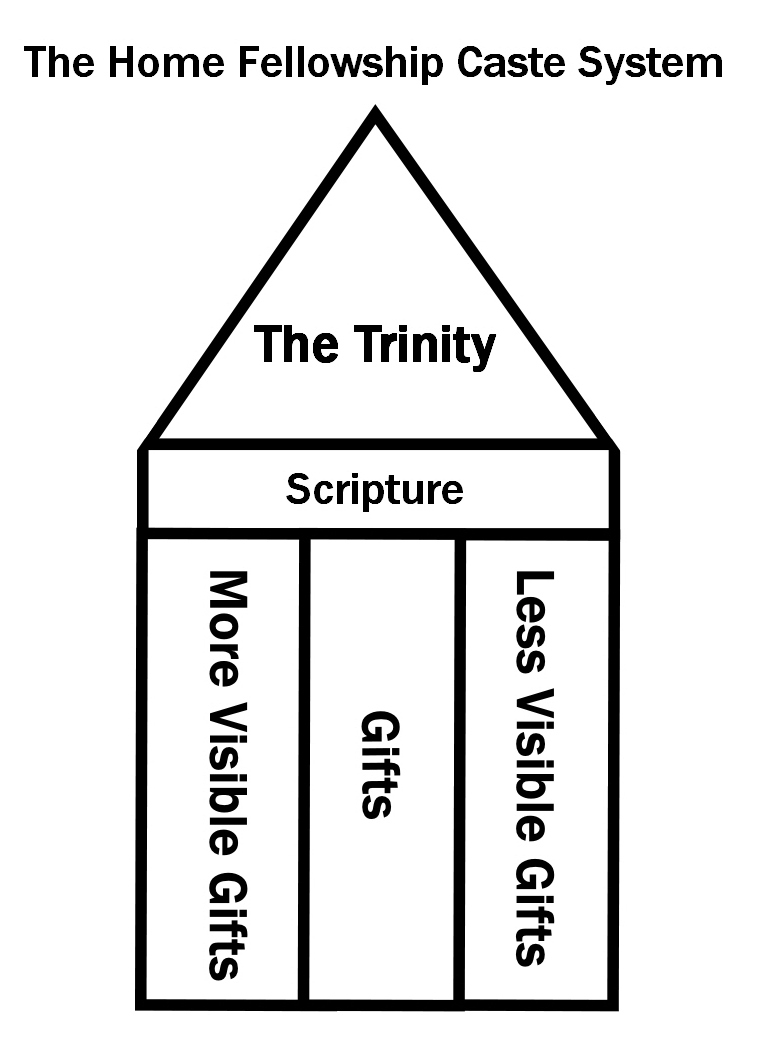
Moreover, let’s face it; while believing in OSAS, there is only one reason people put up with all of the nonsense and drama of the institutional church—OSAS means that if someone leaves the institutional church, they were never saved to begin with. Right? In other words, they function according to the idea that they are led by. It’s OSAS as long as you are “faithful” to the institution. Then each church has its own little “faithfulness” caste system. Those who show up for all of the services are the “core members” that run the church. Those “less faithful” that only come on Sunday mornings are a lower class of member in the caste system.
You have the pastors, staff and deacons, then the “faithful” that attend all of the services and tithe at least 10%, the “casual” attenders that tithe, and then the bottom of the caste strata, even lower than the serfs, the putrid “nonmembers.”
Whether Calvin or Luther, the two icons of Protestantism, these beliefs follow after the doctrine they established for the Protestant institutional church. Access to the institutional church was through water baptism, and the critical need according to the Reformers for formal church membership follows: as Christians, forgiveness for present and future sins can only be found in the institutional church, and those sins condemn us. Forgiveness for all sins does not occur at salvation, but only for past sins. Water baptism initiates us into church membership where forgiveness for present and future sins can be obtained through the sacraments; ie., “gospel preaching,” the Lord’s Table, and anything else deemed as acts of faithfulness to the institutional church not to exclude tithing by any means. Calvin states this explicitly in his institutes, 4.15.1.
All in all, you can say that in Protestantism, the status of sin does not change for the believer—it still condemns requiring perpetual resalvation for every sin committed.
Therefore, 1John 1:9 and 2:1 is interpreted in this light: “If we confess our sins, he is faithful and just to forgive us our sins and to cleanse us from all unrighteousness” (1:9). “My little children, I am writing these things to you so that you may not sin. But if anyone does sin, we have an advocate with the Father, Jesus Christ the righteous” (2:1).
These verses seem to bolster the authentic Protestant position on justification. Confession of sin in our Christian lives keeps us saved. And if we confess our sins, Jesus is up in heaven as our advocate with the Father continuing His work as a propitiation for our sins.
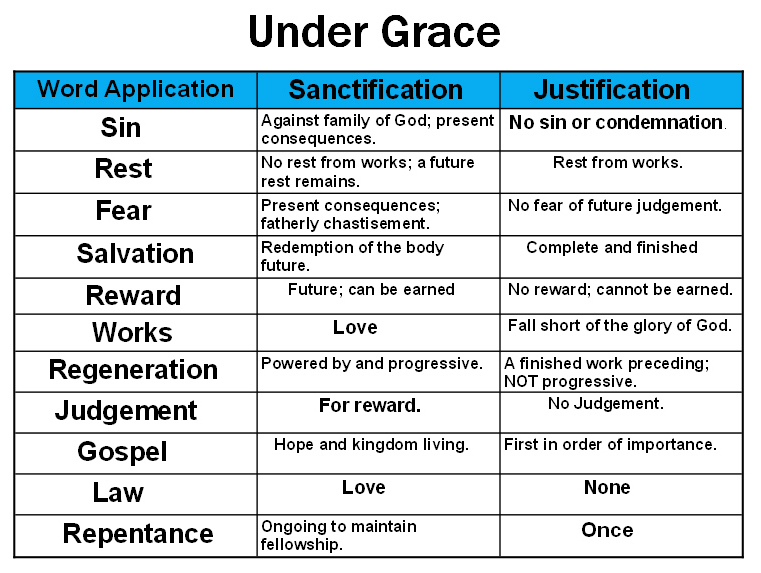
The problem is that this interpretation stands in stark contrast to what other Scriptures state about justification. Biblically, sin has a different classification after salvation—it can’t condemn; it can bring chastisement and present consequences, but it can’t condemn—its ability to condemn has been taken away. Hence, there is no need to have some institution that prevents future condemnation.
Nevertheless, it is easy to understand why the institutional church not only gets a pass on outrageous behavior, but the money keeps pouring in. What will people pay for their salvation and décor that glorifies the institution that saves them? Apparently, no price or compromise is too large. One can also appreciate the fear of so-called excommunication because the institutional church is the only place where one can receive continued forgiveness for present and future sins.
Before I move on, I will solidify my present point. Romans 8:1 states that there is presently NO condemnation for those who are in Christ. In Contrast, Calvin stated that “even saints cannot perform one work which, if judged on its own merits, is not deserving of condemnation” (CI 3.14.9, last sentence). Obviously, the focus is going to be avoiding condemnation, not our freedom to pursue aggressive love in discipleship.
So what are these verses in 1John really saying? Let’s begin to unpack that using the historical grammatical approach to interpretation as opposed to the traditional Protestant means of interpretation, the historical redemptive method. Since Protestantism sees salvation as a process, “redemptive” means that the Bible must be approached with a redemptive prism; ie., the Bible is about salvation. Clearly, this is eisegesis; going to the Bible with a presupposition.
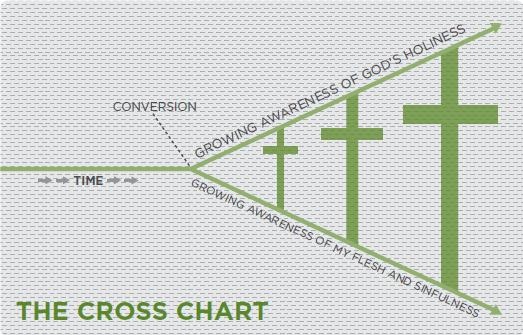
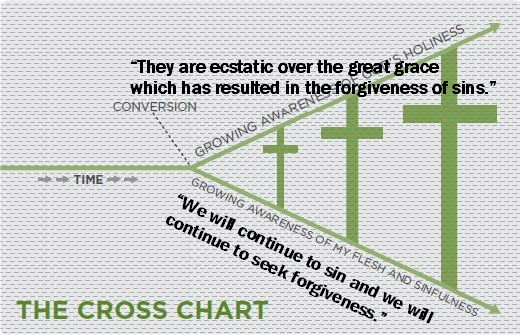
In regard to the history part, this is the belief that history is an unfolding drama about salvation. Hence, all of reality is interpreted through salvation. All of history and the Bible continually reveals the one two-fold redemptive truth/reality: the sinfulness of man and the holiness of God. Salvation begins when we see or understand this reality, and the experience of that reality increases until final salvation.
In contrast, the historical grammatical method uses historical facts to bring more meaning to the text, and all truth is determined by what can be concluded by the grammar—this is known as exegesis. All meaning and truth comes out of the text without anything being read into the text except conclusions from other texts.
In fact, Protestant tradition holds to the idea that a historical grammatical approach to the Scriptures invariably leads to works salvation. Protestant tradition insists that the Scriptures must be interpreted through the prism of total depravity. In this year’s TANC conference, this is what I am going to be hitting on. Christians, save a few, have no idea that Protestant pastors that are leading them view reality in a totally different way than most parishioners. And this is why church looks like it does. And there is no salvaging it—it’s a completely broken system.
So, if you interpret said verses in 1 John redemptively, it fits right into their narrative, right? You have to continue to repent for new sins in your Christian life in order to not be condemned and to keep your salvation. A good old fashioned Baptist lady who I am sure would hold OSAS stated this to my wife Susan in the grocery store a couple weeks ago. When Susan asked her why Christians need to go forward during alter calls, she answered, “they have sin that needs to be forgiven.” Well, why can’t they get that forgiveness by praying at home? You ought to see the reaction Susan and I get when we suggest her mother was saved even though not a member of a church.
Protestantism and all of its offshoots including the Baptists is nothing more or less than functioning Calvinism. Election isn’t the point, progressive salvation is the point. Protestants think salvation grows—salvation doesn’t grow—you are either forgiven once and for all time or you aren’t. Look, if you are going to stay in the institutional church, it makes absolutely no difference where you go. Please, stop driving 15 miles to the Baptist church when there is a Catholic Church right across the street—it’s a shameful waste of gas. It’s all progressive justification.
In contrast, we have to see 1 John in its exegetical historical context. It must be interpreted according to what was going on during the time that prompted this letter. And what was that?
John was pushing back against the number-one nemesis of the assemblies during that time: Gnosticism. Now, there were many, many different veins of Gnosticism during that time, but like denominationalism, there are basics that are fundamentally the same. Denominationalism quibbles about how to get from point A to point B, but it is all progressive salvation.
When you understand the basics of Gnosticism, it is easy to see that John’s first epistle is a point by point rebuttal of Gnosticism, and NOT the proffering of progressive justification. Protestants can bicker with Catholics all they want to about how to get from point A to point B, but again, it’s all progressive justification. If it’s a religious institution, it’s selling final salvation, PERIOD.
If we follow John’s arguments in this epistle, it also apes the fundamental basics of Gnosticism, and that’s what we are going to do:
1 John 1:1 – That which was from the beginning, which we have heard, which we have seen with our eyes, which we have looked upon, and our hands have handled, of the Word of life; 2 (For the life was manifested, and we have seen it, and bear witness, and shew unto you that eternal life, which was with the Father, and was manifested unto us;) 3 That which we have seen and heard declare we unto you, that ye also may have fellowship with us: and truly our fellowship is with the Father, and with his Son Jesus Christ. 4 And these things write we unto you, that your joy may be full. [KJV].
The Gnostics taught that it really wasn’t the spiritual Christ that died on the cross. Gnosticism holds to the idea that material is evil and only the invisible spiritual world is good. Gnosticism rejected the idea that the spiritual realm, or godhood can be one with the material. You must understand: the biblical concept of God-man is a direct affront to the foundation of all false religions, or the knowledge of good and evil. It is the idea that true knowledge cannot be one with the material. Knowledge is good, material is evil and is only a shadow of true knowledge. Knowledge of the material is enslaved and dependent on the five senses.
Now, stop right there. Let me simplify this for you. All false religion flows from the religion of the knowledge of good and evil presented to Eve in the garden. This is also the first sentence of the Calvin Institutes and all of the Calvin Institutes flow from the foundation of 1.1.1., first sentence, viz, ALL wisdom is the knowledge of man and the knowledge of God; man is inherently evil and God is inherently good.
Also, the first sentence of the Calvin Institutes is the primary theses of Luther’s Heidelberg Disputation which is the Magnum Opus of the Reformation. All fundamentals found in contemporary evangelicalism can be found in the Heidelberg Disputation and flow from it. Calvin’s Institutes further articulated the former. In contemporary evangelicalism, we hear constantly that true biblical knowledge is “the knowledge of our own sinfulness as set against God’s holiness.” This is also the pronounced fundamental foundation of the contemporary biblical counseling movement as constantly stated publically in no uncertain terms.
Why am I interjecting this? Because even though much of our knowledge concerning first century Gnosticism comes from the writings of the early church fathers and while they railed against Gnosticism, they themselves were also Gnostics. However, in the process of railing against Gnosticism, they confirm unequivocally that John’s letter addressed the Gnosticism of their day; it just wasn’t the Gnosticism that they preferred.
And by the way, according to some church fathers, John was addressing a Gnostic named Cerinthus who was a contemporary of John and a personal nemesis.
Cerinthus was a gnostic and to some, an early Christian, who was prominent as a heresiarch in the view of the early Church Fathers. Contrary to proto-orthodox Christianity, Cerinthus’s school followed the Jewish law, used the Gospel according to the Hebrews, denied that the Supreme God had made the physical world, and denied the divinity of Jesus. In Cerinthus’ interpretation, the Christ came to Jesus at baptism, guided him in his ministry, but left him at the crucifixion.
He taught that Jesus would establish a thousand-year reign of sensuous pleasure after the Second Coming but before the General Resurrection, a view that was declared heretical by the Council of Nicaea. Cerinthus used a version of the gospel of Matthew as scripture.
Cerinthus taught at a time when Christianity’s relation to Judaism and to Greek philosophy had not yet been clearly defined. In his association with the Jewish law and his modest assessment of Jesus, he was similar to the Ebionites and to other Jewish Christians. In defining the world’s creator as the demiurge, he emulated Platonic philosophy and anticipated the Gnostics.
Early Christian tradition describes Cerinthus as a contemporary to and opponent of John the Evangelist, who may have written the First Epistle of John and the Second Epistle of John to warn the less mature in faith and doctrine about the changes he was making to the original gospel. All that is known about Cerinthus comes from the writing of his theological opponents (Wikipedia).
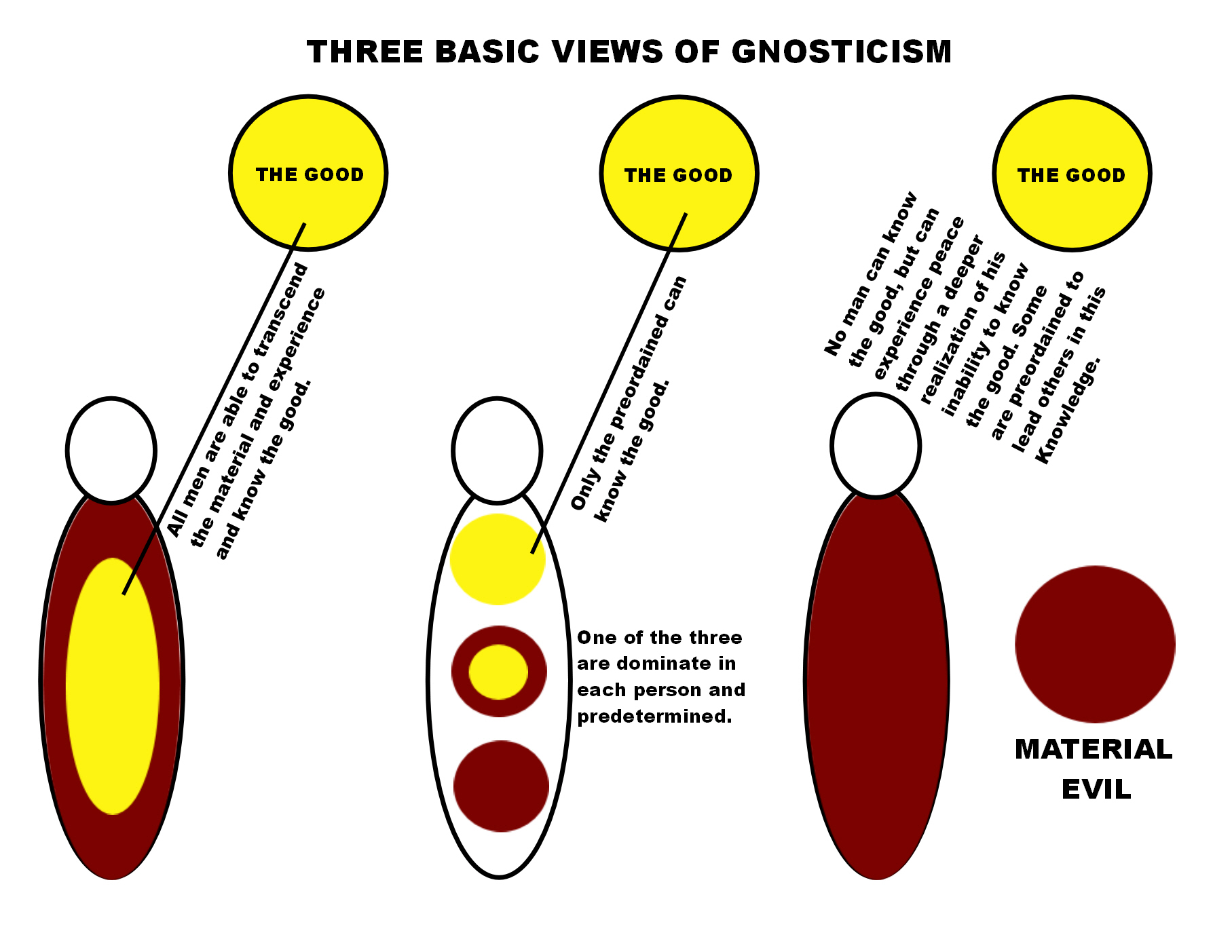
At any rate, the teachings of Cerinthus follow the basic fundamentals of 1st century Gnosticism of which there were two schools of thought unchanged from the cradle of society: intuitive knowledge within versus knowledge outside of man. While both schools held to the strict dichotomy of material being evil and the invisible good, and true knowledge being beyond the five senses, they disagreed on where that knowledge is found and whether or not it is intuitive among all men, or a select few preordained by nature or some supreme being.
Cerinthus followed the philosophical school of Idealism which holds to the belief that the one cosmic mind has an intuitive connection within every individual. Finding that knowledge is often a complex mind-numbing epistemology, but curiously, Luther and Calvin had their own angle that built on the Neo-Platonic teachings of St. Augustine.
This Gnostic bent actually allowed for Christ to be human, or at least some form of humanity. Apparently, God became exasperated with man’s penchant for trying to gain knowledge through the material world, and said in essence, “Ok, since you like to think you can know something and try to gain knowledge through the things that are seen, I am going to send my Son to die on the physical cross, and now all knowledge will only be gained through suffering—there mankind, take that!” This is the essence of the Heidelberg Disputation which is a philosophical treatise, not a theological one by any stretch of the imagination. Luther states plainly in the document that ALL knowledge is hidden in the suffering of the cross. Anyone who thinks they can understand Protestantism without a good grasp of world philosophy is sadly misguided. It is one of the historical necessities of historical grammatical hermeneutics.
Hence, in the Gnostic Protestant construct, Christ and His gospel is the only true objective knowledge and is outside of man. Man is not to seek any knowledge within himself, but all knowledge must be sought outside of him in contemplation of the gospel. All of reality is interpreted by the suffering of the cross. The cross is the epistemology from the material to the invisible, or from the evil to the good.
In contrast, other schools believe the epistemology is intuitive within all men because all men have a spiritual being separate from their material being, and the spiritual part of man is nonmaterial and therefore SINLESS. The material body of man is evil because it is material, but his invisible being is good and has a connection to the cosmic spiritual world that must be cultivated by transcending the material. This was key to the drug culture of the 60’s as LSD trips enabled the individual to transcend the five senses and see into the invisible spiritual world. Supposedly.
Other schools of thought believed that even though all men have a material and spiritual aspect, the spiritual anthropology has classifications in regard to who is able to see true knowledge and who isn’t as determined by the cosmos or cosmic mind; ie., determinism. And consequently, if utopia is to ever be achieved, those with the ability to see knowledge must rule over those who have the inability to transcend the material and are enslaved to it. How do you reason with people hopelessly enslaved to the material? They either understand that they can’t know reality and get with the program, or you kill them.
According to the Reformers, utopia is achieved by understanding that all reality is interpreted through the cross of redemption. This concept was established by Luther’s Heidelberg Disputation and is known as being a “theologian of the cross.” Theologians of the cross are able to know the “cross story,” or interpret reality through the cross, and all others are enslaved to the “glory story” or the story of man. This is the dichotomy of the knowledge of good and evil, or material versus spiritual.
Furthermore, the Reformers believed that the new birth entailed the gift of outward seeing only. All goodness remains outside of man. This is the pious distinction they claim over their fellow Gnostics. Unlike Cerinthus, who would be the modern equivalence of existentialism, no good can be in man, because that does not limit knowledge to suffering and the cross. Even though the early church fathers believed that material is evil and only the invisible is good like all ancient Gnostics, they labeled those heretics who believed that the invisible spirit within man was a connection to the good. That was heresy in their minds. And if you really understand what John Piper et al believe in our day, NOTHING HAS CHANGED.
The true Christians of that day had a different metaphysical take: the material realm is NOT evil, it’s weak. Something that is weak can still be good. The born again Christian struggles with sin because he/she is weak, not because the material realm is inherently evil. Christ really did come adorned in humanity in every since of the meaning because the material is not evil. This understanding of being fits together with the true gospel.
But what Cerinthus et al was teaching speaks directly to what John wrote in his first epistle, and we have addressed some of it in John’s introduction. John, in essence, said the following: Christ was 100% humanity and 100% God. We saw Him, we heard Him, we touched Him, we saw Him die on the cross, there isn’t two Christs, there is only one.
What Cerinthus et al taught explains everything John wrote in this epistle and why he wrote it. It not only explains why John wrote what he wrote in 1:9 and 2:1, it sheds light on why John wrote what he wrote in the rest of the book as well.
And that is what we will look at next. We will do a point by point fly over of 1 John while interpreting it according to this historical context of Gnosticism. John will address the definition of sin in contrast, the definition of knowledge and truth in contrast, the definition of the true gospel in context, the definition of love and hate in contrast, and the definition of the new birth in contrast.



Christian Husbands and Fathers Will Be Held Accountable for Leading Their Families in Calvinism’s False Gospel
Originally published January 8, 2013
 I see a significant laxness towards doctrinal issues in regard to where one goes to church, especially from husbands, and fathers. “But as for me and my household, we will serve the LORD (Joshua 24:15)” is now, But as for me and my household, we will follow the elders. Certainly, the church has never been fuller of mindless, man-following, wimpy husbands.
Husbands are supposed to be like Christ. Christ washes His church in the water of truth. Yes, I know the womenfolk can think for themselves. Here at PPT/TANC, it is mostly women who show theological aptitude in our correspondence with friends of the ministry. Nevertheless, Ephesians chapter five makes it clear that men are responsible for leading their families in truth—not alone, but they are certainly to be in the lead or at least a co-lead for crying out loud. And by the way, elders are nowhere to be found in Ephesians five. Men, Reformed elders have NO authority in your home, period! YOU, and you alone are the pastor of your home. And if you are mixing it up with some Reformed elders who do not get that (and few do), take this advice from someone who learned the hard way: go to your local police station and get a restraining order based on stalking laws, and then notify the local press that you have done so.
Christ said that those who learn His truth and apply it to their lives, and teach others to do the same will be great in the kingdom of heaven (Matthew 5:19). But many husbands in our day want to be great in the eyes of pompous philosopher kings. Christ warned that the LEAST of His commandments were not to be “relaxed.” Many pathetic, spiritually effeminate husbands in our day allow their families to attend Reformed churches that teach the following:
1. Progressive justification.
2. Gospel contemplationism.
3. The complete eradication of self-worth and confidence in applying God-given talents to life.
4. Elder absolution.
5. “Community” as the focal point of all life in Christ.
6. Elder intermediate interpretation of the Bible.
7. Antinomianism.
Basically, they have relinguished total control of their families to sectarian brute beasts. They would do anything that a Reformed elder told them to do, and often do so accordingly. Look, we deal with this. Even husbands who leave Reformed circles have a sort of Stockholm syndrome. They are full of fear, and their life is in turmoil just because they asked a few questions. I correspond with people who are in these groups and are afraid to leave. They are clearly brainwashed, but a consistent comment is, “The leadership doesn’t like to be questioned.” We have even offered asylum to one person in the form of housing, work, and legal counsel. Huh? Right, these groups, i.e., New Calvinism, use “biblical counseling” to gather data on people and then clearly use that information to control them. This is commonplace in the movement. Unless you want a couple of hundred people knowing about sin that you have repented of when you are “brought up before the congregation”—you will play ball the way the elders want you to. Or else.
Doctrinal discrepancy is reason enough, but many husbands relinquish their responsibility before God to lead their home and support this tyranny with their money. After all, not tithing can get you brought up on church discipline in these churches. This is yet another thing that is becoming commonplace as this Reformed movement grows unhindered and unquestioned.
But I have to believe that there will be a day of reckoning, and doctrinal ignorance will be no excuse.
paul
If You Are a Protestant; i.e., Baptist, Methodist, ect., You Represent a False Gospel
 The Protestant Reformation was never about interpreting the Bible literally, or by its plain sense. The official interpretive policy of the Reformers was historical-redemptive. What’s that? It means the Reformers interpreted the Bible as a salvific metaphysical narrative. This philosophy calls for reality to be interpreted as a prewritten movie of sorts, and the Bible is the script. Bible “stories” are prototypes for interpreting our lives according to redemption, and prophecies foretell how the movie will unfold historically. Supposedly, God decided to write the narrative for His own glory and self-love.
The soteriology of the Reformation is a product of this worldview. That’s why orthodoxy plainly contradicts the plain sense of Scripture or its grammatical sense. Of course, Reformers past and present claim they are grammarians, but that refers to grammatical sentences that explain redemptive-historical state-of -being. In other words, historical-grammatical hermeneutical processes are only a means to explaining historical-redemptive metaphysics which enables them to claim grammatical interpretation. They do this knowingly lest they would be found telling the truth about something.
Before we focus on how Protestant orthodoxy defines itself as biblically unregenerate, let’s answer the question in regard to Protestants being so confused about this very simple truth; how did it happen? From the Reformation moving forward in time, people started interpreting the Bible grammatically from a state-of-being perspective. This was never meant to be, but the natural inclination of people is to interpret reality grammatically, or literally so to speak. This resulted in Protestantism, and all of its various stripes, being half pregnant with “under grace.” The Bible’s definitions of the lost and saved, viz, “under law” or “under grace” became confused.
Actually, it became very confused. Historical-redemptive interpretation enables one to interpret every verse of Scripture as being about salvation while grammatical interpretation demands a dichotomy between Christian living and salvation. The former calls for a salvation process while the latter calls for salvation being a onetime finished work. In 1970, a think tank known as the Australian Forum rediscovered this fact and has brought the church back to its authentic roots via the New Calvinist movement.
Now let’s look at how Protestantism defines the so-called “Christian” as being “under law.” There are myriads of examples, but I will use a select few. John Calvin stated the following in his Institutes of the Christian Religion:
3.14.10 – Even were it possible for us to perform works absolutely pure, yet one sin is sufficient to efface and extinguish all remembrance of former righteousness, as the prophet says (Ezek. 18:24). With this James agrees, “Whosoever shall keep the whole law, and yet offend in one point, is guilty of all,” (James 2:10). And since this mortal life is never entirely free from the taint of sin, whatever righteousness we could acquire would ever and anon be corrupted, overwhelmed, and destroyed, by subsequent sins, so that it could not stand the scrutiny of God, or be imputed to us for righteousness. In short, whenever we treat of the righteousness of works, we must look not to the legal work but to the command. Therefore, when righteousness is sought by the Law, it is in vain to produce one or two single works; we must show an uninterrupted obedience. God does not (as many foolishly imagine) impute that forgiveness of sins once for all, as righteousness; so that having obtained the pardon of our past life we may afterwards seek righteousness in the Law. This were only to mock and delude us by the entertainment of false hopes. For since perfection is altogether unattainable by us, so long as we are clothed with flesh, and the Law denounces death and judgment against all who have not yielded a perfect righteousness, there will always be ground to accuse and convict us unless the mercy of God interpose, and ever and anon absolve us by the constant remission of sins. Wherefore the statement which we set out is always true, If we are estimated by our own worthiness, in everything that we think or devise, with all our studies and endeavors we deserve death and destruction.
3.14.11 – We must strongly insist on these two things: That no believer ever performed one work which, if tested by the strict judgment of God, could escape condemnation; and, moreover, that were this granted to be possible (though it is not), yet the act being vitiated and polluted by the sins of which it is certain that the author of it is guilty, it is deprived of its merit. This is the cardinal point of the present discussion.
Calvin makes two things perfectly clear from the Reformed perspective: “Christians” are still judged by the law and its demand for perfection, and therefore, no “Christian” can please God via a righteous work. Simply stated, “under law.” Anyone reading this post should be familiar with many Bible verses that call us to please God with our works, but nevertheless, I will cite the following:
Romans 8:1 – There is therefore now no condemnation for those who are in Christ Jesus. 2 For the law of the Spirit of life has set you free in Christ Jesus from the law of sin and death. 3 For God has done what the law, weakened by the flesh, could not do. By sending his own Son in the likeness of sinful flesh and for sin, he condemned sin in the flesh, 4 in order that the righteous requirement of the law might be fulfilled in us, who walk not according to the flesh but according to the Spirit. 5 For those who live according to the flesh set their minds on the things of the flesh, but those who live according to the Spirit set their minds on the things of the Spirit. 6 For to set the mind on the flesh is death, but to set the mind on the Spirit is life and peace. 7 For the mind that is set on the flesh is hostile to God, for it does not submit to God’s law; indeed, it cannot. 8 Those who are in the flesh cannot please God.
In this passage, the apostle Paul clearly delineated between the lost and the saved, and in regard to “For the mind that is set on the flesh is hostile to God, for it does not submit to God’s law; indeed, it cannot. Those who are in the flesh cannot please God,” John Calvin would say, “Yep, that’s us!” While Paul clearly stated that Christians are no longer under the law’s demand for perfection; Calvin clearly contradicts him. While Paul defines a true believer as someone who CAN please God, Calvin flatly denies it…in writing.
Calvin defines the Christian as under “the law of sin and death” while Paul defines the Christian as under “the law of the Spirit of life” which is the same as being under grace. If you reread the excerpt from the Institutes, Calvin defines the Christian in nearly the exact same way that Paul described the unregenerate. Paul distinguishes how the Spirit uses the law in regard to the unsaved versus the saved. For those under law, the Spirit uses the law to condemn only. The Reformed concur because they say this continually drives the Christian back to the cross for continued atonement for “present sin.”
In contrast, the Spirit uses the law to sanctify believers (John 17:17), and does not use the law to keep so-called Christians under condemnation. This demands a progressive salvation versus a salvation that is finished. The Australian Forum framed it this way:
The Holy Spirit gives the sinner faith to accept the righteousness of Jesus. Standing now before the law which says, “I demand a life of perfect conformity to the commandments,” the believing sinner cries in triumph, “Mine are Christ’s living, doing, and speaking, His suffering and dying; mine as much as if I had lived, done, spoken, and suffered, and died as He did . . . ” (Luther). The law is well pleased with Jesus’ doing and dying, which the sinner brings in the hand of faith. Justice is fully satisfied, and God can truly say: “This man has fulfilled the law. He is justified.”
We say again, Only those are justified who bring to God a life of perfect obedience to the law of God. This is what faith does—it brings to God the obedience of Jesus Christ. By faith the law is fulfilled and the sinner is justified (Present Truth: Law and Gospel; Volume 7, article 2, Part 2).
John Piper, the contemporary “elder statesman” of the New Calvinist movement stated it this way:
We all sense intuitively-and we are encouraged in this intuition by the demands of God-that acceptance with God requires perfect righteousness conformity to the law (Matthew5:48; Galatians 3:10; James2:10). We also know that our measures of obedience, even on our best days, fall short of this standard (Counted Righteous in Christ: Page 123; 2002).
To be under the righteous and perfect demands of the law to remain justified is clearly… “under law.” Also, note that both contemporary Reformers and Calvin always cite James 2:10 as a proof text:
For whoever keeps the whole law but fails in one point has become accountable for all of it.
But it is no mere oversight that they fail to contrast that with love fulfilling the whole law as well (Gal 5:14, Matt 22:40, Rom 3:10). James 2:10 is “under law” while Galatians 5:14 ect. refers to “under grace” (Rom 6:14).
Those who call themselves Protestants identify with a false gospel, but granted, could be confused enough to be saved. However, confusion in the Christian life is not good and is obviously indicative of what we see in the church.
paul

 Paul's Passing Thoughts
leave a comment