
The Protestant Misuse of the Word “Grace”
 The Reformed, and Calvinists in particular use the word “grace” to nuance what they really teach about salvation. Primarily, to nuance the idea that sanctification is the progression of justification, they refer to the doctrine of “duplex grace.” This is a soft term for “duplex salvation,” or the idea that both justification and sanctification are part of a single salvation process, viz, “complete justification.”
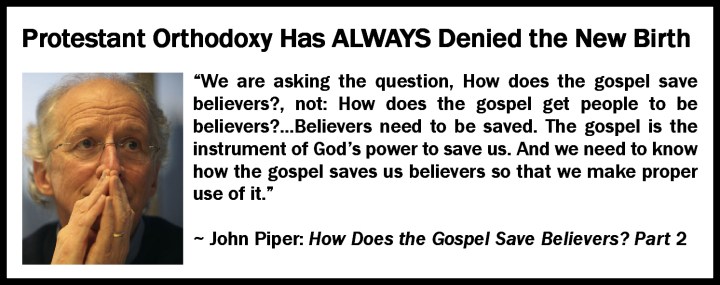
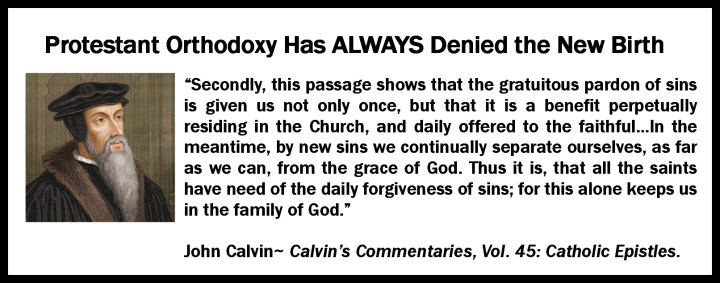
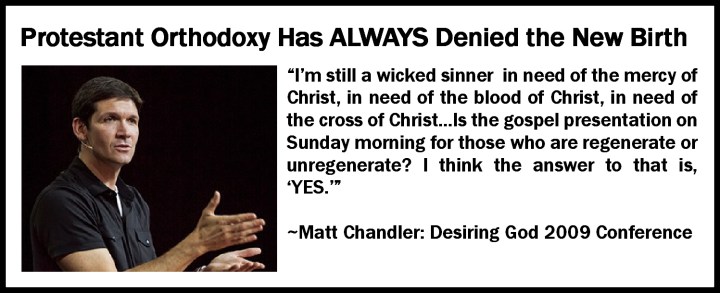
For another example, consider the expression, “We are all just sinners saved by grace.” According to Reformation orthodoxy, this is really stating: “We all remain unregenerate and need continued salvation.” Evangelical superstar John Piper is far less ambiguous than Protestant bumper stickers:
We are asking the question, How does the gospel save believers?, not: How does the gospel get people to be believers? When spoken in the power of the Holy Spirit, the gospel does have power to open people’s eyes and change their hearts and draw them to faith, and save them. That’s what is happening on Tuesday nights and Wednesday nights this summer. People are being drawn to Christ through the power and beauty of the gospel. But I am stressing what Paul says here in verses 16 and 17, namely, that “the gospel is the power of God for salvation to everyone who believes.” Believers need to be saved. The gospel is the instrument of God’s power to save us. And we need to know how the gospel saves us believers so that we make proper use of it.
“Believers need to be saved.” Any questions? However, again, most Protestant scholars nuance this falsehood with the word, “grace.” What people assume is being said follows: “Believers still need grace.” Precious few would deny that—of course we need God’s grace continually, but what do we mean by that?
The word “grace” in the Bible rarely refers to salvation if at all; it is NOT a synonym for salvation. The word is simply little different than the word “love” in the biblical sense. The two words could easily be used interchangeably throughout the Scriptures. Grace, according to the Bible, evoked God to save mankind, but is not the act of salvation.
If you want a definition of grace read Paul’s treatise on love in 1 Corithians 13; the meaning of the two words are all but identical. Salvation is one of many, many things that grace does, but it’s NOT salvation.
In yet one more example of Protestant premeditated deception, scholars will concur that grace does not mean “salvation,” but then proceed to use it that way for purposes of disguising their progressive justification gospel.
paul
James White and Progressive Justification
Live Link: Sunday 5/22/2016 @ 2pm.
Discussion of short discourse with James White on UK radio show about progressive justification.
Susan is under the weather with some back problems so we will fill in with this discussion on progressive justification. However, Susan will be calling in and joining the discussion. The script follows:
PAUL: Hello?
JUSTIN: Hello. Is that Paul?
PAUL: It is.
JUSTIN: Hi, Paul. It’s Justin, and we tweeted each other about you coming on to do a discussion with James White.
PAUL: Yes, we did.
JUSTIN: Are you good to do this recording?
PAUL: I am.
JUSTIN: All right. Okay. And how should I pronounce your surname, Paul?
PAUL: Doh-se, Paul Dohse, D-O-H-S-E.
JUSTIN: Like [UNINTELLIGIBLE] Dohse.
PAUL: That’s absolutely correct.
JUSTIN: Okay. Now look, I’m going to introduce you as our wild card here.
PAUL: Okay.
JUSTIN: Neither James [UNINTELLIGIBLE] come across what you described as the Reformation progressive justification. So you have to kind of explain it first before we can respond to it, if that makes sense. But we only got ten minutes as well, so it’s going to have to quite kind of quick back and forth between you both. Is that going to be all right with you, Paul?
PAUL: Yes, it is. I just have seven questions that I want a yes or no answer for.
JUSTIN: You just want a yes or no answer question.
PAUL: Correct. And if there’s any time left, we can have discussion on number one.
JUSTIN: Okay. Well, look [UNINTELLIGIBLE] I can imagine that James will not be able to just respond with a yes or a no, depending on the question. I’m sure there will be some clarification he wants to bring to the way you ask it probably.
PAUL: Sure.
JUSTIN: We may not [UNINTELLIGIBLE] question one is one thing, okay?
PAUL: Okay.
JUSTIN: We’ll give it a go. Okay?
PAUL: All right.
JUSTIN: All right. [UNINTELLIGIBLE], Paul. Hold on.
PAUL: Okay.
JUSTIN: So let’s take another caller, and today on the program, we’re getting James White to respond to a few calls. Coming in, James, again, is Director of Alpha and Omega Ministries. If they want to find your website, James, where should they go?
JAMES: AOMIN.org, A-O-M-I-N.org
JUSTIN: And they can find things there too [UNINTELLIGIBLE]
JAMES: Definitely.
JUSTIN: [UNINTELLIGIBLE] talk about what happened on today’s program. But [UNINTELLIGIBLE] sort of our wild card [UNINTELLIGIBLE] Paul Dohse is on the line. I don’t know Paul. You don’t either. Neither of us [UNINTELLIGIBLE] his main issue with Calvinism with [UNINTELLIGIBLE] Reformation. He says [UNINTELLIGIBLE] something called progressive justification. I’m just beginning to find out what that is. Paul is on the line now and has a number of questions that he wants you to answer, James. So we’ll see where it gets you in the last ten minutes that we got with James here, Paul. And welcome on to the program. What did you want to ask James, Paul?
PAUL: I would just like seven yes or no answers to seven questions, and I understand that there could be more discussion on these questions, but I just want a yes or no answer that would be…
JUSTIN: Yes or no.
PAUL: Right.
JUSTIN: James, I’m sure, will try his best, but he may want to clarify your questions, obviously, [UNINTELLIGIBLE]. But go ahead.
PAUL: Okay. Number one, did John Calvin hold to progressive justification?
JAMES: You have to define what you think that means, sir. It’s a very strange terminology. What do you think progressive justification means?
PAUL: Well, what it means is that justification isn’t a finished work in the life of the believer. Justification or salvation progresses from a beginning point to an ending point.
JAMES: Okay. Then the answer to your question is he most assuredly believed that justification is a forensic declaration by God that takes place and is a past event, and he differentiated between justification, sanctification and the entirety of salvation. So to meaningfully answer the question, you have to utilize his categories, and he does not believe in progressive justification. He believed in both conditional and progressive sanctification. And we differentiate between justification, sanctification and salvation.
PAUL: Okay. So what you’re telling me, and we must move on quickly to the second one, but what you’re telling me is that as a Calvinist, the term “progressive justification” is a little bit peculiar in your mind. They’re strange.
JAMES: Well, it goes directly against the Reformation teaching of what justification was because this argument was wrong, was that justification involved an infusion of the righteousness of God to the sacrament. The Reformers taught that justification was a forensic declaration of the part of God based upon the work of Jesus Christ that says that you are right before God. And they talk about the imputation of the righteousness of Christ and the imputation of our sins to Jesus Christ, our sin bearer.
PAUL: Right. Okay. So you’re saying that the righteousness of the believer is strictly positional but not a state of being.
JAMES: State of being in the sense of being the basis of justification?
PAUL: No, I’m not talking about the basis of justification at all. I’m talking about the substantive being of the individual believer. Is he righteous or not righteous?
JAMES: Well, that’s exactly where we do get into the differentiation between the concept of sanctification and justification [UNINTELLIGIBLE]
PAUL: Okay. So I think the rest of the questions might help us to clarify, but we only have ten minutes. So I must move on.
JAMES: Okay. Go ahead.
PAUL: Question two, in one of three classes of election–the non-elect, the called and those who persevere–did Calvin teach that the called classification are temporarily elected/illuminated and then fall away to a greater damnation as predetermined by God?
JAMES: He believed that there were certain people who received enlightenment specifically to increase their damnation, yes, but he would not say that they were a part of the elect from eternity.
PAUL: Thank you. Question number three, according to Calvin, does the present sin of the believer remove them from grace requiring a return to the same repentance that saved them which can only be found in the institutional church?
JAMES: In the institutional church…
PAUL: Or let’s say the Reformed Church.
JAMES: Well, no. Now you’re using the term “grace” almost in the Roman Catholic concept of that day, the falling from grace or being a state of grace or something along those lines. Calvin’s doctrine of sin, obviously, is that there is a need for repentance experientially in the person’s life and their relationship with God. But if you’re talking about one of the elect, that does not separate them from the life of Christ. That’s where they have to be re-justified or something like that.
PAUL: Right, and that nails it, the re-justification part of it. So that nails it. So your answer to that one is no. okay, number four, the sola fide…
JAMES: [UNINTELLIGIBLE] questions. I’m kind of intrigued as to where this is all leading, Paul. What’s, I mean, [UNINTELLIGIBLE] we’re not going to catch all your questions at all before we have to [UNINTELLIGIBLE]. What’s your ultimate point? [UNINTELLIGIBLE] Calvin was right. You think the Reformation was, you know, didn’t get it right? [UNINTELLIGIBLE]
PAUL: Well, I think fundamentally – here’s what I think, and I really wanted to end the crux of – the crux of this getting the answers to all seven questions that will help clarify, but can we quickly get a yes or no answer to the rest of the questions, and then I can answer your question?
JAMES: Well, okay. So, yeah. Okay, go ahead then.
PAUL: Okay. So where were we on? Okay, so number four, does sola fide also apply to sanctification as well as justification?
JAMES: No.
PAUL: Thank you. Number five. According to the Reformed…
JAMES: [UNINTELLIGIBLE]
PAUL: According to the Reformed doctrine of mortification and vivification, does the Christian relive their original spirit baptism throughout their lives as a result of practicing the same repentance that originally saved them?
JAMES: I don’t understand that question.
PAUL: Okay, let’s move on. Number six, does total depravity, the T in TULIP, also apply to believers? According to the Reformers, do Christians remain totally depraved?
JAMES: Not in regard to ability, no. There’s a new creation. So there’s a fundamental shift and change of spiritual life.
PAUL: Thank you. Number seven. Can a Christian do any work pleasing to God?
JAMES: Only by grace.
PAUL: So by grace, they can do…
JAMES: So yes, yes. The answer is yes because you said Christian. That means a new creature in Christ [UNINTELLIGIBLE] by the Holy Spirit of God. So yes, obviously [UNINTELLIGIBLE].
PAUL: Okay. So we can park on this a little bit with what little time we have left. So what you’re saying is that, yeah, so Christian can do a good work by grace. But when the Reformers spoke of grace, really, what they were talking about is salvation. So what you’re saying is…
JAMES: No.
PAUL: Okay.
JAMES: No. [UNINTELLIGIBLE] fundamental understanding of the fact that – and yes, when we talk about Reformers, [UNINTELLIGIBLE] Calvin and Luther [UNINTELLIGIBLE] differences of opinion on minor elements [UNINTELLIGIBLE]. So they’re all monergists. And it is a very common error to think the term “salvation” is meant to be taken synonymously with the elements of salvation–regeneration, sanctification, adoption–which are distinguished from one another scripturally and hence, theologically as well. [UNINTELLIGIBLE]
PAUL: Roughly, what percentage of the Reformers, and just roughly, just a general idea. You say that there’s disagreement amongst them. How many of them roughly would have believed that sanctification is purely monergistic?
JAMES: Purely monergistic…
JUSTIN: And so let’s just [UNINTELLIGIBLE] define monergistic.
JAMES: Okay. All right. Monergism is the idea there is one force acting to accomplish something. Synergism is a cooperation of forces. So I’m a biblical monergist. I believe in God, regenerates by his own power [UNINTELLIGIBLE]. So he initiates [UNINTELLIGIBLE]. He accomplishes. It’s nothing on our part exactly. [UNINTELLIGIBLE] sanctification. And of course the difference here is, are we talking about positional sanctification? We have been made holy [UNINTELLIGIBLE]. Or are we talking about the experience of being [UNINTELLIGIBLE] the image of Christ or a – not a positional but an experiential…
JUSTIN: [UNINTELLIGIBLE] ongoing.
JAMES: An ongoing thing. That’s why Paul uses the [UNINTELLIGIBLE] those who are being saved, those who are perishing [UNINTELLIGIBLE]. So they had discussions about these things. I can’t give you percentages, but the problem I’m sensing here in the questions is not using the terminologies that they did in the way they did [UNINTELLIGIBLE].
JUSTIN: Can I just get a clarification here? Because we are going to have to leave in a moment, Paul. But [UNINTELLIGIBLE] fundamental problem that you think Calvin and the other Reformers [UNINTELLIGIBLE] they didn’t really preach a – they didn’t really get the Reformation right because ultimately it’s still in your view become something about works or righteousness. Is that what you’re saying?
PAUL: I believe that Calvin and Luther taught a false gospel, and I think that…
JUSTIN: [UNINTELLIGIBLE] Reformed enough in your view? They didn’t [UNINTELLIGIBLE].
PAUL: No. No. I think they taught a type of works salvation by perpetually returning to the same gospel that saved us to keep ourselves saved, and I’ve got so many quotes from Luther that you would want on that.
JUSTIN: I’m going to have to leave it there from you, Paul, but thank you for calling in.
PAUL: You bet.
JUSTIN: Have you come across this before?
JAMES: No, not in that form.
PAUL: Wow, really?
JAMES: There are a lot of people who [UNINTELLIGIBLE]. Unfortunately, because of the nature of the questions, I realized there’s all sorts of differences about the subjects being discussed as far as most Reformed scholars and even history of Reformation, but it is important to recognize that you’ve read the Institutes [UNINTELLIGIBLE] written by Calvin, that he makes very careful distinctions, very careful thinker, in differentiating what’s called the ordo salutis, the order of salvation, differentiating sanctification and justification, and he was very clearly on what the nature of justification is. [UNINTELLIGIBLE] before God is because [UNINTELLIGIBLE] Jesus Christ. Nothing else. We don’t add to him. Everything else is a gift and grace in our lives, but it does not add to what our standing is before him.
JUSTIN: We’re going to have to leave you there. Thank you, Paul. [UNINTELLIGIBLE]
PAUL: Okay. Thanks for having me on. Thanks for having me on, Justin.
JUSTIN: Thank you, James, for [UNINTELLIGIBLE].
PAUL: All right, bye-bye. Take care.
Do you Misrepresent the Pharisees? Well Then, You Just Might Be an Antinomian
Originally published September 7, 2010
 I heard it again yesterday in a Sunday morning message: the Pharisees were really, really good at keeping the Law, but at the end of the day Jesus said that our righteousness must surpass that of the Pharisees. Alas, proof that we can’t be justified by keeping the Law (which no one would argue with). The pastor, in this message that is one of many in his series on The Sermon on the Mount, even said something like this: “The Pharisees’ efforts at keeping the Law wasn’t the issue, they were good at keeping the Law.” But is that true? And by the way, considering who the audience was at that church (primarily saints gathered for worship and the hearing of the word), and the fact that his topic was the role of the Law in Christian living, why was he even discussing justification in that context? Based on his view of the Pharisees and their supposed efforts to be justified by keeping the Law, one of his statements to *us* was “you don’t keep the Law by trying to keep the Law.” Hmmm, really?
We certainly are not justified by “trying” to keep the Law, but should we try to keep the Law in order to please and obey our Lord? Yes, I think so. Now, I don’t know this pastor very well, but I know him well enough to know that he wouldn’t dream of synthesizing justification and sanctification, but due to the fact that our present church culture is awash in an antinomian doctrine that does just that, are pastors propagating such a synthesis unawares? Yes, I think so. In his sermon notes, the top of the page has statements like ”Things Jesus wants us (“us” would presumably be Christians) to know about the Law.” The top part of the notes are also replete with “we” in regard to the Law, but the bottom part has statements like: “We live in the Age of Grace; salvation is not of works,” but yet, the whole message clearly regards the role of the Law in the life of a Christian. Therefore, whether unawares or otherwise, he clearly extended the relationship of the Law in regard to Justification into the realm of sanctification.
Here is where we must call on our good friend Jeff Foxworthy who developed a program for helping people who may be rednecks but don’t know it. He presents several different questions from different angles of thought, and depending on the answers to the questions, “you just might be a redneck.” Likewise, if you misrepresent the Pharisees, you just might be an antinomian without knowing it.
First of all, we can see from the very same proof text used to demonstrate the idea above that the Pharisees were not guilty of attempting to keep the Law in order to be justified:
[9] “Anyone who breaks one of the least of these commandments and teaches others to do the same will be called least in the kingdom of heaven, but whoever practices and teaches these commands will be called great in the kingdom of heaven. [20] For I tell you that unless your righteousness surpasses that of the Pharisees and the teachers of the law, you will certainly not enter the kingdom of heaven” (Matthew 5:19,20).
So, as the reasoning goes, verse 19 indicates that “we” should revere God’s Law, but since the Pharisees were really, really good at keeping the Law (an assumed interpretive criteria) we shouldn’t “try” to keep the Law because that’s what they tried to do, and our righteousness must surpass theirs because you can’t be saved by keeping the Law (and again, why are we discussing salvation in this context to begin with?). But we can see just from this text alone that this interpretation is not true. In every literal English translation that I could find, the coordinating conjunction “for” links verses 19 and 20. As we know, coordinating conjunctions join two complete ideas together and indicates the connection between the two. In all cases, the translators saw fit to translate the conjunction “for” from the Greek texts. If Jesus was contrasting the two ideas, a different conjunction would have been used like “but,” ie., the Pharisees do verse 19 really well, “but” not perfectly, therefore you need a righteousness that is perfect (this is true, but not what Christ is referring to here). No, the conjunction used is “for” which indicates “reason”(reason why): because the Pharisees were guilty of verse 19, they (the audience) were not going to enter the kingdom of heaven if they where like the Pharisees in regard to habitually breaking the Law of God and teaching others to do so. Also, I think the Lord’s reference to being the least or the greatest “in the kingdom” (verse 19) is in reference to degree and set against the example of the Pharisees who were guilty of doing (breaking the Law and teaching others to do so) habitually which was an indication that their souls were in peril. Therefore, even if the assumption regarding the Pharisees ability to obey the Law outwardly is true, it’s the wrong transition; a better transition would be “but” and would read something like this: “Christians should obey the Law ‘but’ even if you keep the law as good as the Pharisees do, it will not get you into the kingdom, so you need a righteousness that surpasses theirs.”
Granted, depending on how you diagram the sentence, you might be able to make a case either way, but is it true that the Pharisees were experts at keeping the Law outwardly? No. From other Scriptures we know that the Pharisees were guilty of verse nineteen; specifically, they replaced the Law with their own traditions. That’s why Jesus immediately launches into the whole “you have heard that it was said….but I tell you”starting in the following sentence (verse21). Not only that, Jesus says specifically in Matthew 15:1-9 that His contention with the Pharisees (and the teachers of the law as exactly referred to in verse 20) was the fact that they twisted the Scriptures according to their traditions:
[1] Then some Pharisees and teachers of the law came to Jesus from Jerusalem and asked, [2]”Why do your disciples break the tradition of the elders? They don’t wash their hands before they eat!”[3] Jesus replied, “And why do you break the command of God for the sake of your tradition? [4] For God said, ‘Honor your father and mother’ and ‘Anyone who curses his father or mother must be put to death.’ [5] But you say that if a man says to his father or mother, ‘Whatever help you might otherwise have received from me is a gift devoted to God,’ [6] he is not to ‘honor his father’ with it. Thus you nullify the word of God for the sake of your tradition. [7] You hypocrites! Isaiah was right when he prophesied about you: [8] ‘These people honor me with their lips, but their hearts are far from me. [9] They worship me in vain; their teachings are but rules taught by men.'”
The Pharisees were not proficient at keeping God’s law outwardly. In fact, they didn’t do so at all, but rather propagated teachings that were “rules taught by men.” Therefore, the Pharisees were guilty of neglecting the true Law and teaching others to do so (Matthew 5:19). They were not the poster-children for some campaign to demonstrate the futility of Law-keeping, especially in regard to believers. In fact, Christ said their lax attitude toward the Law was indicative of those who will not enter the kingdom. For this reason the Pharisees were not the greatest in heaven as the masses supposed, but the least, if they were even in the kingdom at all. Therefore, when Christ told the crowd that their righteousness must exceed the righteousness of the Pharisees, He wasn’t talking about the imputed righteousness of Christ that the Pharisees were supposedly trying to obtain themselves for salvation (besides, they were not attempting to do that to begin with as I have demonstrated), but rather the true righteous behavior demanded of kingdom citizens. If Christ was talking about an imputed righteousness (for sanctification), why would He have not simply said so? For example: “Your righteousness must not only exceed that of the Pharisees (which wouldn’t have been hard to do anyway, and therefore by no means a profound statement by Christ), but ( a contrast conjunction) must be a righteousness that comes from God alone”…for sanctification.
If you misrepresent the Pharisees as the first century poster-children for “let go and let God theology” because they supposedly tried to keep the Law, you just might be an antinomian. But in part two, we discuss another question that may give credence to the possibility: Do you misrepresent obedience as outward alone? Well then, you just may be an antinomian.
paul
What Is The Biblical Definition of “Perfection”?
 Part 2 on the subject of new birth; program 14 of the Christian living series.
Program link: Friday 4/22/2016 @ 7pm Prerecorded.
Did Christ demand that we be perfect in order to drive us to “despair of self-righteousness,” or does the word translated “perfect” in the English refer to a state of being rather than a standard? Join Susan and Paul as they resume the Christian living series on Blog Talk Radio.

 Paul's Passing Thoughts
2 comments