John Piper: You’re Either With Us, or You’re With Rome
 “Piper is an antinomian false teacher who has the audacity to proclaim, in essence, “You are with us (the New Calvinists), or you are with the Roman Catholics.”
Let’s take some time here to chat about how John Piper thinks he’s the elder statesmen of a modern-day resurgence of the original Reformation. Truly, his ego cup runneth over.
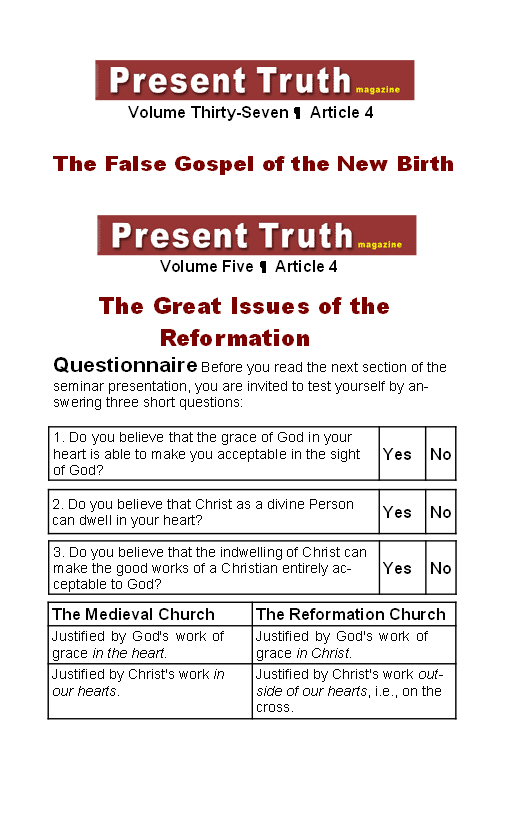
First, as established in “The Truth About New Calvinism,” Piper and his arrogant horde got their doctrine from the Australian Forum. The Forum believed the following about what the true issue of the original Reformation was: Rome separated justification and sanctification, and thereby “infused grace” into the believer via the new birth. The new birth constituted a righteousness that was inside of us, or a righteousness that we actually possessed within us. Supposedly, the Reformation reclaimed “the objective righteousness of Christ completely outside of us.”
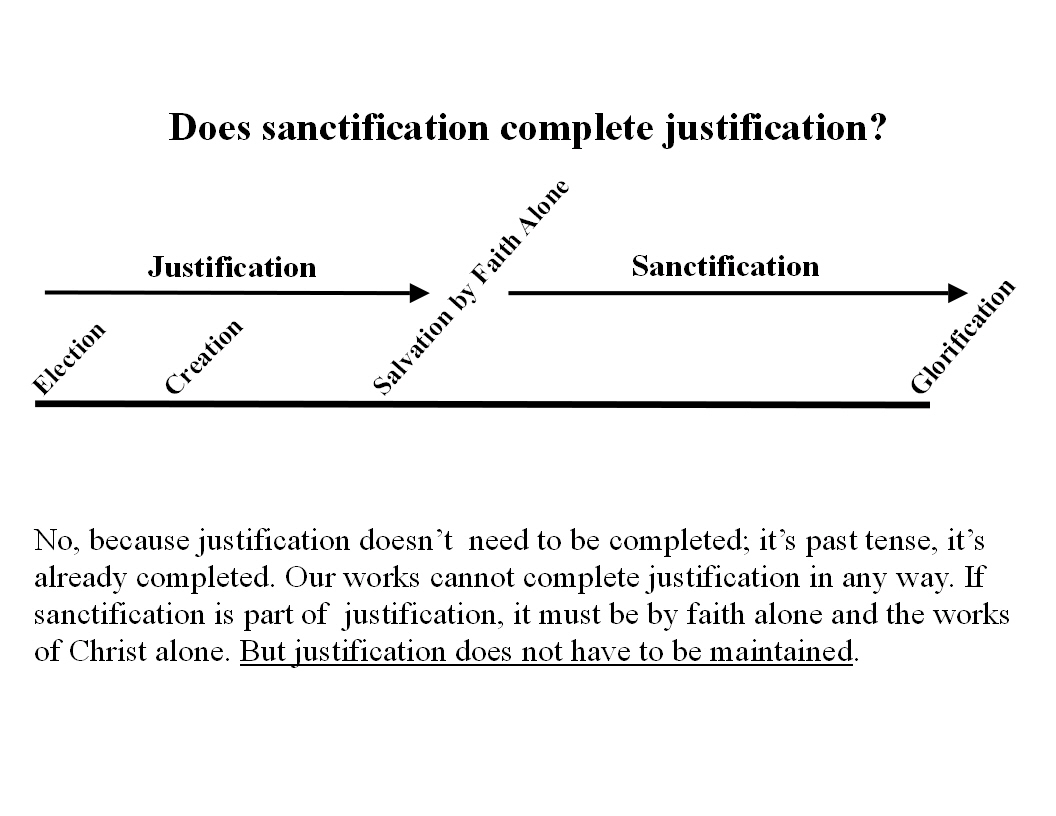
To believe that we have an actual righteousness imparted to us through the new birth is supposedly to believe that our participation in sanctification can maintain and finish justification. In other words, the Reformers supposedly believed that sanctification had to maintain justification and finish it. Of course, mortals cannot do that. Supposedly, the Reformers believed that Christ not only died so that we could be justified, but He lived a perfect life for us also, so that His obedience could be imputed to us for sanctification, which can now complete justification because it is Christ’s works and not ours that is being presented. The Forum believed that living by faith is to constantly present the works of Christ to the Father to maintain justification, and not our own imperfect righteousness.
But the premise is false, and evangelicals believe that justification does not have to be maintained. We believe that justification is a onetime declaration that guarantees glorification (Romans 8:30). And the full righteousness of God has been credited to our account based on our faith ALONE in what Christ accomplished on the cross, and His resurrection. Evangelicals believe that sanctification can’t change that—it’s past tense—it’s a completely done deal. Evangelicals and old Calvinists alike utterly reject an infusion of sanctification and justification.
The truth of the matter is that the infusion of sanctification and justification is the bases for almost every false doctrine known to man because it leaves you with two alternatives only: First, faith alone justifies us and wipes out all of our past sin, but now our standing has to be maintained by what we do in sanctification, either by work or ritual. The other alternative is to say that Jesus ALONE does sanctification for us because everyone knows we are not even going to be faithful in the easier option of ritual to maintain justification; this second option is a Jesus obeys for us antinomianism.
Again, evangelicals don’t believe that justification has to be maintained or completed by sanctification. However, the Forum was formed to develop a systematic theology that made sanctification by Jesus alone for the purpose of completing justification plausible. They also taught ecciesia reformata semper reformanda which holds to the idea that the Reformation was not finished with Luther and Calvin.
The following charts might help to clarify the issue:

The following montage from the Forum’s theological journal confirms what they thought about the original Reformation and the new birth:

Then it happened. One of the original members of the Australian Forum did a series of lectures on the Reformation at Southern Theological Seminary. Piper, who usually stays aloof from his ties to the Forum—couldn’t help himself. He wrote an article about it:
Desiring God blog, June 25, 2009: Goldsworthy on Why the Reformation Was Necessary.
In the article, Piper shows his full agreement with the Forum on their ridiculous Reformation motif and false doctrine:
This meant the reversal of the relationship of sanctification to justification. Infused grace, beginning with baptismal regeneration, internalized the Gospel and made sanctification the basis of justification. This is an upside down Gospel.
In case one would think that Piper excludes evangelicals from this concern because of his mention of baptismal regeneration, consider what he said in the same article: “I would add that this ‘upside down’ gospel has not gone away— neither from Catholicism nor from Protestants….” Piper, like all New Calvinists, insists that justification and sanctification have a “relationship” (infusion), and of course, they reject the idea that we help in the completion of justification; that’s a “reversal” of the two and an “upside down” gospel. They therefore hold to option B: Jesus obeys for us antinomianism.
Piper also states in the same article:
When the ground of justification moves from Christ outside of us to the work of Christ inside of us, the gospel (and the human soul) is imperiled. It is an upside down gospel.
Like the Forum, Piper rejects the new birth as having anything to do with a righteousness that is possessed by the believer. This explains the continual pontification by New Calvinists that believers are no better off than the unregenerate. Paul David Tripp describes believers as dead and unable to do anything. Piper also got the “upside down gospel” phrase from the Forum. In fact, it was one of the major themes of an issue in their theological journal as can be observed below. BUT, also note that they even exclude a righteousness imparted to us by Christ within, and Him doing the work! In fact, to believe that Christ is doing the work within us “imperils(ed)” the soul!

Like the Forum, Piper lumps evangelicals together with Rome in the same article:
In it [Goldsworthy’s lecture at Southern] it gave one of the clearest statements of why the Reformation was needed and what the problem was in the way the Roman Catholic church had conceived of the gospel….I would add that this ‘upside down’ gospel has not gone away—neither from Catholicism nor from Protestants.
Piper is an antinomian false teacher who has the audacity to proclaim, in essence, “You are with us (the New Calvinists), or you are with the Roman Catholics. While Piper puts on the whole humbleness and wisdom of Yoda act, he is one the most arrogant and deceitful false teachers in recent church history.
paul
The Separation of Faith and Obedience is Anti-Gospel
“….faith is not faith until it does something”
While on sabbatical to write TTANC, Susan and I have been visiting Calvary Baptist Church in Xenia, Ohio pastored by David Conrad. By the way, our home used to be the building they worshiped in. Pastor David is preaching through the book of Romans, and 10:13-21 was on the plate for last Sunday. The focus of this post is verses 16 and 17:
But they have not all obeyed the gospel. For Isaiah says, “Lord, who has believed what he has heard from us?” So faith comes from hearing, and hearing through the word of Christ.
What does it mean to obey the gospel? This is so simple that it is easy to miss: verse 16 could rightfully be restated as, But they have not believed the gospel. The apostle Paul first frames acceptance of the gospel via obedience, then he quotes Isaiah who frames acceptance of the gospel via belief: “Lord, who has believed what he has heard from us?” Then Paul restates what Isaiah said in the context of faith: “So faith comes from hearing, and hearing through the word of Christ” Faith, belief, obedience—all the same. Obedience doesn’t come from faith or flow from faith, it is faith.
Let’s visit another passage that illustrates this. Christ said in John 3:36;
Whoever believes in the Son has eternal life; whoever does not obey the Son shall not see life, but the wrath of God remains on him.
Again, in this verse with two independent clauses linked by the same subject of eternal life, obedience and belief could be switched between the two clauses, or either one used for both.
Is this really that hard to understand? You can’t separate obedience and faith (the hindrance of sin will not be addressed in this post). Why? Because faith isn’t faith until it does something. What a pity that theologians have made the book of James so controversial in regard to the whole supposed works/faith issue. All James was saying is that faith isn’t faith until it does something:
Do you want to be shown, you foolish person, that faith apart from works is useless? (James 2:20).
You see that faith was active along with his works, and faith was completed by his works (James 2:22).
And what is the standard for the works of faith? What works? Again, James does not leave us without an answer:
But the one who looks into the perfect law, the law of liberty, and perseveres, being no hearer who forgets but a doer who acts, he will be blessed in his doing (James 1:25).
What about boasting? There isn’t any because faith is a gift from God. If God doesn’t grant it to us, we do not have it. But be sure of this: like all gifts, once one receives it—they own it. It is our faith, and we also own the obedience that is faith—it’s our obedience as well. And as James wrote, the blessings are in completing our faith with obedience to the truth (2:22). In the parable of the talents Christ warned against separating faith and works, calling those who do so “wicked, lazy servant[s].”
Christians can get in the middle of the Arminian/Calvinism fray if they want to, but both are guilty of distorting saving faith; both separate what is one, obedience and faith. Both brainwash our children with the faith alone mantra. Yes indeed, faith alone, but also obedience alone. You can obey the gospel or believe the gospel—pick one, they are both good. Say it anyway you want to; it’s all the same. Arminians separate the two by teaching faith alone without works. That’s simply not true. Once the gift is given, obedience comes with it. We are justified by the gift, but after that, faith works, or you don’t have it, or you are not working out what has been worked in.
The Reformed are a little more craftier in their damning lies. They concur with the proposition of this post, but in their endeavor to be the gatekeepers of God’s self-esteem, they devise complicated theological systems that make our faith and obedience Christ’s faith and obedience. No gift has really been granted, we are merely the prepositions of salvation. This comes from not only separating faith and obedience, or law/gospel, but then synthesizing justification and sanctification. Obviously, if there is no difference between the two, we must be sanctified the same way we are justified which is passive. Receiving a gift is passive, putting the gift to work is not. But if the same gospel that saved us sanctifies us, it’s all about receiving and no giving.
Even as an unbeliever I knew this truth intuitively—I think by the common grace of God. I was begged by an Arminian to just “say the prayer.” Bless his heart, when I wouldn’t, he wept. Better than a Reformed person who would have responded this way: “Oh well, just means you’re not chosen.” Of course, I wouldn’t have bought into that either. I wouldn’t profess because I knew I wasn’t willing to leave the old Paul behind. I still liked the old Paul. Even then, I wouldn’t have known how to word it, but I knew that there is no difference between faith and obedience.
Christ, the apostles, and the prophets used the two words interchangeably throughout the Scriptures. I wish we could pose a question to James: “James, can one be saved if he/she doesn’t understand that obedience and faith are the same thing?” Is love for God a requirement for saving faith? Ok, well, Christ said the following in John 14:
If you love me, you will keep my commandments.
Then immediately following that statement He said:
And I will ask the Father, and he will give you another Helper
Sure, we can’t do it without two “helpers,” Christ and the Holy Spirit, but I’m thinking with those two helping the job should get done! What kind of gospel displays a life that is no better than many others with both Christ and the Holy Spirit helping? But Michael Horton says that exerting our own effort in the process is trying to “be the gospel” rather than merely preaching the gospel. That’s a lie.
However, I have some truthful news for both Arminians and the Reformed alike. To the Arminian: No love for God—no salvation. To the Reformed: In your favorite Bible, the ESV, Christ called the Holy Spirit our “helper.” A helper doesn’t do it for us, they help. I thought you guys are educated? Even a child knows a helper helps and doesn’t do it all. And the fact that we do something in the process of sanctification is not “bad news.” Stop lying and start telling the truth for a change.
What faith is in regard to the gospel is obviously a critical question, and separating faith and obedience is a false gospel. The idea that obedience is optional or done by “Christ for us” is not the good news of salvation. True faith is a gift that we cannot earn, but once we have it, it is never without works, or it is not true faith—being alone. The devils merely believe only, and do tremble.
paul
Interpretive Questions From a Visitor on Justification
1. Do you believe the accomplishments of the cross are complete and whole without the sinner’s reception of them?
It seems to me this is getting into the limited atonement issue, and my answer on that is: I don’t know. Past that, what particular accomplishments are you speaking of?
2. Is it the work of Christ alone that justifies sinners through faith, or the sinner’s faith in the work of Christ that justifies?
First of all, I reject the either/or premise of the question. Christ does NOT work ALONE in salvation/justification. There is NO salvation without the work of the Father and the Holy Spirit as well.
I also reject the either/or premise of ALL Christ or ALL our faith. It’s both. BUT, our faith is a gift from God (Phil. 1:29)—no gift, no faith, but after the gift is given—it is our faith. SO, it’s BOTH.
3. Does God regenerate sinners when they believe, or do sinners believe when God regenerates them (I am speaking causally not temporally)?
God first gives them the gift of faith—then they believe; again, Phil. 1:29.
4. Do you believe God imputes the perfect obedience of Christ to sinners and, on that basis, declares them to be righteous in his sight, or does he infuse grace to sinners in regeneration which in turn forms at least part of the basis of their justification? Is seems to me what Piper is saying is that the basis of justification must be only something outside the sinner, namely, the righteousness of Christ, never something inside the sinner,
regeneration and sanctification. Would you disagree with that statement if that is what he was saying? Justification must be only something outside the sinner, namely, the righteousness of Christ, never something inside the sinner, namely, regeneration and sanctification. Would you disagree with that statement if that is what he was saying?
Again, I reject the either/or premise of the question which is classic John Piper hermeneutics. The declaration HAS to be based on either imputed righteousness or infused righteousness/grace. In other words, all that is happening is justification imputed
or justification infused. What’s happening in us HAS to be justification related and the GROUND of justification.
If you really want to get into this deeply, the Forum, like Piper, says that everything MUST BE either the fruit of justification or the ground (root) of justification. Another either/or hermeneutic that has to see everything through justification. They would then answer your question 5 with an empathic “yes!” BUT only in regard to the new birth/regeneration being the fruit of ongoing/progressive justification. Any teaching that states that the new birth enables us to take part in spiritual growth is considered works righteousness because it “makes the fruit the root.” This is because in the Forum/New Calvinist doctrine, the declaration of righteousness isn’t enough to guarantee glorification, we must be declared righteous, produce perfect righteousness, and be found righteous in the end (eerily similar to SDA theology). Therefore, the only way this can be done is to devise a way in which the righteousness of Christ is presented for sanctification as well.
The concern of the Forum/New Calvinists is that God is saying we are righteous, when really we aren’t. So, somehow, a perfect righteousness has to be ongoing. Problem is, this excludes the law from us in regard to obedience because we are obviously unable to keep it perfectly. This all sounds logical until you need to come up with a system that doesn’t appear to be let go and let God theology or blatant antinomianism.
I’m not going to write a book here, orthodoxy appeals to 1John to answer what New Calvinists and the Forum propagate.
Piper’s right, justification is a legal declaration outside of us, but justification is not a singular prism that defines the entire salvation process. This all smells like SDA investigative theology, but I am withholding judgment on that till volume 2.
Secondly, Scripture regarding righteousness declared by God and based on faith is everywhere in the Bible, but one has to dig hard to make a case for the imputed righteousness of Christ in-particular. Why does Piper have to make this such a huuuuge issue? Hmmmm. Whatever righteousness is credited to our account is enough to get the job done. But I can tell you that I reject double imputation out of hand, but thouroughly understand why New Calvinists need it in order to make everything work.
5. Do you think it is possible to place great emphasis on the objective reality of the sufficiency of Christ’s redeeming work for the sinner’s justification without denying the reality and importance of regeneration?
It’s a mute point. How much we are to emphasize the gospel that saved us is described in the Bible. One way is the Lord’s Table. But be sure of this: a singular focus on justification as a means of spiritual growth is classic antinomianism.
DeYoung’s Plan Won’t Work
Special K is at it again. Kevin DeYoung keeps writing orthodox-like articles about sanctification in hopes that he can get someone from the New Calvinist crowd to kinda agree with him without receiving the dreaded tweet from the first pope of New Calvinism, John Piper the First. Bye-bye you fill in the blank. Have you heard? Rob Bell is resigning from the church he founded—done in by the dreaded tweet.
I can tell from reading his stuff that he knows New Calvinism is propagating antinomian doctrine. However, they are so subtle about it that they could slip back into orthodoxy and the dumbed-down congregants of our day would never know the difference. This is what Special K is hoping for so he keeps writing stuff about sanctification to get someone to join what might be the beginning of the Great Slither back to orthodoxy.
So far—no takers. For one thing, you have Tullian Tchividjian pushing back against DeYoung and as many of his victims know—he’s one bad dude. Everyone saw how he cleaned house at Coral Ridge and few want any part of that. Chad Bresson, the author of Vossed World blog and a New Calvinist elder weighed in as well, saying that Young’s discussion of the difference between monergistc sanctification and synergistic sanctification is “interesting.” Both articles were the usual nuanced New Calvinist double-speak because they just can’t come right out and say that they believe Christ obeys for us. I doubt Special K still believes that, but you know, a man has to eat. If he can get the Great Slither going—he can have it both ways.
Bresson’s post, about a thousand words later, concluded with the following profound unction: “In the end DeYoung is helpful in showing us the drawbacks of using certain terminology to describe what the Bible teaches us about the role of the Spirit and our participation in our transformation into Christ’s image. We are participants in salvation history. Language is not always precise in delineating the inner machinations of how that participation comes to be. It’s easy to see the downward slopes off the deep end in both directions. And DeYoung, like others who may disagree on certain points, wants to avoid the deep ends.”
Likewise, DeYoung’s conclusion was nearly as profound: “So what do we see in this short survey of Reformed theologians. For starters, we do not see the exact language of monergism or synergism applied to sanctification….Second, we see that, given the right qualifications, either term could be used with merit….Third, we see in this Reformed survey the need to be careful with our words. For example, “passive” can describe our role in sanctification, but only if we also say there is a sense in which we are active.”
Huh? Well, there was some definitive verbiage by pastor Terry Rayburn who isn’t very popular among that bunch because he stinks at nuance. Here were his comments at VW:
So the best question is not ” monergistic or synergistic?” The better question is, “Sanctification: by Law or by Grace?” The clear biblical answer is “by Grace”.
The Law (OC or NC) can neither save nor sanctify. We are no longer under the power of sin, why? Because we have the Law? No, because we are no longer UNDER Law, but Grace (Rom. 6:14). The Law is the very POWER of sin (1 Cor. 15:56), so certainly can’t sanctify. Of course, a quick Bible word search will show that the concept of “sanctification” is MOSTLY zeroed in on our once-for-all already-done sanctification. What we loosely call “progressive sanctification” is always by grace through faith, just like initial salvation.
Go Terry!!! Yaaaaaaaa Terry!!!! I love those New Calvinist guys that just come right and say sanctification is by the same grace that saved us, which is monergistic, soooo—you fill in the blank. Will the next Piper Tweet be, “Yaaaaaa Terry!!!!!”? Bresson didn’t follow-up on Rayburn’s comment, go figure.
Here, let me help also by quoting their Reformed daddy, RC Sproul. I agree with Sproul, this is a simple thing:
Sanctification is cooperative. There are two partners involved in the work. I must work and God will work. If ever the extra-biblical maxim, “God helps those who help themselves,” had any truth, it is at this point. We are not called to sit back and let God do all the work. We are called to work, and to work hard. To work something out with fear and trembling is to work with devout and conscientious rigor. It is to work with care, with a profound concern with the end result” (“Pleasing God” p. 227).
As far as Rayburn’s candid comment about how the NC crowd views the law, especially John Piper, here is what Sproul said in the same book:
From the law comes knowledge of sin. Also from the law comes knowledge of Righteousness.
In working with God to be “set apart,” the law is an absolute must, and Bresson’s belief as he alludes to above that the Bible is a gospel narrative and not for instruction in sanctification is antinomianism of the baser sort. And obviously, if we believe use of the law propagates sin—that’s a whole other issue as well.
This is a simple thing: “I can DO all things through Chrsit who strengthens me.” We DO and Chrsit strengthens, and it’s a seamless experience—not a New Calvinist either all the Spirit or all me hermeneutic. But Sproul has it right; if we don’t work—neither does the Spirit: “I must work and God will work.” That’s why we will be judged in the end at the Bema Seat judgment that New Calvinists have to deny. Not a judgment for justification, but a judgment in regard to how well we appropriated the gifts God granted us. And by the way, when you receive a “gift”—you now own it!
The only thing confusing is the double-speak New Calvinist have to use to teach that Jesus obeys for us without actually saying it. And Special K might as well give up because antinomians rarely repent.
paul



19 comments