
Home Churches, the Institutional Church, and the Kingdom of Heaven
 Church history reflects a glaring conflict between home assemblies and institutional religion. The early church met in homes and the Jewish temple at Jerusalem. This was a continuation of the home synagogues that existed prior to Peter’s sermon at Pentecost. However, though they met in several homes and the temple, they knew the temple would be destroyed according to Christ’s prediction.
We have all heard of the spiritual romanticism associated with home churches in countries like Russia and China. Also known as the underground church, by all indications they are flourishing assemblies. Their home fellowship model is by necessity, but it begs the question: does the home church model foster healthy discipleship while the institutional church strangles the former? Church history shows clearly that this is the case. Powerful movements that yield many converts have always started as home fellowship movements and then slip into mediocrity when they become institutions. Almost all of the denominations that exist today started as home fellowship movements.
I am presently doing research on this for two books, and the information is far from being obscure history. The Baptists started as a home fellowship movement, and this was by necessity also because they broke with the Reformers on the issue of infant baptism. Their home fellowships were outlawed and many members were executed over the issue of baptism. As time passed, Baptists were assimilated into the Protestant institutional church.
Another example is the Methodist Church. Methodism started as a New Testament church model. Wesley started societies of home fellowships that were organized within circuits. Each circuit, a designated geography, contained several home fellowships of 10-15 people. The results were staggering, and likely responsible for the Great Awakening in the colonial era. But unfortunately, Wesley sought to reform the Church of England with this movement rather than the societies being a replacement.
However, much more may be at stake than methodology. The debate between the church models may parallel a given position on what the kingdom of heaven is. According to John MacArthur Jr., the kingdom of heaven is a sphere or a realm where God has domain over His people (http://www.youtube.com/watch?v=r7Iz-MIxXC0). This is consistent with the Reformed view overall.
Let’s note the important difference. This view posits the idea that the kingdom of heaven is a realm of influence orchestrated by the Holy Spirit. As a former grammatical interpretist influenced by redemptive interpretists, MacArthur is going to be conflicted on this. He would probably hold to the belief (and rightfully so) that the “flesh” is the mortality of the believer where sin dwells and wages war against the Spirit and our minds. As a half-pregnant Calvinist, MacArthur is at odds with authentic Reformed thought on this wise. True Reformed kingdom theology holds to the idea that the flesh is also a realm, not a remnant of the old self in the believer. We remain unchanged, only the realms change. This is realm manifestation experienced by the believer versus new creature change.
In contrast, there is the view that God’s kingdom is a literal physical kingdom that is in heaven. The kingdom is not on earth, only its citizens are on earth. The Old Covenant had a physical representation of God’s kingdom on earth. That representation has been replaced by the priesthood of every believer. We are the temple, and each and every believer represents the physical temple in heaven. The Holy Spirit doesn’t operate in a realm, he operates in us. Therefore, don’t be confused by the language of some who say Christ is in us; by that they mean we are only experiencing the manifestation of Christ in the kingdom realm. Faith is merely an ability to experience kingdom manifestations, but we are not really valid participants.
Hence, there is the belief that Christ ushered in the kingdom on earth. Yes, the pure form of the kingdom is in heaven, but its spiritual manifestation is progressively manifested on earth. This view of kingdom theology is the basis for reconstructionist and dominion theology. The objective manifestation of the kingdom is in heaven, and it is subjectively experienced on earth—it’s a spiritual kingdom. As the church shows forth the gospel on earth and seeks to control every corner of it , the subjective manifestation of the kingdom becomes progressively more objective until the kingdom dominates the earth. This also matches the Reformed gospel of progressive justification and glorification.
In contrast, there is the belief that God’s kingdom remains in heaven (hence, the name), and that God will bring the physical kingdom down to earth at an appointed time. Until then, the mandate is to make as many disciples as possible, not to participate in the ushering in of the kingdom. An ushering in of the kingdom necessarily focuses on the centrality of temple worship and an institution that unites as many people as possible.
This is the crux issue in regard to ecumenicalism. It’s individualism versus collectivism. Wesley societies coincided with the freedom and individualism of the American Revolution and the combination had a profound effect on history. Slaves, by necessity, already had an established home fellowship network so the Great Awakening was particularly prevalent among them.
Home fellowship societies are about disciple building—the institutional church is about kingdom building. Christ said he would build His assembly—not His kingdom. It is doubtful that His kingdom needs any building.
The final question is this: is a biblical kingdom theology, in reality, consistent with the home fellowship model and contrary to the institutional church?
paul
For the Sake of the True Gospel STOP Saying that Christ’s Righteousness is Imputed to Us
Please stop picking up on every little jingle that sounds good and mindlessly repeating it. In Christian circles, every hour on the hour, whether on TV, radio, or a blog, we see or hear, “the imputed righteousness of Christ,” or “we have the righteousness of Christ” etc. Is this technically true? And why does it matter? The fact is, the Bible never states that the righteousness of Christ has been imputed to us, but rather states in many, many, many places that the righteousness of God the Father has been imputed to us. Is that distinction, or if you will, technicality, relevant? Yes it is; very much so.
Why the constant emphasis on the righteousness of Christ being imputed to us when the Bible emphasizes the righteousness of the Father instead? Well, this is a tradition originally promoted during the Reformation out of necessity. It is the righteousness of Christ that must be imputed to us because the Reformers taught that Christ had to keep the law perfectly during His life in order to secure our justification. Hence, righteousness had to be secured by someone fulfilling the law. So, since the righteousness had to be earned or established by Christ, it can only come from Him. If this approach creeps you out—it should.
Reformed types call this the active obedience of Christ. His death on the cross is the passive obedience of Christ. This makes Christ the primary procurer of our salvation and devalues the role of God and the Holy Spirit. God calls and declares us righteous (imputation), Christ died for our sins (the imputation of our sins to Christ), and the Holy Spirit regenerates (the new birth). Salvation is Trinitarian. If God doesn’t call and impute righteousness, no salvation. If Christ doesn’t die for our sins, no salvation. If the Holy Spirit doesn’t regenerate, no salvation.
A Trinitarian view of salvation keeps law in its proper place, a Christocentric view of salvation causes all sorts of problems with the law. It posits the idea that the law had to be fulfilled as a standard for justification—that’s a huuuuge problem.
We are justified APART from the law. This makes it possible for us to aggressively obey the law in sanctification without it affecting our justification.
Adding to the creepiness is the idea that since the law is a standard for our justification, and we can’t keep it perfectly, the perfect obedience of Christ is continually applied if we live by the same gospel that saved us. This also necessitates the death of Christ being perpetually applied to our lives as well (the Calvin Institutes 3.14.11).
When Christians speak of the imputed righteousness of Christ, they are unwittingly partaking in a distortion of the Trinity. Because the Reformers were Platonists, they believed that Christ was the true, good, and beautiful, and everything else, and everyone else, are shadows. And I do mean everyone else, including the Father and the Holy Spirit. Consider these quotes by Reformed teachers:
Christ alone means literally Christ alone, and not the believer. And for that matter, it does not even mean any other member of the Trinity!
~ Geoffrey Paxton
The pastor who makes anything or anyone other than Christ the focus of his message is actually hindering the sanctification of the flock…We don’t ‘see’ Christ literally and physically, of course (I Peter 1:8). But His glory is on full display in the Word of God, and it is every minister’s duty to make that glory known above all other subjects.
~John MacArthur Jr.
And in regard to the Holy Spirit:
But to whom are we introducing people to, Christ or to ourselves? Is the “Good News” no longer Christ’s doing and dying, but our own “Spirit-filled” life?
~Michael Horton
PPT Top 10 Gnostics of the American Church
 The present day New Calvinism movement is a return to the exact same viral Gnosticism that plagued the New Testament church. New Calvinists proudly claim St. Augustine who was an avowed Neo-Platonist. Platonism later became various forms of Gnosticism. Martin Luther’s theology of the cross laid the foundation for the functioning Platonism that has plagued the church sense the 16th century. Luther, in his endeavor to define Augustinian philosophy for the Reformation, made the cross a Platonist hermeneutic that transcends the material world and the five senses. This was Luther’s definition of a true theologian. Said Luther:
That person does not deserve to be called a theologian who looks upon the »invisible« things of God as though they were clearly »perceptible in those things which have actually happened« (Rom. 1:20; cf. 1 Cor 1:21-25).
This is apparent in the example of those who were »theologians« and still were called »fools« by the Apostle in Rom. 1:22. Furthermore, the invisible things of God are virtue, godliness, wisdom, justice, goodness, and so forth. The recognition of all these things does not make one worthy or wise.
He deserves to be called a theologian, however, who comprehends the visible and manifest things of God seen through suffering and the cross.
The manifest and visible things of God are placed in opposition to the invisible, namely, his human nature, weakness, foolishness. The Apostle in 1 Cor. 1:25 calls them the weakness and folly of God. Because men misused the knowledge of God through works, God wished again to be recognized in suffering, and to condemn »wisdom concerning invisible things« by means of »wisdom concerning visible things«, so that those who did not honor God as manifested in his works should honor him as he is hidden in his suffering (absconditum in passionibus). As the Apostle says in 1 Cor. 1:21, »For since, in the wisdom of God, the world did not know God through wisdom, it pleased God through the folly of what we preach to save those who believe.« Now it is not sufficient for anyone, and it does him no good to recognize God in his glory and majesty, unless he recognizes him in the humility and shame of the cross. Thus God destroys the wisdom of the wise, as Isa. 45:15 says, »Truly, thou art a God who hidest thyself.«
So, also, in John 14:8, where Philip spoke according to the theology of glory: »Show us the Father.« Christ forthwith set aside his flighty thought about seeing God elsewhere and led him to himself, saying, »Philip, he who has seen me has seen the Father« (John 14:9). For this reason true theology and recognition of God are in the crucified Christ, as it is also stated in John 10 (John 14:6) »No one comes to the Father, but by me.« »I am the door« (John 10:9), and so forth.
~ The Heidelberg Disputation to the Augustinian Order of 1518: Thesis 19, and 20.
Hence, the visible is evil, and man is visible. Like Plato’s theory of the pure forms, the invisible is the true, good, and beautiful. The material is the world of shadows. Any wisdom connected to the material world is the “theology of glory.” Luther stated it in no uncertain terms:
The manifest and visible things of God are placed in opposition to the invisible…
John Calvin then articulated Luther’s theology of the cross by developing a full-orbed philosophical application in his Institutes of the Christian Religion. Calvin also affirmed the foundations of Augustinian Neo-Platonism by citing Augustine, on average, on every 2.25 pages of the Institutes.
Like certain Platonic disciplines that were immutable gateways to the immutable true ideas in the mutable shadow world, Luther merely made such the cross. Plato’s philosopher kings were able to transcend the five senses enslaved to the material world and extract the ideas of the true forms for the betterment of the Republic. Luther’s “true theologian” is the present-day philosopher king dressed in biblical garb. The top ten follow:

#10 Elyse Fitzpatrick
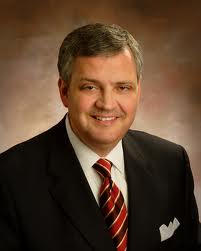
#9 Albert Mohler
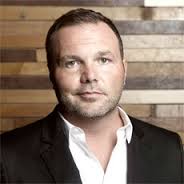
#8 Mark Driscoll
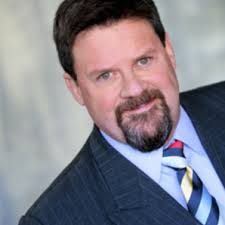
#7 Phil Johnson
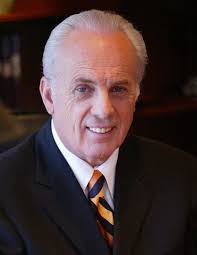
#6 John MacArthur Jr.

#5 Mark Dever

#4 Michael Horton

#3 Tullian Tchividjian

#2 Tim Keller
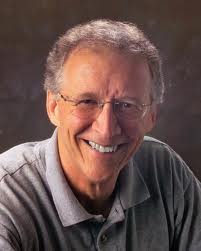
#1 John Piper
 “The New Calvinists are not worried; they don’t believe the American church has the intellectual wherewithal to grasp the fact that John Calvin was a Platonist philosopher. It is time for that theory to be vigorously tested. Even if that theory is believed, it can be attributed to Reformed orthodoxy predicated on the incompetence of the human race wondering about in the shadow world while rejecting the idea that the new birth makes a difference. The new birth is not the mere experience of a changed realm; it is the reality of a changed person, a person that is not only justified positionally, but changed into a just person living for God’s glory. Christians don’t merely “reflect” the glory of God, they are not merely “transformed into an image” of God’s glory, they are new creatures who glorify God with their own actions. The Spirit does not merely manifest Christ in a realm, he colabors with the new creature in the truest sense.”
MacArthur’s Strange Fire Conference: Sigh; Ok, Let’s Go Over This One More Time
I have written two other articles on this year’s Strange Fire Conference hosted by the confused, possibly heretical John MacArthur. MacArthur and the shameless hacks he invited are staunch Calvinists. I have tried to state as simply as possible that Calvin et al taught a false gospel. Why? Because the essence of the false Reformed gospel is that you must live by faith alone in sanctification to keep your justification. It’s salvation by Christ plus antinomianism. And by the way, Antinomianism will be the one world religion of the last days headed by the “man of anomia.”
This is nothing new. James confronted the same thing in his letter to the Jewish church before the Gentiles were officially noted as equals in God’s kingdom. But yet, doctrine is not the crux of the issue here. The cessation of particular gifts issue is not the crux. And behavior is not the crux. Calvin did not go to the Bible and discover that he agreed with Augustine without presuppositions. Neither did Luther. Both approached the Bible with a Platonist worldview.
They simply made Christ the culmination of the true forms, and EVERYTHING else shadows of the true form, including the other two members of the Trinity. Hence, Christ must be seen in every reality of life, and all of life must be interpreted through Christ.
Granted, the way the Reformers dressed it all up in biblical garb is pure genius. Plato’s objective true forms descending into progressive subjectivity is now “the centrality of the objective gospel outside of us,” and “the subjective power of an objective gospel.” Google those terms at your own leisure. It is also comprised of the Platonist idea that matter is evil and spirit is good, so grace cannot be “infused.” This philosophy is the basis of total depravity. And by the way, if you know what to look for, these guys are not even ambiguous about it.
So let me state it again: MacArthur’s problem with the Charismatic movement is that it puts value on life in the here and now. Everything else is just window dressing. He tolerated CJ Mahaney for a time because Mahaney shares his disdain for human existence, MacArthur’s general confusion between his former grammatical interpretation of reality and his present Christocentric interpretation of reality notwithstanding.
This is why these guys brazenly brag about their endearment to the Puritans who despised those who “live in the shadows” of this forsaken world. This is why they boast of their endearment to those who hung Quakers and drowned women; they relate to the same Platonist disdain for putting stock in the ability of man to improve the conditions of this fallen world.
And like the Quakers, Charismatics believe in “infused grace.” MacArthur cannot have them hung, not yet anyway (perhaps his grandchildren will have the Puritan privilege), but the Strange Fire conference is the next best thing.
paul

 Paul's Passing Thoughts
202 comments