Free-Writing Notes: “The Church’s War Against the Holy Spirit”
 “Church” is a word that should be associated with institution and NOT body. Much will be said in this book about the need for a body to be organized, but much will also be said about authority and attempts to invoke life from a so-called body via a spiritual caste system. Though many will find the title of this chapter shocking and absurd, the institutional church’s war against the Holy Spirit is well-defined. If Christ’s called out assembly is a body of Spirit indwelled members, and it is, that could pose significant problems for a top-down institutional authority, and it does.
We will begin where chapter three ended with the rise of the Catholic institutional church that waged all-out war on home fellowships through academic intimidation. Finally, after a nearly 300 year effort, the church at Rome married with the state in order to enforce its orthodoxy upon the masses. Constantine The Great (AD 272-AD 337), the first Roman emperor converted to “Christianity,” consummated the marriage and his rule began the epoch of force and faith in Western culture.
Constantine was the consummate double-minded man, and like the bishops of Rome, integrated paganism with Christianity. What Victor could only verbalize at the first church counsel in AD 193, Constantine made law in the first ecumenical church council (First Council of Nicaea AD 325); that is, the recognition of Passover versus Easter. The reason this is key follows:
“This marked a definite break of Christianity from the Judaic tradition. From then on the Roman Julian Calendar, a solar calendar, was given precedence over the lunar Hebrew Calendar among the Christian churches of the Roman Empire” (Wikipedia: Constantine The Great…citing, Life of Constantine Vol. III Ch. XVIII by Eusebius).
The adoption of “church” nomenclature, as we shall see, was also very deliberate in marking that departure, but for purposes of this book, we would be errant to focus primarily on anti-Semitism; a major problem was the Jewish focus on body versus institution. Like all nations – and of course the Jews were and are a nation – institutions are relevant and needed, but religiously, the Jews always functioned as a body with heavy focus on the individual. A person is normally concerned with their own body parts in equal measure. If Christians are members (as in body parts) of one body, and they are, there should be equal concern and care for each member. This is much different than institutional membership. What the world needs are more functioning body members versus church member-ship. The teachings of Jesus, as well as Jewish traditions, are saturated with a focus on the individual life. When we think of Jewish worship, our minds, unfortunately, gravitate towards the formality of temple worship, but the temple was only a focal point of a broader interpersonal sharing of the faith.
The best example of this is the tabernacle during the exodus. Obviously, the small dwelling was not a central meeting place for millions of Jews who were part of the exodus. Even then, there were elders who led small groups among the people in the learning of the word, prayer, and fellowship. Seventy of these elders were summoned to meet with God on Mt. Sinai with Moses (Exodus 24:1,9). As we know, the temple was not always available for the Jews, and was never the central place of fellowship around the learning of the word, or discipleship, but rather a place of ritual sacrifice. Historically, that was always the norm. Even when the temple existed, the Passover meal was experienced in private homes (Matthew 26:14,15). This is also indicative of the 1st century home fellowships that met together for discipleship and mutual edification. There was fellowship around a meal, a teaching and sharing from the word of God, and singing of hymns.
There are many reasons for anti-Semitism, but one of Judaism’s foremost threats is against spiritual caste systems that have always dominated world history. Judaism emphasizes the authority of God’s word, and the ability of the individual to understand it:
Deuteronomy 29:29 – “The secret things belong to the Lord our God, but the things that are revealed belong to us and to our children forever, that we may do all the words of this law.
Deuteronomy 30:11 – “For this commandment that I command you today is not too hard for you, neither is it far off. 12 It is not in heaven, that you should say, ‘Who will ascend to heaven for us and bring it to us, that we may hear it and do it?’ 13 Neither is it beyond the sea, that you should say, ‘Who will go over the sea for us and bring it to us, that we may hear it and do it?’ 14 But the word is very near you. It is in your mouth and in your heart, so that you can do it.
Herein is a major distinction between individualism and collectivism.[9] In collectivism, there is in fact an hierarchy that must “ascend to heaven for us and bring it to us, that we may hear it and do it… go over the sea for us and bring it to us, that we may hear it and do it.” The word, or truth, is not near to the individual, it must be brought to bear by others who are “specially gifted” to understand. Historians believe there were about 400 synagogues in Jerusalem alone during the ministry of Christ.[10] These were mostly small groups meeting in private homes. These groups were focused primarily on the reading and study of God’s word.
This is where we begin to examine four ways in which the institutional church of Rome began to wage war on the Holy Spirit. Primarily, the newly appointed religion of the Roman Empire under Constantine sought to remove the private interpretation of the Bible from the common people. Let us remember, the word is the “sword of the Spirit” (Eph 6:17) and what the Spirit uses to sanctify (John 17:17).
At that time, New Testament Scriptures were a far less problem than Old Testament Scriptures which were painstakingly preserved and canonized by the Jews. The Old Testament Hebrew had also been translated into Greek (the Septuagint) circa 250 BC. Greek and Latin were the most common languages during the Roman era, but Latin was the language of bureaucracy, law, and the military.
This is when two primary theologians of the Roman church emerge and seek to demonize the people of God making a strong distinction between the Jews and Christianity. Remember, one of the primary objectives of the Holy Spirit was to make Jew and Gentile ONE body in Jesus Christ (Eph 2:11-22). This is/was one of the primary objectives of the Holy Spirt. The church’s two foundational theologians in its 4th century infancy were St. Augustine of Hippo, and St. Jerome. Both were Saints and Doctors of the Roman Catholic Church. And…
“Church Fathers like St John Chrysostom, St Ambrose, St Jerome and St Augustine (second only to St Paul as a Christian authority for the Western world) had by the end of the fourth century AD crysallised a demonic image of the Jew who combined superhuman malevolence with total spiritual blindness…The monkish, ascetic St Jerome, embittered by the spectacle of successful missionizing in Antioch by the large Jewish population, denounced the synagogue in theses terms: ‘If you call it a brothel, a den of vice, the Devil’s refuge, Satan’s fortress, a place to deprave the soul…you are still saying less than it deserves’” (Robert S. Wistrich: Anti-Semitism|The Longest Hatred; Pantheon Books 1992, p. 17 ).
“This theology is for the first time institutionalized in the fourth century AD, when Christianity becomes the official religion of the Roman Empire” (Ibid p. 19).
To divide Jews from the body is an audacious throwing down of the gauntlet against the Holy Spirit. But Jerome and company were far from going to war with the Holy Spirit on that front alone. Jerome set out to translate the Bible in the bureaucratic language of the empire and make it inaccessible to the laity and common people via the Latin Vulgate. Eventually, Rome made it against the law to translate the Bible or even teach from it unless accredited by the Church upon pain of death. This was Rome’s mandate for about 1000 years:
Decree of the Council of Toulouse (1229 C.E.): “We prohibit also that the laity should be permitted to have the books of the Old or New Testament; but we most strictly forbid their having any translation of these books.”
Ruling of the Council of Tarragona of 1234 C.E.: “No one may possess the books of the Old and New Testaments in the Romance language, and if anyone possesses them he must turn them over to the local bishop within eight days after promulgation of this decree, so that they may be burned…”
Proclamations at the Ecumenical Council of Constance in 1415 C.E.: Oxford professor, and theologian John Wycliffe, was the first (1380 C.E.) to translate the New Testament into English to “…helpeth Christian men to study the Gospel in that tongue in which they know best Christ’s sentence.” For this “heresy” Wycliffe was posthumously condemned by Arundel, the archbishop of Canterbury. By the Council’s decree “Wycliffe’s bones were exhumed and publicly burned and the ashes were thrown into the Swift River.”
Fate of William Tyndale in 1536 C.E.: William Tyndale was burned at the stake for translating the Bible into English. According to Tyndale, the Church forbid owning or reading the Bible to control and restrict the teachings and to enhance their own power and importance.
~ Source: Huffington Post .com: Why Christians Were Denied Access to Their Bible for 1,000 Years; Bernard Starr, Ph.D. 5/20/2013.
The Church also took it upon themselves to establish the formal canon of the New Testament which was only in the form of letters written by the apostles and others. There were many copies of these letters circulated among the laity and commonly accepted as Scripture:
2 Peter 3:15 – And count the patience of our Lord as salvation, just as our beloved brother Paul also wrote to you according to the wisdom given him, 16 as he does in all his letters when he speaks in them of these matters. There are some things in them that are hard to understand, which the ignorant and unstable twist to their own destruction, as they do the other Scriptures.
Colossians 4:15 – Give my greetings to the brothers at Laodicea, and to Nympha and the church in her house. 16 And when this letter has been read among you, have it also read in the church of the Laodiceans; and see that you also read the letter from Laodicea. 17 And say to Archippus, “See that you fulfill the ministry that you have received in the Lord.”
1Corinthians 14:37 – If anyone thinks that he is a prophet, or spiritual, he should acknowledge that the things I am writing to you are a command of the Lord. 38 If anyone does not recognize this, he is not recognized.
Therefore, the idea that there was no agreed upon collective Scripture for New Testament era believers is unfounded, and the body of Christ hardly needed Gnostic academics to tell them what was inspired and not inspired. Nevertheless…
The Council of Nicaea called by the Emperor Constantine met in 325 C.E. to establish a unified Catholic Church. At that point no universally sanctioned Scriptures or Christian Bible existed. Various churches and officials adopted different texts and gospels. That’s why the Council of Hippo sanctioned 27 books for the New Testament in 393 C.E. Four years later the Council of Cartage confirmed the same 27 books as the authoritative Scriptures of the Church.
~ Source: Huffington Post .com: Why Christians Were Denied Access to Their Bible for 1,000 Years; Bernard Starr, Ph.D. 5/20/2013.
And…
In 382, Pope Damascus therefore commissioned Jerome (c. 347-420) to translate the Bible into Latin, a task which took him twenty years to complete. This Bible came to be known as the versio vulgata (common translation) and became standard for the Western Church.
~ Source: gbgm-umc.org: Three Early Biblical Translations.
Attempting to obstruct the Spirit’s work in baptizing the Jews and Gentiles into one body, and confiscating the sword of the Spirit from the laity was manifested in a third way. In translating the Bible into English from the Septuagint (LXX), and for the most part not the original Hebrew, the English translators substituted the word “assembly” for “church.” The Greek word for assembly is “ekklesia” as translated from the Hebrew word for assembly, kahal, or edah.
This is a very significant fact in the transition period that produced another version of the institutional Catholic Church, Protestantism. These are merely two sides of the same institutional church that waged the exact same war against the Holy Spirit and continues to do so in our day. As aforementioned, it was against the law to translate the Scriptures without the permission of the Catholic Church, but this happened anyway because of the “Lollard movement, a pre-Reformation movement that rejected many of the distinctive teachings of the Roman Catholic Church” (closed quotation from Wikipedia).
In the early Middle Ages, most Western Christian people encountered the Bible only in the form of oral versions of scriptures, verses and homilies in Latin (other sources were mystery plays, usually conducted in the vernacular, and popular iconography). Though relatively few people could read at this time, Wycliffe’s idea was to translate the Bible into the vernacular, saying “it helpeth Christian men to study the Gospel in that tongue in which they know best Christ’s sentence”.
~ Source: En Wikipedia .org: Wycliffe’s Bible.
Although unauthorized, the work was popular. Wycliffite Bible texts are the most common manuscript literature in Middle English. More than 250 manuscripts of the Wycliffite Bible survive.
The association between Wycliffe’s Bible and Lollardy caused the kingdom of England and the established Catholic Church in England to undertake a drastic campaign to suppress it.
~ Source: Ibid.
However, by no means did the Protestant Reformation abandon the core fundamentals of the institutional Church’s war against the Holy Spirit which was a devotion to the separation of Judaism from the body of Christ, and academic authority in regard to private interpretation of the Scriptures. Though the Protestants presented themselves as commendable for the distribution of Bible translations to the common people, they never believed the laity could interpret it for themselves, nor did they ever state such. To the contrary,
“The Protestant Reformers in leaving Rome did not leave all Romanism behind them. In particular, they brought with them the prosecuting principles of Rome, and worked them freely and vigorously in support of the Reformed faith. They changed the Pope but not the popedom… Persecution is the deadly sin of the Reformed churches, that which cools every honest man’s zeal for their cause, in proportion as his reading becomes more extensive—Hallam… Rightfully and nobly did the Protestant Reformers claim religious liberty for themselves; but they resolutely refused to concede it to others” (William Marshall’s The Principles of the Westminster Standards Persecuting (William Marshall, D.D., Coupar – Angus. Edinburgh: William Oliphant & Co. 1873).
The English translators did something in the English translation of the Bible that Rome did not even do in the Latin Vulgate. They translated “assembly” as “church” which had no validity whatsoever. The Greek word for assembly and the Greek word for church are two entirely different Greek words with completely different meanings. The Hebrew words for assembly and the Greek word for assembly allowed for a connection between the Judaism of the Old Testament and the Christianity of the New. The word “church” puts forth the idea of a completely different program and plan of some sort. In the like institutional core fundamentals, the Catholics kept the Bible from the laity, while the Protestants skinned the cat a different way by taking liberty with translation. Tyndale was much more virtuous on this wise, translating assembly as “congregation,” but unfortunately was executed by the Catholics for the effort.
We will make this point here, but will revisit this issue in a later chapter because the rendering of “assembly,” “synagogue,” and “church” in Protestant translations of the Bible present an egregious distorted dichotomy in regard to the Jewishness of God’s overall plan for the ages. It is best to delve into this while discussing the fact that the 1st century home fellowships were merely a continuation of the Jewish synagogue, and that word seems to suggest some sort of institution, or temple-like mini-institution.
To the contrary, some sort of substructure or mini temple version would have been a blasphemous notion to the Jews. Furthermore, for the most part historically, the Jews have had little choice to do anything other than worship in the privacy of their own homes. Moreover, synagogues were of the laity and far removed from any priestly authority whatsoever. The intended model for Christian fellowship and assembly has never changed since the exodus and before. It is a body and ground-level family unhindered by the musings of bureaucratic control. It is not a machine controlled by men, it is a body that lives and grows.
The Protestants never sought to separate from the Catholic Church and indeed they did not. It was a protest, not a revolution by any stretch of the imagination. Institutional accreditation was vital to the Protestants, and critical to their credibility. This means they NEVER left the Catholic Church. Protestants retained solidarity with the Doctors of the Catholic Church for this reason, particularly St. Augustine. The most prominent fathers of the Reformation, Luther and Calvin, were avowed Augustinians till the day they died. No citations will be noted here due to the immense common knowledge of it. Contemporary Reformers constantly strive to outdo each other in quoting Augustine at every opportunity, but God’s people are completely unmiffed by the exaltation of this serial anti-Semite Platonist. Why? Because what happens under the roof of an institutional church is mostly inconsequential; it is the depot that punches your ticket to heaven.
There are four primary ways that the institutional church wages war against the Holy Spirit, and this is a joint effort that includes Catholic and Protestant alike. We have examined three of them, but the fourth is what separates the Catholic from the Protestant. This war is not as absurd as it sounds, for the permanent indwelling of the Spirit suggests ability on the part of the individual. Both sides endorse the incompetence of the individual and need for enlightened mediators between the great unwashed masses and God; in other words, an efficacious caste system.
This fourth war strategy involves the indwelling of the Holy Spirit and the new birth. The Catholic Church acknowledges the indwelling of the Spirit and the new birth, but insists that this only enables the salvation candidate to cooperate in the finishing of the salvation process; primarily by faithfulness to the Mother Church. As we discussed in the first two chapters, Rome is not shy or ambiguous about this idea. Yes, Catholicism and Protestantism alike hold to an unfinished progressive justification. Again, this was addressed in some detail in chapters one and two.
Protestants deny the indwelling of the Holy Spirit and the new birth all together. Let’s think about this: if the Holy Spirit permanently indwells the believer, salvation MUST be FINISHED, there is simply no way around that. A permanent indwelling of the Spirit makes a progressive salvation dependent on the church completely unnecessary.
So, what are the specific differences in this fourth aberration of the Spirit’s work, and what are the specific differences in their progressive justification constructs? In addition, how does authentic Protestantism explain away the new birth, and how is the new birth redefined by them?
In the next chapter, these questions are answered in detail.
Endnotes:
9. Collectivism defines the worth of an individual by their ability to contribute to the common good. That adds up to the “collective good” which determines the overall wellbeing of a society.
10. Talmud: Bavli Ketubot 100a; there were 394 synagogues in Jerusalem. Yerushalmi (Ketubot 8:1); there were 460 synagogues in Jerusalem. Yerushalmi (Megillah 3:1); in Jerusalem, there were 480 synagogues.
Calvinism and Urine Technology
 Originally published February 1, 2013
Calvinists often intimidate us with oceans of ink left behind by the brilliant, spiritual, educated children spawned by John Calvin: the Puritans. Calvinists like John Piper display their spiritual swagger by quoting the Puritans and making everyone aware that they read them daily. Of course, this plays on the utter ignorance of present-day Christians. Their authority is no longer the really thick pamphlet dropped down from heaven called the Bible—its orthodoxy. Orthodoxy is an analysis of God’s mass publication to people indwelt by His illumining Spirit by the church’s “Divines” of whom many were Puritans. They repackaged God’s word for consumption for the unenlightened masses.
So, when these brainiacs took the urine of accused witches and made cakes from it, and then fed the cakes to dogs in order to watch their reaction for a verdict, we need to understand that what the Divines do at times is the “foolishness of the cross.” We wouldn’t understand. This is activity that is on another spiritual plane; so, recite Luther’s Small Catechism and keep your mouth shut. The Small Catechism is one of Voddie Baucham’s recommendations for use in family devotions. He is really big on husbands being the “family shepherd” and leading the family Bible studies with….orthodox creeds, not anything that would come from their own brains.
Much could be discussed in regard to the lovely traditions that the Puritans brought with them when they were driven out of Europe as political refugees. But let’s talk about urine. Actually, urine tasting was the state of the art research born of European theocracies during Medieval times. How the urine of the subject tasted was used to determine what ailed them. Several examples of medical charts are displayed below for your educational enjoyment. Click to enlarge them, but if you are a Calvinist, don’t try this at home—it’s not orthodoxy!
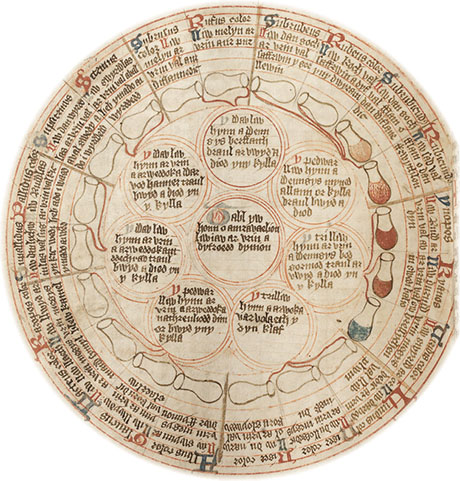
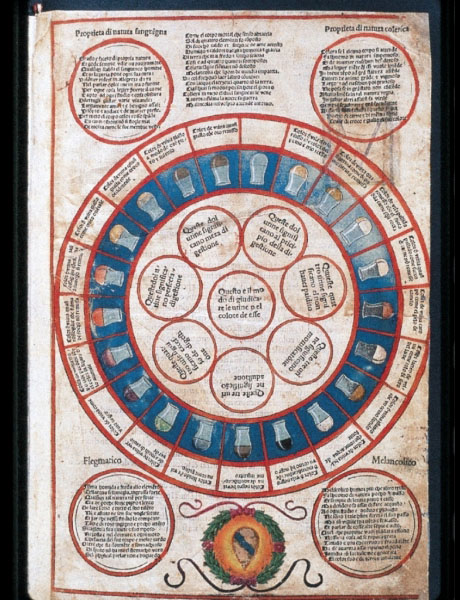
“But Paul, didn’t the Puritans have a lot of awesome things to say about God? Isn’t there much to be learned from them?” No, not in the long run because of their flawed logic. Notice that they aren’t around anymore. Why not? Because Puritanism cannot function without theocracy. Their logic led to the persecution of the Quakers via hanging etc., and when society had enough, an end was forced in regard to their theocracy. No theocracy—no Puritanism. And frankly, the same goes for authentic Calvinism. Calvinism exists today because their logic had to be adjusted for survival. Here at TANC, we call them “sanctified Calvinists.” Yes, they have done the church some good because they don’t share the same logic.
I really wonder if this latest resurgence of authentic Calvinism will put an end to it because of the Information Age that we are in. Nobody calls themself a “Puritan” in our day. Will the day come when few will call themselves a Calvinist? Authentic Calvinism doesn’t work, and people will only use a clock that doesn’t work for so long; the fact that it is useful twice a day does not end up being enough. Once again, the same old superstitions of authentic Calvinism are showing themselves in the contemporary church. The basis is the idea of spiritual caste: the idea that preordained enlightened mediators should rule over the unenlightened masses. Theocracy comes part and parcel with that logic.
“But Paul, Neo-Calvinism is thriving right now in America and America doesn’t allow theocracies.” Oh really? Many New Calvinist “ministries” in our day are nothing less than Little Geneva. They have their own in-house police stations, and control parishioners by almost every means of the past save the death penalty alone. This ministry is compiling a list of various means that these ministries are using to control people through first-hand testimony. Other than the intimidation of armed in-house security forces, they are using “biblical counseling” to compile information on people that can be used to control them. That angle can be seen in living color via the public transcript of CJ Mahaney telling the cofounder of SGM that confidential counseling records would be made public if he left SGM for doctrinal reasons. Let there be no doubt: this is standard protocol in New Calvinist churches. And if they don’t have the dirt on you, they will fabricate it. That’s just fact.
Getting back to superstition—that is also the inevitable result of caste logic. Many blogs document the weirdness in this movement that gets crazier each month. And dismissal of comparisons due to medieval ignorance doesn’t cut it. Sure, urine isn’t used in counseling today (at least not yet), but instead we have rapists counseling their own victims in the church office!
It’s the logic. And in the Information Age, what happens in Salem doesn’t stay in Salem.
Is Calvinism the Same Kind of False Gospel that Plagued the Hebrews?
Originally published December 6, 2013
Calvinism is the “golden chain of salvation.” Justification by faith alone, one of the five solas, means that we are justified by faith alone, but Calvin taught that justification is a PROCESS that extends from when we were saved until final justification at the resurrection where the sons of God will be “made manifest.” This is opposed to seeing justification as a finished work, a onetime factual declaration. We are practically just because we are regenerated by the Holy Spirit via the new birth which is also a onetime final work. A birth is a onetime event.
However, if you see justification as a PROCESS from salvation to glorification, the Christian life must be lived by…what? Right, faith alone. This is just another dirty little secret behind the Reformed bumper sticker. Justification by faith alone also means sanctification by faith alone. And since justification is not a onetime finished work, we can never be worthy of not needing justification; hence, total depravity also pertains to the saints—another devil in the detail of a Reformed bumper sticker.
Furthermore, if justification is a process, we need to stay in that process till the end, right? How? Well, the same way we have always been justified, by faith and repentance alone for justification. If we are in the justification process, we need to live by the same repentance and faith that saved us—alone. This is how Calvin stated it:
Moreover, the message of free reconciliation with God is not promulgated for one or two days, but is declared to be perpetual in the Church (2 Cor. 5:18, 19). Hence believers have not even to the end of life any other righteousness than that which is there described. Christ ever remains a Mediator to reconcile the Father to us, and there is a perpetual efficacy in his death—viz. ablution, satisfaction, expiation;
Hence, it stands to reason that new sins separate us from justification, and the perpetual need for Christ’s mediation is needed:
…by new sins we continually separate ourselves, as far as we can, from the grace of God… Thus it is, that all the saints have need of the daily forgiveness of sins; for this alone keeps us in the family of God.
Calvinists call this “deep repentance.” So, the Christian life, according to Calvinism, focuses on a “lifestyle of repentance and faith” (Paul David Tripp).
Now consider Hebrews 6:1-6. The Hebrew writer seems to be introducing this same idea of revisiting the doctrine of our original salvation rather than moving on to something else:
Therefore leaving the principles of the doctrine of Christ, let us go on unto perfection; not laying again the foundation of repentance from dead works, and of faith toward God, 2 Of the doctrine of baptisms, and of laying on of hands, and of resurrection of the dead, and of eternal judgment. 3 And this will we do, if God permit.
The Hebrew writer says to not lay again the “foundation” of faith and repentance. This is in direct contradiction to Calvinism and its “lifestyle of faith and repentance” within the PROCESS of justification. But what the Hebrew writer says after that is even more interesting:
4 For it is impossible for those who were once enlightened, and have tasted of the heavenly gift, and were made partakers of the Holy Ghost, 5 And have tasted the good word of God, and the powers of the world to come, 6 If they shall fall away, to renew them again unto repentance; seeing they crucify to themselves the Son of God afresh, and put him to an open shame.
Note: the Hebrew writer is saying that it is impossible to return to the same repentance that saved us. Again, this is in direct contradiction to Calvinism. Also, Calvinism teaches that when one re-repents (mortification), they experience “vivification.” The specific Reformed theological term is mortification and vivification. Vivification can certainly be classified as a “heavenly gift… and the powers of the world to come.” New Calvinists refer to it as a “treasure trove of joy” (John Piper). It is “living out our baptism” (Michael Horton). But the Hebrew writer is clearly saying: that is impossible if one falls into a state where the same repentance that saved us is needed again. This is a contradiction to mortification and vivification.
And lastly, even if it were possible: “seeing they crucify to themselves the Son of God afresh, and put him to an open shame.” Remember, Calvin said that the death of Christ continues to be a mediation and perpetual ablution (washing).
Is Calvinism a return to the same heresy that plagued the Hebrews? It sure looks like it.
paul
Calvin: Christians Must Keep Their Salvation by Pursuing Perpetual Forgiveness in the “Church”
Originally published August 14, 2013
“Why does American Protestantism have such weak sanctification? Calvin taught that the apostle Paul went from house to house preaching about the same gospel that saved us rather than teaching the full counsel of God, that’s why.”
I can see clearly now; it all finally makes sense. As a young Scriptural zealot, many things in the Protestant church confused me. I was the Baptist stripe of Protestant. And kudos to church historian John Immel, he is right; there is always a logic behind an action.
Why so much emphasis on the same gospel that saved us? Why were we constantly calling on people to be saved in the church? Why don’t we have any more answers to life’s difficult problems than the world? Why so much fuss over the buildings? Why is the Lord’s Table such an uppity pious affair when it seems to have been inaugurated during a casual dinner? Why have I always struggled to be wowed by that “ordinance”? Why all the crosses all over the place? On the church, in the church, around people’s necks. Geez. And why is the same bad behavior that is in the Catholic Church also in the Protestant church?
Fact is, American religion was founded on the Pilgrims who are not very often called what they really were: Calvinistic Puritans armed with the first Bible to ever arrive on American soil; The Geneva Bible which was John Calvin’s commentary on the Bible.
Talk abounds concerning the foremost figures of the Reformation, John Calvin and Martin Luther. Many opinions abound, but everybody agrees that they are the fathers of the Protestant Reformation and spiritual heroes. They are the George Washington and James Madison of our faith.
New Calvinism is a return to the purest form of the Reformation found in the John Calvin Institutes of the Christian Religion. And there is a reason New Calvinism is taking over Protestantism by storm: Protestantism originally came from Calvinism and is well primed to be retrofitted with the original. Forget doctrine, that’s the same thing as football fans talking about stats. It’s interesting, but it doesn’t matter, the game is played on the field. Calvinism is a tradition that has little to do with the election versus freewill issue as well, that’s just a family quarrel about which sibling gets to use the bathroom next. There are two kinds of Protestants in the world: staunch doctrinal Calvinists and those who function like Calvinists. Today, that translates into New Calvinists and everybody else that’s left. New Calvinists strive to continually define the logic that drives their actions; everyone else is just coasting on the basics, but are well primed to step over to the wild side.
Why is this? We find some answers in the Calvin Institutes; specifically, 4.1.21,22. Therein we read:
Wherefore, our initiation into the fellowship of the church is, by the symbol of ablution, to teach us that we have no admission into the family of God, unless by his goodness our impurities are previously washed away (20).
Nor by remission of sins does the Lord only once for all elect and admit us into the Church, but by the same means he preserves and defends us in it. For what would it avail us to receive a pardon of which we were afterwards to have no use? That the mercy of the Lord would be vain and delusive if only granted once, all the godly can bear witness; for there is none who is not conscious, during his whole life, of many infirmities which stand in need of divine mercy. And truly it is not without cause that the Lord promises this gift specially to his own household, nor in vain that he orders the same message of reconciliation to be daily delivered to them.
This is a startling statement for any Christian paying attention. But it is also a grand example of talking about stats; i.e., Christ died once, for all of our sins and that is imputed, in totality one time, at our conversion for all past and future sins, versus how Protestants really function: a weekly focus on the gospel. Why? That’s how we keep our salvation, that’s why. New Calvinists say, “amen.” Baptists protest, but that’s how they function. I have watched it for 30+ years.
Calvin continues:
On the other hand, the Lord has called his people to eternal salvation, and therefore they ought to consider that pardon for their sins is always ready. Hence let us surely hold that if we are admitted and ingrafted into the body of the Church, the forgiveness of sins has been bestowed, and is daily bestowed on us, in divine liberality, through the intervention of Christ’s merits, and the sanctification of the Spirit.
22. To impart this blessing to us, the keys have been given to the Church (Mt. 16:19; 18:18). For when Christ gave the command to the apostles, and conferred the power of forgiving sins, he not merely intended that they should loose the sins of those who should be converted from impiety to the faith of Christ; but, moreover, that they should perpetually perform this office among believers. This Paul teaches, when he says that the embassy of reconciliation has been committed to the ministers of the Church, that they may ever and anon in the name of Christ exhort the people to be reconciled to God (2 Cor. 5:20). Therefore, in the communion of saints our sins are constantly forgiven by the ministry of the Church, when presbyters or bishops, to whom the office has been committed, confirm pious consciences, in the hope of pardon and forgiveness by the promises of the gospel, and that as well in public as in private, as the case requires. For there are many who, from their infirmity, stand in need of special pacification, and Paul declares that he testified of the grace of Christ not only in the public assembly, but from house to house, reminding each individually of the doctrine of salvation (Acts 20:20, 21). Three things are here to be observed. First, Whatever be the holiness which the children of God possess, it is always under the condition, that so long as they dwell in a mortal body, they cannot stand before God without forgiveness of sins. Secondly, This benefit is so peculiar to the Church, that we cannot enjoy it unless we continue in the communion of the Church. Thirdly, It is dispensed to us by the ministers and pastors of the Church, either in the preaching of the Gospel or the administration of the Sacraments, and herein is especially manifested the power of the keys, which the Lord has bestowed on the company of the faithful. Accordingly, let each of us consider it to be his duty to seek forgiveness of sins only where the Lord has placed it. Of the public reconciliation which relates to discipline, we shall speak at the proper place.
Why so much emphasis on the same gospel that saved us? Because it keeps saving us. Why so much fuss about buildings? Those are the temples where we find our need for perpetual salvation and forgiveness for sins that would circumvent our justification. Why are pastors put on a pedestal and allowed to rape, pillage, and steal? In them we have our absolution. Why so much fuss about the Lord’s Table and quarreling over real wine or grape juice? There is additional salvation in the sacraments. Why all of the crosses? Same thing: more gospel; more salvation. Why do we sweep scandal under the rug? It is a threat to the institution, and that’s where we find our salvation. Why does American Protestantism have such weak sanctification? Calvin taught that the apostle Paul went from house to house preaching about the same gospel that saved us rather than teaching the full counsel of God, that’s why.
Calvin’s statement about being “engrafted” into the “church” is interesting. The Potter’s House has just adopted Remnant Theology as opposed to Covenant Theology, New Covenant Theology, or Dispensationism. Are we engrafted into a “church” or an “olive tree”? In Romans 9-11, what does that olive tree symbolize? Something to think about.
John Immel is right, action is always driven by logic. In our present day, doctrine is getting lip service while Calvin’s logic is driving the actions. That is why nothing going on in the church makes any sense right now.
And I doubt it ever will until God’s people come out from among them.
paul
Know Your Cuts of Calvinism
Originally posted July 2, 2013
1. Total Depravity: Pertains to the saints also.
2. Justification by Faith Alone: Pertains to sanctification also.
3. Mortification and Vivification: Perpetual death and rebirth for living by faith alone in sanctification to maintain justification. The reliving of our baptism “again and again.”
4. Double Imputation: Christ’s passive obedience to the cross for justification, and His active obedience as a substitution for our obedience in sanctification.
5. Deep Repentance (aka Intelligent Repentance): Seeks the death of mortification in re-experiencing our new birth.
6. New Obedience (aka New Fruit): The experience of Christ’s active obedience in sanctification (vivification).
7. The New Birth: Perpetual mortification and vivification.
8. The Objective Gospel: All reality is interpreted through the redemptive works of Christ.
9. Christ for Us: Christ died for our justification, and lived a perfect life for our sanctification.
10. The Imperative Command is Grounded in the Indicative Event: Biblical commands show forth what Christ has accomplished for us and what we are unable to do in sanctification. Works are experienced only as they flow from the indicative event of the gospel.
11. Neo-Nomianism (New Law, aka New Legalism): The belief that we can please God by obeying the law in sanctification.
12. Progressive Sanctification: The progression of justification to glorification.
13. Progressive Imputation: Whatever is seen in the gospel narrative and meditated upon is imputed to our sanctification, whether mortification or vivification.
14. The Golden Chain of Salvation: See cut 12.
15. Good Repentance: Repenting of good works.
16. In-Lawed in Christ: Christ fulfilled the law perfectly and imputed it to our sanctification.
17. Redemptive Historical Hermeneutics (the Christocentric Hermeneutic, aka the Apostle’s Hermeneutic): The Bible as historical narrative for the sole purpose of showing forth Christ’s redemptive works.
18. Faith: A neutral entity within us with no intrinsic worth that is able to reflect the object of its focus outside of us. The object of focus can be experienced within, but remains outside of us.
19. The Heart: The residence of evil desires and faith. It can be reoriented (the “reorientation of the heart” or “reorientation of desires”) to reflect Christ via mortification and vivification.
20. Flesh: The world realm where evil is manifested and experienced.
21. Spirit: The Spirit realm where the imputed works of Christ are manifested and experienced (not applied through our actions).
22. Christian Hedonism: Seeks to experience the joy of vivification.
23. Obedience of Faith: New Obedience.
24. Christ in Us: “By faith,” and faith only has substance and reality to the degree of the object it is placed in; i.e., Christ outside of us.
25. Vital Union: Makes experiencing the gospel possible. Makes mortification and vivification possible.
26. Eclipsing the Son (aka the Emphasis Hermeneutic): Focusing on anything other than Christ. Anything that is not seen through a Christocentric prism creates shadows that we live in. The obstacles that create the shadows may be truth, but they aren’t the “best truth.” “They may be good things, but not the best thing.”
27. Sabbath Rest: Sanctification. We are to “rest and feed” on Christ for our Christian life. The primary day this is done is Sunday. Through preaching and the sacraments we “kill” (mortification, or the contemplation of our evil and misery) resulting in vivification throughout the rest of the week.
28. The Subjective Power of the Gospel: The manifestation of the gospel that flows from gospel contemplationism. We never know for certain whether it is a result of our efforts or the Spirit’s work (although the Spirit’s work is always experienced by joy); hence, the power of the objective gospel is subjective (Heidelberg Disputation: Thesis 24).
29. Mortal Sin: Good works by the Christian not attended by fear that they may be of one’s own effort (HD 7).
30. Venial Sin: Good works by the Christian attended with fear (HD 7).
31. Power of the Keys (aka Protestant Absolution): Reformed elders have the authority to bind or loose sin on earth (Calvin Institutes 3.4.12).
32. Redemptive Church Discipline: In all cases to convert one to cuts 1-31. This redeems them to the only one, true faith. This can be a long process, and said person is not free to leave a given church until the elders bind or loose.
33. Preach the Gospel to Yourself: See cuts 1-32.

 Paul's Passing Thoughts
2 comments