
Paul David Tripp Gnosticism
 Paul David Tripp is a leading “Christian” author and well noted in the contemporary biblical counseling movement. Tripp was active in aiding fellow Gnostic David Powlison in hijacking the biblical counseling movement from Reformed grammarians. I use the term “grammarian,” who are few in our day, to differ from redemptive historical interpreters. If a teacher is not identified according to his/her interpretation method of either grammatical or redemptive, it is impossible to know what they are really teaching. You may think you know what they are saying, but you don’t. Depending on which method is being utilized, all basic theological terms, like “new birth” mean different things. To believe you can understand any teacher without knowing their interpretive method is folly. The best way to explain a grammarian is, “words mean things.”
Gnosticism came from Platonism and to state it simply: it is the belief that the material realm is evil and only the spiritual realm is good. In order to find true knowledge, one must obtain it by getting beyond what the five senses can ascertain. Plato believed that the material world is the shadows of the invisible world. Plato also believed that truth is immutable; so, the gateway to truth from the material/evil realm must be something immutable. For Plato, that was math.
The Reformers were not theologians first, they were philosophers first and were embroiled in the debate of that era: Plato or Aristotle? Platonism holds to spiritual caste which proffers the idea that elitist philosophers are preordained to lead the masses who are enslaved to the shadows of reality. They are specially gifted by the force or god of your choice to obtain the “Gnosis.” Determinism is also a major pillar of Platonism.
Hence, Gnosticism can be seen throughout Tripp’s teachings, especially in How People Change. In that book, Tripp attributes a literal interpretation of Scripture to works salvation. He also attributes obedience to something that Christians only experience, but do not really perform; the experience is imputed to the material realm by the Spirit, who is defined more as a realm than a person. Gnosticism can be seen in Tripp’s interpretation of Romans 8:2 and most of Romans 7—“law” is not really “nomos,” a written law, but refers to two different realms: material/evil versus invisible/good.
paul
Reformed “Total Depravity” and Yin-Yang
 Most Christians are familiar with the Reformed view of total depravity from the T.U.L.I.P acrostic fame. Mankind, being totally depraved, cannot and will not seek God. This is also often prefaced with “also known as Total Inability and Original Sin.” This leads to the logical progression of Unconditional Election, or the “U.” God didn’t choose us because of anything worthy in us. Well, of course not. This leads to Limited Atonement, often prefaced with “also known as Particular Atonement.” This and the “I,” Irresistible Grace, is where most of the arguments come in according to the free will/sovereign grace debate. There is almost no disagreement with the “P,” or Perseverance of the Saints, often prefaced with, “also known as Once Saved Always Saved.” Few argue about that as discussion swirls about regarding “I’m a fill in the blank: 1-5 point Calvinist.”
So goes the arguments around, and round, and round for 500 years now, and with no resolution. Why? Because the arguments are based on a faulty understanding of the doctrine. This is evident from the idea that you can be a partial-point advocate of Calvinism. The points depend on each other. It’s like saying you’re a partial advocate of the equation, 1+1+1+1+1=5. Moreover, once there is an understanding of what makes Calvinism tick, the free will/sovereign grace issue is exposed as just an inferior byproduct of the big picture.
We begin with the dirty little secret concerning the “T.” The total depravity of man (original sin) is also the total depravity of the saints. It has come to the point where neo-Calvinists have had to come clean on this of late. And if you are paying attention, they are constantly saying that we (Christians) are “wicked sinners saved by grace,” “enemies of God,” “no different than unbelievers,” etc, etc, etc. This ministry has a storehouse of data confirming this. Calvin himself stated that Christians are utterly unable please God in any way (Calvin Institutes: Book 3; ch. 14, sections 9-11). The fact that this idea flies in the face of the apostle’s stated goal of pleasing God, whether here or in glory, is irrelevant because of how Calvin approached the Scriptures. Reformed theology is not based on exegesis by any stretch of the imagination.
We remain totally depraved. We remain completely evil. We don’t change. This is foundational to Reformed theology. It also brings us to the next dirty little secret: “P” or, once saved always saved, is not “true” in the way most Christians think it is from a Reformed viewpoint. The perseverance of the saints is really Christ persevering for us. Hence, Christians “manifest” Christ’s perseverance. This is simple math. How can the totally depraved persevere? Once Calvinists have to come clean on the total depravity of the saints, the house of cards will fall. The “P” as worded indicates that the saints have a part in the persevering—this is a deliberate, deceptive lie. Something else is going on. But what?
We get a clue from beginnings. Specifically, Genesis and the first sentence of the Calvin Institutes. In the very first sentence of the Calvin Institutes, Calvin states that ALL wisdom comes from a deeper and deeper understanding of God, and ourselves. That’s his metaphysics and epistemology, and is appropriately stated in the very first sentence of his magnum opus. But wait. If we are evil and remain evil, and God is good, is this not the same thing as the “knowledge of good and evil”? Where have we heard that before? This is the knowledge that the Serpent tempted Eve with. He told her God was withholding true wisdom from her which could be found by eating the fruit from the tree of “the knowledge of good and evil.”
Basically, we have Calvin agreeing with Satan in regard to what true knowledge is. But is ALL knowledge ALWAYS the best wisdom? Is all metaphysics good metaphysics? Obviously, sin was a knowledge that Adam and Eve knew nothing about. They had to sin to get the sin knowledge. Let me repeat that in another way because it’s an important element: they had to disobey God to get the knowledge and actually experience it.
The Bible states the details of Satan’s fall and the entering of evil into reality or, what is (metaphysics). The passages are Isaiah 14:12-14 and Ezekiel 28:11-19. At that point, no doubt, evil was born into the knowledge of reality. But was that a good thing? And hold on to this question for now: did God need evil to better define Himself?
Since the garden, men and women have founded many philosophies on the idea of good and evil being the full knowledge of reality. The whole metaphysical story if you will. They often made that knowledge equal with wisdom, and wisdom being good, in and of itself. Added was the idea that good and evilas moral verses immoral is not reality, but was contrived by men because of their misunderstanding of true reality. This is known as Dualism and is the foundation of most false religions of all kinds with thousands of variances. Basically however, it’s the idea that the invisible reality is a higher knowledge than the material, and cannot be obtained through what the five senses can ascertain. The goal (in some cases) is to join the spiritual with the physical by accessing the spiritual (invisible). By gaining a deeper and deeper knowledge of both invisible and material, the invisible can be experienced in the material realm resulting in wellbeing.
We see this concept in the most ancient of civilizations; eg, oriental culture. The goal of the Yin-Yang (literally, “shadow and light”) is to gain understanding of both which leads to an understanding of reality because opposites give definition to each other. Darkness can’t be understood without light etc. Likewise, “the good” or God, can’t be understood without evil. Hence, reality is made up of opposites (male, female, etc), and understanding the opposites and how they define each other is the key (epistemology) to understanding reality. That’s the gest.
And let there be no doubt—this basic idea is the foundation of Reformed theology. Again, the math is simple. If we don’t change—if we remain evil—there is only one place left to go: Mystic Dualism. But how do they make this work? It’s not that difficult, and can be seen throughout Reformed teachings. First, all of the magnificent teachings in Reformed theology are mostly about how great God is. We focus on that (who wouldn’t!), we are mesmerized by that (who wouldn’t be!), and miss what is missing: learn and apply. Learn and apply isn’t the point; more and more knowledge of the good (God) and the evil (us) is supposedly the point. Stopping to apply God things to our life cuts off the God experience achieved through the knowledge of both.
The Reformed camp states it all the time: “Seeing God’s holiness as set against my own sinfulness is the key to transformation.” Al Mohler says it all the time. Elyse Fitzpatrick says it all the time. John Piper says it all the time. CJ Mahaney says it all the time. It’s a first-degree theological felony performed in broad daylight under the cover of how awesome God is—a very powerful cover! It reminds me of my frog-gigging days with my grandfather: the rays from the flashlight paralyze the bullfrog, and then you spear his stupidity.
I have often posted the New Calvinist cross chart on this blog, and sigh, I will do it again at the end of this post. This is their chart, not mine, and what is more obvious? We don’t change. By seeing God’s holiness more and more, and our sinfulness more and more, the cross gets bigger. This lends to powerful “rhetorical” questions that argue the case such as, “Do you want to be bigger? Or do you want the cross to be bigger?” “Do you want what you do to be bigger? Or what Christ did on the cross to be bigger?” This is very powerful; primarily, because it was hatched from the minds of demons. But if you stop and think for a while, you might stop and ask: “The cross getting bigger; what does that look like? How is that experienced?”
Good question, and the key is the word EXPERIENCE. What we experience is not necessarily who we are. We can experience the cross getting bigger—that doesn’t necessarily mean we are bigger. We can experience the cross in our lives as we use the Scriptures to see the glory of God and our own sinfulness (Chrsitocentric, or gospel-centered hermeneutics). And, that experience leads to more UNDERSTANDING which leads to more experience, or a “transformation from glory to glory.” But the experience is separate from who we are, more like a manifestation in the realm in which we exist. Therefore, we may experience an obedient act in our lives, but it is not really us obeying, it is the “active obedience” of Christ imputed to us. This is why New Calvinists often say that our obedience, when it is real obedience, isn’t experienced in what feels like “self-effort,” or “obedience in our own effort.” As Francis Chan states:
When we work for Christ out of obligation, it feels like work. But when we truly love Christ, our work is a manifestation [emphasis Added] of that love and it feels like love (Crazy Love: p.110).
That’s because we are experiencing the obedience of Christ imputed to us, and not an obedience that we exercise. Hence, as New Calvinist Chad Bresson often states, it’s a “mere natural flow.” Other Reformed teachers call obedience “kinesthetic” or “experienced, not performed.” It is also interesting what the first tenet of New Covenant Theology states:
New Covenant Theology insists on the priority of Jesus Christ over all things, including history, revelation, and redemption. New Covenant Theology presumes a Christocentricity to the understanding and meaning of all reality.
This simply means that “all reality” is interpreted through the gospel; ie, the aforementioned cross chart. So, gospel contemplationism leads to experiencing “grace,” and that experience leads to an even deeper understanding of grace, leading to more deeper and deeper experiences of grace. Or, “spiritual formation.” Or, “heart transformation.”
What about sin? Well, remember, the cross, or the cross experience, gets bigger as we gain a deeper and deeper knowledge of our own sin as well as God’s holiness. Therefore, our sin serves to give us a deeper understanding of both the Yin and the Yang. In this case, God’s holiness “as set against our sinfulness.” The experience of both, one fruit (Christ’s imputation), and thorns (our sin) contribute to knowledge of the good which leads to deeper experiences of grace. The latter is the theme of Paul David Tripp’s How People Change published by Punch Press in 2006. I included a visual illustration from that book at the end of this post along with the cross chart for your viewing pleasure. Anyone familiar with Gnostic dualism will immediately recognize the cybernetic loop of experience that leads to deeper knowledge through reinforcement, and hence deeper experiences of the spiritual, or the gospel.
There are two fundamental problems with this approach. Serious problems. First, it sees the necessity of understanding evil to better understand God. Evil is factual, but it isn’t God’s truth—He doesn’t need it to define His Holiness. The idea is the epitome of vileness. Secondly, this philosophy encourages an endeavor that Scripture forbids—dwelling on that which is not honorable (Philippians 4:8 among a myriad of other texts). We are to learn what sin is in order to put it off in our lives, not to inflate our supposed identity as among the totally depraved in order to glorify God. This is all a complete distortion of sanctification reality.
In the final equation, total depravity being total inability in both justification and sanctification is the dirty little secret that completely unravels Reformed theology. When we remain unchanged, there is only one formula left: mysticism, and interpreting obedience as something performed by Christ and only experienced by us. In the same way that Adam and Eve could only know evil by experiencing it, we can only know good through experience, but are not able to practice it ourselves. In other words, in the fall, ability to perform and experience our own performance of good was supposedly reversed with evil. Now, we can only perform evil and experience the good imputed to us by Christ’s obedient life as part of the atonement, and added to His, apparently, not all sufficient death. You can add that as a third reason to believe Reformed theology is nothing short of repugnant.
This is elementary. The simple knowledge of what total depravity really means leaves the whole Reformed house in ruins. The only thing that now adds up is the misery, blood, and oceans of foolish ink left in its wake.
paul


A Big Fat Lie: “Tripp Has Taken Powlison’s DBC Too Far”
 No one is better than David Powlison for throwing people under the bus. He will throw you under it, and in some cases, continue to run you over: first forward, then backing up and running you over again. Strangely, he will then publicize (either in print or publicly) his reasons for running you over while flavoring the reasons with compliments—if you’re elderly, apparently, the younger suffer full traction without compliments.
Larry Crabb has suffered Powlison’s wrath since the early 90’s for not being nuanced enough. Supposedly, Crabb and he never agreed on anything, and of course, Powlison was dismayed by Crabb’s book, “Inside Out” which claimed that Evangelicals denied an “inside life,” and all truth is God’s truth. Crabb also said in IO that the church needed Freud’s wisdom to figure it all out. Powlison has no patience for that kind of honesty: you’re supposed to accuse them of denying that the heart has to change first and refer to truth as stuff in the Bible that the church forgets about. When rediscovered—you never, never, admit that God showed it to guys like Freud; instead, you cite really, really old Catholic bishops.
Apparently, Powlison now finds himself in the same dilemma with Paul Tripp who articulated his “Dynamics of Biblical Change” in a book authored by Tripp and Timothy Lane entitled, “How People Change.” Tripp plainly states in the book, among other things, that Christians remain spiritually dead, and passive endeavors such as changing our thinking to that of Christ is a denial of the gospel. Hence, I heard the rumor again last weekend: “Paul Tripp has taken DBC farther than Powlison intended.” Anybody smell diesel fuel?
However, the rumor must be working because Tripp and Powlison will be sitting on the new board of the Biblical Counseling Coalition together where they can once again giggle (because undoubtedly, the rest of the board thinks they’re orthodox), pass notes to each other, and sip lattés while cursing Moses under their breath. Only problem is—it’s a lie. I went ahead and copied documents for comparison purposes: things Tripp and Powlison wrote together at CCEF that can be compared to “How People Change.” It’s all the same stuff—stuff that the church has forgotten, but now interpreted in its “socio-historical context.” The information is almost identical, and was easily gathered in cursory fashion. It should be self explanatory, but I can produce more information if necessary.
Written by Tripp and Powlison in 2003:
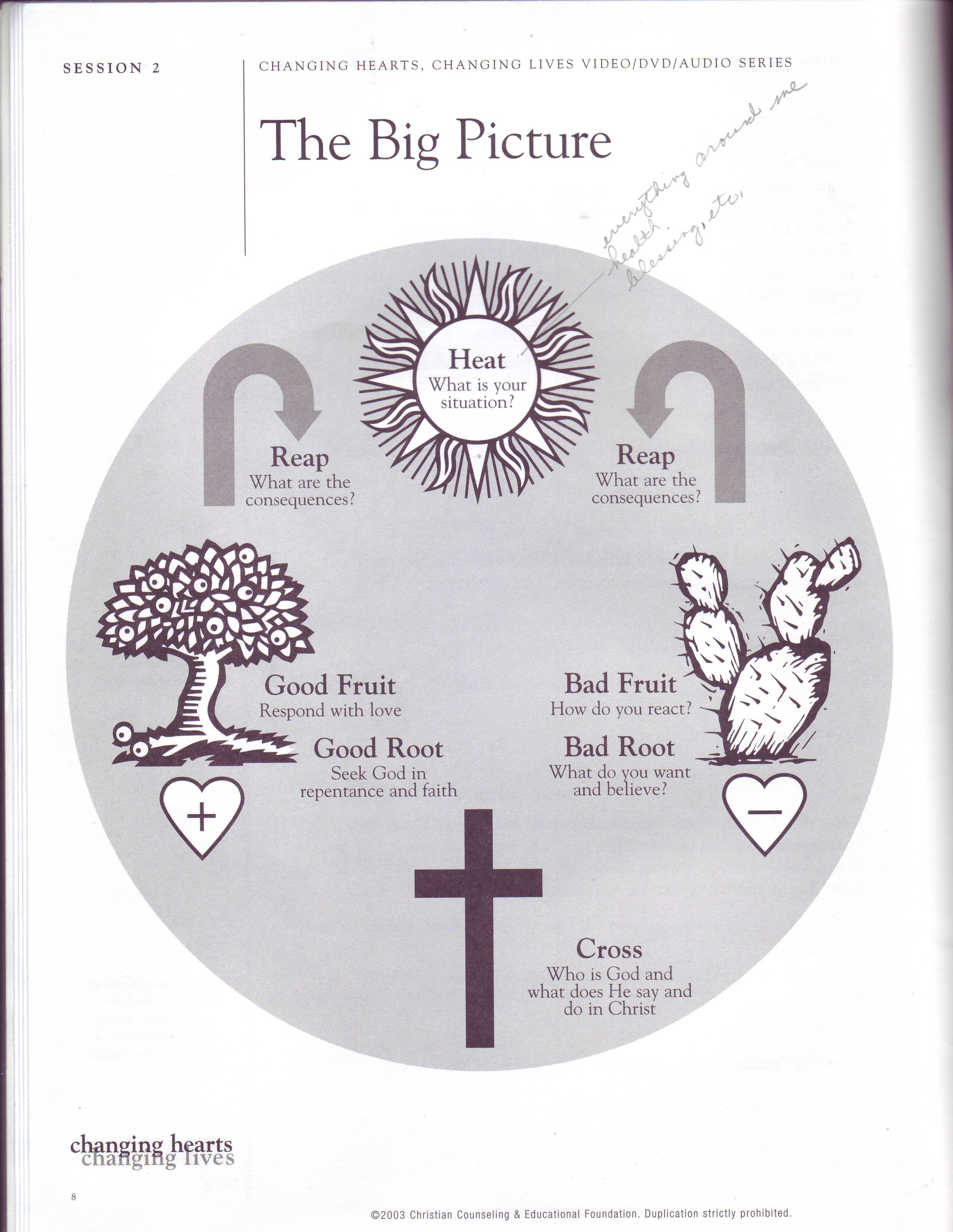
“How people Change,” Paul Tripp, 2006:


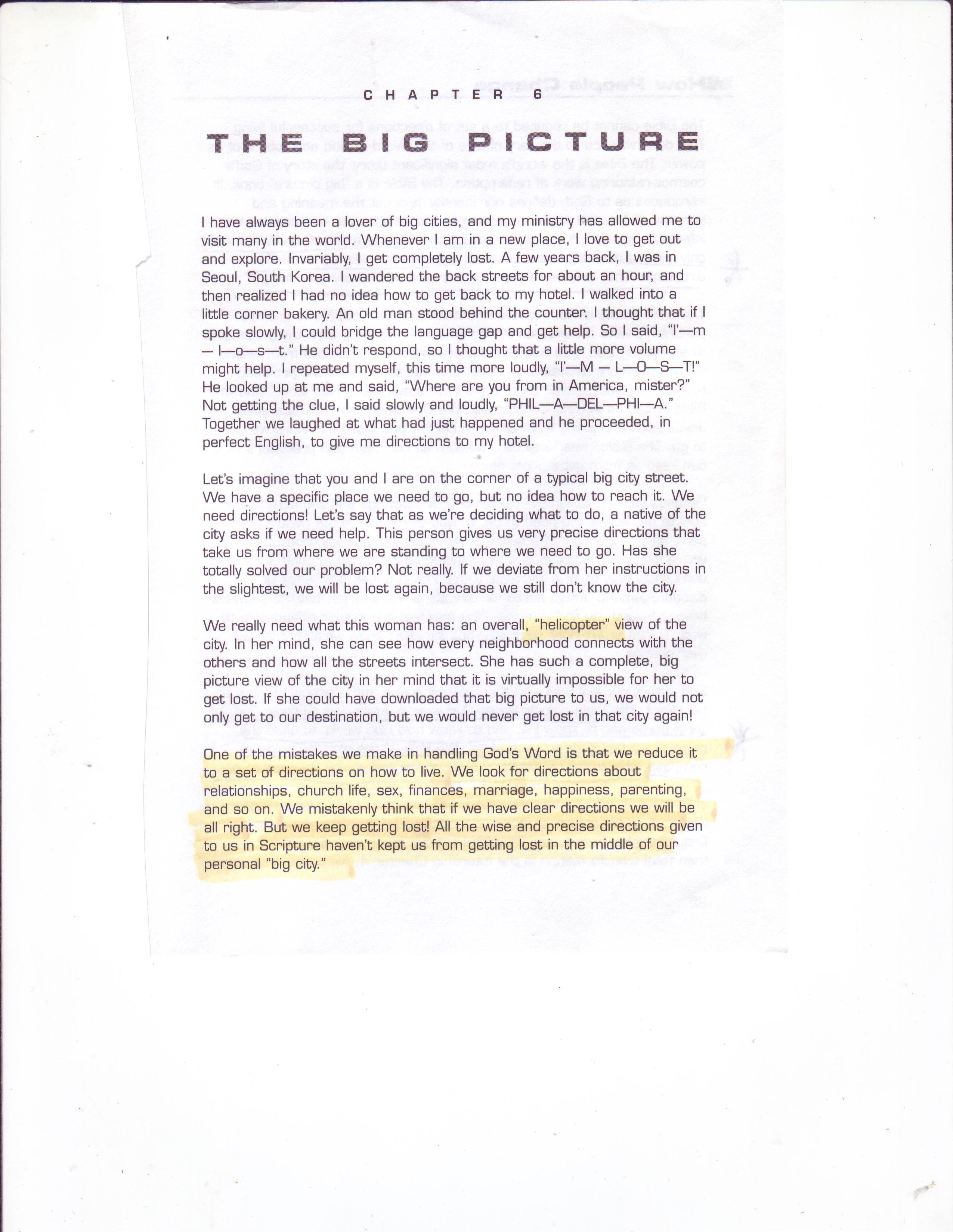
CCEF’s pilot / test program prior to the release of Tripp’s “How People Change”:


Tripp’s “How People Change” 2006:

Written by Powlison in CCEF’s Journal of Biblical Counseling:

Tripp’s “How People Change” 2006:

Piper’s Sabbatical is a Reflection of Reformed Idol Worship and Arrogance
“Is Piper taking an eight-month sabbatical to put Paul Tripp’s theory of change to the test? If he is, God help us.”
“Per the usual, Scripture takes a backseat in regard to judging such situations. In fact, Scripture isn’t even in the car.”
Well, I have read through several commentaries on John Piper’s “heroic” decision to take an eight-month “sabbatical” from his, um; stand by while I find a replacement word for “duties,”…….ok, activates. We don’t want to use the ‘D’ word, especially when we are talking about an eight-month leave of absence (this is sarcasm in regard to Piper’s constant dissing of “duty”; this dissing serves him well in regard to his sabbatical). No surprise, all of the reviews were stellar, as the Reformed rock stars of our age can do no wrong. But, I still stand perplexed in this development, especially in regard to the plain sense of Scripture, and really, just good-old-fashioned common sense as well.
First, from a common sense point of view, it’s inconsistent with all of the clamor about not putting Reformed leaders on pedestals. In his formal letter regarding this latest episode, dated March 28, 2010, he, himself, eludes to this by saying the following: “Not only that, others could use similar time away. Most working men and women do not have the freedom to step back like this.” Ya, so why are you? The very thought by him that he has a right to do this, also confirms that he thinks of himself as distinct from most other Christians, and Christian leaders. Eight months? Why not just resign and be done with it? Simply put, it’s arrogance. But, per the usual, all these guys have to do is mention that they acknowledge a possible objection, and the objection goes away like the wind drives away chaff in the minds of their koolaid-drinking followers; “Oh, he knows this is reality, all must be well.” Actually, he makes the statement in conjunction with the fact that he requested not to be paid while on his sabbatical. Apparently, the elders of Bethlehem Baptist Church rejected the request. Surprise, surprise. What a huge disconnect, some leader taking an eight-month sabbatical to reconnect with his family while getting paid. And he’s just like us?; struggling in the same spiritual trenches? Doesn’t seem to compute.
Not only that, didn’t he write a book entitled “Brothers, We Are Not Professionals”? What is more indicative of professionalism than some guy getting paid to take a leave for eight months from an incorporated church? Not only that, as well, didn’t he thank a well known Evangelical leader for inviting him to speak, by publicly rebuking his leadership (the leaders of the church he was invited to), from the very pulpit he was invited to, for honoring him (Piper) with embellished accommodations? I guess they treated him like a professional, or something. My guess is as good as any, as to why Piper and other Reformed leaders get a pass on their extreme hypocrisy. I guess, like GM, Piper and other Reformed leaders are just “too big to fail.”
But I will now address another issue that just makes me want to jump in the river. Per the usual, Scripture takes a backseat in regard to judging such situations. In fact, Scripture isn’t even in the car. Anyone who has a big picture grasp on the New Testament should know that such an endeavor by an elder is foreign to Scripture. Can you imagine the Apostle Paul doing something like this? Better yet, could you imagine the same apostle, with his scared-up body, being at that elder’s meeting? “You want to do what?” “Eight months?” “And you will be doing what?; spending time with your wife?” And would the apostle also insist that he be paid as well? I seriously doubt it.
But I may be digressing a bit, Piper’s reasons were stated as follows: “I see several species of pride in my soul that, while they may not rise to the level of disqualifying me for ministry, grieve me, and have taken a toll on my relationship with Noël and others who are dear to me.” First of all, these types of statements that continually come out of Piper’s mouth raise all kinds of questions: 1. Several “species” of pride? How many are we talking about? What specific “species” are they, and where do we find them in Scripture? 2. What do you mean when you say you “see” them in your soul? How, exactly, do you “see” them? Please specify. I’m sorry, but the guy was in an elder’s meeting; therefore, the solution to any of his problems were right there:
“Is any one of you in trouble? He should pray. Is anyone happy? Let him sing songs of praise. 14Is any one of you sick? He should call the elders of the church to pray over him and anoint him with oil in the name of the Lord. 15And the prayer offered in faith will make the sick person well; the Lord will raise him up. If he has sinned, he will be forgiven. 16Therefore confess your sins to each other and pray for each other so that you may be healed. The prayer of a righteous man is powerful and effective” (James 5:13-16).
I don’t know how many elders serve with him, but his actions make it clear that, supposedly, the prayer, confession to, and counsel of these men are not enough, he needs a lengthy sabbatical. In fact, he calls it a eight-month “….reality check from the Holy Spirit.” He’s such a super, high-powered, man of God, that he needs a special fix. Again, it’s arrogance. I could see a couple of weeks in addition to his vacation time. I could certainly see a cut-back in ministry duties, uh! I mean, activities, sorry; but an eight-month leave of absence? C’mon, what’s really going on here?
Well, we get a clue of sorts. Here is what he is quoted as saying in The Christian Post : “One of the goals of fasting,” he noted, “is to determine levels of addiction or, as Paul Tripp of [of?] Tim Keller would say, levels of idolatry.”
Per the usual, Piper can make statements like this and nobody blinks. Where does the Bible talk about determining levels of idolatry through fasting? I wish the whole reformed movement would fast and pray to determine its level of addiction to the teachers they worship. An idol is anything you cannot say no to, and trust me, not many followers of John Piper say no to him, including his elders. They can’t even say no to him when he doesn’t want to get paid for not working, and by his request! Furthermore, he mentions Paul Tripp, who believes that you can empty your heart of idols by determining what they are by identifying their relationship to sinful desires. These sinful desires are discovered by asking yourself “X-ray questions,” which are like interpretive questions of sorts. I believe Tripp borrowed this concept from Nero-linguistic Programming, a method of change used by psychologist. His treatise on this method of change can be observed in “How People Change,” published in 2006. Is Piper taking an eight-month sabbatical to put Paul Tripp’s theory of change to the test? If he is, God help us.
I suggested to my daughter, Heather, a missionary in PR, that this sabbatical could result in Piper repenting of his Christian mysticism. She suggested instead, that as a teacher that survives from novelty to novelty, that he will more than likely come back with all kinds of fresh, new ideas. Frankly, I find this possibility terrifying.
paul

 Paul's Passing Thoughts

leave a comment