Take Heart, the Scotts are Out There, We are NOT Alone
 Sometime in the night while sleeping, I received an article via email written by the Queen of Anomia, Elyse Fitzpatrick. So as I sit here this morning not without coffee and reviewing emails, I have decided to use this specimen to make some points.
Per the usual, this New Calvinist diva arrogantly pontificates while the following fact runs in the background like Lou Priolo justification: the New Calvinists have been working on running the American church for 44 years now, and have dominated American evangelicalism for ten years; so, where’s the beef?
Second point: New Calvinism is a return to authentic Protestantism which is Gnostic at its core. Of course we can’t be saints in the flesh—flesh is of the material realm. Again, I beseech Christians everywhere to read the foundation of Protestant doctrine, the Heidelberg Disputation; it is expressly Gnostic. I might also add that the New Calvinist movement is a good thing because it is forcing God’s people to come to grips with our evil Protestant roots.
Third point: Queen Elyse, like the commentator “Lori,” states something we hear often that is a smoking gun…pointing out that we aren’t perfect—we don’t keep the law perfectly.
Stop right there. This simply means that they see Christians as still under the law whereof the standard is perfection. This is a twofold error: there is NO law in justification, and justification is a finished work and is no longer to be of concern to the Christian. The unjustified are “under law,” but the justified are justified “apart from the law.” Protestantism fuses justification with the law, and keeps Christians under the law. That’s the Pauline definition of the unregenerate.
Point A under point three: antithetical to Pauline soteriology, this posits the idea that there is life in the law because Jesus keeps it for us. Who keeps it isn’t the point—the point is that there is no life in the law.
Point B under point three: contrary to Pauline theology, if perfect law-keeping can bring life, there are TWO SEEDS and not ONE; Jesus and the law both. No! Jesus came to “end the law.” The Promise did not say that there are two seeds, but only one. The Promise is not of law.
Point C under point three: if law and justification are fused together, there is still condemnation for the believer. Our sins are only covered, not ended.
Point D under point three: if perfection is still the standard for Christians, there is no new birth because the old us who died with Christ is still under the law and not free to serve under the law of the Spirit. See Romans 7:1ff. By the way, this is not to be confused with the GOAL of perfection in sanctification.
Point E under point three: yes, in regard to justification, we are, in fact, perfect because there is no law to judge us. Protestantism therefore makes sin against a law justification (a metaphysical anomaly for the Christian) the same as sin in family relationship. Hence, they are saying we sin under the old seed that died. We are not truly brothers/sisters with Christ—we are not literally born of God.
Point four: This is why Protestantism is a vile and egregious false gospel that turns holy writ completely upside down from Genesis to Revelation.
Point five: almost everyone, Prince, MacArthur, Osteen, Driscoll, Jeremiah, Lawson, Wright, Mohler, Johnson, et al, either believe or unwittingly function according to this progressive justification. They are all theological thieves sitting at the poker table bickering at one another.
Point six: making the law of sin and death the same thing as the law of the Spirit of life is the essence and formal definition of antinomianism, the paramount religion of the last days according to Christ. The king of antinomianism will be the antichrist himself. We know who the queen is.
Point seven: not everyone is wrong; we have “Scott”:
Thanks for this, Elyse. I would like to suggest that in your desire to bring folks to reality, you miss a distinction that is too often overlooked by my reformed brothers and sisters. Paul does not describe us as, by NATURE, sinners. He says we are new creations in which old things have (past tense) passed away. He says we ‘became obedient from the heart’ in Romans 6:17. He commands us to ‘Let not sin reign…’ In Romans 6:12. And in Romans 8:9 he says, after telling us to now expect to see the law fulfilled as we walk according to the Spirit, that we are not even in the flesh anymore! ‘You are not in the flesh, but in the Spirit.’ (I’m not making this up.)
So what’s the catch? Certainly we should all agree with you that there is plenty of sin that flows in our marriage and that we are no longer under condemnation. So what’s the difference in what I am saying?
Here it is: Paul says that our problem is not that we are by nature sinners. He says that we are by nature saints. Yes he does, in each of his letters. But he also says that we live in unredeemed bodies where the power of sin still dwells, and he calls that the flesh. Nothing good dwells in my flesh! Nada. But I am no longer in the flesh. I’m in the Spirit, and that is not just “positional truth,” any more than Christ being in us by the Holy Spirit is just “positional truth.”
At this point most people will tune out and say “What’s the big deal? It’s just semantics.” Well, Paul spends two and a half chapters in Romans and many other key verses in Galatians, Ephesians and Colossians talking about those “semantics”.
But here’s the secret: If we remember a few key things in the gospel, we can accomplish what you desire in this article and a lot more.
First, remember that, as you kind of said, any emphasis on technique in marriage that takes our focus away from Christ and Christ in us is law!
Second, remember that if we never get it right, we are still justified and destined to reign with Christ forever!
Third, expect nothing good to come from your flesh. If Paul said nothing good dwells in His flesh, then we need to be comfortable with that! Don’t be shocked. Your flesh is capable of any sin you can imagine.
But fourth, know that you really are a brand new creature in Christ where old things have passed away and new things have come. Expect righteousness to flow as you learn to walk in the Spirit and not after the flesh! Expect Galatians 2:20 to become a reality as you recognize who you are in Christ and live by faith in the indwelling Christ.
If I am finding my joy and peace and identity in Christ rather than in my spouse, then I will, like you and your husband, be in it for the long haul because of the covenant we have made.
Point eight: I would only correct Scott on a few issues. First, you are wrong Scott. Queen Elyse does not have good intentions; she is a wicked false teacher. Secondly, yes, Paul said that there is no good thing in our flesh, but that is not to say that flesh (also “members”) cannot be used for good purposes as you pointed out. Flesh is not inherently evil in and of itself, that’s Gnosticism. It is the sin in the flesh that is inherently evil; the sin is the sin. “In the flesh” does not mean flesh is inherently evil; it refers to when the members are being used for evil purposes rather than holy purposes. Something that is inherently evil cannot be used for holy purposes or “holy sacrifice.” The flesh is “weak,” but not inherently evil. The earth is also weak, but not inherently evil, and groans with us for redemption. The earth also proclaims the glory of God and testifies to His glory.
Last point: Scott, you get it; come out from among them and be separate. Do not continue to touch the unclean thing.
paul
PPT Top 10 Gnostics of the American Church
 The present day New Calvinism movement is a return to the exact same viral Gnosticism that plagued the New Testament church. New Calvinists proudly claim St. Augustine who was an avowed Neo-Platonist. Platonism later became various forms of Gnosticism. Martin Luther’s theology of the cross laid the foundation for the functioning Platonism that has plagued the church sense the 16th century. Luther, in his endeavor to define Augustinian philosophy for the Reformation, made the cross a Platonist hermeneutic that transcends the material world and the five senses. This was Luther’s definition of a true theologian. Said Luther:
That person does not deserve to be called a theologian who looks upon the »invisible« things of God as though they were clearly »perceptible in those things which have actually happened« (Rom. 1:20; cf. 1 Cor 1:21-25).
This is apparent in the example of those who were »theologians« and still were called »fools« by the Apostle in Rom. 1:22. Furthermore, the invisible things of God are virtue, godliness, wisdom, justice, goodness, and so forth. The recognition of all these things does not make one worthy or wise.
He deserves to be called a theologian, however, who comprehends the visible and manifest things of God seen through suffering and the cross.
The manifest and visible things of God are placed in opposition to the invisible, namely, his human nature, weakness, foolishness. The Apostle in 1 Cor. 1:25 calls them the weakness and folly of God. Because men misused the knowledge of God through works, God wished again to be recognized in suffering, and to condemn »wisdom concerning invisible things« by means of »wisdom concerning visible things«, so that those who did not honor God as manifested in his works should honor him as he is hidden in his suffering (absconditum in passionibus). As the Apostle says in 1 Cor. 1:21, »For since, in the wisdom of God, the world did not know God through wisdom, it pleased God through the folly of what we preach to save those who believe.« Now it is not sufficient for anyone, and it does him no good to recognize God in his glory and majesty, unless he recognizes him in the humility and shame of the cross. Thus God destroys the wisdom of the wise, as Isa. 45:15 says, »Truly, thou art a God who hidest thyself.«
So, also, in John 14:8, where Philip spoke according to the theology of glory: »Show us the Father.« Christ forthwith set aside his flighty thought about seeing God elsewhere and led him to himself, saying, »Philip, he who has seen me has seen the Father« (John 14:9). For this reason true theology and recognition of God are in the crucified Christ, as it is also stated in John 10 (John 14:6) »No one comes to the Father, but by me.« »I am the door« (John 10:9), and so forth.
~ The Heidelberg Disputation to the Augustinian Order of 1518: Thesis 19, and 20.
Hence, the visible is evil, and man is visible. Like Plato’s theory of the pure forms, the invisible is the true, good, and beautiful. The material is the world of shadows. Any wisdom connected to the material world is the “theology of glory.” Luther stated it in no uncertain terms:
The manifest and visible things of God are placed in opposition to the invisible…
John Calvin then articulated Luther’s theology of the cross by developing a full-orbed philosophical application in his Institutes of the Christian Religion. Calvin also affirmed the foundations of Augustinian Neo-Platonism by citing Augustine, on average, on every 2.25 pages of the Institutes.
Like certain Platonic disciplines that were immutable gateways to the immutable true ideas in the mutable shadow world, Luther merely made such the cross. Plato’s philosopher kings were able to transcend the five senses enslaved to the material world and extract the ideas of the true forms for the betterment of the Republic. Luther’s “true theologian” is the present-day philosopher king dressed in biblical garb. The top ten follow:

#10 Elyse Fitzpatrick

#9 Albert Mohler

#8 Mark Driscoll

#7 Phil Johnson
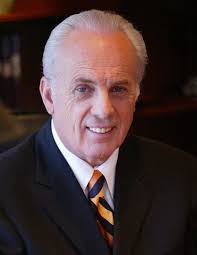
#6 John MacArthur Jr.

#5 Mark Dever

#4 Michael Horton

#3 Tullian Tchividjian

#2 Tim Keller

#1 John Piper
 “The New Calvinists are not worried; they don’t believe the American church has the intellectual wherewithal to grasp the fact that John Calvin was a Platonist philosopher. It is time for that theory to be vigorously tested. Even if that theory is believed, it can be attributed to Reformed orthodoxy predicated on the incompetence of the human race wondering about in the shadow world while rejecting the idea that the new birth makes a difference. The new birth is not the mere experience of a changed realm; it is the reality of a changed person, a person that is not only justified positionally, but changed into a just person living for God’s glory. Christians don’t merely “reflect” the glory of God, they are not merely “transformed into an image” of God’s glory, they are new creatures who glorify God with their own actions. The Spirit does not merely manifest Christ in a realm, he colabors with the new creature in the truest sense.”
Satire: New Calvinists Start 12-Step Program for Righteous Christians
 New Calvinists, firmly in control of Christian counseling in our day, have started a 12-step program for Christians addicted to righteousness. According to David Powlison’s research and development team at CCEF, the addiction begins with a literal translation of the Bible. Apparently, the addiction is most prevalent among lower income Christians who can’t afford CCEF and NANC materials that keep Christians updated in regard to the latest Christocentric metaphysical interpretations. This marks a new focus by CCEF towards the ignorant laity.
Powlison joins colleague Paul David Tripp in this new program that targets the longstanding problem among Christians of not interpreting the Bible in its “gospel context.” Consequently, the writings of the apostle Paul are interpreted literally in regard to his assertion that Christians are “enslaved” to righteousness (ROM 6:17,18) and able to please God by obeying Scripture. Particularly troublesome is Paul’s message to those who are obeying: do it “more and more” (1THESS 4:1). While Powlison acknowledges that the enemies of the “vertical church” have been sufficiently neutralized, there is an unfortunate remnant suffering in the shadows caused by obedience in our “own efforts” that eclipse the Son.
As Paul David Tripp explains on page of 64 and 65 of How People Manifest the Saving Works of Christ in the Spirit Realm, Christians are still enemies of God, spiritually dead, alienated from God, suppress the truth in unrighteousness, and “enslaved.” The problem, asserts Tripp, is that many well-meaning Christians confuse that Christocentric reality with the apostle Paul’s description of the unregenerate throughout the New Testament.
PPT has obtained a tape of a weekly meeting associated with this new program:
Group leader: “We have a new visitor with us tonight. Jake, would you like to introduce yourself?”
Jake: “Uh, uh, I, uh, Hi, uh, my name is Jake, uh, I, I, I, I am righteous.”
Group: “Hi Jake.”
Group leader: “Is there anybody here who might encourage Jake?”
Group member: “Hi Jake, I’m Kippy, and I have been righteousness-free for five years now. You can do it Jake! Like us, you can stop trying to be the gospel and instead let Jesus show forth His righteousness in your realm.”
Applause from group.
PPT has also obtained the 12 steps associated with this new program:
1. Admit that you are righteous. Overcoming denial is the first step.
2. Begin using the Bible to plunge the depths of understanding in regard to your wickedness.
3. Burn all to-do lists at home, work, and at church.
4. Buy and read all new releases by John Piper.
5. Join a gospel-centered church.
6. Obey the elders for weekly absolution.
7. Tattle on anyone seen frowning during a sermon.
8. Stop hanging on to anything that gives you joy other than Christ. Most New Calvinist churches have covenants that allow you to sign all of these things over to the church.
9. Avoid all persons who are addicted to righteousness as you once were. Remember, bad company corrupts good orthodoxy.
10. Refute challenges with a list of quotations from 45 Reformed dead guys. This list can be obtained from your local New Calvinist elder.
11. Ignore guilt associated with unrighteousness, this is the flesh tempting you to focus on something you may do rather than what Jesus has done.
12. Preach the gospel to yourself daily. As you then partake in deep repentance, the works of Jesus are offered to the Father and you are once again justified.
paul
There is NO Such Thing as “Legalism”
 We live in a unique era marked in its beginning by Christ paying the penalty for our sin (HEB 1:2). We are in the last days. We know that because it’s post cross. We live in this specific era which is also biblically described as a time of unprecedented deception (MATT 24:3,4; 2THESS 2:10-12).
Therefore, we must be careful to use specific biblical words in our communication of the truth. Those who define the language win the argument. Redefining the meaning of words to deceive is literally the oldest trick in the book; e.g., Satan redefined what God meant by death. “Surely, you will not die.” Depending on your definition of death, that was true—Eve didn’t die on the spot.
“Legalism” is a word that is not in the Bible anywhere. The concept/term was made popular by Martin Luther’s interpretation of law and grace. The term, “legalism” lends strong foundation to authentic Reformed doctrine. If you use the term, you are being a good Calvinist whether you know it or not. The Reformers were anti-sanctification because it suggests enablement and some room for self-esteem. The Bible does not call us to eradicate all concept of self for the sole purpose of the group, it calls us to evaluate ourselves truthfully (ROM 12:3). That’s why there is a severe lack of sanctification in the church today—we are all just good Protestants.
So, legalism is in, but the word for the primary nemeses of righteousness throughout the ages is out: “anomia.” The English word is, “antinomianism.” It means, anti (a) – law (nomia). And I assure you that manmade law is not in view. Ignorantly, Christians deem the word as just another 50-cent theological term even though it appears throughout the New Testament and defines the core of human woes. While anomia is ignored, a word that doesn’t even exist in the Bible is thrown around more often than we change clothes.
Because the ramifications of anomia pushback against Luther’s law/gospel theology, the word is translated in English Bibles as “wickedness” and “lawlessness” giving the idea of general bad behavior. The real idea is anti-truth, anti-God’s full counsel, anti-God’s wisdom, anti-sanctification, anti-kingdom living, anti-clear conscience, anti-life, anti-goodness, etc., etc. Christ points to it as the primary cause of lovelessness and cold-heartedness (MATT 24:12; PS 119:70). John indicts it as the very definition of sin (1JN 3:4).
Perhaps the greatest deception in all of this is the Reformed motif that the Pharisees are the poster children for “legalism.” Supposedly, they strived to keep God’s law as a way of earning His favor for both justification and sanctification of which are the same to the Reformers. The opposite is true; the Pharisees were full of anomia and voided the law with their anti-truth (MATT 15:1-9; 23:23-28). The Pharisees were not “legalists,” that’s a lie, they were antinomians.
Nothing cripples sanctification more than the Reformed idea that Christians can sincerely seek to obey God by following their born again new desire for the law and thereby unwittingly partaking in works righteousness. There is no more detestable evil under the sun because it causes a conflict between the new desire God has put in our hearts (ROM 7:25; PS 119:1ff.) and instruction that propagates a relaxed view of the law (MATT 5:19). This is why Calvinism has crippled the American church. They propagate a doctrine that sets us against the very desire that God has put in our new hearts.
Satan did not come to Eve in the garden as a “legalist.” He came to her as an antinomian. In regard to the time of the end, the apostle Paul refers to the antichrist as the man of anomia at least four times in his letter to the Thessalonians. From the beginning, and through the middle embodied in the likes of Baalam’s error and Korah’s rebellion, and culminating in the end, the doctrine of anomia is the primary beast that devours the souls of men. But yet, New Calvinist queen Elyse Fitzpatrick likens anomia to the Loch Ness Monster, and is celebrated accordingly for her supposed biblical insight.
It’s time to eradicate “legalism” from our Christian vocabulary and replace it with a description of the New Calvinist breed of beasts among us: Antinomians.
paul.
2013 PPT’s Top Ten Heretics of Our Day
10. David Platt

Heresy: Progressive Justification
9. Paul Washer

Heresy: Progressive Justification
8. Ligon Duncan

Heresy: Sonship Theology
7. David Powlison

Heresy: Sonship Theology
6. Albert Mohler
Heresy: Progressive Justification
5. Mark Dever and 4. CJ Mahaney

Heresy: Progressive Justification
3. Elyse Fitzpatrick
Heresy: Progressive Justification
2. Tim Keller
Heresy: Mysticism, Sonship Theology
1. John Piper
Heresy: Mysticism, Progressive Justification

 Paul's Passing Thoughts
1 comment