The Protestant Twisting of 1John: A Clarification, Part 1
Listen to audio or download audio file.
Welcome to Blogtalk Radio False Reformation this is your host Paul M. Dohse Sr. Tonight, we are going to attack and unravel interpretive abuses of 1John, particularly 1John 1:9 and 2:1. There is only one other text twisted for ill use more than these two verses, and that would be Galatians 2:20 and 3:1-3. Later, In part 2, I will toss in an exegesis of those verses as a bonus.
There may be a lot of different religions and even more denominations, but for all practical purposes they all have one thing in common: this whole idea that salvation is a process with a beginning and an end. This makes salvation a process that includes our present life.
So, the argumentation between religions and denominations involves the correct way of getting from point A to point B. But there is no point A and point B. When you believe God unto salvation, you get the complete package and the salvation part of your life is finished. It is an instantaneous quickening of the Spirit that transports you from one kingdom to another, from one master to another, from being under law to being under grace, from the old person to the new person, and from darkness to light. You don’t become a servant of righteousness on the installment plan, and you don’t become a kingdom citizen on an installment plan.
How is 1John used to argue for a progressive salvation, and what is John really saying in his epistle? That’s what we are discussing tonight. If you would like to add to our lesson or ask a question, call (347) 855-8317. We will check in with Susan towards the end of the show and listen to her perspective. If you would like to comment on our subject tonight, you can also email me at paul@ttanc.com. That’s Tom, Tony, Alice, Nancy, cat, paul@ttanc.com. I have my email monitor right here and can add your thoughts to the show.
Way back at the beginning of this ministry, I had this nailed down. If salvation is a process, and eternal life as opposed to eternal punishment is at stake, the Christian life is really a minefield. The focus isn’t being the best kingdom citizen; the focus is making sure you don’t mess up your salvation. The focus is salvation, not discipleship. The focus is fear of judgement, not love.
I realize many Christians hold to OSAS, once saved always saved, but the problem is how they are led by pastors trained in seminaries deeply grounded in Protestant tradition. That tradition looks to the institutional church as the primary way of getting God’s people from point A to point B in regard to their salvation. Whether OSAS or not, they are led to do the same things week in and week out. Be here at this time or that time; stand up; sing; sit down; listen to announcements; stand up; sing; sit down; listen to the special music presentation; put your tithe in the plate; listen to the sermon (always about the gospel just in case there are lost people present, wink, wink); stand up; sing “Just As I Am” until someone walks the isle so you can stop singing “Just As I Am”; pray; be dismissed; be cordial to people and tell them how much you love them; go home, and come back next week and do it again.
Why? Because all of that ritualism “imparts grace” and enables us to “grow in grace.” It enables us to “grow up in our salvation.” After all, discipleship is the “growing part of our salvation.” We have all said it, but salvation doesn’t grow. While believing in OSAS, most parishioners are led by pastors who believe in progressive salvation/justification which was clearly the foundational premise of Protestantism with the progression being overseen by the Protestant institutional church.
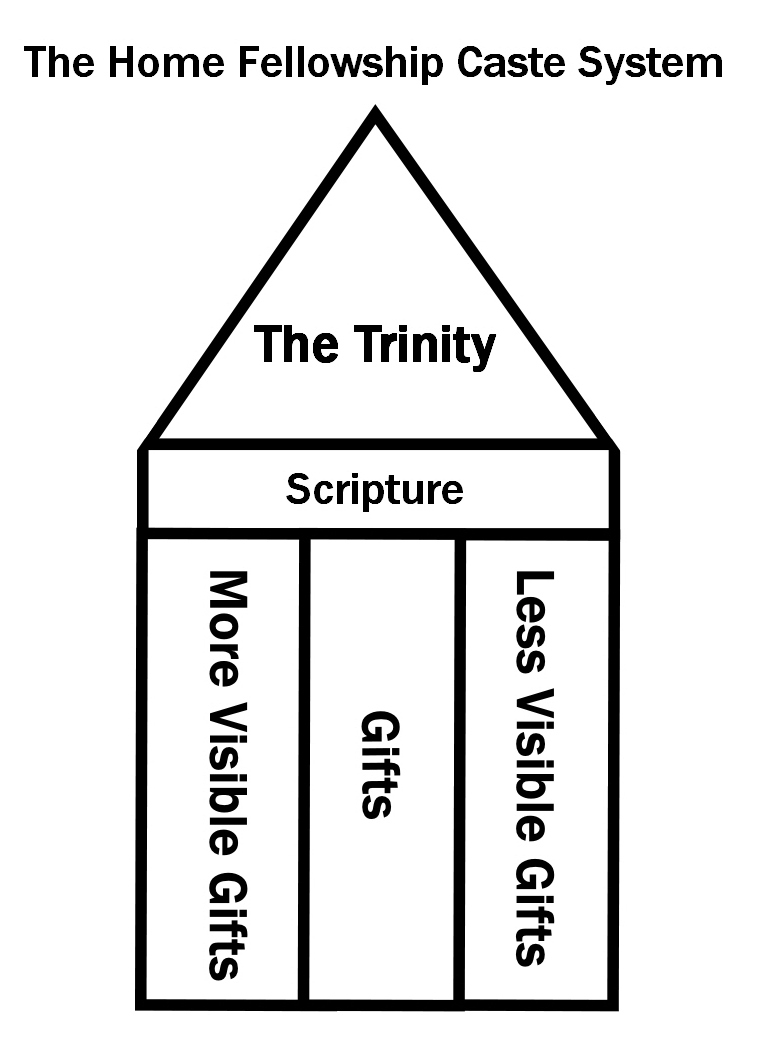
Moreover, let’s face it; while believing in OSAS, there is only one reason people put up with all of the nonsense and drama of the institutional church—OSAS means that if someone leaves the institutional church, they were never saved to begin with. Right? In other words, they function according to the idea that they are led by. It’s OSAS as long as you are “faithful” to the institution. Then each church has its own little “faithfulness” caste system. Those who show up for all of the services are the “core members” that run the church. Those “less faithful” that only come on Sunday mornings are a lower class of member in the caste system.
You have the pastors, staff and deacons, then the “faithful” that attend all of the services and tithe at least 10%, the “casual” attenders that tithe, and then the bottom of the caste strata, even lower than the serfs, the putrid “nonmembers.”
Whether Calvin or Luther, the two icons of Protestantism, these beliefs follow after the doctrine they established for the Protestant institutional church. Access to the institutional church was through water baptism, and the critical need according to the Reformers for formal church membership follows: as Christians, forgiveness for present and future sins can only be found in the institutional church, and those sins condemn us. Forgiveness for all sins does not occur at salvation, but only for past sins. Water baptism initiates us into church membership where forgiveness for present and future sins can be obtained through the sacraments; ie., “gospel preaching,” the Lord’s Table, and anything else deemed as acts of faithfulness to the institutional church not to exclude tithing by any means. Calvin states this explicitly in his institutes, 4.15.1.
All in all, you can say that in Protestantism, the status of sin does not change for the believer—it still condemns requiring perpetual resalvation for every sin committed.
Therefore, 1John 1:9 and 2:1 is interpreted in this light: “If we confess our sins, he is faithful and just to forgive us our sins and to cleanse us from all unrighteousness” (1:9). “My little children, I am writing these things to you so that you may not sin. But if anyone does sin, we have an advocate with the Father, Jesus Christ the righteous” (2:1).
These verses seem to bolster the authentic Protestant position on justification. Confession of sin in our Christian lives keeps us saved. And if we confess our sins, Jesus is up in heaven as our advocate with the Father continuing His work as a propitiation for our sins.
The problem is that this interpretation stands in stark contrast to what other Scriptures state about justification. Biblically, sin has a different classification after salvation—it can’t condemn; it can bring chastisement and present consequences, but it can’t condemn—its ability to condemn has been taken away. Hence, there is no need to have some institution that prevents future condemnation.
Nevertheless, it is easy to understand why the institutional church not only gets a pass on outrageous behavior, but the money keeps pouring in. What will people pay for their salvation and décor that glorifies the institution that saves them? Apparently, no price or compromise is too large. One can also appreciate the fear of so-called excommunication because the institutional church is the only place where one can receive continued forgiveness for present and future sins.
Before I move on, I will solidify my present point. Romans 8:1 states that there is presently NO condemnation for those who are in Christ. In Contrast, Calvin stated that “even saints cannot perform one work which, if judged on its own merits, is not deserving of condemnation” (CI 3.14.9, last sentence). Obviously, the focus is going to be avoiding condemnation, not our freedom to pursue aggressive love in discipleship.
So what are these verses in 1John really saying? Let’s begin to unpack that using the historical grammatical approach to interpretation as opposed to the traditional Protestant means of interpretation, the historical redemptive method. Since Protestantism sees salvation as a process, “redemptive” means that the Bible must be approached with a redemptive prism; ie., the Bible is about salvation. Clearly, this is eisegesis; going to the Bible with a presupposition.
In regard to the history part, this is the belief that history is an unfolding drama about salvation. Hence, all of reality is interpreted through salvation. All of history and the Bible continually reveals the one two-fold redemptive truth/reality: the sinfulness of man and the holiness of God. Salvation begins when we see or understand this reality, and the experience of that reality increases until final salvation.
In contrast, the historical grammatical method uses historical facts to bring more meaning to the text, and all truth is determined by what can be concluded by the grammar—this is known as exegesis. All meaning and truth comes out of the text without anything being read into the text except conclusions from other texts.
In fact, Protestant tradition holds to the idea that a historical grammatical approach to the Scriptures invariably leads to works salvation. Protestant tradition insists that the Scriptures must be interpreted through the prism of total depravity. In this year’s TANC conference, this is what I am going to be hitting on. Christians, save a few, have no idea that Protestant pastors that are leading them view reality in a totally different way than most parishioners. And this is why church looks like it does. And there is no salvaging it—it’s a completely broken system.
So, if you interpret said verses in 1John redemptively, it fits right into their narrative, right? You have to continue to repent for new sins in your Christian life in order to not be condemned and to keep your salvation. A good old fashioned Baptist lady who I am sure would hold OSAS stated this to my wife Susan in the grocery store a couple weeks ago. When Susan asked her why Christians need to go forward during alter calls, she answered, “they have sin that needs to be forgiven.” Well, why can’t they get that forgiveness by praying at home? You ought to see the reaction Susan and I get when we suggest her mother was saved even though not a member of a church.
Protestantism and all of its offshoots including the Baptists is nothing more or less than functioning Calvinism. Election isn’t the point, progressive salvation is the point. Protestants think salvation grows—salvation doesn’t grow—you are either forgiven once and for all time or you aren’t. Look, if you are going to stay in the institutional church, it makes absolutely no difference where you go. Please, stop driving 15 miles to the Baptist church when there is a Catholic Church right across the street—it’s a shameful waste of gas. It’s all progressive justification.
In contrast, we have to see 1John in its exegetical historical context. It must be interpreted according to what was going on during the time that prompted this letter. And what was that?
John was pushing back against the number-one nemesis of the assemblies during that time: Gnosticism. Now, there were many, many different veins of Gnosticism during that time, but like denominationalism, there are basics that are fundamentally the same. Denominationalism quibbles about how to get from point A to point B, but it is all progressive salvation.
When you understand the basics of Gnosticism, it is easy to see that John’s first epistle is a point by point rebuttal of Gnosticism, and NOT the proffering of progressive justification. Protestants can bicker with Catholics all they want to about how to get from point A to point B, but again, it’s all progressive justification. If it’s a religious institution, it’s selling final salvation, PERIOD.
If we follow John’s arguments in this epistle, it also apes the fundamental basics of Gnosticism, and that’s what we are going to do:
1John 1:1 – That which was from the beginning, which we have heard, which we have seen with our eyes, which we have looked upon, and our hands have handled, of the Word of life; 2 (For the life was manifested, and we have seen it, and bear witness, and shew unto you that eternal life, which was with the Father, and was manifested unto us;) 3 That which we have seen and heard declare we unto you, that ye also may have fellowship with us: and truly our fellowship is with the Father, and with his Son Jesus Christ. 4 And these things write we unto you, that your joy may be full. [KJV].
The Gnostics taught that it really wasn’t the spiritual Christ that died on the cross. Gnosticism holds to the idea that material is evil and only the invisible spiritual world is good. Gnosticism rejected the idea that the spiritual realm, or godhood can be one with the material. You must understand: the biblical concept of Godman is a direct affront to the foundation of all false religions, or the knowledge of good and evil. It is the idea that true knowledge cannot be one with the material. Knowledge is good, material is evil and is only a shadow of true knowledge. Knowledge of the material is enslaved and dependent on the five senses.
Now, stop right there. Let me simplify this for you. All false religion flows from the religion of the knowledge of good and evil presented to Eve in the garden. This is also the first sentence of the Calvin Institutes and all of the Calvin Institutes flow from the foundation of 1.1.1., first sentence, viz, ALL wisdom is the knowledge of man and the knowledge of God; man is inherently evil and God is inherently good.
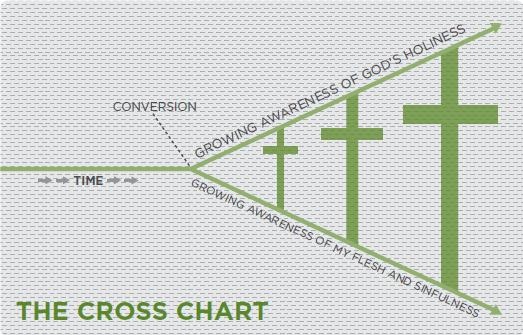
Also, the first sentence of the Calvin Institutes is the primary theses of Luther’s Heidelberg Disputation which is the Magnum Opus of the Reformation. All fundamentals found in contemporary evangelicalism can be found in the Heidelberg Disputation and flow from it. Calvin’s Institutes further articulated the former. In contemporary evangelicalism, we hear constantly that true biblical knowledge is “the knowledge of our own sinfulness as set against God’s holiness.” This is also the pronounced fundamental foundation of the contemporary biblical counseling movement as constantly stated publically in no uncertain terms.
Why am I interjecting this? Because even though much of our knowledge concerning first century Gnosticism comes from the writings of the early church fathers and while they railed against Gnosticism, they themselves were also Gnostics. However, in the process of railing against Gnosticism, they confirm unequivocally that John’s letter addressed the Gnosticism of their day; it just wasn’t the Gnosticism that they preferred.
And by the way, according to some church fathers, John was addressing a Gnostic named Cerinthus who was a contemporary of John and a personal nemesis.
Cerinthus was a gnostic and to some, an early Christian, who was prominent as a heresiarch in the view of the early Church Fathers. Contrary to proto-orthodox Christianity, Cerinthus’s school followed the Jewish law, used the Gospel according to the Hebrews, denied that the Supreme God had made the physical world, and denied the divinity of Jesus. In Cerinthus’ interpretation, the Christ came to Jesus at baptism, guided him in his ministry, but left him at the crucifixion.
He taught that Jesus would establish a thousand-year reign of sensuous pleasure after the Second Coming but before the General Resurrection, a view that was declared heretical by the Council of Nicaea. Cerinthus used a version of the gospel of Matthew as scripture.
Cerinthus taught at a time when Christianity’s relation to Judaism and to Greek philosophy had not yet been clearly defined. In his association with the Jewish law and his modest assessment of Jesus, he was similar to the Ebionites and to other Jewish Christians. In defining the world’s creator as the demiurge, he emulated Platonic philosophy and anticipated the Gnostics.
Early Christian tradition describes Cerinthus as a contemporary to and opponent of John the Evangelist, who may have written the First Epistle of John and the Second Epistle of John to warn the less mature in faith and doctrine about the changes he was making to the original gospel. All that is known about Cerinthus comes from the writing of his theological opponents (Wikipedia).
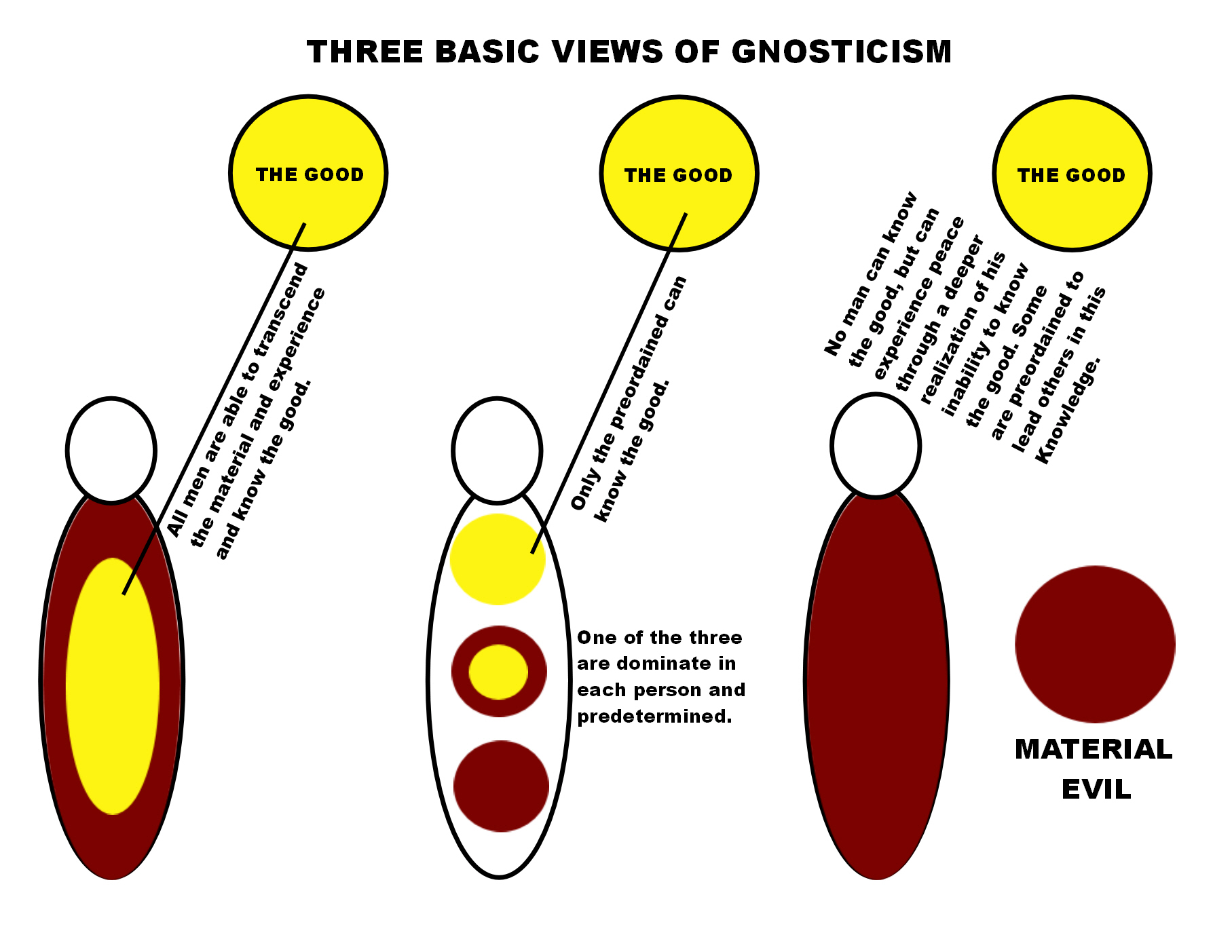
At any rate, the teachings of Cerinthus follow the basic fundamentals of 1st century Gnosticism of which there were two schools of thought unchanged from the cradle of society: intuitive knowledge within versus knowledge outside of man. While both schools held to the strict dichotomy of material being evil and the invisible good, and true knowledge being beyond the five senses, they disagreed on where that knowledge is found and whether or not it is intuitive among all men, or a select few preordained by nature or some supreme being.
Cerinthus followed the philosophical school of Idealism which holds to the belief that the one cosmic mind has an intuitive connection within every individual. Finding that knowledge is often a complex mind-numbing epistemology, but curiously, Luther and Calvin had their own angle that built on the Neo-Platonic teachings of St. Augustine.
This Gnostic bent actually allowed for Christ to be human, or at least some form of humanity. Apparently, God became exasperated with man’s penchant for trying to gain knowledge through the material world, and said in essence, “Ok, since you like to think you can know something and try to gain knowledge through the things that are seen, I am going to send my Son to die on the physical cross, and now all knowledge will only be gained through suffering—there mankind, take that!” This is the essence of the Heidelberg Disputation which is a philosophical treatise, not a theological one by any stretch of the imagination. Luther states plainly in the document that ALL knowledge is hidden in the suffering of the cross. Anyone who thinks they can understand Protestantism without a good grasp of world philosophy is sadly misguided. It is one of the historical necessities of historical grammatical hermeneutics.
Hence, in the Gnostic Protestant construct, Christ and His gospel is the only true objective knowledge and is outside of man. Man is not to seek any knowledge within himself, but all knowledge must be sought outside of him in contemplation of the gospel. All of reality is interpreted by the suffering of the cross. The cross is the epistemology from the material to the invisible, or from the evil to the good.
In contrast, other schools believe the epistemology is intuitive within all men because all men have a spiritual being separate from their material being, and the spiritual part of man is nonmaterial and therefore SINLESS. The material body of man is evil because it is material, but his invisible being is good and has a connection to the cosmic spiritual world that must be cultivated by transcending the material. This was key to the drug culture of the 60’s as LSD trips enabled the individual to transcend the five senses and see into the invisible spiritual world. Supposedly.
Other schools of thought believed that even though all men have a material and spiritual aspect, the spiritual anthropology has classifications in regard to who is able to see true knowledge and who isn’t as determined by the cosmos or cosmic mind; ie., determinism. And consequently, if utopia is to ever be achieved, those with the ability to see knowledge must rule over those who have the inability to transcend the material and are enslaved to it. How do you reason with people hopelessly enslaved to the material? They either understand that they can’t know reality and get with the program, or you kill them.
According to the Reformers, utopia is achieved by understanding that all reality is interpreted through the cross of redemption. This concept was established by Luther’s Heidelberg Disputation and is known as being a “theologian of the cross.” Theologians of the cross are able to know the “cross story,” or interpret reality through the cross, and all others are enslaved to the “glory story” or the story of man. This is the dichotomy of the knowledge of good and evil, or material versus spiritual.
Furthermore, the Reformers believed that the new birth entailed the gift of outward seeing only. All goodness remains outside of man. This is the pious distinction they claim over their fellow Gnostics. Unlike Cerinthus, who would be the modern equivalence of existentialism, no good can be in man, because that does not limit knowledge to suffering and the cross. Even though the early church fathers believed that material is evil and only the invisible is good like all ancient Gnostics, they labeled those heretics who believed that the invisible spirit within man was a connection to the good. That was heresy in their minds. And if you really understand what John Piper et al believe in our day, NOTHING HAS CHANGED.
The true Christians of that day had a different metaphysical take: the material realm is NOT evil, it’s weak. Something that is weak can still be good. The born again Christian struggles with sin because he/she is weak, not because the material realm is inherently evil. Christ really did come adorned in humanity in every since of the meaning because the material is not evil. This understanding of being fits together with the true gospel.
But what Cerinthus et al was teaching speaks directly to what John wrote in his first epistle, and we have addressed some of it in John’s introduction. John, in essence, said the following: Christ was 100% humanity and 100% God. We saw Him, we heard Him, we touched Him, we saw Him die on the cross, there isn’t two Christs, there is only one.
What Cerinthus et al taught explains everything John wrote in this epistle and why he wrote it. It not only explains why John wrote what he wrote in 1:9 and 2:1, it sheds light on why John wrote what he wrote in the rest of the book as well.
And that is what we will look at next week. We will do a point by point fly over of 1John while interpreting it according to this historical context of Gnosticism. John will address the definition of sin in contrast, the definition of knowledge and truth in contrast, the definition of the true gospel in context, the definition of love and hate in contrast, and the definition of the new birth in contrast.
See you next week.

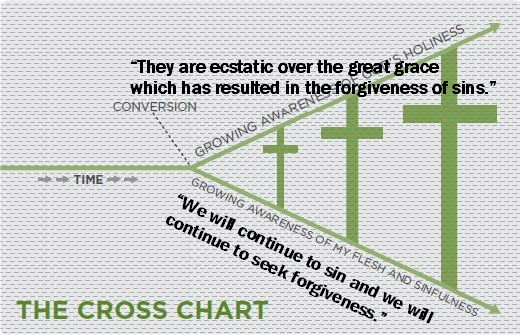


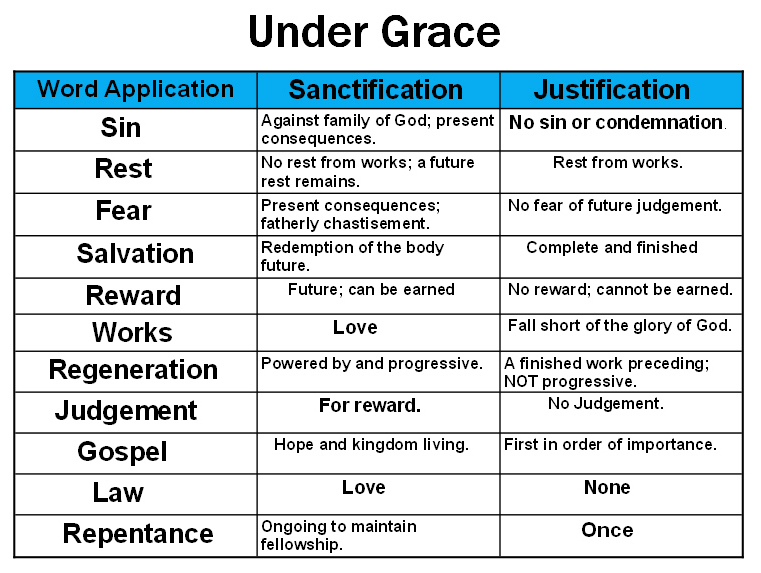
Choice and Evangelism
 Freewill is a major metaphysical pillar of God’s creation. We like to talk about the “attributes of God,” but we must also be careful that God is not erroneously limited by our own definitions of Him.
Below, you will hear a very formidable thinker of our day decry God for creating the world a certain way; specifically, the allowing of suffering and evil. In other words, he believes God should have predetermined goodness in order to prove Himself good.
God indeed created the world according to good, but obviously, God did not predetermine choices and possibilities. Does that make freewill an evil concept? Clearly, John Calvin believed that God predetermined evil while God Himself is good, and the subject speaking in the following video states that God is evil because He didn’t predetermine an exclusion of evil. Hence, in both cases, freewill is deemed evil.
When mankind sinned, it was God’s choice to redeem mankind. Man could not choose to be reconciled to God, nor was it possible for man to devise a way of reconciliation. That could only be accomplished by God. Once man sinned, he was ashamed and hid from God. But God sought him out, and offered a solution for sin. I believe man is capable of making that choice.
What is evangelism? It is doing what God did in the garden on His behalf. Man is ashamed and hides from God, but as His ambassadors, it is our job to seek them out and present God’s plan of reconciliation. Man’s aloofness from God because of shame does not equal an inability to choose. Man’s resentment towards God because God is not predeterminist does not preclude an ability to be persuaded.
God does predetermine a happy ending through intervention, but that is not plenary determinism. God invites all men to choose God’s plan of intervention. Instead of all men being doomed, God intervened.
Wrestling with this issue creates lots of accusations. In the video, the subject accuses God of being completely selfish. And in fact, many of God’s most popular self-proclaimed pundits advocate the centrality of God’s self-love. An example of that would be Dr. John Piper and this fellow here. The same advocate the idea that God predetermined evil as a way to better highlight His holiness and bring more glory to Himself, and as another means of self-love through that enhanced glory.
God predetermined the means of salvation, and He seeks all men out and implores them to choose life. I believe every good thing and enjoyment comes from God and beckons man towards eternal life. The goodness of God and the love of God is not merely God sporting with mankind, it is meant to lead us to repentance and the full experience of God’s eternal goodness.
God clearly takes no pleasure in the death of man, so we should diligently seek out men on God’s behalf because God sent His only Son into the world…not to condemn the world, but that through His Son the world might be saved.
paul
Why Calvinists Have No Understanding
 Originally published January 10, 2013
Think “colabor.” And by the way, that’s a biblical word. It should be understood that salvation is completely of the Lord. In our day, it’s just best to leave it at that though some finer points could be argued. Election is what it is, but I think it not a good idea to draw logical conclusions that lead to hardcore determinism. The apostle Paul evangelized like it depended on us to some point—that’s irrefutable. At any rate, if God didn’t make a way for reconciliation—there wouldn’t be any. So, should He get all the glory? Absolutely. Does that mean we have no role at all? I doubt it.
But one thing is clear: the Christian life is a colaboring with God, the Son, and the Holy Spirit. Our role is learn and do. That’s what a “disciple” is. And one of the doings, perhaps the most important one, is….THINKING.
Throughout the Bible, the colaboring of God and the Christian is seen. Unlike salvation and justification, the Christian life (sanctification) is full of conditions, promises, commands, encouragement, warnings, and instruction. If you take note in your daily Bible reading, you will see this colaboring concept throughout. Perhaps the most profound is 2Timothy 2:7. Here is what the apostle Paul said to Timothy:
Think over what I say, for the Lord will give you understanding in everything.
The Lord will give us understanding, BUT, we have to THINK. No thinking—no understanding. To say that Christians in our day believe that God will give us understanding without thinking is quite the understatement.
Clearly, in Reformed circles, the elders think for the parishioners, and the elders get their information from a bunch of Calvinistic dead people, also known as “orthodoxy.” Even when Calvinists do pick-up their own Bibles to read they are anticipating that God will show them “pictures of Jesus” in every verse. Look, those are John Piper’s very words, not mine. Bible reading in Reformed circles has become always been like watching TV; you just watch and let your brain chemicals to the rest. As you read, Jesus will show Himself and whatever Jesus shows you will be imputed to your life because Jesus came to live for our sanctification and die for our justification. The death and resurrection was for our justification, but His life prior to the cross was for our sanctification.
Also implicit in Paul’s charge to Timothy is the fact that Paul expected people to verify for themselves what he taught. Let me show you a picture since we like them so much: When Susan and I are discussing Reformed issues with people while enjoying the perplexity on their faces as we accuse the big names of heresy, this question often follows: “So, who do you follow?” Initially, Susan and I were too shocked at the response to even answer. The question is, at times, also followed by, “You can’t say that about him—he has a lot of followers.”
Not sure I can add to that point. Have a wonderful colaboring day in Christ.
paul
Predestination and Fatalism: “How Much?” is the Question that Only Leaves Two Choices

Originally published May 30, 2014
“This speaks to conditional and unconditional promises by God, cause and effect, and hope. What is at stake is our very understanding of reality itself.”
“What am I saying? A am saying that predeterminism is not a paradox in and of itself, I am suggesting that we consider the idea in our study that predeterminism is a slippery slope to making all of life a paradox. In other words, it makes objective truth unknowable.”
This is part 6 of our series on predestination. We are in the process of evaluating predestination from the viewpoint of love, promises, judgment, cause and effect, hope, commandments, obedience, fear, foreknowledge, freewill, choice, ability, total depravity, evangelism, the gospel, Bible doctrine, paradox, and salvation. In most cases, determinism creates a strained understanding of what some of these words mean to us in real life.
For instance, if God loves the world and man does not have the ability to choose, why does God choose some and not others? He is impartial, no? Why will God judge those who never had a chance to escape judgment? Would God really command us to do things that He knows we are not able to do? How is God’s love really defined? Paradox is a reality, but to what extent do we except paradox as a replacement for the common understanding of life concepts and the words that describe them? Are the simple concepts of commands, love, and choice really a paradox in spiritual matters but necessarily taken literally in the milieu of life? Does whosoever will really mean whosoever has been chosen? And if it does, why doesn’t God simply state that accordingly?
In part one, we established an important starting point: the doctrine of predestination has always been primarily framed and assimilated by Reformed theologians. That’s a problem because they had/have the gospel wrong. This is a matter of simple theological math; they were on the wrong side of the law and gospel. Therefore, the doctrine must be reexamined.
In part 2, we examined God’s will in regard to the lost and the relationship of evangelism and paradox. Evangelism is another word that becomes paradoxical in light of predestination. Obedience is a paradox, love is a paradox, judgment is a paradox, and evangelism as well because the legitimacy of the offer of salvation is called into question. Whosoever will becomes whosoever has been elected. If election is a paradox, all of the concepts connected to it are paradoxical as well.
In part 2, we established that God does not desire that any person perish. He does not take pleasure in the death of the wicked. Which brings up another paradox: does God plead and exhort man to be saved while knowing that he is unable to respond? When God states, “come, let us reason together,” is he saying that while knowing that man is unable to reason?
At any rate, we concluded in part 2 that God does not desire the death of the wicked—He desires that all would be saved.
In part 3, we established that predestination was not unique with the Reformers. In fact, determinism is an ancient concept that has dominated human history. We also examined the historical bad fruit produced by its ideology, and biblical contradictions as well.
In part 4, we looked at the means by which God seeks man. Man is created with intuitive knowledge of God, man begins life in the book of life and must be blotted out if he/she perishes, and Christ died for all men, not just the elect. Though not in the study, the fact that all sins are imputed to the Old Covenant, and belief in Christ eradicates the Old Covenant and all of the sin imputed to it, it implies a readiness and desire of God to vanquish one’s sin. The imputation of all sin to a covenant is sort of the opposite of starting life in the Book of Life; God wants to keep you in the one book and get rid of the other one.
Moreover, God sent the Holy Spirit to convict the world of sin and the judgment to come while the works of God’s law are already written on the heart of every person. On the one hand, God has set up a gargantuan infrastructural reality to facilitate the salvation of man, but in all of this, who enters in is ultimately predetermined by Him. Why all the drama? Why all of the paradox? Why all of the confusion? Yet, another paradox that could be added is the Holy Spirit’s warning in regard to judgment along with all of God’s prophets; why offer this incentive to escape judgment to those who are unable to respond? This speaks to conditional and unconditional promises by God, cause and effect, and hope. What is at stake is our very understanding of reality itself.
In part 5, we begin to answer the question, “How much?” Let’s say that man is unable to choose God initially, but what about post new birth? Is man then able to make choices? Curiously, the Reformers say, “no.” We looked at the Reformed redemptive-historical hermeneutic that interprets all reality as a gospel metaphysical narrative. We simply put ourselves in the narrative by believing everything in life points to a truth about Christ and is predetermined. We called this plenary determinism. Also, while discussing this, we introduced the possibility that certain things are predetermined by God, while other things are not. We used the following chart to illustrate this:

Granted, we want some things to be predetermined by God. We want a happy ending. We want justice. We want the good guys to win. We want everyone to live happily ever after. In times of danger, we want our fears tempered by knowing that God is control. In the book of Revelation, for certain, the opening of the six seals will make it seem like the earth is in complete chaos and spinning out of control, but the fact will be that God is in control of every bit of that. Will that temper the fear of those who know that at the time? Sure it will.
But is everything predetermined? Does man have any role in reality at all? The main source for predestination doctrine has always been the Reformers, at least in Western culture, and they disavow choice in both the saved and unsaved state. Consequently, from an eschatological view, there is only one judgment in which both believers and unbelievers stand in to determine one’s eternal fate. Opposing eschatological views posit a separate judgment for believers and unbelievers, one for reward (believers), and one that condemns (unbelievers).
Obviously, the idea of reward strongly suggests that the reward is for something earned by making a right choice. In Reformed circles, rewards spoken of in the Bible are attributed to salvation (the reward[s] is salvation), but now we have yet another paradox because it is not really a reward that we get for something that we did! What am I saying? I am saying that predeterminism is not a paradox in and of itself, I am suggesting that we consider the idea in our study that predeterminism is a slippery slope to making all of life a paradox. In other words, it makes objective truth unknowable.
However, the Reformers state that truth can be known, and that there is no paradox at all: Man and history were created to glorify God. Everything that happens is predetermined by God (cause), and everything that happens is for God’s glory, and in fact, does glorify Him (effect). Hence, man has no ability to choose in being the cause for anything that happens. Judgment reflects God’s glory alone in simply revealing what God has preordained via good or evil. If this is not true, then how much choice does man have? That must be determined. If true, then how much choice does man not have? This must be determined as well.
At the T4G 2008 conference, John MacArthur stated the following:
The sum is that man is evil and selfish, unwilling and unable because he is dead. He loves his sin. He loves the darkness. He thrives on selfish lust. He’s happy to make a god of his own, manufacturing and convinced himself that he is good enough to satisfy that god. He may see his sin in his sin, but he does not see his sin in his goodness, and he does not see his sin in his religion, and it is his sin in his goodness that is most despicable for there is the deception and it is his sin in his religion that is most blasphemous because there it is that he worships a false god…
The contemporary idea today is that there’s some residual good left in the sinner. As this progression came from Pelagianism to Semipelagianism and then came down to sort of contemporary Arminianism and maybe got defined a little more carefully by Wesley who was a sort of a messed up Calvinist because Wesley wanted to give all the glory to God, as you well know, but he wanted to find in men some place where men could initiate salvation on his own will. That system has literally taken over and been the dominant system in evangelical Christianity. It is behind most revivalism. It is behind most evangelism. That there’s something in the sinner that can respond.
Notice how MacArthur combines ability with goodness. Ability is made to be a moral issue. Why does an ability to choose something, or make a wise choice, or desire to have something that is rooted in anthropology, have to be an issue of inherent goodness? If unregenerate man can make wise choices, or at least correct choices, and certainly he can, why couldn’t one of those wise choices be that of salvation? Yes, certainly the Bible teaches that man’s inclination is away from God, but once God seeks him out and confronts him, does he have the ability to be persuaded? Why is man able to choose to stop at a red light (cause) to prevent an accident (effect), but unable to choose God?
Throughout the same message, MacArthur asserts the following like points:
Wesley wanted to give all the glory to God, as you well know, but he wanted to find in men some place where men could initiate salvation on his own will.
Here, MacArthur makes an ability to choose equal with initiating the means of salvation and initially seeking God. Our previous lessons assert that man doesn’t initially seek God, but once God seeks him by various means, man has the ability to choose. Man has many abilities that are morally neutral, even in his weakness, why can’t the ability to choose be one of them when he/she is aided by God and convicted by the Holy Spirit? In Scripture, we have instances of men being nearly persuaded (Mark 12;34, Acts 26:25-32); what are we to surmise from this, that man has the ability to be partially persuaded, but not the ability to be fully persuaded? James suggested that some men can believe in God, but fall short of believing in a saving way (2:19). This means man has an ability to believe in God intellectually, but is unable to understand saving truth about God and make his own choice? Why would man then have the ability to believe in God at all?
According to MacArthur,
A new wave followed as people struggled to hang on to human freedom which said that Adam’s sin had “in some measure” affected and disabled all men, but sinners were left with just enough freedom of the will to make the first move of faith toward God. And then God’s grace kicked in. But sinners made the first move, and that’s what became known as semi-Pelagianism. Some would call it prevenient grace. There’s a component of grace in all human beings that gives them in the freedom of their own will the ability to initiate salvation. The idea is that depravity is real, but it is not total. Saving grace from God then becomes a divine response rather than the efficient cause of our salvation. This view is denounced, as you know, by several councils starting around 529.
How does an ability to choose equal the initiation of salvation? How does an ability to choose, or the freedom of the will to choose equal us making the first move? We by no means made the first move! Clearly, God made the first move by supplying the means of salvation, and the second move by calling all men unto salvation. After this, how does our abilty to choose constitute the “first move”? It’s not the first move, it’s a response to God’s love. And in regard to the point of our first lesson, throughout his message, MacArthur validates his points by citing St. Augustine; that is very problematic in and of itself. MacArthur then moves on in the same message to make the new birth synonymous with our ability to choose. If we have an ability to be persuaded, that is supposedly like giving birth to ourselves:
When the Bible speaks about the condition of the sinner, with what words does it speak? Well, when the Bible speaks of the sinner’s condition, it is usually in the language of death, sometimes darkness, sometimes blindness, hardness, slavery, incurable sickness, alienation, and the Bible is clear that this is a condition that affects the body, the mind, the emotion, the desire, the motive, the will, the behavior. And it is a condition that is so powerful no sinner unaided by God can ever overcome it… John 3, you are very familiar with it, Nicodemus, and no one is going to be able to see the kingdom of God unless he’s born again, Jesus said in verse 3, very interesting. Nicodemus said to him, “How can a man be born when he is old? He cannot enter a second time into his mother’s womb and be born, can he?” He is not stupid. He’s a teacher in Israel. He’s speaking metaphorically. He’s picking up on Jesus’ born again metaphor and asking the question, how does that happen? How does it happen? You can’t do it on your own. You can’t birth yourself. That’s his point. He gets it. He understands that man has no capability to bring birth to himself. Jesus follows up by saying, “Truly, truly, I say to you, unless one is born of water and the spirit,”
First, MacArthur’s concession, perhaps unwittingly, that “it is a condition that is so powerful no sinner unaided by God can ever overcome it” is exactly what we are saying, and not by any means that man can choose God solo. God supplies the means of salvation and seeks after man with the conviction of the Holy Spirit and the word of God. But in the end, man is able to neglect this great salvation, and to his own eternal detriment. Also, the new birth is part of the means of salvation totally out of man’s control; the new birth is a promise to those who believe, and obviously not man giving birth to himself.
When you start thinking about these things apart from Reformed orthodoxy, some observations become interesting. MacArthur used the following proof texts to make one of his points:
But let me just work you through John for a minute, John 1:12-13. “But as many as received him, to them he gave the right to become the children of God even to those who believed in his name who were born, not of blood nor of the will of the flesh nor of the will of men, but of God.” That is unmistakable. Unmistakable. Salvation being the work of God.
First, notice that man’s role is simply to receive, and then man is “given” the “right” to become the children of God. Then MacArthur bemoans the following:
It is behind most revivalism. It is behind most evangelism. That there’s something in the sinner that can respond. And this is sort of like the right in a free country. You have to have this right. This wouldn’t be fair if God didn’t give the sinner the right to make his own decision so that the sinner unaided by the Holy Spirit must make the first move. That’s essentially Arminian theology. The sinner unaided must make the first move. And God then will respond when the sinner makes the first move.
This is exactly what the proof text that MacArthur stated says, that those who receive Christ do in fact have the “right” to become part of God’s kingdom. Also, in stating his Reformed logic in another way, he suggested that hearing the gospel message and receiving it was the same thing as preaching ourselves:
What can remedy that? We do not preach ourselves, verse 5, we preach Christ Jesus as Lord and ourselves as your slaves for Jesus’ sake. We preach the gospel of Christ as lord and ourselves as slaves. And what happens? Verse 6, God who said light shall shine out of darkness, that’s taking you back to creation, God who created, who spoke light into existence is the one who has shown in our hearts to give the light of the knowledge of the glory of God in the face of Christ.
Aside from the fact that having the ability to be persuaded is not preaching ourselves rather than Christ, note that MacArthur equates creation with the gospel which insinuates that the fall was built into creation itself. This is part and parcel with the supralapsarianism that we discussed in previous lessons.
But the thrust of this lesson centers on the “how much” when it comes to any role at all for man in salvation and the logical end of it, and in the final analysis how God’s love is defined. This is a sobering consideration. In both the 2013 Shepherds’ Conference and T4G 2008, MacArthur presents the idea that John 3, regarding the new birth, is something that is done to the individual without any participation on the part of the believer. The clear message in both cases was that any decision or belief on the part of the believer was excluded also. It was very much like the following rendition of the same text:
When we consider the great teachings of Scripture, they are not there just to give us information and they are not to teach us what we can do in our own strength. In Musings 34 (http://www.godloveshimself.org/?p=2018) we looked at how believing that the doctrine of justification is true is not the same thing as being justified. The new birth was also mentioned at the end. In the passage above (John 3:3-5) Jesus speaks pointedly and with power in a way that reflects on the issue being mused on here. Jesus did not tell Nicodemus that he must know the truth about the new birth in order to enter the kingdom. Jesus also did not tell Nicodemus that he must believe the truth about the new birth in order to enter the kingdom. Instead of that, Jesus told Nicodemus that he must actually be born again in order to enter the kingdom. There is a huge difference between believing what is true and what is true actually happening to you.
If we take this as a picture or even as an example of the teachings of Scripture, we can view what it means to believe something with different eyes or with a different perspective. Neither Jesus or Paul declared that a person must believe the facts about justification in order to be justified, but simply that a person must be justified (God Loves Himself .wordpress .com: Musing 35; February 10, 2014).
So, if reality is a prewritten metaphysical narrative for the sole purpose of glorifying God in all that happens in the narrative, it only stands to reason that God is motivated by self-glorification and self-love as the highest purpose for all that he does:
Perhaps this concept that Edwards gives just above cannot be stated too strongly or emphasized too much since all true Christianity depends on the truth of it. If God is not centered upon Himself and He does not do all for His own glory, then God Himself is not holy and acts against the perfection of His own nature, wisdom, holiness, and perfect rectitude. If God Himself does not love Himself and do all He does out of love for Himself (as triune), then He does not keep the same standard that He commands all others to do. If God does not love Himself and do all He does out of love for Himself, then the both the great Commandments and the Ten Commandments are not a transcript of the character of God. If God Himself does not love Himself and do all He does out of love for Himself (as triune), then He does not do what He requires of others in the first three petitions in the Lord’s Prayer. If God Himself does not love Himself and do all He does out of love for Himself (as triune), then He does not do all in His own name as He requires others to do so. If God Himself does not love Himself and do all He does out of love for Himself (as triune), then He does not do all for His own glory which He requires others to do (God Loves Himself .wordpress .com: Edwards on the God Centeredness of God; 11 December 7, 2013).
Add yet another paradox in regard to love. God didn’t send His Son to the cross because he loves mankind, he sent His Son to the cross because He loves Himself. The list of commonly understood words in a grammatical reality that have been redefined by the doctrine of determinism is now very lengthy. Why indeed did God even bother to write the Bible in a grammatical format? No wonder that Rick Holland, a former associate of John MacArthur has stated that good grammar makes bad theology. No kidding? Add yet another paradox: the idea that God is not a God of confusion. Of course, the Reformed would say that there is no confusion at all—ALL things are predetermined for God’s glory and completely out of our control—end of story.
Let’s pad this point a little more with some quotes from John Piper:
I would like to try to persuade you that the chief end of God is to glorify God and enjoy himself forever. Or to put it another way: the chief end of God is to enjoy glorifying himself.
The reason this may sound strange is that we tend to be more familiar with our duties than with God’s designs. We know why we exist – to glorify God and enjoy him forever. But why does God exist? What should he love with all his heart and soul and mind and strength? Whom should he worship? Or will we deny him that highest of pleasures? It matters a lot what God’s ultimate allegiance is to! (Desiring God .org: Is God for Us or for Himself?; October 23, 1984).
Actually, the Bible states that the chief end of man is to obey God, and that God takes more pleasure in obedience than sacrifice (Ecc 12:13,14 1Sam 15:22). I am not sure that the Bible ever states any “chief end” of God. Really? God’s life has a primary purpose that we can understand? And its narcissism?
Though there seems to be many Scriptures that bolster determinism, it requires the redefining of many commonly understood word meanings, and inevitably leads to an unavoidable illogical outcome. If the doctrine of predetermination in and of itself was the only paradox, that would be different, but the problem we see here is that it makes all of reality a paradox unless you accept the mythological Reformed metaphysical narrative.

Book Review: Facing Up To John Immel’s “Blight In The Vineyard”
 Originally published June 19, 2012
Barb Orlowski, D.Min, and author of ChurchExiters.com states the following in an introduction to said blog:
Every year dedicated Christian people leave churches because of spiritual abuse [this is epidemic in our day]. What factors contribute to dedicated and active believers in Christ leaving their churches and becoming exiting statistics? The stories of people who left their home church because of a negative and hurtful experience [more often they are shown the front door] paint a picture of a widespread occurrence, which beckons consideration by church leaders and church congregants alike.
John Immel saw the picture that Dr. Orlowski describes and even experienced it firsthand. I don’t know what his experience was exactly, and he doesn’t know much about mine either; as he said to me over dinner: “I think we are both past that now.” Which brings me to something else Orlowski wrote in a recent article:
The church should lead the way in uncovering any of these dark behaviors. The local church has an opportunity to be part of the solution and not part of the problem regarding these covert and dysfunctional issues in the church today.
As more people understand what spiritual abuse is and what it is not, then there can be an army of people who are able to help in clarifying many of the confusing topics that get intertangled with this issue (Dr. Barb Orlowski: What Spiritual Abuse Is and Is Not).
I dare say that John Immel has seen the picture (which is hard to miss in our day), considered it, and discovered the root cause. He has also articulated the cause/root in a way that invokes a Monopoly-like motto: “Do not pass understanding; do not collect 200 issues.” Now all that’s left is to educate and raise the army.
Immel has clarified the issue in Blight In The Vineyard: Exposing the Roots, Myths, and Emotional Torment of Spiritual Tyranny (2011 Presage Publishing). Therefore, the solution is easy: promote education that will lead to a rejection of the root cause. Yes, it can be complicated, but it can also be simple; when you follow and support certain philosophies, either “wittingly” or unwittingly— bad things happen. A certain philosophy, or maybe better said, idea, has always spawned the same results from the conception of Western culture. A counter idea has always yielded dramatically different results deemed favorable by those disposed towards happiness. I have come to believe that America was founded on the counter idea. Consider what Immel writes in the introduction to Blight In The Vineyard:
Blogs made it possible for people to compare notes and connect dots. Suddenly, the pixelated events result into high definition and the picture shows a breathtaking consistency. The stories contain striking uniformity in pastoral conversations and actions. They contain profound similarities in the emotional, spiritual, and psychological pain of those who have suffered.
That set me to thinking. How was it possible that from state to state, even country to country, people could recount similar life events with stunningly consistent conversations, outcomes, and backlash? What ideas could produce such underlying fear, anxiety, and spiritual frustration? What ironclad logic could cause masses of people to act out similar conduct that produces such invasive outcomes? What thoughts that lurk under the titles of authority would lead average men to believe they wield unchecked control over people’s lives? How could a denomination reproduce such unswerving reproducibility?
Many today ask the same questions. A reader of my blog named Charles posed the same question this way:
Have noticed this for a great many years, and my wife and I always wondered…. “What text book on abusing the sheep are all these guys reading from,” because they all acted the same.
Right here in this review we see some of what Charles is referring to. Orlowski, Immel, and Charles have never met, but note the similarities in their descriptions and even use of the same words. Nevertheless, here is where I depart for a spell and will return a little later. My perspective has been radically changed by Immel’s book and interacting with him in the arena of ideas. In fact, I have made his book required reading in the Dohse household, and have already led family devotions based on the book’s major theme. I now share my perspective based on additional study/research prompted by Immel’s assertions.
The least common denominator is the debate over the competency of man verses the incompetency of man. I believe the basic philosophy of Plato is vastly relevant to this debate. Plato saw man as utterly incompetent save those who understood that reality must be ascertained by means other than the senses. In other words, reality, goodness, and truth could not be surmised by observation of matter. He believed that the few who are able to see reality should rule over the ignorant masses who are enslaved to mere shadows/forms of the truth. Remember also that Plato lived in a culture inhabited primarily by slaves who served the elite. Some historians estimate that 90% of the Greek citizenship during the time of Plato were slaves.
It is my contention that Augustine (a Catholic Saint) integrated Plato’s ideas with theology and more specifically, Neo-Platonism which later spawned multiple forms of Gnosticism that plagued the 1st century church. The most notable Reformers were followers of Augustine, but the backbone of their theology was the underlying assumption that man was utterly incompetent whether regenerate or unregenerate. I believe that Augustine merely exchanged Plato’s concept of reality with “gospel.” Hence, today we have the elitist gatekeepers of the gospel ruling over the totally depraved.
Now we can return to Charles, and my reply to his comment:
Charles,
John Immel answers that question in his book, “Blight In The Vineyard.” It’s a philosophy that yields natural results, so it’s like they all read from the same playbook. The basic philosophy sees freedom of ideas as a danger to civilization and the church. Initially, many buy into it for fear of chaos, but the results are always bad according to history. Ideas are very powerful, and almost always tempt the individual to act upon them. Freedom to interpret reality is a kissing cousin to freedom of ideas.
The ideas that rule the day also rule the world. Hence, the Reformation was really a spat between Rome and the Reformers about who was going to control the ideas. Both Rome and the Reformers believed that one’s freedom to interpret reality was nothing that should be tried at home by the common people. When man is seen as utterly incompetent to contribute to his own destiny, love as determinism is the only solution. Visit any of the spiritual abuse expose blogs–the trouble started when people questioned doctrine, or even spoke in way that would enable others to think for themselves. Immel uses happenings at SGM [a denomination of Reformed Charismatics] to illustrate how this philosophy plays out naturally in real life.
Later, John Immel contributed some thoughts to Charles’ comment:
Charles… I think the answer to the question is … yes, they are reading from the same book. Pastors the world over are pulling from the same intellectual traditions. They don’t pastor in a vacuum. They pastor with the whole history of Christianity hanging in their heads like a fog.
Very few people want to reinvent the peanut butter and jelly sandwich. Or maybe better said very few people have the ability to challenge peanut butter and jelly orthodoxy, so they tend to review what has always been said, and emulate those foggy ideas.
While very, very few people consider themselves Calvinists… (or even know what he really preached, or practiced) with striking consistency they accept many of the Calvinist assumptions, which is to say they accept Augustinian presumptions about life, and spirituality what God intended the “gospel” to mean.
I have said this in many places… for all of Protestantism’s presumption that they are the authentic real version of Christianity that Catholicism screwed up…. at the end of the day, post Reformation Christian doctrine is metaphysically Catholic, which is to say we are foundationally committed to Augustine’s presumptions.
The ‘abuse’ is merely the logical outcomes of those foundations. The reason we are circling back around the tyranny of the ages, is because for the first time in American history, our doctrinal thinkers (en mass) without any hesitation, with full ‘moral’ clarity, are advocating the historic ideas that justified the tyranny.
So yes… they are all reading from the same book…
Today’s church can stop spiritual tyranny. But it will require agreement on the root cause. And the root cause is Reformed theology. Wherever and whenever it has been tried, despotism and despair has followed: in Calvin’s Geneva; in Colonial Calvinism; in Confederate Calvinism; in the empty promises of the SDA 1888 conference and the Awakening Movement of the 70’s; and finally, in the present-day Neo-Calvinism Resurgence—a sectarian beast resurrected by the Reformed theological dream team of the Australian Forum.
Just like its non-religious philosophical counterparts, classic Calvinists (the original article as opposed to my “sanctified Calvinists” and Immel’s “convenient Calvinism”) think it’s a good idea that has never been done the right way. The philosophy of determinism, fatalism, and the incompetence of the common man is foisted upon the unregenerate by irreligious despots, and by Reformed elders among the saved.
Immel’s book puts feet on these generalizations. The solution is to shun the philosophy; bad things happen when bad philosophy is followed. And through education, we can raise up Orlowski’s army.
Whether Geneva Calvinism, Colonial Calvinism, Confederate Calvinism, SDA Calvinism, or Neo-Calvinism, it always has, and always will die a social death due to its gangrenous despotism. We can hasten its rightful death in our day, and prevent future rediscovery movements with the present-day “picture” following. We can give others another way to follow…
…If we can face up to the blight in the vineyard.
Paul M. Dohse
Author: The Truth About New Calvinism: Its History, Doctrine, and Character

 Paul's Passing Thoughts
leave a comment