Election, and the Arena Unlittered by Flesh and Blood
 “Does the doctrine of election logically exclude the value of the non-elect?”
When it gets right down to it, ignorance built the people ovens at Auschwitz. Not the builders, they were by no means ignorant, but the ignorance of people in general supplied the mortar. The bloodthirsty are rarely ignorant of knowledge that matters, that’s how they control the ignorant masses. We would expect God to be the master of understatement for the purpose of making a point; hence, “My people die for lack of knowledge.” The Nazis knew exactly what they were doing, and the world finally responded because of the results. And so it goes; the eventual reactionary blitzkrieg by good men is bittersweet for Lady Wisdom. Many must die to make the point, and no consolation can be found in quick death, for the tyrant’s disdain for the victims will not tolerate such mercy.
Christians have always led the pack of ignorance that focuses on the what rather than the why. Our faith is a “license for irrationality” (John Immel: TANC 2012, session 1). Yes, knowledge is puffed up. Knowledge seeks to explain the God so high above us. We embrace the philosophy of our fathers whom we know not: “The truly wise man knows that he knows nothing” (Socrates). Ignorance is child-like faith. We believe that we can remain as harmless doves without the wisdom of serpents. We claim Jesus Christ while parroting Socrates in our ignorance. We worship at the altar of mindlessness while attributing all that we don’t understand to “God’s will.” Prayer is our exhibition of faith that proclaims our helplessness. Stupidity, prayer, and “God’s will” are our functional trinity. Knowledge that feeds our bank account and personal worth is within our domain—knowledge for life and death belongs to the gods. Therefore, our elderly fustigate the young for using bad grammar while wallowing in doctrinal ignorance.
So, week after week, we settle for the same old song and dance at church; literally, seven verses about Jesus repeated eleven times with drums, guitars, and violins. And what will we learn this week? What else? Something about Jesus. When He spoke of wisdom, He was merely speaking of Himself. This is how Churchianity is done; this is our doctrine: to teach ANYTHING ELSE but Jesus is to hinder the sanctification of the saints (John MacArthur Jr.). No, no, we don’t need to know the history and substance of philosophy; that would prevent us from quoting ancient philosophers and attributing their wisdom to Jesus (piously pronounced, “geeee-jussss”).
So this is the lightbulb moment: in the name of Jesus, we watch tyranny grow in our backyard. As it sprouts upward, we attribute its growth to God’s will and we pray about it. The American church has watched the TULIP named Neo-Calvinism grow for 43 years now, and we still attribute it to God’s will and we still pray about it.
I imagine sister Martha is pretty upset about being asked to leave after being a member here for seventy years. Certainly, she must have done more than just ask a few questions. Oh well, God’s will. I asked one of the elders about the situation and he replied, “Jesus.” And who can argue with that answer? We must remember to pray for her.
Dear, could you please pass the fish?
Two articles written by Kevin O’Brian reveal the jolt of reality that can result from a little bit of thinking. I don’t know anything about Kevin O’Brian, but I can tell you that you need to read these two articles: [1] and [2]. Does the doctrine of election logically exclude the value of the non-elect? And what does Nihilism have to do with today’s Churchianity? Is John Immel right? Can the rejection of certain ideologies prevent the tyranny that always follows? Can the arena of ideas prevent the festive arena of humans being devoured by wild beasts?
That question is answered by another must read article [3] by the 12 Tribes organization. I don’t know anything about them either, but I can tell you that you need to read this article also. These three articles together make a strong statement; a wakeup call to the importance of thinking in the arena unlittered with flesh and blood—the arena of knowledge, wisdom, and thinking.
Logic that always leads to tyranny and death must not be allowed to grow. It must be slain in the arena of ideas. And most of all, it must be kept from entering the house of God in the Trojan horse embodied by the minds of men.
paul
[1] http://www.thwordinc.blogspot.com/2013/01/just-kill-it.html
[2] http://thwordinc.blogspot.com/2013/06/calvinism-and-abortion.html
How to Lead a Calvinist to the Lord
 “What imperils the Calvinist soul is a fundamental anti-biblical view of the law. They must be shown the new way of the Spirit.”
Know Calvin’s Gospel
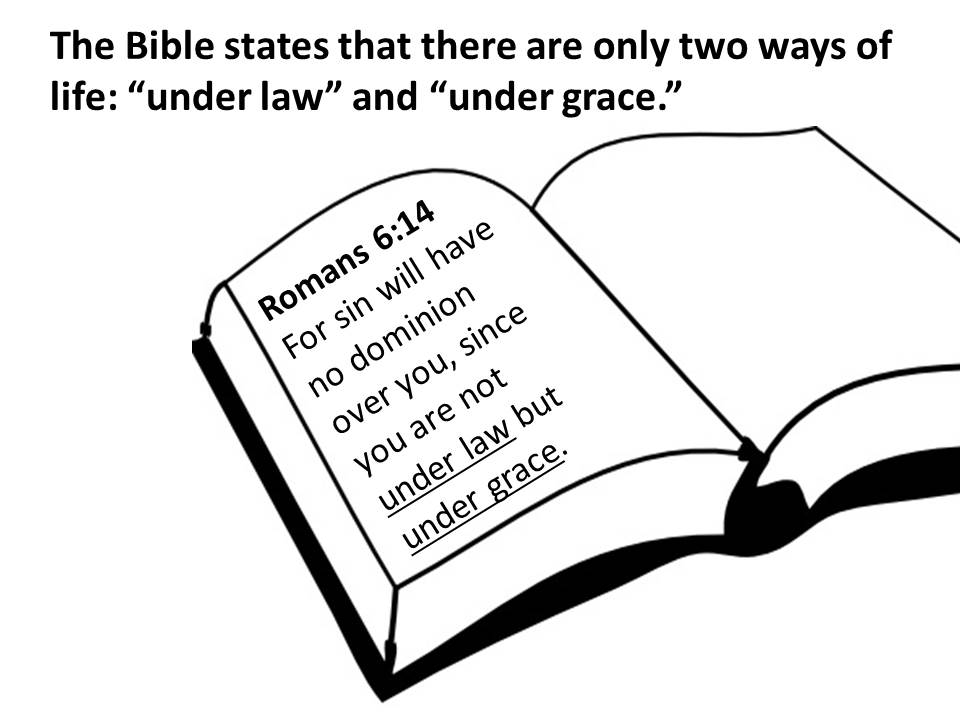
Calvinism is a false gospel that imperils the soul. The apostle Paul made it clear in Romans that there are only two people groups in the world: those under law, and those under grace (ROM 6:14). The lost and the saved. Calvinists declare themselves to be under law. They try to get around this by saying you can be under law and under grace both, but such is not the case. They say it is ok to be under law and covered by grace if we live by faith alone in sanctification; or, living by the same grace that saved us. The whole, “We must preach the gospel to ourselves every day” is indicative of where they stand on law and grace. According to their other gospel, we need the same grace that saved us every day for one reason and one reason only: we are supposedly still under law. Certainly, all people live under the grace of God whether saved or unsaved—we are addressing the grace that saved us initially.
Calvinists use the book of Galatians in an effort to make the opposite point; supposedly, the Galatians were putting themselves under law by attempting to please God in sanctification by keeping the law. Hence, in the Calvinist mind, attempting to keep the law in sanctification is the same thing as trying to keep the law for our justification—they are still under it accordingly….for justification….IN sanctification. In other words, a demand for perfect obedience to the law in sanctification is still the standard to maintain justification. This was Paul’s actual beef with the Galatians: that the law was still a standard for maintaining their justification. The Galatians were adding law to grace in order to maintain grace. So, instead of the law informing their sanctification, they were putting themselves back under the law to maintain justification. That’s why Paul wrote the following to them:
Galatians 4:21 – Tell me, you who desire to be under the law, do you not listen to the law?
Paul continues from there to drive home the point that justification is a settled issue and obligation to the law is separated from it. We are obligated to listen to the law for sanctification, but there is no longer any law obligation to our justification. To say that justification has to be maintained by perfect law-keeping is to be under the law. The Galatians were being taught that rituals such as circumcision completely satisfied the law. But again, being under law is the point here. That is why Paul stated the following:
Galatians 5:2 – Look: I, Paul, say to you that if you accept circumcision, Christ will be of no advantage to you. 3 I testify again to every man who accepts circumcision that he is obligated to keep the whole law. 4 You are severed from Christ, you who would be justified by the law; you have fallen away from grace.
The Galatians were being taught that circumcision satisfied all of the requirements of the law for justification. This led to an antinomianism in sanctification because in these systems there is no distinction between hearing and doing the law in sanctification and the laws relationship to justification. For the unbeliever, the law is the standard for justification because unbelievers are under the law. Christians are under grace and not under the law, so the law has no relevance to their justification. Paul was simply telling the Galatians that if they are under the law, they are obligated to keep all of it for justification. Circumcision or any other ritual does not satisfy the law.
Paul states that we are not under law because the old us that was under the law is dead (ROM 7:1-11), and therefore, the law cannot judge the sins of our mortality (Rom 3:19, 7:8,9). But on the other hand, we are enslaved to the law in sanctification (Rom 8:7,8). Even though we cannot keep it perfectly due to our present mortality, we are enslaved to it and nonetheless strive to keep it in our sanctification. The law was never fulfilled to maintain our justification because there is no law in justification. The law is fulfilled through us in sanctification (ROM 8:3,4). Christ’s death separated the law from justification in the same way that a spouse is no longer under a marriage covenant when the other spouse dies (ROM 7:1-3).
This excludes the necessity for perfect law-keeping in sanctification. Christ accomplished this through His death, not keeping the law for us in sanctification. Calvinists call this, “Christ 100% for us.” Christ’s perfect law-keeping is a given by virtue of who He is and not because perfect law-keeping was part of the Abrahamic covenant of promise which occurred 430 years before the law (GAL 3:17,18).
Which Brings Us to Calvin’s Galatian Error
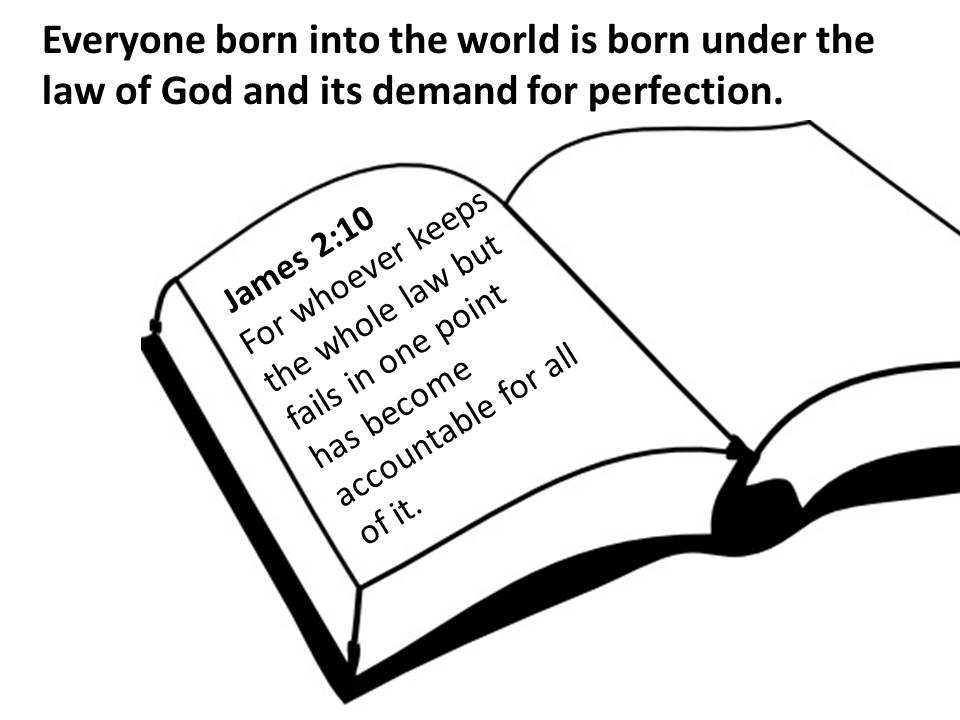
No works salvation system ever promotes a perfect, intelligent obedience to the law. It posits activity on our part that imputes something that counts for a perfect keeping of the law to maintain our salvation. This always leads to antinomianism because a ritual replaces actual law-keeping. Those under grace strive to please God by law-keeping because they are enslaved to the law, but on the other hand, perfection is not the standard because they are hindered by mortality (ROM 8:3,4) and the law can’t judge them because they are no longer under it (ROM 3;19). They are enslaved to it for sanctification, but not under it for justification. Those under grace are enslaved to the law but will not be judged by it; those under law are enslaved to sin and will be judged by the law. The Bible has an awesome way of stating this: those under the law violate it at all points by one sin; those under grace fulfill the law by loving their neighbors and God. The enslavement hindered by the weakness of the flesh fulfills the law in sanctification.
Calvin’s error/false gospel merely replaced the ritual of circumcision with daily re-salvation for the atonement of sin and the perpetual imputation of Christ’s perfect law-keeping for sanctification in order to maintain our justification (Calvin Institutes: 3.14.9-11). “We must preach the gospel to ourselves every day” is a ritual that imputes Christ’s perfect obedience to our sanctification in order to maintain our justification. This was also the fatal error of the Pharisees who replaced the law of God with their traditions and thus, “you have made void the law of God” (MATT 15:6 [most translations : “set aside” and “commandments”). The law is void for justification (the dead letter and covenant of death), but not sanctification.
Therefore, Calvinism keeps the “believer” under the law for justification leading to antinomianism in sanctification because Christ is 100% for us and keeps the law for us in sanctification in order to maintain our just standing. This is well exemplified via the following tweet by a well-known Calvinist:

This was the same result at Galatia as well:
Galatians 5:7 – You were running well. Who hindered you from obeying the truth?
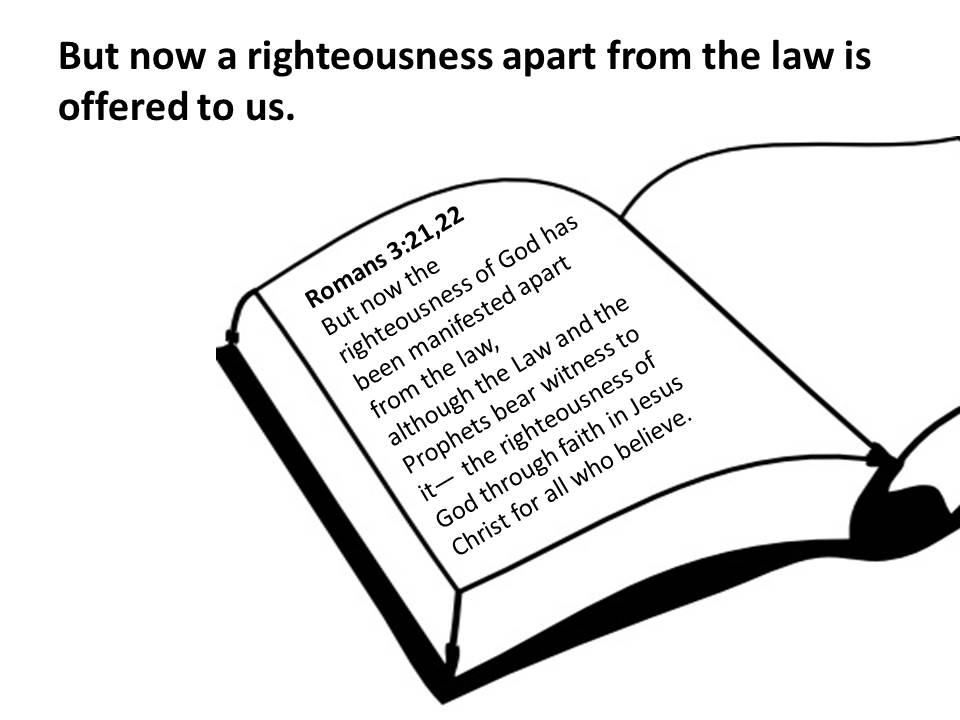
This rejects the believer’s hindered enslavement to the law in sanctification and only leaves one other alternative: under the law. For all practical purposes: lost. Therefore, the Calvinist must be informed that he/she is still under the law and trusting in a false gospel. What imperils the Calvinist soul is a fundamental anti-biblical view of the law. They must be shown the new way of the Spirit.
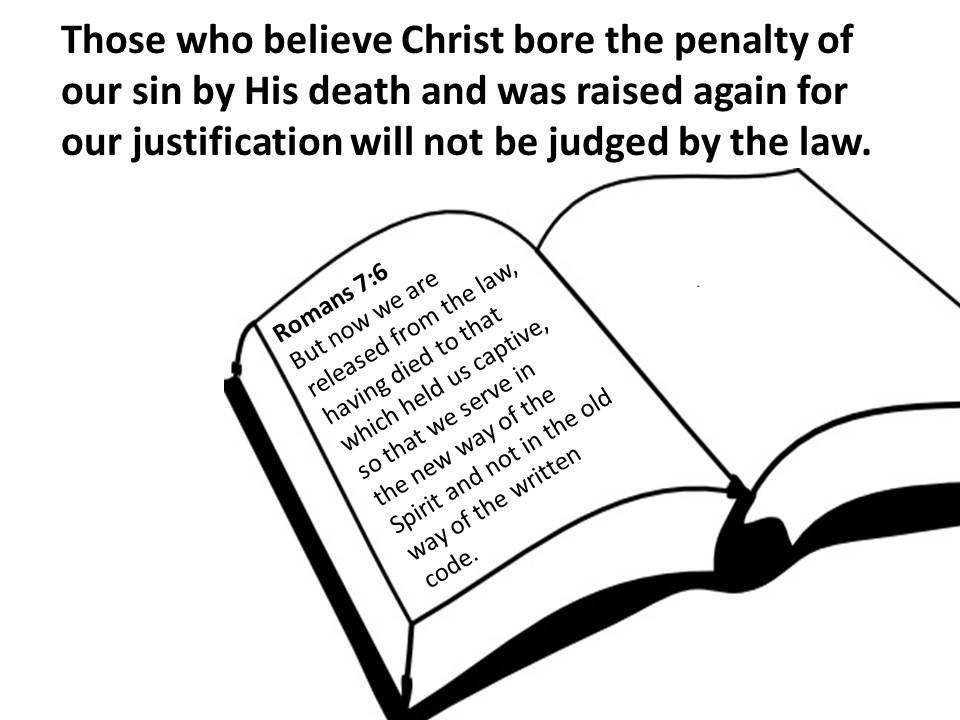
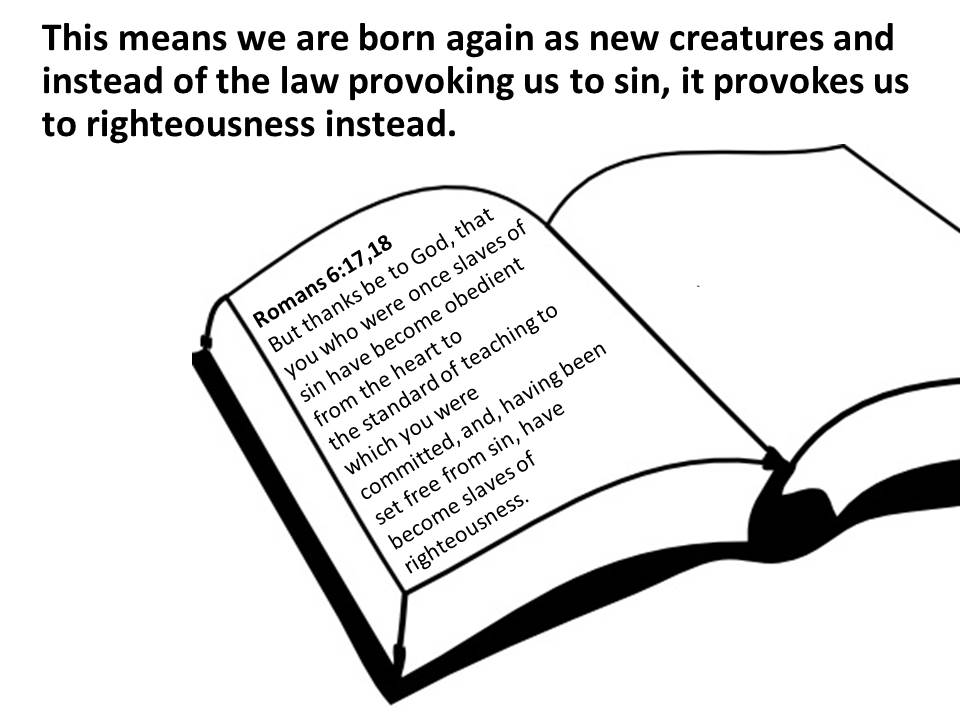
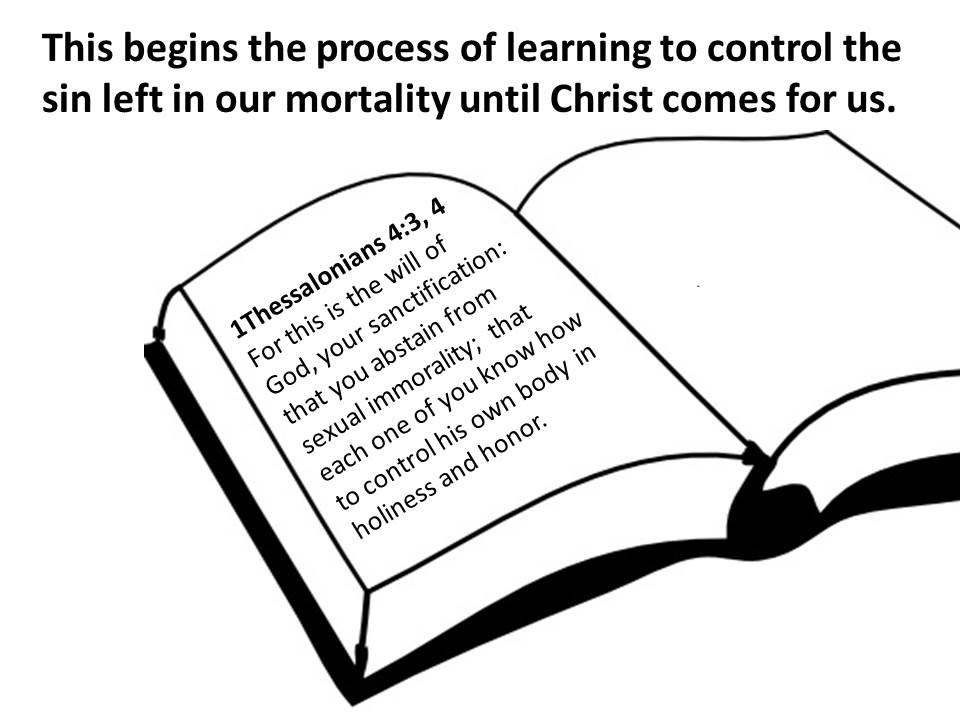
Let me recommend that you then teach them through the following booklet (Click on images to enlarge if necessary):




2013 TANC Conference Links for Friday, Saturday and Sunday 6/21-23
Our Justification Crisis, Perseverance, and Assurance: Part 2
Live Streamed every Sunday @ 7pm from freebereans.blogspot.com
CLICK ON TO ENLARGE

CLICK ON TO ENLARGE

CLICK ON TO ENLARGE

CLICK ON TO ENLARGE
Last week we looked at the nature of the present-day justification crises. Tonight we will look at the relationship between justification, perseverance, and assurance of salvation. This is another topical subject related to the book of Romans that we are adding to our verse by verse study. I have interjected this study because of the rampant confusion related to perseverance and the Christian. Granted, there are verses in the Bible that seem to indicate that Christians have to persevere in their faith to obtain a “final justification.”
If there is anything about election that would endear detractors at all, it is the idea that our justification was determined before the creation of the world, and therefore, there is nothing we or anyone else can do in sanctification to mess that up. Once saved, always saved. Traditionally, Calvinists have been primarily associated with this election idea. The idea makes people uneasy, but at least you get assurance of salvation in the deal. Or do you?
In our endeavor to understand the paramount subject of justification, Calvinism and Reformed doctrine in general must be dealt with. Why? Because as the lazy-thinking church slumbered, Calvinists have established a doctrinal foundation. They own the history. They own the seminaries. They own the publishing companies. They own the debate. They are accepted out of hand as the ones who know. This is what they do—they attempt to create a reality that yields the results that they want. And in our day, they have nearly succeeded. If not for the internet, this would be a done deal.
Many assumptions prevail: total depravity only pertains to the unregenerate. Faith alone (sola fide) only pertains to justification. Christ alone (solus Christus) doesn’t literally mean “Christ alone” to the exclusion of the other Trinity members. Scripture alone (Sola scriptura): instruction for life and godliness, or a meta-narrative for gospel contemplationism? And now we find that election doesn’t really mean “election” per se. Now we find that election justifies you, if you are chosen, but you have to persevere in order to obtain “final justification.”
And this idea is split up into two authentic Calvinism camps. In one camp, the Christian must persevere in sanctification by faith alone with his/her primary nemesis being the temptation to “obey in our own efforts.” “Effort” is the essence of works salvation. Augustine and Calvin both taught that the Sabbath rest was sanctification specifically. Because salvation is a “golden chain” where justification starts, and progresses in the middle towards final justification, we must maintain our justification in the same way that it began at the beginning of the chain. By faith alone. This is the double imputation crowd. Christ’s passive obedience to the cross secured our justification, His active obedience to the law while He lived on earth is imputed to our sanctification as long as we live by faith alone in sanctification. To the contrary, biblical double imputation is the imputation of God the Father’s righteousness to us apart from the law by faith in Christ alone, and the imputation of our sin to Christ. The imputation of Christ’s perfect obedience to the law being imputed to our sanctification to finish justification is NOT righteousness apart from the law.
Now the other camp. They reject Reformed double imputation, but their view of election is also an initial justification that must be maintained by our perseverance. In this case, a general faithfulness to the New Covenant. Note the following comments I received on my blog from a knowledgeable Reformed teacher from this camp:
I think it is clear from Scripture that salvation (election, calling, justification, glorification) cannot be lost. But justification can be initially entered into via faith alone, but we must then remain faithful. This was the error of the Jews, they thought that because they had entered a right standing (justification) with God, they were good to go…. All who have been elected unto mercy will persevere unto salvation, but Scripture makes it clear that there will be some who enter into or begin a relationship with God (justification, a right standing), but who fall away, commit apostasy, are severed from Christ, do not bear fruit, soil their garments, are excommunicated, etc. Another way to say this is that they lose their justification.
Justification is necessary for salvation, but the initial possession of justification does not mean that one will be saved in the end. He must endure….Sure there is – the New Covenant. And our faithfulness to this law will certainly be judged. This is why Paul teaches a gospel of righteousness, self-control and judgment in Acts 25 (or 24?)…. Back to your first statement – there is a standard: it is called the New Covenant. We now have cleansing (forgiveness, justification) through faith in Christ, but just like the Jews, we must also maintain that righteousness by virtue of faithfulness to the moral law – which, by the way, has been the same since Adam and Eve. Furthermore, under the new covenant, it is the Church (the Body of Christ) that is the focus of this covenant. We are enslaved to God, we are bound to the law of the Spirit, the law of Christ, etc. We have all kinds of instruction in Scripture about how to keep the law of God and what to do when we break it.
The key is the covenant community, however. There is no justification outside of the visible, local church…. All who have been elected unto mercy will persevere unto salvation, but Scripture makes it clear that there will be some who enter into or begin a relationship with God (justification, a right standing), but who fall away, commit apostasy, are severed from Christ, do not bear fruit, soil their garments, are excommunicated, etc. Another way to say this is that they lose their justification.
Justification is necessary for salvation, but the initial possession of justification does not mean that one will be saved in the end. He must endure.
Here was one of my responses that I think is the crux of my contention:
The problem is a standard for faithfulness maintaining justification. Those who are justified are no longer under any standard/law that judges whether or not they are justified. The justified live BY the law as a pattern of life, but not FOR justification. We are justified “apart from the law” and it is impossible for us to sin in the eyes of justification because apart from the law, “sin lies dead.”
That’s the problem. There is no standard or way to judge faithfulness in regard to justification because we are no longer “under the law.”
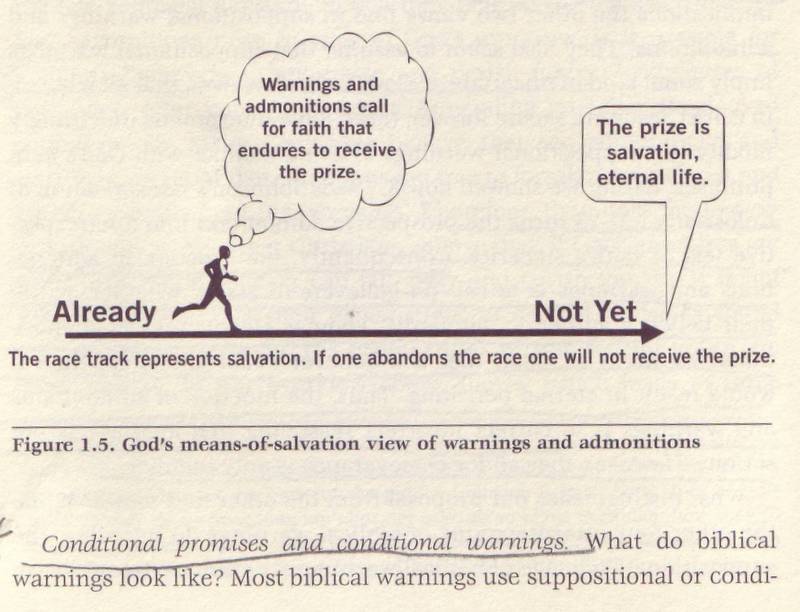
This view by camp B is specifically called, mutable justification. So, these are the two authentic Calvinist camps: Reformed double imputation and mutable justification. Both of these ideas are referred to the reformed motto, already-but not yet. Here is yet another assumption, that this is a Reformed paradox. Not so, “already” is initial justification; “not yet” is perseverance. This is why Calvinism is predicated on lack of assurance. The following is an illustration from the Reformed book, The Race Set Before Us p. 40:
CLICK ON TO ENLARGE
Now, let me begin by saying that election must be completely reevaluated because most of the thinking in regard to it has come from Reformed orthodoxy. That makes election according to the Reformers extremely suspect, especially since it is not really election to begin with. And trust me, for six years, I have been dealing with the justification issue and its relationship to the law and have not had time to reevaluate the metaphysics of election, and I know, much to the consternation of many of PPT’s (blog) readers. But I want to begin our evaluation of justification’s relationship to perseverance and assurance by beginning with what we do know about election. We have addressed the reality of the present-day foundation that dominates the church; now let’s look at this biblically.
What do we know today, here at the Potter’s House, about election? First, we know its purpose. Its purpose is to completely remove works from justification:
Romans 9:11 – though they were not yet born and had done nothing either good or bad—in order that God’s purpose of election might continue, not because of works but because of him who calls— 12 she was told, “The older will serve the younger.” 13 As it is written, “Jacob I loved, but Esau I hated.”
This couldn’t be clearer: God’s purpose in election is to remove all of our works from justification and make it dependent on the “call.” By the way, though I haven’t revisited the metaphysical questions of election yet, I do reject, on the basis of Scripture, that the call equals fatalistic determinism. Now, I don’t know how that fact is going to play out when I revisit this, but to date, I know that much. This brings us to the second thing that we know about election. In the following text, election is referred to as the call:
Romans 8:30 – And those whom he predestined he also called, and those whom he called he also justified, and those whom he justified he also glorified.
Stop right there. Here is where we drive a stake. If we can’t take this at face value, neither can we take John 3:16 at face value. The two things we know about election is that it has two purposes: one, to eliminate all works in justification; therefore, perseverance must be excluded from justification because perseverance has to be judged by a standard. To meet that standard is a work. Perseverance must be severed from justification completely. Secondly, election is for assurance of salvation. Election is the bedrock of our assurance. Paul makes this clear in the next verses immediately following:
31 What then shall we say to these things? If God is for us, who can be against us? 32 He who did not spare his own Son but gave him up for us all, how will he not also with him graciously give us all things? 33 Who shall bring any charge against God’s elect? It is God who justifies. 34 Who is to condemn? Christ Jesus is the one who died—more than that, who was raised—who is at the right hand of God, who indeed is interceding for us. 35 Who shall separate us from the love of Christ? Shall tribulation, or distress, or persecution, or famine, or nakedness, or danger, or sword? 36 As it is written,
“For your sake we are being killed all the day long; we are regarded as sheep to be slaughtered.”
37 No, in all these things we are more than conquerors through him who loved us. 38 For I am sure that neither death nor life, nor angels nor rulers, nor things present nor things to come, nor powers, 39 nor height nor depth, nor anything else in all creation, will be able to separate us from the love of God in Christ Jesus our Lord.
Now, how can glorification be spoken of in the past tense? Because it is a finished issue. It is guaranteed. In addition, the philosophers among us can probably be a help here, but I assume there is no beginning and end in eternity. This calling took place before creation. So does this mean there was never a time when we weren’t elected? That would be an interesting discussion for the philosophers among us. But sanctification is not in Romans 8:30 because sanctification has no connection to justification. Justification results in glorification. The two are inseparable because the calling guarantees glorification.
Romans 11: 29 – For the gifts and the calling of God are irrevocable.
John 6:35 – Jesus said to them, “I am the bread of life; whoever comes to me shall not hunger, and whoever believes in me shall never thirst. 36 But I said to you that you have seen me and yet do not believe. 37 All that the Father gives me will come to me, and whoever comes to me I will never cast out. 38 For I have come down from heaven, not to do my own will but the will of him who sent me. 39 And this is the will of him who sent me, that I should lose nothing of all that he has given me, but raise it up on the last day. 40 For this is the will of my Father, that everyone who looks on the Son and believes in him should have eternal life, and I will raise him up on the last day.”
Verses that seem to indicate a necessary perseverance by the believer to the obvious hindrance of assurance must be interpreted in light of Romans 8:30 and 9:11-13. These verses are definitive. Furthermore, 1John 5:13 states unequivocally that we can presently know that we have eternal life. If final justification awaits a confirmation in the future as a result of our perseverance, this is ambiguous at best. Though we are born again, our ultimate confidence, our sure confidence, is in God. Moreover, the New Covenant is a one-way covenant that does not depend on anything we do. We enjoy the benefits of the covenant as heirs, but all the riches of the inheritance are because of the testator, not our contribution to that covenant. The Old Covenant was the will; the New Covenant is the inheritance upon the death of the testator, Jesus Christ. The fullness of the inheritance will be realized at the new heavens and new earth.
There are many, many, conditional promises in the Bible, for example, EPH 6:1-3, but The Promise, the Abrahamic Covenant that is built by all the other covenants, is UNCONDITIONAL. God put Abraham in a deep sleep and consummated the covenant himself. The thief on the cross contributed nothing to his election. He only believed, and was assured by God Himself that he would be in heaven that day. Not because of anything he did, there was no perseverance to be had by him—he could only hang there with the hope he had been given by God’s promise.
So what is going on with all of the verses in the Bible that seem to indicate a requirement on our part to persevere in order to obtain a supposed “final justification”? You can consider Romans 8:30 and 9:11-13 point one, and the following point 2: perseverance is stated throughout Scripture as a characteristic of salvation, but not a condition. We are engaged in warfare, and the friends of God and the enemies of God are evident. During the tribulation period as now, the side you are on is manifest. We are not justified by anything we do, but we can be called justified by what we do. Our actions justify our justification. We have a good example of this in the book of James:
James 2:14 – What good is it, my brothers, if someone says he has faith but does not have works? Can that faith save him? 15 If a brother or sister is poorly clothed and lacking in daily food, 16 and one of you says to them, “Go in peace, be warmed and filled,” without giving them the things needed for the body, what good is that? 17 So also faith by itself, if it does not have works, is dead.
18 But someone will say, “You have faith and I have works.” Show me your faith apart from your works, and I will show you my faith by my works. 19 You believe that God is one; you do well. Even the demons believe—and shudder! 20 Do you want to be shown, you foolish person, that faith apart from works is useless? 21 Was not Abraham our father justified by works when he offered up his son Isaac on the altar? 22 You see that faith was active along with his works, and faith was completed by his works; 23 and the Scripture was fulfilled that says, “Abraham believed God, and it was counted to him as righteousness”—and he was called a friend of God. 24 You see that a person is justified by works and not by faith alone. 25 And in the same way was not also Rahab the prostitute justified by works when she received the messengers and sent them out by another way? 26 For as the body apart from the spirit is dead, so also faith apart from works is dead.
This isn’t that complicated. Saving faith justifies us, and is alive: therefore, works result that per se, justify us, or show that we are justified. Rahab wasn’t justified by what she did, her actions revealed the fact that she was justified. This is also the Bible’s way of making a strong statement about Christians acting like Christians. Stating that we are justified by what we do is using an obvious contradiction to get our attention: behavior is so intrinsically connected to the new birth that for all practical purposes you can say one is justified by what they do. This is the point James is making. And I think that point is made throughout Scripture:
Romans 2:13 – For the hearers of the law be not just with God, but the doers of the law shall be made just (Wycliffe Bible).
You can’t read the book of Romans and think for a second that Paul is talking about being justified by the law. The point is made here: obedience justifies the claim that we are justified. Likewise, those who are justified persevere as a characteristic of the justified; the perseverance does not make them justified. It’s our character resulting in practice, not our position. All such verses can be read in that way.
This is the third point concerning assurance: practice gives assurance. No text gives this more clarity than 2Peter 1:5-11:
3 According as his divine power hath given unto us all things that pertain unto life and godliness, through the knowledge of him that hath called us to glory and virtue: 4 Whereby are given unto us exceeding great and precious promises: that by these ye might be partakers of the divine nature, having escaped the corruption that is in the world through lust. 5 And beside this, giving all diligence, add to your faith virtue; and to virtue knowledge; 6 And to knowledge temperance; and to temperance patience; and to patience godliness; 7 And to godliness brotherly kindness; and to brotherly kindness charity. 8 For if these things be in you, and abound, they make you that ye shall neither be barren nor unfruitful in the knowledge of our Lord Jesus Christ. 9 But he that lacketh these things is blind, and cannot see afar off, and hath forgotten that he was purged from his old sins.
10 Wherefore the rather, brethren, give diligence to make your calling and election sure: for if ye do these things, ye shall never fall: 11 For so an entrance shall be ministered unto you abundantly into the everlasting kingdom of our Lord and Saviour Jesus Christ (KJV).
Obviously, Peter isn’t talking about solidifying our election through works; he is talking about making our election sure to ourselves through obedience. This is also the major theme of 1John. Verse ten strikes a contrast between it and verses eight and nine. We can forget that we have been purged from our sins and heaven can become a distant reality. Also note that there is a quality of entry into heaven (v.11). Some translations refer to a “rich” entry into heaven. Verse ten refers to falling into deep sin. This is a picture of someone who is unsure of their standing with God. We can’t work for our justification, but we can certainly work for our assurance. Peter calls for “diligence” in this regard. One of the elements he mentions that needs to be added to our faith is “patience.” This has the idea of “endurance” and “perseverance.” The three words are used interchangeably throughout Scripture. The reward for our perseverance is assurance—not salvation.
I would like to close with some charts. The following two are from last week and illustrate what we have discussed in general.
CLICK ON TO ENLARGE
CLICK ON TO ENLARGE
The next one is from page 24 of False Reformation:

Justification is a one-time declaration. Salvation is a little different. At salvation we receive all of the blessings and power of heaven. As we appropriate that power through obedience in sanctification the reality and power of our salvation is experienced. This gives assurance, and shows others that we are justified. In that regard we are justified by our works.
Addendum:
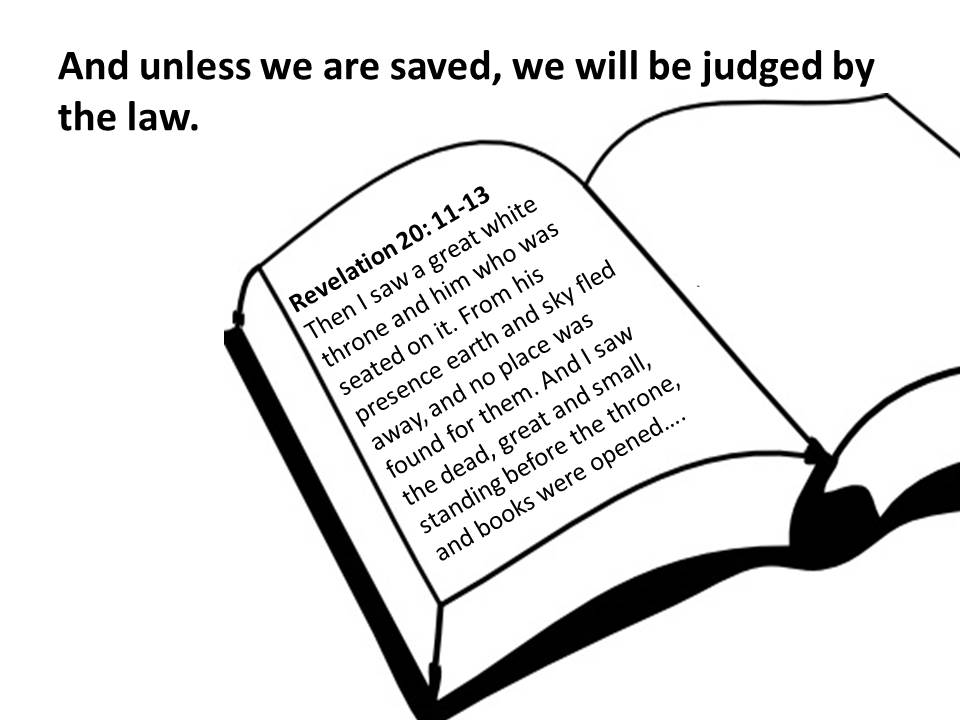
We have discussed many reasons why we believe that Christians will not stand in a final judgment to determine final justification. We reject the idea that justification has a beginning, process, and end (aka, justification, “progressive sanctification” and final justification confirmed at a final judgment). We find that at the final judgment, books are opened and the “dead” are judged from the books according to what they have done (REV 20:11-14). Being “under the law,” we assume that they are judged according to the law. Everyone at this judgment has died. This is NOT so with the OTHER judgment that seems to be primarily a judgment for rewards.
We believe that Christians will not be judged by the law in a final judgment. It is very possible that our sins were once recorded in those books, but were blotted out when we gave our lives to Christ:
Isaiah 43:25 – I, I am he who blots out your transgressions for my own sake, and I will not remember your sins.
Many texts document the fact that God will not remember the sins of the redeemed (a few: HEB 8:12, 10:17, JER 31:34, Micah 7: 19 ISA 44:22, Acts 3:19, PS 103:12) . As the apostle Paul said, “love does not keep a record of wrong.” At one judgment, Christ states, “depart from me….I never knew you.” “Knew” probably refers to the fact that He never loved them as a kingdom heir. At the final judgment, there is obviously a record of sin. But of particular interest is the blotting out statements. Again, this probably refers to the idea that our sins were once recorded in those books, but were blotted out when we were saved. Similar language is used to refer to those who are blotted out from the book of life:
Psalm 69:28 – Let them be blotted out of the book of the living; let them not be enrolled among the righteous.
A Scriptural study of the books is critical to understanding justification and the grace of God. How many of us have been taught this subject in-depth? Let me give you some framework as a result of some residual study I have done. There appears to be books where all of the sins of mankind are recorded, and the book of life in which all who are born into the world are recorded. A cursory observation seems to point to the idea that the saved are blotted out of the books that record sin, and not blotted out of the book of life. It is also possible that some are never recorded in the book of life even though they walk the earth at some point. The Lamb’s book of life may also be a separate book. Christ promised the saved would never be blotted out of the book of life (one among many: REV 3:5).

 Paul's Passing Thoughts
1 comment