Calvinism and Communism: A Comparison; 13 minute video
Do you think when you hear on the one hand, “We didn’t do that, the Holy Spirit did it,” and on the other hand, “You didn’t build that” –that there is a difference? Well, you’re wrong.
Justice, and Why Christians Leave Church

“It’s not about injustice, It’s about Jesus.”
~ Producer of “Unearthed”
Justice: One Reason People Don’t Go to Church: Romans 13:1-7
1. Romans 13:1-7
A. What does this have to do with people not going to church?
b. Everything.
2. “Unearthed” video clip.
A. Seems to be EVERYTHING Christians would agree on as well as all moral people.
a. “You can’t legislate morality; you have to change people’s hearts.”
b. It calls men to stand up and be moral, and therefore circumventing the demand for porn.
c. Tim Keller
- A man’s “sense of justice.”
- The men are victims too; they are slaves.
- The gospel is the key. (the collective soul will be explained).
d. Mark Driscoll
- It hurts EVRYBODY, not just the man enslaved to porn.
† Voice of reason; man is an island is a misnomer hurtful to society.
†† The collective good.
e. It’s the “portal”; soft porn ultimately leads to sex trafficking.”
f. You can’t keep picking the fruit (ie, stop the behavior), you have to cut off the root.
g. If we do this, it is hard telling what society will “look like” versus BE like.
h. We want move beyond the problem and make a film about the solution.
- Title: The Hearts of Men.
- Christ moves beyond symptoms and deal with the HEARTS of men.
† Interpretive question: what is the “heart.”
i. Action.
- Primarily pray for the victimizers as well as the victims.
- Share
- Give Money
3. What is really going on here?
A. Their definition of the gospel is the societal collective Psyche.
B. Their definition of the heart is the soul of man.
4. The construct defined.
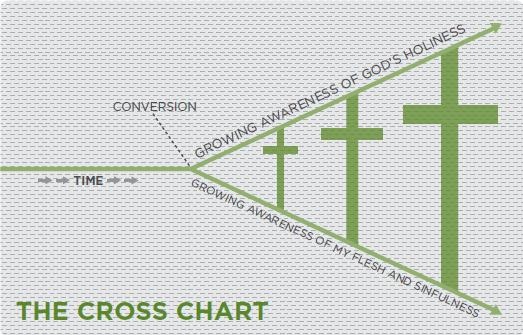
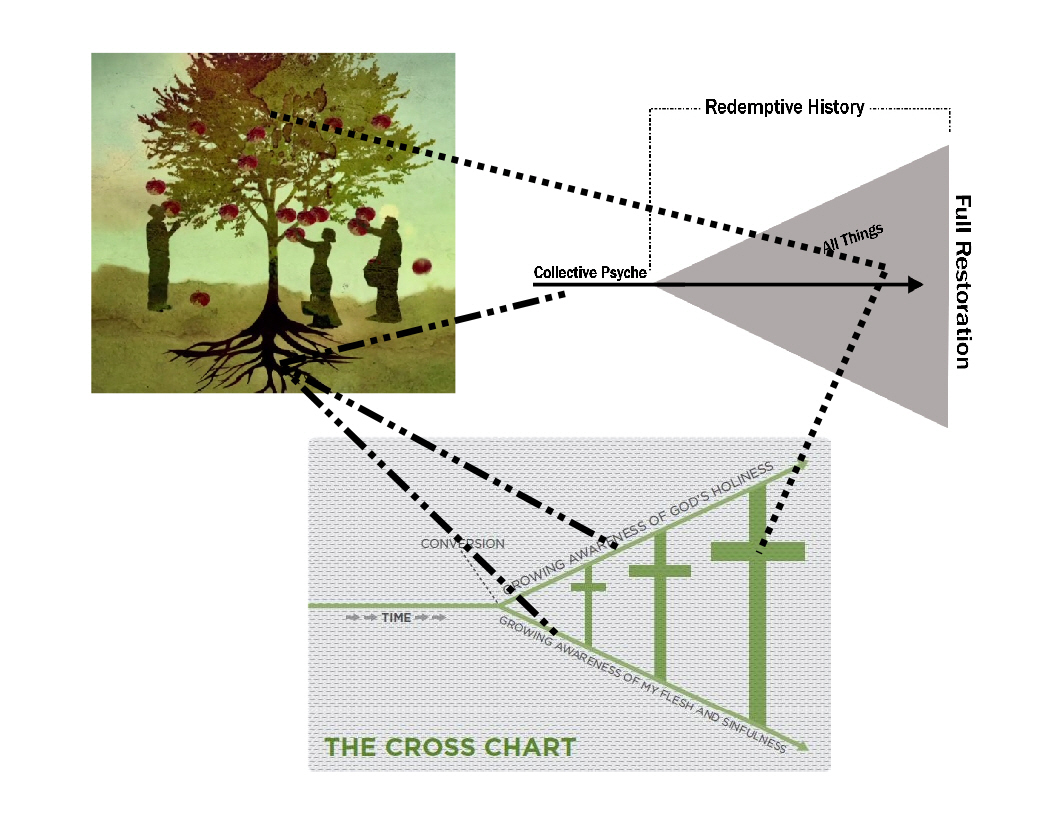
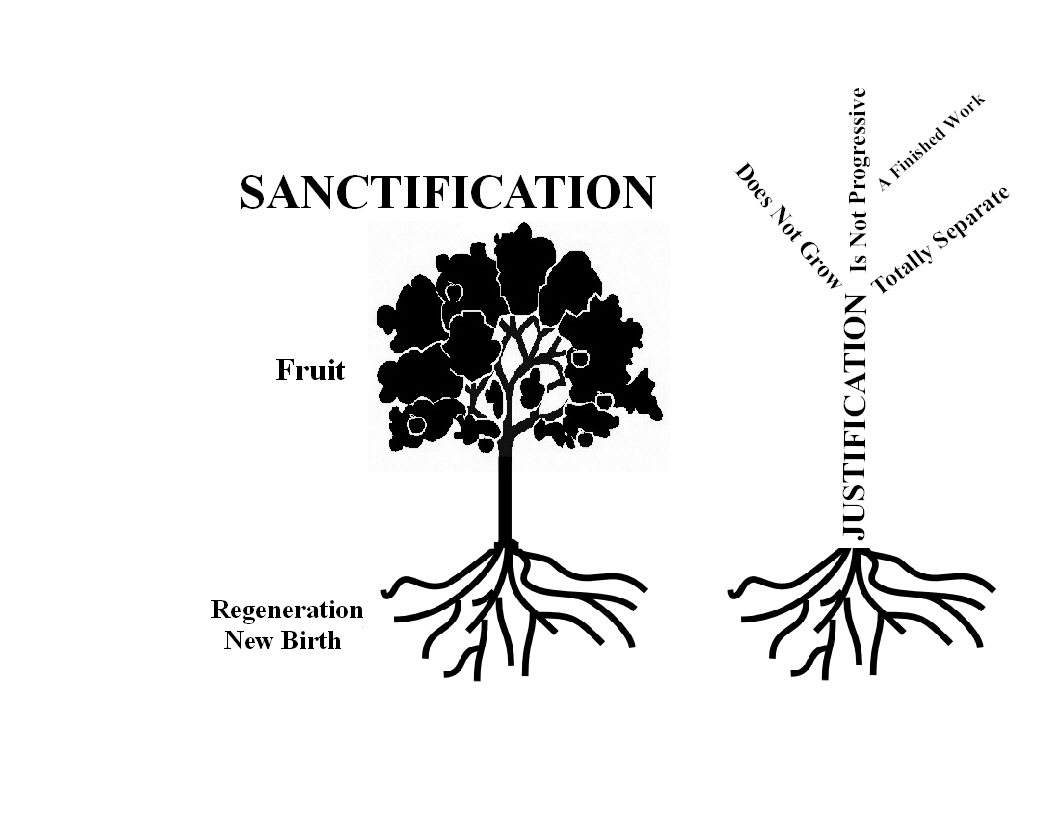
A. Image #1
a. The collective psyche is the root.
b. All things progressing toward restoration is the fruit.
c. Image #2—the tree in the video.
d. Church historian and author John Immel
- Image #1
- The root is IDEAS.
- The fruit is what society “looks like” as a result of the ideas.
B. The soul.
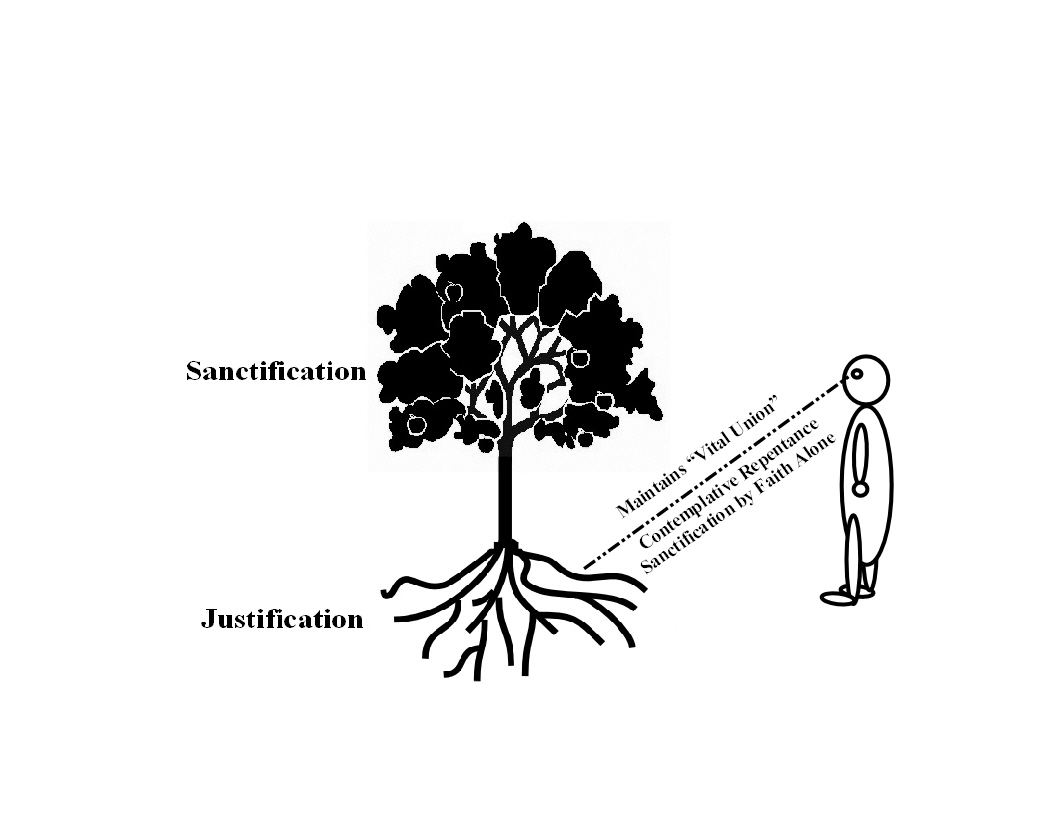
a. Like a tree, the “heart” has a root and fruit.
b. This is the Heart Theology of Neo-Calvinism.
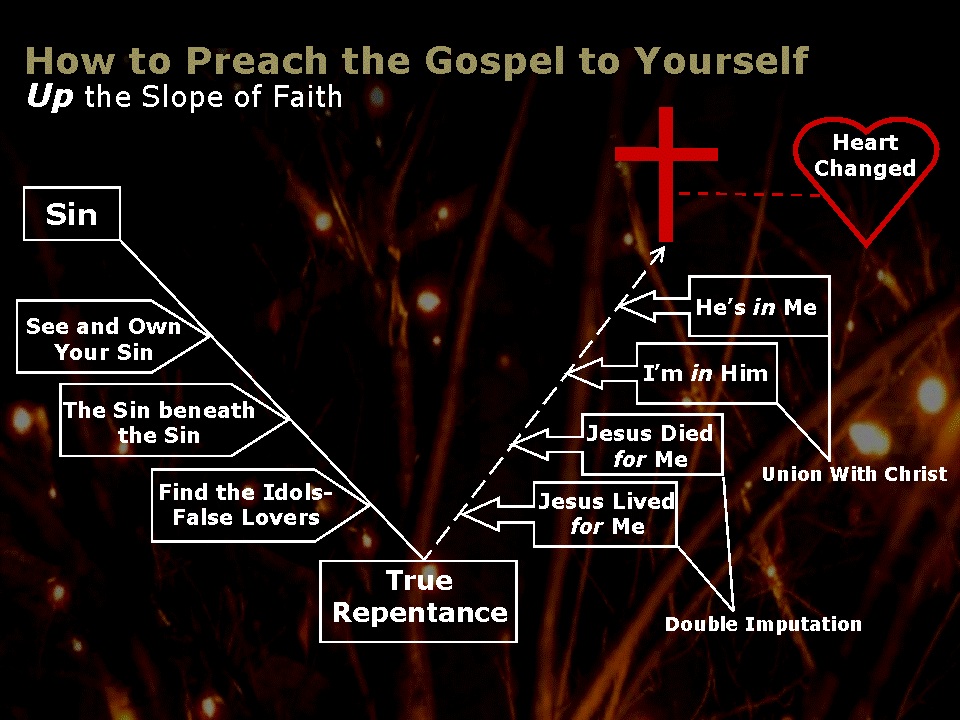
- Pastor rant: “I am sick of the “root and fruit gospel”
- What is it? Image #3
- Man is totally depraved/incompetent, therefore, his root ideas must be supplied for the collective good of society.
- Moreover, his ideas should be compelled by force for the betterment of society.
- What man thinks is what society is.
† This is the collective soul making the collective psyche resuting in the ideal society.
- This is Plato: man’s soul is a mirror image of society; society is a tree of fruit and root, and man’s soul is a tree of fruit and root.
- Image #4
- Compare to Image #1
- Image #5
c. The video NEVER states that man changes; it states, like communism, that society is the manifestation of man’s thinking, and that man does not know what to think, and must be compelled to think the right things through being educated by the enlightened, and for the betterment of society, by force if necessary.
d. Man is too incompetent to be a problem, bad ideas are the problem. The Neo-Calvinist therefore deems him as someone who should be prayed for, and at times agrees with the state that he/she should be executed if they refuse to repent of their own ideas—for the collective good of society. It’s nothing personal, it just so happens that your body is the bearer of bad ideas that are hurtful to society. No man is a bad person per se, ideas are the problem.
5. Justice: the story of two realities.
A. The justice of Romans 13:1-7 versus the justice of Plato’s Republic.
a. Government is a gift to man by God and is His servant for the good of man.
b. God exhorts man to have a sense of justice and to follow Him, and man is capable of doing so, and has a free will to do so.
c. However, when injustice takes place via the choices of men, God warns Christians and the unregenerate alike (throughout the New Testament) that the government is His servant to enforce justice and punish injustice. Hence, God is pleased with the natural flow of justice, but warns that He will enforce justice sooner or later; presently by government, or in the future via His White Throne Judgment.
d. Man is without excuse because he is created with a conscience—Paul exhorts Christians to live by their consciences.
B. Plato’s Republic insists that ALL justice comes from the root because man is incapable of knowing good and reality. Therefore, it does NO good to enforce behavior, what man believes is what must be enforced, and this root will result in societies fruit.
Conclusion
History tells us that Plato’s construct does not work. And because it has become the premise of the church’s Heart Theology, church doesn’t work. Hence, people stop going to church for the same reason that people do not move from America to Russia.
“It’s not about injustice, It’s about Jesus.”
~ Producer of “Unearthed”



The Law and Why Calvinists are in Danger of Hell
 “Incredibly, Calvin’s view of double imputation raises its hand and counts itself with the unbelievers.”
“Our attitude towards the law in sanctification shows what we believe about the law in justification, and that’s the difference between a true gospel and a false gospel.”
Calvinists are in danger of hell because of their view of the law. This can be primarily seen in their view of double imputation (will define shortly). This has everything to do with the gospel. Simply stated, Calvinism believes the law is the standard of justification. In contrast, the biblical gospel states that the law has been completely removed from justification. This is why it is ever-so critical that justification and sanctification are separate. If we are justified apart from the law, we can aggressively practice the law to glorify God in sanctification.
Calvin’s view of double imputation clearly shows that the Reformers believed that law is the standard for justification. Because of this, they expanded Christ’s role in the atonement to include His perfect obedience while He was on earth and lived His life among mankind (out of this comes the idea that Christ had to prove Himself to be a worthy sacrifice as opposed to being worthy by virtue of who He is). He died for our sins, but He also obeyed, or “fulfilled” the law in our stead. There are many, many, many problems with this view biblically, but primarily, it keeps believers, “under the law” and NOT “under grace.” These are the ONLY two categories in the Bible that distinguishes the lost from the saved. Calvinism categorizes “believers” as lost people. Incredibly, Calvin’s view of double imputation raises its hand and counts itself with the unbelievers.
The biblical double imputation follows: God the Father’s righteousness is imputed to us, and our sins are imputed to Christ. Therefore, His death took the old us and our sins to the grave. The Holy Spirit raised Christ from the grave, and also regenerates or quickens all of those who believe the gospel.
Calvin’s double imputation recognizes that Christ paid the penalty for our sins, but insists that the law had to be perfectly obeyed for us, or we cannot be truly righteous because we fall short of perfect law keeping. This perfect law keeping must then be perpetually applied to our sanctification by faith alone. It keeps Christians under the law for justification (Rom 6:14). Supposedly, this is ok because Christ kept the law for us.
Though the Bible continually states that the law has been voided in regard to our justification, Calvinism insists the following: It’s voided because Christ fulfilled it. This is why Calvinists are constantly referring to the righteousness of Christ being imputed to us, but the Bible doesn’t say that—it states that the righteousness of God the Father was imputed to us. Christ’s death put an end to the law, not His perfect obedience. The imputation of Christ’s obedience to sanctification to keep us justified is a “relaxing” of the law, and Christ sternly warned against that. Our attitude towards the law in sanctification shows what we believe about the law in justification, and that’s the difference between a true gospel and a false gospel.
What does the Bible say about the law in regard to our justification? Let’s see:
Romans 3:19 – Now we know that whatever the law says it speaks to those who are under the law, so that every mouth may be stopped, and the whole world may be held accountable to God. 20 For by works of the law no human being will be justified in his sight, since through the law comes knowledge of sin. 21 But now the righteousness of God has been manifested apart from the law, although the Law and the Prophets bear witness to it— 22 the righteousness of God through faith in Jesus Christ for all who believe.
I am not sure what is clearer. The law speaks only to those under it in regard to justification. The law informs the believer in sanctification (“although the Law and the Prophets bear witness to it” also see Gal 3:21), but we are no longer under it for justification: “Now we know that whatever the law says it speaks to those who are under the law” We are justified by God the Father THROUGH faith in Christ:
Romans 3:25 – whom God put forward as a propitiation by his blood, to be received by faith. This was to show God’s righteousness, because in his divine forbearance he had passed over former sins. 26 It was to show his righteousness at the present time, so that he might be just and the justifier of the one who has faith in Jesus.
Here, we see that Christ’s role in the atonement was His bearing of our sin, not any keeping of the law. And God the Father is the “justifier,” not Christ. To replace the Father as “justifier” with Christ because Christ supposedly fulfilled the law is a false gospel. Why?
Romans 3:27 – Then what becomes of our boasting? It is excluded. By what kind of law? By a law of works? No, but by the law of faith.
No fulfilling of the law for justification was needed. We are justified by the “law of faith.” Think about it, has Christ ever needed faith? Only we need faith, not Christ. Christ didn’t fulfil any law for our justification, that law, in justification, is replaced with the law of faith because there is NO law in justification. Hence…
Romans 3:28 – For we hold that one is justified by faith apart from works of the law.
And that includes works of the law by anyone—it doesn’t matter who is doing the work—it’s irrelevant—we are justified by the “law of faith”—there is NO other law in justification. Why would Christ have to fulfil a law of faith? Did He lack faith? I think not.
Let’s add to our thinking with the following:
Romans 4:15 – For the law brings wrath, but where there is no law there is no transgression.
Romans 4:24 – but for ours also. It will be counted to us who believe in him who raised from the dead Jesus our Lord, 25 who was delivered up for our trespasses and raised for our justification.
Note: the summation of Christ’s role in the atonement is here stated: He died for our sins, and was raised from the dead by God through the Holy Spirit. If a perfect obedience to the law is part of that, why would Paul exclude it here?
The Calvinist view of double imputation removes God the Father as the justifier and makes works of the law the basis of justification rather than the law of faith.
It’s a false gospel.
paul

 Paul's Passing Thoughts
1 comment