Smoking Gun: ACBC is a Nationwide Divorce Mill
Orig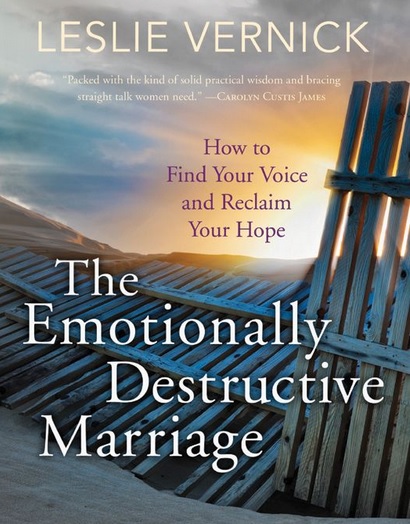 inally published July 13, 2015
For a more detailed discussion on this book, check out Susan Dohse’s book review and commentary here
Christ made it clear that what God has brought together NO man is to separate. Does this mean God predetermines every marriage in regard to particular spouses? I doubt it. This probably refers to God’s covenant of marriage and the theology of vows. At any rate, death, unrepentant adultery, and an unbeliever who abandons their believing spouse are the only exceptions.
How does one live happily with a spouse who has become difficult? For Protestants, that is a hard question because the focus has been on justification for 500 years with little emphasis on the biblical art of godly living (sanctification). When you are supposedly sanctified by a perpetual “return to the gospel afresh”… knowledge on how to repair a marriage is going to be what it is today, practically nonexistent. And of course, living by the same gospel that saves us (not saved us) is a very complex matter needing the ongoing “research and development” of gospel-centered experts.
Add to that: Protestants don’t even have justification right. Little wonder then that the institutional church is a train wreck after 500 years of scholarship and trillions of hard-earned laity dollars. What is the answer? The answer is a laity movement that will reclaim the priesthood of believers seized by Gnostic hacks dressed in biblical garb.
The answers will come through one Lord, and one word interpreted by individuals indwelt by the Spirit who gives all knowledge needed for life and godliness liberally. In case we forget the obvious, “I was only obeying the elders” will not cut it when you stand before Christ and His blazing eyes of fire. The Nazis were very good at being “subordinate,” and many were hanged accordingly. I realize Reformed elders claim God gave them His authority to rule on earth, but you may want to rethink that claim.
As predicted, the biblical counseling movement overseen primarily by the Association of Certified Biblical Counselors (ACBC) has become a divorce mill via its efforts to build marriages that “look like the gospel.” And the smoking gun is a book written by Leslie Vernick titled The Emotionally Destructive Marriage: How to Find Your Voice and Reclaim Your Hope that is widely used among ACBC counselors.
The obvious problems here are first seen in the title of the book. As Christians, is it really our goal to, “find our voice”? I thought it was our goal to please God in every circumstance. Secondly, the idea of emotional destruction is subjective at best and a ticket to do anything you want at worst. To make the point here, Google “American Civil Law.” In a culture judging anything that causes bad feelings to be abuse, such an approach to “biblical counseling” should give one pause.
Thirdly, why do Christians need a 240 page book written by a serial regurgitator of other people’s thoughts to FIND hope? You would think that by now Christians would be fairly certain about where hope is found.
Chilling is the examination of the 61-question survey found in the book that supposedly determines if one is in an abusive relationship or not. In the hands of a person that is unhappy in their marriage, the outcome will be a foregone conclusion. It’s like asking a chicken if Colonel Sanders is an emotional abuser.
The lynchpin becomes the ACBC’s loose interpretation of 1Corinthians 7:12-16. If the spouse is already an unbeliever, emotional abuse is tantamount to departing from the marriage even if they have not left physically or filed for divorce. Church discipline takes care of the pesky obstacle of the “abusive” spouse being a believer—they can be declared an unbeliever…actually MADE an unbeliever by elder authority supposedly vested to them by God. This paves the way for sanctified divorce.
It boils down to this: whoever is handed the book by the counselor is coronated as the abused spouse. Be sure of this: if both counselees in a bad marriage were handed the book, both would be guilty of the same thing. This is the smoking gun: it depends on who the ACBC “biblical counselor” wants to label abusive for whatever the motives might be.
I think a present situation that I am involved in says it all. I know enough about the situation to know that if the person I am talking with took the book’s survey, the other spouse would be judged as emotionally abusive hands down. The other spouse was handed the book because of who the ACBC counselor wanted to label “abusive.”
This is the niche service that Leslie Vernick now supplies to ACBC counselors.
paul
Protestant View on Atonement Dies Hard
Updated July 14, 2017
Most Facebook discussions aren’t pretty. Oh, they start out innocent enough, but they have a tendency to turn ugly in a hurry, especially when you challenge pet doctrines. It doesn’t take long for the name-calling and other ad hominem attacks to ensue. But every once in a while you encounter a group of individuals who express a modicum of politeness and respect even if you don’t manage to persuade them with your argument.
I hold out some hope for the folks involved in the following discussion. As you can see for yourself, their overall tone of civility leads me to believe that some of them just might be persuaded one day (perhaps as the lingering words of the argument echo in their minds and they have time to reflect on them and the Holy Spirit uses them to bring about conviction).
The roots of Protestant orthodoxy run deep, as the many well-documented examples here at Paul’s Passing Thoughts affirm. Therefore it doesn’t really come as any surprise that so many Christians demonstrate such a woeful misunderstanding of a doctrine such as “The Atonement” or hold on to that same misunderstanding so vehemently. Yet when so many Christians begin with the assumption that believers still sin, it only stands to reason that the obvious conclusion is that some need for perpetual “covering” of that sin is required.
Therein lies the error. Believers don’t sin because sin is ENDED. Sin is ended because they are born again. And if sin is ended, then there is no more need for a covering!
~ Andy
“So then, the law was our guardian until Christ came, in order that we might be justified by faith. But now that faith has come, we are no longer under a guardian, for in Christ Jesus you are all sons of God, through faith.” ~ Galatians 3:24-26
“For if we sin wilfully after that we have received the knowledge of the truth, there remaineth no more sacrifice for sins” ~ Hebrews 10:26


New comments were added to this discussion this afternoon:


New comments added as of 7/13/2017


 New comments added July 14, 2017


Why Born-Again Believers Should Offend God Less Than Unbelievers
 In yet another example of how Protestantism is wrong about virtually everything; its orthodoxy calls for a belief that there is no moral difference between Christians and non-Christians. This ministry has documented a vast number of citations that make this point other than the constant affirmation thereof heard on Christian radio, TV, and everyday conversations. The belief that Christians actually offend God less than unbelievers is often dubbed “moralism.”
The home fellowship gospel is stated by the practice of meeting in homes which exemplify a literal new birth into the family of God, or the “household of faith.” The household is God’s literal family. It is also a body versus an institution, and gifts versus authority; the only authority is the head of the body, Christ. The body has one head. The focus is cooperative group contribution to the knowledge of Christ, not groupthink.
Elders are apt to teach and protect the group from error as each discerns for themselves whether or not the teaching seems right according to Scripture. Hence, the elder is a contributor to the body like all the other gifts. Eldership is a gift, not a position of authority. In the body analogy, the organs and members are gifts for edifying the body.
Key to understanding all of this is the new birth and how it changes a person’s function in the real world.
The beginning point is the believer’s relationship to the one law, or the Bible. One law—two relationships: condemnation and love or under law and under grace, and also “under the power of sin.” “Under grace” does NOT mean you are no longer under a law, it is just a different relationship to the law.
What does being “under sin” mean? Sin is empowered by the law. The Bible is VERY clear on this. Sin uses the law to create particular “desires” within any given person. Those desires can include a desire to kill people, a desire to steal in order to get someone’s stuff, or a desire to have sex with animals. How these desires pan out regarding complex paradigms vary, but one major consideration is conscience and consequences (which is a dynamic that takes place in everyone) versus the intensity of the desire which is increased through practice.
Simply stated, sin’s ability to use the law to condemn is the source of its power to tempt and enslave through ignorance of love and strong desires; again, the Bible is VERY clear on this.
When condemnation is removed; sin is stripped of its power.
However, sin still resides in the mortal body. It can still use the law to tempt a believer, but not enslave a believer. Due to the weakness of mortality, sin can harass a believer, but the believer can actually say “no” to the sinful desire and use the same law that once condemned the believer to learn how to “control the body.” Not that the body in and of itself is evil, but whether or not the body is used to fulfill good desires or evil desires.
In the new birth, two primary things happen: the believer is given a new heart that loves God’s law, and is no longer under the condemnation of the law. The same law that once brought only death now brings life and life more abundantly. This gospel is the same gospel that Moses preached: “I set before you this day life and death; choose life.” It has always been the same gospel though applied differently at points of historical eschatology which will not be addressed in-depth here.
Suffice to say here, the Old covenant law was a vessel to which ALL sin IS imputed and was increased for the full expression of Christ’s love. The law was increased over time for the purpose of death and life both; and both condemnation and love.
Christ came to establish the baptism of the Spirit through His death and resurrection. This brought two things into consummation: the baptism of Jew and Gentile into one body, and the official ending of the law’s condemnation. Until Christ came, the law held the believer’s sin in captivity, hence Old Testament believers are sometimes referred to as “the captives.” However, that ministry, in a sense, remains for unbelievers in our day because “all sin is against the law.” Every sin committed by an unbeliever is still imputed to the law, and when they believe, all their sins are vanquished along with the law; they are no longer “under law,” or more specifically, no longer “under condemnation.” For this reason the Old covenant is “passing away” but is not yet ended completely.
And here is another way believers are changed: the Bible teaches that sin itself has a core desire; to control and enslave. People under condemnation condemn as a way to control others in the same way sin controls them via condemnation. This is the crux of marriage counseling; most marriage problems flow from a spouse’s desire to control the other spouse through condemnation.
So, Christ came to die and END the law of condemnation for those who believe, and was resurrected by the Spirit so that the law could be fulfilled through love by those who follow Him in death and resurrection. When Christ said He didn’t come to abolish the law, but to fulfill the law, He wasn’t talking about the law of sin and death; He was talking about the law of the Spirit that sanctifies. This issue boils down to the Spirit’s two uses of the one law; to convict the world of sin and the judgement to come, or to sanctify. The believer dies with Christ to the old law, and is resurrected to the new law. The law of the Spirit of life has set us free from the law of sin and death. The denial of two uses of the law is tantamount to an outright denial of the new birth. Moreover, identifying one’s self as a “sinner” is tantamount to declaring self as yet under the condemnation of the law. In every biblical case, a “sinner” is “under law.”
If one’s old self died with Christ, and the same resurrected with Christ as a new creature, good works, viz, LOVE is not also substituted; truly good works flow from the believer and are not a substitution. And ironically, unbelievers know this intuitively (probably because the works of the law are written on their hearts according to Romans 2:12-16) and expect good behavior from professing Christians.
What do unbelievers hear from “believers” instead? “There is no perfect church; We are all just sinners saved by grace; Come and join us anyway and we will have one more hypocrite.” Unbelievers know better. The primary thing that keeps them from being saved is fear of radical change. Most unbelievers have a better grasp of the gospel than any Protestant and that includes all of its various stripes such as Baptists and all of their stripes.
The belief that most people don’t accept the gospel because they want to deny their sin is false. Unbelievers know they have a sin problem. Hence, “If they see how readily we admit that we are sinners when we humble ourselves, they will be encouraged to confess their sin” is a false notion. Not so; they don’t fear staying the same and seeing their sameness in and deeper and deeper way with the help of being “edified” at church; to the contrary, they fear the radical change of the new birth. Instead of “edifying unto good works,” the edification is the ability to see the depths of our totally depraved selves. The lost world will not buy this package.
There is only one thing that will dissuade fear of real change; when they see our godly, free, and happy lives and want the same for themselves. A testimony of staying the same will neither impress or convince.
In all of this, how can one stay the same and still be “saved”? You know, “Come just as you are.” There is only one factor left in the equation: faithfulness to the authority of the institutional church where staying just as you are lest you have a “righteousness of your own” will usher you into heaven by faith alone in sanctification. The crux of that is something that the church has in common with sin itself…
…a desire to control others with its splendid temples giving testimony to the sale of salvation on an installment plan.
These pagan temples are set against the believer’s body that is the Spirit’s temple where the members are used to offer living sacrifices to God in sanctifcation. Confining worship to a temple made with hands denies the temple of the new birth; our very own bodies that are gifted to edify the family of God.
paul
Protestantism – Redefining Reality By Reinterpreting Scripture
 Protestantism is more than just a false gospel. It is a redefinition of reality itself. When God created the world He used words to describe it. Words are the product of a rational mind. Since Man is made in the image of God, he also has a rational mind. Man uses the power of language to define his reality and communicate that reality to other individuals. Therefore, if one desires to create a new reality, the most effective way to get another to accept that reality is through the use of words, the redefinition of words, or in some cases the omission of words.
The meme at left is a perfect example of this because it fits the Protestant metaphysical assumption of reality. The verse is well known. Many of us were probably taught this verse in Sunday School as children. But if you look closely, something is amiss with this verse as it appears in the ESV, favorite bible of Reformed theology. Here it is in the King James, the way most of us learned it:
“We love Him, because He first loved us.” ~ 1 John 4:19
The ESV subtly leaves out the word “Him”. The question is, does one little word really make that big of a difference? Before we explore that answer, consider how the verse appears in the original manuscripts. Here is an excerpt from my interlinear Bible program which shows the Greek from the textus receptus manuscript.

It is clear from the Greek that the word “Him” appears in the manuscript and is the direct object in the first clause in this verse. God is the object of our love. Notice how the omission of the word “Him” in the ESV completely changes the meaning of the verse! There is no longer an object of our love. Instead the context of the verse is now about our ability or capacity to love in general.
So the question remains, does one little word really make that much difference in the grand scheme of things? Does it really matter that the ESV left out the object of our love: our Heavenly Father?
To answer this question we must first answer another more important question: Why? Why would Protestantism seek to marginalize the love a believer has for his Father? The answer is simple: Man’s depravity. The metaphysical assumption of Protestantism is that man is depraved and unable to love God. And since the false gospel of Protestantism is based on perfect law-keeping, this keeps believers “under law”, which means according to Protestantism, believers are no different than the unsaved. In other words, believers are just as totally depraved and unable to love God as unbelievers are.
If you think that is farfetched, then please explain to me why a word, which is clearly the manuscripts, was left out for no good reason whatsoever? Would it not seem contradictory, on the one hand, to have a philosophy rooted in the depravity of man and his inability to love God and, on the other hand, have a Bible that definitively states that man indeed loves God?
When this meme from Our Daily Bread showed up in my Facebook newsfeed the other day, the post used this verse in the context of forgiveness and loving others. But understand this, the metaphysical reality of Protestantism makes it impossible to love others because of Man’s depravity. The point according to such orthodoxy is this: unbelievers cannot really love because they don’t have Jesus. But here’s the rub. Believers can’t really love either. Any act of love they do is only experienced subjectively as Jesus does the loving for them.
Thus the omission of the word “Him”. Forget trying to love God. The assumption is that the only reason we love at all is because God had to first love us, and only those whom God sovereignly elected to salvation can show love as they subjectively experience love through them by Jesus Christ.
In fact, even Protestantism’s erroneous perspective on Law circumvents love. Believers are not only unable to love, they don’t even have any means to show love. Keeping the law is the way we show love to God and others. But the Protestant gospel says that we are to live by “faith alone”, trusting Jesus to keep the law for us. So if we aren’t supposed to keep the law, then not only are believers unable to love because of their pervasive depravity, but neither do they have the means to love even if they were able to. Double whammy!
~ Andy



leave a comment