
John 5:24 and the ACBC Lie: Protestant Assurance is Faithfulness to the Church, NOT the New Birth
Today’s weekly discussion live link: https://boxcast.tv/channel/cmw1hcabgtwjnvn9eblc
Protestant orthodoxy rejects individual assurance of salvation. This is by necessity to support the church. A purely organic salvation through the new birth makes church authority irrelevant. Pastors, and the who’s who of church leadership speak and write often about assurance of salvation, but what they are really talking about is the assurance found in obeying the church…no matter what the church does. Protestant orthodoxy rejects an individual assurance of salvation apart from church authority.
When your father and mother come together resulting in your birth, you are their biological child and legal child. Adoption only has the legal aspect. The church conflates the two and deliberately allows people to assume it believes in a biblical new birth: it does not. With church, salvation is a strictly legal affair.
What prompted this post? I was followed on Twitter by a pastor who is heavily involved in the Association of Certified Biblical Counselors (ACBC) and recently appointed to a counseling position at Mid-America Baptist Theological Seminary. The latter is a seminary that embraced Jay Adams in his later years of ministry. Hiring someone endeared to ACBC is another example of the church’s penchant for allowing wolves in the henhouse. Why the guy followed me, I know not, but some posts on his stream kind of lighted a fuse in me. Particularly, quotations from a book written by Dr. John Street and his wife. Here is the citation from the book that lit my fuse:
Too often we use the term hope carelessly because it is used to express uncertainty… However, when your concept of hope is anchored in biblical promises, all ambiguity and doubt is removed. Biblical hope is backed up by the very character and faithfulness of God. Unlike ‘I hope so’ hope, it is absolute and full of confident assurance
The Biblical Counseling Guide for Women, p. 161
When considering Protestant orthodoxy, this statement is wholly disingenuous. The founders of Protestant soteriology (from which the framework and basis for all ACBC counseling is taken) rejected assurance of salvation. In fact, they believed fear of damnation was essential to the progression of salvation. But, before we move on to the first point, there will be another point: the Streets, in their book, propagate another overt lie common in ACBC circles; viz, ACBC counseling is about individual change. People are allowed to assume that counseling will result in changing them for the better. No, no, no. Protestant dogma rejects the idea that people can change for the better in respect to basic goodness and morals. We will look at the real Protestant definition of what they deceptively call “change.”
…change is often not instantaneous. As you seek the Lord and His Word through your difficulty, you will learn the sufficiency of God’s grace so that you can be freed from the illusion of your own self-sufficiency.
The Biblical Counseling Guide for Women, p. 104
Saint Augustine, Martin Luther, and John Calvin are the big three of the Protestant Reformation. Luther and Calvin were really followers of Augustine, and he was the basis for their theological authority. Augustine was an avowed Platonist and embraced collectivist ideology. Remember, Protestantism was created in the midst of a church-state, and for the express purpose of church-state. The purpose of the Reformation was to do church-state better through collectivism because Enlightenment Era ideas had corrupted the Catholic Church, which Calvin and Luther never left. The goal was not to replace the Catholic Church, but to reform it. Hence, the R-e-f-o-r-m-a-t-i-o-n. In addition, the Catholic Church was the beginning of church circa 350 AD and was a totally different concept than Christ’s ekklesia. At any rate, “Reformed” theology was the attempt to bring the Catholic Church back to its Platonist roots, and is the basis for ACBC counseling. One must understand what the ACBC means by “hope,” “change,” and the so-called “sufficiency of Scripture.” Yes, just for the heck of it, let’s add their definition of the “sufficiency of Scripture” and “biblical thinking” to our outline.
Hope
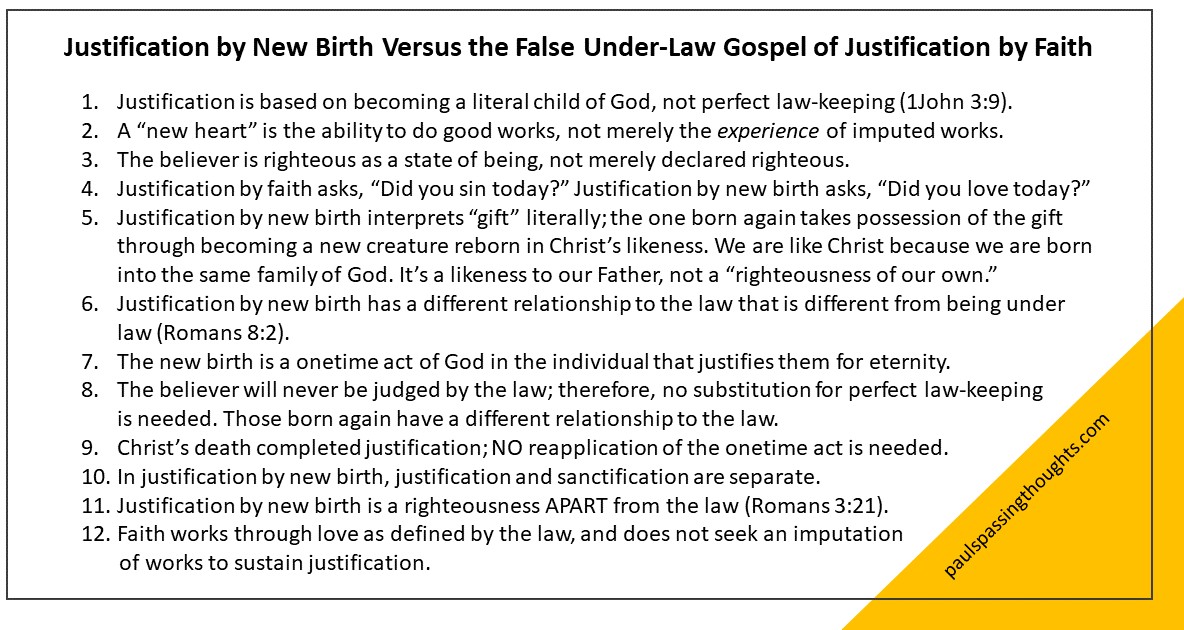
ACBC’s definition of hope is going to follow Reformed theology. It ALL boils down to justification by the law (works salvation) through submission to the authority of the church. Protestantism strayed away from this concept after the Revolutionary war in exchange for a more individualist theology. The idea of new birth obviously empowers the individual. This is the idea that the individual is indwelt by the Trinity leading to ideas like, “But the anointing which ye have received from Him abideth in you, and ye have no need that any man teach you. But as the same anointing teacheth you of all things, and is truth and is no lie, and even as it hath taught you, ye shall abide in Him.” Whoa! hardly a Reformed idea, and why the Puritans despised the Quakers and often hung them from makeshift gallows. Confusion about the new birth prevailed in the Protestant church until the New Calvinist movement began in 1970 and began to move the church back to its Reformed roots. That transition is complete, because the church never really nailed down a complete new birth sanctification theology. In other words, the church was already primed for a return to authentic Protestant soteriology. Jay Adams, a confused Calvinist, but yet the father of the only true revival in the church that occurred in the 90’s, started his biblical counseling movement the same year of 1970. His practical application of Scripture was a threat to the New Calvinist movement with mantras like, “the power is in the doing,” which led to the deceptive formation of the Christian Counseling & Educational Foundation (CCEF). The formation of CCEF was solely for the purpose of countering Jay Adams’ INS nouthetic counseling movement. As clearly documented in my book, The Truth About New Calvinism, these two counseling constructs were based on two different gospels. The most visible leader of CCEF, David Powlison, even said so in no uncertain terms. Today, ACBC is the embodiment CCEF’s counseling construct predicated on Reformed theology. Jay Adams was reformed, but clearly misunderstood its rejection of the idea that justification and sanctification are separate. He rejected sanctification by a perpetual return to justification or the idea that “the same gospel that saved you also sanctifies you.” Adams never really figured out what CCEF was up to until 2010. Until then, the civil war going on in the biblical counseling movement between INS and CCEF confused him. In the end, he was totally thrown under the church bus while ACBC still lives off the reputation of INS’s revival of the 90s.
In regard to Street’s definition of hope, you must understand that intrinsic in all Reformed doctrine is the word, “IF.” The promises of God are for you, and you can be sure of it because of God’s character, IF you are God’s elect. BUT, there is no way to know whether you are God’s elect, or not, until the “final tribunal” as Calvin called it. Calvin noted three classifications for elect: the non-elect, the temporary elect (those who are called, and presently attend church), and those who persevere. TULIP is based on John Calvin’s three categories of elect. Anyone going to church cannot know whether they are of the temporary elect or those who persevere. So, in fact, the Streets are lying, because one can only hope God enables them to stay faithful to church until John Calvin’s “final tribunal.”
This brings us to John Calvin’s “power of the keys.” That is, the church elders have been given the keys to the kingdom. Calvin and Luther couldn’t form new churches in the ways of Augustinism without a succession of authority, and as avid followers of Augustine, they believed they had a right to claim his authority. Ironically, this boiled down to their individual understanding of Augustine as apposed to the popes. Reformed theology rejects individual understanding. There is little doubt that Augustine would have told Luther and Calvin to shut up and obey the Catholic Church. At any rate, the point here follows: Christ gave the elders the keys to the kingdom, which means that whatever the elders bind on earth will be bound in heaven. Hence, if the elders say you are saved, you are saved. In one sense, in the same way that rejection of individual understanding only applies to the peasants, election has a double standard as well. One can choose their election by remaining faithful to church and making sure the elders approve of them. Of course, the reformed would say you only remained faithful through God’s illumination and empowerment as opposed to those who see the folly of church and leave it; refusing to be partakers in its sin. Please note: I have belabored these same points for years and have written hundreds of articles with citations. The best book to read that substantiates the claims I make in this article would be It’s Not About Election. For more information of the Streets and their connection to biblical counseling read Religious Tyranny A Case Study.
Change
ACBC entraps people into the movement by allowing them to believe change is becoming a better person and a happier person due to better life choices. No, Reformed doctrine holds to the total depravity of mankind which includes the “saved.” According to Reformed theology, the only difference between a saved person and a lost person follows: the saved person knows they are totally depraved and seeks the process of reconciliation with God through the church’s “ordinary means of grace.” Read, ordinary means of salvation. The reformed often replace the word “salvation” with “grace” to veil what they really believe about salvation. They believe in a progressive justification obtained through church membership.
So, according to Reformed theology, change is a change in perception only, or basically, how you see things. It can also be described as knowledge only, and not anything you do, for humanity can do no good work. Recently, the president of the Sothern Baptist Convention’s flagship seminary, Dr. Albert Mohler, boasted at an SBC convention that the SBC had successfully returned to its “confessional roots.” What’s that mean? It means that church is about “confessing Christ and everything He is and does, not anything we do.” Get it?
And, this perception is critical to progressing your salvation forward and using the church to do it. God has blessed you with an ability to be more and more aware of your sinfulness and the “sin beneath the sin” and even the sin of your good works. As you see your sin more and more, as set against the holiness of God, it leads to an increased gratitude for your original salvation, which is the gage for spiritual maturity. This makes the “cross and God’s redemption bigger, and man smaller. This is Martin Luther’s theology of the cross subtitled with “the glory story versus the cross story.”
So, think about this, the actual goal is to realize and see how far you are from your heavenly Father, as opposed to being more like your Father. Let that sink in. Furthermore, this view of life can be curative regarding peace of soul. How? Well, indifference. If the material world and everything in it is totally corrupt, like the Anarchists would say, “Let it burn.” This would include your own life, right? The following meme captures the idea:
Of course, according to Reformed theology, and Martin Luther, the source of the joy is experiencing the grace of God, but at least indirectly, it begins with realizing how evil you are. Hence, it is the very opposite of what Paul said defined love: it doesn’t rejoice in evil. At the very least Reformed theology insists that all joy begins with seeing our own depravity. Be sure of this: the ACBC definition of change is Martin Luther’s Theology of the Cross. It’s a mere perception of life, namely, Zero Sum Life, that devalues all life in material form. It’s indifference to life experience. As a result, we might remind ourselves that all calm in the midst of a storm may not be virtuous; it may merely be evil indifference. And in essence, this also defines what the Streets refer to as biblical thinking.
Sufficiency of Scripture
I have written extensively on the Historical Redemptive Hermeneutic versus the Historical Grammatical Hermeneutic and the folly of most church-goers not knowing the difference. In Reformed thought, the sole purpose of the Bible is to aide the believer in realizing the depths of their own sin. It is the law that continually leads us back to Christ for more justification. Reformed leaders say it all of the time. There is no better example of justification by the law than Protestantism.
John 5:24
Truly, truly, I say to you, whoever hears my word and believes him who sent me has eternal life. He does not come into judgment, but has passed from death to life.
John 5:24 ESV
Interesting, as far as believing a second party other than Christ, He points to the Father only, not some “institution” supposedly set up by God to oversee salvation.
Also notice that the believer does not “come into judgement.” A one final judgement or Calvin’s “final tribunal” is an eschatology consistent with progressive justification. Moreover, the believer “has” eternal life presently, and “has” passed from death to life. That’s “has” used in the past and present tense in one sentence. This is why an institution is not needed to administer a progressive salvation: “It is finished.”
Another Church Contra Gospel: Family Disunity
Today’s live discussion about this article @ 4:30 7-11-21 Live Link: https://boxcast.tv/channel/cmw1hcabgtwjnvn9eblc
A major theme in the Bible is unity. The Bible teaches us to be one and to be at peace with our enemies as much as it depends on us. As literal children of God, the Bible teaches us that God’s family is one body in Christ. We strive for unity by learning more and more about who we are in Christ together. Hence, the focus must be to discover our “one mind in Christ” and its objective truth.
With that said, we are “ambassadors” while we are here representing God’s kingdom. It’s not us against them. Moreover, OUR KINGDOM IS NOT YET OF THIS WORLD. No, no, no no, we are not here to “conquer the world for Christ.” One of the primary reasons church is a hot mess is its kingdom theology. It’s a disaster, and creates a morass of disunity within and outside of the church. Our kingdom is totally future, and NO, God’s kingdom authority is not here “spiritually” and being applied “through the church.” Look, why are church missions overseas such a hot mess like everything else in the church? Because foreign governments understand the church’s kingdom theology and see it as a conquering invader. Because…it is.
This is why church is NOT the ekklesia. Church is an institution by its very definition; ekklesia is a literal family. The church’s kingdom theology necessarily demands an authoritative political infrastructure. Hence, church is just another entity that contributes to world disunity. It’s just another authoritative institution vying for power.
Now we come to what has prompted me to finally write this post. For some time, I have observed an overt disrespect and disdain that churchgoers have for their biological families. Ironically, this perspective comes from born again believers who have left the church and seek to worship God with their whole lives and really look to their individual understanding of the Bible alone for life wisdom. This is an interesting position to be in because in the eyes of unbelievers as well, you are yet a Christian though you no longer do church, and not exactly at the top of their Christmas card list.
More irony follows. Church orthodoxy teaches that ALL people are “sinners,” so according to church orthodoxy, churchgoers are not better than unbelievers, but yet, there is only one thing worse than an unbeliever, a professing Christian that has disavowed church. Indeed, this is, apparently, a whole different level of sinism wherein all bets are off; you are fair game for all forms of disdain. Furthermore, those who are included in having a right to disdain you are those who are unfaithful to regular church attendance, but are formal members. It’s little wonder the home fellowship justification by new birth movement is off to a slow start. Here is another thought: church members, though they claim to be yokefellows with lowly sinners, can not avoid an inner belief that they are at least smarter than unbelievers for being church members. And if you are a really, really humble churchgoer that believes in “sovereign grace,” you merely believe God chose you over someone else, which is ok, because God didn’t choose you over someone else for any merit that you have. Right.
The subsequent folly of church evangelism is something I have discussed prior in other posts. In no case whatsoever in any church canned gospel presentation, is it revealed that the recipient’s response to the Gospel is wholly dependent on what God has already decided. It’s the “sovereign grace” gospel, but obviously, presenting the whole truth of this “good news” would elicit some interesting responses from any thinking person. If you are in business management, try that one out at your next meeting: you will agree with me if God opens up your understanding. Yes indeed, that will win them over. At any rate, the point here follows: the church’s “good news” is not full disclosure and therefore disingenuous to begin with on many other levels in addition to allowing recipients to believe that salvation will make them a better person. That’s not church orthodoxy. I could go on and on about this, but an additional point well worth the time is Susan Dohse’s presentation on sanctification at the 2012 TANC conference (https://youtu.be/B-jYAvrxkV0).
What have I seen over the years in regard to how churchgoers treat their own biological family members? Just put it this way: most unbelievers would be aghast. And what the unchurched family reprobates have done for them, viz, paid for their college educations or whatever, need not be considered because after all, “it’s the Lord who really did that for me through them and the Lord uses all kinds of people to bring about His will.”
Be sure of this: church is a license to do or think anything you want to. In addition, its orthodoxy fosters a narcissistic worldview cloaked in altruism. It contributes to a world that is hellbent on being the antithesis of God’s heart, which necessarily includes disunity wherever possible.
When your whole life is worship, your life is a nonstop gospel presentation. When people ask you about the hope in your life that they see, merely share your worldview that strives to love, and not a focus on avoiding the consequences of law-breaking due to total depravity. I have mentioned previously about the evangelical return to something they are very proud of: “confessionalism.” What’s that? Well, it’s this idea that we don’t confess anything with our actions, but rather, we merely verbally confess the truth about how bad humanity sucks. To actually attempt to live the gospel, is an attempt to…wait for it…”be the gospel.” And, “the gospel isn’t you, It’s Jesus.” We constantly hear this type of verbiage from church leaders nonstop.
The result? A life that enables you to waller in the world’s hate and still make it into heaven via church membership. A hate that even dismisses the value placed on biological families by the unregenerate. It is also an indifference to unity in every venue of life.
paul


leave a comment