Charles Haddon Spurgeon. The Prince of Preachers?
“The most inconvenient thing ever for admirers of Spurgeon is the truth.“
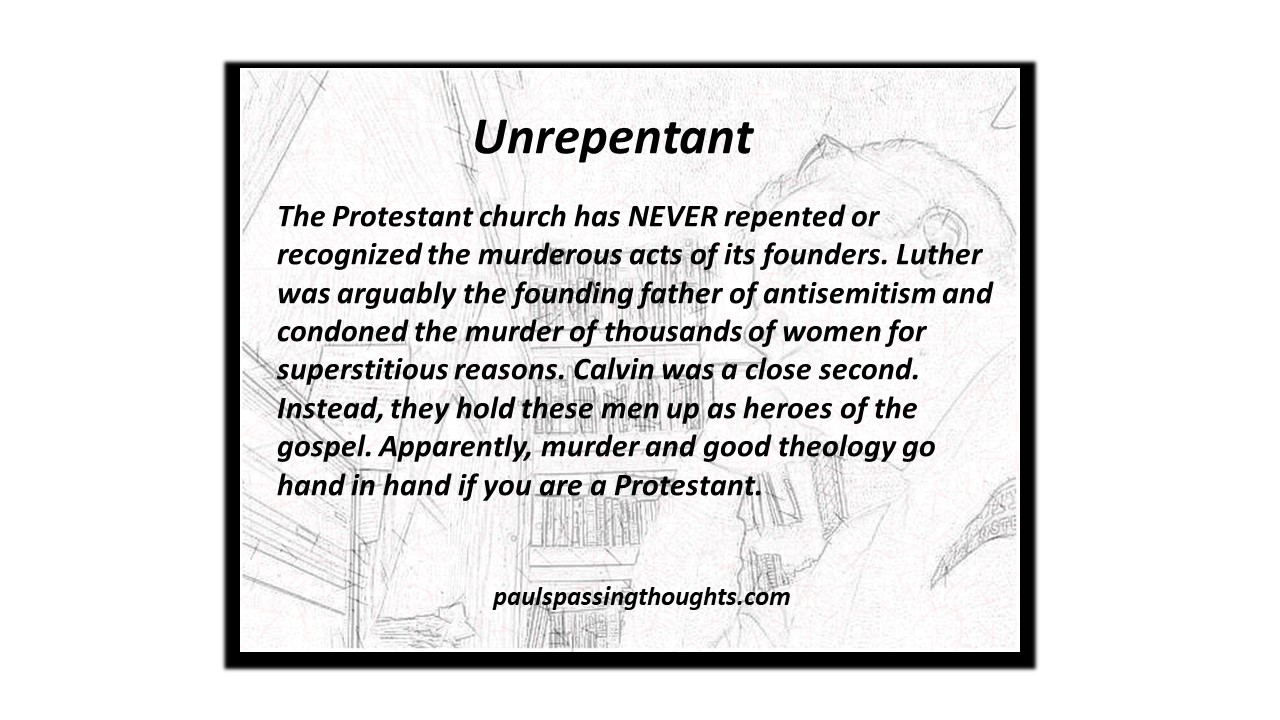
Calling Charles Haddon Spurgeon the “Prince of Preachers” is perhaps the grandiose example of illogical tradition. Spurgeon was a shameless Calvinistic hack. He once said,
There is no such thing as preaching Christ and Him crucified, unless we preach what nowadays is called Calvinism. It is a nickname to call it Calvinism; Calvinism is the gospel, and nothing else.
The most inconvenient thing ever for admirers of Spurgeon is the truth. He constantly disregarded the plain sense of Scripture, though eloquently. While comparing Augustine and Calvin to the apostle Paul in the same sermon (A Defense of Calvinism), any concern for Paul’s warning of being a proponent of a doctrine named after a man was totally disregarded by Surgeon in open defiance to the truth (1COR 3:1-9).
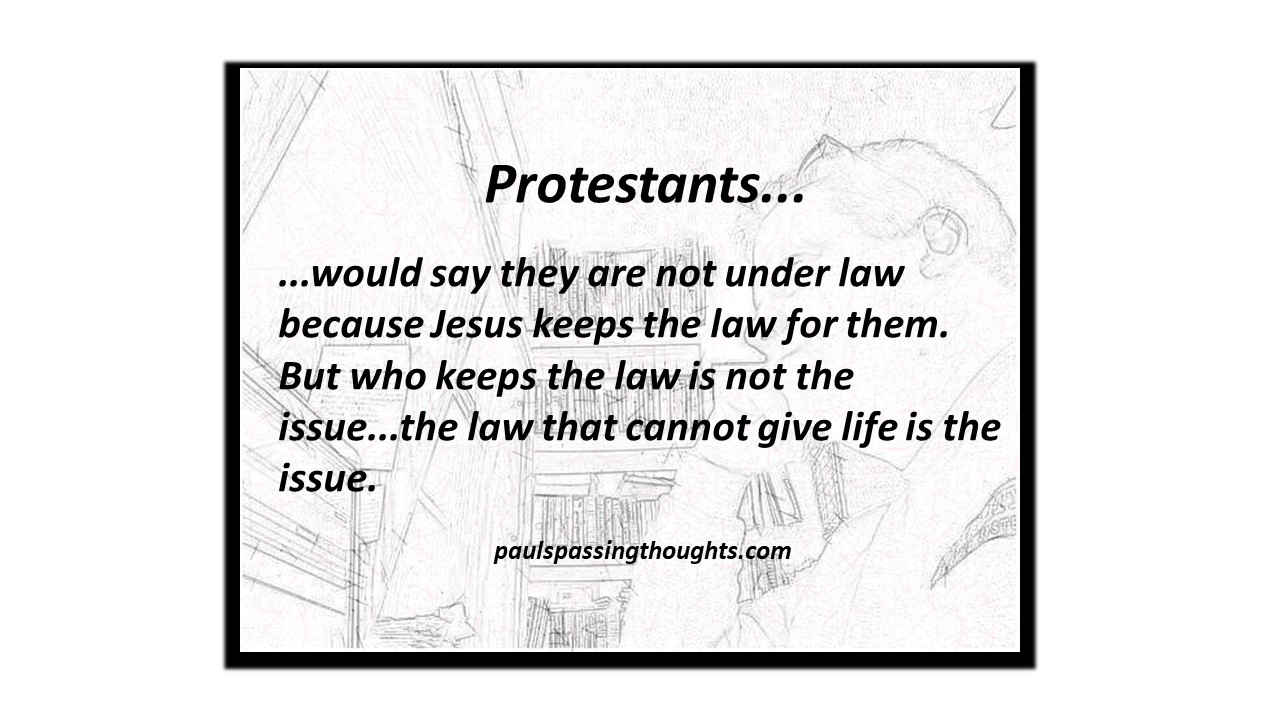
But the fundamental problem is the fact that Calvin taught a blatant false gospel. He believed that grace was not possible unless Christ fulfilled the law for us (CI 3.14.9-11). He believed that Christians are still “under law” which is the very definition of a lost person in the book of Romans and the premise for Calvin’s total depravity.
Hence, Christians remain under the law for justification and must live their Christian lives by faith alone in order to keep their salvation. If Christians live by faith alone in sanctification, the perfect obedience of Christ is perpetually imputed to us and we remain saved. Of course, this requires a complex doctrinal judgment in regard to what is works in sanctification and what is not a work in sanctification in order to live our Christian lives by faith alone resulting in the maintaining of our salvation. This is the very reason for the anemic sanctification that has plagued Protestantism for centuries. We either throw Law out the window completely, or live in fear regarding what is a work and what isn’t a work in our Christian lives lest we find ourselves in “works salvation.”
The problem is the fusing of law and grace. Not election. People on both sides of that argument can fuse law and grace together and often do. Unbelievers are “under law” while believers are “under grace.” We are justified APART from the law (ROM 3:21). Christ didn’t come to fulfill the law FOR OUR JUSTIFICATION; He came to die for our sins so that a righteousness APART from the law could be credited to our account. If Christ had to fulfill the law…. for our justification, law is still the BASIS for our justification and justification is then NOT OF GRACE. The basis of our justification is not law, we are rather UNDER GRACE. This is what the apostle Paul wrote:
Romans 11:6 – But if it is by grace, it is no longer on the basis of works; otherwise grace would no longer be grace.
Notice that who does the work is not the issue. Work period is the issue. The BASIS of grace is the issue here, and if the basis of grace is works it is no longer grace. If Christ had to keep the law for us to make grace possible, according to Paul, grace is no longer of grace. To the contrary, Paul states that Christ came so that he could fulfill the law through us in sanctification completely separate from justification:
Romans 8:1 – There is therefore now no condemnation for those who are in Christ Jesus. 2 For the law of the Spirit of life has set you free in Christ Jesus from the law of sin and death. 3 For God has done what the law, weakened by the flesh, could not do. By sending his own Son in the likeness of sinful flesh and for sin, he condemned sin in the flesh, 4 in order that the righteous requirement of the law might be fulfilled in us, who walk not according to the flesh but according to the Spirit. 5 For those who live according to the flesh set their minds on the things of the flesh, but those who live according to the Spirit set their minds on the things of the Spirit. 6 For to set the mind on the flesh is death, but to set the mind on the Spirit is life and peace. 7 For the mind that is set on the flesh is hostile to God, for it does not submit to God’s law; indeed, it cannot. 8 Those who are in the flesh cannot please God.
Notice that a perfect keeping of the law is not required for us in sanctification to please God for justification. Why? Because the two are separate and there is no law in justification for the believer. The two are separate. We are saved apart from the law for justification and the law informs our sanctification (ROM 3:21, GAL 4:21). Calvinism propagates a grace based on works. Its consummation is an antinomianism where Christ must keep the law for us because we are unable to please God through the perfect fulfillment of it in our Christian lives—perfection as a goal not withstanding in sanctification, but not for justification. According to Calvinism, we have no faith that is alive; we are still dead in our trespasses and sins. It is of the variety that separates us from the fulfillment of the law in sanctification as well. Only Calvin was genius enough to devise a doctrine that combined the best of works salvation and antinomianism.
Only truth sanctifies (John 17:17). The idea that Spurgeon ever helped anyone with his preaching is an illusion grounded in the traditions of men.
paul
Are Christians Truly Righteous? Yes, Because Jesus DID NOT Die For All of Our Sins
The weak sanctification/kingdom living among Christians is due to a fundamental misunderstanding of the new birth. Once again, I was involved in a debate last week with several professing Christians who understand the new birth to be an idiom for our sins being covered rather than ended. Rather than being made, or recreated righteous, we still have sin that separates us from grace and requires an “imputation” of an “alien righteousness.” Our sins are only covered and we remain fundamentally unchanged.
Per the usual, the debate included Baptist pastors and missionaries which of course is completely terrifying. Wonder why your little Baptist church is dying a slow death? A false gospel perhaps?
Ask many professing Christians if Christ died for our present and future sins and they will look at you like it is the stupidest question they have ever heard in their whole life, but this is indicative of the overall ignorance concerning the true gospel among professing Protestants.
Christ came to end the law, and where there is no law there is no sin. Christ only died for sins that are under law. When you are saved you are no longer under law—there is no penalty to be paid for any sin that is not under law. That is the legal aspect, but it is also the reality of being.
The new birth puts the old person to death with Christ. A dead person is no longer under law. And where there is no law there is no sin. All sin is against the law; that is, the law of sin and death. That law no longer applies to the believer for two reasons: Christ ended it on the cross, and a dead man is no longer under the law. What happens when the Police find out a suspect is dead? Case closed. This is along the exact same line of argument Paul makes in Romans 7.
But there is also a resurrection. Even though the body of sin has been brought to nothing, and those who have died have ceased from sin, the soul of the believer is quickened (regeneration) and now is free to “serve another.” Who is the new person now free to serve? His/her new master; the law of the Spirit of life. The law is now our guide to loving God and others—it cannot condemn us. We were indifferent to the law when we were under it and it was condemning us, but now we love it (see Psalms 119).
If Christ died for our present and future sins, we are still under the law of sin and death. The law of sin and death is not ended—we are still under it, and in fact, Christ’s death needs to be applied to any present or future sin we commit—we are therefore not under grace.
This denies the new birth. We have not ceased from sin because we never really died with Christ. The sin we presently commit is not merely family sin that can bring chastisement from our Father—that sin can actually condemn us. There is still condemnation for those who love God.
A verse often quoted to refute the literal new birth and the ending of the law of sin and death is 2Corinthians 5:21.
“For he hath made him to be sin for us, who knew no sin; that we might be made the righteousness of God in him” (KJV).
The idea in citing this verse is that the only righteousness we have is the righteousness of Christ imputed to us. Christ not only came to die for our sins, but instead of ending the law of sin and death, he came to obey it perfectly so that His obedience (righteousness) can be credited to our account because we are not literally righteous and fall short of obeying the law of sin and death perfectly. 1John 1:9 is often added to 2Corinthians 5:21 to make the case.
Moreover, this perfect obedience and His death must be reapplied to any new sin we commit against the still active law of sin and death. Hence, any obedience to the law done by us can only bring about death—we are not free to serve the law of the Spirit of life (Romans 8:2).
So, we have no righteousness of our own, and are not recreated righteous. We only have the righteousness of God, who is also Christ, so being interpreted: we are not righteous or recreated, but merely covered by the righteousness of Christ. “In Christ” means that the righteousness of God and the righteousness of Christ are the same thing.
This idea not only turns the true gospel completely on its head for a number of reasons, but 2Corithians 5:21 is saying the exact opposite.
“In Christ” means that Christ made it possible for God to recreate believers as truly righteous beings through the baptism of the Spirit. Christ died on the cross so that we could die with Him and no longer be under the law of sin and death. Christ died for us so that we could die with Him. Christ was then resurrected by the Spirit so that we could be resurrected with Him as new creatures that are truly righteous. This is what 2Corithians 5:21 is saying.
The two words translated “made” in said verse are two different Greek words. The first in regard to Christ being made sin is the word poieō which, for the most part is the idea of assignment or appointment. The meaning has a wide use and is ambiguous. Not so much with the word ginomai used in regard to us being made the righteousness of God. The word means to make something, or create something completely. For example, this is how the word is used in Matthew 4:3…
“If you are the Son of God, command these stones to become loaves of bread.”
“Become” is the same word, and how it is used is obvious. Satan wasn’t demanding that Christ declare the stones to be loaves of bread in some kind of forensic declaration, he was demanding that Christ recreate the stones as bread. Nor was this going to be a gradual process of transforming the stones into bread, but would have been a final complete act. Get the picture?
2Corinthians 5:21 is simply stating that Christ made it possible for God to recreate us to be the same righteousness that defines our Father because we are truly born of Him—that’s the gospel.
paul
SUNDAY WORSHIP
It is Sunday morning, and I am presently studying Physiology. The Bible states that we are wonderfully and fearfully made. Studying how the body works will, indeed, inspire awe regarding God.
This is one major definition of worship. Another is finding self-fulfillment in pleasing God by loving others.
Worship is not confined to a place or time. Would you like a temple to worship in? Very well, the New Covenant made the believer’s body the temple indwelled by the Holy Spirit. A believer cannot separate temple worship from any moment of existence.
Does the Bible ever state a place or time that is some sort of elevated worship? Never.
TANC Foundational Principles
- Authentic Protestantism as initiated by Martin Luther and John Calvin, and in accordance with Augustinianism, is progressive justification, and the apostle Paul’s definition of justification by the law. It defines grace as a covering for remaining under law.
- The First Century ekklesia of Christ was defined as the family of God and functioned as a literal family. Church, by definition, is an institution, and institutionalized Christianity circa 350 AD. Hence, it should be expected that church will have all of the attributes of an institution, such as, politics, power struggles, and an infatuation with infrastructure, with the former defining its success.
- The church’s ill behavior is directly linked to the law, which empowers sin.
- Under grace does not mean the Christian is not obligated to the law; it means the new birth properly defined changes the Christian’s relationship to the law and is mutually exclusive to the unbeliever’s relationship to the law. This is due to an ending of condemnation, NOT a covering for condemnation.
- The believer is righteous as a state of being. It is a righteousness inherited from God the Father through being born into His family. In addition, weakness is not defined as inherently sinful, or defined as sin.
- A cult is defined by the integration of faith and authority. ANY religious organization claiming the authority of God by proxy that goes beyond the proclamation of the gospel, is by definition, a cult.
- The Protestant Reformation was incited by the integration of Thomism into Catholicism as opposed to Augustinian philosophy.


1 comment