It’s Simple Predestination: Presbyterians Will Be Cursed by God
 I was adopted by a wonderful man named Harry Dohse when I was two years old. I still have the original certificate with my birth name, Paul Martin Stein. Harry had one son with my mother who was born exactly two years from my birthday on September 5th, Harry Kent Dohse. My older brother David was not adopted by Harry; therefore, his name is David Stein.
David and I were in business together in the 80’s, but rarely revealed that we were brothers, and because of prejudice I was often the point man in business dealings for that reason. In one case, when a person found out he was dealing with a Stein as well as a Dohse, showed us his 38 revolver, and it wasn’t show and tell time.
Throughout our time together as business owners, many railed against my brother to me unawares that we are brothers. He was usually the brunt of money jokes and references to Jewish greed. If you watched our TANC conference last week, you heard John Immel trace this motif about the Jews from Luther to Hitler’s National Socialist Workers Party platform. The idea of “greedy Jews” in Luther’s On the Jews and Their Lies (1543) shows up again in said platform, and initially got the ball rolling towards Auschwitz. John Calvin also aped the same anti-capitalist rhetoric against the Jews and complained of their detriment to Christian merchants.
As grammatical historical Christians, we affirm that God originally made His covenant with the Jews, promised them a land where they will dwell in peace forever, and made a new covenant with them from which the Gentiles share in the election of Israel. We affirm that God promises blessings for those who bless Israel, and cursing for those who curse Israel. Hence, we affirm that God has promised to curse all who hold to supersessionism or any doctrine that undercuts a grammatical understanding of Scripture regarding promises to Israel.
There is a biblical predestination that guarantees historical outcomes. It guarantees a happy ending for Israel. Presbyterians are big on election until it comes to Israel. However, this is somewhat consistent because they also believe, like their father Calvin, that you can lose your election. According to Calvin et al, Israel lost its election because of sin and was replaced by the church who apparently is unable to lose its election because of sin—regardless of the fact that Protestantism has adorned the soil of earth with more blood than any other movement in history.
Why then are we surprised that the Presbyterian Church recently divested Israel in favor of the Palestinians? Other historical offshoots of Protestant whoredom did the same in 2012. This is not only expected fruit from the false gospel of progressive justification, but we must remember that John Calvin shared the exact same presuppositions about mankind as Islam, Communism, Socialism, and Fascism. The kinship is the belief that man must be governed in every detail of his life to prevent chaos. Protestants are not strange bedfellows with Islam at all—violence will no longer be needed if democracy can be eliminated, and Muslims will immediately beat their swords into plowshares. Right.
I suppose it’s predestined because God doesn’t break His promises: those who curse Israel will be cursed, and Presbyterians have been cursing Israel for 500 years.
paul
More Musings on TANC 2014: Somebody Has to Do it
 I am swamped with responses from this year’s conference and unfortunately, I can’t respond to all of them. Some people sense that I could use a little cheering up, so thanks for the dog video. Some have offered services, I will get to you at some point, trust me; I don’t forget free stuff. Bless you.
But I was struck by one email that reminds me of why we are here. We are here for those who want to know what is going on in the cognitive dissonance reality created by the Neo-Platonists of our day. Traditionally, for about 500 years now, these Neo-Platonists are otherwise known as “Protestants.”
We are not going to completely upset 500 years of tradition, but it is our intention to be there for people who want to know why church is getting really weird. We want to be there for people who want to learn how the Protestant hierarchy has reinterpreted every aspect of biblical nomenclature that exists. We want to be there for people who are figuring out that Protestantism is nothing more or less than an institutional political organization dressed in Bible verses.
Be sure of this: in the near future, the Neo-Platonists will make a significant move that will bring them closer to closing the gap between church and state. Many conservatives in the Republican Party hold to Calvinistic Dominion/Reconstructionist theology. I believe that a significant move would have already been made by the Neo-Calvinist T4G crowd if the Mahaney scandal hadn’t become public. A new denomination? A political party? I don’t know, but something.
That’s where your money is really going: to help Protestantism go back to its roots, to find the whore that originally gave it birth; the marriage of church and state, the marriage of faith and force, a government that will enforce their orthodoxy. First, and clearly, they tell you that they have the authority to eliminate your just standing (salvation)—Calvin did not mince words on this fact. For those not buying that package, you must be compelled for the sake of the collective. They will not relent on that goal—it’s a control lust that they have never been able to resist.
And fear this: they will side with a Muslim who understands God’s “sovereignty” long before they will side with a half-pregnant grammarian evangelical. In the mass of information that supporters send us, I understand that the Presbyterian Church of America has pulled all of its investments out of Israel in defense of Palestine. Events like this taking place in the church no longer perplex me. In this case, you see the kinship between the Protestant and the Muslim…
…man has no right to exist. We exist at the behest of a god that seeks only the glory that is due him. That’s Plato; that’s Augustine; that’s Luther; that’s Calvin; that’s John Piper et al. And that is all encompassed in the word…
…sovereignty. Much more on that this Sunday: “The Gospel of Sovereignty.”
The direness of the problem was alluded to in the same email:
I don’t know if you ever listen to Janet Mefferd, at JanetMefferd.com, but on her program today, June 26th, she interviewed a Dr. Joel R. Beeke about his new book, “A Puritan Theology.” It’s a 1,000 page book on the Puritans and he gave a totally different view. I would love to hear your take on the interview if you are so inclined to listen.
Janet Mefferd represents the mainstream, and Dr. Joel R. Beeke is the contemporary personification of the most radical form of medieval Puritan mysticism. Mefferd is clueless in regard to what she is promoting. And as far as I can tell, no alternatives are being articulated for those who seek something else and love the truth. Again, that’s where we think TANC is important.
Come now, let’s be honest. What’s the difference between this…

And this…
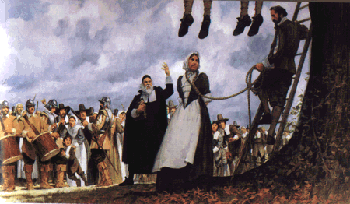
I didn’t ask you which of the two sounds better or looks better; I asked you what the real difference is in the final analysis.
paul
TANC 2014 Andy Young Session 1: Anybody Remember Grammatical Historical Teaching?
Be Ye Holy for I am Holy
Ok, welcome to Session 1 on Understanding Sanctification.
In my opinion, the hardest part about doing any sort of topical study is finding a starting point. I would much rather take a passage of scripture and teach through that in context, and just let the passage say what it says. What makes a topical study of the Bible so difficult is that there is always a danger of proof-texting. We have to always make sure that we are aware that we unconsciously bring a bias with us, wherever that bias comes from, it could be from our parents, what out parents taught us, could be from a particular church denomination that we grew up attending, or maybe our worldview, whatever influenced that. There are things in our life that shape us and we end up having a particular bias when it comes to interpreting scripture. So when it comes to studying a particular topic or doctrine, we have this tendency to seek out passages that fit in with our bias. This is called proof-texting.
Now there is nothing inherently wrong with proof-texting. In fact, many of the scriptural truths we hold dear we can directly site a specific verse or passage that teaches that. For example, if I were to ask you, what must a person do to be saved, what are some verses that immediately come to mind?
Acts 16:31
“Believe on the Lord Jesus Christ, and thou shalt be saved, and thy house.”
Romans 10:13
“For whosoever shall call upon the name of the Lord shall be saved.”
Romans 10:9-10
“That if thou shalt confess with thy mouth the Lord Jesus, and shalt believe in thine heart that God hath raised him from the dead, thou shalt be saved. For with the heart man believeth unto righteousness; and with the mouth confession is made unto salvation.”
John 3:14-18
“And as Moses lifted up the serpent in the wilderness, even so must the Son of man be lifted up: That whosoever believeth in him should not perish, but have eternal life. For God so loved the world, that he gave his only begotten Son, that whosoever believeth in him should not perish, but have everlasting life. For God sent not his Son into the world to condemn the world; but that the world through him might be saved. He that believeth on him is not condemned: but he that believeth not is condemned already, because he hath not believed in the name of the only begotten Son of God.”
Now these are all good verses, and the reason these are good proof-texts is because the context is pretty straightforward. And the big danger with proof-texting is ignoring the larger context. For example, if someone were to ask me about how to be saved, one verse I would not use as a proof text is Acts 27:31. Anyone know that verse? “Paul said to the centurion and to the soldiers, Except these abide in the ship, ye cannot be saved.” That’s a good salvation verse, isn’t it? Now I know that’s a silly example, but don’t laugh, I have heard of people teaching on this passage and making all kinds of metaphors out of the ship and trying to turn this into a salvation passage. But I use this to show you how easy it is to take a verse out of context. We have to make sure we are very careful to understand and interpret a verse or passage within the larger context.
So in these sessions dealing with sanctification, we’re going to be turning to a lot of scripture. We’re going to spend a lot of time looking up verses and passages of scripture dealing with sanctification, and I’m going to be very careful and methodical to make sure we keep the context straight, that we understand the larger theme of where these verses fit in with the rest of scripture, and so hopefully we’ll avoid this danger of proof-texting.
In this first session I want to lay the ground work for the other sessions, so I’m going to spend a lot of time defining terms. That will become our premise for the rest of the study on Sanctification. It is important to understand the distinction between Sanctification and Justification. It is important to keep that distinction. Sanctification is an act that happens to those who are already justified; those who are already declared to be righteous. No, not just declared righteous, made righteous by belief in God, belief in the name of the Lord Jesus Christ. That is the Biblical standard for righteousness; belief in God. So because Sanctification is subsequent to Justification, I am going to be specifically addressing those who are already saved. If you have already believed in Christ for your salvation, I am speaking to you today. These sessions will apply specifically to you. Nothing I have to say applies to someone who is unsaved. I am speaking directly to believers. In other word, little to nothing I have to speak about applies to Justification. Justification has already been accomplished in your life, now we’re moving on to Sanctification.
So having said all of that, I’m going to use this first session to define our terms. What is Sanctification? More importantly, what is a Biblical definition of Sanctification? Then our second session, we’ll explore sanctification in the Old Testament and it’s relationship to the Law, and I want to consider the idea, that if God wants me to be holy, then why do I still sin? And then in the last session on Sanctification we will examine the question of, is there any merit to good works, and we will even examine the Biblical source of assurance for the believer.
So let’s get started on some terms. What is Sanctification? What does it mean to be Sanctified? Before we can address those questions, we need to understand what Sanctification has to do with relation to holiness. We know that God is holy. The Bible teaches that holiness is one of God’s attributes. So as creatures made in the image of God, can we exhibit holiness? Are believers really holy? The verse that I’ve chosen to use, sort of as the theme for these sessions on Sanctification is 1 Peter 1:16. Why don’t we start there. Go ahead and turn to 1 Peter. And actually I want to start with verse 14.
“As obedient children, not fashioning yourselves according to the former lusts in your ignorance: But as he which hath called you is holy, so be ye holy in all manner of conversation [way of life, how you conduct yourselves]; Because it is written, Be ye holy; for I am holy.”
And this last part here in verse 16 like I said is what I have chosen as the theme for these sessions. Peter uses the esxpression, “because it is written,” he is actually making reference to the Law. Peter is actually quoting the exact phrase found in Leviticus 11:44, 45.
Now some things I want you to notice about the grammatical structure of this passage here in 1 Peter. Please notice all of the verbs in this passage, all of the action words, they are all in the imperative mood. Imperative mood means it is a command. An order. Holiness is not optional. It is a command.
Secondly, not only are all the verbs, all the actions, not only are they commands, they are in the active voice. Active voice means that the subject performs the action. The opposite of active voice is the passive voice. In passive voice, the subject is the recipient of the action, or the subject has the action performed upon him. Notice the active voice in all of these commands
do not fashion yourselves – you don’t fashion
be ye holy – you be holy
Notice the subject performs the action. You. You are performing the action. This is different from passive voice. If these commands were in the passive voice it would read something like:
do not be fashioned – do not allow yourself to be fashioned. Or;
be made holy – allow yourself to be made holy.
Taking this even one step further, if we look specifically at this phrase, “be ye holy”. This phrase in the Greek looks like this. It’s pronounced:
αγιοιγενεσθε “hag-ee-oy gin-ess-theh”
The word I have underlined here is the imperative form of the word:
γινομαι – “gin-oh-my” – to cause to be; to become (reflexive)
This is a linking verb that is the equivalent to our English word “is”, and all the forms it takes- am, is, are, was, were, be, being, been.
So not only is this verb in the active voice, the word itself is causative in its very meaning. This phrase could actually read, “cause yourself to become holy.” Or, “make yourself holy.”
The third thing I want you to consider from this passage is, who is the audience? Who is to perform this command to be holy? Let your eyes go up to the beginning of the chapter. To whom is Peter addressing this letter? Who is supposed to be holy?
King James says – the strangers scattered throughout all these regions of Asia Minor. Who would that be? In the Greek this would read as pilgrims of the dispersion. That is an expression that is used other places in scripture to describe displaced ethnic Jews. These are Jews who did not return to the land of Israel following the Babylonian and Assyrian captivity. They dispersed, and settled here and there throughout this region. We also know from reading the books of Acts and from Galatians chapter 2 for example, that Paul’s ministry focused on the Gentiles, and Peter’s ministry focused on the Jews. Galatians 2 uses the expression the gospel of the uncircumcision vs. the gospel of the circumcision.
So what we have here is Peter writing this letter addressed to these Jews of the dispersion, but what’s more important is that they are believers. And that is what I really want us to see here. Peter is writing to believers. More than that, these commands here in verses 14-16 are issued to believers. He is exhorting believers to not fashion themselves after their former life. The believer is commanded to be holy. The believer is to cause it to happen, actively, make it happen, not to passively wait for it to happen to him. And I want this to be our underlying theme of these sessions.
As we go through these sessions, keep this in the forefront of your mind at all times, this is what we as believers are commanded to do. We are not to live our lives the way we used to. Not fashioning ourselves after the former life. And by the way, that is the exact same word the apostle Paul uses in Romans 12:2, where he says be not conformed to this world, “soo-scheme-ah-tid-zo”. This is where we get the word “schematic”. You’ve probably heard of a schematic diagram. For electrical engineers a schematic is a pattern to follow. And that’s what the word means, having to do with a pattern. We don’t pattern our lives after this world, we don’t follow the pattern of our old behaviors. As believers we are to be holy as God is holy.
And if God in His word is commanding us to do it, then we must be able to do it, because I don’t know about you, but I don’t believe in a God who would tell us to do something that we can’t do. And if you don’t believe that, then I’m sorry, then you and I don’t believe in the same God.
Believers are called to holiness. Now what is holiness? That’s a word that has a lot of mystique about it. Very ethereal. We hear it, we think we know intrinsically what it means and we throw it around, but we have a hard time explaining it. Well, let’s define these terms. How does the Bible define holiness? Let’s start at the beginning. Surprisingly, the word “holy” doesn’t even appear in the book of Genesis. The first occurrence of the word “holy” in the Bible appears in Exodus 3:5.
Exodus 3:5
“And he said, Draw not nigh hither: put off thy shoes from off thy feet, for the place whereon thou standest is holy ground.”
קדשׁ – qôdesh – ko’-desh
Strongs dictionary defines it as a sacred place or thing. Ok, well, that doesn’t tell us very much. There is a parallel word for holy in the New Testament. The first use of the word holy in the NT is
Matt 1:18
“Now the birth of Jesus Christ was on this wise: When as his mother Mary was espoused to Joseph, before they came together, she was found with child of the Holy Ghost.”
A couple more places where this is found, and I’m not going to look all of these up, but
Matthew 4:5
“Then the devil taketh him up into the holy city, and setteth him on a pinnacle of the temple,”
Matthew 7:6
“Give not that which is holy unto the dogs, neither cast ye your pearls before swine, lest they trample them under their feet, and turn again and rend you.”
This word in the Greek for holy is
αγιος – “hag-ee-oss” – sacred.
Again, still a pretty abstract concept. Let’s set out to de-mystify these concepts. Bring it from the abstract to the tangible. Let’s see if we can nail it down a little more. To better understand what holiness is, let us examine the opposite of holiness. In scripture, the opposite of holy is profane. Now profane carries with it a different meaning than what we understand in our modern usage of the word. When we hear the word profane we usually think of profanity, like foul language. So in the modern usage of the word, profane has the idea of evil, or foul, or sinful. But that is not what the word means as it’s used in scripture. In scripture profane simply means, common, ordinary, or everyday. Run-of-the-mill. No-frills. Just like all the rest.
Now when you consider profane in this aspect, scripture presents all kinds of contrasts between that which is holy and that which is profane. The Old Testament is full of these contrasts. Here are just a few of them:
Holy vs. Profane
Leviticus 20:3
And I will set my face against that man, and will cut him off from among his people; because he hath given of his seed unto Molech, to defile my sanctuary, and to profane my holy name.
Leviticus 21:6
They shall be holy unto their God, and not profane the name of their God: for the offerings of the Lord made by fire, and the bread of their God, they do offer: therefore they shall be holy.
Leviticus 21:7
They shall not take a wife that is a whore, or profane; neither shall they take a woman put away from her husband: for he is holy unto his God.
Leviticus 22:2
Speak unto Aaron and to his sons, that they separate themselves from the holy things of the children of Israel, and that they profane not my holy name in those things which they hallow unto me: I am the Lord.
Leviticus 22:15
And they shall not profane the holy things of the children of Israel, which they offer unto the Lord;
Leviticus 22:32
Neither shall ye profane my holy name; but I will be hallowed among the children of Israel: I am the Lord which hallow you,
Ezekiel 22:26
Her priests have violated my law, and have profaned mine holy things: they have put no difference between the holy and profane, neither have they shewed difference [discernment] between the unclean and the clean, and have hid their eyes from my sabbaths, and I am profaned among them.
Ezekiel 44:23
And they shall teach my people the difference between the holy and profane, and cause them to discern between the unclean and the clean.
Amos 2:7
That pant after the dust of the earth on the head of the poor, and turn aside the way of the meek: and a man and his father will go in unto the same maid, to profane my holy name:
Over and over again we have this contrast presented to us. So if we understand then that profane is that which is common, or ordinary, or just like all the rest, and we understand that holy is the polar opposite of profane, then holy would be that which is not profane; that which is not common, that which is not ordinary, that which is not every-day, that which is not just like all the rest.
God said to Israel, when you profaned My name among the heathen, you made Me to be just like all the other gods. When you profaned my temple, you made it like any other ordinary building. I am no longer holy. You caused me to be patterned after just like everything else. I am no longer in that place where I deserve to be, because I am God, I am Jehovah. I am not like all the rest. I am higher than all the rest. In fact, there are no others. I am the only one. I am that I Am! I am the self-existent One! That’s what My name means. Do not profane it! Do not make it just like all the rest!
This distinction between holy and profane is very helpful when it comes to us understanding why holiness is important in the Christian life. Because if we are believers, then we are the adopted children of God. If we are believers then we have identified with Christ. We are righteous as He is righteous. Sin has been taken away. So then why would we live a life that profanes our Father? Why would we live a life, why would our behavior be common, ordinary, why would our behavior be just like everyone else?
God is out of the ordinary, and He wants His people to be like Him. In fact, He made it possible when He saved us. Sin was taken away. Our old man was crucified with Christ, and now we live in newness of life. Our lives should be out of the ordinary. Our lives should not be characterized by that which is just like everyone else in this world.
So, after we have gone through all of that, do we have a Biblical definition of holiness that we can work with?
Holy – a place or thing which is distinct from that which is common, ordinary, or just like everything else.
Now those are words we can understand. Those are words we can wrap our minds around and sink our teeth into.
Now that begs the question, what determines if something is holy? What is it that makes something holy? And this is where the relationship with sanctification comes into play. If we as believers are commanded to be holy, our holiness then is effected through the process of sanctification. In fact that could be a good starting place to define Sanctification. We could say that:
Sanctification – the process whereby the holiness in the life of the believer is effected.
But let’s not leave it there. Remember, our goal is to have a Biblical understanding of these concepts. So let’s go back to God’s word and see how the scriptures define Sanctification.
Now while the word holy did not appear until the book of Exodus, the word sanctify appears early on in the book of Genesis. The first instance of “sanctify” appears in
Genesis 2:3
“And God blessed the seventh day, and sanctified it: because that in it he had rested from all his work which God created and made.”
קדשׁ – qâdash – kaw-dash’ – to be clean; to make, pronounce, or declare clean.
Notice that, the basic definition of sanctification has to do with cleansing. If you wanted to substitute the word clean for the word sanctify in Genesis 2:3 it would read:
“And God blessed the seventh day, and cleansed it: because that in it he had rested from all his work which God created and made.”
Now let me put our word for holy back up here for a moment.
Holy – ko-desh
Sanctify – kaw-dash
There is a great similarity between these two Hebrew words. In fact they are both taken from the same root word. What we have here is a very close relationship between cleansing and holiness. The fourth commandment is what, remember the Sabbath day to keep it, holy. Remember our definition of Holy? Why was the Sabbath day holy? Why was the Sabbath day distinct from that which is common, ordinary, or just like everything else? It was holy because God cleansed it.
Ok, how about the New Testament? The first instance of “sanctify” in the NT is found in
Matthew 23:17
“Ye fools and blind: for whether is greater, the gold, or the temple that sanctifieth the gold?”
αγνος – “hag-noss” – clean
Now just like I did in the Hebrew, let me put up the word for holy in the Greek.
Holy – “hag-ee-oss”
Sanctify – “hag-noss”
Again, look at the similarity of the two words. And just like in the Hebrew, these two words in the Greek are taken from the same root. The same relationship appears in the Greek between these ideas of cleansing and holiness.
So now that we understand this relationship between holiness and cleansing, we can take the meaning of the word Sanctify, and combine it with the meaning of holiness, and we can come up with what I believe is an accurate, Biblical definition of Sanctification.
Sanctification – the process of cleansing for the purpose of making a place or thing distinct from that which is common, ordinary, or just like everything else. (or the purpose of making something holy)
So we have our definitions. We’ve established the ground work, the foundation from which we can build.
If you remember at the beginning of this session I asked the question, as creatures made in the image of God, can we exhibit God’s attribute of holiness? I would say that according to scripture, the answer is a resounding, YES! We are able to. We are able to be distinct from that which is common, ordinary, or just like everyone else. We are able to behave that way. We are able to pattern our lives that way.
So, now that we have a premise to build on, in session two, we’ll take a look at how this all worked out in the Old Testament under the law, and the relationship of Sanctification to the law. We’ll expand on this idea of cleansing and the relationship between cleansing and Sanctification and holiness in the life of a believer.
Do we have time for any questions or comments?



1 comment