The Historical Transition From Home Assembly and Passover to Church and Easter
From Christ’s Assembly to the Institutional Church: Part 1
http://truthaboutnewcalvinism.weebly.com/vol-2015-issue-4.html
From Christ’s Assembly to the Institutional Church: Part 2
http://truthaboutnewcalvinism.weebly.com/vol-2015-issue-5.html
Is John MacArthur Totally Confused, or Simply a Liar?
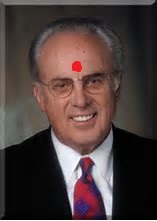 Yesterday, I was sent a link from a series going on at Grace to You Blog. Of late, advocating the free and civil exchange of ideas is in vogue among the Neo-Protestants. Susan and I heard this theme echoed at the recent TGC conference in Indianapolis by Kevin DeYoung.
As one who has painstakingly documented Neo-Protestantism’s claim to God’s authority by proxy for years, the need to respond to such an absurd notion; specifically, that Protestantism advocates the free exchange of ideas, is much like getting motivated for oral surgery at the dentist’s office. Nevertheless, I will take one for the team.
However, instead of comparing MacArthur’s criticism of Pentecostalism’s authority claims with his own claims of authority and thereby painting a picture of gargantuan hypocrisy, I will instead explain what is really going on here.
First, the basics. All disagreements flowing from the church in general are disagreements over different expressions of the same basic doctrines. Whether Catholicism, Protestantism, or all other flavors that flow from church ice cream, the fundamental doctrines are exactly the same. Let me name them: collectivism and progressive justification. For that matter, even religions that are of temple worship like Hinduism and Islam are predicated on the same basic doctrines.
Collectivism is based on particular presuppositions concerning mankind and reality. Like all churchians and templetons, MacArthur is neither confused or a liar per se, but totally driven by these exact same fundamental doctrines. Am I saying that when it’s all boiled down MacArthur is little different than a Hindu priest? Pretty much.
Collectivism is the idea that mankind cannot comprehend reality. The epitome of wisdom is defined by knowing that you can’t know. Those who think they can know are defined as having a god complex and are detrimental to the world in general and the collective good of others specifically. Hence, those who know that we cannot know should rule over those who struggle with the temptation of thinking they can know, and this for the common good of mankind and its ultimate survival. In other words, individual knowing is the destroyer of wellbeing that will eventually annihilate mankind. Therefore, all collectivists whether Protestant, Catholic, or Hindu are on a mission to save mankind from itself.
For the most part, reality is interpreted through Plato’s two worlds. The material world is a totally separate existence from the invisible world. Those granted wisdom via whatever spiritual/invisible realm authority seek the best wisdom for existence in the material realm, and of course, because they have been granted this wisdom from the other realm they should be vested with rulership over the great unwashed.
Farfetched? Keep these basic principles in mind and go to church on any given Sunday and listen carefully. Pay attention for a change and you might be surprised. Though the religious systems for our best material realm life now are innumerable, Protestantism claims an “objective” truth. What is that “objective” truth? All reality is interpreted through Christ’s redemptive act for the glory and self-love of God and this “truth” is “experienced subjectively.” It’s an ingenious system that posits Plato’s two world philosophy as objective truth. Sure, you can know something: here it is; “I know nothing but Christ and him crucified.” Reality, according to Protestantism, is a metaphysical movie produced by God to reveal one thing only: God’s holiness as set against mankind’s total depravity. The goal of all reality is a greater revelation regarding the dichotomy between mankind and God. Accordingly, you may note that the logical conclusion is the same outcome of all collectivist religions that make up the vast majority.
Now, Aristotle confused things a little. He made authority into authority light by making expertism a synonym for authority. Aristotle believed that the material world reflects reality in totality. Man can know reality. That glass sitting on the table is really a glass. A=A. Man can ascertain knowledge of reality through empirical observation and study. However, those who do the hard work of study and are able to comprehend should rule over the ignorant. This is where we get the following: “Dr. John Doe is a leading authority on…[fill in the particular discipline].” Unlike Platonism, authority is not mandated by force, but you are deemed an idiot if you do not obey the experts. This is why expertism is so prevalent in Western culture. Until Americanism came upon the world scene, freedom to ascertain reality for yourself could get you executed and often did. In contrast, Americanism didn’t go far enough with individualism; you are not executed for daring to think for yourself, but you are looked upon as ignorant. It’s character assassination versus physical assassination, and those who do the challenging work of study are rewarded with higher pay, attractive spouses, spacious living abodes, and collective accolades.
Either way, it’s a caste system. Nevertheless, it is interesting to note that America’s tacit node towards individualism completely turned the world upside down for the better. It is fair to say that the historical metaphysical pendulum swung from Platonism to Aristotelism, but in regard to religion is swinging back to Platonism. And by the way, this issue, Plato verses Aristotle, and collectivism verses individualism is what sparked the Protestant Reformation. That’s just plain historical fact. If you believe that freedom of religion and sola scriptura sparked the Protestant Reformation, I have some oceanfront property in Xenia, Ohio that I would like to sell you.
Speaking to the secular realm, not so much; Brexit and the election of Donald Trump signifies a rejection of expertism in exchange for collective individualism, or the ability of the individual versus “total inability.” At least in the secular realm, we may be seeing a movement that will go beyond Americanism. This probably poses an opportunity for the home fellowship movement which is greatly hindered by the idea of expertism. Home fellowships promote the idea of individuals contributing spiritual gifts to a body that is led, not ruled over by experts or those claiming authority over individual conscience in the name of God.
This brings us to the second fundamental, progressive justification. This is the basic soteriology of all religions. Why? Because if the new birth changes the individual’s state of being to a literal child of God and a family heir to Christ’s kingdom, where does that leave mere men regarding knowledge and authority? Answer: totally out in the cold with no clothing. In addition, authoritative institutional religion must have what we call reoccurring monthly revenue (RMR) to support infrastructure where the gods or cosmic authorities over men meet to dole out salvation on the installment plan. Salvation becomes a lifelong goal instead of being spiritually birthed into God’s family as a onetime finished, and permanent transaction. This lends no authority whatsoever to men claiming coregency with God.
So, MacArthur et al are not confused or lying per se, but are practicing Platonism’s “noble lie.” What they teach is driven by trending “concerns” coming from the great unwashed herd. Of late, it’s the idea that the church doesn’t tolerate critical thinking. What in the world might give them that idea? Therefore, the herd is calmed by statements of crass contradiction. Regardless of the obvious, MacArthur is the expert. Any contradictions must be “truth masquerading as a contradiction” otherwise known as “paradox.”
paul
The Bible Answer Man, Hank Hanegraaff Chooses Different Authority for Salvation
 Apparently, the Bible answer man, Hank Hanegraaff, has converted from mainline Protestantism to the Greek Orthodox church. How could someone so immersed in the Protestant tradition for so many years switch to another religious system? The answer is simple: it’s all the gospel of authority ice cream—different flavors. One is saved by displaying humbleness in submitting to “the authority of godly men.” When it gets right down to it the only cardinal sin is thinking for yourself and being accountable to God as an individual.
Nevertheless, what is more evident than the fact that we will all be accountable to God as individuals anyway? Yet, as one example in volumes of Protestant cognitive dissonance, the church demands that we give up individual discernment and submit to its authority while assuming that Christ is in total agreement because they say He is. And oh, by the way, you are charged a temple tax for all of this as well.
According to an article posted on Pulpit and Pen,
The Orthodox Church is a false expression of Christianity, much like the Roman Catholic Church, that is highly driven by graven images and denies the biblical doctrine of salvation by grace alone through faith alone, and instead, trusts in meritorious works and a sacramental system for salvation. This flies in the face of Ephesians 2:8-9, which states,
For by grace you have been saved through faith. And this is not your own doing; it is the gift of God, not a result of works, so that no one may boast.
Um, excuse me, BOTH Protestantism and the Orthodox Church hold to progressive salvation. Although Protestantism excludes graven images of people in exchange for graven images of crosses everywhere you look, BOTH have sacrificial systems that maintain salvation. While more ambiguous than Mass, the Protestant “means of grace” [viz, means of salvation] are the Lord’s Table, church membership, prayer, sitting under formal preaching, and a perpetual return to the same gospel that originally saved us through “a lifestyle of repentance” or “deep repentance.” What Protestantism calls “faith alone” really includes works to maintain salvation that are classified as faith alone works. Preaching the gospel to yourself every day is obviously a work, but since the gospel is by faith alone anything that is a gospel work or the “obedience of faith” isn’t really a work. Right.
In contrast, the real gospel ends works under the law because the law is ended and interprets all good works via the motive of love. If one is still under the law all works must be categorized by church orthodoxy as faith alone works or work works with each claiming the others as heresy because of how they categorize the works and other issues. For example, people raising their arms to a huge cross behind a praise band isn’t idol worship. Right. Being faithful to the “means of grace salvation” isn’t really a “means” of salvation either. Right. I guess it depends on what “means” means.
Whether Protestantism, Catholicism, Orthodoxy, or whatever, it’s all the pot calling the kettle black. And it’s all a morass of contradiction scripted in a soap opera on steroids. Examples are found by poking the institutional church’s Jabba the Hutt body anywhere you choose while blindfolded. According to Pulpit and Pen this is just another example of the great falling away that we should expect in the last days while the Neo-Protestant movement lays claim to a great “Resurgence” expressed in viral conferences attended by thousands, a plethora of dynamic teachers hanging on trees everywhere you look, and thousands of megachurch campuses located in every American city. Yes indeed, a great revival during a great falling away. I remind you that Christ asked if He would find any faith at all when He returns. In addition, Pulpit and Pen decries…
… this is merely an example of what happens when professing Christians elevate something other than Scripture as the final authority on all things.
Right, we can tell that the Bible is an evangelical authority by the massive volume of books about the Bible that have all but totally replaced individual Bible study. Yet, after 500 years and oceans of Protestant ink, Pulpit and Pen bemoans the following,
So what is the significance of this? This should be a testimony of the dismal state of the evangelical church in our modern day. There is a sure lack of biblical truth and doctrinal stability to which many can be left wandering.
Dismal state? Again, the Neo-Protestant movement is defined by billions of incoming dollars and thousands of splendid megachurch temples with huge infrastructure budgets. Yet, Protestant teachers effectively pull on the heartstrings of their followers while picturing the movement as a destitute few huddled together in the wilderness suffering for Christ…while sitting in a multimillion dollar sanctuary.
Trust me folks, there is nothing more willingly ignorant than a Protestant.
As history moves forward, all of these religions will come together as one because they are all predicated on progressive justification and positional justification apart from the new birth. What is the element of progressive justification that will bring them all together?
Only time will tell.
paul

 Paul's Passing Thoughts
1 comment