Bible Continuity; Is Dispensationalism Valid?
What is the real big picture of the Bible?
Donald Trump, Kid Blink, and the Newsboy Strike of 1899

One of the most fantastic stories of American history is the newsboy strike of 1899. It is glaring testimony to the real reality of government or business; when it gets right down to it; the people rule if they want to. America was merely designed after this reality; the people always outnumber the governing authorities and there is no government without people. You can kill everyone, or too many, which would leave the governing authorities to do their own work and cook their own meals. Trust me, they don’t want to. The founding fathers of America recognized this and that’s why we are a “representative republic.”
Look at what we plainly have going on in our day: the Democrats and Republicans alike are not representing what the people want; obviously, as the elitist experts, they know what’s best for the people who pay their salaries. Congressman and Senators are attorneys who represent people, not rulers over the people or experts that know better than people what people need or want. Observe the obvious: those who work for us are the judges as to whether we got it right or not. More frightening yet, law enforcement is in on it and setting out to jail those who truly represent the people.
The world and reality are designed around the individual, and institutions are for the express purpose of facilitating that reality and that’s just plain reality. Governments are always the result of the people’s will whether that will is the result of being deceived or lazy thinking. During WWII, civilians were held responsible for the actions of their government, and rightfully so. The world would be a better place if that continued.
Houston, we have a problem; someone who truly represents the will of the people, Donald Trump, is in office and all hell is breaking loose. This goes to show we have been fooling ourselves for a lot of years. America hasn’t been functioning like a representative republic for a long time. And by the way, America is not a democracy. Of course, the elitist ruling class who now dominate our government would love a democracy complete with elections being determined by the popular vote. This would not be equal representation, it would mean the West coast and East coast elitist politicians would obtain complete control of America. Middle America would be told what to eat, what to drive, where to work, how to talk, and whatever else you would like to add to the list. Don’t forget anything; it would be comprehensive control.
The newsboy strike of 1899 demonstrates all of the above points and mirrors what is going on in the present-day government shutdown. Once upon a time, newspapers depended on children to distribute their newspapers. These children were little more than street urchins. Mostly from poor immigrant families, and oftentimes homeless or orphaned, they lived and survived by the cruel laws of the streets.
Yet, overall, they represented one of two humanity camps; the individualist with self-respect and the courage to be free versus the collectivist who believes humanity must be mothered and taken care of by an elitist class. The newsboys lived by their own reality; the reality that worked for them. Their demand for fairness and justice was directly linked to their self dignity. They would swallow no food if it meant swallowing injustice along with it. Don’t be too quick to judge all the homeless, they are often homeless because they won’t play the game.
The deal went something like this. The newsboys (and girls) bought newspapers from the companies of Joseph Pulitzer and William Randolph Hearst for 50 cents per hundred. The amount of papers they sold on the streets of New York for a 50% profit margin determined what they would make. So, these children needed to have a significant degree of business acumen. They would have to plan in order to have money to buy more papers to resell. And, whatever they didn’t sell, they owned, so many would have to work late into the night in order to not lose money and then get up for school the next morning if they went to school. They would also have to possess ability to project sales in order to stay in business. They were child business owners.
Then came the Spanish-American War which promised to greatly increase sales. And, what then, was the thinking of Hearst and Pulitzer? Something like this: “Hey, since you guys are going to be selling more papers, we are going to increase what you pay for the papers.” The price was raised to 60 cents per hundred while the price of the paper was not raised. This meant the newsboys were going to be working harder for the same amount of money while being the engine that would greatly increase sales for Hearst and Pulitzer during the war. As always the case with elitists, Hearst and Pulitzer were surprised that the little street urchins saw it for the bad deal that it was. The newsboys went on strike.
This is another thing that the newsboys realized; shutting down newspaper circulation during that time was a huge deal. In our day, it would be literally like shutting down the internet and cellphone towers. During the strike, circulation for the New York World dropped from about 360,000 papers to 125,000. Eventually, mere children brought two elitist icons to their knees.
Adult businessmen and politicians had managed to organize a union for the newsboys, but had a limited grip on what the newsboys did. Their primary leader was a thirteen-year-old named “Kid Blink” who only had one eye and wore an eyepatch. His speech before a rally during the strike attended by 6000 newsboys is instructive for Donald Trump and Republicans in general during our present government shutdown:
Friens and feller workers: Dis is a time which tries de hearts of men–dis is de time when we’re got to stick togedder like glue! But der’s one ting I want ter say before I goes any furder. I don’t believe in gettin’ no feller’s papers from him and tearin’ ’em up. I know I done it. (Cries of “You bet you did!”) But I’m sorry fer it.
No! der ain’t nuttin in dat. We know wot we wants and we’ll git it, even if we is blind. Dem 10 cents is as good ter us as to de millionaires–maybe better. I shouldn’t be surprised but that it’s as good as a quarter is to dem. Anyway, we wants it. And we’ll strike and restrike until we get it. Won’t we boys? (Cries of “Yes! Yes!”)
But don’t lets stop no more poor driver and dump over der wagons, like we done in Madison st. de odder day. I know I was one. (“You bet you was!”) Let’s not do it no more. Say, will we, boys? (“No! No!”) Say, you remember dat day in Wall-st., when the gents trun money to us and tole us to buy decent papers? You remember, say, don’t you boys? (“Yes! Yes!”) Dat’s all right, but, say, don’t lets hurt no more poor drivers. We won de fight in 1893. We ought to win in 1899. Oughtn’t we, boys? (“Yes! Yes!”)
Youse all know me, boys, don’t you? We’ll stick togedder like plaster, won’t we, boys?
The newsboys held fast, and forced Hearst and Pulitzer to the bargaining table that resulted in a compromise, but not before they attempted to destroy the leader of the strike, Kid Blink, by spreading false rumors about him. Sound familiar? Hearst and Pulitzer agreed to buy back all unsold papers while the 60 cent charge per hundred remained until the end of the war. The newsboys held out in the face of literal starvation, but got a “good deal.” A just deal.
That’s the way it will always work because reality is about the individual, not the collective. Strong individuals make a strong collective, not the other way around. Listening to the propaganda of the elitist ruling class filled with control lust results in every third-world hellhole we see in our day.
Collectivism will not work. Americans can keep kicking the can of individualism down the road, but as always, it will eventually end in a revolution of some sort. We can pay freedom now, or later.
Donald Trump needs to learn from Kid Blink, don’t blink, freedom will demand payment now or later.
paul
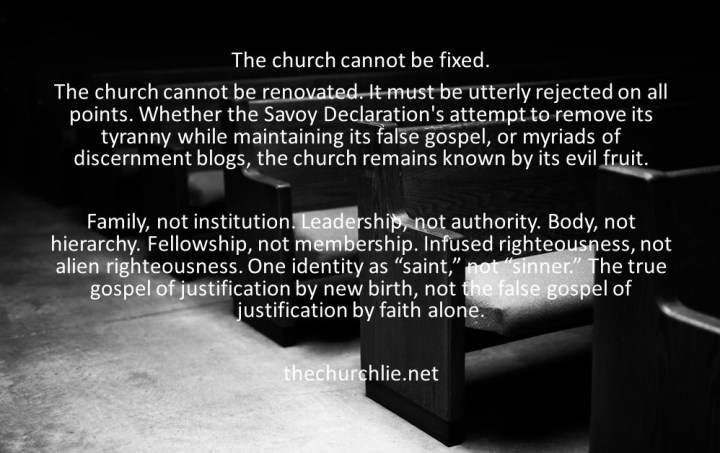
Abortion: The Slave Master Always Comes Offering Freedom
 I started writing for this blog in 2009 and have written well over 3000 articles; this is the first one on abortion. The enormity of an issue has never compelled me to write about it. However, of late, I have a few thoughts about it that I want to put down in writing.
“Freedom to choose.” There it is again, that freedom word. As the saying goes, “Always follow the money,” and that is fine, but in addition, never fail to follow the freedom, especially when the very word is being used in the discussion.
I suppose readers of this blog tire of seeing my continued emphasis on the essence of sin; viz, sin is an entity driven by the desire to enslave and control. Key to sin’s ability to do that is condemnation. If you are condemned, you are deemed unworthy by yourself and others and readily concede that you must be a follower. Sin is described in the Bible as an animal that crouches in wait for its prey to fail, and its hunting ground is enriched by law, civil law, God’s law, conscience, and the judgments of others.
The Bible also states that when condemnation is taken away, sin is disarmed. Sin is the epic slave master who comes offering freedom as a rouse to enslave. Sin always uses an offer of freedom to lead individuals into the condemnation trap. Whether a bear cage, raccoon cage, or minnow cage, it’s baited with freedom.
Most governments have a sin problem. By virtue of how societies work, the populous greatly outnumber those who make up government authority. Without the people there is no government, to begin with, but if the majority of any given populous stand against the government they are powerless to do anything about it. So, governments are always looking for ways to maintain control and seek to do this on many different levels.
Abortion is one of the many ways of doing so. There is strength in numbers, so keeping population down makes any given society easier to control. The following point is often made as well: “How many people who might have lived to invent a cure for cancer have been wiped out through abortion?” Indeed, but a cure for cancer is only one point among myriads of others that speak to benefiting humanity, not to mention great thinkers who may have greatly empowered individualism. How many James Madison types et al. didn’t make it out of the womb? Meanwhile, sin is hard at work offering freedom to those who do make it out of the womb as a way to enslave them.
I wonder if there is a greater example than the feminist movement: finding freedom through being somebody else that you aren’t; how much sense does that make? I owe this thought to Tucker Carlson. Women ought to be empowered by being who they are rather than the opposite. Rather than recognizing that women can do many things men cannot do, we have women trying to be more like men. Does this not concede to the ancient draconian view that women are inferior?
Hence, in many cases, the power and ability to bring life into the world is rejected in the name of freedom. Yes, laws against abortion are just another ploy by the evil man-driven world to enslave women. And rather than focus on the moral aspect of abortion specifically, let me focus on the theme of this post: in most cases, abortion does lead to self-condemnation via personal conscience.
And then sin pounces.
This can also be applied to any mentality that doesn’t embrace who we are individually in the name of being free from who we are. Wellbeing comes from embracing who we are as created individuals and making the best of it thereof. Wellbeing comes from being the best us.
Sin is a clever entity. It uses both law and sin to enslave in the name of freedom leading to slavery. Beware of government laws whether seemingly moral or liberal; either one can lead to slavery. What is lawful may not be expedient to your self-image, but may rather lead to self-condemnation by catering to errant desires.
…and then sin pounces.
paul
According to Church, Church is Hard Because Humanity Has NO VALUE
 “Objective truth is the root of all evil.”
In the Bible, the essence of sin is not law-breaking, but a desire to control others. Sin is all about being enslaved or enslaving others, or both; it’s a food chain. Then you have sin’s twisted definition of “love.” Love is kindness and mercy shown to people who have no value; yes, love is “grace” and “mercy.”
You see, grace and mercy are astounding because we all deserve nothing but death. This is what we call “zero sum life.” As some would put it, “humanity sucks.” Love is kindness shown to people who deserve nothing because they are worthless.
Furthermore, those with knowledge should be in authority over those with less knowledge. And what is knowledge? The knowledge that humanity is worthless. The philosophers of zero sum life plunge the depths of not knowing. This is the science of social engineering in a reality where there is no truth other than the fact that humanity is worthless. “Evil” is defined as the arrogance of believing in objective truth and any degree of goodness in mankind.
Hence, our best life now can only come about by obeying the philosophers of any given venue and uniting around whatever they say the truth is. Social justice is actually defined as unification around any given body of information that guides any given society. Objective truth outside of any given authority is the root of all evil.
And also, ANYTHING that empowers the individual is evil because it can only result in the devaluing of statism and its collectivist philosophy demanding pure altruism. This is the least common denominator of all politics. You can always follow the money, but better understanding comes from always following the freedom.
In human history, the politics of statecraft begins by being inseparable from religion. The kingdom of darkness approached Eve in the garden via its serpent ambassador and introduces the Caste Party. This is the knowledge of good and evil; all material creation, which of course includes mankind, is evil, and only the invisible is good. The ambassador of darkness came and offered mediation between the two and the first caste hierarchy: the invisible good, the serpent mediator (who appointed Eve first to have more knowledge of good and evil than Adam), and then Adam. From there, world history becomes a caste system free-for-all. The result is a dark human history which was so dark that people began asking questions which led to the Enlightenment Era resulting in the American Revolution. This blew up the church-state monopoly on darkness, misery, and unspeakable terrors.
Of course, there is still enough integration between Enlightenment philosophy and zero sum life ideology and its caste political system to provide the reality that we see in everyday life moving forward. This post is about the zero sum life philosophy seen in church.
Church is still very popular despite its atrocious history and being a sanctuary for every form of evil including child rape, but how can this be? Answer: church is the institutional mediator between the material and the good, and besides, people are totally depraved anyway, so…get over it. So, your child got raped by a priest or Deacon Dan? So what? You and your children deserve death anyway so get over it. You want to make an issue of this and threaten the only bus going to heaven? Where’s your thankfulness? The church is the temple of God, and whoever destroys that temple will be destroyed by God!
This mentality alone explains everything we see in our society today, and it comes from the zero sum life ancient philosophy. This post is about a good example of such. The following poem, of sorts, was sent to me recently:
“Church is hard.
Church is hard for the person walking through the doors, afraid of judgment.
Church is hard for the pastor’s family, under the microscope of an entire body.
Church is hard for the prodigal soul returning home, broken and battered by the world.
Church is hard for the girl who looks like she has it all together, but doesn’t.
Church is hard for the couple who fought the entire ride to service.
Church is hard for the single mom, surrounded by couples holding hands, and seemingly perfect families.
Church is hard for the widow and widower with no invitation to lunch after service.
Church is hard for the deacon with an estranged child.
Church is hard for the person singing worship songs, overwhelmed by the weight of the lyrics.
Church is hard for the man insecure in his role as a leader.
Church is hard for the wife who longs to be led by a righteous man.
Church is hard for the nursery volunteer who desperately longs for a baby to love.
Church is hard for the single woman and single man, praying God brings them a mate.
Church is hard for the teenage girl, wearing a scarlet letter, ashamed of her mistakes.
Church is hard for the sinners.
Church is hard for me.
It’s hard because on the outside it all looks shiny and perfect. Sunday best in behavior and dress.
However, underneath those layers, you find a body of imperfect people, carnal souls, selfish motives.
But, here is the beauty of church—
Church isn’t a building, mentality, or expectation.
Church is a body.
Church is a group of sinners, saved by grace, living in fellowship as saints.
Church is a body of believers bound as brothers and sisters by an eternal love.
Church is a holy ground where sinners stand as equals before the Throne of Grace.
Church is a refuge for broken hearts and a training ground for mighty warriors.
Church is a converging of confrontation and invitation. Where sin is confronted and hearts are invited to seek restoration.
Church is a lesson in faith and trust.
Church is a bearer of burdens and a giver of hope.
Church is a family. A family coming together, setting aside differences, forgetting past mistakes, rejoicing in the smallest of victories.
Church, the body, and the circle of sinners-turned-saints, is where He resides, and if we ask, He is faithful to come.
So even on the hard days at church—
The days when I am at odds with a friend, When I’ve fought with my husband because we’re late once again. When I’ve walked in bearing burdens heavier than my heart can handle, yet masking the pain with a smile on my face. When I’ve worn a scarlet letter, under the microscope. When I’ve longed for a baby to hold, or fought tears as the lyrics were sung. When I’ve walked back in, afraid and broken, after walking away.
I’ll remember, He has never failed to meet me there.
Church is a body, a family, a place to love God and love others through our struggles!
~Author unknown “
The Bible also explains that there are only two people groups in the world: under law and under grace. I have written extensively on the two, but let me say for purposes of this post that under law is a mindset from which people see all reality. All of reality is seen from the perspective of judgement and condemnation. Condemnation leads to fear, and there is an element of anxiety in every diagnosis of mental illness. Some estimate that 60% of America’s population suffers from clinical depression or anxiety. We live in an under law reality with condemnation and fear following. Christians who understand justification by new birth as opposed to justification by faith are beginning to see this but have a long way to go in learning how to see the world through under grace. I am working on it all of the time now, and often when Susan and I are talking about life in general I catch myself saying, “That’s under law thinking.”
Let me give you an example. This morning Susan and I had a discussion that went sort of like this:
“Betty-Jo is having problems with her husband.”
‘Oh? How’s that?’
“He doesn’t spend enough time with the new baby.”
See the problem here? How much time with the new baby would be enough? It’s a subjective standard determined by one of Betty-Jo’s ten commandments. And by the way, it’s a pretty good marriage if there are only ten. One of the tenets of under law thinking is everyone turning their personal preferences into a moral law. Secondly, what does Betty-Jo talk about most? What’s good about her husband, or what’s wrong with him according to the gospel of Betty-Jo? Thirdly, notice that Betty-Jo might be comfortable with her husband spending more time with the baby, not out of love, but out of avoiding the penalties for violating Betty-Jo’s law: the silent treatment, withholding of sex, and incessant nagging. In a marriage, couples often have their own laws and the punishments that go with those laws. Unfortunately, with men, that can be verbal and physical abuse. And fourthly, Is Betty-Jo comfortable with him obeying her law in a loveless manner because submission to one law is only going to lead to more laws? In other words, is she looking for reasons to condemn her husband for purposes of controlling him through condemnation? Of course, this cuts both ways and some marriages are therefore a law war fought with weapons of condemnation.
Under grace thinking has patience with failure to love because it weighs failure against everything else that is good about the person. However, if none of us are good, all that is left is condemnation, no? If you are out to control someone, the person’s positive attributes do not contribute to that cause. And of course, a couple’s failure to communicate regarding the realities of marriage and having children prior, is a factor, but not open for discussion in this post. With that said, many secular couples are better at living according to under grace thinking than professing Christians. This is because they are self-confident, have a lot in common, and sort of live and let live, so to speak. All in all, they have more of an individualistic mindset leading to seeing each other as true equals. This leads to true companionship. The diminishing of companionship is directly related to duty and rank. Caste systems do not facilitate healthy relationships.
The poem, of sorts, is not without an author. With the help of Google I quickly found the source. It’s a Facebook page titled “Choosing Freelan.” Apparently, the post was inspired by a church meeting she attended:
“I sat in a meeting. The discussion was heated. The conversation heavy.
Hearts were burdened. Chests were puffed. Sorrow, pain, arrogance, curiosity, humility, fear, courage, and forgiveness sat together in a single room.
As I looked around the church, I just kept thinking-
Church is hard.”
Not only is church hard because of its presuppositions concerning humanity which we have discussed, it’s hard because following objective truth and improving our lives accordingly is not the goal. Church is a place where we go to confess that life doesn’t work. Church is a place where we go to learn coping skills and keep ourselves saved. Though Susan and I do little marriage counseling of late, we used to greatly improve marriages by telling couples to cease going to church immediately. This, in and of itself, made the marriages 100% better overnight. Being habituated into an under law mindset does no marriage any good at all. Besides, the book of James makes it clear why interaction looks like it did in the church meeting: “desires that battle within” people. Viz, a desire to be in control. Church will destroy a marriage. Again, if we are merely “sinners” who can do no good, all that’s left is condemnation. Imagine a home where condemnation rules the day as proof of spirituality and humbleness. Good luck with that.
Church is hard for the person walking through the doors, afraid of judgment.
Right, because the gospel of justification by faith calls for “believers” to remain under law and subsequent condemnation…duh.
Church is hard for the pastor’s family, under the microscope of an entire body.
Under the microscope law of an entire body. Remember what we said about the individual laws of under law thinking?
Church is hard for the prodigal soul returning home, broken and battered by the world.
Under law thinking is basically unregenerate, so, one returns to the church for more of it.
Church is hard for the girl who looks like she has it all together, but doesn’t.
Because she is depressed from being under condemnation…duh.
Church is hard for the couple who fought the entire ride to service.
Because they function according to under law thinking and are trying to control each other through condemnation…duh.
Church is hard for the single mom, surrounded by couples holding hands, and seemingly perfect families.
Because she has been taught church laws about dating that aren’t practical.
Church is hard for the widow and widower with no invitation to lunch after service.
Because church is an under law institution and cliquish, and so is the world.
Church is hard for the deacon with an estranged child.
Because youth know something isn’t right with church.
Church is hard for the person singing worship songs, overwhelmed by the weight of the lyrics.
Because church music is also under law leading one to be condemned, and returning to the cross for more salvation. Why do you think they play under law music during the alter call?
Church is hard for the man insecure in his role as a leader.
Because the church tells him he is just another sinner saved by grace…duh.
Church is hard for the wife who longs to be led by a righteous man.
Um, that is defined by a husband who always says “yes” to the church leaders. Church is, in fact, hard for spouses married to those who think for themselves.
Church is hard for the nursery volunteer who desperately longs for a baby to love.
Wait a minute, that should be the next best thing that gives them joy. But since church is about suffering, and embracing the hardship of living, I guess not.
Church is hard for the single woman and single man, praying God brings them a mate.
You don’t pray for a mate, you do what’s practical to find one. But first things first: find out what true reality is and find someone who also understands what true reality is or else you will indeed fulfill church destiny. Indeed, church marriages are about someone under law marrying someone else who is under law which is a disaster.
Church is hard for the teenage girl, wearing a scarlet letter, ashamed of her mistakes.
Because the condemned are easy to control. The goal isn’t happiness; the goal is submission.
Church is hard for the sinners.
Right, because the Bible says, “The way of the wicked is hard”…duh.
Church is hard for me.
…because you are wicked by your own testimony.
It’s hard because on the outside it all looks shiny and perfect. Sunday best in behavior and dress.
Unless you pay attention to the news.
However, underneath those layers, you find a body of imperfect people, carnal souls, selfish motives.
Right, because when you are under law, there is no way to determine true motives; unless, that is, ALL condemnation is gone and you know there is no justification in law. The only motive left is love. In contrast, when you are under law, selfish motives must be necessarily assumed.
But, here is the beauty of church—
Church isn’t a building, mentality, or expectation.
Church is a body.
No it isn’t; it’s an institution that sells salvation.
Church is a group of sinners, saved by grace, living in fellowship as saints.
No, not by fellowship, but by membership into an institutional authority coronated by water baptism.
Church is a body of believers bound as brothers and sisters by an eternal love.
Institutions and families are mutually exclusive; institutions don’t love people.
Church is a holy ground where sinners stand as equals before the Throne of Grace.
No, no, the church temple is not the holy ground or the temple. The holy temple is the body of the believer who offers living sacrifices to God that brings the believer joy, not hardship. Since worship must necessarily be holy, note that this implies that worship only happens at church, which in fact is church orthodoxy.
Church is a refuge for broken hearts and a training ground for mighty warriors.
Mighty warriors are broken-hearted souls who need a refuge? Doublespeak much? Actually, the Bible says we assemble together to encourage each other unto good works.
Church is a converging of confrontation and invitation. Where sin is confronted and hearts are invited to seek restoration.
Right, because “present sin,” speaking in football terms, needs a fresh set of salvation downs. We leave church with first down and salvation goal and come to church on Wednesday because it’s fourth and one.
Church is a lesson in faith and trust.
…in church authority and many mediators other than Christ.
Church is a bearer of burdens and a giver of hope.
…for “final justification.”
Church is a family. A family coming together, setting aside differences, forgetting past mistakes, rejoicing in the smallest of victories.
Again, institutions and families are mutually exclusive.
Church, the body, and the circle of sinners-turned-saints, is where He resides, and if we ask, He is faithful to come.
The Bible says Christ has permanent residence within us.
So even on the hard days at church—The days when I am at odds with a friend, When I’ve fought with my husband because we’re late once again. When I’ve walked in bearing burdens heavier than my heart can handle, yet masking the pain with a smile on my face. When I’ve worn a scarlet letter, under the microscope. When I’ve longed for a baby to hold, or fought tears as the lyrics were sung. When I’ve walked back in, afraid and broken, after walking away. I’ll remember, He has never failed to meet me there.
The Bible says that perfect love casts out fear. The Bible says that Christ’s burden is light, not hard. The Bible says Christ came so we can have life and have it more abundantly. The apostle Paul said to rejoice always.
Church is a body, a family, a place to love God and love others through our struggles!
No, church is a lie.
paul

 Paul's Passing Thoughts
3 comments