PPT Top 10 Gnostics of the American Church
 The present day New Calvinism movement is a return to the exact same viral Gnosticism that plagued the New Testament church. New Calvinists proudly claim St. Augustine who was an avowed Neo-Platonist. Platonism later became various forms of Gnosticism. Martin Luther’s theology of the cross laid the foundation for the functioning Platonism that has plagued the church sense the 16th century. Luther, in his endeavor to define Augustinian philosophy for the Reformation, made the cross a Platonist hermeneutic that transcends the material world and the five senses. This was Luther’s definition of a true theologian. Said Luther:
That person does not deserve to be called a theologian who looks upon the »invisible« things of God as though they were clearly »perceptible in those things which have actually happened« (Rom. 1:20; cf. 1 Cor 1:21-25).
This is apparent in the example of those who were »theologians« and still were called »fools« by the Apostle in Rom. 1:22. Furthermore, the invisible things of God are virtue, godliness, wisdom, justice, goodness, and so forth. The recognition of all these things does not make one worthy or wise.
He deserves to be called a theologian, however, who comprehends the visible and manifest things of God seen through suffering and the cross.
The manifest and visible things of God are placed in opposition to the invisible, namely, his human nature, weakness, foolishness. The Apostle in 1 Cor. 1:25 calls them the weakness and folly of God. Because men misused the knowledge of God through works, God wished again to be recognized in suffering, and to condemn »wisdom concerning invisible things« by means of »wisdom concerning visible things«, so that those who did not honor God as manifested in his works should honor him as he is hidden in his suffering (absconditum in passionibus). As the Apostle says in 1 Cor. 1:21, »For since, in the wisdom of God, the world did not know God through wisdom, it pleased God through the folly of what we preach to save those who believe.« Now it is not sufficient for anyone, and it does him no good to recognize God in his glory and majesty, unless he recognizes him in the humility and shame of the cross. Thus God destroys the wisdom of the wise, as Isa. 45:15 says, »Truly, thou art a God who hidest thyself.«
So, also, in John 14:8, where Philip spoke according to the theology of glory: »Show us the Father.« Christ forthwith set aside his flighty thought about seeing God elsewhere and led him to himself, saying, »Philip, he who has seen me has seen the Father« (John 14:9). For this reason true theology and recognition of God are in the crucified Christ, as it is also stated in John 10 (John 14:6) »No one comes to the Father, but by me.« »I am the door« (John 10:9), and so forth.
~ The Heidelberg Disputation to the Augustinian Order of 1518: Thesis 19, and 20.
Hence, the visible is evil, and man is visible. Like Plato’s theory of the pure forms, the invisible is the true, good, and beautiful. The material is the world of shadows. Any wisdom connected to the material world is the “theology of glory.” Luther stated it in no uncertain terms:
The manifest and visible things of God are placed in opposition to the invisible…
John Calvin then articulated Luther’s theology of the cross by developing a full-orbed philosophical application in his Institutes of the Christian Religion. Calvin also affirmed the foundations of Augustinian Neo-Platonism by citing Augustine, on average, on every 2.25 pages of the Institutes.
Like certain Platonic disciplines that were immutable gateways to the immutable true ideas in the mutable shadow world, Luther merely made such the cross. Plato’s philosopher kings were able to transcend the five senses enslaved to the material world and extract the ideas of the true forms for the betterment of the Republic. Luther’s “true theologian” is the present-day philosopher king dressed in biblical garb. The top ten follow:

#10 Elyse Fitzpatrick
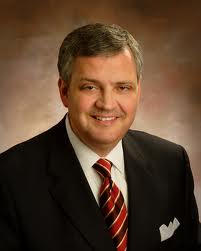
#9 Albert Mohler
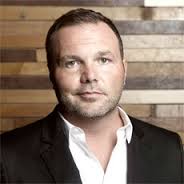
#8 Mark Driscoll
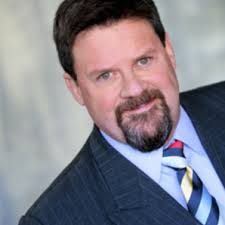
#7 Phil Johnson
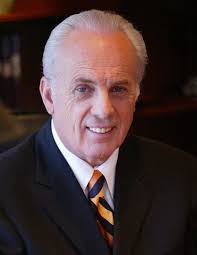
#6 John MacArthur Jr.

#5 Mark Dever

#4 Michael Horton

#3 Tullian Tchividjian

#2 Tim Keller
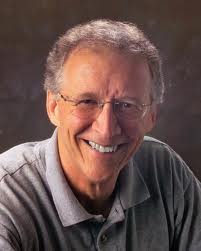
#1 John Piper
 “The New Calvinists are not worried; they don’t believe the American church has the intellectual wherewithal to grasp the fact that John Calvin was a Platonist philosopher. It is time for that theory to be vigorously tested. Even if that theory is believed, it can be attributed to Reformed orthodoxy predicated on the incompetence of the human race wondering about in the shadow world while rejecting the idea that the new birth makes a difference. The new birth is not the mere experience of a changed realm; it is the reality of a changed person, a person that is not only justified positionally, but changed into a just person living for God’s glory. Christians don’t merely “reflect” the glory of God, they are not merely “transformed into an image” of God’s glory, they are new creatures who glorify God with their own actions. The Spirit does not merely manifest Christ in a realm, he colabors with the new creature in the truest sense.”

 Paul's Passing Thoughts
This has left me much to ponder. Thank you
LikeLike
What about New Covenant Theology and Pastor Randy Seiver? On the same or opposing sides of the true gospel?
LikeLike
Good question Gary. NCT came out of the 1970 resurgence of authentic Calvinism. The core four of the think tank that rediscovered authentic Calvinism was Robert Brinsmead, Geoffrey Paxton, Greame Goldsworthy, and Jon Zens. NCT was the brainchild of Brinsmead and Zens. I go into this in detail in TTANC volume one. Send your mailing address to mail@ttanc.com, and I will send you a manuscript of that chapter.
LikeLike
Gary said @ 2:10: “This teaching has big implications. If what you say is true, it has primal authority beyond Plato and the Reformation, yet it’s not anything new. Who else is teaching this? Did Spinoza teach anti-Platonic metaphysics without the scriptures?”
Who else is teaching which thing? If you are asking who is teaching what Al Molher said in Paul’s last post, the answer is pretty much every one of the men listed in the top Ten. Truth imparted to a select few to be mediated to the masses is a staple of Calvinist doctrine. It takes about an hour reading Calvin’s institutes to get swatted upside the head with this foundational assumption.
As for Spinoza… he was part of the Rationalist school and specifically opposed to René Descartes dualism (Mind/Body dichotomy) and the Empiricist school. He was more Aristotelian in his epistemology and as such offered a challenge to revelation based source for Truth (the Puritan “Gnostics” of his day) but his metaphysics maintained some of the Platonist errors that has plagued western thought since the 4th century BCE.
LikeLike
What I was asking is basically “Who else is teaching that Platonism, the Reformation, and other error riddled thinking is Gnosticism”? If this mystical knowledge has corrupted the true gospel, and ideologues are not trustworthy, and science is not biblical – what is the lowly and foolish truth seeker left with?
LikeLike
Gary,
I never said science is not biblical. What is the truth seeker left with? Suffice to say that Christ PROMISED THE INDIVIDUAL that he/she will find truth if they seek it. Suffice to say that Moses said not to ask who will go up to heaven and bring the word down to us, but rather, the word is close to us, in us, and we are able to do it. I would beckon to keep this confined to the problem of truth mediators between men other than Christ. Clearly, clearly, the Reformation reestablished spiritual caste in regard to the mediation of truth.
Basically, this all starts with the lie in the garden; in essence, “Eve, you need me to tell you what God really said.”
LikeLike
Basically, this all starts with the lie in the garden; in essence, “Eve, you need me to tell you what God really said.”
LikeLike
Gary:
“What I was asking is basically “Who else is teaching that Platonism, the Reformation, and other error riddled thinking is Gnosticism”?
Ahh… ok . . . I see what you are asking … and the answer is Uh… virtually no one other than Paul and myself and a blogger that goes by the pseudonym Argo.
I run across someone who, every now and then notices that Augustine was a Platonist an realizes that could be a problem, but I rarely find anyone with a comprehensive rebuttal to the Platonist/Augustinian (Lutheran/Calvin) axis of evil within Christianity. This is because Christianity has with relentless determination ran thinkers from the chancel. So, in some respect modern Christianity deserves the disaster that is raining down on pew sitter heads.
“If this mystical knowledge has corrupted the true gospel, and ideologues are not trustworthy, and science is not biblical – what is the lowly and foolish truth seeker left with?”
Hum… I know Paul has answered some of this but I wanted to make a couple observations. I think this is a false choice. The issue is not unbiblical Science VS mystical corruption. First, Science is neither biblical or unbiblical. Science is a byproduct of a specific set of ideas: i.e. that man’s perceptions are valid, that his reason is effective and that nature is explorable. This leads to discoveries that encompass the broad category we call science.
Second, I would offer this observation … the “Lowly and foolish” riff is error. By definition the fool does not value truth. The fool is committed to delusion at the expense of reality and reason. He is at no point interested finding the truth, which is why he can’t be told anything and refuses to take the most basic understanding from the world around him. So it is an oxymoron to couple FOOL with truth SEEKER. So if you are SEEKING truth it means that you must VALUE truth which means you CANNOT be a fool.
Fool is not to be confused with ignorant. There is no moral failing in being ignorant. Man is not judged for his lack of omniscience. Man is judged for his willful ignorance. And willful ignorance is the essence of the Fool’s existence.
And last . . . the appeal to being “Lowly” is also disingenuous. No man who deliberately seeks to inform his own mind with truth can ever be said to be “lowly.” For anyone to say he has the truth is to presume the superiority of his own rational faculties. So by definition that man can never honestly say he is lowly. To do so is either error or a vain attempt at fraudulent humility.
LikeLike
Hmmm. Maybe not a vain attempt at fraudulent humility. Maybe a realization of one’s ignorance and character flaws results in genuine modesty. I am not so proud to think that I know the truth. Neither am I so vain as to believe that I am good or acceptable or perfect at living the truth, walking in the light, speaking the truth in love, in control of my tongue, loving as God loves in deed and in truth. Maybe I am on that path. Maybe not. Maybe I know my own ambivalence and ambiguity somewhat well enough. I don’t think that this is false meekness. Being meek and lowly of heart might be true character traits or I might have an inflated ego. I’m just here to learn. This all started a few months ago when I realized that the truth about who am I, why am I here, where am I going? we’re too important to ignore any longer. Retirement, crises, traumas have a way of helping one put life into perspective.
Who is a fool? Maybe willful ignorance is too narrow of a definition. Words and the deep meaning of words are very important to me. Just accepting someone else’s definitions and meanings is too disempowering for my taste. Perhaps my opinion of myself as a fool or behaving foolishly much of my life is relatively correct. Perhaps seeing myself as a fool is more true than seeing myself as wise. The authentic reality of both lowliness and foolishness is that mostly all of us are somewhere in between the extremes. A man can both be a fool and value truth. If I am aware of truths but not living in harmony with them, where do I rank in terms of wise or foolish. It’s a matter of behaviour, not willful ignorance. Fool is as fool does or fails to do. So perhaps you misjudge a humble and unwise truth seeker. It doesn’t matter that much being judged rightly or wrongly by my peers.
I appreciate all this information. I started out weeks ago looking to rid myself of false prophets, false worship, false spirits, false doctrine, false teachers. I had no idea that there were teachers who had such an accurate view of science as well as the false gnostic gospel in this day and age. I just became aware of anti-Platonism outside a gospel perspective. It has been refreshing to discover it within the gospel and with the further understanding of the errors of Calvin, Augustine, Luther, neo-Platonism, long term error in Western philosophy that influenced late Judaism and early Christianity. It’s a lot to take in. It makes me feel the opposite of upright and wise.
LikeLike
Liz said: Would your view of these people have anything to do with the fact that you were excommunicated from a Reformed church? You didn’t really seem to say much in this article other than “I don’t like Reformed people.”
LOLOL… that is hilarious. That is a trite summation of Paul’s critique of the Neo Reformed movement. Maybe spend some time digesting the breadth of his comments. I’m just saying… that might be a good place to start.
But here is the important question. So what? And so he got kicked out? So Paul doesn’t like them. We SHOUOLDN’T like men who act the way Neo Calvinist thugs act. Their conduct is despicable. They are deserving of contempt. But “dislike” aside . . . how does that change the content of his criticism?
Oh wait… answering that question would actually require KNOWING the substance of Paul’s challenge.
LikeLike
And these people make these statements as if what they say transcends reality. It’s almost as if they think because they have spoken, people will look at the post and only see, “I don’t like Reformed people.” Truly strange.
LikeLike
Where does Science fit in then? Natural philosophy? Biblical exegesis? Revelation? Inspiration? Just ignore the doctrines of men and false gospels? Exercise faith that the truth is in me and that’s all that’s necessary? Focus on working with the truth to become sanctified?
LikeLike
Gary,
The Bible is very clear in regard to what sanctification is: it is learning to “control your own body” via the wisdom of Scripture. It is “putting off the old man” and “putting on the new man.” Christ stated that man lives by “every word that comes from the mouth of God.” The Bible begins with metaphysics (creation), epistemology (and God said, let there be light etc), ethics (the meeting between God, Adam, Eve, and the serpent after the fall and other events following), and politics (most of the Bible).
LikeLike
Sanctification and taming the tongue, as written in James. Thanks very much
LikeLike
Gary,
Look for putting off and putting on constructs throughout the Bible in the same context.
LikeLike
Thank you Paul.
LikeLike
Bro, do you even Bible?
LikeLike
Hannah,
Welcome, I wasn’t aware that there were Jonestown survivors.
LikeLike
This is a list of my favorite preachers!
LikeLike
Gnostics of a feather . . . ops Calvinist of a feather flocking together … uh . . . err. Something like that.
>snicker<
LikeLike
I also graduated from John MacArthur’s college, which apparently makes me a gnostic, according to this post at least.
LikeLike
It certainly puts you in the ballpark liz.
LikeLike
And unfortunately, I was responsible for sponsoring at least three men to go out there and get turned into KoolAid drinkers. Well, I was ignorant, but that doesn’t mean others have to be.
LikeLike
What a long painful trip it was to finally come to grips with the fact that MacArthur has bought into this stuff.
LikeLike
Trying to read and understand this post. I totally reject Calvinism, neo or otherwise. I am upset that my pastor wants a Calvinist, JD Greer as President of the SBC. Although my pastor isn’t reformed, he does quote Calvinist authors often, which means he is reading their books and apparently looks up to them. Apparently you have studied this in depth. What reading materials would you suggest would give me more understanding of this? Thank you.
LikeLike
We have a lot of material connecting Gnosticism with Protestantism. In fact, the Doctor of Grace for both churches, St. Augustine, was an avowed Neo-Platonist which was the prerequisite for Gnosticism. The real issue surrounding the Reformation was metaphysics. Said another way, the real issue was the interpretation of reality. For the most part, the Reformers were Dualists. Let me think about the best links to refer you to. I will post some files and links here in response to your questions. MacArthur wrote the forward to Rick Holland’s book, “Uneclipsing the Son” which is an in-your-face Gnostic treatise.
LikeLike