John Piper, Wilberforce New Calvinist Jive, and Social Justice
 It is probably true, unfortunately, that William Wilberforce was a Calvinist of the Puritan variety.
I didn’t see the movie about him and his supposed exploits as an abolitionist, so I have no idea how the movie portrays that patch of history, but I can tell you this: there are a lot of “history” issues in our culture; one would do well not to take anybody’s word for anything without due diligence in this information age.
However, It would seem fairly evident that Wilberforce, at the very least, represents an anomaly of logic in our day—the dichotomy of logic and behavior. Calvinistic Puritans were very up with spiritual caste systems in that day, and were of the first to bring slaves to colonial America. Though Wilberforce was endeared to the nonconformist movement within the Reformation, the fundamental worldview and soteriology is the same. Most of the Puritans in that day believed that any attempt at social mobility was a violation of the 5th commandment. In the Eastern tradition that Reformed theology came from, the social strata you were born into was the predetermined will of the force or some sundry god; so, those who endeavored to move upward violated the will of the gods and dishonored their parents as well.
It would seem that Wilberforce addressed slavery, but not the spiritual caste that produces it. Reformation theology is part and parcel with caste, and caste will ALWAYS produce some variation of slavery or outright in-your-face slavery itself. Perhaps this influenced his lack of support for trade unions and women’s rights. Wilberforce was not without critics.
Wilberforce is highly respected by authentic Calvinist John Piper who points to Wilberforce as a sterling example of how the Reformed gospel transforms the world. Piper even wrote a book about Wilberforce. The thesis of the book proffers the idea that Wilberforce’s theology resulted in realm transformation, and is an uncanny revelation of what drives Piper’s own views on social justice.
The problem with authentic Reformed doctrine dying a social death every 100 years or so is a metaphysical one. The Reformers were primarily philosophers, and introduced a different method of interpreting reality itself from the Eastern traditions. For the first time in history, a Reformed think tank packaged authentic Reformation doctrine in a way suitable for contemporary thinkers in 1970. They were absolute masters of the highest order in integrating these ideas with biblical lingo, and that is the lingo of the New Calvinist movement.
That is why I deemed it strange when Piper quoted Wilberforce in contemporary New Calvinist terms that evolved out of said think tank circa 1970. John Piper, who often demonstrates his ability to memorize long portions of Bible passages, and wrote a book on Wilberforce’s life, closed his eyes in a video clip (indicating focus), and portends to cite Wilberforce in the whole transformation comes from the root of justification, not making the fruit the root through moralism motif. I do believe Wilberforce held to that construct, but Piper embellished the point by attributing contemporary lingo to Wilberforce. Curiously, or maybe not so much, the video has been pulled from Piper’s Desiring God website.

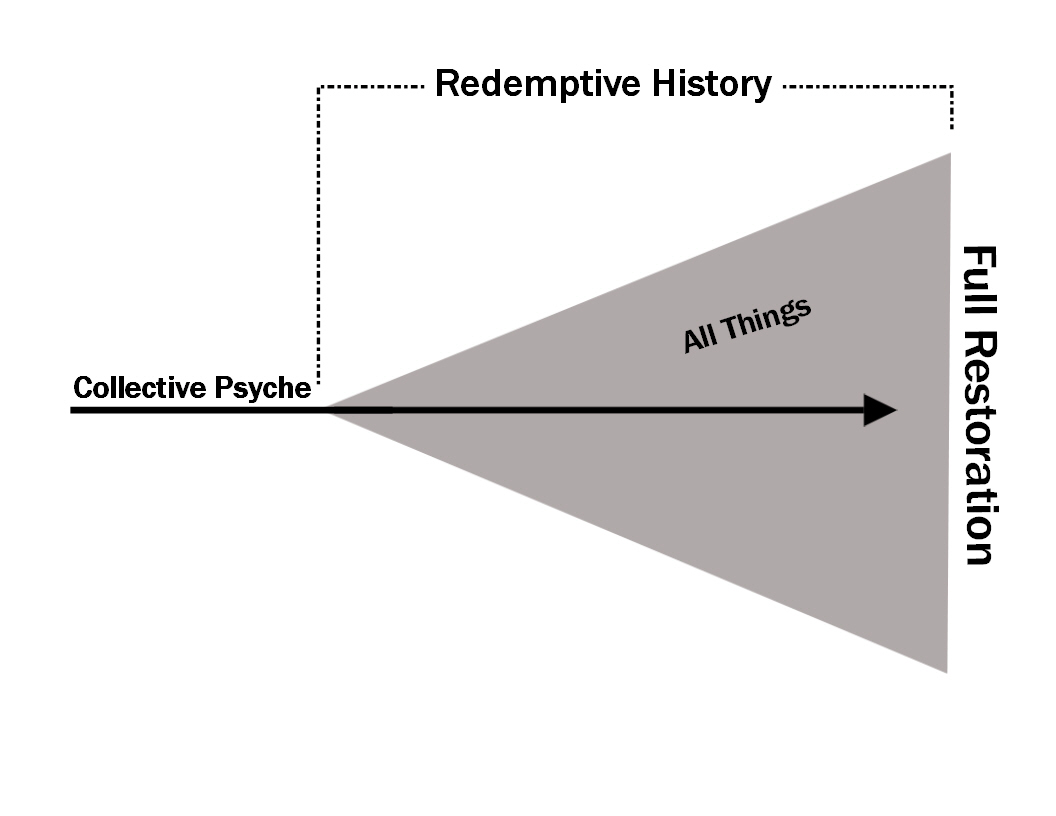
However, the larger point is Piper’s view of social change, which is interesting. This has to do with something that this ministry has learned in the past month after seven years of research. We have often bemoaned the Reformed fusion of justification and sanctification making justification a progression and not a finished work by God, but we never realized that this also includes glorification. In other words, “the gospel” is a transforming power that moves creation, society, and the individual towards a full experience of glorification.
So, through gospel contemplationism, the individual, creation, and society are transformed from “glory to glory.” And of course, the more people who are participating in this contemplationism, the more all of reality is jettisoned towards kingdom glory. The answer to your question is, “yes,” this is probably the basis of reconstructionist theology.
And it’s not passive. The more you suppress ideas by various and sundry ways, the less people will be drawn away from this collective contemplationism that will usher in the kingdom. And the answer to your second question is, “yes,” it does sound a lot like Eastern mysticism. And the answer to your third question is also, “yes,” it does remind me of Piper leading a Passion Conference in Lectio Divina.
Looking at this via individual conversion is interesting. We normally think of the resurrection being a radical transformation of the whole being in an instant. Sure, we progress in righteousness and our ability to represent the kingdom on earth, but we normally don’t think of progressive sanctification as an increased experience of what we will actually experience as glorified beings in heaven.
Is the new birth the beginning of glorification and an increased experience of what we will actually experience in heaven? Or is glorification a radical, instantaneous transformation from mortality to immortality? Is the only common element love? Is the Christian mandate the complete reconstruction of everything from the individual to the cosmos through gospel contemplationism? This idea is not foreign to Reformed tradition and is the specific thesis of books like Broken-Down House authored by Calvinist Paul David Tripp.
Where are the most visible leaders of our day leading people and what do they really believe? What did the apostle Paul mean when he said that it has NOT entered into the mind of Christians what God has prepared for them? What Piper et al seem to be saying is that it has entered into our minds, and we experience more and more of it until we usher in God’s full renovation.
The devil is in the details, and will determine how we function as Christians. Are we to make disciples? Or a new world?

 Paul's Passing Thoughts
1 comment