Helping Tim Challies and Other Calvinists with Evangelism
 Yesterday, I was sent the following article about Calvinist evangelism written by blogger Tim Challies: How To Offend a Room Full of Calvinists. Miffed by the suggestion that somebody knows better than me how to offend Calvinists, I immediately read the article.
Apparently, according to Challies, Calvinists get offended when people suggest that their soteriology hinders evangelism. According to Challies, the argument goes like this:
Many people are firmly convinced that there is a deep-rooted flaw embedded within Reformed theology that undermines evangelistic fervor. Most blame it on predestination. After all, if God has already chosen who will be saved, it negates at least some of our personal responsibility in calling people to respond to the gospel. Or perhaps it’s just the theological-mindedness that ties us down in petty disputes and nuanced distinctions instead of freeing us to get up, get out, and get on mission.
Protestants en masse think Calvinism’s greatest sin is weak evangelism, and of course, that makes them very angry because it’s supposedly the last criticism standing. I could start with the fact that Calvinism is works salvation under the guise of faith alone, or progressive justification, or salvation by antinomianism. Pick one; any of the three will work. But I have a mountain of data on that subject already; let’s do something different. Yes, let’s use Challies’ own words in the post to refute his argument. Before we call on Challies to refute his own protest, we will address his take on church history.
We go to history to show that the great missionaries, great preachers, and great revivalists of days past were Calvinists, and that Reformed theology was what fueled their mission… There are only so many times I can point to Jonathan Edwards, George Whitefield and the Great Awakening, or William Carey and the great missionary movement of the nineteenth century, or Charles Spurgeon and the countless thousands saved under his ministry. Sooner or later I have to stop looking at my heroes and look to myself. I can’t claim their zeal as my own. I can’t claim their obedience as my own.
In the post, Challies argues that we know that a straight line can be found from Reformed theology to evangelistic zeal because of history. Supposedly, Calvinists throughout history were driven directly by this deterministic gospel to reach thousands. It is very interesting when you consider the examples given which will aid in making my point.
The Great Awakening had absolutely nothing to do with Reformed soteriology. We should know this as a matter of common sense to begin with because the Holy Spirit doesn’t colabor with a false gospel. The Great Awakening was fueled by the ideology of the American Revolution and was expressed to a great degree in churches, especially among African Americans. Fact is, guys like Edwards and Whitefield then got on their horses and rode around the countryside bloviating and taking credit for the freedom movement tagged with “The Great Awakening” nomenclature.
Fact is, the Great Awakening was a pushback against the Puritan church state driven by Reformed soteriology that came across the pond as a European blight on American history. I would liken Challies’ assessment to our present President taking credit for things he is against when the results are positive.
What about Spurgeon? That example is just too rich because it makes the last point for me. Spurgeon, who once said Calvinism was no mere nickname but the very gospel itself, was the poster boy for getting people to come to church in order to get them saved. That’s important, hold on to that because it’s our last point.
But before we get to the last point, let’s look at the major point: Challies argues against the idea that fatalism hinders evangelism, and then confesses that he doesn’t evangelize like all of the great Calvinists in history because of…fatalism. Calvinism doesn’t cause fatalism resulting in lame evangelism, but Challies doesn’t evangelize because of fatalism.
After all, if God has already chosen who will be saved, it negates at least some of our personal responsibility in calling people to respond to the gospel… We go to the pages of Scripture to show that God’s sovereignty and human responsibility are not incompatible, but that people truly are both free and bound, that God both chooses some while extending the free offer of the gospel to all.
So why does Challies not evangelize according to him? First, because he just doesn’t, but secondly, he is responsible:
It is my conviction—conviction rooted in close study of God’s Word—that Calvinism provides a soul-stirring motivation for evangelism, and that sharing the gospel freely and with great zeal is the most natural application of biblical truth. But it is my confession—confession rooted in the evidence of my own life—that my Calvinism too rarely stirs my soul to mission. The truths that have roared in the hearts and lives of so many others, somehow just whisper in me. The fault, I’m convinced, is not with God’s Word, or even with my understanding of God’s Word; the fault is with me.
He is responsible, but not often stirred. And what’s his solution? There isn’t one, it is what it is; he is responsible, but not called to evangelism. No corrective solution is offered in the post. Why not? Because, as he said, we are responsible, but unable. Responsibility and inability are not incompatible. So, Calvinism doesn’t hinder evangelism, but if you don’t evangelize, there is no solution. Others did it, and you don’t, the end. Well, I suppose that approach doesn’t prevent evangelism either!
And funny he should cite Edwards. Susan is doing a session on Edwards for TANC 2015 and is studying his sermon Sinners in the Hands of an Angry God. She approached me and wanted to discuss something about the sermon that she was perplexed about. Edwards spent the better part of an hour addressing the total hopelessness of man and his likelihood of ending up in an eternal hell, but in the end offers no counsel on how to escape. Why? Because if God is going to do something, he is going to do it, and man is responsible either way.
This now brings us to the final point with a bonus; we are going to help Challies with his evangelism shortcomings. There is, in fact, a solution for Tim’s lack of evangelistic zeal. He doesn’t properly understand Calvinism and its history. This isn’t about saving Tim from the false gospel of Calvinism, this is about being a good evangelist in the context of Calvinism. If I can’t save a Calvinist, I can at least teach them how to be a better Calvinist. Really, it’s disheartening when Calvinists don’t properly understand Calvinism.
This is how we will help the Challies. We will bring him back to the historical significance of Spurgeon using some of his own observations. First, let’s get a lay of the land; how does true Calvinistic evangelism work? First, it is the “sovereign” gospel which means the subject must not be told that they have a choice. This is some fun you can have with Calvinists. Ask them if they tell the recipients of their gospel message that they have a choice. Most will avoid answering because they don’t want to admit the answer is, “no.” By their own definition, that would be a false gospel speaking to man’s ability to choose God.
Secondly, if God does do something, if “the wind blows,” that puts the subject in two categories according to Calvin: the called and those who persevere. The called are those that God temporarily illumines, but later blinds resulting in a greater damnation. Those of the perseverance class are the truly elect. So, the “good news” is that you have a chance to make it. But, if you don’t make it according to God’s predetermined will, your damnation is greater than the non-elect. God has either chosen you for greater damnation or the jackpot, but I guess it’s worth a try if God so chooses.
But hold on, and this is huge: all of that can be bypassed by Calvin’s “power of the keys.” What’s that? If you are a formal member of a Reformed church, and the elders like you, whatever they bind on earth is bound in heaven and whatever they loose on earth is loosed in heaven.
Furthermore, according to Calvin, sins committed in the Christian life remove us from salvation, but membership in the local church and receiving the “impartations of grace” that can only be found in church membership supply a perpetual covering for sin. And here is the crux: one of those “graces” is sitting under “gospel preaching” of which Spurgeon was chief. In one way or the other, Spurgeon sold this wholesale and the results speak for themselves.
See, the solution for Challies is simple. There is a solution for the disobedience he himself is responsible for: simply invite people to church in order to “get them under the gospel.” And that often looks like this…
Or perhaps it’s just the theological-mindedness that ties us down in petty disputes and nuanced distinctions instead of freeing us to get up, get out, and get on mission.
Problem solved. That’s how Calvinism is a straight line from its theology to evangelism—you are saved by being a formal member of a Reformed church, and your salvation is sustained by remaining a faithful member of that church and obeying everything the elders tell you to do and think. But let’s not call it intellectual rape, let’s call it “keeping ourselves in the love of Jesus.” Let’s call it “preaching the gospel to ourselves every day.” Let’s call it “being faithful to the church every time the doors are opened.” Let’s call it “putting ourselves under the authority of Godly men.” Let’s call it “trusting God with our finances.”
You’re welcome Tim, glad I could help.
paul
Outraging the Spirit of Grace by Preaching the Gospel to Ourselves Everyday
 There is no new thing under the sun—just different variations of the same thing. Sure, a company in Israel has developed a car that can run on water, that seems to be new, but they stole the idea from fish.
Likewise, man is heck-bent on either being owned to quiet his fears derived from presuppositions or being one of the elite owners of men. The argument most used for this cause is the biblical Old Covenant. Hence, there will always be various and sundry variations of a priestly class ruling over the great unwashed masses.
It goes something like this: the Old Covenant sacrifices were a shadow of Christ who offered himself once for the sins of man. Everybody agrees, but the devil is in the details; was Christ’s death a modification of the Old Covenant covering that still needs to be repeated albeit a different way? Did the Old Covenant sacrifices cover sins, or take them away? Did Christ present a variation of atonement (covering), or did He end atonement? Sure, Christ only died once as opposed to the repetition of the Old Covenant sacrifices, but must we continually return to the one time offering of Christ in order for our sins to be continually covered?
According to this construct, we remain the same except for a continual return to the sacrifice of Christ in remembrance for the forgiveness and covering of sin; after all, we still sin, right? Present sin must still be covered, no? So, instead of offering animal sacrifices, we continue to remain covered or atoned for by “remaining” faithful to the New Covenant.
How do we do that? It’s pretty clear: faithfulness to the local church through formal membership, obeying the New Covenant priests, tithing (and don’t forget “offerings” as well, and the building program, and…), baptism, sitting under elder preaching of the gospel, and especially the Lord’s Table which is one of the “grace imparting” ordinances of the church. We ALL still need grace, right?
But here is the money question: What is meant by “grace”? It can mean “help,” or it can refer to salvation. In this construct, trust me, it’s the latter.
Here is the second money question: is the New Covenant a covering of sin or a taking away of sin? “Paul, it’s only a covering because if our sins were taken away we wouldn’t sin anymore.” One of the most popular rhetorical questions in our day for someone who dares think that Christians no longer need “the gospel” (in a salvation sense) follows: “Did you sin today?” As one commented on PPT, “Well, I would hope we have forgiveness for present sin!” Hence, present sin would condemn us if we don’t continue to receive a covering for our sins. And, this covering can only be obtained in the institutional church through the “ordinances that impart grace.” You still need grace don’t you? “Are you saying that you don’t need grace?”
Therefore, “We must preach the gospel to ourselves every day.” “The same gospel that saved us also sanctifies us.” “You need the gospel just as much today as you did when you were saved.” “The gospel is not the ABCs of the Christian life; it is the A-Z.” “The gospel is not a rung on the ladder, it’s the whole ladder.” “If you leave the gospel and move on to something else, you lose justification and sanctification both.”
What does the Bible really say about all of this?
Let’s start with the Old Covenant which was, in fact, a covering for sin, but spoke of an actual ending of sin (taking away) and saints made presently holy regardless of sin.
In Leviticus 16, we find the regulations for the Day of Atonement (covering). The sacrifice included one bull, one ram, and two goats. Only the High Priest, Aaron, could perform the part of the ceremony that involved entering the Holy of Holies or the “Holy Place.” This was the inner chamber of the tabernacle separated from the entry chamber by a veil where the Ark of the Covenant was located. The fact that only the High Priest could enter the inner chamber is very significant. There was only ONE priest that executed that function. While other ceremonies only required hand washing, this ceremony required the complete washing of the body.
Laxness in regard to any ceremony connected with the Holy Place directly or indirectly resulted in instant death. This is what happened to Aaron’s two sons. The Holy Place was VERY inaccessible. The terror of the Old Covenant was for the express purpose of drawing a contrast between the Old Covenant and New Covenant.
The one priest, the inaccessibility to the Holy Place, the washing of the whole body, and the two goats are what we want to focus on in order to meet the objective point of this post. We have covered the first three, let’s consider the two goats. One was sacrificed. In regard to the sacrifices for sins, Aaron had to wash his whole body and sprinkle the blood on the mercy seat of the Ark in the Holy Place. In regard to the other goat, Aaron laid his hands on it and pronounced the sins of the people upon it, and then turned it loose into the wilderness. So there is a death resulting in a complete washing and the taking away of sin.
Now let’s go to Hebrews to find out how this all applies to the New Covenant. The Hebrew writer, probably Paul writing on behalf of the Apostles, is dealing with the same age-old problem of covering versus ending. That is the mere covering of sin versus the ending of sin. This also defines who the Christian is. If our sins are only covered we are only declared holy, but are not personally holy. If our sins are taken away, we are personally holy and possess the righteousness of God. “But Paul, we still sin!” I will get to that.
Also, if our sins are not ended, continued atonement is needed as well resulting in a system that accesses that continued atonement. For the Hebrews, that was easy because Old Covenant Judaism was alive and well. In our day, that has been replaced with some sort of system that returns us to Christ’s sacrifice for sins. Or in other words, a return to the same gospel that originally saved us.
The glaring problem with this is the fact that Christ only entered the Holy Place once to offer one sacrifice for all time, and made the Holy Place accessible to all people. That’s the coup de grace for all of these types of systems; if what Christ did is only a covering, the Holy Place would not be open to all. Christ would still be the only one who could enter the Holy Place on our behalf like Aaron did for the Israelites:
Hebrews 10:19 – Therefore, brothers, since we have confidence to enter the holy places by the blood of Jesus, 20 by the new and living way that he opened for us through the curtain, that is, through his flesh, 21 and since we have a great priest over the house of God, 22 let us draw near with a true heart in full assurance of faith, with our hearts sprinkled clean from an evil conscience and our bodies washed with pure water.
We ourselves have access to the Holy Place without the representation of a High Priest walking on holy eggshells lest he is struck dead. There is only one way we can enter that Holy Place—if we are truly holy. If we are not truly holy, and our sins are only covered, only Jesus would have access to the Holy Place—not us. Notice also that we have full access with our bodies completely washed from sin—the sins carried into the wilderness by the other goat.
Curiously, most English translations interpret the Holy Place in Heb 10:19 as “holy places.” Plainly, in the context that is an anomaly, but it should be noted that the KJV (“holiest”) and the Complete Jewish Bible (“Holiest Place”) have it correct.
So, how is it possible for us to have access to the Holiest Place while we in fact still sin? One thing and one thing only: belief in Christ’s death and resurrection resulting in the new birth or the baptism of the Spirt of grace. Legally, we died with Christ and are no longer under the condemnation of the law (Roman 6,7), and Spiritually, our minds are renewed (Ibid) and we have the very seed of God within us (1Jn 3:9). Even though we still reside in a mortal body where sin can harass us, our mind is regenerated and we are enabled to use our bodies as holy sacrifices unto God (Rom 12:1).
Christ offered one sacrifice to set us free from sin’s slavery, and we are now free to offer holy sacrifices to God in sanctification. The flesh is weak, but not inherently sinful. In fact, since the Holy Spirit permanently indwells us, it is His temple:
1Corinthians 6:19 – Or do you not know that your body is a temple of the Holy Spirit within you, whom you have from God? You are not your own, 20 for you were bought with a price. So glorify God in your body.
Unfortunately, sin still dwells in our mortality, but sin’s power comes from its ability to condemn. Christ died on the cross to end the law and its ability to condemn (Rom 10:4, 1Cor 15:56), but that’s only one side of the coin; on the other side is the reality that the Holy Spirit also raised us to new life with Christ. This means we are no longer under the slavery of the law and its condemnation (we were bought with a price from the slave master), and free to serve the Spirit of God (Rom 7:6).
Before we were saved, sin was able to use the law to provoke us to sin through desires of various kinds (Rom 7:5), this is when we were “living in the flesh” because sin was our master and had the upper hand (Rom 6:20). Now, that same sin wars against us and the Spirit who dwells within (Gal 5:16, 17, 1Pet 2:11). The “lust of the flesh” refers to when sin uses our body to bring about fruits for death; it does not mean the flesh is inherently evil. The flesh, like creation, is presently “weak.”
All in all, we must define present holiness the way the Bible defines it. But the denial of our personal holiness also denies the new birth and denies us access to the Holy Place. In that case, only Christ can enter in. Christ has not sat down at the right hand of the Father, but rather still offers the daily sacrifice (Heb 10:10-14). So, instead of our focus being…
Hebrews 10:24 – And let us consider how to stir up one another to love and good works, 25 not neglecting to meet together, as is the habit of some, but encouraging one another, and all the more as you see the Day drawing near.
…and faith working through love (Gal 5:6), keeping yourself saved through a perpetual need for atonement is the focus.
That denies the new birth and outrages the Spirit of grace (Heb 10:29). A return to the same gospel that saved us suggests that we are still under law and did not die with Christ; and additionally, not free to serve in the new way of the Spirit via being resurrected with Christ—Christ must continue to stand in the Holy Place and continue to offer His blood daily. He has not sat down at the right hand of the Father.
This is how preaching the gospel to ourselves every day outrages the Spirt of grace.
paul
Eight Reasons Why Christians No Longer Need the Same Gospel That Saved Them
Originally published June 16, 2013
1. When we are saved, we are washed and do not need another washing: John 13:9-11.
2. When we drink of the gospel, we never thirst again: John 4:13,14.
3. When we eat of the bread of life, we never hunger again: John 6:35.
4. When we are saved, we receive all of the fullness of God: Ephesians 1:19, 20.
5. We are called to move forward from repentance of dead works and on to maturity: Hebrews 6:1, 2.
6. Reconciliation only occurs once: 2 Corinthians 5:18-21.
7. The gospel is a foundation that we build on—you don’t continue to build the foundation: 1Corinthians 3:10-15, Romans 15:20.
8. Peter said he wanted to spend his last days reminding believers to add certain things to their faith. If PTGTY (preaching the gospel to yourself) is the paramount vessel for sanctification, why would that not be his emphasis in the time he had left? 2Peter 1:5-17.
How to Lead a Calvinist to the Lord

Originally published June 28, 2013
“What imperils the Calvinist soul is a fundamental anti-biblical view of the law. They must be shown the new way of the Spirit.”
Know Calvin’s Gospel
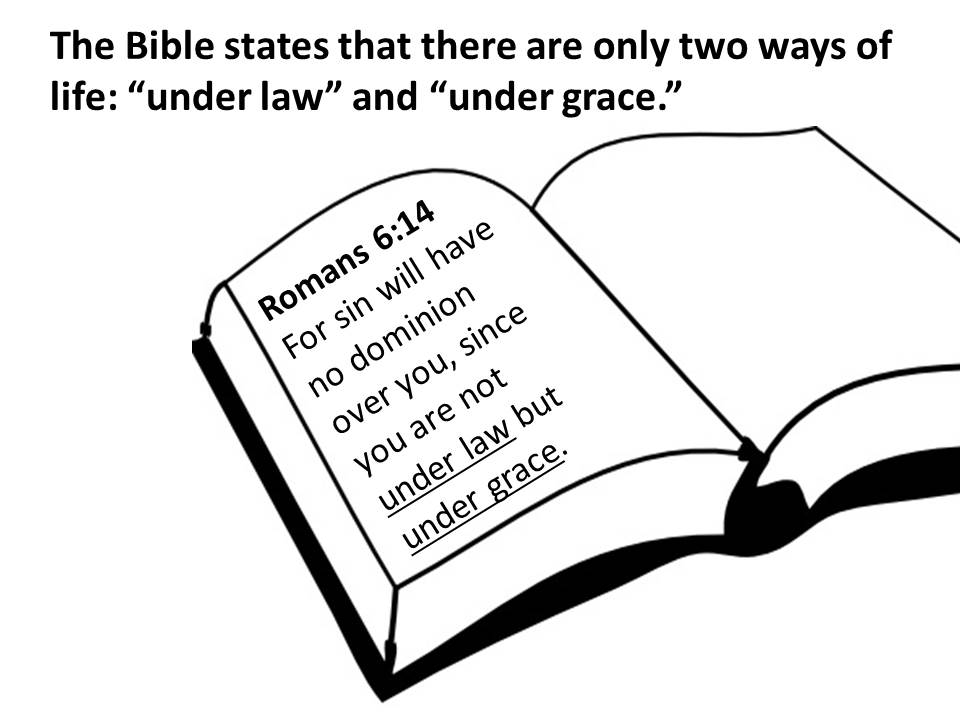
Calvinism is a false gospel that imperils the soul. The apostle Paul made it clear in Romans that there are only two people groups in the world: those under law, and those under grace (ROM 6:14). The lost and the saved. Calvinists declare themselves to be under law. They try to get around this by saying you can be under law and under grace both, but such is not the case. They say it is ok to be under law and covered by grace if we live by faith alone in sanctification; or, living by the same grace that saved us. The whole, “We must preach the gospel to ourselves every day” is indicative of where they stand on law and grace. According to their other gospel, we need the same grace that saved us every day for one reason and one reason only: we are supposedly still under law. Certainly, all people live under the grace of God whether saved or unsaved—we are addressing the grace that saved us initially.
Calvinists use the book of Galatians in an effort to make the opposite point; supposedly, the Galatians were putting themselves under law by attempting to please God in sanctification by keeping the law. Hence, in the Calvinist mind, attempting to keep the law in sanctification is the same thing as trying to keep the law for our justification—they are still under it accordingly….for justification….IN sanctification. In other words, a demand for perfect obedience to the law in sanctification is still the standard to maintain justification. This was Paul’s actual beef with the Galatians: that the law was still a standard for maintaining their justification. The Galatians were adding law to grace in order to maintain grace. So, instead of the law informing their sanctification, they were putting themselves back under the law to maintain justification. That’s why Paul wrote the following to them:
Galatians 4:21 – Tell me, you who desire to be under the law, do you not listen to the law?
Paul continues from there to drive home the point that justification is a settled issue and obligation to the law is separated from it. We are obligated to listen to the law for sanctification, but there is no longer any law obligation to our justification. To say that justification has to be maintained by perfect law-keeping is to be under the law. The Galatians were being taught that rituals such as circumcision completely satisfied the law. But again, being under law is the point here. That is why Paul stated the following:
Galatians 5:2 – Look: I, Paul, say to you that if you accept circumcision, Christ will be of no advantage to you. 3 I testify again to every man who accepts circumcision that he is obligated to keep the whole law. 4 You are severed from Christ, you who would be justified by the law; you have fallen away from grace.
The Galatians were being taught that circumcision satisfied all of the requirements of the law for justification. This led to an antinomianism in sanctification because in these systems there is no distinction between hearing and doing the law in sanctification and the laws relationship to justification. For the unbeliever, the law is the standard for justification because unbelievers are under the law. Christians are under grace and not under the law, so the law has no relevance to their justification. Paul was simply telling the Galatians that if they are under the law, they are obligated to keep all of it for justification. Circumcision or any other ritual does not satisfy the law.
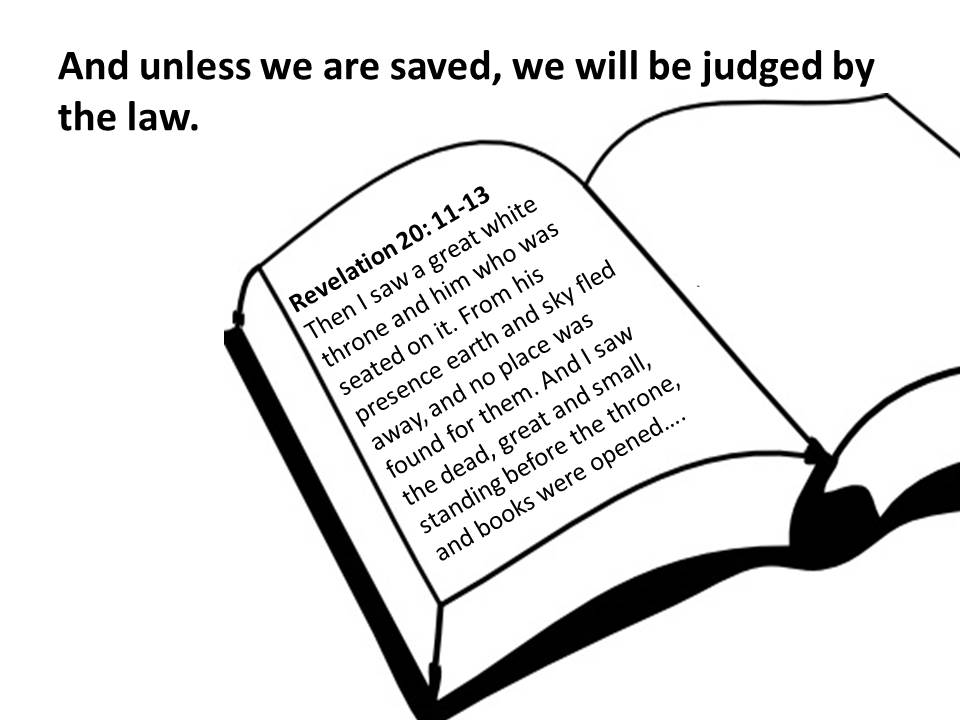
Paul states that we are not under law because the old us that was under the law is dead (ROM 7:1-11), and therefore, the law cannot judge the sins of our mortality (Rom 3:19, 7:8,9). But on the other hand, we are enslaved to the law in sanctification (Rom 8:7,8). Even though we cannot keep it perfectly due to our present mortality, we are enslaved to it and nonetheless strive to keep it in our sanctification. The law was never fulfilled to maintain our justification because there is no law in justification. The law is fulfilled through us in sanctification (ROM 8:3,4). Christ’s death separated the law from justification in the same way that a spouse is no longer under a marriage covenant when the other spouse dies (ROM 7:1-3).
This excludes the necessity for perfect law-keeping in sanctification. Christ accomplished this through His death, not keeping the law for us in sanctification. Calvinists call this, “Christ 100% for us.” Christ’s perfect law-keeping is a given by virtue of who He is and not because perfect law-keeping was part of the Abrahamic covenant of promise which occurred 430 years before the law (GAL 3:17,18).
Which Brings Us to Calvin’s Galatian Error
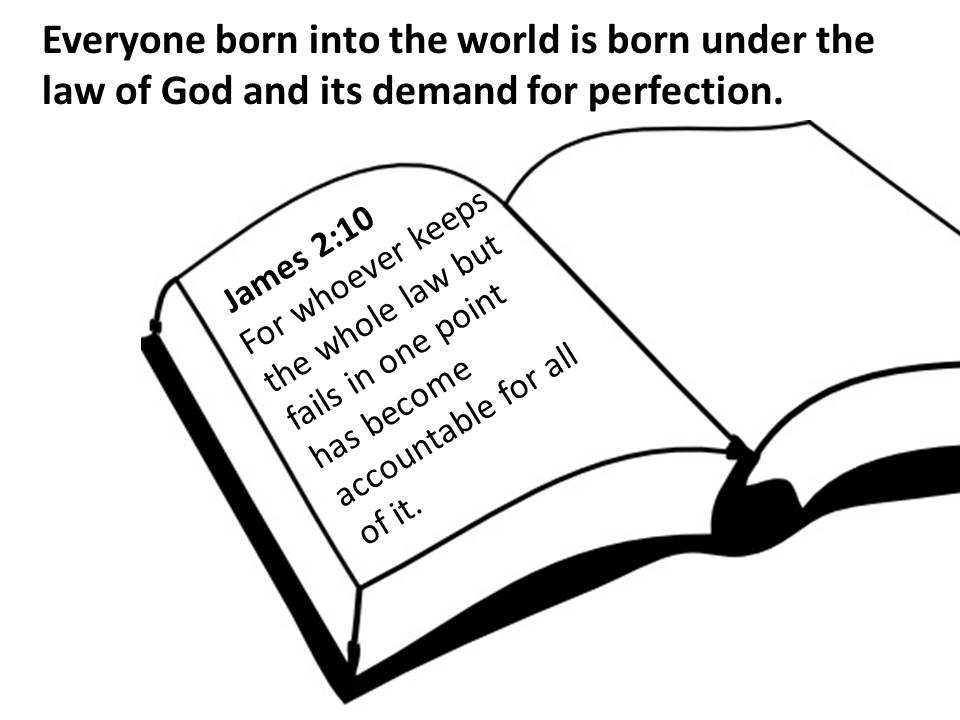
No works salvation system ever promotes a perfect, intelligent obedience to the law. It posits activity on our part that imputes something that counts for a perfect keeping of the law to maintain our salvation. This always leads to antinomianism because a ritual replaces actual law-keeping. Those under grace strive to please God by law-keeping because they are enslaved to the law, but on the other hand, perfection is not the standard because they are hindered by mortality (ROM 8:3,4) and the law can’t judge them because they are no longer under it (ROM 3;19). They are enslaved to it for sanctification, but not under it for justification. Those under grace are enslaved to the law but will not be judged by it; those under law are enslaved to sin and will be judged by the law. The Bible has an awesome way of stating this: those under the law violate it at all points by one sin; those under grace fulfill the law by loving their neighbors and God. The enslavement hindered by the weakness of the flesh fulfills the law in sanctification.
Calvin’s error/false gospel merely replaced the ritual of circumcision with daily re-salvation for the atonement of sin and the perpetual imputation of Christ’s perfect law-keeping for sanctification in order to maintain our justification (Calvin Institutes: 3.14.9-11). “We must preach the gospel to ourselves every day” is a ritual that imputes Christ’s perfect obedience to our sanctification in order to maintain our justification. This was also the fatal error of the Pharisees who replaced the law of God with their traditions and thus, “you have made void the law of God” (MATT 15:6 [most translations : “set aside” and “commandments”). The law is void for justification (the dead letter and covenant of death), but not sanctification.
Therefore, Calvinism keeps the “believer” under the law for justification leading to antinomianism in sanctification because Christ is 100% for us and keeps the law for us in sanctification in order to maintain our just standing. This is well exemplified via the following tweet by a well-known Calvinist:

This was the same result at Galatia as well:
Galatians 5:7 – You were running well. Who hindered you from obeying the truth?
This rejects the believer’s hindered enslavement to the law in sanctification and only leaves one other alternative: under the law. For all practical purposes: lost. Therefore, the Calvinist must be informed that he/she is still under the law and trusting in a false gospel. What imperils the Calvinist soul is a fundamental anti-biblical view of the law. They must be shown the new way of the Spirit.
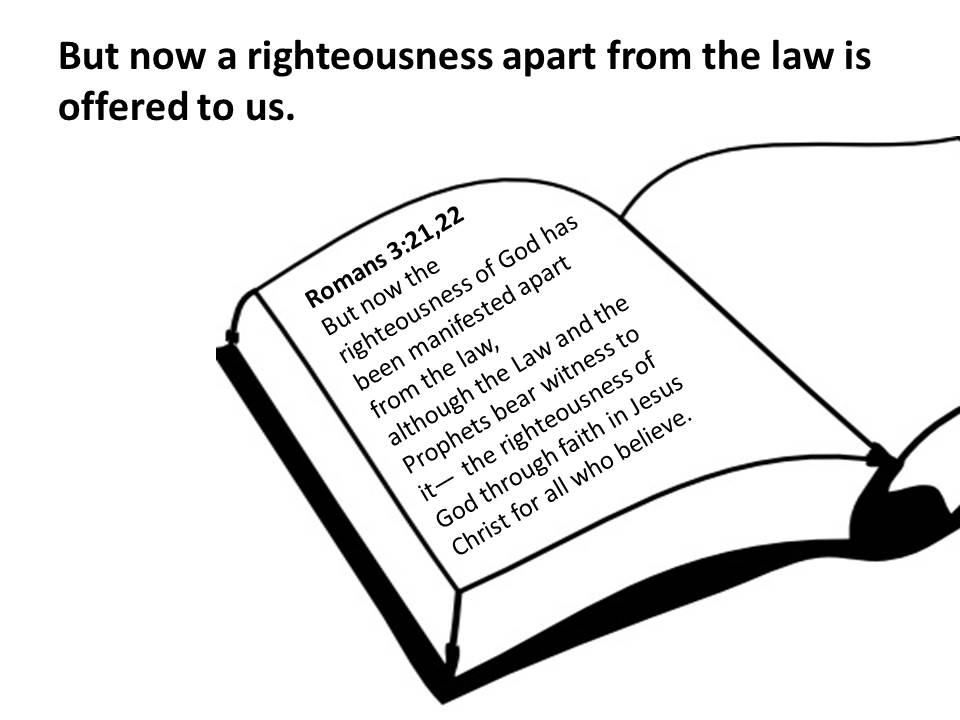
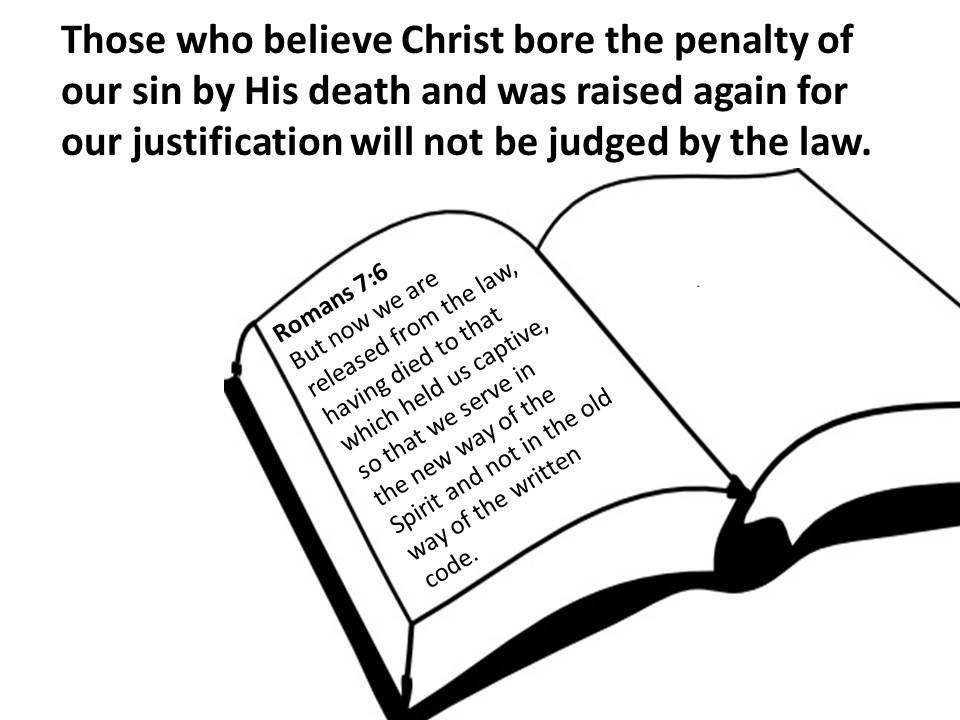
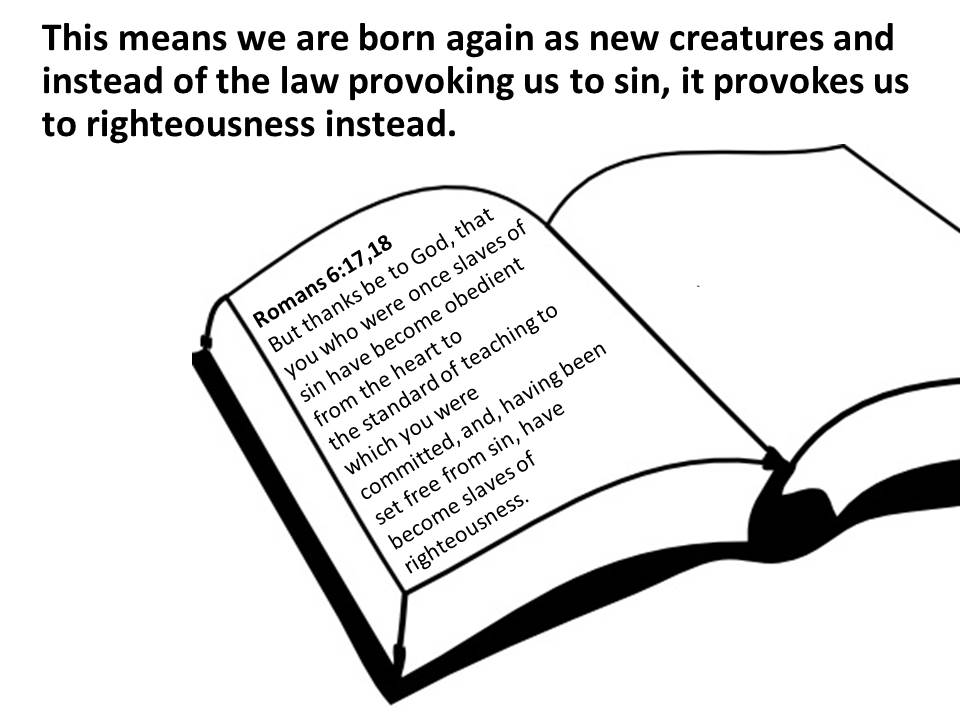
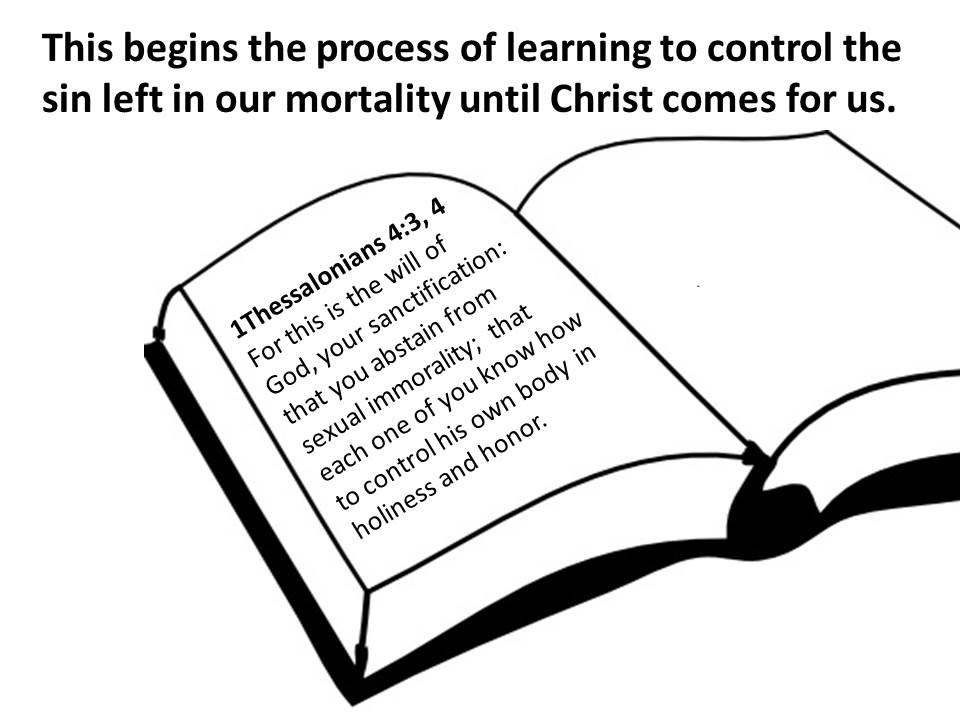
Let me recommend that you then teach them through the following booklet (Click on images to enlarge if necessary):





 Paul's Passing Thoughts
leave a comment