Piper, Tchividjian, Christian Counseling, and the Calvinist False Gospel: The Law of the Spirit has NO Power to Change
Originally posted May 22, 2014

DOING THE CROSS ONLY TO KEEP YOURSELF SAVED
The Bible is two different laws to the only two people groups in the world: the lost and the saved. To the lost, it is the law of sin and death. To the believer, it is the law of the Spirit of life:
Roman 8:1 – There is therefore now no condemnation for those who are in Christ Jesus. 2 For the law of the Spirit of life has set you free in Christ Jesus from the law of sin and death.
We are no longer UNDER LAW, but UNDER GRACE, and being under grace is the same as being under the law of the Spirit of life. As Christians, the Spirit does in fact use the law to change us:
John 17:14 – I have given them your word, and the world has hated them because they are not of the world, just as I am not of the world. 15 I do not ask that you take them out of the world, but that you keep them from the evil one. 16 They are not of the world, just as I am not of the world. 17 Sanctify them in the truth; your word is truth. 18 As you sent me into the world, so I have sent them into the world. 19 And for their sake I consecrate myself, that they also may be sanctified in truth.
20 “I do not ask for these only, but also for those who will believe in me through their word, 21 that they may all be one, just as you, Father, are in me, and I in you, that they also may be in us, so that the world may believe that you have sent me.
As I will keep proclaiming, the Achilles’ heel of Calvinism is law. Calvinism keeps the Christian under the law of sin and death. Hence, Jesus must fulfil the law of sin and death for us, and this is made up to be part of the atonement. But the law of sin and death has no part in justification—that’s why there is “no condemnation” for believers. But clearly, Calvin taught that Christians are still under the condemnation of the law and that Christ must perpetually save us from it by reapplications of the cross. In particular, note 3.14.9-11 in the Calvin Institutes. This construct turns the Bible and grace completely upside down. This is also why John Piper refers to the Bible as a book of “saving acts” (plural).
Note that John Piper, like Calvin, keeps Christians under the law of sin and death:
What Then Shall Those Who Are Justified Do with the Law of Moses?
Read it and meditate on it as those who are dead to it as the ground of your justification and the power of your sanctification. Read it and meditate on it as those for whom Christ is your righteousness and Christ is your sanctification.
Notice that Piper replaces the law of the Spirit of life with Christ alone as our sanctification. Notice also that we are to PRESENTLY read the law as those who are dead to it…[for] the power of your sanctification. Piper, like Calvin, only recognizes ONE law, the one we are dead to.
Tullian Tchividjian is more pointed about it:
So do you think the law no longer has—or should no longer have—a role in the Christian life?
No, I wouldn’t say that. While the law of God is good (Romans 7), it only has the power to reveal sin and to show the standard and image of righteous requirement—not remove sin. The law shows us what God commands (which of course is good) but the law does not possess the power to enable us to do what it says. You could put it this way: the law guides but it does not give. In other words, the law shows us what a sanctified life looks like, but it does not have sanctifying power—the law cannot change a human heart. It’s the gospel (what Jesus has done) that alone can give God-honoring animation to our obedience. The power to obey comes from being moved and motivated by the completed work of Jesus for us. The fuel to do good flows from what’s already been done. So, while the law directs us, only the gospel can drive us.
This, of course, asserts the idea, per Calvinism, that the power of our sanctification comes from justification. Per the usual, “gospel” and “Jesus” are words used to replace “justification” for cover on this issue. If our sanctification comes from justification, the law of sin and death is not ended and Jesus must continue to save us from it. The “finished” work isn’t so much finished, it needs to be perpetually applied to save us from the law of sin and death. Simply stated, Calvinism keeps us under the law of sin and death and ignores the law (“nomos”) of the Spirit of life. In other places, Tchividjian posits the idea that “the Bible never says that the law can give life.” That isn’t true,
Psalm 19:7 – The law of the Lord is perfect, reviving the soul;
Psalm 119:93 – I will never forget your precepts, for by them you have given me life.
I won’t belabor the point, but Christ also said that man lives by every word that comes from the mouth of God, and when Moses said to “choose life” he was talking about the law.
In the final analysis, it’s works salvation via antinomianism; we have to work hard at doing nothing but the cross to keep ourselves saved from the law of sin and death which Calvin, even from the grave, keeps poised over our heads, ready to damn us at any time unless we live by faith alone in sanctification. And of course, faithfulness to the institutional church which has the “power of the keys” is our best shot to be “ready for the judgment.” Frankly, a judgment that we will not be attending because the final judgment is according to the law of sin and death, not the law of the Spirit of life that the Spirit does in fact use to change us.
And also take note: 95% of the Christian counseling going on in the institutional church is based on Christians being yet under the law of sin and death with Christ fulfilling it in our stead as part of the atonement. Good luck with that—it’s a false gospel.
paul
Is Christianity a One-Way Love? Is using the Bible for Spiritual Information “Evil” and “Nasty”?
Gnostic Watch Weekly program 9 REVISED AUDIO in which Paul and Susan discuss Tullian Tchividjian’s 2014 Liberate conference. Tchividjian, Elyse Fitzpatrick, and Paul David Tripp propagate meditative spirituality in contrast to exegetical study of the Bible.

Roger Olson, Bikers, Calvinists, and Arminians: Can’t We All Just Get Along?
 “EXACTLY like Calvinists, Olson decries the Christian message of ‘Do, do, do, do,’ while unwittingly propagating the false gospel of keeping ourselves saved by doing nothing. Making sure that we don’t do anything is in fact doing something while begging the question: why is it so important that we continue to do the same thing that originally saved us lest it be a false gospel?”
“Be not deceived: antinomianism is defined by an aversion to the law in sanctification. Antinomianism is defined by ‘one way love’… Be not deceived by the philosopher kings of the institutional church, or simply ‘church.’ When they decry ‘Do, do, do do,’ they are really decrying, ‘Love, love, love, love.’”
There is one reason and one reason only why New Calvinism has completely taken over the institutional church; fundamentally, Protestantism has always been predicated by weak sanctification because of its foundational beliefs in regard to justification. In other words, our functional sanctification is the true indicator of what we believe about justification. And in Protestantism, that has never changed. Therefore, the institutional church has always been primed for a return to the original article.
In the same way, all outlaw biker clubs should unite into one happy family; after all, they all believe in hedonism by unfettered lust alone. Why quibble about the best way to rob a liquor store or beat your “biker bitch”? Those are matters of hedonology. If I am not mistaken, a famous biker once said…
In essentials, unity; in non-essentials, liberty; in all things, charity.
However, bikers wouldn’t let some Protestant sins be named among them once; e.g., pedophilia. One biker club has even formed an effective child abuse advocacy program where they support victims through the legal process and accompany them when they testify in court. This is in stark contrast to Protestants, like their Catholic kin, who defend the pedophiles and blame the victims. Pedophiles have to be isolated in prison, but among Protestants they find that good old fashioned “grace.” While many Neo-Calvinists tacitly support ISIS, biker clubs in Europe have joined the Kurds in fighting ISIS on the ground in Iraq. So, a unification of outlaw biker clubs and Protestantism is unlikely—the bikers wouldn’t have them, but there is still hope for the unification of Protestant factions and even the Catholic Church that spawned them.
Roger Olson, the Mr. Rogers of Protestantism, bemoans the reality that he was forced into a situation where he must defend Arminianism. It is a gig he didn’t want. Good Protestants should be above the fray of public debate. After all, public brawls are biker-like. He argues that Calvinists and Arminians believe the same gospel, and he is absolutely correct about that. And what is that gospel? According to Olson’s spot-on assessment, progressive justification. Of course, he doesn’t use those particular synonyms because it undresses the Protestant emperor, but as we shall see, it is the same thing. Calvinists and Arminians believe the same false gospel that is foundational to Protestant “essentials.”
At one point in Olson’s call for Calminianism, he notes his respect for moderate Calvinists as opposed to the radical Young, Restless, and Reformed (YRR). But of course, he loves the Calvinist, but hates the Hyper Calvinism, not the moderate Calvinism. This is the constant mantra of Baptist leaders who say that a playing card can barely be slipped between moderate Calvinism and Arminianism, and again, they are absolutely right about that. Only one adjustment needs to be made: there is no difference between “moderate” Calvinism and “radical” Calvinism. That’s the same difference between moderate and radical Islam. To show that he knows what he is talking about, Olson cites examples of moderate Calvinists from his contemporary church history mojo. He cites Donald Bloesch and G. C. Berkouwer as examples of moderate Calvinists.
Only problem is, Bloesch, as I document in The Truth About New Calvinism, was one of the forefathers of the present-day New Calvinist movement. He was a champion of the “gospel recovery” movement that was spawned by the Australian Forum. As documented, he promoted the Australian Forum study groups in Presbyterian circles. One of the Forum’s most quoted Reformed teachers was G.C. Berkouwer, who stated unequivocally that Reformed soteriology is predicated on the belief that there is absolutely NO difference whatsoever in an unbeliever and a believer in their state before God. Bloesch was a strong advocate of the EXACT theology that drives YRR.
And what is that theology? What is that gospel? Olson tells us in his Calminian treatise:
Evangelical Calvinists and evangelical Arminians need to reach an accord, an agreement, to put down the long knives and cooperate with each other in opposing the real “default heresy” of American Christianity—moralism.
And what is this “moralism” that is the common foe of the Calminians?
The true, biblical, evangelical gospel is difficult to find in American churches or hear from their pulpits…Not far from my house is a church that purports to be evangelical. For weeks now the marquee has said simply “Decide to grow.” Decide to grow? What does that mean? Ah, much to my dismay I think I know what it means: “Being a good person, even a good Christian, is totally up to you. Use your will to decide to change and become the person that pleases God.” The missing all-important truth is that no one can do that by themselves, on their own, just using their will power.
This is Calvinism to a T including its Gnostic either/or emphasis interpretation of reality. Notice that Olson excludes any discussion of colaboring between us and the Spirit. It’s either ALL of our will, or ALL of the Spirit. We hear this coming forth from the Calvinist camp constantly along with the deliberate use of the words “us alone” as a red herring to throw you off the antinomian scent. When you read, “no one can do that by themselves,” which goes without saying, what isn’t discussed is the truthful discussion of colaboring: out of sight, out of mind.
Olson then goes on to present the same worn-out misuse of Scripture used by Calvinists constantly:
“Work out your own salvation with fear and trembling.” End of story, for most American Christians. Do, do, do. Work harder at being a disciple, a good citizen, a church person, a good neighbor, a successful person.
But Philippians 2:12 can no more be taken alone, without 2:13, than 2:13 can be taken alone without 2:12. “For God is at work in you, to will and to do for his good pleasure.” The Greek word translated “work” in 2:12 is not the same translated “work” in 2:13. So it’s not a sheer contradiction or even a paradox (as many have claimed). The message is: “Carry your salvation out to its best possible conclusion in being Christ-like and do it with care knowing all the time that you aren’t really doing it at all because God gives you everything you need to do it and is even the one doing it in you.”
From beginning to end, everything about being a Christian, in more than a merely nominal sense, is gift. All we have to do, all we can do, is receive the gifts—forgiveness, regeneration, justification, sanctification, glorification. At no point in the process does anyone have the right to claim some good accomplished or achieved as his or her own.
The American gospel, however, is that you must use your will power to change and grow. It’s totally up to you—so just “do it.” The vast majority of sermons focus on that message of moralism. “God would be more pleased with you, you would be more pleasing to God, if you exercised your will to change and grow and become a better person than you are.” That’s not the gospel. The gospel is that you can’t do it. As songwriter Jeremy Camp said in a song popularized by Amy Grant: “Being good is just a fable; I just can’t ‘cause I’m not able. Gonna leave it to the Lord”—the “Lord” being the Holy Spirit.
That’s Calvinism plain and simple that can be tagged with all the Reformed essential truisms: “Christ 100% for us” (in both sanctification and justification), “The vital union” (we keep ourselves “in the love of Christ” by faith alone), “Justification by faith alone” (in sanctification also), and the idea that the Christian life is a “rest” in which we “rest and feed on the saving works (plural) of Christ.”
EXACTLY like Calvinists, Olson decries the Christian message of “Do, do, do,” while unwittingly propagating the false gospel of keeping ourselves saved by doing nothing. Making sure that we don’t do anything is in fact doing something while begging the question: why is it so important that we continue to do the same thing that originally saved us lest it be a false gospel?
Because it demonstrates the fact that both Calvinists and Arminians believe that justification is not a finished work and that it must be maintained the same way it was initiated—by faith alone.
This is irrefutable and unavoidable: note once again the very words of Olson:
From beginning to end, everything about being a Christian, in more than a merely nominal sense, is gift. All we have to do, all we can do, is receive the gifts—forgiveness, regeneration, justification, sanctification, glorification.
Hence, all we can do is receive, and this includes love. Sanctification, like justification, can only be received. Pray tell, what is the difference between this and Tullian Tchividjian’s Liberation 2014 theme “One Way Love.”?
Christ stated clearly what the results of the latter-day religion of lawlessness (anomia) would be: “the love of many will wax cold.” Are we to assume that this love doesn’t include love for God? Just what would be our first clue in all of this? What does “one way” mean? What does it mean to “receive” only?
And lest Olson fall short of defining himself as a pure Calvinist, he dissed the first thinkers in human history to stop the constant flow of blood from determinism’s spiritual caste system of the church state:
This is the gospel, folks. But, by and large, we have lost it. For it we have substituted false gospels of morality, prosperity, “success in life,” niceness, effort, churchmanship, citizenship, the “American way.”
Sigh. Again, we see Olson’s kinship with Calvinism’s Gnostic dualism: if you believe in individualism, you are also guilty of everything in column A, including a prosperity gospel. If you believe you can do anything, that means you believe you must do it all, etc. It’s either material evil, or invisible good. It’s either Luther’s cross story, or the glory story. It’s either all about your glory, or Christ’s glory. It’s either about what you do, or what “Christ has done.”
It’s all the same antinomian false gospel. Sure, “the law is good,” but Jesus must keep it for us lest we do something. Be not deceived: antinomianism is defined by an aversion to the law in sanctification. Antinomianism is defined by “one way love.”
Olson put the icing on the cake by stating the following:
Now I’m sure some readers are wondering how this is not Calvinism. Well, it is! It’s also Arminianism!
Precisely. He goes on to say, in essence, that It’s Not About Election. That’s a title of a book. It’s about Protestantism’s false gospel of progressive justification which both Calvinists and Arminians hold to. Both deny the new birth and new creaturehood that is troubled by a profession of faith not accompanied by a changed life, or denoting a changed life as works salvation. Love is one way. Love is redefined as believing you are loveless. That’s what Calvinists and Arminians alike are saying when they say they love you: it is a statement that you are both loveless.
Also, Olson, like the Calvinists, makes sanctification the exact same gift that justification is.
 So what is the true gospel? The true gospel demands a radical gulf between justification and sanctification. How wide is that gulf? 430 years apart. As far as the east is from the west. It also denies that regeneration is powered by the finished work of justification. It also denies that sanctification is a rest. There remains a rest for God’s people, and it is not sanctification. No, the heretic Roger Olson has it wrong: justification is the free gift, sanctification is a responsibility. We have been assigned as “ambassadors.” That’s not a gift—it’s a job. The Hebrew writer stated that God would be “unjust” if he forgets our works and service of “love.” Unjust? How can that be? Because sanctification has to do with rewards, and that is totally different than justification. Rewards are earned, the free gift of justification cannot be earned. Roger Olson, like the Calvinists he pines away for, is a false teacher who will lead many to hell at worst, and will rob many Christians of their reward at best.
Why? Because not doing something to maintain your salvation is doing something. You may not do anything at Mass to get absolution, but you had to do something to get there in order to keep your salvation. Progressive justification is no different.
Justification is a finished work and there is no law to judge the Christian. The law that formally condemned us is now our instruction for loving God and others. In regard to justification, we are perfect because there is no law to judge us and we are literally born of God. We are the holy ones of God saved by grace, NOT “sinners saved by grace.” Where there is no law, there is no sin. We are born anew and long for salvation from mortality. There may be fear in working out that salvation, but there is NO fear in love. Our sanctified life of love drives the fear of judgment far from us. We are free to labor aggressively in love without fear of condemnation.
Be not deceived by the philosopher kings of the institutional church, or simply “church.” When they decry “Do, do, do, do,” they are really decrying, “Love, love, love, love.”
Come out from among the wicked false teachers and their false antinomian gospel of lovelessness.
paul
How to Lead a Calvinist to the Lord

Originally published June 28, 2013
“What imperils the Calvinist soul is a fundamental anti-biblical view of the law. They must be shown the new way of the Spirit.”
Know Calvin’s Gospel
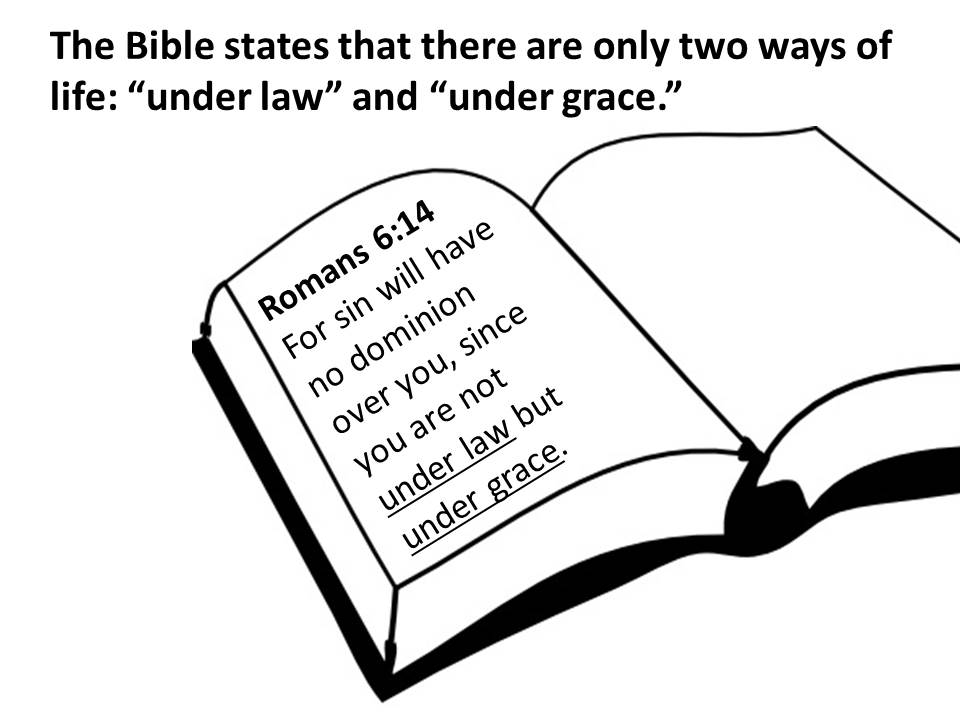
Calvinism is a false gospel that imperils the soul. The apostle Paul made it clear in Romans that there are only two people groups in the world: those under law, and those under grace (ROM 6:14). The lost and the saved. Calvinists declare themselves to be under law. They try to get around this by saying you can be under law and under grace both, but such is not the case. They say it is ok to be under law and covered by grace if we live by faith alone in sanctification; or, living by the same grace that saved us. The whole, “We must preach the gospel to ourselves every day” is indicative of where they stand on law and grace. According to their other gospel, we need the same grace that saved us every day for one reason and one reason only: we are supposedly still under law. Certainly, all people live under the grace of God whether saved or unsaved—we are addressing the grace that saved us initially.
Calvinists use the book of Galatians in an effort to make the opposite point; supposedly, the Galatians were putting themselves under law by attempting to please God in sanctification by keeping the law. Hence, in the Calvinist mind, attempting to keep the law in sanctification is the same thing as trying to keep the law for our justification—they are still under it accordingly….for justification….IN sanctification. In other words, a demand for perfect obedience to the law in sanctification is still the standard to maintain justification. This was Paul’s actual beef with the Galatians: that the law was still a standard for maintaining their justification. The Galatians were adding law to grace in order to maintain grace. So, instead of the law informing their sanctification, they were putting themselves back under the law to maintain justification. That’s why Paul wrote the following to them:
Galatians 4:21 – Tell me, you who desire to be under the law, do you not listen to the law?
Paul continues from there to drive home the point that justification is a settled issue and obligation to the law is separated from it. We are obligated to listen to the law for sanctification, but there is no longer any law obligation to our justification. To say that justification has to be maintained by perfect law-keeping is to be under the law. The Galatians were being taught that rituals such as circumcision completely satisfied the law. But again, being under law is the point here. That is why Paul stated the following:
Galatians 5:2 – Look: I, Paul, say to you that if you accept circumcision, Christ will be of no advantage to you. 3 I testify again to every man who accepts circumcision that he is obligated to keep the whole law. 4 You are severed from Christ, you who would be justified by the law; you have fallen away from grace.
The Galatians were being taught that circumcision satisfied all of the requirements of the law for justification. This led to an antinomianism in sanctification because in these systems there is no distinction between hearing and doing the law in sanctification and the laws relationship to justification. For the unbeliever, the law is the standard for justification because unbelievers are under the law. Christians are under grace and not under the law, so the law has no relevance to their justification. Paul was simply telling the Galatians that if they are under the law, they are obligated to keep all of it for justification. Circumcision or any other ritual does not satisfy the law.
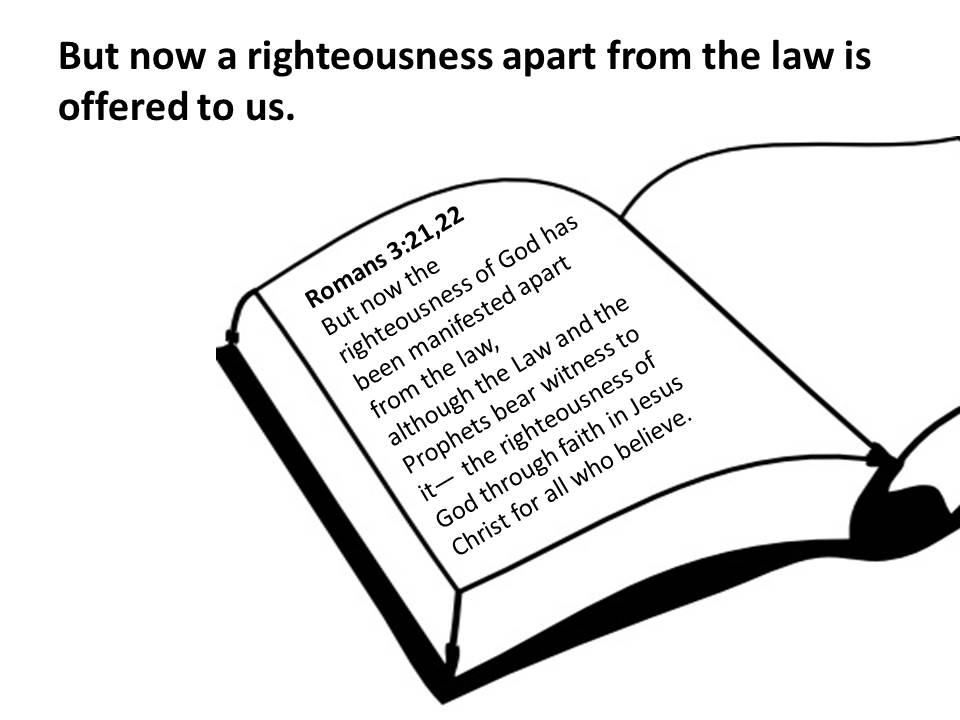
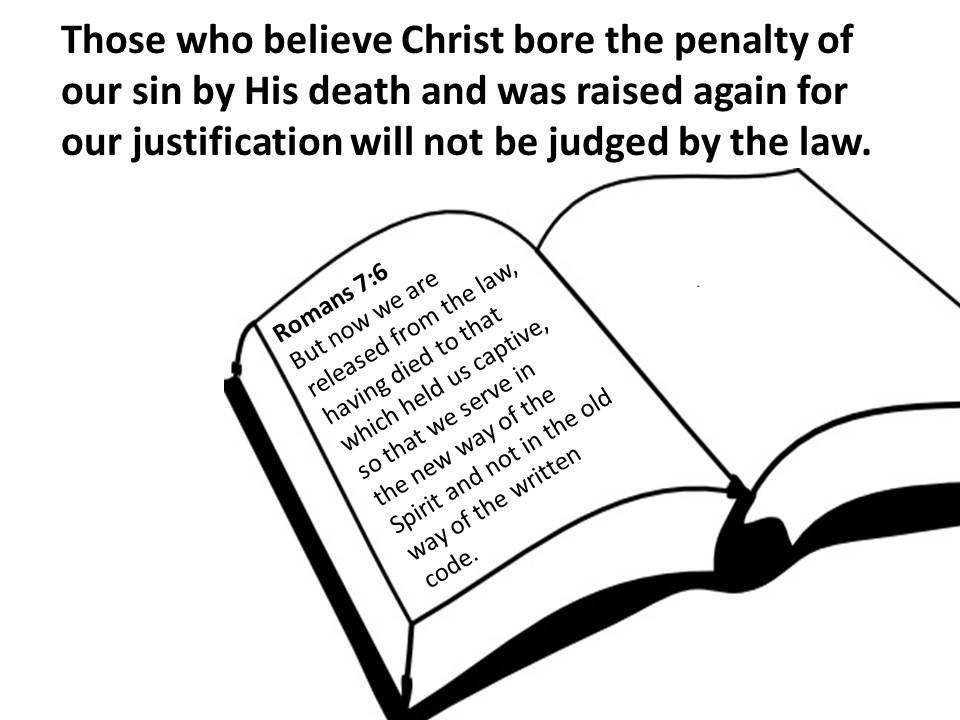
Paul states that we are not under law because the old us that was under the law is dead (ROM 7:1-11), and therefore, the law cannot judge the sins of our mortality (Rom 3:19, 7:8,9). But on the other hand, we are enslaved to the law in sanctification (Rom 8:7,8). Even though we cannot keep it perfectly due to our present mortality, we are enslaved to it and nonetheless strive to keep it in our sanctification. The law was never fulfilled to maintain our justification because there is no law in justification. The law is fulfilled through us in sanctification (ROM 8:3,4). Christ’s death separated the law from justification in the same way that a spouse is no longer under a marriage covenant when the other spouse dies (ROM 7:1-3).
This excludes the necessity for perfect law-keeping in sanctification. Christ accomplished this through His death, not keeping the law for us in sanctification. Calvinists call this, “Christ 100% for us.” Christ’s perfect law-keeping is a given by virtue of who He is and not because perfect law-keeping was part of the Abrahamic covenant of promise which occurred 430 years before the law (GAL 3:17,18).
Which Brings Us to Calvin’s Galatian Error
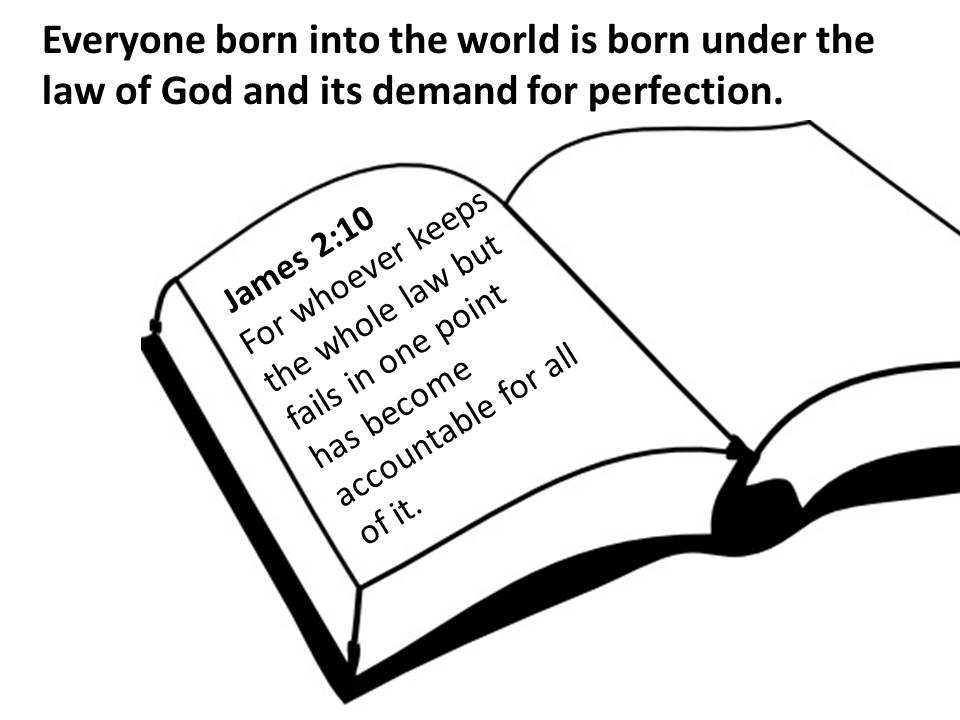
No works salvation system ever promotes a perfect, intelligent obedience to the law. It posits activity on our part that imputes something that counts for a perfect keeping of the law to maintain our salvation. This always leads to antinomianism because a ritual replaces actual law-keeping. Those under grace strive to please God by law-keeping because they are enslaved to the law, but on the other hand, perfection is not the standard because they are hindered by mortality (ROM 8:3,4) and the law can’t judge them because they are no longer under it (ROM 3;19). They are enslaved to it for sanctification, but not under it for justification. Those under grace are enslaved to the law but will not be judged by it; those under law are enslaved to sin and will be judged by the law. The Bible has an awesome way of stating this: those under the law violate it at all points by one sin; those under grace fulfill the law by loving their neighbors and God. The enslavement hindered by the weakness of the flesh fulfills the law in sanctification.
Calvin’s error/false gospel merely replaced the ritual of circumcision with daily re-salvation for the atonement of sin and the perpetual imputation of Christ’s perfect law-keeping for sanctification in order to maintain our justification (Calvin Institutes: 3.14.9-11). “We must preach the gospel to ourselves every day” is a ritual that imputes Christ’s perfect obedience to our sanctification in order to maintain our justification. This was also the fatal error of the Pharisees who replaced the law of God with their traditions and thus, “you have made void the law of God” (MATT 15:6 [most translations : “set aside” and “commandments”). The law is void for justification (the dead letter and covenant of death), but not sanctification.
Therefore, Calvinism keeps the “believer” under the law for justification leading to antinomianism in sanctification because Christ is 100% for us and keeps the law for us in sanctification in order to maintain our just standing. This is well exemplified via the following tweet by a well-known Calvinist:

This was the same result at Galatia as well:
Galatians 5:7 – You were running well. Who hindered you from obeying the truth?
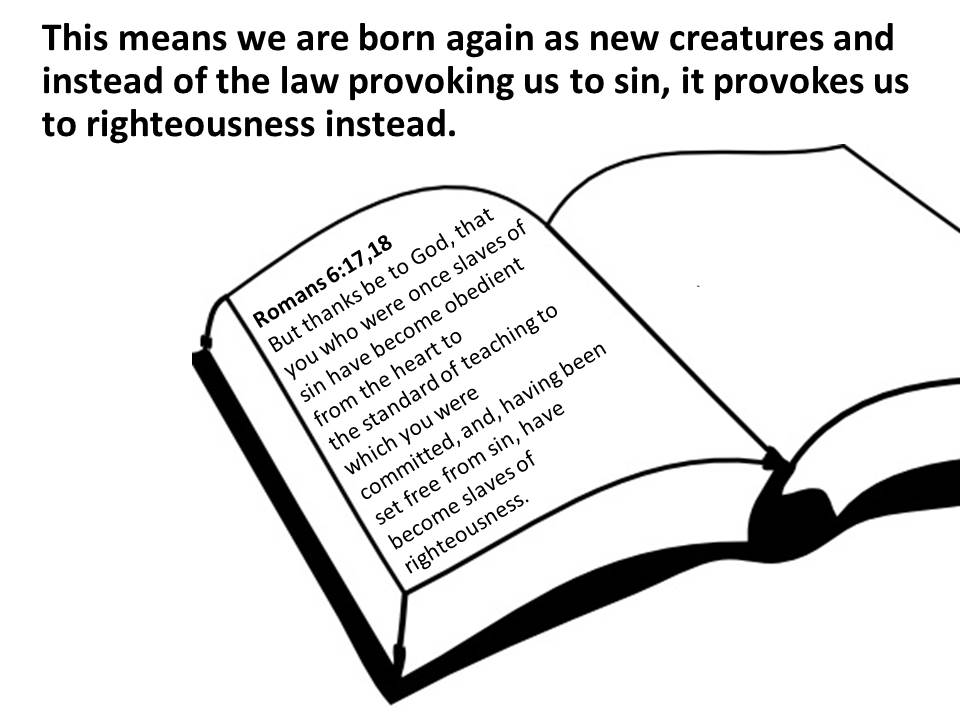
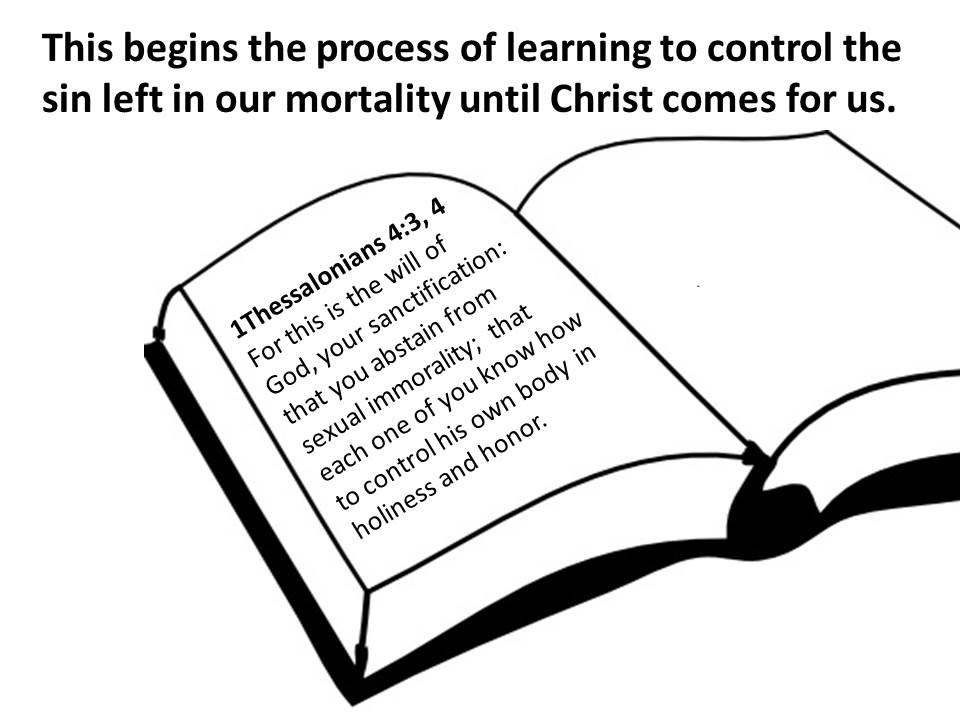
This rejects the believer’s hindered enslavement to the law in sanctification and only leaves one other alternative: under the law. For all practical purposes: lost. Therefore, the Calvinist must be informed that he/she is still under the law and trusting in a false gospel. What imperils the Calvinist soul is a fundamental anti-biblical view of the law. They must be shown the new way of the Spirit.
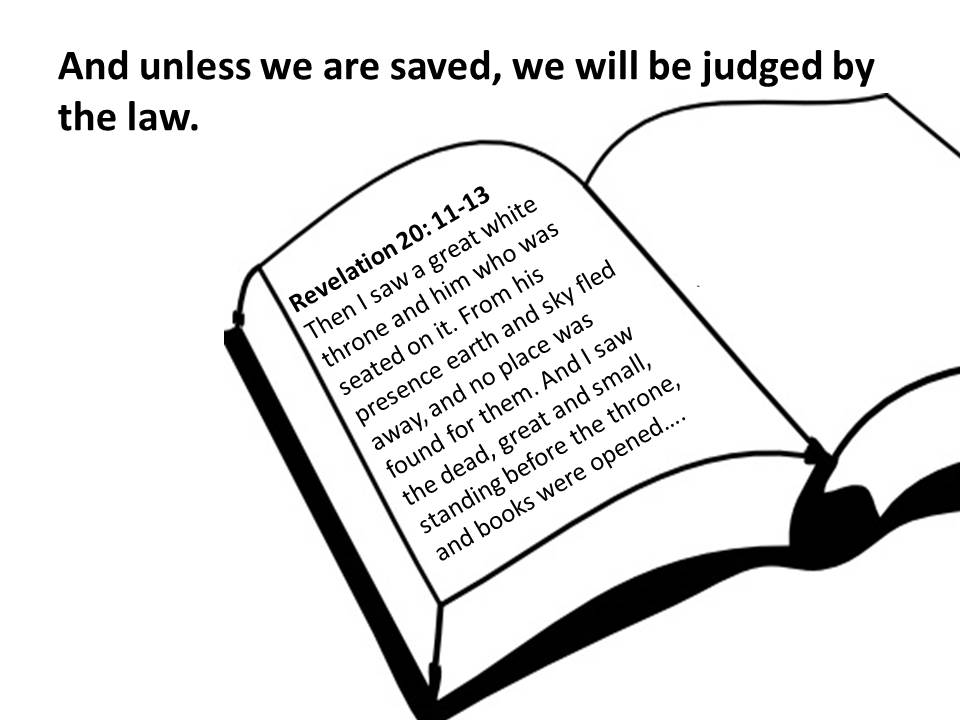
Let me recommend that you then teach them through the following booklet (Click on images to enlarge if necessary):




Tullian Tchividjian: Why People are Attracted to Christianity; We are Evil Just Like Them
How shocking that there is so much evil in the institutional church in the name of Christ. Gee, I can’t imagine why.

 Paul's Passing Thoughts
leave a comment