Piper, Tchividjian, Christian Counseling, and the Calvinist False Gospel: The Law of the Spirit has NO Power to Change

DOING THE CROSS ONLY TO KEEP YOURSELF SAVED
The Bible is two different laws to the only two people groups in the world: the lost and the saved. To the lost, it is the law of sin and death. To the believer, it is the law of the Spirit of life:
Roman 8:1 – There is therefore now no condemnation for those who are in Christ Jesus. 2 For the law of the Spirit of life has set you free in Christ Jesus from the law of sin and death.
We are no longer UNDER LAW, but UNDER GRACE, and being under grace is the same as being under the law of the Spirit of life. As Christians, the Spirit does in fact use the law to change us:
John 17:14 – I have given them your word, and the world has hated them because they are not of the world, just as I am not of the world. 15 I do not ask that you take them out of the world, but that you keep them from the evil one. 16 They are not of the world, just as I am not of the world. 17 Sanctify them in the truth; your word is truth. 18 As you sent me into the world, so I have sent them into the world. 19 And for their sake I consecrate myself, that they also may be sanctified in truth.
20 “I do not ask for these only, but also for those who will believe in me through their word, 21 that they may all be one, just as you, Father, are in me, and I in you, that they also may be in us, so that the world may believe that you have sent me.
As I will keep proclaiming, the Achilles’ heel of Calvinism is law. Calvinism keeps the Christian under the law of sin and death. Hence, Jesus must fulfil the law of sin and death for us, and this is made up to be part of the atonement. But the law of sin and death has no part in justification—that’s why there is “no condemnation” for believers. But clearly, Calvin taught that Christians are still under the condemnation of the law and that Christ must perpetually save us from it by reapplications of the cross. In particular, note 3.14.9-11 in the Calvin Institutes. This construct turns the Bible and grace completely upside down. This is also why John Piper refers to the Bible as a book of “saving acts” (plural).
Note that John Piper, like Calvin, keeps Christians under the law of sin and death:
What Then Shall Those Who Are Justified Do with the Law of Moses?
Read it and meditate on it as those who are dead to it as the ground of your justification and the power of your sanctification. Read it and meditate on it as those for whom Christ is your righteousness and Christ is your sanctification.
Notice that Piper replaces the law of the Spirit of life with Christ alone as our sanctification. Notice also that we are to PRESENTLY read the law as those who are dead to it…[for] the power of your sanctification. Piper, like Calvin, only recognizes ONE law, the one we are dead to.
Tullian Tchividjian is more pointed about it:
So do you think the law no longer has—or should no longer have—a role in the Christian life?
No, I wouldn’t say that. While the law of God is good (Romans 7), it only has the power to reveal sin and to show the standard and image of righteous requirement—not remove sin. The law shows us what God commands (which of course is good) but the law does not possess the power to enable us to do what it says. You could put it this way: the law guides but it does not give. In other words, the law shows us what a sanctified life looks like, but it does not have sanctifying power—the law cannot change a human heart. It’s the gospel (what Jesus has done) that alone can give God-honoring animation to our obedience. The power to obey comes from being moved and motivated by the completed work of Jesus for us. The fuel to do good flows from what’s already been done. So, while the law directs us, only the gospel can drive us.
This, of course, asserts the idea, per Calvinism, that the power of our sanctification comes from justification. Per the usual, “gospel” and “Jesus” are words used to replace “justification” for cover on this issue. If our sanctification comes from justification, the law of sin and death is not ended and Jesus must continue to save us from it. The “finished” work isn’t so much finished, it needs to be perpetually applied to save us from the law of sin and death. Simply stated, Calvinism keeps us under the law of sin and death and ignores the law (“nomos”) of the Spirit of life. In other places, Tchividjian posits the idea that “the Bible never says that the law can give life.” That isn’t true,
Psalm 19:7 – The law of the Lord is perfect, reviving the soul;
Psalm 119:93 – I will never forget your precepts, for by them you have given me life.
I won’t belabor the point, but Christ also said that man lives by every word that comes from the mouth of God, and when Moses said to “choose life” he was talking about the law.
In the final analysis, it’s works salvation via antinomianism; we have to work hard at doing nothing but the cross to keep ourselves saved from the law of sin and death which Calvin, even from the grave, keeps poised over our heads, ready to damn us at any time unless we live by faith alone in sanctification. And of course, faithfulness to the institutional church which has the “power of the keys” is our best shot to be “ready for the judgment.” Frankly, a judgment that we will not be attending because the final judgment is according to the law of sin and death, not the law of the Spirit of life that the Spirit does in fact use to change us.
And also take note: 95% of the Christian counseling going on in the institutional church is based on Christians being yet under the law of sin and death with Christ fulfilling it in our stead as part of the atonement. Good luck with that—it’s a false gospel.
paul
Tchividjian Booted from The Gospel Coalition for Being Too Concise
 “Tullian Tchividjian is John Calvin. Period.”
Be sure of this: Tullian Tchividjian thoroughly understands Reformed doctrine and its gospel. Tchividjian doesn’t believe one whit different from anybody who writes or speaks for The Gospel Coalition, and they ALL know it.
The problem with TT is that he does not follow the philosopher king script of nuance for the sake of the totally depraved herd that is “not ready” for the true Reformed gospel of justification by faith…plus the dirty little secret of faith alone for both justification and sanctification. It’s like total depravity this, and total depravity that, and “oh, we forgot to mention that includes the saints as well.”
TT is not nuanced enough. In this interview here, it is absolutely clear that this is the reason he was sent packing. Because of him, The Gospel Coalition, T4G, and others have to recruit sanctification gurus Jerry Wragg, Kevin DeYoung, and Mike Fabarez to cleanup his mess and calm the mindless totally depraved zombie sheep. They are tired of cleaning up the messiness of questions raised as a result of TT’s accurate articulation of the Reformed gospel.
There is only one thing better than a rank antinomian, an honest one. Charles Spurgeon once said that Calvinism isn’t a nickname, Calvinism is the gospel. Let me take that a step further for our purposes: Tullian Tchividjian is John Calvin. Period. I will debate anyone out there who has a problem with TT’s Calvinism and will show clearly from the Institutes that TT is spot on. Get over it. Please debate me on this, you will lose.
In my disdain for the Neo-Calvinist movement, a weird respect is floating to the top for the few who know what Calvin really believed and are honest about it. In fact, who else is there other than TT and Joseph Prince? (see here for explanation). How bad is it when I have to admit that I respect these guys because A, they know what they are talking about, and B, they are honest about it? Prince’s life application is beside the point, he understands the Reformed version of justification by faith, and the rest of the story mostly untold.
The two other camps annoy me to no end: those who think there is a difference between New Calvinism and Old Calvinism, and for that matter, Sonship theology as well, and those who know grade-A-well that there is no difference and are lying about it. I have also lost all patience with those who think they can help the spiritually abused while retaining some supposedly respectable remnant of Reformed theology. Name one aspect that passes a grammatical interpretation of Scripture: it’s not there.
So there it is. TT is very important to this ministry because people have to know what they believe before you can convince them. We think followers of TT know what they believe. The rest? It’s really just a massively confused personality cult with a plethora of discernment bloggers adding to the confusion by dissecting all of the symptoms.
Get with the program: it’s either Tullian or something else.
paul
In Regard to the Newest Neo-Calvinist Controversy: This Post is for Christians Who Don’t Want to be Confused

“Here is why these guys want to have a debate in order to keep people confused: the dirty little secret is; the Reformed false gospel is a matter of simple theological math.”
The Neo-Calvinist movement that has taken over this country has also created a hobby- like subculture via the blogosphere. This theological Entertainment Tonight subculture drifts from one controversy to the next with the WadeWatch blog leading the way.
It’s pretty obvious at this point that none of this is about truth and solutions, but rather a wallowing in confusion for the sake of drama. Neo-Calvinist leaders are all but deliberately keeping people confused, and to a great degree, that’s what Christians want. The Scriptures state plainly that in the latter days people will heap to themselves teachers with itching ears. And this is nothing new; Paul exhorted Timothy to avoid endless controversies. Come now, let’s be honest; “endless controversies” describes our church culture to a “T.”
The newest recycled “controversy” is more wrangling over the first, second, and third use of the law, or the law/gospel discussion. As a new Christian in the early 80’s I was perplexed by the fact that pastors don’t teach theology in the local churches, but of course now I understand exactly why that is and have written on the subject extensively. Knowledge empowers the individual, and Protestantism came out of the same power politics that dominated the Dark Ages.
One of the greatest misnomers of contemporary history is the idea that the Reformers wanted to make the word of God available to the masses. Personally, I believe the mass printing of Bibles was an unintended consequence of the Reformation. But regardless of where you stand on that, the Reformers rendered the Bible useless by making it a commentary on two things and two things only: the total depravity of mankind, including Christians, as set against the holiness of God.
This dualist interpretation of reality is the very foundation of Protestantism. In the same way that light defines darkness and darkness defines light, man and God are more and more defined by a deeper and deeper knowledge of each. This is the same old regurgitated metaphysics that has driven state as god from the cradle of civilization, founded all of Eastern religion, defined and given dignity by Plato, and integrated into the Bible by the big three of the Reformation; Augustine, Luther, and Calvin. Luther laid the foundation in the Heidelberg Disputation, and Calvin expanded it into a full-orbed philosophical statement in his Institutes. Therefore, ALL of the Institutes flow from 1.1.1and the first sentence thereof:
Our wisdom, insofar as it ought to be deemed true and solid wisdom, consists almost entirely of two parts: the knowledge of God and ourselves.
Of course, it is no secret how Calvin and Luther defined “ourselves.” This is not the least bit complicated, below is the most widely distributed illustration of the Reformed gospel in our day (click on to enlarge if needed):
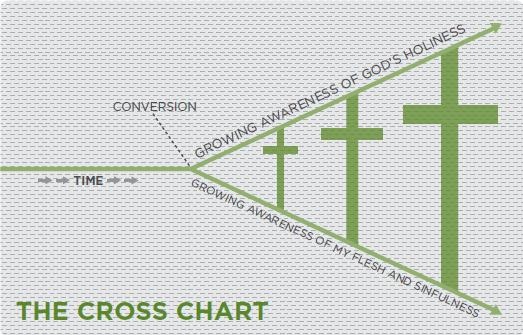
Look, as a Segway into the latest controversy, let me point out that Tullian Tchividjian did NOT create that illustration. But yet, the same people who criticize him have used this illustration themselves to teach the Reformed gospel. And well they should, it is a concise and astute depiction of Calvinism.
Sigh. This is NOT complicated.
If we have any goodness in us at all, what gets smaller? “The cross.” Very good class. If we have any goodness in us at all, is knowledge of God’s holiness increased or diminished? “Diminished.” Very good class. If we have a less and less realization of how wicked we are, is our appreciation for the cross increased or diminished? “Diminished” Is that goody-woody? “No.”
Oh my, we are on a roll!
What in the Sam Hell is complicated about this? Yet, another clueless Christian starts the newest controversy by writing the following post:
http://thegospelcoalition.org/blogs/tgc/2014/05/02/failure-is-not-a-virtue/
Tullian Tchividjian then rebuked her in a follow-up post using his usual red herrings: stuff about people believing that the power for change is in the written word; viz, law. The argument concerning power being in the paper, ink, and leather of a Bible is soooooo worn out that when I hear it, again, I just want to cry from utter disgust.
Now, the controversy plot thickens because some thirty something YRR comes riding in on a white horse of confusion to save the poor little Reformed damsel who doesn’t have a clue to begin with. Sure, it seems like she gets it to a point until you find out she sits under Matt Chandler who no whit, in principle, has any gospel disagreements with Tchividjian. He (Mark Jones) has challenged Tchividjian to a debate which will only serve to further confuse because that’s the goal. Apparently, the debate centers on the first, second, and third use of the law. This is the same old Reformed red herring that is one of the primary mainstays (other than the election debate) used to deliberately keep God’s people confused and dependent on these narcissistic Reformed hacks.
Confusion is the goal, and they know it. It’s deliberate for purposes of control. I stand behind that statement 200%.
But let me clear up the confusion on law because that is easy also. Here is why these guys want to have a debate in order to keep people confused: the dirty little secret is; the Reformed false gospel is a matter of simple theological math. Calvin believed that the law is the standard for justification as opposed to justification being APART from the law. According to RC Sproul, the third use of the law reveals the righteousness of God. That sounds completely reasonable, but is the very problem itself with Calvin’s false gospel.
“But Paul, what then is the standard for justification? ‘God’s righteousness.’” “Right, the law reveals God’s righteousness. ‘For justification or sanctification?’” “For justification. ‘No.’” “Then what is the standard for justification? ‘God’s righteousness imputed to us apart from the law.’”
See, the problem is, if the law is the standard for justification, a perfect fulfilling and maintaining of it must be sustained in order to keep God’s people saved; viz, justified. Justification is then not a finished work, a perfect keeping of the law must be maintained to keep us saved. And of course, we can’t do that, so we must live our Christian lives by faith alone so that the perfect obedience of Christ is perpetually applied to the law in our stead. The law is the standard and that not apart from justification. The apostle Paul made this point in several different ways throughout his epistles: there is NO law in justification. “Apart” means a-p-a-r-t. (Read the Brinsmead excerpt on pp. 10, 11 of It’s Not About Election http://www.7questions.org/its-not-about-election-read-here.html ).
And Tullian Tchividjian gets that. A perfect keeping of the law must be maintained in the Christian’s stead by a perpetual reapplication of the cross. Being interpreted: living by the cross via faith alone in sanctification. If we obey by “jumping from the imperative to our own effort,” we circumvent the ongoing works of the cross. Is justification finished or not finished? Read the title of chapter 14 in book 3 of the Calvin Institutes; that should answer your question.
I have a better idea. I hereby challenge Tchividjian and Jones to a debate at a place of their choosing even though I am just a dumb hillbilly from Portsmouth, Ohio. I don’t need to be smart—this is simple theological math. Calvin was fundamentally wrong on law; throw around all of your ganky Reformed phraseology all you want to—I will bring you right back to the difference between what Paul said and what the heretic John Calvin plainly said. I am sure that if one or both agree to the debate and will not come to Xenia, Ohio, PPT readers would be more than happy to donate to the cause.
Hide behind the whole idea that I am not worthy of your platform because of my lack of education if you will—that’s what James White did, and that’s all you have. And frankly, there are many Arminians strewn about who know this simple theological math is the issue, but like you, if they reveal that, they will no longer be needed as well.
Confusion and ignorance is what puts bread on your table: you are all a disgrace to the gospel of God.
paul



PPT Top 10 Gnostics of the American Church
 The present day New Calvinism movement is a return to the exact same viral Gnosticism that plagued the New Testament church. New Calvinists proudly claim St. Augustine who was an avowed Neo-Platonist. Platonism later became various forms of Gnosticism. Martin Luther’s theology of the cross laid the foundation for the functioning Platonism that has plagued the church sense the 16th century. Luther, in his endeavor to define Augustinian philosophy for the Reformation, made the cross a Platonist hermeneutic that transcends the material world and the five senses. This was Luther’s definition of a true theologian. Said Luther:
That person does not deserve to be called a theologian who looks upon the »invisible« things of God as though they were clearly »perceptible in those things which have actually happened« (Rom. 1:20; cf. 1 Cor 1:21-25).
This is apparent in the example of those who were »theologians« and still were called »fools« by the Apostle in Rom. 1:22. Furthermore, the invisible things of God are virtue, godliness, wisdom, justice, goodness, and so forth. The recognition of all these things does not make one worthy or wise.
He deserves to be called a theologian, however, who comprehends the visible and manifest things of God seen through suffering and the cross.
The manifest and visible things of God are placed in opposition to the invisible, namely, his human nature, weakness, foolishness. The Apostle in 1 Cor. 1:25 calls them the weakness and folly of God. Because men misused the knowledge of God through works, God wished again to be recognized in suffering, and to condemn »wisdom concerning invisible things« by means of »wisdom concerning visible things«, so that those who did not honor God as manifested in his works should honor him as he is hidden in his suffering (absconditum in passionibus). As the Apostle says in 1 Cor. 1:21, »For since, in the wisdom of God, the world did not know God through wisdom, it pleased God through the folly of what we preach to save those who believe.« Now it is not sufficient for anyone, and it does him no good to recognize God in his glory and majesty, unless he recognizes him in the humility and shame of the cross. Thus God destroys the wisdom of the wise, as Isa. 45:15 says, »Truly, thou art a God who hidest thyself.«
So, also, in John 14:8, where Philip spoke according to the theology of glory: »Show us the Father.« Christ forthwith set aside his flighty thought about seeing God elsewhere and led him to himself, saying, »Philip, he who has seen me has seen the Father« (John 14:9). For this reason true theology and recognition of God are in the crucified Christ, as it is also stated in John 10 (John 14:6) »No one comes to the Father, but by me.« »I am the door« (John 10:9), and so forth.
~ The Heidelberg Disputation to the Augustinian Order of 1518: Thesis 19, and 20.
Hence, the visible is evil, and man is visible. Like Plato’s theory of the pure forms, the invisible is the true, good, and beautiful. The material is the world of shadows. Any wisdom connected to the material world is the “theology of glory.” Luther stated it in no uncertain terms:
The manifest and visible things of God are placed in opposition to the invisible…
John Calvin then articulated Luther’s theology of the cross by developing a full-orbed philosophical application in his Institutes of the Christian Religion. Calvin also affirmed the foundations of Augustinian Neo-Platonism by citing Augustine, on average, on every 2.25 pages of the Institutes.
Like certain Platonic disciplines that were immutable gateways to the immutable true ideas in the mutable shadow world, Luther merely made such the cross. Plato’s philosopher kings were able to transcend the five senses enslaved to the material world and extract the ideas of the true forms for the betterment of the Republic. Luther’s “true theologian” is the present-day philosopher king dressed in biblical garb. The top ten follow:

#10 Elyse Fitzpatrick

#9 Albert Mohler

#8 Mark Driscoll
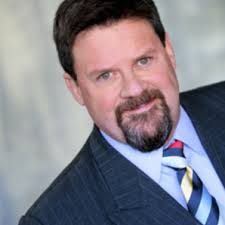
#7 Phil Johnson
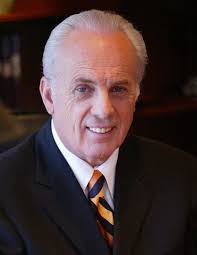
#6 John MacArthur Jr.

#5 Mark Dever

#4 Michael Horton

#3 Tullian Tchividjian

#2 Tim Keller
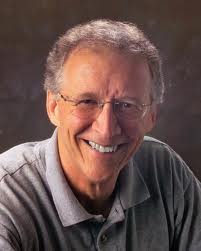
#1 John Piper
 “The New Calvinists are not worried; they don’t believe the American church has the intellectual wherewithal to grasp the fact that John Calvin was a Platonist philosopher. It is time for that theory to be vigorously tested. Even if that theory is believed, it can be attributed to Reformed orthodoxy predicated on the incompetence of the human race wondering about in the shadow world while rejecting the idea that the new birth makes a difference. The new birth is not the mere experience of a changed realm; it is the reality of a changed person, a person that is not only justified positionally, but changed into a just person living for God’s glory. Christians don’t merely “reflect” the glory of God, they are not merely “transformed into an image” of God’s glory, they are new creatures who glorify God with their own actions. The Spirit does not merely manifest Christ in a realm, he colabors with the new creature in the truest sense.”

 Paul's Passing Thoughts
16 comments