Cowardly Husbands and the Protestant Super-Cult: Elder Authority Over the Family Unit
 I have written some articles recently about elder authority. Where is it? When it gets right down to it, the gift of eldership (no, it is NOT an “office”) is specifically spoken of in the New Testament four times, five if you want to argue for Hebrews 13:17 regarding “leaders” which assumes eldership.
Furthermore, where tradition assumes “church discipline” is a ministry tool for the express use of elders, they are not even mentioned in Matthew 18 nor is there anything in the chapter that lends any notion towards an argument for such an idea. Moreover, where do we even find “church discipline” in the Bible to begin with? Where is the idea in Matthew 18 or anywhere else in Scripture?
In books of correction and apologetics, as well as major doctrinal statements on justification such as the book of Romans, elders are not even mentioned.
Also, ministries traditionally attributed to elders such as counseling are specifically earmarked for congregants at large and the Scriptures specifically call on them to fulfill those ministries as a matter of obedience.
This brings us to the supposed authority of elders in the home. Ephesians 5:22-6:4 and 1Peter 3:1-7 speak specifically to authority in the home and guess who are totally absent from the conversation? Right, the big bad elders.
How have those of such little relevance in the Bible come to rule over the church with a spiritual iron fist?
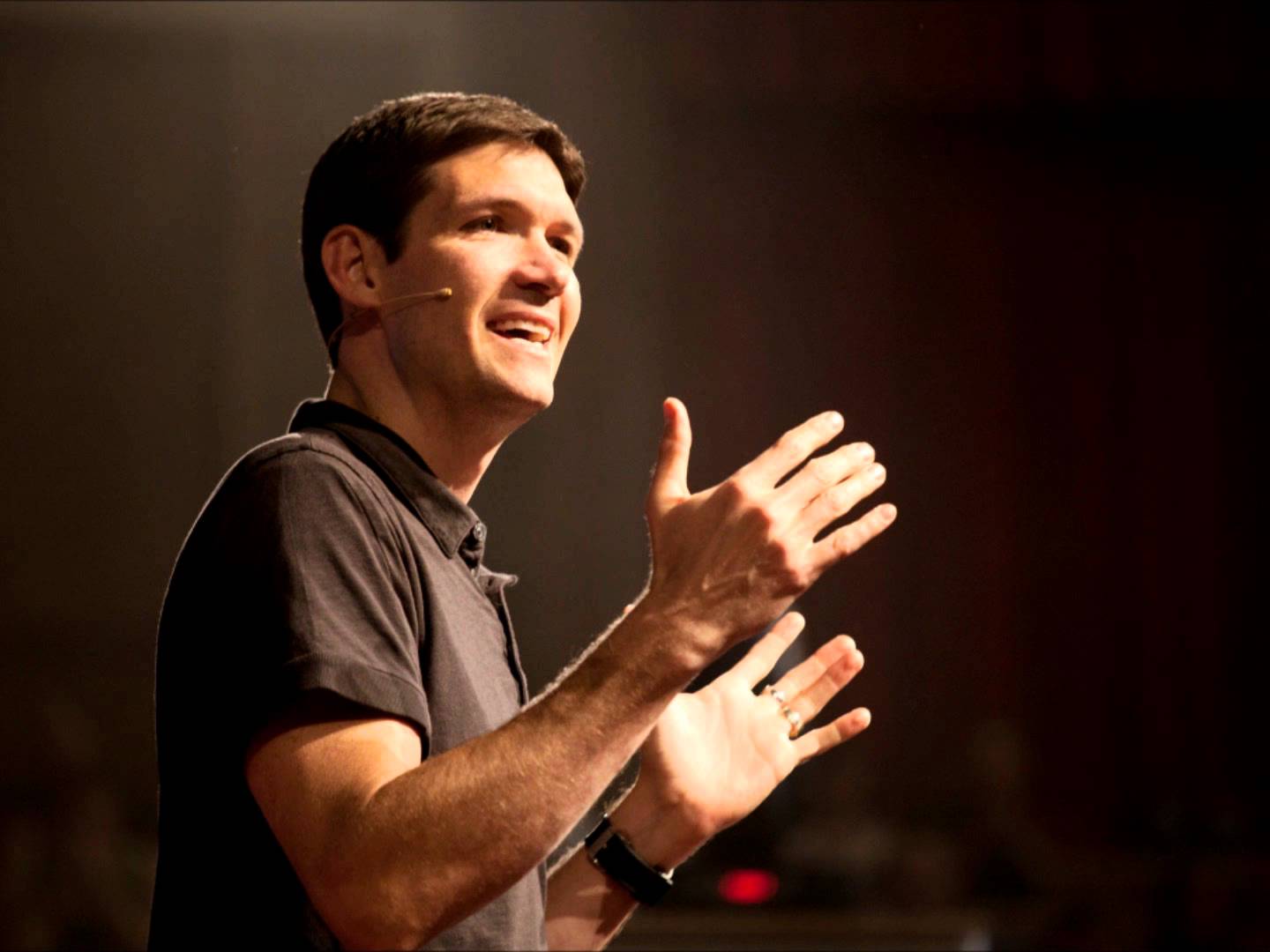
This brings me to yet more drama going on in the institutional church. At Matt Chandler’s church, a well-known Neo-Calvinist, the elders have brought a wife under church discipline for divorcing her husband who was caught with child porn. If she goes to Chandler’s church, she has heard often about how people cannot change save their perception of just how sinful they really are leading to an increased “gratitude” for “what Jesus has done, not anything we do.”
You do the math. Unless the wife is mentally catatonic, she has to figure she is married to a man that is infatuated sexually with little children, but cannot change. But trust me, she has something going on upstairs because she asked the elders in essence, “Who gave you the authority to tell me I can’t divorce my husband?” Good question, and the answer is… “nobody.” Also, redemptive church discipline proffers the idea that the elders have the authority to “declare her an unbeliever.” How do we get from the aforementioned biblical facts to a bunch of guys who have authority over your salvation? Have we totally lost our minds? In addition, preventing someone from performing a lawful act under threat of public defamation is a felony in most states. It just so happens that the practice of redemptive church discipline is technically a serious crime.
And let’s talk about the tragedy of Chandler’s teachings and how they created the situation to begin with. The Bible makes it clear that anyone can be inflicted with “sinful desires” of all sorts. This is an affliction and the source is sin. The source is also the old self that was crucified with Christ which means that the desire has no power over the believer—the believer is able to say “no” to that desire, and if he/she doesn’t, it will bring death in one way or another.
The blood of the situation is totally on the hands of Chandler and his elders due to errant teachings on sanctification, and the divorce is merely part of the death process that her husband is now experiencing. In this case, the death of a marriage along with whatever else is he is going through.
It is amazing to see how husbands are relinquishing their families to these doctors of death. This return to authentic Protestantism will continue to implode more and more until something gives. The destruction of families is ongoing and incalculable. As I have mentioned in other articles, I continue to get testimonies that family situations are greatly improved by virtue of the fact that the families simply leave the institutional church.
Cultism will never make a situation better, only worse.
paul

Josh Duggar: The Protestant Gospel Strikes Again
 Yawn. Here we go again. The Catholics no longer have the market on sexual child abuse cornered…for some time now. Pray tell, how much longer are all of the clichés going to cover for this stuff until people finally realize that there is a serious fundamental problem underneath the hood of the Protestant magical yellow bus supposedly going to heaven.
May I suggest a false gospel?
How many children will be sacrificed for the sake of evangelicals saving face? I understand that Westerners don’t want to admit that we fell prey to the same en masse religious deceptions found in the East, but the price of children is way too high for the redemption of Western pride. Besides, Germany trashed the notion during the 40s anyway.
Dear discernment bloggers: in case you haven’t noticed, you cannot save the Protestant church. You are now merely gossip peddlers; nothing more or less. And enough with your whiney open forums: truth is found as promised by Christ in His word, not your pooling of ignorant uninformed opinions leading to more and more confusion.
It’s time to stop and question everything, and the answers are egregiously simplistic. It’s time for the solution.
The first century Christians met in homes for mutual edification because that is the intended model; always was, always will be. The “church” was NEVER meant to be any kind of institution. The Protestant gospel was designed for institutional purposes. The five word gospel, “Christ died for our sins,” was derived from spiritual caste presuppositions and an institutional mindset.
Catholics like Protestants because they both share the same metaphysical presuppositions concerning mankind and a call for oligarchy. Hence, the few will always be sacrificed for the collective good. Name one victim who has found justice in the church. Where is this victim? Where is Christ’s one in ninety-nine? You search in vain. That’s because in the Protestant five word gospel, “victim” is a misnomer.
What’s your first clue? Regardless of the fact that Josh Duggar confessed to child molestation in 2006, he was appointed as executive director of the Family Research Council. They knew. Everyone knew. James Dobson probably knew. Sigh. You really think it’s about families? Really? Are you that naive?
Again, the fundamental problem is egregiously simple: the Gospel of Jesus Christ is more than five words. Christ died so the old us could also die. The old us should be dead. But it isn’t, so we continually return to the death of Christ to seek forgiveness for our total depravity. By focusing on our total depravity, grace abounds, and those who know how sinful they are—are actually more qualified to be Christian leaders. And because of that, the Duggars are among the Grace Philosopher Kings, and the American Christian peasantry still doesn’t understand these things. Well, Josh must resign and once again Christianity has lost a great leader because of the Pharisees. In essence, this is the same worn-out Protestant response being proffered in the press by the Duggers.
Also missing from the Protestant five word gospel is our resurrection with Christ. Instead of emphasizing the holiness of new creaturehood, we rejoice in the evil that supposedly manifests Christ’s living, not a “righteous living of our own.” We have not died with Christ, nor have we been resurrected with Him. This is a gospel that is totally off the biblical reservation.
Gee whiz, it’s testimony to the fact that there is a lot more grace work to be done in the church—boy howdy—God’s people still do not understand grace. Poor Josh must resign because there are still way too many Pharisees in the church.
When are God’s people going to stop falling for all of this? When are the discernment bloggers going to beat their keyboards into tools for solutions instead of brushes for whitewashing the tombs of dead people? It’s not a few bad apples, it’s the whole Protestant basket.
And when are Christians going to see the five word gospel for what it is? When is the investment made in error going to look like dung in comparison to the children who have been made to stumble?
paul
Does Protestantism Require Church Membership for Salvation?
 It most certainly does, but the reason church membership is required by the Protestant faith is far more scandalous than that one symptom. We will start with the core gospel of the Protestant religion, and then see how required membership in the local church is efficacious to its gospel.
How “Christians” that are far removed from the original Protestant tradition function is no defense for its official Reformed gospel. Protestants can’t have it both ways though they try. They excuse what Luther and Calvin taught because not all Protestants function by every jot and tittle. But on the other hand, they deem other religions as false based on their original statement of faith. Obviously, no Protestant will give a Buddhist a pass for one second because, “Not all Buddhists believe the exact same things that Buddha believed.”
By and large, the problem is that most Protestants really don’t know what the Protestant gospel is, and when they are confronted, they choose to defend their investment in it for whatever reason. At least one reason follows: investing in the truth is hard work. Protestantism, like many other religions, propagates the farming-out of their faith to the experts. Of course, that is very ill advised.
First, we will look at a summary of the Protestant gospel, and then establish the summary with specific citations. The core principle is progressive justification. This is the idea that salvation is a process and not a onetime passing from death to life. This fact about Protestantism surprises many Protestants. Many tout “once saved always saved,” but that’s not what the Reformers taught at all. They taught that the justified state was a progression from definitive justification to final justification, and the process in the middle is subjective justification. The process in the middle is really progressive justification, but many Reformed scholars deny that in the face of insurmountable evidence. In fact, the title of chapter 14 in book 3 of the Calvin Institutes is, “The Beginning of Justification. In What Sense Progressive.” In other words, justification is present continuance; it’s not a onetime finished event.
As we will see, the institutional church established by the church at Rome circa 4th century is deemed as God’s institution that oversees the progression of justification for God’s people. Unless you are a member of a local church, your salvation cannot progress from point A to point B. Remember, the Reformation did not really seek to replace the “Mother Church,” but rather sought to reform it. Luther, Calvin, nor their mentor St. Augustine ever officially left the Catholic Church. Luther and Calvin had a dying devotion to Augustine until the end who is an official Doctor of Grace in the Catholic Church until this day.
Foundational to Protestantism is the idea that Christ’s death served two purposes for sin: an unconditional forgiveness of past sin, and a conditional forgiveness for “present sin” and future sin. The condition for receiving forgiveness for “present” and future sin was membership in the local church signified and confirmed by water baptism. They didn’t teach baptismal regeneration directly, but taught that forgiveness of present and future sin can only be received in the church, and only water baptism made someone a true member of the church:
“Wherefore, our initiation into the fellowship of the church is, by the symbol of ablution, to teach us that we have no admission into the family of God, unless by his goodness our impurities are previously washed away” (The Calvin Institutes: 4.1.20).
“Nor by remission of sins does the Lord only once for all elect and admit us into the Church, but by the same means he preserves and defends us in it. For what would it avail us to receive a pardon of which we were afterwards to have no use? That the mercy of the Lord would be vain and delusive if only granted once, all the godly can bear witness; for there is none who is not conscious, during his whole life, of many infirmities which stand in need of divine mercy. And truly it is not without cause that the Lord promises this gift specially to his own household, nor in vain that he orders the same message of reconciliation to be daily delivered to them” (The Calvin Institutes: 4.1.21).
“To impart this blessing to us, the keys have been given to the Church (Mt. 16:19; 18:18). For when Christ gave the command to the apostles, and conferred the power of forgiving sins, he not merely intended that they should loose the sins of those who should be converted from impiety to the faith of Christ; but, moreover, that they should perpetually perform this office among believers” (The Calvin Institutes: 4.1.22).
“Secondly, This benefit is so peculiar to the Church, that we cannot enjoy it unless we continue in the communion of the Church. Thirdly, It is dispensed to us by the ministers and pastors of the Church, either in the preaching of the Gospel or the administration of the Sacraments, and herein is especially manifested the power of the keys, which the Lord has bestowed on the company of the faithful. Accordingly, let each of us consider it to be his duty to seek forgiveness of sins only where the Lord has placed it. Of the public reconciliation which relates to discipline, we shall speak at the proper place” (Ibid).
“…by new sins we continually separate ourselves, as far as we can, from the grace of God… Thus it is, that all the saints have need of the daily forgiveness of sins; for this alone keeps us in the family of God” (John Calvin: Commentaries on the Catholic Epistles; The Calvin Translation Society 1855. Editor: John Owen, p. 165 ¶4).
“. . . forgiveness of sins is not a matter of a passing work or action, but comes from baptism which is of perpetual duration, until we arise from the dead” (Luther’s Works: American ed.; Philadelphia: Muhlenberg Press; St. Louis: Concordia, 1955, vol. 34, p. 163).
“. . . Forgiveness of sins is not a matter of a passing work or action, but of perpetual duration. For the forgiveness of sins begins in baptism and remains with us all the way to death, until we arise from the dead, and leads us into life eternal. So we live continually under the remission of sins. Christ. is truly and constantly the liberator from our sins, is called our Savior, and saves us by taking away our sins. If, however, he saves us always and continually, then we are constantly sinners” (Ibid, p.164).
“For the forgiveness of sins is a continuing divine work, until we die. Sin does not cease. Accordingly, Christ saves us perpetually” (Ibid., p.190).
“Daily we sin, daily we are continually justified, just as a doctor is forced to heal sickness day by day until it is cured” (Ibid., p.191).
Hence, notice that there is no distinction made between sins committed as unbelievers and sins committed as believers. Sin is sin and needs a perpetual forgiveness in order for the “believer” to remain justified. The only difference is unconditional forgiveness (sin committed as an unbeliever) and conditional forgiveness, i.e., you can only receive forgiveness as a member of the local church.
Also note the shocking assertion, usually attributed to Catholic priests, that pastors/elders have the authority to grant forgiveness for present and future sin.
paul
What is the Gospel?
 Is the gospel a declaration about the death, burial, and resurrection of Christ? Are people saved because they believe those facts?
Granted, they have to believe those facts to be saved, but they must not only believe that Christ died for our sins and was resurrected three days later, they must also believe something else about those facts:
Salvation is a choice to follow Christ in that same death, burial, and resurrection. He accomplished such so that we can follow Him in it.
Salvation is an intellectual ascent AND a choice. The choice is also referred to as “repentance.” You are not only turning from an indifference to God’s truth, you are turning from who you are to whatever God wants to make you.
This is called the new birth, or the baptism of the Holy Spirit. You can do absolutely nothing to effect this new birth, you can only ask for it. It is the desire to turn from who you are to whatever God makes you. If you understand that, and want that, God has promised it to you if you ask for it.
Being saved encompasses the belief that you have passed from death to life. The Bible then commands us to proceed with life based on certain assumptions. First, we must know that we cannot be condemned for any sin. Secondly, we make it our goal to please God by putting off the former ways and learning the new ways of the Spirit. Spiritual growth is a true colaboring between ourselves and the Spirit. Our focus is putting off the old ways and putting on the new ways of the Spirit. This is the laser focus of discipleship.
A contrary focus on our supposed continued need for the same gospel that saved us, and a focus on how “sinful” we are is a denial that we have passed from death to life. Instead of our goal being love, our goal becomes a deeper and deeper appreciation of why Christ had to die for us. This is functioning on a completely different assumption:
It denies that we have passed from death to life, and makes our greatest sin that of not understanding how sinful we are resulting in a supposed lack of gratitude for Christ’s sacrifice. It assumes that the old us is still alive, and able to supply ample fodder for showing us why Christ had to die for us. Instead of the Bible showing us the new way of the Spirit, it supposedly shows us the old way of sin leading to a greater appreciation of the cross.
This is the theme we hear constantly in the institutional church, on Christian radio, and in contemporary praise music. And unfortunately, it tells us what we really believe about the gospel.
The new birth is redefined as a mere ability to see how sinful we are, and not an ability to be a transformed person—a true kingdom citizen—a true child of God. Transformation is redefined as an increased ability to see how sinful we are and plunge the depths of our total depravity. The idea that we can actually change and better learn Christ is declared to be arrogant, prideful, and… “having a righteousness of your own.”
This is a slick, deliberate play on words that subtly denies the new birth. It takes the reality that righteousness did not originate with us, and makes it tantamount to having NO righteousness that is a part of our true being. We remain unchanged except for an ability to SEE only, and the righteousness of God that comes part and parcel with being born of Him remains apart from us. We are merely vessels that “reflect” God’s righteousness, but it remains separate from our new identity.
In other words, we really don’t perform any love that pleases God, our only goal is to plunge the depths of our own sinfulness that results in God “reflecting” His love on us and others. This coincides with rhetoric we hear in the church constantly such as, “It wasn’t I who did it—it was the Spirit working through me.”
Passages like Galatians 2:20 are then twisted to make the case.
Consequently, instead of a proper dichotomy being drawn between GIFT and REWARD, salvation ends up as our reward for living a life of faith alone in… “what Jesus HAS done, not anything I do.”
Again, this not only denies the new birth, but makes “Christians” unwitting participants in a damning endeavor to keep ourselves saved by faith alone which is defined as a mere ability to see our need for a savior more and more. “Jumping directly from the commandment to obedience” is supposedly works salvation.
Jesus said, “You must be born again,” and this is exactly why He said it. Water baptism has nothing to do with a church membership found nowhere in the Bible, and it is not only about what Jesus did, it is a testimony that you have followed Christ in a literal death and resurrection.
Salvation is the abandonment of who you are, and trusting what God will do by recreating you into His own child. It is a matter of trust, because…
That which is born of the flesh is flesh, and that which is born of the Spirit is spirit. Do not marvel that I said to you, ‘You must be born again.’ The wind blows where it wishes, and you hear its sound, but you do not know where it comes from or where it goes. So it is with everyone who is born of the Spirit.
paul

 Paul's Passing Thoughts
2 comments