How to Lead a Calvinist to the Lord
 “What imperils the Calvinist soul is a fundamental anti-biblical view of the law. They must be shown the new way of the Spirit.”
Know Calvin’s Gospel
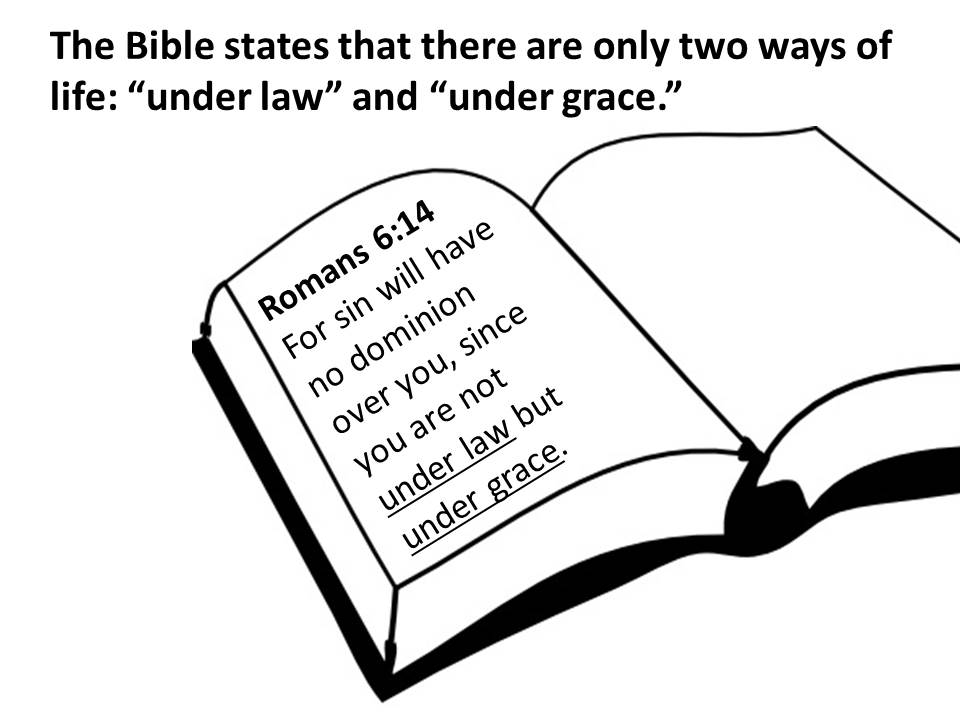
Calvinism is a false gospel that imperils the soul. The apostle Paul made it clear in Romans that there are only two people groups in the world: those under law, and those under grace (ROM 6:14). The lost and the saved. Calvinists declare themselves to be under law. They try to get around this by saying you can be under law and under grace both, but such is not the case. They say it is ok to be under law and covered by grace if we live by faith alone in sanctification; or, living by the same grace that saved us. The whole, “We must preach the gospel to ourselves every day” is indicative of where they stand on law and grace. According to their other gospel, we need the same grace that saved us every day for one reason and one reason only: we are supposedly still under law. Certainly, all people live under the grace of God whether saved or unsaved—we are addressing the grace that saved us initially.
Calvinists use the book of Galatians in an effort to make the opposite point; supposedly, the Galatians were putting themselves under law by attempting to please God in sanctification by keeping the law. Hence, in the Calvinist mind, attempting to keep the law in sanctification is the same thing as trying to keep the law for our justification—they are still under it accordingly….for justification….IN sanctification. In other words, a demand for perfect obedience to the law in sanctification is still the standard to maintain justification. This was Paul’s actual beef with the Galatians: that the law was still a standard for maintaining their justification. The Galatians were adding law to grace in order to maintain grace. So, instead of the law informing their sanctification, they were putting themselves back under the law to maintain justification. That’s why Paul wrote the following to them:
Galatians 4:21 – Tell me, you who desire to be under the law, do you not listen to the law?
Paul continues from there to drive home the point that justification is a settled issue and obligation to the law is separated from it. We are obligated to listen to the law for sanctification, but there is no longer any law obligation to our justification. To say that justification has to be maintained by perfect law-keeping is to be under the law. The Galatians were being taught that rituals such as circumcision completely satisfied the law. But again, being under law is the point here. That is why Paul stated the following:
Galatians 5:2 – Look: I, Paul, say to you that if you accept circumcision, Christ will be of no advantage to you. 3 I testify again to every man who accepts circumcision that he is obligated to keep the whole law. 4 You are severed from Christ, you who would be justified by the law; you have fallen away from grace.
The Galatians were being taught that circumcision satisfied all of the requirements of the law for justification. This led to an antinomianism in sanctification because in these systems there is no distinction between hearing and doing the law in sanctification and the laws relationship to justification. For the unbeliever, the law is the standard for justification because unbelievers are under the law. Christians are under grace and not under the law, so the law has no relevance to their justification. Paul was simply telling the Galatians that if they are under the law, they are obligated to keep all of it for justification. Circumcision or any other ritual does not satisfy the law.
Paul states that we are not under law because the old us that was under the law is dead (ROM 7:1-11), and therefore, the law cannot judge the sins of our mortality (Rom 3:19, 7:8,9). But on the other hand, we are enslaved to the law in sanctification (Rom 8:7,8). Even though we cannot keep it perfectly due to our present mortality, we are enslaved to it and nonetheless strive to keep it in our sanctification. The law was never fulfilled to maintain our justification because there is no law in justification. The law is fulfilled through us in sanctification (ROM 8:3,4). Christ’s death separated the law from justification in the same way that a spouse is no longer under a marriage covenant when the other spouse dies (ROM 7:1-3).
This excludes the necessity for perfect law-keeping in sanctification. Christ accomplished this through His death, not keeping the law for us in sanctification. Calvinists call this, “Christ 100% for us.” Christ’s perfect law-keeping is a given by virtue of who He is and not because perfect law-keeping was part of the Abrahamic covenant of promise which occurred 430 years before the law (GAL 3:17,18).
Which Brings Us to Calvin’s Galatian Error
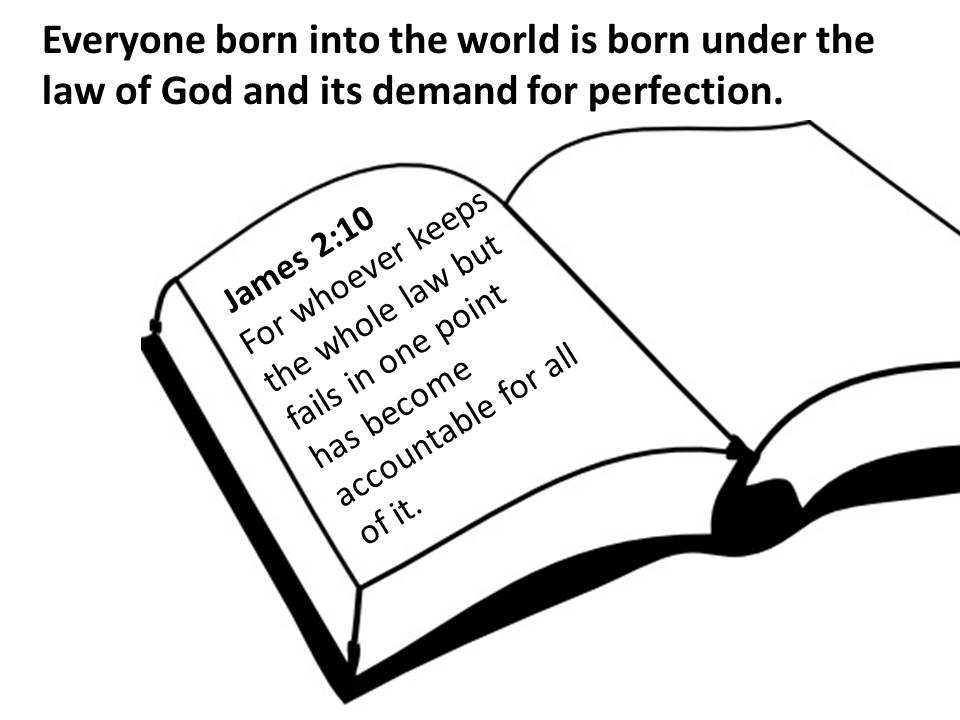
No works salvation system ever promotes a perfect, intelligent obedience to the law. It posits activity on our part that imputes something that counts for a perfect keeping of the law to maintain our salvation. This always leads to antinomianism because a ritual replaces actual law-keeping. Those under grace strive to please God by law-keeping because they are enslaved to the law, but on the other hand, perfection is not the standard because they are hindered by mortality (ROM 8:3,4) and the law can’t judge them because they are no longer under it (ROM 3;19). They are enslaved to it for sanctification, but not under it for justification. Those under grace are enslaved to the law but will not be judged by it; those under law are enslaved to sin and will be judged by the law. The Bible has an awesome way of stating this: those under the law violate it at all points by one sin; those under grace fulfill the law by loving their neighbors and God. The enslavement hindered by the weakness of the flesh fulfills the law in sanctification.
Calvin’s error/false gospel merely replaced the ritual of circumcision with daily re-salvation for the atonement of sin and the perpetual imputation of Christ’s perfect law-keeping for sanctification in order to maintain our justification (Calvin Institutes: 3.14.9-11). “We must preach the gospel to ourselves every day” is a ritual that imputes Christ’s perfect obedience to our sanctification in order to maintain our justification. This was also the fatal error of the Pharisees who replaced the law of God with their traditions and thus, “you have made void the law of God” (MATT 15:6 [most translations : “set aside” and “commandments”). The law is void for justification (the dead letter and covenant of death), but not sanctification.
Therefore, Calvinism keeps the “believer” under the law for justification leading to antinomianism in sanctification because Christ is 100% for us and keeps the law for us in sanctification in order to maintain our just standing. This is well exemplified via the following tweet by a well-known Calvinist:

This was the same result at Galatia as well:
Galatians 5:7 – You were running well. Who hindered you from obeying the truth?
This rejects the believer’s hindered enslavement to the law in sanctification and only leaves one other alternative: under the law. For all practical purposes: lost. Therefore, the Calvinist must be informed that he/she is still under the law and trusting in a false gospel. What imperils the Calvinist soul is a fundamental anti-biblical view of the law. They must be shown the new way of the Spirit.
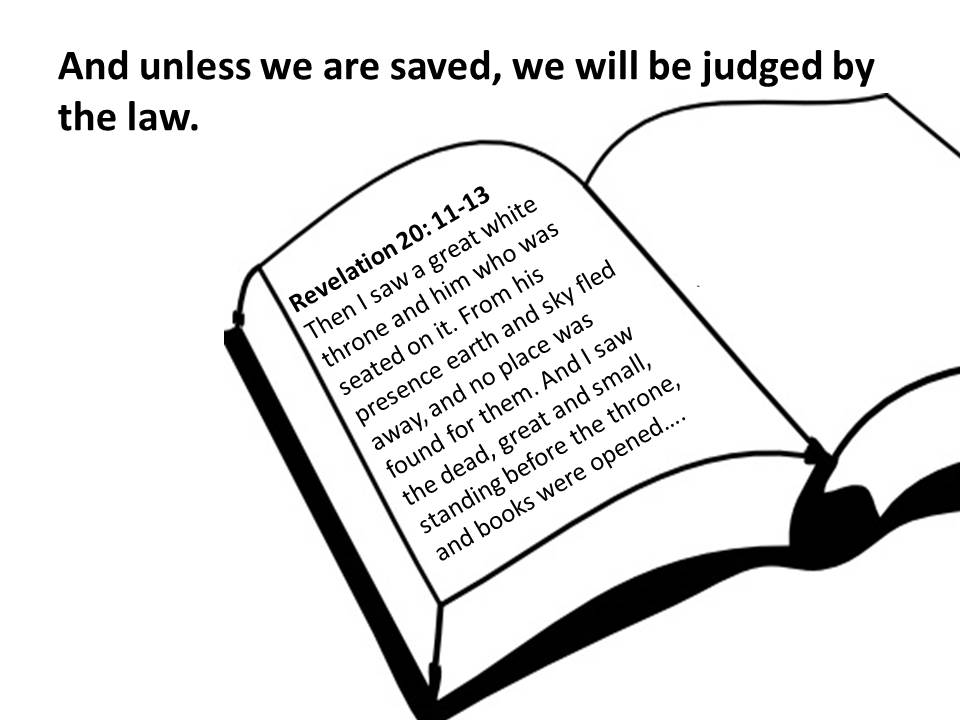
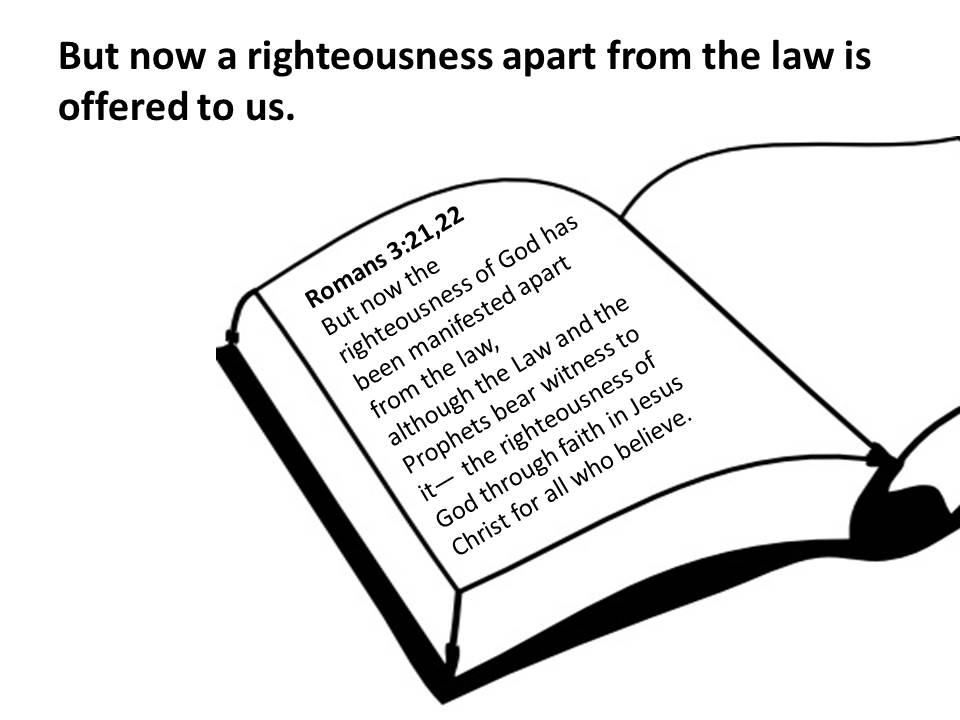
Let me recommend that you then teach them through the following booklet (Click on images to enlarge if necessary):



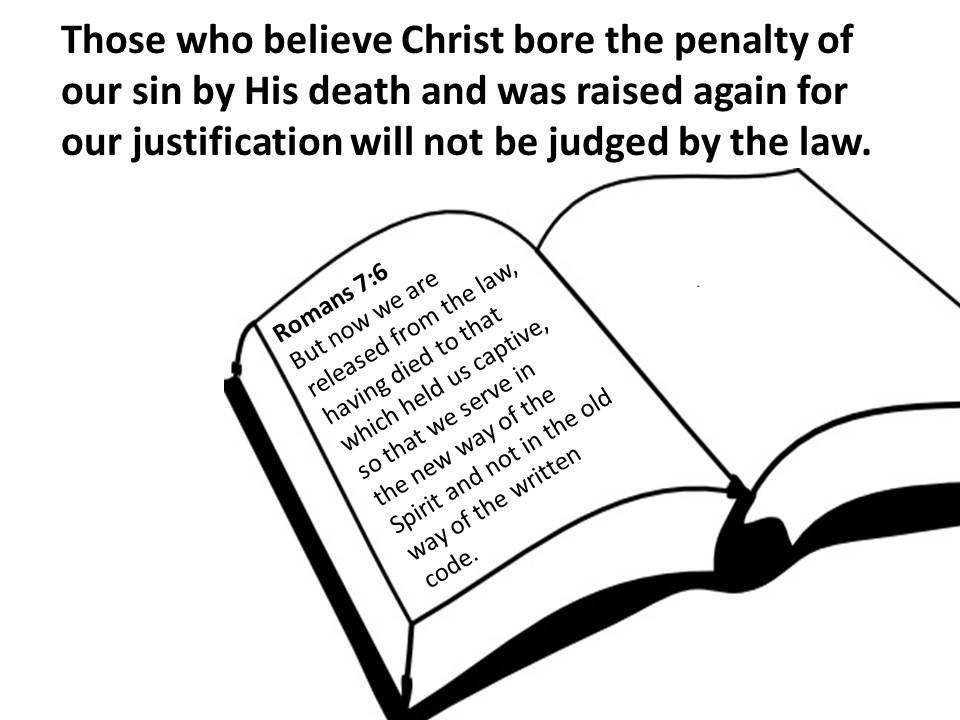
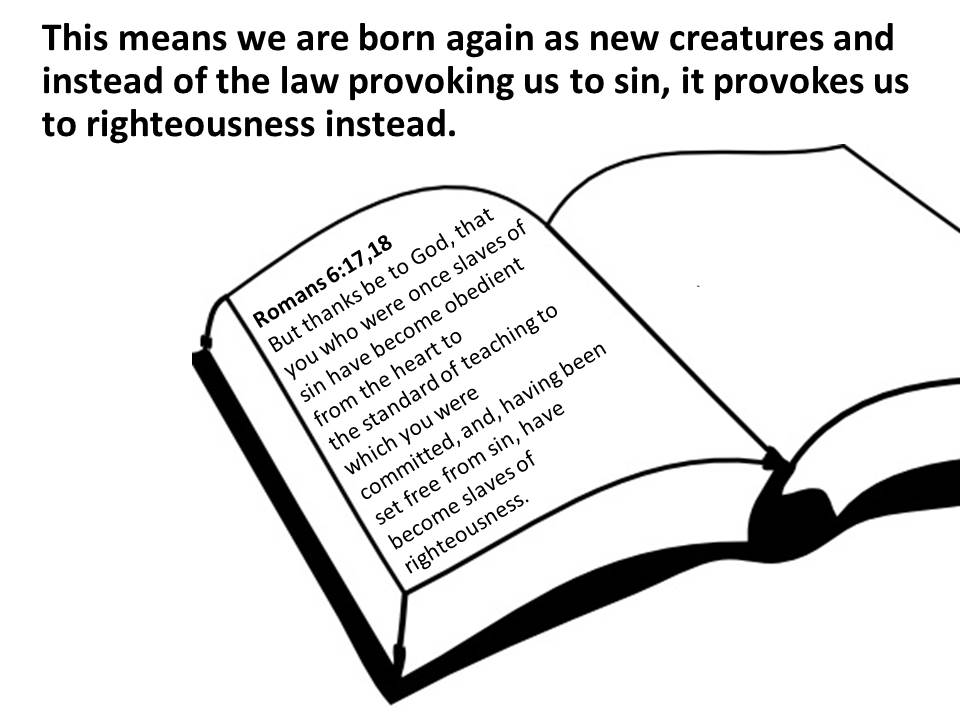
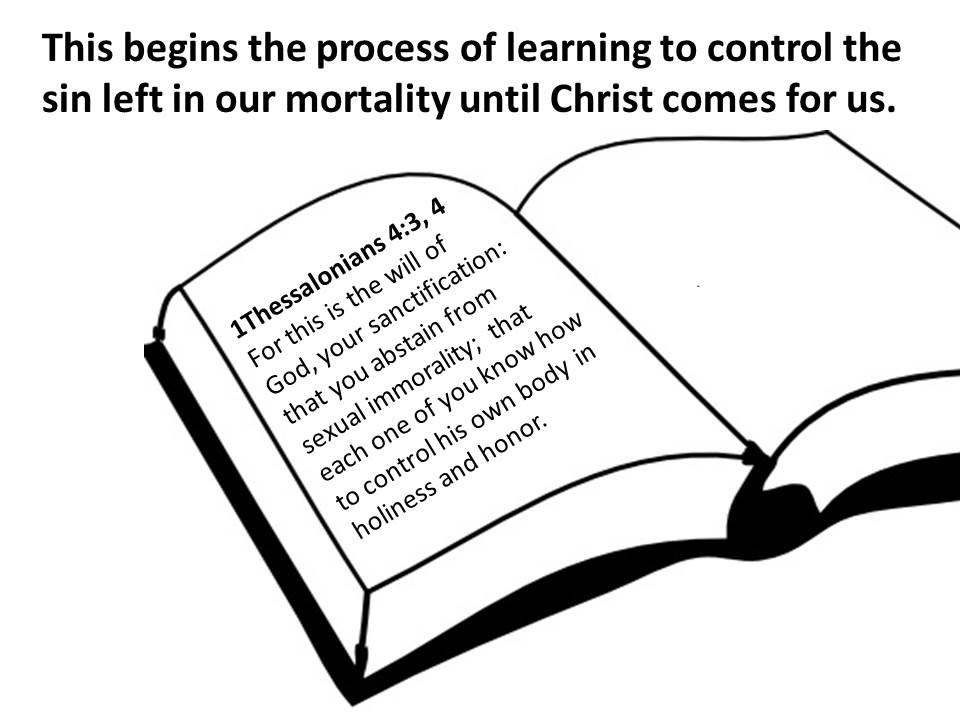






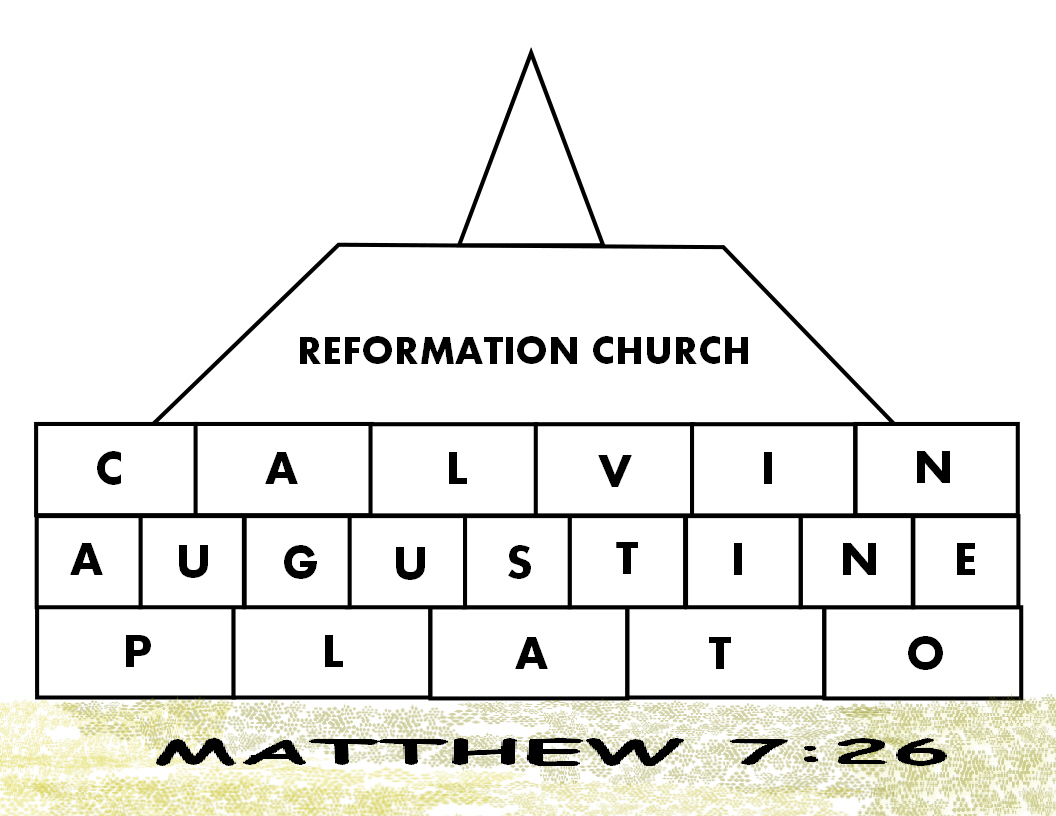
American Clergy Brilliance: “The Gospel of Jesus Christ: An Evangelical Celebration”
 “Look, think about this: even an adolescent Sunday school student can see it; if the righteousness of God is revealed apart from the law (Romans 3:21), why would Christ need to keep it for our justification? For crying out loud, what does ‘apart’ mean?”
My theses for this year’s TANC conference highlights the fact that the Reformers taught from a totally different reality than a normative reality that draws logical conclusions from the arrangement of verbs, nouns, prepositions, adjectives, conjunctions, etc. taken at face value. The Reformers created their own metaphysical premise for interpreting reality. The authentic Reformed gospel is predicated on a contra reality.
This is one of four reasons that the authentic Reformed gospel experiences a social death periodically throughout church history, and then periodic resurgence movements like the one we are presently in via New Calvinism. There have been five of these resurgence movements sense Calvin’s theocracy in Geneva. They will be documented in volume two of The Truth About New Calvinism. As Christians read their Bibles, they are naturally drawn away from the authentic Reformed gospel because the human tendency is to interpret reality from the normative perspective. They become uncomfortable with the contradictions.
However, as each resurgence dies a social death, Protestant traditions of men continue to be a significant part of what emerges from the ashes. A Reformed hybrid emerges that apes the anemic sanctification spawned by Reformed thought. This lays the ground work for the resurgences that follow. Protestantism, historically, oscillates between the weak sanctification of the hybrid and the despotic resurgence movements that temporarily replace the hybrid. Basically, the vicious cycle must be stopped if revival is going to be possible. God sanctifies with truth, not the traditions of men.
Part and parcel is a dumbed-down Christianity saturated with the traditions of Reformed men—primarily dead ones. Men of old that are deemed geniuses are often mindless Kool-Aid drinking followers of John Calvin and his ugly stepchildren, the murdering despotic Puritans. Part of the Protestant tradition that carries on is the big “O,” ORTHODOXY. A synonym for “truth” in American churchianity, it is really the repackaging of truth interpreted by the Protestant elite for consumption by the unenlightened masses. The American church follows the tradition of Protestantism when the arrogant, elitist who’s who of evangelicalism come together and publish declarations, i.e., the confessions and creeds of traditional Reformed thought.
A recent example of this is the third edition of The Gospel of Jesus Christ: An Evangelical Celebration (1994, 1997, 1999) signed and/or endorsed by, for example, the following:
John Ankerberg, Kay Arthur, Tony Evans, Jerry Falwell, Bill Hybels, David Jeremiah, D. James Kennedy, Max Lucado, Woodrow Kroll, Tim & Beverly LaHaye, Erwin Lutzer, Bill McCartney, Luis Palau, Pat Robertson, Ronald Sider, Charles Stanley, John Stott, Joseph Stowell, Chuck Swindoll, Bruce Wilkinson, Ravi Zacharias, Jack Hayford, Steven Strang, John MacArthur Jr., RC Sproul, Charles Colson, Bill Bright, and JI Packer.
Only problem is, the document denies the new birth and describes Christians as being under the law as opposed to being under grace. In other words, the authentic gospel of the Reformation. First, the document speaks from the perspective of the authentic Reformed gospel that only recognizes the possibility of a linear gospel, ie., the “golden chain of salvation.” Because sanctification is the links of a chain that stretches from justification to glorification, the links must stay intact by the same gospel that saved us. Hence, grace cannot be inside of the believer because that makes him/her a participant in the completion of justification. Justification is only a finished work if we live among the sanctification links in the same way we were saved—by faith alone.
The Reformers only recognized this reality, and judged all other gospels from the same reality. Grace is either infused within the believer, making him/her a participant in finishing justification, or grace remains completely outside of the believer. The alternative that sanctification is completely separate, a parallel gospel, is not considered to be a possible reality. Accordingly, note the following statement in said GEC document:
We deny that we are justified by the righteousness of Christ infused into us or by any righteousness that is thought to inhere within us.
The Reformers believed that ALL grace and righteousness must remain OUTSIDE of the believer or it by default made him/her a participant in the completion of justification. They got around the mass of prepositions throughout Scripture that clearly state that grace is within us by utilizing the emphasis hermeneutic (the redemptive historical hermeneutic). This hermeneutic is a Gnostic concept derived from Plato’s theory of forms. I will delve into this in detail during my second session at this year’s TANC conference. Granted, many of the signers probably didn’t, and still don’t understand what the Reformers believed, and I believe other signers such as RC Sproul deliberately play on that confusion.
Secondly, the doctrine propagates the Reformed mainstay of Christ’s perfect obedience to the law being imputed to our sanctification so that “sanctification is not the ‘ground’ of our justification.” See the chain thing going on there? Our enablement in sanctification necessarily makes sanctification the GROUND of our justification because sanctification finishes justification. It’s a “chain.” Here is what the document states:
God’s justification of those who trust in him, according to the Gospel, is a decisive transition, here and now, from a state of condemnation and wrath because of their sins to one of acceptance and favor by virtue of Jesus’ flawless obedience culminating in his voluntary sin-bearing death.
And….
We affirm that Christ’s saving work included both his life and his death on our behalf (Gal. 3:13). We declare that faith in the perfect obedience of Christ by which he fulfilled all the demands of the Law of God on our behalf is essential to the Gospel. We deny that our salvation was achieved merely or exclusively by the death of Christ without reference to his life of perfect righteousness.
Look, think about this; even an adolescent Sunday school student can see it: if the righteousness of God is revealed apart from the law (Romans 3:21), why would Christ need to keep it for our justification? For crying out loud, what does ‘apart’ mean? Worse yet is the idea that this perfect obedience is imputed to our sanctification if we live our Christian lives by faith alone because sanctification is a progressive process that finishes justification. James refuted this idea in no certain terms, which is why the Reformers questioned its rightful place in the New Testament canon.
Moreover, this idea keeps Christians “under the law,” which is the biblical designation for the unregenerate. I don’t know much about the theologian William R. Newell, but with that disclaimer, I will say that I agree with his opinion in regard to this issue:
The fatal result of this terrible error is to leave The Law as claimant over those in Christ: for, “Law has dominion over a man as long as he liveth” (7.1). Unless you are able to believe in your very heart that you died with Christ, that your old man was crucified with Him, and that you were buried, and that your history before God in Adam the first came to an utter end at Calvary, you will never get free from the claims of Law upon your conscience (William R. Newell: Verse by Verse Commentary on Romans).
Hence, the law remains a claimant over the believer at any point where he/she stops living their life by faith alone in the same gospel that saved them rather than belief in the new birth followed by the death of the old us that died with Christ and is no longer under the law. We must now fear that our obedience in sanctification is making the law the “ground” of our justification. Likewise, Calvin stated the following:
Another principal part of our reconciliation with God was that man, who had lost himself by his disobedience, should by way of remedy oppose to it obedience, satisfy the justice of God, and pay the penalty of sin.
Editor’s note: For our redemption, Christ kept the Law for us and died upon the Cross. By this, Christ obtained forgiveness of sins for us (Calvin on the Mediator: Chapel Library press, 2009).
This is also known as “vicarious law-keeping.” A definition of vicarious is:
Adjective
Experienced in the imagination through the feelings or actions of another person: “vicarious pleasure.” Acting or done for another: “a vicarious atonement”.
Christians need to stop following men in general, and Reformed men in particular. God only sanctifies with truth, and Reformed doctrine does not save or sanctify accordingly. It calls for a salvation by law-keeping and who keeps it is not the issue. The law as a standard for justification is the issue. It also denies the different relationship of the law to believers as opposed to unbelievers: the law provokes the former to righteousness, and provokes the latter to sin. It skews the very biblical definition of the regenerate.
paul
Confused in Denmark: Seeker of Truth Wants Answers to Seven Questions About Salvation
 “I love you, but your thinking is fraught with Reformed morbid introspection that they want to use to control you. Stop reading John Piper.”
Busy and haunted. I received an email from a person in Denmark that is confused about all of the different positions on the gospel floating about today. Our commentary from the first eight chapters of Romans (compiled manuscripts from the Potter’s House) answer the questions in detail. Susan and I have received positive feedback regarding the book. At least one family is using it for their family devotions. So concerning the Denmark person, I offered to send the book and the offer was accepted. That was easy.
And haunting. I once talked to a Christian who was critical of an elder that she sought out for counsel. With an expression on her face somewhere between disgusted and hurt, she stated, “I came to him for help. Do you know what he did? He gave me a book!” Let there be no doubt about it: Christian books have gone way beyond teaching in our day, they are orthodoxy. And by the way, Neo-Calvinism all but completely owns Christian publishing. “Orthodoxy” is a Reformed term. It is the faith repackaged for the unenlightened masses by the preordained Reformed philosopher kings. For the most part, American Sunday Schools teach from Reformed writings and not the Bible. This is a complaint that this ministry hears constantly. These guys have effectively rewritten systematic theology and church history. They have created another standard of Christian reality altogether and speak from that reality as if there is no other reality.
And this is where the confusion comes in. But confusion is good. Confusion is very good. Concern that you are confused is even better. If you are letting other people think for you—you are not confused. Everything makes perfect sense to you even though it is completely illogical. Jesus warned us about letting other people think for us. He referred to it as the blind leading the blind. That rarely turns out well.
So, we may conclude that confused Christians who know they are confused, and are concerned about it, are the top of the crop among Christians in our day. They are the blue chip because they are thinking Christians. We must not merely hand them a book. Besides, others may have the same questions.
1. Who is a true Christian?!
Answer: Those who place all of their hope in God and believe in His way of being reconciled to Him. Remembering that God has promised to reward those who seek Him is also very helpful. Don’t be too concerned with your confusion at this time: He who has promised is faithful. In regard to your residual question, “Should I just then read the Bible and forget about every other theory and just rely on my Bible reading?” The short answer is, ABSOLUTLEY. I am not discarding the need for teachers, but they must bow to the authority of Scripture. The Bible must be your absolute authority for life and godliness.
2. What does a true Christian look like?
Answer: A true Christian doesn’t “look like” anything. That’s the wrong question coming from Reformed metaphysics where verbs are works salvation. The Hebrew writer framed the question this way: what do Christians DO? See Hebrews 11. Aggressive DOING in our Christian life reveals that we really believe that our salvation is a finished work that we cannot contribute to. Fear of doing in our Christian life reveals an attitude that our salvation must be maintained in some way by living a noun life instead of a verb life. Hence, “what does that look like” rather than “how do I do that?” “How do I please God” becomes, “What does that look like” because it really isn’t me doing it. If I am doing it, I am finishing my salvation in some way. Salvation is finished, and it can only be appropriated through faith alone. But the power imputed to us for Christian living must be appropriated through BOTH faith and obedience. In our Christian life, faith and obedience work together and enhance each other (James 2:22). Hence, assurance of salvation grows as our obedience and faith feed each other.
3. Is there such a thing as a wealthy (monetary terms) Christian?
Answer: Yes. Kingdom living is many faceted and full-orbed. God uses a variety of socio-economic types of people in His kingdom.
4. Does being a Christian mean having no money, no career ambitions.
Answer: Only if you are a follower of Martin Luther. We are free from the law and have incredible liberty to pursue the things we enjoy. However, though free from the law’s jurisdiction, we are “enslaved to righteousness.” The balance of liberty and what is pleasing to God is a complex issue, but that is why God gave us a miraculously designed and capable brain. Be patient and wait on the Lord as you prayerfully search the Scriptures for these answers. Even Daniel lived this way. He searched the Scriptures for answers. And many times, the answers we seek will determine the book where we look for the answers (Daniel 9:1,2).
5. How do I please God with my life? For example, how much Bible reading am I supposed to do? Should I wait for the Spirit to lead me? Can I continue reading romance novels or should I stop because Christians say it is wrong, yet I still want to read one?
Answer: No, as Christians, we NEVER wait to do anything that is within our power and abilities to do. To do otherwise is to rob blessings from our Christian life (James 1:25). Granted, we will continually rob ourselves of blessings because we are hindered by our mortality: “The Spirit is willing, but the flesh is weak.” As Christians, we have new desires. But a remnant of the old sinful desires remain. HOWEVER, unlike when we were unsaved, their power to control us is broken because the old us died with Christ. HOWEVER, the old desires wage war against us through feelings, and the argument that we have to obey those desires can be pretty strong. But because of what we know from the Scriptures, those feelings are lying. The strength of the sinful desires’ argument is strengthened through disobedience.
Christians should listen to their conscience. The apostle Paul said to keep a clear conscience before God. However, as our conscience becomes more and more biblically trained, our consciences will give more freedom. Right now, if reading romance novels makes you feel guilty, I would encourage you to stop. Don’t violate your conscience. Don’t allow a desire to lead you into a watered down blessing that you cannot fully enjoy anyway. I know that there is a, well, for lack of a better way of stating it, “need” for Christian romance novels. Some of the content in the novels you are reading could be the issue. Christians are to “dwell” on what is honorable. That doesn’t exclude creative/interesting thoughts provoked by reading.
6. How do I know I am pleasing God from my heart and not as a result of my intellect?
Answer: Learn and do. ALL truthful obedience is from the redeemed heart. Obeying God when we don’t want to or don’t feel like it is the most self-sacrificial. If we have a desire not to obey a clear biblical imperative, it is probably a “desire of the flesh.” Often, when we obey when we don’t want to, we are merely refusing to obey a desire of the flesh. The Bible has much to say about obedience to desires (ROM 6:11,12). ALSO, this is a result of your biblical intellect which is a GOOD THING! I love you, but your thinking is fraught with Reformed morbid introspection that they want to use to control you. Stop reading John Piper.
7. Sanctification, justification, Grace being born again.. right now I am so confused by all of this I am doubting what I believe and whether I am on the right path or am I just lost and not aware.
Answer: I can tell you that you are not lost. Lost people don’t concern themselves with these things. You have great potential to please God because you are a thinker and not a mindless follower of men. A good example of the latter is your everyday Calvinist. There is hope for confused Calvinists. Here is Paul’s justification/sanctification construct in the book of Romans: the lost and saved fall under two categories:
1. Under the law. Definition;
A. Enslaved to sin and the obedience to sinful desires.
B. Provoked to sin by the law.
C. Will be judged by the law.
2. Under Grace. Definition;
A. Released from the law.
B. Enslaved to righteousness.
C. Provoked to please God by the law.
D. Will not be judged by the law.
E. Harassed by sinful desires.
Read Romans carefully line by line. Read it thoughtfully and prayerfully. Take the words at face value. I will mail the book today or tomorrow.
Stay the course. In all, stand immovable in the Lord Jesus Christ our beloved King.
Your brother,
paul

 Paul's Passing Thoughts
6 comments