2Corinthians 3:18: New Calvinist “Word Pictures,” and Idol Worship
“If MacArthur hasn’t bought into contemplative spirituality, where is the clarification while his verbiage mimics that of antinomians such as John Piper?”
“Please do not bore me with what you think he meant—he’s unclear and that’s on him. Furthermore, a lack of clarity regarding this issue is reckless because of what is widely taught in our day, and coupled with whom and what Phil Johnson endorses.”
New Calvinism (NC) makes much of two primary Scriptures: Galatians 2:20 (the targeted verse for distortion among antinomians throughout the New Testament age) and 2Corinthians 3:18. It reads as follows:
“And we all, who with unveiled faces contemplate the Lord’s glory, are being transformed into his image with ever-increasing glory, which comes from the Lord, who is the Spirit.”
I have chosen the NIV translation because it best fits the NC take on this passage. Supposedly, by contemplating the Lord’s glory in Scripture we are changed (the implication is by contemplation alone) from one degree of glory to the next, or “ever-increasing glory.” The fact that this is the primary message that proponents want parishioners to get can be seen in John Piper’s mantra, “Beholding as a way of becoming.” If there is another way equally as important in the process of change—they don’t talk about it much—if at all. To be certain, conversation about doing (biblical doing) something different as change, which one would assume is change, is avoided like the Bubonic Plague. In his endorsement of Uneclipsing The Son by Rick Holland, Phil Johnson, a close ministry associate of MacArthur, states the following:
“We become like whatever we worship (Psalm 135:15-18). So the key to sanctification and spiritual maturity is a simple principle: As we set our affections on Christ and keep Him at the center of all our thoughts, activities, desires, and ambitions, we are transformed into His likeness (2 Corinthians 3:18).”
Notice that Phil Johnson quotes Psalm 135: 15-18 to make his point:
“The idols of the nations are silver and gold, made by the hands of men. They have mouths, but cannot speak, eyes, but they cannot see; they have ears, but cannot hear, nor is there breath in their mouths. Those who make them will be like them and so will all who trust in them.”
So, in the same way that pagans become like the images they worship, we can supposedly become like Jesus by worshiping “Him,” and keeping “Him” at the center of our lives. But what does that mean? The point of this Psalm is that men trust images that can’t instruct or impart true wisdom (they can’t speak, hear, or see). Therefore, the images represent anything the worshippers want them to represent, and then they become whatever that is. We are not to worship any image in heaven or earth because images can’t impart truth to be obeyed (Exodus 20:4-6), but using Scripture to ascertain the personhood of Christ (ie., the mantra of our day: “Christ is not a quiz—He’s a person”) rather than what He instructs is flirting with making images of Christ that are the result of our own imaginations. Johnson asserts that this nebulous concept is the “key” to spiritual maturity. I strongly disagree. Please do not bore me with what you think he meant—he’s unclear and that’s on him. Furthermore, a lack of clarity regarding this issue is reckless because of what is widely taught in our day, and coupled with whom and what Phil Johnson endorses.
In addition, is this “simple principle” more simple than learning and applying? Johnson’s statement is indicative of the new four-letter word of our age: O-B-E-Y. Note the degree to which the word and the idea is spoken of in the New Testament, and then compare that to what the spiritual rock stars of our time emphasize—hardly anything is more conspicuous.
How subtle this is; in its application to teaching, can be seen in John MacArthur’s recently published, “Slave.” The book is an excellent exposition of the fact that we are slaves to Christ, and the historical documentation/insight is most likely unmatched by anything written in recent history, but the book is all but purely descriptive and not prescriptive for our walk with Christ. In other words, it displays an awesome “picture” of what our slavery to Christ “looks like,” but very little information regarding how that fact can be specifically applied to our lives. This is a marked departure from how MacArthur taught in the past.
It is also a prism that saturates the writings of John Piper as well. His writings are predominantly descriptive and contain little, if any instruction. Piper advocated the idea that the Gospels should be read with the sole intent of looking for “pictures of Jesus” at the 2010 T4G. Funny, Christ’s conclusion to the Sermon on the Mount was: “He who hears these words of mine and puts them into practice is like….” Of course, Paul David Tripp clears up the confusion caused by Jesus’ plain language by clarifying with the term, “word pictures.” Apparently, Jesus doesn’t really want us to study and apply, but rather contemplate what obedience “looks like” so our obedience will “look like” MacArthur’s description in Slave: always without hesitation and full of joy. Like his close friend John Piper, MacArthur now makes these statements without any specific qualification. In Piper’s case, he doesn’t qualify such statements because he believes joy gives obedience its moral value—one can only assume that MacArthur doesn’t qualify such statements for the same reason. Birds of the feather flock together.
Back to 2Corithians 3:18. Asserting that Paul was teaching a contemplation on the glory of Christ only as the paramount way in which we change is an assumption at best. It says both are going on at the same time, but there is no because of or a result of conjunction that also excludes anything else. Besides, this passage is best interpreted by James 1:25 which contains the same types as 2Corinthians 3:18 in context; such as, “liberty” and “mirrors[s]” (see verse 17). We are changed into the likeness of Christ by being “doers” of the word, and not hearers only. Of course, this application is only possible through our vital union with Christ—I think that is Paul’s main point in 2Corinthians, NOT a pie in the sky obedience that flows automatically from contemplative spirituality.
If MacArthur hasn’t bought into contemplative spirituality, where is his clarification while his verbiage mimics that of antinomians such as John Piper? And, the key to spiritual growth is understanding the supposed dynamics of how worshipping an image makes us like that image? Has the key to spiritual growth become worshipping the right “picture”? Again, if biblical instruction and life application (obedience) is equally important, or just as “key” as setting our affections on “Him” and also seeing “pictures” of His “personhood,” it’s conspicuously missing.
But this is for certain: we become what is emphasized, and the emphasis of our day looks more and more like the servant who hid his talents in the ground; because supposedly, we can’t add to the faith Christ has given. Since it apparently doesn’t turn out well for that servant, perhaps we could get some clarification.
paul
John MacArthur: The Evil Empire Only Needs a Little Tweaking
It needs to be stated again, and again: the Emergent Church approaches Scripture the same way that New Calvinism does—as a narrative that devalues propositional truth. One searches the narrative for “pictures of Jesus” for contemplative purposes while the other seeks to emphasize what Jesus has done in the narrative, and endeavors to “enter into the gospel story” by doing what Jesus did. At least the latter has some application to their mysticism as opposed to New Calvinist contemplative spirituality. MacArthur is the pot calling the kettle black.
John MacArthur, apparently equipped with a new motto: “Looking at the face of Jesus one verse at a time,” has some advice for the youth division of the New Calvinist movement (the Young, Restless, Reformed [YRR]). The advice, which is being doled out in a three-part series, is entitled, “Grow up. Settle Down. Keep Reforming.” The whole notion reveals how out-of-touch MacArthur has become—save the fact that the timing of this is good because he knows they have cut ties with him.
First, how can they take such advice when it would mean changing their name? This is a marketing machine, and you don’t mess with name recognition—that’s marketing 101.
Second, “keep reforming”?!! What are they reforming? The movement is wreaking havoc from coast to coast—splitting families, splitting churches, breaking hearts, spreading false doctrine, and leaving the disillusioned strewn across the Christian landscape.
Third, the very coldhearted arrogance of the movement can be seen in what MacArthur states in his article, and in a related article by Tim Challies. MacArthur cites this paragraph in his second article that obviously is fruit from a very bad tree:
Pastors must be innovative, stylish, agents of change. You have got to appeal to young people. They are the only demographic that really matters if the goal is to impact the culture.
And if elderly people in the church prove to be “resisters,” just show them the door. Give them the left foot of fellowship. After all, “There are moments when you’ve got to play hardball.”
But for heaven’s sake don’t dress for hardball. HCo. clothes and hipster hair are essential tools of contextualization. The more casual, the better. Distressed, grunge-patterned T-shirts and ripped jeans are perfect. You would not want anyone to think you take worship as seriously as, say, a wedding or a court appearance. Be cool. Which means (of course) that you mustn’t be perceived as punctilious about matters of doctrine or hermeneutics. But whatever you do, do not fail to pay careful attention to Abercrombie & Fitch.
After some research, I ascertained that this is Mac’s take on an attitude prevalent in the movement—an attitude that he chalks up to the supposed unfortunate influence of the Emergent church movement among the innocent souls of YRR. In his first part, he says this:
“Five years later, the so-called Emergent Church is now in a state of serious disarray and decline. Some have suggested it’s totally dead. Virtually every offshoot of evangelicalism that consciously embraced postmodern values has either fizzled out or openly moved toward liberalism, universalism, and Socinianism. Scores of people who were active in the Emerging movement a decade ago seem to have abandoned Christianity altogether.”
It needs to be stated again, and again: the Emergent Church approaches Scripture the same way that New Calvinism does—as a narrative that devalues propositional truth. One searches the narrative for “pictures of Jesus” for contemplative purposes while the other seeks to emphasize what Jesus has done in the narrative, and endeavors to “enter into the gospel narrative” by doing what Jesus did. At least the latter has some application to their mysticism as opposed to New Calvinist contemplative spirituality. MacArthur is the pot calling the kettle black.
Furthermore, postmodernism isn’t going anywhere, it is being integrated into New Calvinism in the same way that Sonship Theology is. Proof? No problem, just remember what grandma used to say: “Birds of the feather flock together.” Really, I am weary of Mac whining about who the YRR associate with. They associate together for a reason; namely, the antinomian ties that bind.
The arrogance of the movement can be further seen in the Challies post:
“In my travels and in many conversations with people like you [the YRR], I have come to realize that many people discount MacArthur as a man whose time has come and gone. ‘He has finished the New Testament; he fought the theological battles of the 1980’s and 1990’s, but it’s time for him to stop. He doesn’t get it anymore. He’s stuck in the past.’”
Then, Challies, who disagrees with MacArthur, but likes him, and disagrees with the above assessment, but then sort of says that Mac’s criticism of Patrick and Driscoll (who he likes but sometimes disagrees with) confirms what he thinks their kind of wrong about above, and then quickly follows that by mentioning that his mother likes Mac a lot, and….good grief!
If only it were true that MacArthur was “stuck in the past.” Anymore, following him is like being a Cincinnati Bengals fan; you don’t know which team is going to show up—the contemplative spirituality ( Gospel Sanctification /Sonship) Mac, or the expository Mac? If he believes both are applicable, he hasn’t stated that. I suppose that would add a clarity that is out of vogue in our day. In the close to his first part, Mac says the following:
“It is a wonderful thing to come to grips with the doctrines of grace, and it is a liberating realization when we acknowledge the impotence of the human will. But embracing those truths is merely an initial step toward authentic reformation. We still have a lot of reforming to do.”
This statement contradicts the theme / mantra of the movement he has now embraced: “The gospel is not the first step of Christian truth, or the ABC’s, but rather the A-Z….It is not a room in a building, it’s the whole building….it’s a hub that holds together all of the spokes and rim….the same gospel that saves us also sanctifies us….” etc. The first part of the statement is the Sonship Mac: we still have an impotent will and are totally free because now we know we can’t do anything. The second part is the expository Mac: “we” build on the foundation of the first step of understanding. “We,” who have impotent wills, “have a lot of reforming to do.” Say Mac, that wouldn’t be in a list form would it?
Behold our new Mac. Total confusion.
paul
A Passing Thought: New Calvinist Treachery
 I am in the middle of three significant projects regarding PPI and happily overwhelmed accordingly; the truth about New Calvinism is making some inroads. However, not much is written on this blog about one of the things that keeps this cause going; namely, letters of testimony concerning New Calvinist heavy-handed treachery and how that impacts the lives of Christians.
The movement’s overall mentality that it is a “modern reformation,” and that evangelicals have been deceived about the gospel for the past fifty years has had some very unfortunate results. It reminds me of a person I was talking with who now resents family—a psychologist who believes environment is always the blame has informed said person that repressed memories must be the problem since nothing else is apparent. Said person now believes that the “memories” are true even though they are not remembered.
In the same way, New Calvinism has caused unjust resentment in the evangelical community over the lie that we are sanctified by justification. In other words, justification is not only the foundation of spiritual growth, but ALL spiritual growth flows from justification and our primary role is to contemplate “the objective gospel.” Not only that, but sanctification by a dependent colaboring with God is a supposedly false gospel leading people to hell because it rejects sanctification by justification. And the primary culprit is evangelicalism. Why are we heaped in with the likes of Joel Osteen? Because like us, he believes that the Christian has a role in sanctification. Of course, orthodox Christians strongly disagree with Osteen about that role and what the priorities of sanctification entail.
I have seen it on many occasions, and readers constantly send emails about experiencing it themselves: the us against them mentality among New Calvinist resulting in bogus church discipline, hostile ministry takeovers, being ostracized, and overall persecution in many other ways. I personally know two individuals who took their families and fled the state of Ohio to escape persecution by a New Calvinist church. Surprised? Come now— think about it my fellow evangelical; your “false” doctrine was supposedly leading them to hell and is responsible for many of their relatives going there because they attended an evangelical church. Now you dare question their “reformation”? Better gird up your loins my friend; they will have you for lunch.
Secondly, there are also the ill results that come from living out bad theology. As Jay Adams has said: “Quietism will ruin people’s lives.” In fact, remaining under “Christocentric” teaching as opposed to expository preaching in order to remain loyal to my former church did my own life much harm. Some pastors are often amazed at the reaction they get from parishioners who are perplexed by the idea that “we can actually DO something.” This is what’s really going on behind the high-tech spiritual façade of New Calvinism.
paul
Comments by “Karen” and “Jill” Capture the Fundamentals of the New Calvinist Lie and its Life Formula
 Hardly anything that comes out of New Calvinism is the truth. I was reminded of this as I read a recent comment by “Karen” on the Michael Horton Trilogy post. See no law, hear no law, speak no law:
In the comment, Karen regurgitates the usual New Calvinist canned gospel along with the usual communication techniques that attempt to cover for a lack of validity; and attempts to demean those who are not on the cutting edge of the “New Reformation.” Here is the comment:
“You obviously haven’t listened to Horton on his White Horse Inn broadcasts, where he and the panel are always admonishing the church to preach the Law AND the Gospel. One must recognize the Law’s demands before one can appreciate the fact that we are not capable of achieving the righteous requirements of the Law, and therefore we NEED the Savior, who lived a perfectly righteous life which is imputed to my account at the point of justification. Horton’s cry to the church is not to abandon the imperatives of Scripture (those lists of godly behaviors in Paul’s epistles), but to practice them in light of the indicatives (what Christ has already accomplished on our behalf). Perfect case in point: Phil. 2:12 and 13 — ” . . . work out your own salvation with fear and trembling, for it is God who works in you, both to will and to work for his good pleasure.” Most of Paul’s epistles are indicative heavy up front (Gospel) and imperative heavy following (Law). But the Good News is what keeps us from becoming frustrated in our failure to attain the righteousness that “exceeds that of the pharisees” (Matt. 5:20).”
I. Communication
The first thing we see in Karen’s comment under “communication” is the New Calvinist (NC) prerequisite for those who are not followers of NC. You have to read EVERY book any particular NC has written in order to be qualified to criticize them. This is a technique often used to defend John Piper who has written about 600 books on joy. He is the spiritual counterpart to Anne McCaffrey who wrote the mystical “Pern” series, and trust me, she couldn’t hold a candle to the first pope of NC, John Piper. Of course, this sets a standard not even foisted upon Holy Writ—the idea that you have to read the whole Bible to understand any of it. But as the fawning, Koolaid drinking writers of the Pyro blog note, “To know Piper is to understand Piper”(gag).
The second thing we see under communication is the misrepresentation of terms. Yes, Horton and the White Horse Inn gang constantly talk about law and gospel, but what they mean by those terms are not orthodox. Horton believes that the purpose of the law is to drive Christians to despair so that they will be totally dependant on Christ. Like Paul David Tripp, he also believes that any effort on our part to keep the law only breeds self righteousness. In “Another Gospel,” there will be a whole chapter dedicated to NC phraseology.
The third element in NC communication is intimidation: “You obviously haven’t…,” and “One must….” etc. Ever heard the one about what was written in the preacher’s sermon notes? “Point weak—pound pulpit here.” This works particularly well for Piper who is also helped by this because he looks like Yoda’s big brother.
II. New Calvinist Doctrine
1. The Synthesis of Justification and Sanctification.
The first element of NC doctrine can be seen in Karen’s statement as follows: “One must recognize the Law’s demands before one can appreciate the fact that we are not capable of achieving the righteous requirements of the Law,…” The goal of a believer is not to achieve righteousness for justification; that is a onetime legal declaration by God that happens when we believe. Christians seek to obey the law because “we make it our goal to please him” as colaborers with God in sanctification (2Cor. 5:9, 1Cor. 3:9, 1Thess. 3:2).
2. The Total Depravity of the Saints.
If the law has the same role in the lives of unbelievers as it does for believers, this logically speaks of ability being the same. In fact, Horton plainly writes in Christless Christianity, page 62, that justification (or, “gospel”) gives life to unbelievers in the same way that it gives life to believers when they revisit the gospel “afresh.” Horton also states on the same page that any other application besides the gospel in the Christian life results in the loss of salvation.
3. Denial of the New Birth.
Obviously, if our ability to obey the law is no more than that of an unbeliever, one must ask: “What about Christians being “new creatures”? That’s easy, NC deny the significance of the new birth. In the cradle of New Calvinism, Robert Brinsmead’s Australian Forum (along with G. Paxton and G. Goldsworthy [the Australian 3 or “A3”]), concurred that there is a new birth, but that lending significance to that fact would eclipse the preeminence of the gospel and the works of Jesus Christ. Example: yes, it’s true that there are planets that are 300 light years away from us, but what is the significance of them when discussing the Sun? Rick Holland uses this same hermeneutical logic in his book, “Uneclipsing The Son” to promote the NC doctrine of Gospel Sanctification. Consider this side by side comparison of quotes from G. Paxton and Michael Horton:
Paxton: “It robs Christ of His glory by putting the Spirit’s work in the believer above
and therefore against what Christ has done for the believer in His doing and dying.”
Horton: “Is the ‘Good News’ no longer Christ’s doing and dying, but our own
‘Spirit-filled’ life?”
4. The Obedient Life of Christ as Part of the Atonement.
Known as the imputed active obedience of Christ, it adds the obedience that Christ practiced during His incarnation to our account along with righteousness. Therefore, active obedience is imputed to us, and any attempt on our part to obey is a denial of a key part of the atonement. I highly recommend pastor Terry Rayburn’s sound refutation of this doctrine here (5 Part series):
http://grace-for-life.blogspot.com/2011/03/active-obedience-imputation-is-not.html
Karen’s reflection of this doctrine can be seen in this statement: “….and therefore we NEED the Savior, who lived a perfectly righteous life which is imputed to my account at the point of justification.”
5. The Imperative Command is Grounded in the Indicative Event.
Karen says: “Horton’s cry to the church is not to abandon the imperatives of Scripture (those lists of godly behaviors in Paul’s epistles), but to practice them in light of the indicatives (what Christ has already accomplished on our behalf). Perfect case in point: Phil. 2:12 and 13 — ‘ . . . work out your own salvation with fear and trembling, for it is God who works in you, both to will and to work for his good pleasure.’ Most of Paul’s epistles are indicative heavy up front (Gospel) and imperative heavy following (Law).”
This is the NC teaching that the Bible demonstrates contemplation on the gospel as the key to spiritual growth by a supposed grammatical pattern that always displays the works of Christ/gospel (indicative) prior to commands (imperative). This is hardly a consistent pattern throughout Scripture. Don’t be fooled by Karen’s typical NC nuanced doublespeak. She seems to be saying that our good works are a result of being saved by Christ, but she is really toeing the classic NC line that Christ is obeying for us because His obedience was imputed to us through the atonement. Contemplating the gospel results in an effortless display of His obedience—not ours. This can be seen in this part of her statement: “(what Christ has already accomplished on our behalf).” Obviously, if Christ has already “accomplished” IT, there is nothing more for us to “accomplish.” Notice that in her citation of Phil. 2:12,13, both God and believer “work,” but her implication is: go ahead and do what Jesus did and it will be effortless because he already accomplished it. So, any works in our OWN effort is not of Christ because when it is Him doing it, it doesn’t require our effort. If you doubt that’s the take, consider this statement by “Jill” whom I was having a discussion with last night:
“When Christ lives in us, everything is effortless because it is Christ living in us doing it all through us. When we have to work in our own strength to please God, we know that we are still bound by the law.”
In Jill’s statement, all the elements of what we are discussing here can be seen.
However, we must remember: like the new birth, the will to obey God is a gift, but with all gifts, we still possess it (new creatureship and the will) regardless of the fact that it is a gift. Therefore, we are enabled to obey—have the will to obey (which does not imply that we will always feel like the will is there), and it is really us obeying/working.
6. The Pharisees were really, really good at keeping the law and look how angry God was with them, so let that be a lesson to you; if you try to keep the law, your nothing but a Pharisee. No, no, even though the Pharisees were really, really good at keeping the law, you need a righteousness that exceeds the righteousness they had—the righteousness of Christ that comes by your non-effort which shows your faith.
This worn out, straw man eating a red herring argument used often by NC can be seen in these words by Karen: “But the Good News is what keeps us from becoming frustrated in our failure to attain the righteousness that “exceeds that of the pharisees” (Matt. 5:20).”
Again, pleasing Christ, and putting on the new creature while putting off the old, is not an attempt to secure justification as Karen suggests. And, Christ was saying the exact opposite of what NC say He is saying in Matthew 5:20. Because the Pharisees were actually antinomian law-breakers of the worse sort, Christ was saying that your life better look a whole bunch better than theirs. Christ’s beef with the Pharisees was not their supposed attempt/efforts to apply the truth to their life, but the fact that they distorted the law with their traditions, and thereby making the law “void” ( Matthew 15:6 ESV). This fact can also be clearly seen in the context of Matthew 5. The Pharisees were the ones who “relaxed” the law and taught others to do the same.
7. By attempting to keep the law, the Pharisees were only cleaning the outside of the cup and not truly dealing with the heart (Matthew 23:25-28).
Karen doesn’t touch on this, but it is the matching bookend of NC’s Pharisee angle, so I present it here as a bonus point. Supposedly, any effort on our part to keep the law only concerns the outer person. We supposedly change from the inside out by contemplating the gospel with the result being an outer manifestation of Christ’s obedience, not ours. But again, that is a distortion of what Christ was really saying. Christ was saying that outer obedience is always preceded by inner obedience, not contemplative spirituality:
“So you alsooutwardly appear righteous to others, but within you are full ofhypocrisy and lawlessness.”
The word for “lawlessness” in this passage is “anomia” which means “without the law” or “anti-law” or “against the law.” The Pharisees were disobedient in regard to their inner life (thinking, reasoning, knowledge, etc). They were law-breakers on the inside and the outside both. Apparently, one of the primary reasons God destroyed mankind except for Noah’s family was: “And Jehovah saw that the wickedness of man was great in the earth, and that every imagination of the thoughts of his heart was only evil continually.”
III. Conclusion
Despite the fact that NC are masters of nuance and double speak, their formula for life is simply this: Living the Christian life is an effortless endeavor that only seeks to display the works of Christ and the gospel that flow from “worship” and spiritual contemplation. It is a formula that is wreaking havoc on Christian families and will continue to do so. And although most Christians today deny this doctrine based on terminology, it is how they function in real life. This can be easily demonstrated. When one goes to college, he/she will have to labor in various ways to eventually earn a degree. Not only that, they will have to learn something NEW in every class they attend every day in order to obtain a grade that illustrates that they have the knowledge necessary to perform a trade. That’s college—not sanctification, but yet, how many Christians have that attitude about what’s necessarily for the Christian life? And regardless of the fact that the apostle Paul said: “Do your best to present yourself to God as one approved, a workman who does not need to be ashamed and who correctly handles the word of truth,” Christian leaders insist that believers make the ABC’s of Christianity the A-Z.
paul
Rick Holland’s “Uneclipsing The Son” Part 4: Mr. Holland Was For Obedience Before He was Against It, And The Sonship / AF Connection
On pages 46 through 56 (most of chapter 4), Holland makes a case that the book of Job is all about Christ. Of course, New Calvinist believe every verse in the Bible is about Christ so that’s no surprise. Though I believe his exegesis is a stretch to come to that conclusion, these pages are by far the less ghastly so far and have some merit. In addition to making this point, he seems to slightly redefine the word transcendence as primarily the difference between two things, rather than something that is superior or not confined by immanence. I know, this seems like nitpicking, but Holland seems to use his primary definition to make some sort of strict dichotomy between the Son and the Father that effects how we perceive the Trinity, and such dichotomies tend to make me suspicious. Not only that, it’s eerily similar to the “objective” part of COG (the centrality of the objective gospel) which teaches that gospel reality is completely outside of us. This can subtly set up a prism that requires all realities about the Father to be seen through the Son, rendering the Father as true, but insignificant when compared to Christ; and in fact, our biggest problem—with Christ coming to the rescue. Of course, there is some truth to that, but that approach also makes me uncomfortable with what seems like an unbalanced view of the Trinity that can lead to bad places.
Nevertheless, what follows is much easier to expound on. On page 59, Holland reiterates what makes GS what it is: contemplative spirituality. Holland states on page 59: “In other words, we see Christ now, and the more we know Him and the more we study Him, the more we become like the clear image we see of Him. Looking for [emphasis mine. This is supposedly what job one is for Christians when reading their Bible] and seeing and gazing [my emphasis] at the excellencies, the glories of Jesus leads to greater vision, sharper focus, deeper awareness of Jesus and His permanent abiding presence. It elevates the soul to a higher vantage point of worship. We must learn to stare at the Son of God such that we are blinded to all the allurements of the world! All encumbrances aside, all slack hardeness aside, everything aside but…Him.”
Along with this statement being a superb specimen of how GS instructs followers to read the Bible, looking for Jesus only; and specifically, his “excellencies” and “glories,” the statement shows the kinship between GS and Sonship Theology. In a book Jay Adams’ wrote to warn the church about Sonship, he wrote the following:
“The problem with Sonship is that it misidentifies the source of sanctification (or the fruitful life of the children of God) as justification. Justification, though a wonderful fact, a ground of assurance, and something never to forget, cannot produce a holy life through strong motive for it.”
And,
“Certainly, all of us may frequently look back to the time when we became sons and rejoice in the fact, but there is no directive to do so for growth, or even an example of this practice, in the New Testament….The true reminder of the good news about Jesus’ death for our sins is the one that he left for us to observe-the Lord’s supper (‘Do this in remembrance of Me’).”
Holland follows this up on page 60 and 61 with the usual GS slight of hand. On page 60, using John 14:21 as a point of reference, he makes several orthodox statements concerning obedience. He seems to be clearly saying that obedience is the gateway to a deeper love for Christ. He seems to be saying the same thing Christ is clearly saying in that text: obedience to Christ is synonymous with loving Him. In other words, obedience is a loving act (John 3:16).
I used to become perplexed by these sudden bursts of orthodoxy after reading page after page of “truth” seasoned with nuance because God’s people are not yet ready to accept that we have been supposedly living under a false gospel for the past 100 years. I calmly read pages 60-61 while enjoying a nice lunch Susan fixed for me. Two all beef patties smothered in pepper-jack cheese and jalapeños. No buns because I’m on a low-carb diet that is working fabulously (email me at pmd@inbox.com if you want the details). She also brought me a glass of tea sweetened with something other than sugar, but it was really good. Before I finished the last bite, Holland began to explain exactly what he means by “obedience” on page 61. He was for it on page 60, but on page 61, well, you see, what Jesus meant in John 14:21 is love and obedience are the same thing.
But you say: “Paul, that agrees with what you just said was orthodox!” Not exactly. I said that obedience is an act among many that is a demonstration of love. On page 61, Holland makes the point that they are the same thing, but obedience must be defined by love, and now we must ask ourselves what “love” is. Hmmmmm—get you hand on your wallet:
“So what does it mean to love Jesus? Yes, we’ve already seen obedience. That’s a given [I’m sure]. But [just like the “But”Light commercial: “Here we go!”] true Christians are distinguished from unbelievers not only by their obedience, but by their love for Christ. Let this question echo in your soul: Do you love Christ? Is He precious to you, as He was to Peter? Is He the hub of your faith and your life, [and here is the crux:] or have you made Christianity something of a way to live instead of a person to love?”
NOTE, after saying obedience and love are intrinsically connected, he makes a dichotomy that is impossible to distinguish in real life. How can one possibly distinguish Godly obedience from making “Christianity something of a way to live instead of a person to love?” It’s a false dichotomy that forces the reader to decide whether true love is a way of life or a “person to love.” And again, and again, regardless of a calling to live in a new way throughout Holy Writ, Holland does not qualify the statement.
HOWEVER, Holland then defines what this true love is on pages 61-67 after the pesky subject of obedience is relegated to its proper place in the back of the bus. He then breaks down a “biblical” definition of love into three categories: Love And Faith (p.61), Love And Understanding (p.64), and Love And Affections (p.66).
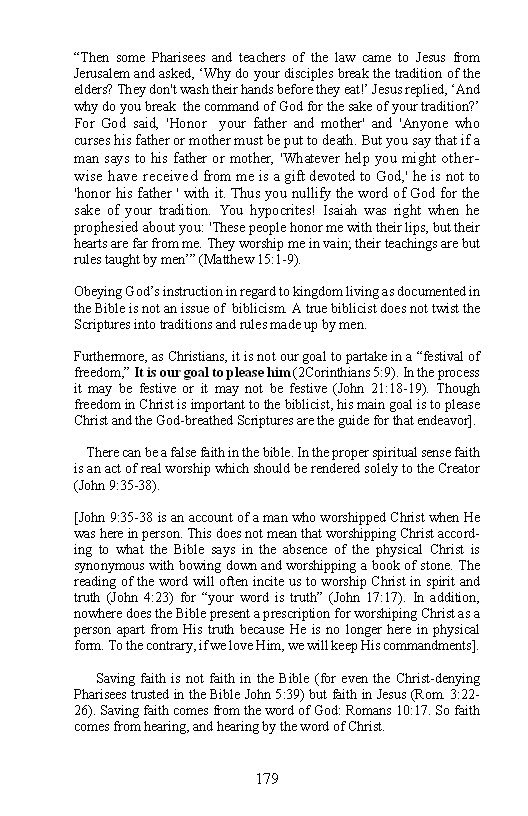
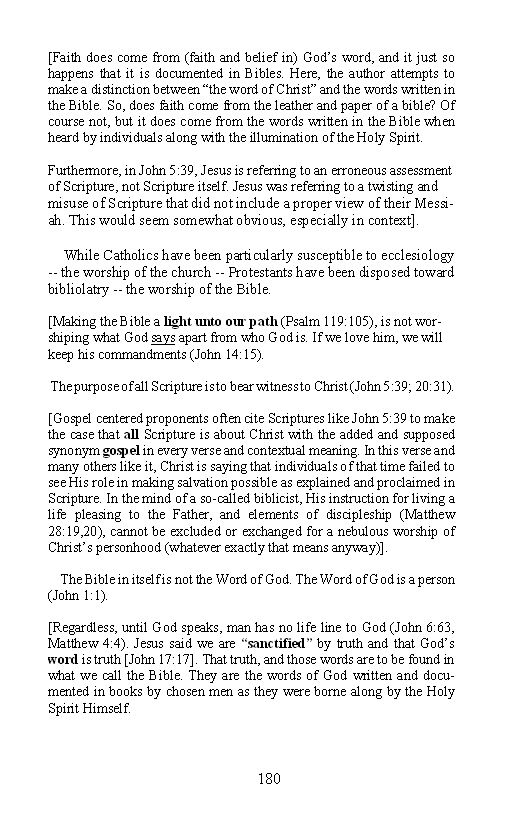
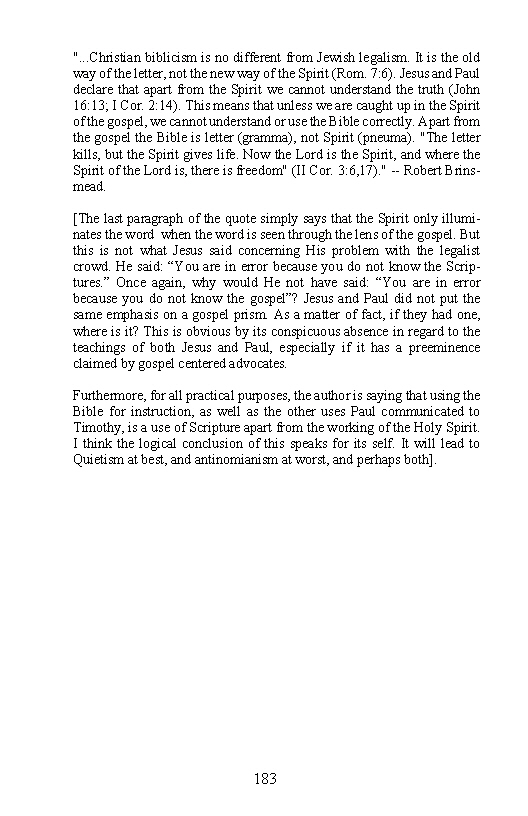
In the first segment, “Love And Faith,” Holland clearly shows this book’s kinship with the Australian Forum. I devote a whole chapter in my book, “Another Gospel” to Robert Brinsmead’s interpretive prism as taught by him and Paxton / Goldsworthy. Following this post, a full copy of that chapter can be viewed. On page 62, Holland describes faith as the “eye of the soul.” He then writes that Scripture is the lens used by faith and the Holy Spirit illuminates Scripture for one purpose and one purpose only: “Suddenly the Bible comes alive and we see Christ’s excellence, His splendor!” Hence, this is the EXACT position of the AF: the Bible’s only purpose is to obtain a deeper knowledge of the gospel, and the Holy Spirit will not illuminate anything else but that. Holland writes on page 63: “There must be a faith that engages with God’s Word on Jesus and estimates it to be the most important information in the world” [which then becomes the interpretive mode of operation].
Therefore, the Bible is for the purpose of plunging the depths of seeing the glory of Christ and nothing else. Any other information in the Bible that seems to be contrary to that thesis is descriptions of what Christ has done and should teach us more about Him instead of being an instruction book for a different “way to live.” All of the commands in the Bible are meant to show us what Christ has done for us already, and to humble us because we can’t keep all of them perfectly anyway. As I heard one pastor say from a pulpit about three months ago: “You can’t keep all of God’s law anyway, so don’t even try.” Pondering the volume of commands should also drive us to the foot of the cross and more dependence on Christ. Supposedly.
Therefore, the only logical conclusion is that obedience is a natural result of “Staring At The Son” (the actual title of chapter 5). But how do we know when we are committing the horrible sin of “obeying Jesus in our own efforts?” Well, because it will FEEL like it—that’s how you supposedly know, and Holland emphasizes that point throughout the rest of chapter 5. Throughout the book, Holland reiterates the same worn-out GS points made by Francis Chan (“When it’s love, it feels like love”), John Piper (“Beholding as a way of becoming” and joy is synonymous with faith), Paul David Trip (Christians are still spiritually dead), and Michael Horton (we only grow spiritually when we “revisit the gospel afresh”). The following is the chapter of my future book where the AF view of interpretation is dealt with—which is the same approach propagated by Holland:





 Paul's Passing Thoughts
leave a comment