The SBC is Shooting Innocent Wolves: is That a Good Thing?
 We Southern Baptists have our standards. I have been a Southern Baptist since 1983, and we are notorious for not confronting sin in our churches, unless the sin happens to be Calvinism. Leave? Why? It’s way too much fun admitting our hypocrisy at SBC gatherings and watching the veins swell-up in people’s necks.
So, apparently, there is a Calvinism controversy going on in the SBC. Southern Baptists are concerned about an “aggressive Calvinism” that is growing in the SBC. The latest episode where those rascally Calvinists got a learnin’ was the rejection of Pleasant Valley Community Church’s bid to become part of the Daviess-McLean Baptist Association. The Association voted 104-9 to deny membership because, “It affirms the doctrine of election and grace. While we know the doctrine is not heresy, we do recognize that it is vastly different than the majority of churches within the DMBA.”
This particular association also voted to separate from a church in the association due to some sort of compromise that was deemed to be a serious issue. Therefore, they have something right that is rare today; they understand that church discipline is a universal matter. There are situations where Matthew 18:15-20 needs to be carried out between churches and the fourth step is the breaking of Christian fellowship between those churches. Church A will no longer fellowship with church B—this sends a very powerful message. Point in case: member/spouse A files an unbiblical divorce on member/spouse B. Their church leaders will not deal with the problem, other than to “pray about it.” Spouse B goes to the leadership of another church in the association and pleads for help. The other church tells the couple’s church to deal with the problem or they will. This would be the first step of church discipline between churches, and though I get a lot of flak for this position, I stand by it and believe it is 100% biblical.
So kudos for DMBA—except for the fact that Pleasant Valley Community Church is innocent of being Calvinistic. I checked out their website; they are New Calvinists, NOT (old) Calvinists. Big difference. In fact, old Calvinists don’t even like New Calvinists. One well known Calvinist said of New Calvinism:
….a seriously distorted Calvinism falling far, far short of an authentic life of obedience to a sovereign God. If this kind of Calvinism prospers, then genuine biblical piety will be under attack as never before.
And….
The new Calvinism is not a resurgence but an entirely novel formula which strips the doctrine of its historic practice, and unites it with the world.
Yet another well known Calvinist said:
This movement runs contrary to the Reformation and the Scriptures. It is dangerous and must be exposed and halted.
So, if real Calvinists are saying, “Ya, they are like us in name only, but they are dangerous and don’t obey God,” wouldn’t it behoove SBC folk to learn what the difference is? If they won’t fellowship with the devil they do know, what about the devil they don’t know? Seems to me if you are going to break fellowship with people, you should know what they are really guilty of.
Per the usual, we Southern Baptists are the best at making idiots of ourselves even when we do the right thing. The DMBA said, “While we know the doctrine is not heresy, we do recognize that it is vastly different than the majority of churches within the DMBA.”
Ugh. First, Old Calvinism is NOT “VASTLY” different from Southern Baptist doctrine. I have NEVER heard a Southern Baptist pray for someone to save themselves. Southern Baptist are only Arminians when they are evangelizing. After they get someone saved; trust me, they believe God does it all! Southern Baptists have a lot to learn from Calvin on discipleship. Then the DMBA said, ”…. we know the doctrine is not heresy.” That’s true about Calvinism, BUT NOT Pleasant View! Pleasant View Community Church does in fact hold to a heretical doctrine—Old Calvinists even say so!
So, the SBC is shooting “wolves,” but not the ones that are eating the sheep. Is that ok? After all, a wolf is a wolf, right? No, I have a better idea. The SBC needs to unite with the real Calvinists that have been in the SBC forever (and have never caused a problem) to get rid of New Calvinism. In the process, we might learn something from them.
New Calvinism is the New Covenant Theology/Gospel Sanctification/Sonship Theology wolf in sheep’s clothing. They are not honest about who they are and deliberately hide behind the ignorance thereof. Um, DMBA, did you go to Pleasant View’s website? They say that they are a “Acts 29 church” (the church planting organization). Acts 29 came out of World Harvest which was founded by the father (Dr. John Miller) of Sonship Theology, a theology that has been banned in many Presbyterian churches (the church founded by Calvin). Also, ever heard of the Emergent Church, and their ties to Acts 29?
Please, please, my fellow Southern Baptists, get your head out of, um, er, uh, the sand.
paul
Robert Brinsmead’s Side of the Family Only Meets in the Desert
Why doesn’t Robert Brinsmead’s side of the family ever get invited to the big dances? You know, T4G and TGC. I know, I know, a little too close to the illegitimate Adventist children nobody knows about. But the Emergent Church side of the family gets invited to the big family reunions all the time! You know, Mark Driscol, Darren Patrick, etc. (Dr. John Miller’s chidren). And Geez, some of the Charismatic side of the family are keynote speakers! Yes, yes, I know, they are “Reformed Charismatics” (huh?), but hey, Robert Brinsmead was Reformed too! Not fair, just not fair.
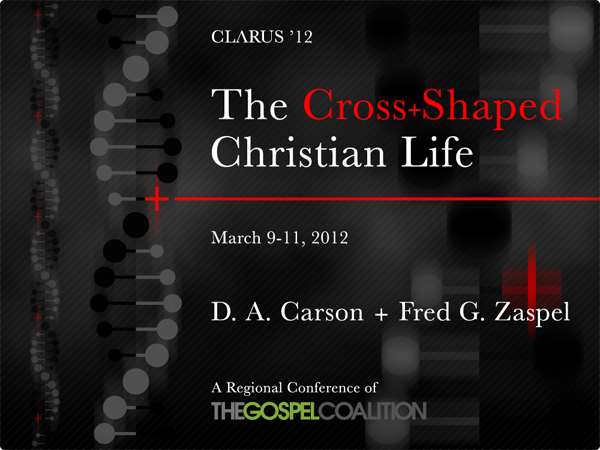
Well, bless DA Carson’s little heart—he is willing to party with Brinsmead’s side of the family now and then. Ya, out in the desert, but it’s a start. He will do a little reunion with Fred Zaspel at “Clarus 12” held annually at Desert Springs Church and sponsored by TGC.
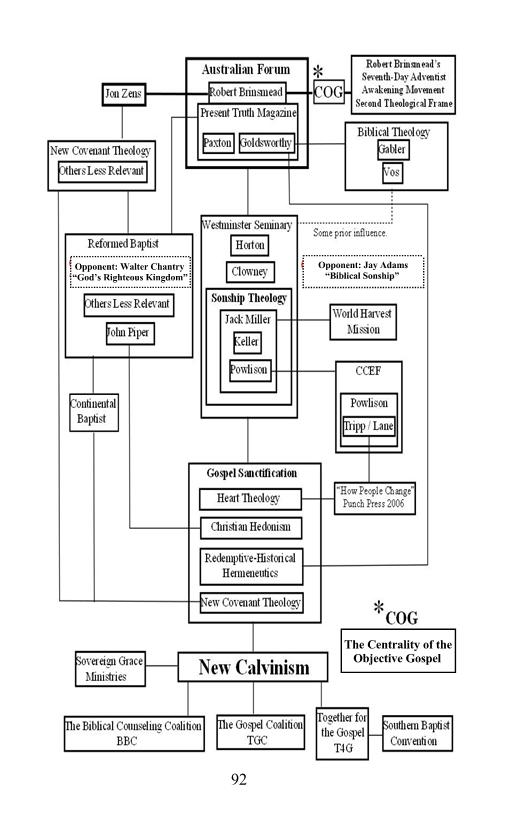
If you examine their family chart below, you only have Zaspel’s daddy, Jon Zens, between the New Covenant Theology clan (Zaspel would fall under “others less relevant” in the NCT box) and granddaddy Brinsmead’s Australian Forum. Jon Zens is known as the father of New Covenant Theology, and it is a well-documented fact that Brinsmead had a lot of input with Zens in the development of NCT. In 08, Carson did Clarus with Michael Horton and they discussed the Westminster offspring in a Q and A, but once again forgot to mention daddy Brinsmead. A shame.
NCT is the official position of New Calvinists but they won’t admit it due to the fact that Brinsmead and Zens concocted it. Brinsmead is now, as reported by many, an atheist, and Zens holds to Adventist-like beliefs. Though they put a good face on “all truth is God’s truth” they would rather not go there.
God’s people are not “ready” for that yet—the meeting and inclusion of all the family members.
paul
Interview With a New Calvinist: Part 5
Again, the purpose of this interview is education, not debate from the interviewer. But to accentuate the interview, I invite vigorous debate in the comment section. After his response here, I have decided to move on to the next topic.
Q: Me.
Responses in blue.
Italics are third-party references used in questions.
Continued from part 4. Q: I’m not so sure about that clarification. Let’s take a pure, unadulterated NC view of justification and see where you agree or disagree:
The Present, Continuous Nature of Justification; For all its strength, Reformed theology tends to relegate justification by faith to an initiatory action in the soteriological process. This is because it contends that the subjective (personal) justification of the believing sinner is a once-and-for-all, nonrepeatable act. Hence the relationship between justification and sanctification is seen as justification succeeded by sanctification. AGREED
And…Since the life of holiness is fueled and fired by justification by faith, sanctification must constantly return to justification. In other words, our sanctification is fueled/motivated by the grace of salvation. In a very technical sense, it is grace that precedes justification (i.e., the sovereign work of regeneration) that necessarily leads to justification, that brings us as Christians to the point of gratitude for grace. Regeneration is a monergistic act of the Holy Spirit where as justification is a synergistic act between God and man (i.e., God promises IF we believe, THEN we will be saved/justified). Traditionally, most classical “reformed” Christians have great difficulty labeling justification as synergistic, but that is because of the historical line of reasoning from Arminian and Pelagian forefathers.
Otherwise, the Christian cannot possibly escape arriving at a new self-righteousness. We cannot reach a point in sanctification where our fellowship with God does not rest completely on forgiveness of sins. Foundationally, yes. Exclusively, no. There are other motivating factors for a Christian, But they all coincide with a God/Christ centered motivation. The desire to be holy stems from a renewed heart’s love and passion to want to conform to the image of Christ, because of the gratitude for Christ, because of the joy found in glorifying Christ, his life, death and resurrection.
And…Christian existence is gospel existence. Sanctification is justification in action. Agreed.
[Q] Second part of this question: I’m not so sure evangelicals would say that, Any/all acts of obedience, we would say, are empowered alone by the Holy Spirit. “It is God who works in you, both to will and to act.” I am not an advocate of monergistic sanctification, so I hope I didn’t leave that impression. Classical Christianity understands sanctification as a synergistic act between God and man. God works in us, we work it out. The difference between “reformed” synergism and non-reformed synergism is that the former is understood as a sovereign-synergism and the latter, not.
That being said, when I/we say any/all acts of obedience are empowered alone by the Holy Spirit, we make reference to the monergistic act of the Holy Spirit whereby the bondage of our will has been liberated “alone” by the power of the Holy Spirit, and from then on out, the entirety of our obedience drives its ultimate “power” from the Holy Spirit. “What do you have that you have not been given, and if you have been given it, why do you boast as though you have not…For by him and through him and to him are all things. To God alone be the glory forever.”
[Q] Please distinguish this as opposed to sanctification by faith alone which evangelicals would reject out of hand. “Sanctification by faith alone…” does not mean we sit back and believe in some kind of fatalistic sanctification, that we just sit back and wait for God to, magically, “do everything.” SBFA is, as Martin Luther described it, an active/living faith. Utterly passive sanctification is agreeably just a fancy way of advocating antinomianism. SBFA simply means, we are sanctified, we are changed and made increasingly holy, as we trust God, at his word, trusting him by believing and obeying everything in his word, not just the verses that talk about believing in the life, death and resurrection of Christ. We trust him with all of our life by embracing and believing all of his word.
[Q] Third part of this question: How should we reconcile this with believers being described as “co-laborers with God” and the Holy Spirit being our “Helper.” To me, the reconciliation is very simple. We have paradoxical revelations in Scripture, both transcendent and imminent dealings with God and man. Both camps error when emphasizing one facet at the expense of the other (can you say Christological paradox? J). The difference between the two theological camps rests within the understanding that there is paradoxical revelations/teaching in Scripture that can lead one to believe that, transcendently, God does everything or imminently, God waits for man to accomplish anything.
[Q] Fourth: What’s you evaluation of the following statement:
Sanctification is cooperative. Agreed.
There are two partners involved in the work. I must work and God will work. Agreed.
If ever the extra-biblical maxim, “God helps those who help themselves,” had any truth, it is at this point. Again, this concept has validity so long as the balanced understanding of transcendence and imminence remains intact. Yes, God does draw near to those who draw near to him…If we abide in Christ, then he will abide in us…I believe in those contingent truths and promises like nobody’s business.
The point of departure from we what we would describe as evangelical orthodoxy stems from an autonomous understanding or practice of synergism, once the believer has been regenerate. The idea that once the HS has regenerated one’s life, somehow they are, for all practical purposes, autonomous, a sort of neo-deistic practice of the Christian life, that God has regenerated an individual and basically now, sits back for the rest of their spiritual life waiting to see what they will do with the regenerating life they have been given. This, we would say, is not how the Christian is to understand synergistic sanctification. That would be better defined as self-righteous self-betterment.
We are not called to sit back and let God do all the work. We are called to work, and to work hard. To work something out with fear and trembling is to work with devout and conscientious rigor. It is to work with care, with a profound concern with the end result. Agreed. We would simply qualify this as being motivated to chase after our sanctification via. the Christ centered-gospel motivation.
Sanctification is, undeniably, a synergistic process. God works concurrently with our human agency. However, theologically, there is a difference between “reformed” and “non-reformed” synergism and concurrence. For that reason, the previous entire statement can mean two different things to two different theological persuasions.
How Paul’s Passing Thoughts Came About
There is no doubt that much of my Christian life will be defined by my stand against New Calvinism. Not long after I became a Christian, my life was providentially moving toward the establishment of this ministry.
Saved in late 1983 in Dallas, Texas, and baptized in the Southern Baptist church in 1984, I began to see serious contradictions between God’s word and what was going on in church. My perception did not come from a limited view; in my early years as a Christian, I went to a major seminary and taught in various types of ministries.
In 1989, I moved back to my hometown in Dayton, Ohio with my family, and living the Christian life according to biblical generalities had taken its toll. In 1990, and by God’s providence, I was led to Clearcreek Chapel in Springboro, Ohio (a suburb of Dayton). Pastor John Street had implemented NANC (National Association of Nouthetic Counselors) counseling at the Chapel, and that counseling turned my life around. The Chapel also became a NANC counseling center for pastors. In 1994, I was asked to serve as an elder and accepted. I served as an elder for five years. At that time, elders were reconfirmed by a congregational vote every three years. I was confirmed by the congregation twice.
In 1997/98(?), “pastor” Russ Kennedy returned to the Chapel after leaving in controversy for a pastorate in Illinois. That was in the early 90’s, and he returned to the Chapel after (unknown to most at the Chapel) being dismissed from his post in Illinois. According to a family member and close friend of Kennedy, he was dismissed for plagiarizing a John Piper sermon. During the time of his return, DA Carson and Jerry Bridges were invited to speak at our church. I realize now that he was probably behind that. I was out of town when Carson spoke, but remember thinking that the following statement from Bridges was rather odd: “We must preach the gospel to ourselves every day.” Though I thought the statement was odd, I brushed it aside and thought no more of it. Little did I know how much that little phrase would one day change my life!
Russ Kennedy was considered for eldership in 1999. In preparation for a forum to consider his appointment, he produced a sixteen-page booklet that outlined his doctrinal beliefs and philosophy of ministry. It is now evident, twelve years later, that he had totally bought into Gospel Sanctification, Sonship Theology, and New Covenant Theology at that time. Reading the booklet presently, I can only shake my head in disbelief as I read what he stated on page six concerning sanctification: “I believe that every believer is sanctified (set apart) unto God by justification….” There it is: sanctification by justification—if it was a snake it would have bit me. He also stated that this sanctification is known as “progressive sanctification” which is the usual deceptive term used by New Calvinists to describe the unorthodox concept of progressive justification.
Kennedy was affirmed, and right away things started getting weird. In the first elder’s meeting he attended, I was immediately taken aback by his heavy-handed style of leadership. I had to insist that a softer approach be taken concerning a miscommunication between Chapel elders and some students we were supporting at Master’s Seminary; specifically, a phone call for clarification verses a formal letter of rebuke from the elders. Shortly thereafter, I stepped aside as an elder for personal reasons (1/10/1999), but continued to teach at the Chapel. During this same time, a group of men from Emmanuel Baptist church in Dayton, Ohio started showing up. Dale Evans, Chad Bresson, Greg Cook, and Tom Watkins. This also coincided with the announcement by John Street that he was leaving the Chapel for a ministry in California.
I am unaware of how Kennedy knew this group of men who came over from Emmanuel, but they were all of New Covenant Theology persuasion and followers of Chad Bresson. All of this group except for Watkins ended up being elders at the Chapel after John Street departed (2000). We should pause here and examine their mindset that set the table for events following. This is an excerpt from this ministry’s book, “The Truth About New Calvinism” page 131:
This whole Reformation motif was started by the Forum which taught that all doctrines either fall into the objective gospel or subjective experience. Subjective spirituality was supposedly spawned by Rome and resulted in a reversal of justification and sanctification. Therefore, the Reformers rediscovered the objective gospel which ignited the Reformation, and also taught that the job wasn’t done (semper reformanda), and you can imagine who contemporary New Calvinists think that duty has fallen to. This is all covered in chapter four along with documentation concerning the fact that John Piper, one of the “elder statesmen” of the New Calvinist movement agrees with that scenario. This us against them mentality was passed down from the Forum and blossoms in the movement to this very day. They are the children of the Reformers—we are Rome.
And this arrogance translates into a predominant characteristic of New Calvinism: heavy-handed leadership style. As far as New Calvinists are concerned, evangelicals have been leading people into hell for the past 100 years (their estimation of when semper reformanda was lost) and any interference with the “unadjusted gospel” will be dealt with—no holds barred.
And such was the case at Clearcreek Chapel. After John Street left, changes were swift and radical. Russ Kennedy was appointed to replace Street, but we were clueless as to what he really believed. The front doors of the Chapel had barely hit Street in the backside before a marked difference in the preaching was noticed. A friend of mine referred to it as “flyby preaching.” Many left the Chapel shortly thereafter because “things are getting weird,” but really didn’t know why. Eventually, even though the elder over adult education was part of the old guard and called on me to teach from time to time, I declined because of the open hostility towards my teachings from the Emmanuel crowd.
All in the same year: my mentor left; I stepped aside as an elder; stepped aside as a teacher; and found it difficult to wrap my mind around what was going on with the new leadership. I started investing more time at work and began traveling a lot, but still stayed connected to the Chapel body. In 2003, I began discussing a business partnership with two core members at the Chapel, Matt and Sheelah Beaver. About the same time, something strange happened. The aforementioned Greg Cook, who I never really related to well, and always felt uncomfortable around, offered to start meeting with me every Monday morning for breakfast to discuss business, and offer advice on being the sales manager for the company that was being formed by the Beavers and me. Not long after that, I started attending a Friday morning men’s fellowship, and upon my attendance, an elder by the name of Dan Turner also started attending. I began to notice a pattern—I was being monitored.
It is important to share this testimony about Clearcreek Chapel because it is typical of many New Calvinist churches and where they end up because of their mindset concerning semper reformanda. Frankly, they become cultish. In fact, as we shall see, Clearcreek Chapel possesses all eight points that constitute a cult by Cultwatch.com. The first point is Deception. Cultwatch says the following about the first point:
A cult needs to recruit and operate using deception. Why? Because if people knew their true practices and beliefs beforehand, then they would not join. A cult needs to hide the truth from you until they think you are ready to accept it.
New Calvinist leaders are not hasty to reveal to people that they believe the Reformation was about the “false gospel of the new birth” and that you are either with them or the Roman Catholics. Neither are they hasty to introduce their ministries as part of the original Reformation. It is clear that the Clearcreek elders spoon-fed the congregation over a number of years. When one member started raising questions about New Covenant Theology, a gag order was placed on him and he was told by elder Chad Bresson that NCT would be taught when the members “were ready.”
The second point is Exclusiveness. This speaks for itself. To say that New Calvinists believe they have an exclusive doctrine would be a gargantuan understatement. This mindset is fertile ground for cultism.
A third point described by Cultwatch is a Reporting Structure. The Chapel clearly had a reporting/monitoring structure—primarily through the elders, and I assume they still do. The Chapel has three times the number of elders that is prescribed by church consulting groups for a church their size. When I was a member there—it was clear that elders were used to monitor the congregation.
In 2004, I parted ways with the Beavers; they took the retail part of the company, and I took the service part and started my own company. That was the agreement. The separation was overseen by Greg Cook and all parties agreed to it. In 2006, I began redoubling my efforts to become closer to the Clearcreek Chapel “family.” I had a large tolerance for the ongoing weirdness; it’s the only church my children knew, my daughter and son-in-law were married by Russ Kennedy, and after twenty years of membership, all of the “friends” that I had were there.
That’s when the problems started. Questions I was asking in Sunday School couldn’t be answered. The first problem was that the Chapel elders were asking long time core members to teach their doctrine when the members had no idea what they were teaching. They were given the material and told to merely read through it. One or two elders would then be assigned to that class to monitor the outcome. This was obviously done to give the doctrine credibility with the Chapel members. At least one parishioner resented being used in that way and told me so (Terri Engle). The problems started for me in a class where Greg Simmons was “co-teaching” a class with elder Mark Schindler. It became obvious that Simmons had no idea what he was teaching, and frankly, I didn’t either.
Another individual in the class was also asking difficult questions. He was telephoned by elder Chad Bresson and put under a gag order. I was called into a meeting with two elders (Devon Berry and Mark Schindler) and told that members were concerned about the questions I was asking. I pointed out that Matthew 18 was being ignored and that if those individuals had a problem with me, they needed to come to me “alone.” The response was: “They don’t have a problem with you, they are just ‘concerned.’” To this day, I contend that there was no “they” because several members were thanking me for the questions I was asking because, “I don’t know enough about theology to even know how to ask the questions I want to ask.”
The elders were beginning to lose credibility, so core members were removed and replaced with elders; and that didn’t go any better—now several other people were asking difficult questions. Then all of the Sunday Schools were combined into the auditorium to be taught by the big gun—Russ Kennedy. That didn’t go well either. The whole situation was becoming a comedy of confusion. Then one night, while relaxing in my living room, there was a knock on the door. When I answered, I was surprised to see three elders standing at my door, Mark Schindler, Greg Cook, and Devon Berry. They had inappropriately prearranged the meeting with my wife for obvious shock and awe effect (element of surprise by coming unannounced—plus three of them which is very unusual). Surprisingly, the meeting was not about doctrinal issues, but a “concern” for the difficulties I was having with my company. However, Mark Schindler had the audacity to suggest that I not be concerned about doctrinal issues “for at least two years.” I remember thinking, “That should give you enough time to assimilate the doctrine (whatever it is) into the minds of our people.” What was going on was completely obvious. This brings me to another Cultwatch element, Intimidation. This meeting was designed to intimidate, and several members who thanked me for asking questions would do so stealthily—wanting to encourage me to do so while being too fearful of the Chapel elders to do so themselves. The climate of fear at the Chapel was evident.
There were several of these kinds of meetings in the months following. During that time, the Chapel elders offered to pay for my CE in fire inspection—I declined for obvious reasons. By December 2007, I still had very little idea what these guys were teaching. My best guess was that they were enamored by New Covenant Theology, Christian Hedonism, Heart Theology, and Redemptive-Historical hermeneutics, and were trying to devise their own system that unified these theologies into a consistent system. However, unknown to me at the time, that was already a done deal—they were propagating a prepackaged system that had already accomplished that. Whether you want to call it the centrality of the objective gospel, Sonship Theology, or New Covenant Theology, that was their package. I submitted my letter to the elders in December of 2007 and departed with my family. We began to attend Grace Covenant Church in Beavercreek, Ohio. The church is pastored by a former associate pastor of the Chapel, Rick Wilson.
After my departure, and apparently due to being called on it previously, Mark Schindler and Devon Berry called and asked for a prearranged meeting with me. However, Schindler lied about the purpose of the meeting. When they arrived, and much to my surprise, they announced that they were putting me under the “first step of church discipline.” Already upset about leaving my church family of twenty years, this turn of events stunned and confused me. I collected my thoughts enough to ask for specifics. Four reasons were given: 1. Sewing discord among the brethren. 2. Worldly sorrow 3. Slothfulness 4. Walking in darkness. I thought number three to be interesting because I knew I had a reputation at the Chapel for being too focused on work. When I asked for clarification on number three, Schindler corrected Berry and said that wasn’t one of the reasons, so these two elders were not even on the same page regarding the purpose of the discipline. I asked for time to consider whether or not I would submit to the discipline, and such was granted, but I also knew what would happen if I refused to submit regardless of the fact that I had already submitted a letter of departure.
The next day I contacted Rick Wilson. He didn’t know what to make of the situation. However, a former elder from the Chapel suggested that the situation was driven by Russ Kennedy reliving visions of Illinois. Rick Wilson’s counsel was probably apt for the moment; the best I can remember: “Look Paul, you have been there twenty years. Go back and take their concerns seriously, and then take your family and leave in peace.” That’s what I did, but if I didn’t do anything else correctly, I was smart about one thing: I insisted that they put the reasons for the church discipline in writing. This took about two weeks of my insistence because it was evident that they did not want to do this. When I finally got the letter, two reasons were stated. 1. Love your wife according to Ephesians chapter five. 2. Find a different job. They refused to put any of the initial four reasons in writing. When I finally got the letter, I met with Rick Wilson at a Cracker Barrel restaurant, his treat, and he was completely perplexed by the letter and didn’t know how to respond.
I returned to address the issues, but in every meeting with the elders, NEW ISSUES were introduced. The whole situation became very confusing. Two months later, I announced to the elders that I was leaving the discipline. I was sternly warned that I would be excommunicated and declared an unbeliever before the congregation. I later found out that controlling a person in any way via threat of personal loss, including reputation, was a felony listed as Coercion under Ohio kidnapping laws. Another month later, it became evident that I was going to have to embrace their doctrine before I was released from the church discipline. That’s why New Calvinists call it “redemptive church discipline.” The goal is not to correct behavior, but to bring the individual into a “redemptive understanding of sanctification.” Hence, all of my meetings with the elders were break sessions attempting to use what I call “law negative” in The Truth About New Calvinism to show me that it is impossible for a Christian to keep the law in our “own efforts.” In fact, to attempt to do so in sanctification is an attempt to duplicate the fruits of justification; so for all practical purposes, justification by works. That’s why the elders continued to bring up more and more issues in our meetings while I was under their church discipline. As I saw my failures and a second step of church discipline looming on the horizon, I was supposed to break down and cry out, “I cannot keep it—someone must keep the law for me!” I cite New Calvinist Bill Baldwin in the book to illustrate this twisted reality concerning New Calvinism. This also explains why Mark Schindler was baptized again shortly after John Street left. Apparently, he repented, leaving Rome and joining semper reformanda.
Meanwhile, my missionary son-in-law and daughter came back on furlough from Puerto Rico and become intimately involved in the situation. Upon his counsel and the counsel of other pastors, I walked away from the discipline and took my family to Rick Wilson’s church. Shortly thereafter, Berry and Schindler came to my house on a Saturday evening and warned me not to leave. I in turn warned them that God would judge all things in the end. The next morning I was excommunicated before the congregation and declared an unbeliever. No reasons were given; the congregation was left to their own imaginations. Many who I had ministered to in the past simply assumed that I had committed adultery against Shirley and was unrepentant. In fact, a member of the Chapel recently told an acquaintance of mine that they were told such accordingly. In a meeting with myself, Mark Schindler, and Rick Wilson, Schindler pathetically denied that deliberate form of slander by saying that the elders mentioned in their statement to the congregation that I disagreed with the discipline. No kidding? I bet they were surprised to hear that! Adulterers rarely agree with church discipline. No?
Upon arrival at Grace Covenant with my family, Shirley and I entered marriage counseling with pastor Wilson. In our first counseling session, Wilson asked Shirley what it would look like for me to repent of the reasons I was brought up on church discipline. She didn’t know. In fact, she said she wasn’t sure why I was brought up on discipline. During this time, and unknown to me or Wilson, the Clearcreek elders privately submitted a six-page resolution to my wife commanding her to return to the Chapel without me. The statement painstakingly documented all of my sins against Shirley, which excluded verbal accusations they were making to Chapel parishioners at home Bible studies. The document also gave her the green light to divorce me based on three biblical abandonment principles of not supplying need: love; sex; financial needs. A copious note written by Shirley on the document is telling: “Is it still abandonment if 3, or 2 of the 3 are provided?” Also, I submitted full financial disclosure to Wilson which he also forwarded to the Chapel elders. I found the document in Shirley’s Bible. It also included a promise of a job, financing of a divorce attorney, and housing. Had Wilson been copied on the document, it could have been used to address specific issues in our counseling, but the document was given to Shirley in secret. They also stated to Shirley in the document that I had no authority over her because I had been declared an unbeliever by the Clearcreek elders. According them, they were the ones who had the authority in her life, and they were instructing her to return to the Chapel. At that same time, they instructed parishioners to barrage Shirley with cards and letters. Cultwatch calls this technique, Love Bombing.
During that time, I began receiving emails from a Clearcreek parishioner. Here are some excerpts:
So what ended up happening, is all these clues started to add up. The major one was how they responded to your being “given the boot” so to speak… I was there when they first announced it in service, and later on, in flock when Dan brought it up “in order to allay [or prevent…] our questions and concerns”. You probably already know basically what we were told- not to visit your website, not to engage debate with you- to trust our elders who knew so much more than we did from having spent so much time “in” the situation. And shortly after that, was when they implemented the security measures, in a not-so-concealed and vague way, they certainly implied you or someone on your behalf may pose a serious threat. I of course went to search out the website immediately, I’m sorry but even the apostle Paul encouraged the church to search the Scriptures for themselves- to my knowledge he never demands our unconditional trust of himself, or anyone but the Lord.
The website that the parishioner is speaking of is a website constructed by my son-in-law to confront the Clearcreek congregation for breaking up our family. The website, eldersresolution.org contains substantial documentation for purposes of ascertaining the truth in the situation. But the parishioner’s testimony is also indicative of two more points by Cultwatch: Relationship Control and Information Control. Regarding the first, Cultwatch says, “Beware of a group that tells you who you can and cannot see.” Regarding information control, Cultwatch states, “If you are instructed by a group not to read information critical of the group, then that is a sign of a cult.”
Regarding the motives of the Chapel elders, this email was interesting:
Even after this, I continued to attend Clearcreek. But more questions arose, especially concerning church discipline. More and more it seemed they selected the ppl for discipline, while others were left alone. I am a prime example. I realize they don’t have the resources to follow everyone around, but I was even living with my [boyfriend/girlfriend (info withheld to protect identity of parishioner)] at one point and [name of elder withheld to protect identity of parishioner] just eventually quit talking to me- though my membership remains and I was never brought up on any “charges”. I’d been in counseling for much of the entire time I attended. There are more strange happenings, but I won’t get into all of it.
The above was going on while I was literally being held hostage at the Chapel under a bogus church discipline. The Chapel elders severely overestimated the congregations ability to think for themselves or to take a stand. They should have just let it all go. But they continued to try to cover bad decisions with more bad decisions. And as time goes on, they are telling more lies to try to cover for prior lies.
Though these events are tragic, I can now see where they have equipped me to contend against this false doctrine. My story is by no means isolated or unique. I think Clearcreek Chapel is typical of the kind of ministries that are being spawned by New Calvinism. In fact, I know it is. This has given me the drive necessary to research this doctrine in order to learn more and more about it and warn others. And to earnestly contend for the faith once delivered to the saints. Because only truth sanctifies (John 17:17).
paul

 Paul's Passing Thoughts
12 comments