

Clearcreek Chapel’s “All in the Family”
 “I gathered up jewels that others here and there had mined, and just put it together in a way that seemed clear and important to me. If I could, it would be easier to reply that I had copied the package from somewhere in particular, but I am not able to do that. What I was on about impacted others and sharpened others up – like Paxton and Goldsworthy – and Jons [as confirmed later: Jon Zens] and a guy called Edward Fudge and others along the way.” ~ Robert Brinsmead
Clearcreek Chapel in Springboro, Ohio is a good representation of the kinship between all of the elements in our genealogy chart ( http://wp.me/pmd7S-K7 ). One of the joys of this ministry is reconnecting family members with long-lost relatives. It is intriguing to see how remnants of the genealogy chart are all gathered at the bottom—thirty-something years later, but with family members like Robert Brinsmead and Jon Zens (the original patriarchs) missing. Heartbreaking.
Not only that, credit is not being given where credit is due; for example, Jack Miller’s Sonship Theology, which pumped new life into the centrality of the objective gospel (aka Gospel Sanctification and New Covenant Theology) after it received a brutal beating from Walter Chantry and others on the left side of the chart, is never mentioned at T4G, TGC, and SGM gatherings, even though the primary disciples of Jack Miller (Tim Keller and David Powlison) are major players in those movements. Could it be because the Sonship label was shot full of holes by Jay Adams and Chad Van Dixhoorn on the right side of the chart? It would really do my heart good to see the Sonship label proudly displayed at the 2012 T4G. I mean, we’re talking family here.
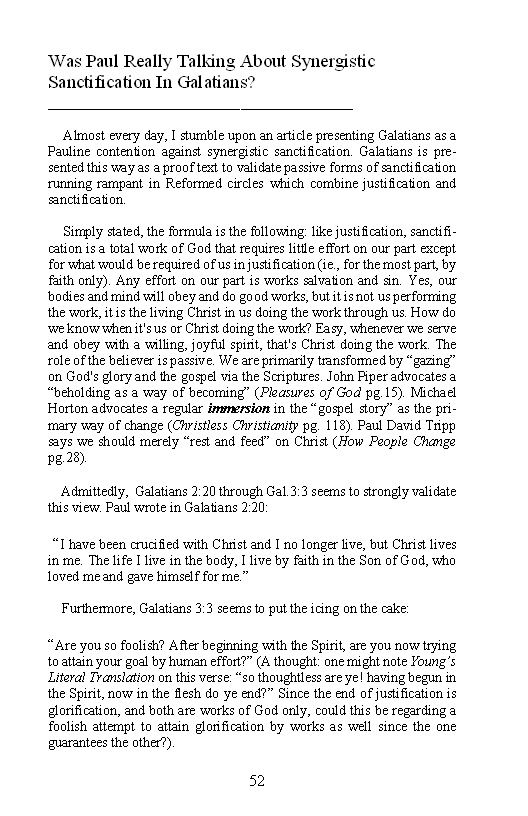
Though I will be writing about many of these bottom-of-the chart family reunions, Clearcreek Chapel is an excellent specimen. The “elder” in charge of their “adult education” is Christian radio personality Chad Bresson, who authors a blog dedicated to Geerhardus Vos. Bresson is a member of the Earth Stove Society which promotes New Covenant Theology. Bresson has recently posted a lengthy article on eighty elements of New Covenant Theology followed by four articles on the writings of Graeme Goldsworthy. Also, a post by Bresson that articulates how New Calvinists interpret the Bible using a lengthy excerpt from the writings of Robert Brinsmead drew a lot of heat from some readers: http://goo.gl/qbeS4 .
Bresson was a recent speaker at the John Bunyan Convention which is a yearly conference that fictitiously uses the name of Bunyan to promote New Covenant Theology (NCT). This year’s conference included two primary figures of NCT, Fred Zaspel and John Reisinger. The conference was held at Reformed Baptist Church in Lewisburg, PA and I have not ascertained whether or not it is a Continental Baptist church which are a small fellowship of NCT churches that split from Reformed Baptist circles over the NCT issue. The debate that fueled the split was primarily between the father of NCT, Jon Zens, and Walter Chantry. Reformed Baptist protestants staunchly proclaimed NCT to be Antinomianism and were not the least bit apologetic about the accusation. Jon Zens is now in the background, probably because of his close association with the likable, but controversial Robert Brinsmead.
While Bresson shows Clearcreek’s kinship with Jon Zens, Brinsmead, and Goldsworthy, the Chapel leadership as a group focuses heavily on David Powlison’s Theology of the Heart ( http://goo.gl/8UnBe ) and John Piper’s Christian Hedonism. In fact, the pastor of Clearcreek is a well known rabid follower of John Piper. It is my understanding that Piper’s Christian Hedonism is presented yearly in the adult Sunday school class. Paul David Tripp is a frequent speaker there and the Chapel was one of the pilot churches that “tested” Tripp’s book How People Change, which is based on Powlison’s Dynamics of Biblical Change.
The common thread that ties all of the family members together is the Australian Forum’s centrality of the objective gospel (COG). This core thread (COG) was primarily developed by Brinsmead and Zens. Though it includes what Brinsmead describes (in our interview) as a collection of jewels, there is no doubt that Brinsmead and Zens formulated the basic systematic theology that makes its present-day life possible. In regard to any such system prior to the Forum, Brinsmead stated: “I gathered up jewels that others here and there had mined, and just put it together in a way that seemed clear and important to me. If I could, it would be easier to reply that I had copied the package from somewhere in particular, but I am not able to do that. What I was on about impacted others and sharpened others up – like Paxton and Goldsworthy – and Jons [as confirmed later: Jon Zens] and a guy called Edward Fudge and others along the way.”
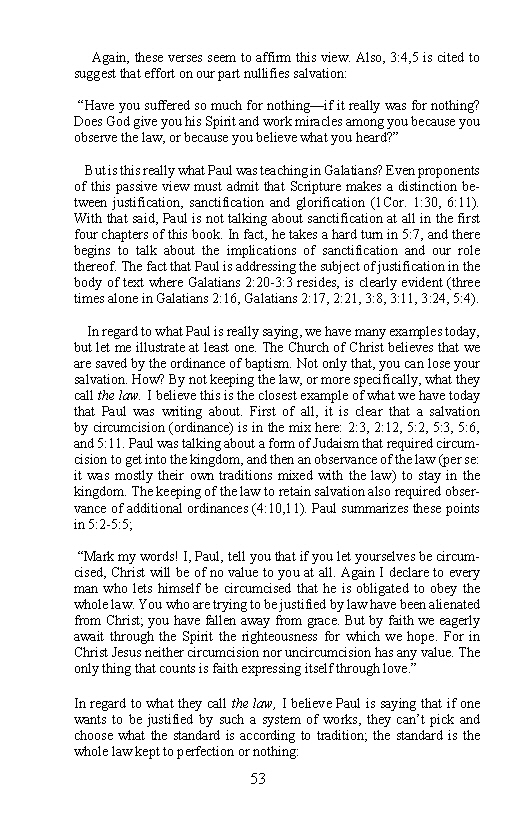
COG states that all spiritual growth comes from contemplating the gospel outside of us. Any truth that is placed in the same priority at any given time is said to eclipse Christ. Inside considerations (the inner us [subjective]) would be included, which relegates the new birth to a position of insignificance—paving the way for the total depravity of the saints, “The same gospel that saved you also sanctifies you,” and “we must preach the gospel to ourselves everyday” (coined by Jack Miller and aped excessively by Jerry Bridges). As this foundational thread (system) has weaved through contemporary church history, it has been endowed with an explanation of how it is experienced (Christian Hedonism); how it applies to life (Heart Theology); its view of covenants (New Covenant Theology); and an interpretive model that enables outcomes that fit together logically (The Goldsworthy Trilogy [research on how the Dutch Reformed movement and Vos may have influenced Goldsworty is still pending]).
In an introduction to a Christian Hedonism class at Clearcreek Chapel, Chad Bresson said, “This is what makes us unique.” While one wonders why the goal is to be unique, we all can agree that it’s family that makes it all so special.
paul
The Significance of Kevin DeYoung’s Top Ten
“However, it is my hope that [DeYoung] will realize that as we grow spiritually using everything in our ‘sanctification tool belt,’ that we become increasingly aware of what we have been saved from, and hence, a deeper appreciation of our original salvation.”
“One can only pray that DeYoung will free himself completely from the insanity that creates such questions.”
“Whenever New Calvinist followers feel guilty, they don’t check their Holy Spirit tool belt; they are rather taught to contemplate the gospel that saved them.”
Kevin DeYoung, hereafter, “Special K” (SK), recently wrote a third post
( http://shar.es/HeU1Q ) clarifying his position on sanctification. SK wrote a prior post
( http://shar.es/HeU3w ) which was a capitulation to Tullian Tchividjian who responded to his first post on the same subject. In the second post, SK listed ten interpretive questions that he is considering while on a sabbatical for the purpose of writing a book on sanctification. The significance of these ten questions should not be missed. Those ten questions strike at the heart of New Calvinism, and it would seem that in light of his latest post, he has answered those questions in a way that is not favorable to New Calvinism. In fact, it almost seems like the latest post is in your face when compared to his response to Tchividjian’s “pushback” regarding his first post which only hinted of orthodoxy to begin with. The significance of these ten questions is the following:
1. Can the justified believer please God with his obedience?
SK didn’t pull these questions out of the clouds. This question has to be asked because New Calvinist (NC) teach that God cannot be anymore pleased with us than He already is in Jesus Christ (that’s true in regard to justification). The “justified” believer, as opposed to simply, “believer” is not worded that way for no reason. Supposedly, to admit that there is something we can do to please God as believers is to take away from the sufficiency of Christ’s atonement. Also, remember that the core beliefs of New Calvinism came from the Australian Forum, and their doctrine is primarily driven by the centrality of the objective gospel. In other words, the gospel is something outside of us, not inside (subjective). Inside considerations (like anything we would do [subjective]) cannot “eclipse” anything Christ has done (note: Rick Holland’s “Uneclipsing The Son” will soon be available for purchase).
2. Is the justified believer displeasing to God in some way when he sins?
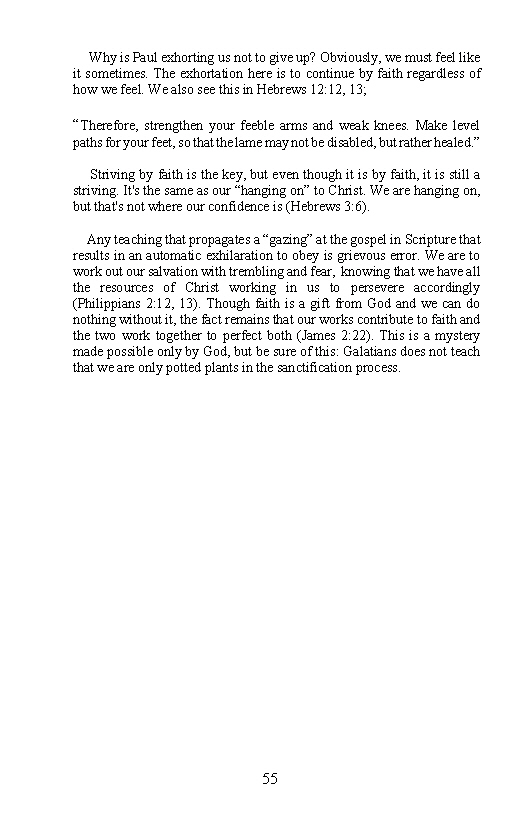
This question is simply the other side of number one. New Calvinist teach that God cannot be displeased with us anymore than he can be displeased with Christ, and for the same reasons that we cannot do anything to gain more favor with God than we already have in Christ. Again, it’s not about us (subjective) and how the supposed displeasure of God would make us feel (subjective). SK seems to have answered this question for himself in the third post: “But God also motivates us by a sense of duty, by gratitude, by threats, by promises, and by the fear of the Lord.” And by the way, to NC, this statement is barely less than blaspheme.
3. Is unbelief the root of every sin? Or is it pride? Or idolatry? Should we even both
trying to find a root sin?
Obviously, SK is questioning one of the four major tenets of NC: Theology of the Heart. This theology was added to NC via Sonship Theology and David Powlison’s Dynamics of Biblical Change which was articulated in Paul Tripp’s “How People Change”
What Jonah knew and believed about God is what caused him to rebel. He knew God was a merciful God and would probably save the Ninevites, whom Jonah hated. That’s why he didn’t want to go there. In Jonah’s case, it was attitude, bad thinking, and a refusal to obey, not unbelief. It is evident in the book that Jonah had tremendous faith in God. But NC must make all issues in sanctification the same as justification which is primarily by faith only; so, it stands to reason that they have to make all sin issues in sanctification a belief issue. The NC position on this question is no better defended than in Tripp’s book. SK needs to read “How People Change” followed by the Donn Arms book review of HPC ( http://wp.me/pmd7S-EC ).
4. How are justification and sanctification related?
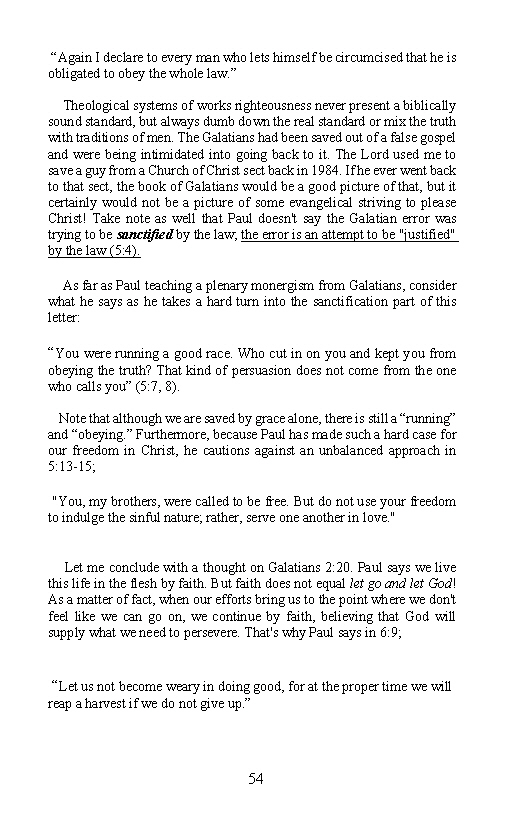
I think this question is now rightly, for the most part, answered by SK’s third post. I only take exception to a few statements thereof, but here is one: “Are we sanctified by remembering our justification? Yes.” SK is saying that contemplating our justification is still a viable way to grow spiritually, but he is presenting it as another tool “in our tool belt” rather than the only discipline from which all other duties flow (Dr. Peter Masters’ contention regarding Piper). However, it is my hope that SK will realize that as we grow spiritually using everything in our sanctification tool belt, that we become increasingly aware of what we have been saved from, and hence, a deeper appreciation of our original salvation.
5. Can we obey God?
This speaks to the NC doctrine of the total depravity of the saints. Again, most definitely, this originated with the Australian Forum who denied the new birth, or being born again. Michael Horton also denies the significance of the new birth and takes his cue from the Forum on that issue.
6. Can we feel confident about our obedience, not in a justifying way but that we
have done as we were commanded?
This clearly speaks to the NC belief that obedience in sanctification is synonymous with an attempt to be justified. Hence, asked another way: “Is the totally depraved believer really able to obey and know that it is legitimate obedience that pleases God?” One can only pray that DeYoung will free himself completely from the insanity that creates such questions.
7. How does Scripture motivate us to obedience?
By describing the tools in our tool belt, not the NC belief that the Bible is only a tool for contemplating the gospel.
8. Are most Christians too hard on themselves (thinking they are filthy scum when
they actually walk with the Lord in a way that pleases him)?
No Kevin. Many Christians are walking in violation of their conscience because of what New Calvinism teaches. Whenever New Calvinist followers feel guilty, they don’t check their Holy Spirit tool belt, they are rather taught to contemplate the gospel that saved them. My brother—please flee—perhaps there is not too much blood on your hands.
9. Or are most Christians too easy on themselves (thinking nothing of holiness
and content with little progress in godliness)?
Of course they are! They are taught that they cannot be a part of the progress!
10. What is the role of union with Christ in sanctification? And how do union with
Christ and sanctification relate to justification?
It’s the antithesis of the Forum’s view that formed New Calvinism: “The centrality of the objective gospel.”
paul





 Paul's Passing Thoughts
2 comments