A Big Fat Lie: “Tripp Has Taken Powlison’s DBC Too Far”
 No one is better than David Powlison for throwing people under the bus. He will throw you under it, and in some cases, continue to run you over: first forward, then backing up and running you over again. Strangely, he will then publicize (either in print or publicly) his reasons for running you over while flavoring the reasons with compliments—if you’re elderly, apparently, the younger suffer full traction without compliments.
Larry Crabb has suffered Powlison’s wrath since the early 90’s for not being nuanced enough. Supposedly, Crabb and he never agreed on anything, and of course, Powlison was dismayed by Crabb’s book, “Inside Out” which claimed that Evangelicals denied an “inside life,” and all truth is God’s truth. Crabb also said in IO that the church needed Freud’s wisdom to figure it all out. Powlison has no patience for that kind of honesty: you’re supposed to accuse them of denying that the heart has to change first and refer to truth as stuff in the Bible that the church forgets about. When rediscovered—you never, never, admit that God showed it to guys like Freud; instead, you cite really, really old Catholic bishops.
Apparently, Powlison now finds himself in the same dilemma with Paul Tripp who articulated his “Dynamics of Biblical Change” in a book authored by Tripp and Timothy Lane entitled, “How People Change.” Tripp plainly states in the book, among other things, that Christians remain spiritually dead, and passive endeavors such as changing our thinking to that of Christ is a denial of the gospel. Hence, I heard the rumor again last weekend: “Paul Tripp has taken DBC farther than Powlison intended.” Anybody smell diesel fuel?
However, the rumor must be working because Tripp and Powlison will be sitting on the new board of the Biblical Counseling Coalition together where they can once again giggle (because undoubtedly, the rest of the board thinks they’re orthodox), pass notes to each other, and sip lattés while cursing Moses under their breath. Only problem is—it’s a lie. I went ahead and copied documents for comparison purposes: things Tripp and Powlison wrote together at CCEF that can be compared to “How People Change.” It’s all the same stuff—stuff that the church has forgotten, but now interpreted in its “socio-historical context.” The information is almost identical, and was easily gathered in cursory fashion. It should be self explanatory, but I can produce more information if necessary.
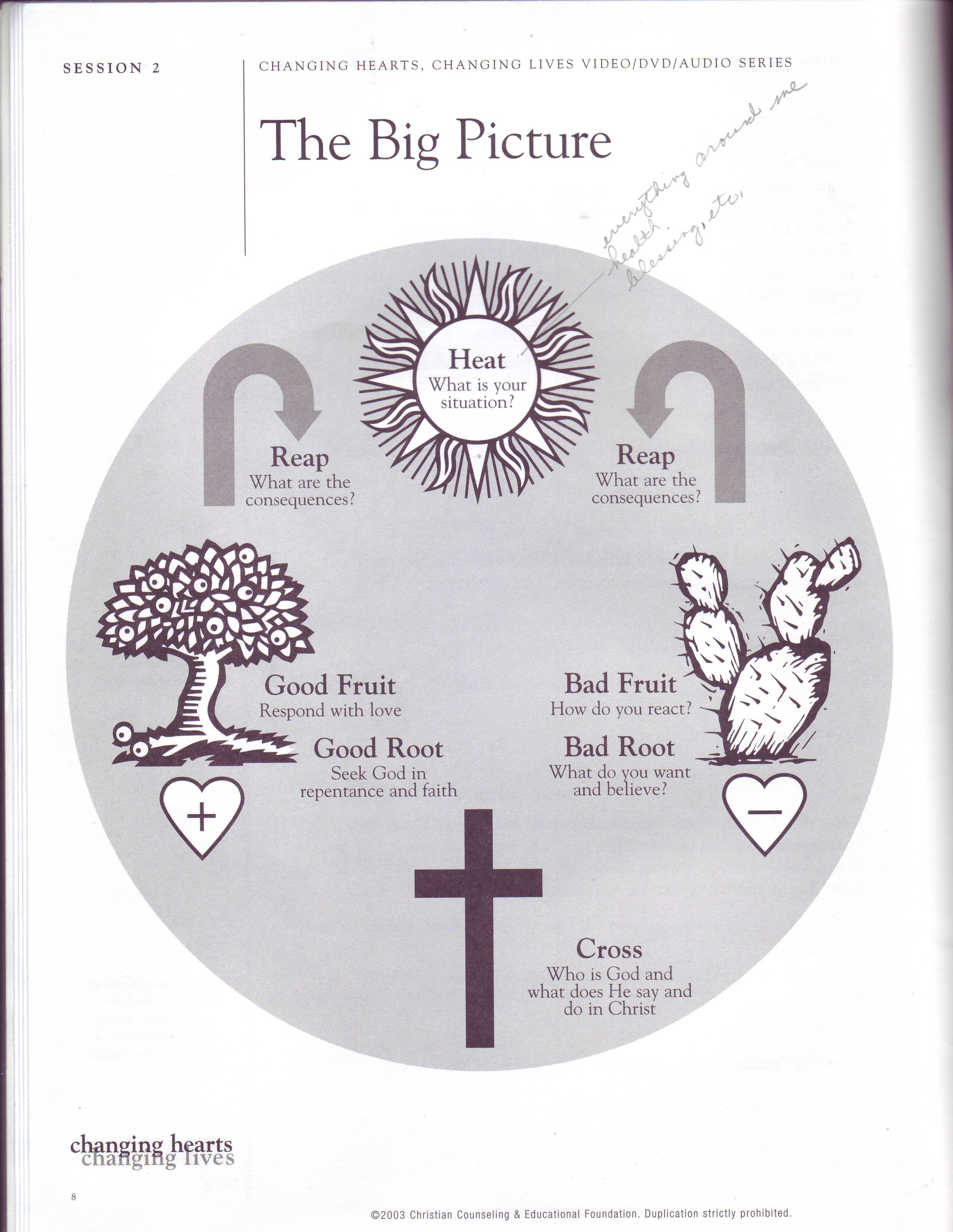
Written by Tripp and Powlison in 2003:
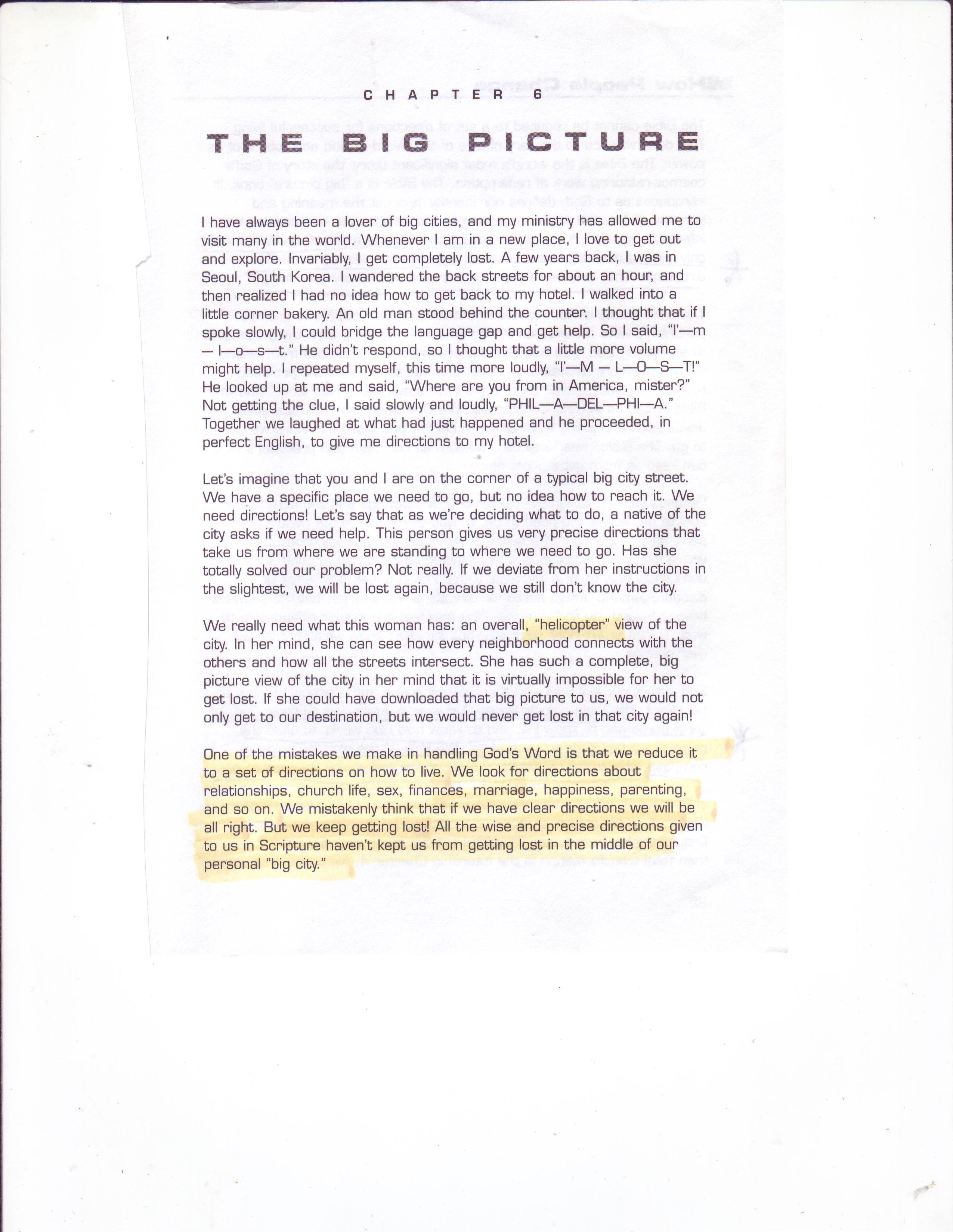
“How people Change,” Paul Tripp, 2006:


CCEF’s pilot / test program prior to the release of Tripp’s “How People Change”:


Tripp’s “How People Change” 2006:

Written by Powlison in CCEF’s Journal of Biblical Counseling:

Tripp’s “How People Change” 2006:

TGC Part 19: Michael Horton Drama, “Decrying Peter at the White Horse Inn”
Read 2Peter, chapter one, and compare that with what Horton and the others at the White Horse Inn are saying about assurance. Regardless of how unspiritual it sounds to us in this antinomian, hyper-grace day we live in, Peter, via the Holy Spirit, clearly says that we make our calling and election “sure” by adding a number of spiritual disciplines and virtues to our lives. And by the way: “the gospel” is not one of them. And by the way: Peter is telling us to live by a LIST. Get over it; grace is not an excuse for spiritual laziness. Also note Horton’s statement that blatantly contradicts Hebrews 10:24, 25 regarding purposes for community worship.
TGC Part 17: Michael Horton Drama, “The Dance”
In this clip, Horton dances around what he really believes about the relationship between justification and sanctification. He makes reference to those pesky evangelicals who “collapse justification into sanctification.” Huh? Dr. Horton, please just tell the truth and say that you believe they are both the same. And by the way, nobody can dance with theological terms like you can.
TGC Part 16: Michael Horton Drama, “Evangelical Heretics”
In this clip, Horton clearly says that Christians should merely “sit down and receive” [only]. He also employs the usual GS technique for devaluing biblical imperatives by referring to them as do’s and dont’s, living by lists, etc. You can refer to the every word that comes from the mouth of God that we live by (Matthew 4:4) in that way; it’s just not advisable to do so. Horton also uses the GS tactic of comparing orthodox evangelicals to Joel Osteen and pop-psychology. And Dr. Horton, by the way: the only fog creeping through Christianity is your Sonship theology.
“The ‘Gospel’ Coalition” Series, Part 15: How Does GS / Sonship Work?
Once you bring people to the point where they can wrap their brain around GS, inevitably, this question follows with an incredulous expression on their faces: “How does this supposedly work in real life?” I have developed a visible chart following this post that will hopefully aid in understanding
Remember, GS / Sonship is sanctification by salvation / justification, so, like salvation, you can only implement belief and repentance to effect sanctification. Therefore, under “Gospel Narrative,” you have the “Belief” and “Repentance” circles. If sanctification is by salvation, then the Bible only addresses justification. Hence, at the top of the chart we have the “Gospel Narrative” circle. The Bible, or gospel narrative, helps us with all of the other circles. In fact, in their view, the Bible could actually be organized according to these circles. Paul Tripp has a similar chart in “How People Change.” It’s just a different way to explain the same thing, except I go beyond his primary “change” thesis and implement some of the theology as well. In chapter 6, Tripp explains this GS “big picture” hermeneutic. He specifically states in chapter six that the whole Bible can be organized according to his chart, and more than once cautions his readers that the information is not “a set of directions, but an aerial view of daily life….” Many GS counselors now use such visual tools to avoid instructing counselees with “do’s and dont’s” and “lists.” The goal is to show the counselee where they are in the gospel narrative, and thereby illuminating the gospel to a brighter level in the mind of the counselee. Tripp claims that his model (a redemptive-historical model) is derived from the book of Jeremiah; but of course, that’s ridiculous.
We will examine the belief leg first and then move to the repentance leg in explaining how these two effect change. Supposedly. Reading the gospel narrative with, as John Piper says, “an eye toward the cross,” we begin to “treasure” (see Treasure circle) Christ and the gospel more and more which contributes to the endgame (the New Obedience circle). Note the Law Positive circle: all of the commands in the Bible are to be seen as what Christ fulfilled for us—a bunch of laws that we could never keep anyway; so instead of seeing them as laws to be obeyed, or instruction, we are to see them as a way to cultivate thankfulness for the works of Christ, “not anything we do.” Therefore, one of the pillars of faith concerning the gospel narrative is its documentation of all of the laws that Christ obeyed for us.
Repentance is the major component of GS. Almost everything is geared towards removing idols from the heart (anything we love more than Christ). As we remove idols from our heart through confession, the void is filled by Christ which results in New Obedience (HPC p.28). Therefore, all of life is geared toward a warfare with idols of the heart. All circumstances are seen as an opportunity to reveal heart idols through our responses (see Response to Circumstances circle). In “How people Change,” it’s the “Heat” circle on Tripp’s chart. Idols of the heart produce evil desires, i.e., anything we love more than Christ; so, an examination of the desires can reveal what the idol is that is causing the sin. This is done through asking ourselves questions that help determine what we loved / wanted / desired more than Christ (see Interpretive Questions circle). David Powlison and Paul Tripp refer to these as “X-ray questions” (HPC p. 163).
“Law Negative” has to do with using Scripture as law, and not gospel / Spirit. The Bible is used for the purpose of (as Michael Horton states it speaking of biblical imperatives): “….drive[ing] us to despair of self righteousness.” GS counselors will often do this, especially during redemptive church discipline. Supposedly, it reveals the folly of trying to obey the law / Scriptural imperatives. Paul Tripp calls such an effort on the part of the believer, “Christless activism.” So it also serves in revealing idols of self righteousness as well. The goal of Law Negative is to bring the counselee to the point where, as Bill Baldwin conveys it—the counselee says, “’I cannot keep it! Someone must do it for me!’”
Once idols are identified and the desires that they produce (by the way, Scripture says sinful desires come from the flesh, not the heart), they can be repented of and replaced with a contrary desire produced by the gospel narrative. This whole process is called “deep repentance,” and replacing the sinful desire with a desire spawned by the gospel narrative is called the “reorientation of desires / heart.” By contemplating the gospel and partaking in deep repentance, we are strengthened to make two primary facilitators of change possible: new desires, and in some veins of GS, “yielding.” Many in the GS movement, like John Piper, believe that we are completely driven by desire. So, by changing the desires—you change the behavior. Of course, this is eerily similar to Freudian Depth Psychology. Others believe that the flesh and the Spirit are figurative realms, and at any moment we yield to one or the other. They also make a distinction between the Spirit and the law—the law brings death like the flesh realm, and the Spirit brings life. Of course, this is eerily similar to Gnosticism.
This all results in the filling of Christ, which results in “New Obedience,” which is always earmarked by experiencing obedience as a “mere natural flow” accompanied by joy.
paul


 Paul's Passing Thoughts

leave a comment