Book Review: “The Race Set Before Us: A Biblical Theology of Perseverance & Assurance”; Part 1, the Introduction
 Confusion reigns in Christianity regarding salvation and its relationship to the Christian life. In other words, the Christian academia of Western culture has failed to clarify the issue. Christians have bought into the idea that truth must be certified by graduates from institutions of “higher learning.” What the average Christian learns on their own is apparently “lower learning.” Yet, why the confusion? We have had 2000 years to straighten all of this out. It just feeds the idea among the lost that truth can’t be known. A reader sent me some information on yet another Reformed yearly conference. The focus of the conference is a conglomerate of Reformed dead guys. Classic. And so it goes. Dating myself, I will say, “The beat goes on.”
Thomas R. Schreiner and Ardel B. Caneday wrote a book in 2001 that seeks to clarify the issue. I have read the introduction thus far and find it dazzling enough to push a book review into my schedule that I don’t have time to do. Don’t tell Susan.
The introduction is pretty beefy and it over-fulfills the rule of setting the parameters of a book in the introduction. But yet, though they show their hand completely, a well-orchestrated and interesting argument is anticipated. Their arguments are concrete, and respect the intelligence of the reader. As someone who has suffered through the massive droning of Reformed mystic despots, both ancient and contemporary, I find my initial perusing of the book engaging, honest, definitive, and propositional. The usual attitude that nuance and ambiguity is necessary because most are not ready for deep, hard, Reformed truth seems to be completely absent. I heard a comment the other day: because John Piper is on a much higher spiritual plane than us—it is alright if we don’t understand everything he is teaching. The reason that this book is the antithesis of that gagathon is uncertain. They are college professors and obviously love to teach—perhaps that’s the reason.
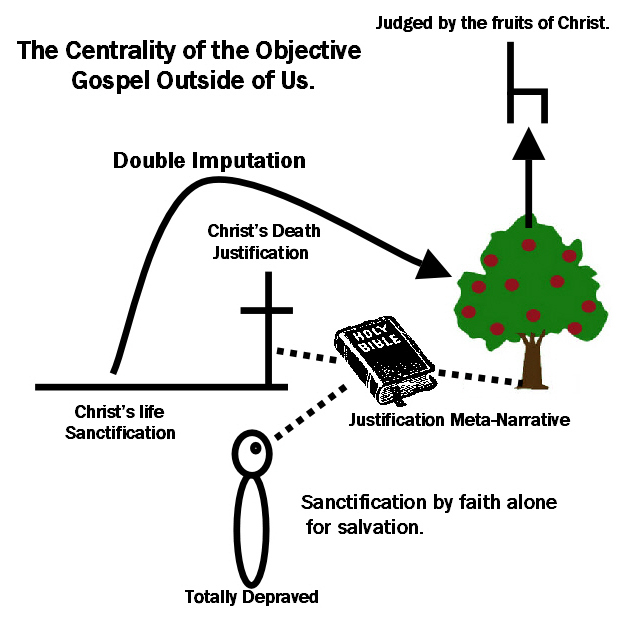
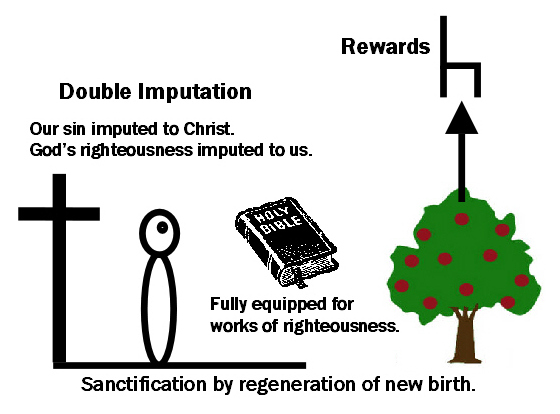
This is not entirely surprising. Christians who know something of Caneday (and I do) are aware that he has a sincere love for others. The other author I cannot speak for other than the fact that he graduated from Southern Seminary which is a bastion of evil. Nevertheless, already, I would recommend the book because it posits a compelling argument. I hold to the idea that salvation is already, and already, not “already—not yet.” Our race in sanctification is for rewards in this life (one being assurance) and the life to come; salvation is not the reward of the race. From the introduction, I get the idea that they may not agree with that, but I welcome an intelligent, objective, and definitive challenge to my present position. That’s just a healthy thing to do—If you can find such an argument among the mass of young, arrogant, petulant, “pastors” of our day. This book promises to be different.
The introduction has some problems, but still poses substantial challenges for someone who holds my position (per the usual, I have scanned the whole book and have returned to the beginning for the detailed pondering thereof). Not only that, it presents a concrete, substantive argument for the rest though substantially flawed in regard to doctrinal correctness. But all in all, what I am trying to say is that this book poses an important and dignified argument in the debate. Buy the book if you want an intelligent analysis from that perspective.
First problem: the authors say that they wrote the book from the “Biblical Theology” perspective. Uh, that’s usually the Redemptive Historical hermeneutic (see chapter 3 of The Truth About New Calvinism vol. 1). Second, according to the introduction, the book is based on eight types of Scriptures that indicate salvation must be finished by perseverance. I do not believe that seven of their eight types present that idea biblically. However, it would seem that one of the types presented does, and that must be reconciled, so read on I will. Third, they speak of the“obedience of faith” which is a creep alert. That MIGHT indicate a sanctification by faith alone that results in Jesus persevering for us and thereby finishing our salvation. Fourth, they quote Augustine (no secret that he was a neo-Platonist) favorably in regard to the “obedient faith” thing. Creep alert just went from blue to yellow. Fifth, justification can’t be a race in the athletic motif that the authors present because righteousness, faith, salvation, and justification are apart from any kind of standard, or law. Yes, the apostle Paul said that he could be “disqualified,” but he couldn’t have been talking about a race to a finish-line where the prize is final salvation. Salvation has no standard—it is “apart from the law.” The question of how much? perseverance would be a problem in, and of itself except for the fact that there is no measure or standard to begin with. Sixth, they speak of assurance as having “three legs” (God’s promises, fruit of the Spirit and His witness) and OBEDIENCE is NOT one. How can this be? Why the exclusion of the undeniable link between our obedience and assurance?
Nevertheless, the book is causing me to take a closer look at what I believe about these things. I believe the authors are sincere and have the hearts of teachers. I do not believe they are a part of the Reformed mystic despot wolf pack. I believe the book will help sharpen and clarify my thinking on this issue.
Honest debate always does.
paul
The Book Of Psalms Is About The Wicked
 I always thought of Psalms as a meditation book. For the most part, that’s how it’s always been presented to me. I have never experienced someone teaching the book as a whole, but have heard many sermons focused on small portions. Usually, we look to Psalms for comfort in troubled times.
A couple of days ago, I was using a search tool to find a verse in Psalms. I knew the word “wicked,” was in the verse, so that’s what I entered into the search engine. Surprise! I immediately noticed that the word “wicked” appears in 53 chapters throughout the book beginning with chapter one and ending with chapter 147 (there are 150 chapters in Psalms). Then I said to myself, “Hmmm, I wonder how the book begins?” Answer:
“Blessed is the man who does not walk in the counsel of the wicked or stand in the way of sinners or sit in the seat of mockers.”
That’s how the book starts, and then the wicked are spoken of in chapters 3,5,7,9,10,11,12,17,21,26,28,31,32,34,36,37(15times),39,43,45,49,50,55,58,59,64,68,71,73,75,82,
84,89,91,92,94,97,101,104,106,107,109,112,119,125,129,139,140,141,145,146,147.
The book is obviously about the wicked. Throughout the book, aspects of the wicked— what they do, and why they do it, is explained. God wants us to know our cuts of wickedness. Furthermore, many of the comfort verses in the book regard King David (and others) needing comfort because of the affliction suffered at the hands of the wicked. Once the theme of the book is understood, even a cursory observation of the book reveals many things; one example is the following: persecution from the wicked can be a source of depression among God’s people. Chapter 42 is often used to teach many things about depression while 42:9,10 are glossed over and disconnected from the major theme of the book:
“I say to God my Rock, ‘Why have you forgotten me? Why must I go about mourning,
oppressed by the enemy?’ My bones suffer mortal agony as my foes taunt me,
saying to me all day long, ‘Where is your God?’” (I realize the prophetic implications of these verses but that doesn’t exclude the application I am making here).
Even the often cited Psalm 23, in context, is about affliction caused by the wicked: “You prepare a table before me in the presence of my enemies.”
When mention of “adversaries”(of God or believers),“enemies” (of God or believers), and their evil deeds are also considered, chapters 6,8,13,15,18(7 times), 22,23,25,27,30,35,38,40,41,42,44,51,52,54,56,60,66,69,72,74,78,80,81,83,86,90,99,102,105,108,
110,118,121,127,132,136,143, and 144 can be added, encompassing more than two-thirds of the book. And I might add that my research stopped there. Psalms is not a meditation book—it’s a war manual for understanding the schemes of the wicked against God and his people, and the resources available to God’s people accordingly.
Paul told Timothy that those who live Godly in Christ WILL suffer persecution (2Tim 3:12). But unfortunately, those who come for encouragement and healing from such affliction are usually told that they are the problem: “Now brother, you must be offending them in some way. We recommend that you take a long, deep look at your own heart. If you stop blame shifting, and own your sin in this matter, God will resolve it”
According to Psalms, we should take such claims of persecution seriously, and Psalms should be our counseling manual in instructing the afflicted as to why the wicked behave this way, and how to respond in God-honoring ways.
paul

 Paul's Passing Thoughts
1 comment