Israel: The Capstone of Justification; Part 1

We are now on the last leg of Paul’s vast study regarding justification. Paul wrote the book of Romans for the purpose of teaching the full-orbed gospel. It is a significant study for understanding the ends and outs of living a godly life and how it works. It is the what, why, and how of spiritual living. It does not concern poetic writings for meditation, it is not a narrative, it concerns knowledge and wisdom. It concerns doctrine. It concerns systematic theology. It arms the Christian with knowledge.
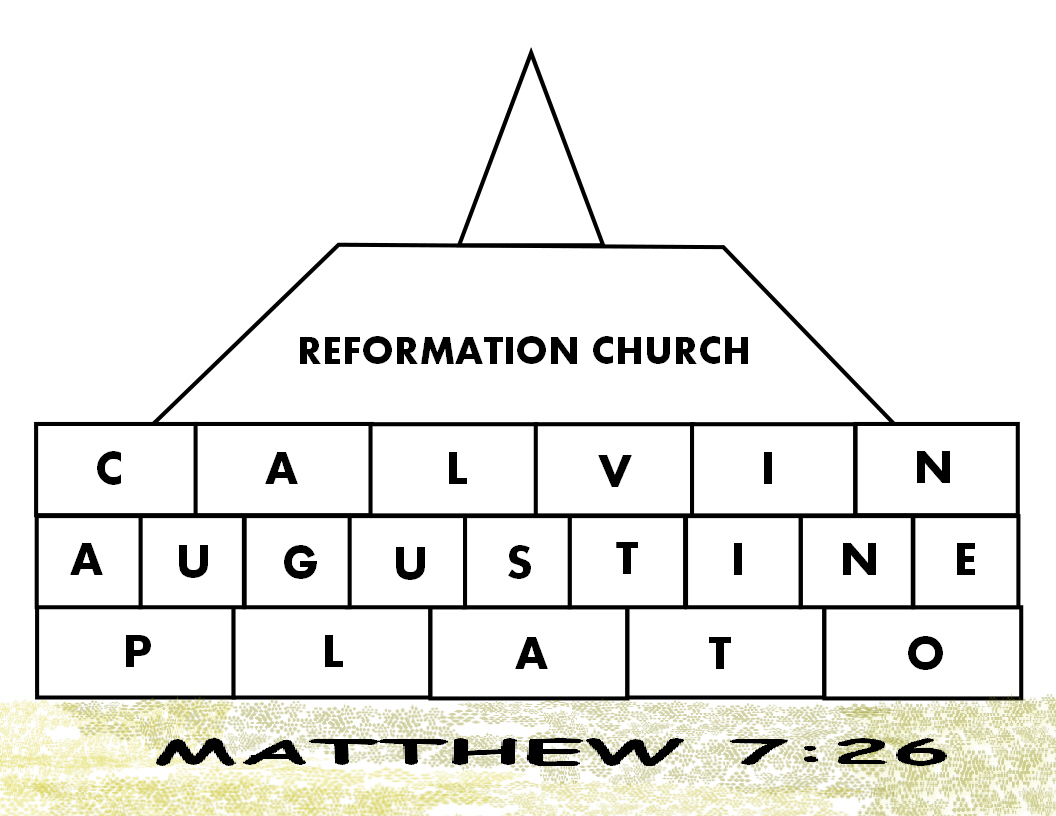
Paul started with the study of anthropology and its relationship to the gospel, now he ends in Romans10:10-11:36 with the capstone of justification: Israel’s role and relationship to justification. In a moment of sanity, John MacArthur once said that “if you get Israel right, you get the Bible right,” and that is absolutely right. It would be doubtful that he still holds to that position as he is now solidly in the Reformed camp, his usual confusion notwithstanding. The big three of the Reformation, Augustine, Luther, and Calvin despised the Jews.
The Abrahamic Covenant is “The Promise” that justifies both Jew and Gentile. Both Jew and Gentile look for the new heavens and new earth that is the final consummation of The Promise. ALL the nations will be blessed through the father of our faith, Abraham. God made it clear in that covenant that He would bless those who bless Abraham, and curse those who curse him. The Reformers cursed the Jews in no uncertain terms. If for no other reason, the Reformers should be rejected out of hand for that reason alone.
The long anti-Semitic tradition propagated by the Reformation must be necessarily exposed and adjusted by the book of Romans. The apostle Paul sternly warned against the very prejudice that we see against the Jews in the contemporary church. Paul explains the central role that Israel plays in justification while warning that wrong attitudes towards Israel can result in being cut off from justification itself. A bitter root concerning Israel is indicative of a serious spiritual problem.
The Romans, as well as most Gentiles integrated into the church, had an inferiority complex because the early church was a Jewish church. “Salvation is of the Jews” were the very words of Jesus Himself. Initially, He only came to the lost sheep of Israel. In much of the book of Romans Paul strives to reassure the Romans that they have inherited all of the blessings of the kingdom possessed by the Jews. But with that reassurance comes a stern warning: do not turn this into boasting against the Jews. Let’s begin to observe what Paul states in the verses following:
Romans 10:10 – For with the heart one believes and is justified, and with the mouth one confesses and is saved. 11 For the Scripture says, “Everyone who believes in him will not be put to shame.” 12 For there is no distinction between Jew and Greek; for the same Lord is Lord of all, bestowing his riches on all who call on him. 13 For “everyone who calls on the name of the Lord will be saved.”
Apparently, Paul is writing about a principle found throughout the Old Testament and not a particular chapter and verse which didn’t divide the Bible at that time. Several, very similar texts appear in the book of Isaiah. Paul wants to show the Roman Gentiles that their inclusion was planned from the beginning. The authority of Scripture in making this point, as well as all of Paul’s other points are obviously assumed. “All” who call on the Lord will be saved and the riches of the Lord will be bestowed upon them. I think “riches” refers to the will language we have discussed previously.
Let’s not stray too far from the point at hand: Paul wants to give the Roman Gentiles assurance that they are legitimate members of the kingdom by showing them via the authority of Scripture that this was God’s plan from the beginning. Paul then continues with the following:
Romans 10:14 – How then will they call on him in whom they have not believed? And how are they to believe in him of whom they have never heard? And how are they to hear without someone preaching? 15 And how are they to preach unless they are sent? As it is written, “How beautiful are the feet of those who preach the good news!” 16 But they have not all obeyed the gospel. For Isaiah says, “Lord, who has believed what he has heard from us?” 17 So faith comes from hearing, and hearing through the word of Christ.
Paul states a principle before he moves on to make his point. This should inspire us in regard to the authority of God’s word. Nobody can believe on Christ without hearing the gospel, and faith comes by hearing the word of God. If we don’t preach the word, people will not get saved. If God has used you to save someone, it wasn’t through silence, a song, prayer only, or anything else other than the “word of Christ” That’s why the Potter’s House is not a “Christ-centered ministry,” it’s a Bible-centered ministry and that suits Christ just fine. We aren’t spiritual elitists who seek deep knowledge of Christ’s “personhood.” Rather, we are ones who observe all that He commands in His word. The Scriptures give the lost faith when they hear it, comforts God’s children, and equips us for every good work. It gives us all we need for life and godliness.
And Paul is about to share a very important truth in his letter to the Romans. Christ, the chief cornerstone, being rejected by national Israel and thus paving the way for Gentile inclusion is a constant theme throughout the Old Testament. What happened when Christ came the first time and the birth of the church should have been plainly foreseen in the Old Testament Scriptures. This is the point that Paul will now make:
Romans 10:18 – But I ask, have they not heard? Indeed they have, for “Their voice has gone out to all the earth, and their words to the ends of the world.” 19 But I ask, did Israel not understand? First Moses says, “I will make you jealous of those who are not a nation; with a foolish nation I will make you angry.” 20 Then Isaiah is so bold as to say, “I have been found by those who did not seek me; I have shown myself to those who did not ask for me.” 21 But of Israel he says, “All day long I have held out my hands to a disobedient and contrary people.”
Honestly, it’s a little difficult to figure Paul’s usage of Psalm 19:4 to answer his first question. By the way, only in recent history was it discovered that our solar system orbits in space as stated by Psalm 19:6. Looking at the text in context may lend some understanding:
The heavens declare the glory of God, and the sky above proclaims his handiwork. 2 Day to day pours out speech, and night to night reveals knowledge. 3 There is no speech, nor are there words, whose voice is not heard. 4 Their voice goes out through all the earth, and their words to the end of the world. In them he has set a tent for the sun, 5 which comes out like a bridegroom leaving his chamber, and, like a strong man, runs its course with joy. 6 Its rising is from the end of the heavens, and its circuit to the end of them, and there is nothing hidden from its heat.
7 The law of the Lord is perfect, reviving the soul; the testimony of the Lord is sure, making wise the simple; 8 the precepts of the Lord are right, rejoicing the heart; the commandment of the Lord is pure, enlightening the eyes; 9 the fear of the Lord is clean, enduring forever; the rules of the Lord are true, and righteous altogether. 10 More to be desired are they than gold, even much fine gold; sweeter also than honey and drippings of the honeycomb. 11 Moreover, by them is your servant warned; in keeping them there is great reward.
The point may be that in the same way that God’s glory is not hidden in all the earth because of creation, nether is the truth of His word. God makes sure the truth of His law reaches to the ends of the earth in every generation. I do not think that Paul is putting forth the idea that creation preaches the gospel in a way that can save people by general revelation alone. But more specific is Paul’s citation of Moses who taught Israel in no uncertain terms that God would save the Gentiles for the purpose of making Israel angry/jealous. Israel disobeyed God’s commands to not follow the ways of Egypt or Canaan. Yet, though Israel followed their ways they still possessed an attitude of entitlement as God’s chosen people. So God hardened their hearts against Christ, the stumbling block of Zion, and saved “those who did not seek me; I have shown myself to those who did not ask for me.”
Romans 9:32….They stumbled over the stumbling stone, 33 just as it is written, “Behold, I lay in Zion a stone of stumbling and a rock of offense, And he who believes in Him will not be put to shame.”
Romans chapter eleven, verse one, and following, are not in need of any explanation. There is a reason the Gentiles should be confident that they are included because it is a result of Israel stumbling over Christ, and this was foreseen from the beginning, but….
I ask, then, has God rejected his people? By no means! For I myself am an Israelite, a descendant of Abraham, a member of the tribe of Benjamin. 2 God has not rejected his people whom he foreknew. Do you not know what the Scripture says of Elijah, how he appeals to God against Israel? 3 “Lord, they have killed your prophets, they have demolished your altars, and I alone am left, and they seek my life.” 4 But what is God’s reply to him? “I have kept for myself seven thousand men who have not bowed the knee to Baal.” 5 So too at the present time there is a remnant, chosen by grace. 6 But if it is by grace, it is no longer on the basis of works; otherwise grace would no longer be grace.
7 What then? Israel failed to obtain what it was seeking. The elect obtained it, but the rest were hardened, 8 as it is written, “God gave them a spirit of stupor, eyes that would not see and ears that would not hear, down to this very day.” 9 And David says, “Let their table become a snare and a trap, a stumbling block and a retribution for them; 10 let their eyes be darkened so that they cannot see, and bend their backs forever.”
This is interesting: Paul uses himself as proof that God hasn’t rejected Israel. This seems to be a pretty straightforward argument. Then he says God has not rejected His people that he “foreknew” or elected. Like in Romans nine, Paul refers once again to the remnant, and then we are reminded once again of election’s purpose:
“So too at the present time there is a remnant, chosen by grace. But if it is by grace, it is no longer on the basis of works; otherwise grace would no longer be grace.”
Remember, as we study our Bibles we must keep this in mind as one of our building blocks of understanding: election is all about completely removing works from justification. And I believe this frees us to not worry about works in our Christian life. The key to a powerful Christian life is to not worry about obedience in sanctification having bearing on justification. We like to call this, “aggressive sanctification.” While having dinner with a Christian man in Columbus this week, the reality of the 10/90 rule was discussed. What’s that? That is the reality of 10% of the people in a given congregation doing 90% of the work. Not only is that a leadership issue, it’s a theology issue and is directly linked to the Protestant fusion of justification and sanctification.
Consider the line of thought starting in Romans 8:30 and ending with Romans 8:39—nothing can separate us from the love of God because our justification was settled before the foundation of the earth. Sanctification is not in that verse because that would involve us in some way with justification which would be disastrous. Election enables the mortal saint to love God without jeopardizing his/her salvation. Hence, NOTHING can separate us from the love of God. Know this: advocating election with the fusion of justification and sanctification is a theological oxymoron. It would seem evident that sanctification is absent from Romans 8:30 because it is not there.
Now, at this point, I am going to jump ahead a little bit to make a point:
Romans 11:28 – As regards the gospel, they are enemies for your sake. But as regards election, they are beloved for the sake of their forefathers. 29 For the gifts and the calling of God are irrevocable. 30 For just as you were at one time disobedient to God but now have received mercy because of their disobedience, 31 so they too have now been disobedient in order that by the mercy shown to you they also may now receive mercy. 32 For God has consigned all to disobedience, that he may have mercy on all.
I think we have another building block of understanding here. Paul makes a distinction between the gospel and election. Though the Jews are enemies of the gospel, they will be saved because of election. The calling of God is irrevocable. I also remind you of Paul’s reference to disobedience. We are not saved by obedience/works. Again, the words obedience and faith are used interchangeably. Obedience is merely the life of faith. Faith is invisible; obedience is merely the visible life of faith. In the passage we just read, it reads the same if you replace disobedience with unbelief and faith with obedience. They are the same because we are not saved by obedience or works, but yet, the words are used interchangeably. Again, this is because our faith is a living faith. Curiously, the Reformers taught that faith is a lifeless conduit to the Spirit realm. But the bigger point is: understanding that our faith is a living faith clears up a lot of confusion in regard to the relationship of faith/obedience in justification versus sanctification. That’s the point.
But in regard to your justification, God’s call is irrevocable. This leads to fearless, aggressive sanctification. Paul also makes the point that the Jews were allowed to be enemies of the gospel for the benefit of the Gentiles who like the Jews were once disobedient:
For God has consigned all to disobedience, that he may have mercy on all.
So, both the Jews and the Gentiles were unbelieving so that he could have mercy on both. The Jews were chosen first, but when they rebelled, God reserved a remnant for Himself according to election and used the rebellion for the benefit of the Gentiles. This benefit is a set time called “the times of the Gentiles.” It has a specific beginning in time and a specific end. Apparently, election pertains primarily to the Jews and the gospel primarily to the Gentiles. The Jews were/are enemies of the gospel for the sake of the Gentiles, but beloved for the sake of election. Obviously, this merely scratches the surface of a vast wealth of knowledge thereof.
Now, next week, we are going to look at this deeper in regard to eschatology. We are going to look at how Bible prophecy is absolutely essential to understanding justification and how God fulfills The Promise. He chooses the Jews, appoints the time of the Gentiles as a response to their rebellion, and then fulfills The Promise to Abraham after the end of the times of the Gentiles. The Gentiles are an inclusion, not a replacement. Replacement Theology, also known as Supersessionism, is specifically what Paul is warning against in Romans 11:
25 Lest you be wise in your own sight, I do not want you to be unaware of this mystery, brothers: a partial hardening has come upon Israel, until the fullness of the Gentiles has come in. 26 And in this way all Israel will be saved, as it is written, “The Deliverer will come from Zion, he will banish ungodliness from Jacob”; 27 “and this will be my covenant with them when I take away their sins.”
Next week, we will look at this from the perspective of prophecy in part two. But in the following week, part 3, we will look at this from the standpoint of covenants. Note carefully: the rebellion of the Jews did not result in the New Covenant replacing the Old Covenant. The Covenants build on each other in order to consummate The Promise to Abraham to bless all nations through him. All the covenants belong to the commonwealth of Israel (Ephesians 2:11-16) and build on each other for the final consummation of The Promise. The rebellion does not replace any of the covenants with a new one; the rebellion is merely used by God to include the Gentiles in the Promise.
Inclusion, not replacement in regard to prophecy and covenants. Understanding the true relationship between election, the Jews, Gentiles, justification, sanctification, prophecy, and covenants has catastrophic ramifications for understanding God’s salvific plan for the ages.
Hence, our hefty endeavor will need much prayer and study moving forward into parts two and three.
Inclusion, not replacement regarding the church.
Progression of covenants, not replacement of the old with the new.
Romans 10:6-9; Righteousness, Faith, Life, and Law
Click on illustrations to enlarge.
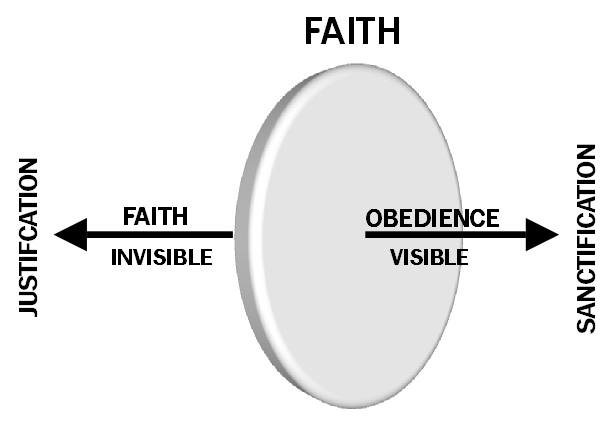

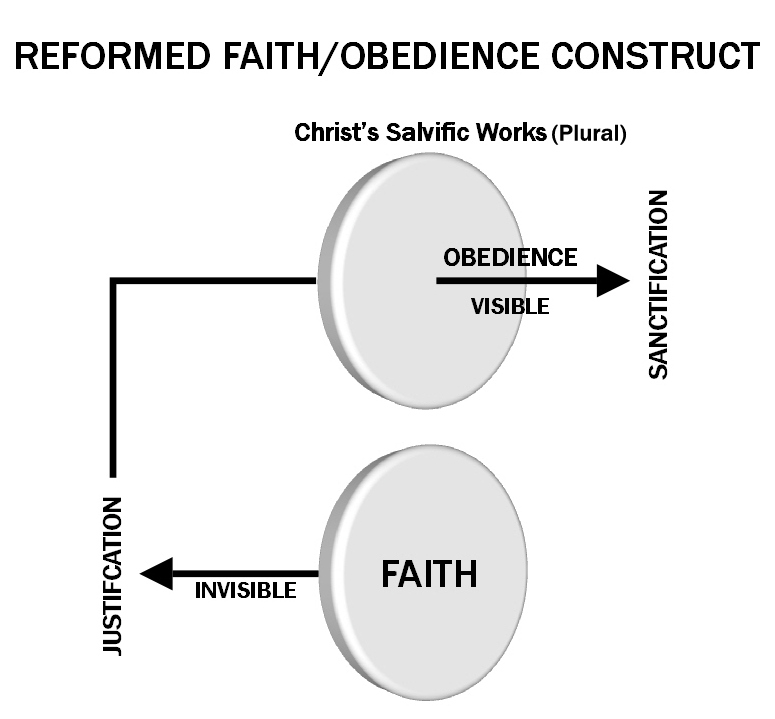
I have been wrestling with this passage all week long through pondering and praying. Last week, we looked at Christ being the end of the law for righteousness, or for all practical purposes, justification. Then, we noticed that to further his points, Paul referred to his Old Testament commentaries. We wanted to read those commentaries along with Paul to better understand what he was teaching about righteousness/justification. Those two words mean the same thing for all practical purposes.
But reading the passages from Moses that Paul cites led to utter confusion. What Moses wrote seems to contradict Paul. Moses states that life comes through obedience to God’s law while Paul states that justification comes through faith in Jesus Christ alone. As we have seen, a righteousness apart from the law. Here is what Paul states:
Roman 10:5 – For Moses writes about the righteousness that is based on the law, that the person who does the commandments shall live by them. 6 But the righteousness based on faith says, “Do not say in your heart, ‘Who will ascend into heaven?’” (that is, to bring Christ down) 7 “or ‘Who will descend into the abyss?’” (that is, to bring Christ up from the dead). 8 But what does it say? “The word is near you, in your mouth and in your heart” (that is, the word of faith that we proclaim);
These are the two passages written by Moses that Paul is referring to:
Leviticus 18:1 – And the Lord spoke to Moses, saying, 2 “Speak to the people of Israel and say to them, I am the Lord your God. 3 You shall not do as they do in the land of Egypt, where you lived, and you shall not do as they do in the land of Canaan, to which I am bringing you. You shall not walk in their statutes. 4 You shall follow my rules and keep my statutes and walk in them. I am the Lord your God. 5 You shall therefore keep my statutes and my rules; if a person does them, he shall live by them: I am the Lord.
Deuteronomy 30:11 – “For this commandment that I command you today is not too hard for you, neither is it far off. 12 It is not in heaven, that you should say, ‘Who will ascend to heaven for us and bring it to us, that we may hear it and do it?’ 13 Neither is it beyond the sea, that you should say, ‘Who will go over the sea for us and bring it to us, that we may hear it and do it?’ 14 But the word is very near you. It is in your mouth and in your heart, so that you can do it.
15 “See, I have set before you today life and good, death and evil. 16 If you obey the commandments of the Lord your God that I command you today, by loving the Lord your God, by walking in his ways, and by keeping his commandments and his statutes and his rules, then you shall live and multiply, and the Lord your God will bless you in the land that you are entering to take possession of it. 17 But if your heart turns away, and you will not hear, but are drawn away to worship other gods and serve them, 18 I declare to you today, that you shall surely perish. You shall not live long in the land that you are going over the Jordan to enter and possess. 19 I call heaven and earth to witness against you today, that I have set before you life and death, blessing and curse. Therefore choose life, that you and your offspring may live, 20 loving the Lord your God, obeying his voice and holding fast to him, for he is your life and length of days, that you may dwell in the land that the Lord swore to your fathers, to Abraham, to Isaac, and to Jacob, to give them.”
The idea that is in vogue in our day is that Moses continually prodded the Israelites to try to live by the law so that they would be driven to despair and see their need for Christ. This is the popular interpretation of what Paul meant by the law being a schoolmaster that leads us to Christ. In fact, we supposedly still use the law in that way to perpetually live by faith alone in sanctification. The law shows us our sinfulness and continual need for Christ’s saving grace and forgiveness. “Life” is not really found in obedience; Moses was just saying that to show us our inability to obey the law perfectly and thus be justified by it. Be sure of it: this is 90% of what is being taught in the church today. That fact alone should make us suspicious for a great revival is NOT predicted for the latter days; the contrary is predicted in no uncertain terms.
This approach demands a nonsensical approach to a massive portion of Scripture. The concept of happiness, blessings, and life being found in obedience to God’s word dominates the Scriptures from Genesis to Revelation. Let’s look at an example:
Ephesians 6:1 – Children, obey your parents in the Lord, for this is right. 2 “Honor your father and mother” (this is the first commandment with a promise), 3 “that it may go well with you and that you may live long in the land.” 4 Fathers, do not provoke your children to anger, but bring them up in the discipline and instruction of the Lord.
It might also be interesting to note King David’s final instructions to his son Solomon:
1Kings 2:2 – “I am about to go the way of all the earth. Be strong, and show yourself a man, 3 and keep the charge of the Lord your God, walking in his ways and keeping his statutes, his commandments, his rules, and his testimonies, as it is written in the Law of Moses, that you may prosper in all that you do and wherever you turn, 4 that the Lord may establish his word that he spoke concerning me, saying, ‘If your sons pay close attention to their way, to walk before me in faithfulness with all their heart and with all their soul, you shall not lack a man on the throne of Israel.’
So, what in the world is going on here? First, please hang on to this principle of Bible study: when you begin the study of any given passage, read it intently and look for what the passage is plainly stating, and pay particular attention to specific words. Do not underestimate the intended meaning of any given word by assuming its singular concept does not have vast implications.
Secondly, as Christians we must function on objective truth that we know definitively. Often, those truths will be building blocks that add to a more complete building of truth. And in my struggle to understand what Paul is trying to teach in this passage, we have a building block. The building block of truth that we can use to build more understanding is that faith and obedience are the exact same thing. No, I am not saying that obedience is a result of faith—I like the two sides of the same coin illustration. One side of the coin didn’t come before the other. You may see one side of the coin before you see the other, but one didn’t come before the other. They are the same. It might even be said that the inside of the coin is never seen as well. It might also be said that the coin has two sides that can’t be seen at the same time and an invisible aspect.
We tend to dichotomize faith and obedience; I doubt the Bible does that. Here is another building block: faith does have a result; it’s not obedience, but it is “life.” Faith and obedience are one, life is the result.
So, where can we back this up with Scripture? Well, first, let’s look at what Paul is pointing to in his Isaiah commentary, and then we will go back at some point to his Moses commentary. Paul reads it as follows:
Romans 10:15 – And how are they to preach unless they are sent? As it is written, “How beautiful are the feet of those who preach the good news!” 16 But they have not all obeyed the gospel. For Isaiah says, “Lord, who has believed what he has heard from us?”
Obey the gospel? Seems like a peculiar way to state it, until Paul rehearses what Isaiah says, “who has believed what he has heard from us?” We see that Paul has simply replaced believe with obey. This is not nearly the only place where Scripture does this:
John 3:35 – The Father loves the Son and has given all things into his hand. 36 Whoever believes in the Son has eternal life; whoever does not obey the Son shall not see life, but the wrath of God remains on him.
Obviously, the antithesis of faith is disobedience. In other passages, believing the gospel is replaced with obeying the gospel:
2 Thessalonians 1:8 – in flaming fire, inflicting vengeance on those who do not know God and on those who do not obey the gospel of our Lord Jesus.
1 Peter 4:17 – For it is time for judgment to begin at the household of God; and if it begins with us, what will be the outcome for those who do not obey the gospel of God?
Now, let’s go back to Moses. When Paul quotes Moses as saying, “if a person does them, he shall live by them,” that is simply a statement of fact. Before Christ came, people were born again by believing God. We know from Christ’s conversation with Nicodemus that the new birth was prior to the cross. Any kind of standard is not the point, believing God is the point. And remember, obedience is faith. So, saving faith is a heart inclined towards God. Reaching a standard isn’t the point; an inclination towards God is the point.
Abundant life is found in obedience, but that’s not where justification comes from. Justification comes from faith only, and then faith will always be looking for a way to please God. Reaching a standard has never been part of justification; therefore, perfection has never been required for salvation. A goal of perfection (desire for) will be the inclination of faith, but has never been a standard for justification. In Exodus 19, the Israelites agreed to the covenant before they knew the details—they simply agreed to follow God wherever it led them by faith. Faith makes us able to obey in a way pleasing to God because the word is in our hearts and in our mouths as a visible manifestation of faith. The invisible part of faith is belief in our hearts; the visible part of faith is what we do. What we do brings blessings, but not salvation. That’s why the principle of blessings and cursings is the same in the Old Testament and New Testament. That’s why King David’s exhortation and promise to Solomon is the same as Paul’s exhortation to children in the New Testament (EPH 6:1-3). Now, let’s read Moses in full context and see if we can observe these principles:
Deuteronomy 30:9 – The Lord your God will make you abundantly prosperous in all the work of your hand, in the fruit of your womb and in the fruit of your cattle and in the fruit of your ground. For the Lord will again take delight in prospering you, as he took delight in your fathers, 10 when you obey the voice of the Lord your God, to keep his commandments and his statutes that are written in this Book of the Law, when you turn to the Lord your God with all your heart and with all your soul.
11 “For this commandment that I command you today is not too hard for you, neither is it far off. 12 It is not in heaven, that you should say, ‘Who will ascend to heaven for us and bring it to us, that we may hear it and do it?’ 13 Neither is it beyond the sea, that you should say, ‘Who will go over the sea for us and bring it to us, that we may hear it and do it?’ 14 But the word is very near you. It is in your mouth and in your heart, so that you can do it.
15 “See, I have set before you today life and good, death and evil. 16 If you obey the commandments of the Lord your God that I command you today, by loving the Lord your God, by walking in his ways, and by keeping his commandments and his statutes and his rules, then you shall live and multiply, and the Lord your God will bless you in the land that you are entering to take possession of it. 17 But if your heart turns away, and you will not hear, but are drawn away to worship other gods and serve them, 18 I declare to you today, that you shall surely perish.
Like I said, these are building blocks and I am not sure how this all fits together, but let me add a third building block: Christ is the end of the law for righteousness. This doesn’t mean that there was previously righteousness in obedience to the law, but it means the following:
Galatians 3:17 – This is what I mean: the law, which came 430 years afterward, does not annul a covenant previously ratified by God, so as to make the promise void. 18 For if the inheritance comes by the law, it no longer comes by promise; but God gave it to Abraham by a promise.
19 Why then the law? It was added because of transgressions, until the offspring should come to whom the promise had been made, and it was put in place through angels by an intermediary. 20 Now an intermediary implies more than one, but God is one.
21 Is the law then contrary to the promises of God? Certainly not! For if a law had been given that could give life, then righteousness would indeed be by the law. 22 But the Scripture imprisoned everything under sin, so that the promise by faith in Jesus Christ might be given to those who believe.
23 Now before faith came, we were held captive under the law, imprisoned until the coming faith would be revealed. 24 So then, the law was our guardian until Christ came, in order that we might be justified by faith. 25 But now that faith has come, we are no longer under a guardian, 26 for in Christ Jesus you are all sons of God, through faith. 27 For as many of you as were baptized into Christ have put on Christ. 28 There is neither Jew nor Greek, there is neither slave nor free, there is no male and female, for you are all one in Christ Jesus. 29 And if you are Christ’s, then you are Abraham’s offspring, heirs according to promise.
Granted, I am foggy on how all of this works in the first covenant, but the word that was in their heart and in their mouth is now replaced with Christ as the object of faith:
Romans 10:5 – For Moses writes about the righteousness that is based [“based” not in the manuscripts, added by ESV] on [*] the law, that the person who does the commandments shall live by them. 6 But the righteousness based [Ibid] on [*in both cases could be “of” instead of “on”] faith says, “Do not say in your heart, ‘Who will ascend into heaven?’” (that is, to bring Christ down) 7 “or ‘Who will descend into the abyss?’” (that is, to bring Christ up from the dead). 8 But what does it say? “The word is near you, in your mouth and in your heart” (that is, the word of faith that we proclaim);
Perhaps the law was the object of their faith because it promised Christ, a will that was inaugurated by blood and executed upon the death of the testator (HEB 9:15-22), but the object of faith justifies, and obedience brings life. Obedience doesn’t justify per se, it is just the body life of faith. We are justified by faith alone, obedience merely shows forth the life of faith:
James 2: 14 – What good is it, my brothers, if someone says he has faith but does not have works? Can that faith save him? 15 If a brother or sister is poorly clothed and lacking in daily food, 16 and one of you says to them, “Go in peace, be warmed and filled,” without giving them the things needed for the body, what good is that? 17 So also faith by itself, if it does not have works, is dead.
18 But someone will say, “You have faith and I have works.” Show me your faith apart from your works, and I will show you my faith by my works. 19 You believe that God is one; you do well. Even the demons believe—and shudder! 20 Do you want to be shown, you foolish person, that faith apart from works is useless? 21 Was not Abraham our father justified by works when he offered up his son Isaac on the altar? 22 You see that faith was active along with his works, and faith was completed by his works; 23 and the Scripture was fulfilled that says, “Abraham believed God, and it was counted to him as righteousness”—and he was called a friend of God. 24 You see that a person is justified by works and not by faith alone. 25 And in the same way was not also Rahab the prostitute justified by works when she received the messengers and sent them out by another way? 26 For as the body apart from the spirit is dead, so also faith apart from works is dead.
Also, we have a choice in sanctification to enhance life through obedience. The blessings are “in” the “doing” (James 1:25). We can apply biblical wisdom to our lives in order to have a life built on a rock (MATT 7:24-27), and experience life more abundantly (2PET 2-11). But remember, This is apart from justification by faith alone that has an invisible reality and a visible reality:
Romans 10:9 – because, if you confess with your mouth that Jesus is Lord and believe in your heart that God raised him from the dead, you will be saved. 10 For with the heart one believes and is justified, and with the mouth one confesses and is saved.
This can be best summed up by “The just shall live by faith” (HEB 10:38, HAB 2:4). “Just” is our position and imputed righteousness of God; the faith that we live by justified us, but the obedience of our faith lives in sanctification. These two, faith and obedience, cannot be separate for faith without works is dead.
In the final analysis, because national Israel rejected Christ, they sought righteousness in that which pointed to Christ instead of Christ Himself. By “Christ Himself” I mean faith in Christ’s death and resurrection as stated in the Scriptures, and submission to His Lordship commands that are also found in the Scriptures. In other words, faith in Christ and the obedient life that is also faith. Hence:
John 5:39 – You search the Scriptures because you think that in them you have eternal life; and it is they that bear witness about me, 40 yet you refuse to come to me that you may have life. 41 I do not receive glory from people. 42 But I know that you do not have the love of God within you. 43 I have come in my Father’s name, and you do not receive me. If another comes in his own name, you will receive him. 44 How can you believe, when you receive glory from one another and do not seek the glory that comes from the only God? 45 Do not think that I will accuse you to the Father. There is one who accuses you: Moses, on whom you have set your hope. 46 For if you believed Moses, you would believe me; for he wrote of me. 47 But if you do not believe his writings, how will you believe my words?”
It would seem, at least in my mind, that this whole concept of obedience and faith being one lends understanding to a host of difficult passages.
ADDENDUM:
Three Constructs
1. Reformed
A. Perfect keeping of the law is the standard for righteousness.
B. We can’t keep the law perfectly.
C. Christ must keep the law for us via faith alone in sanctification to maintain just
standing.
2. Reformed New Covenant Theology
A. The law has been eliminated or abrogated by the New Covenant.
B. Life and godliness guided by single law of love as mediated by our consciences.
3. Biblicism
A. Our righteousness is apart from the law and by faith alone in Christ.
B. The law informs our obedient faith for sanctification.
How to Lead a Calvinist to the Lord
 “What imperils the Calvinist soul is a fundamental anti-biblical view of the law. They must be shown the new way of the Spirit.”
Know Calvin’s Gospel
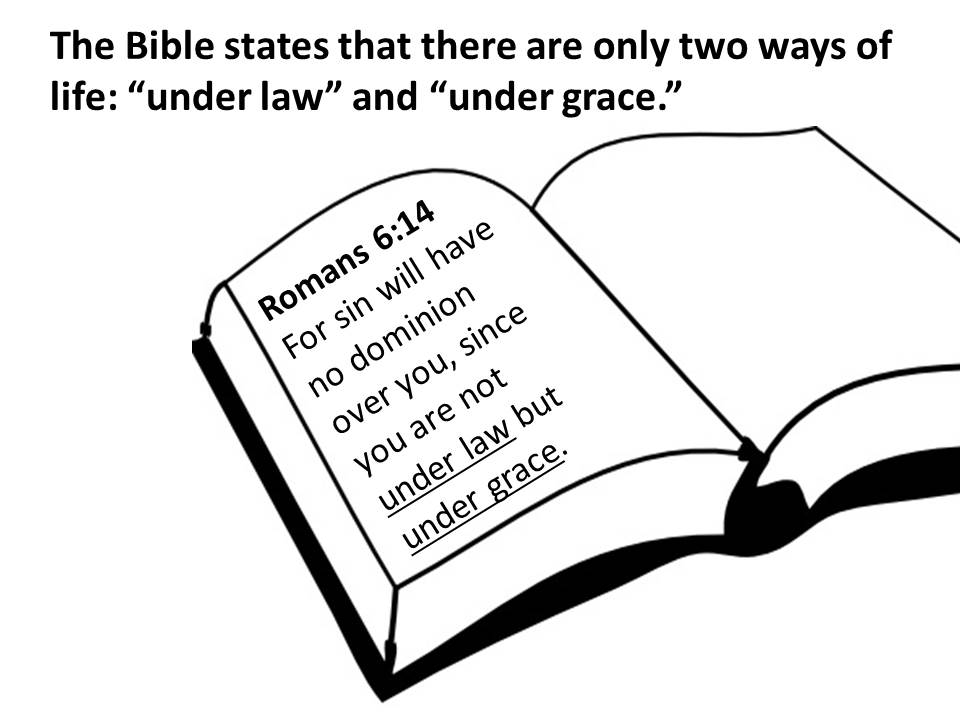
Calvinism is a false gospel that imperils the soul. The apostle Paul made it clear in Romans that there are only two people groups in the world: those under law, and those under grace (ROM 6:14). The lost and the saved. Calvinists declare themselves to be under law. They try to get around this by saying you can be under law and under grace both, but such is not the case. They say it is ok to be under law and covered by grace if we live by faith alone in sanctification; or, living by the same grace that saved us. The whole, “We must preach the gospel to ourselves every day” is indicative of where they stand on law and grace. According to their other gospel, we need the same grace that saved us every day for one reason and one reason only: we are supposedly still under law. Certainly, all people live under the grace of God whether saved or unsaved—we are addressing the grace that saved us initially.
Calvinists use the book of Galatians in an effort to make the opposite point; supposedly, the Galatians were putting themselves under law by attempting to please God in sanctification by keeping the law. Hence, in the Calvinist mind, attempting to keep the law in sanctification is the same thing as trying to keep the law for our justification—they are still under it accordingly….for justification….IN sanctification. In other words, a demand for perfect obedience to the law in sanctification is still the standard to maintain justification. This was Paul’s actual beef with the Galatians: that the law was still a standard for maintaining their justification. The Galatians were adding law to grace in order to maintain grace. So, instead of the law informing their sanctification, they were putting themselves back under the law to maintain justification. That’s why Paul wrote the following to them:
Galatians 4:21 – Tell me, you who desire to be under the law, do you not listen to the law?
Paul continues from there to drive home the point that justification is a settled issue and obligation to the law is separated from it. We are obligated to listen to the law for sanctification, but there is no longer any law obligation to our justification. To say that justification has to be maintained by perfect law-keeping is to be under the law. The Galatians were being taught that rituals such as circumcision completely satisfied the law. But again, being under law is the point here. That is why Paul stated the following:
Galatians 5:2 – Look: I, Paul, say to you that if you accept circumcision, Christ will be of no advantage to you. 3 I testify again to every man who accepts circumcision that he is obligated to keep the whole law. 4 You are severed from Christ, you who would be justified by the law; you have fallen away from grace.
The Galatians were being taught that circumcision satisfied all of the requirements of the law for justification. This led to an antinomianism in sanctification because in these systems there is no distinction between hearing and doing the law in sanctification and the laws relationship to justification. For the unbeliever, the law is the standard for justification because unbelievers are under the law. Christians are under grace and not under the law, so the law has no relevance to their justification. Paul was simply telling the Galatians that if they are under the law, they are obligated to keep all of it for justification. Circumcision or any other ritual does not satisfy the law.
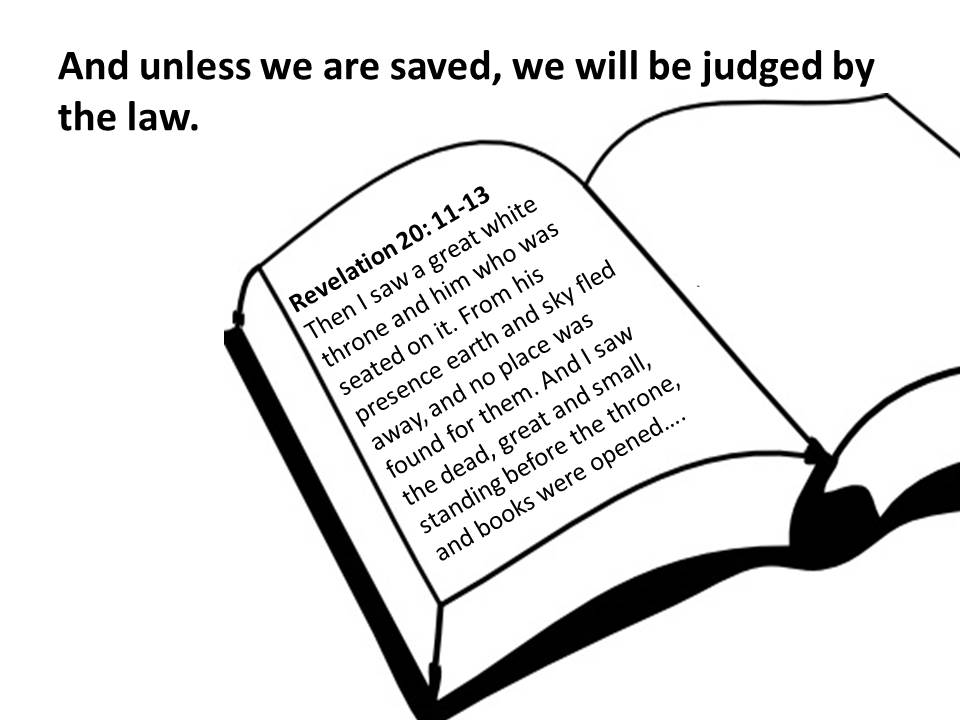
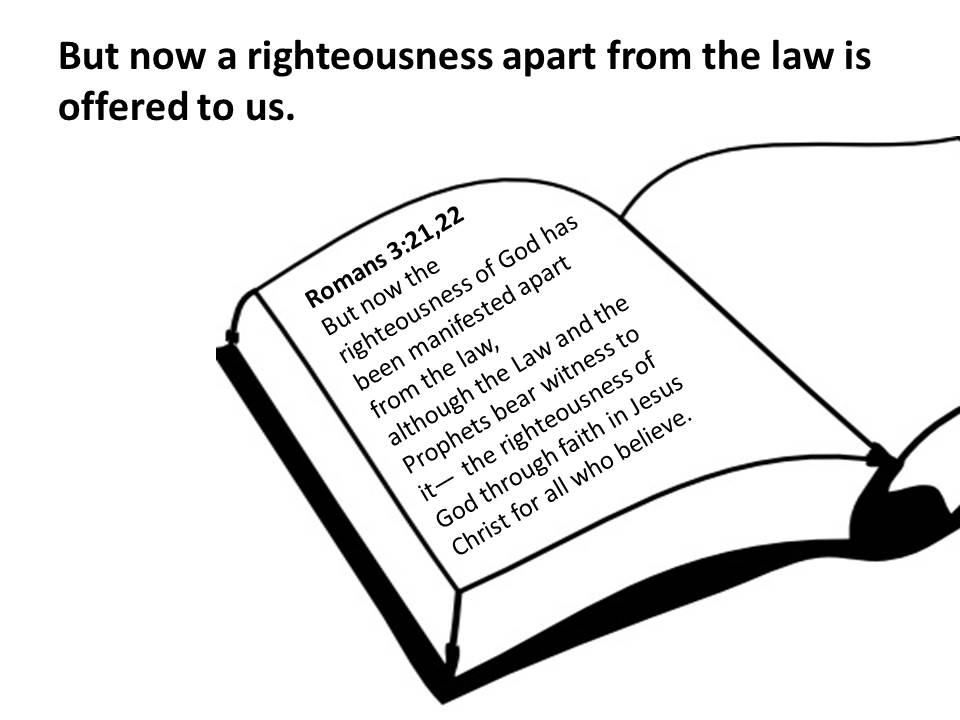
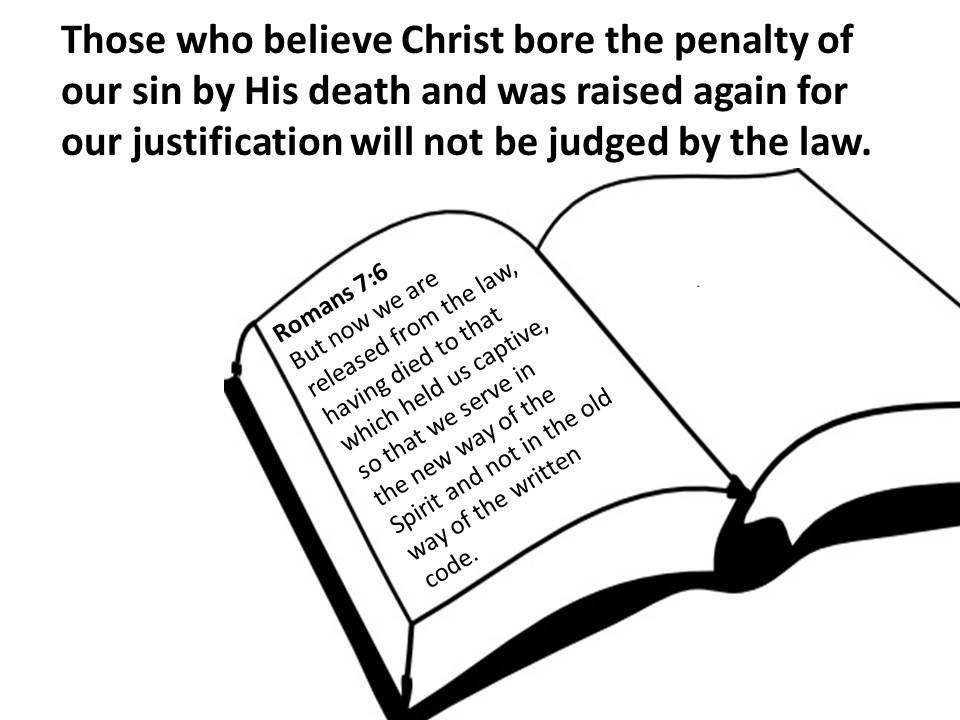
Paul states that we are not under law because the old us that was under the law is dead (ROM 7:1-11), and therefore, the law cannot judge the sins of our mortality (Rom 3:19, 7:8,9). But on the other hand, we are enslaved to the law in sanctification (Rom 8:7,8). Even though we cannot keep it perfectly due to our present mortality, we are enslaved to it and nonetheless strive to keep it in our sanctification. The law was never fulfilled to maintain our justification because there is no law in justification. The law is fulfilled through us in sanctification (ROM 8:3,4). Christ’s death separated the law from justification in the same way that a spouse is no longer under a marriage covenant when the other spouse dies (ROM 7:1-3).
This excludes the necessity for perfect law-keeping in sanctification. Christ accomplished this through His death, not keeping the law for us in sanctification. Calvinists call this, “Christ 100% for us.” Christ’s perfect law-keeping is a given by virtue of who He is and not because perfect law-keeping was part of the Abrahamic covenant of promise which occurred 430 years before the law (GAL 3:17,18).
Which Brings Us to Calvin’s Galatian Error
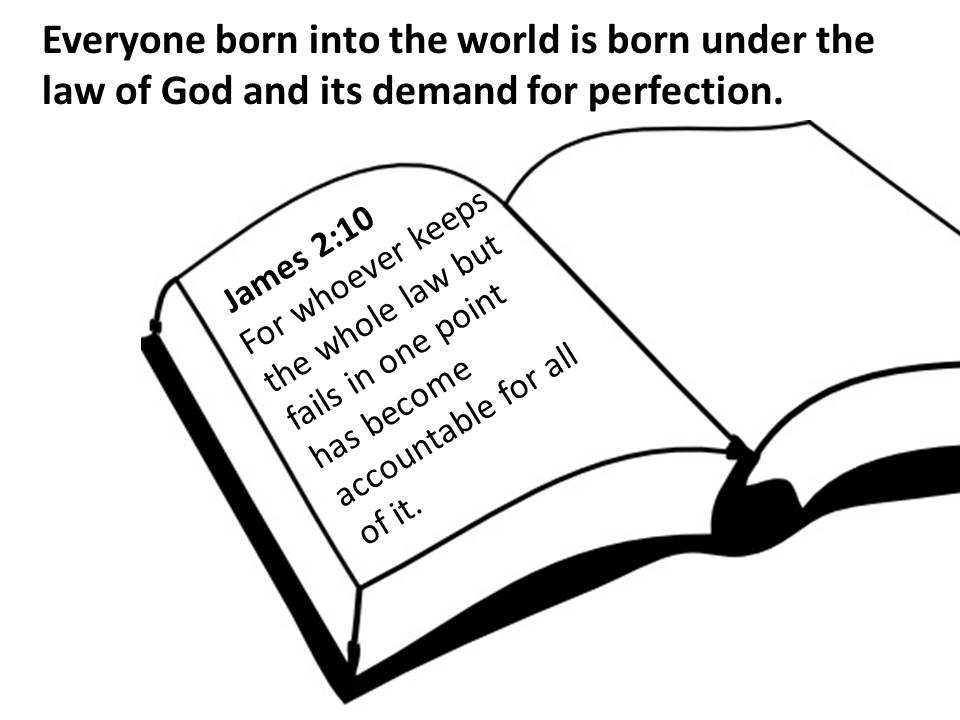
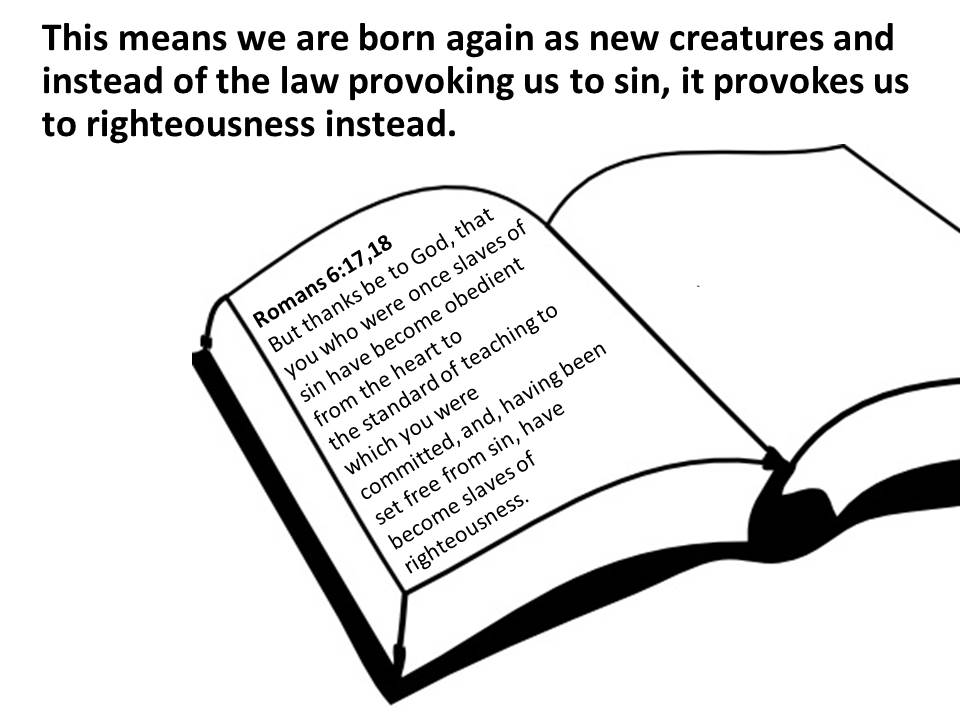
No works salvation system ever promotes a perfect, intelligent obedience to the law. It posits activity on our part that imputes something that counts for a perfect keeping of the law to maintain our salvation. This always leads to antinomianism because a ritual replaces actual law-keeping. Those under grace strive to please God by law-keeping because they are enslaved to the law, but on the other hand, perfection is not the standard because they are hindered by mortality (ROM 8:3,4) and the law can’t judge them because they are no longer under it (ROM 3;19). They are enslaved to it for sanctification, but not under it for justification. Those under grace are enslaved to the law but will not be judged by it; those under law are enslaved to sin and will be judged by the law. The Bible has an awesome way of stating this: those under the law violate it at all points by one sin; those under grace fulfill the law by loving their neighbors and God. The enslavement hindered by the weakness of the flesh fulfills the law in sanctification.
Calvin’s error/false gospel merely replaced the ritual of circumcision with daily re-salvation for the atonement of sin and the perpetual imputation of Christ’s perfect law-keeping for sanctification in order to maintain our justification (Calvin Institutes: 3.14.9-11). “We must preach the gospel to ourselves every day” is a ritual that imputes Christ’s perfect obedience to our sanctification in order to maintain our justification. This was also the fatal error of the Pharisees who replaced the law of God with their traditions and thus, “you have made void the law of God” (MATT 15:6 [most translations : “set aside” and “commandments”). The law is void for justification (the dead letter and covenant of death), but not sanctification.
Therefore, Calvinism keeps the “believer” under the law for justification leading to antinomianism in sanctification because Christ is 100% for us and keeps the law for us in sanctification in order to maintain our just standing. This is well exemplified via the following tweet by a well-known Calvinist:

This was the same result at Galatia as well:
Galatians 5:7 – You were running well. Who hindered you from obeying the truth?
This rejects the believer’s hindered enslavement to the law in sanctification and only leaves one other alternative: under the law. For all practical purposes: lost. Therefore, the Calvinist must be informed that he/she is still under the law and trusting in a false gospel. What imperils the Calvinist soul is a fundamental anti-biblical view of the law. They must be shown the new way of the Spirit.
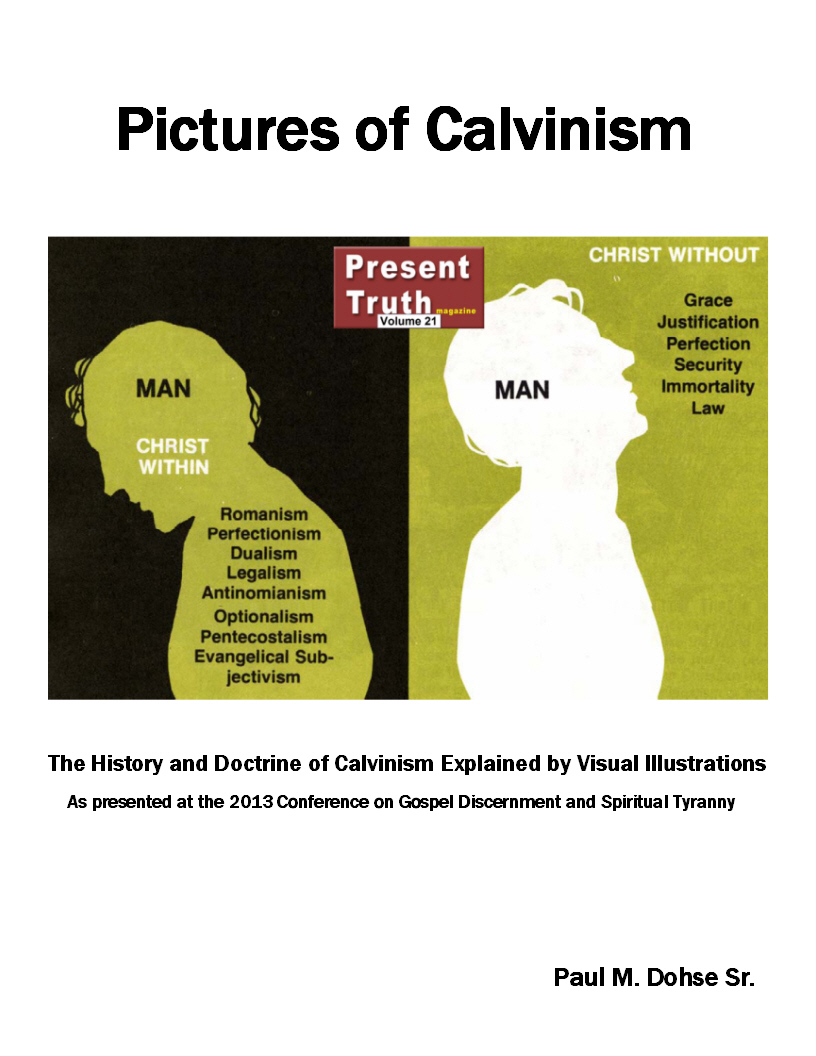
Let me recommend that you then teach them through the following booklet (Click on images to enlarge if necessary):










 Paul's Passing Thoughts
1 comment