When Church is Spiritual Gangrene: Sanctification by Justification
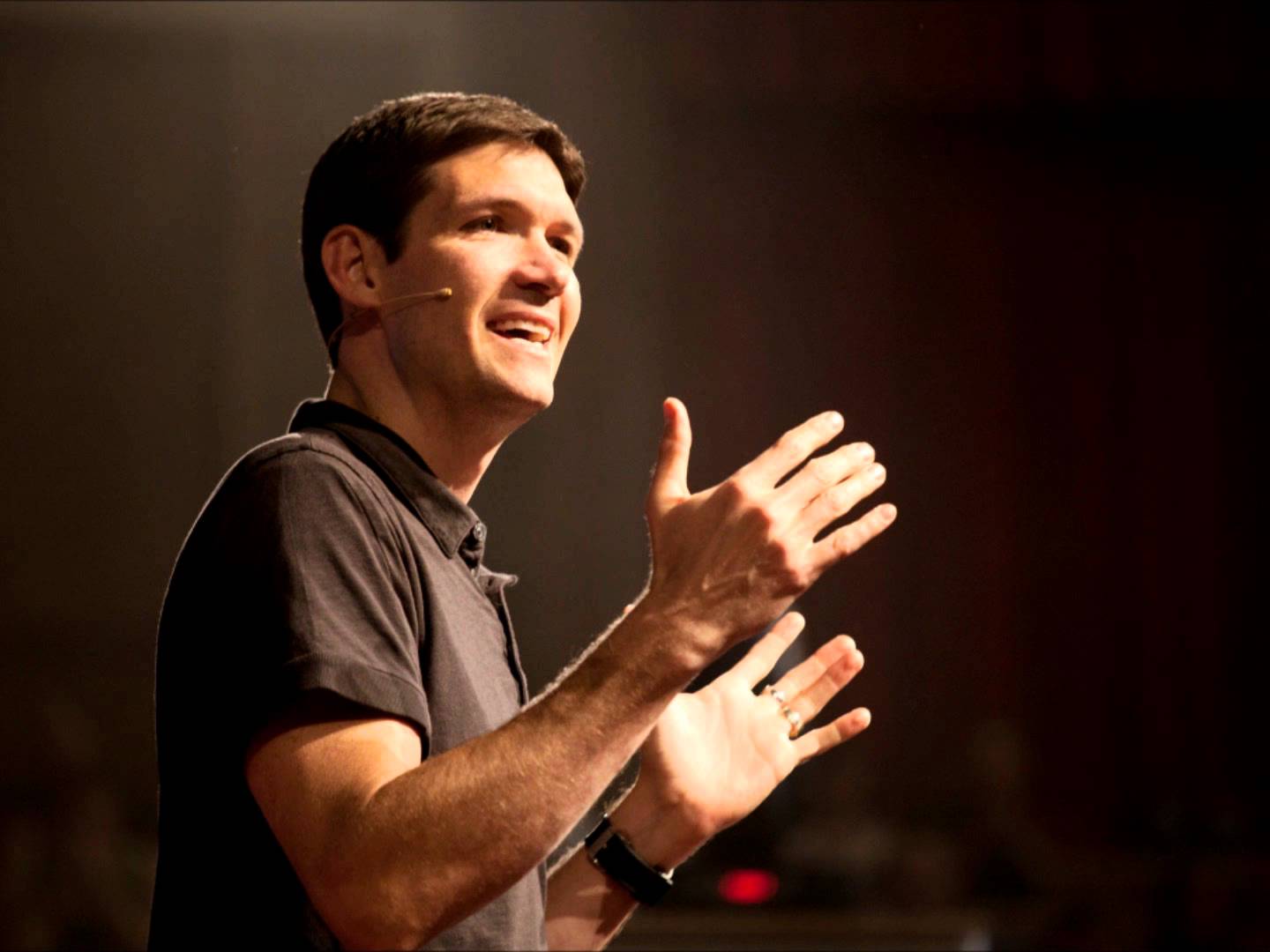 We have recently received our weekly dose of Neo-Calvinist drama. This time, it was Matt Chandler’s turn to give discernment bloggers the gift that just keeps on giving. This recent incident involving Chandler’s Village Church has gone super-viral. Secular news networks are even reporting on the episode resulting in a public outcry.
These incidents are not isolated and will continue to be exposed in both Protestant and Catholic circles because they are the result of a false gospel. As Jesus said, a tree is known by its fruit.
Jordan Root
Apparently, the constant drama taking place in the evangelical church is not nature’s way of telling us something is wrong. However, the most recent drama concerning former missionary Jordan Root supplies a pretty decent insight into the core problem of progressive justification.
Christ’s called out assembly is a body that depends on individual members. The apostle Paul used a body analogy because it is the perfect analogy of Christ’s called out assembly. Strong individual members make a strong body. Consequently, every member’s role must be identified and nourished. To the degree that members (body parts, not the Salvation Club membership) do not function properly, the body is crippled and falls short of fulfilling Christ’s mandate.
Christ is the only head. The common goal is the one mind in Christ. The advent of Christ’s called out assembly was a monumental event. The monumental event was the baptism of the Holy Spirit. The Spirit is a major participant in the plan of salvation. Beware of any doctrine that emphasizes one of the three Trinity persons over the other in the plan of salvation. Salvation is Trinitarian.
 There was a new birth before the death, burial, and resurrection of Christ, but until that time, salvation was atonement by the law. In other words, according to Moses, obedience to the law could bring both life and death, but at that time the law was a covering for sin. All sin was imputed to the law and the law held that sin captive along with the believer. The believer was blessed by obedience to the law, and their sins that were a violation of the law were held in escrow until the coming of Christ. Of course, the terms of this particular escrow is an eradication instead of a payment.
On the other hand, the sins of unbelievers were not imputed to the law, but rather the law condemned them for every offence. In both cases, life and death according to the law was experienced, but with different ENDS. Whether believer or unbeliever, degrees of life and death occurred, but salvation determined a life end while being unsaved determined a death end with degree of violation determining the wages of eternal death.
When it was the Spirit’s time for His major event, He resurrected Christ from the grave and gave gifts to Christ’s assembly while baptizing Jews and Gentiles into one body. Christ died to end the law by paying the penalty for ALL sins imputed to it. With the ending of the law, all sins committed against it were ended as well except for those who were not covered by it. For unbelievers, the law was not ended and therefore they remain condemned by it.
Hence, the law is no longer an atonement for believers, but only serves as a means to love God and others. Before the baptism of the Holy Spirit, it served as atonement and a means of love, now it can only serve as a means of loving God and others. However, for unbelievers in this day, the law has a sort of grace to it; in that sin is still imputed to it. If and when they believe in Christ, every sin they committed against the law (all sin is a violation of the law) is ended with the law and now there is no law that can condemn them in the future. Therefore, the Old Testament atonement is still a “ministry of death” that is “passing away” (From an eschatology point of view, this is why believers were in the abode of the dead until Christ died on the cross. During the three days after His crucifixion, he preached to the “captives” and set others free leading them to heaven in a victory procession).
Nevertheless, through ignorance, the believer can experience as much present death, or even more death than unbelievers who will come to realize a death ending. There is a specific dynamic that figures in. The Bible splits this up into “under law” and “under grace.” Under law is the biblical definition of an unregenerate person and possesses a certain metaphysical dynamic, or state of being. Those under law are free to do good but enslaved to sin. This is primarily because they are under the law’s condemnation or judgement. In conjunction with SIN, the law empowers sin. When the law is ended, sin is stripped of its power because there is no condemnation. Sin finds its power in condemnation.
And death finds its sting in sin. The primary root of all fear is fear of judgment, and mankind, having the “works of the law” written on their hearts and administered by the conscience, knows intuitively that future death means future judgement. But “perfect love casts out fear.” What’s that? That’s “under grace” which is now no longer under the condemnation of the law; the law only serves to inform the believer in regard to loving God and others. There is NOW NO condemnation for those in Christ.
Yet, there is still a death/life dynamic going on that is experienced by the believer and unbeliever alike. The end is different, but not necessarily the life experience. Those under grace are enslaved to righteousness, but unfortunately free to sin. They are enslaved to righteousness because of the baptism of the Spirit. Don’t get too hung-up on the “slave” nomenclature. Under law enslaves the unbeliever to the laws condemnation. That is inescapable. They are crippled and enslaved to constant condemnation and the fear of death. This is where it is vital to realize that the baptism of the Spirit is a literal death of the person who is under law and enslaved to it. They are enslaved to its inevitable endgame of death measured by the degree of life choices regarding law—primarily the law of their conscience, but ultimately the full brunt of God’s specific law of which they are indifferent.
Once a person is saved, they are ”free” from the condemnation of the law also known as the “law of sin and death,” and “free to serve another.”
Romans 7:4 – Likewise, my brothers, you also have died to the law through the body of Christ, so that you may belong to another, to him who has been raised from the dead, in order that we may bear fruit for God. 5 For while we were living in the flesh, our sinful passions, aroused by the law, were at work in our members to bear fruit for death. 6 But now we are released from the law, having died to that which held us captive, so that we serve in the new way of the Spirit and not in the old way of the written code.
Note the slave terminology. Through the death of Christ, he purchased all of mankind by ending the law. His death purchased all people from the Sin slave master. Think about that in regard to those under law. Their freedom has been purchased already. If Christ died to end the law, and He did (Romans 10:4), and all unsaved people are under the law, and they are (Romans 8:2, 6:14), those who believe in Christ are now dead to the law and any possible condemnation in the future.
Christ didn’t die for anyone in particular, He died to end the law that all of mankind is under at one time or another. That necessarily demands a conclusion that Christ died for all people unless some are born into the world who are not under law, and that is obviously not the case.
To believe in Christ is to follow Him in the Spirit’s baptism. It is not merely a mental ascent to the facts of the gospel of first importance, it is a decision to follow Christ in that baptism. You recognize that Christ has purchased you from the Sin master, and know that you will not escape if you reject so great a salvation. The judgement is greater in this era because atonement spoke on earth through Moses and none who rejected it escaped, but now the call comes from heaven.
In Romans 7:4, we see both sides of the Spirit’s baptism:
A. Death;
you also have died to the law through the body of Christ, so that you may belong to another.
B. Resurrection;
But now we are released from the law, having died to that which held us captive, so that we serve in the new way of the Spirit.
This is summarized this way:
Romans 6:3 – Do you not know that all of us who have been baptized into Christ Jesus were baptized into his death? 4 We were buried therefore with him by baptism into death, in order that, just as Christ was raised from the dead by the glory of the Father, we too might walk in newness of life.
5 For if we have been united with him in a death like his, we shall certainly be united with him in a resurrection like his. 6 We know that our old self was crucified with him in order that the body of sin might be brought to nothing, so that we would no longer be enslaved to sin. 7 For one who has died has been set free from sin. 8 Now if we have died with Christ, we believe that we will also live with him. 9 We know that Christ, being raised from the dead, will never die again; death no longer has dominion over him. 10 For the death he died he died to sin, once for all, but the life he lives he lives to God. 11 So you also must consider yourselves dead to sin and alive to God in Christ Jesus.
12 Let not sin therefore reign in your mortal body, to make you obey its passions. 13 Do not present your members to sin as instruments for unrighteousness, but present yourselves to God as those who have been brought from death to life, and your members to God as instruments for righteousness. 14 For sin will have no dominion over you, since you are not under law but under grace.
We are released from the law (death) in order to be freed to “serve” another (resurrection). The guide for that service is the Spirit’s law. That’s a really good thing to call the Bible: the Spirit’s law; He uses it to convict the world of sin and the judgment to come in regard to those under law, and uses it to sanctify those under grace (John 17:17).
This is all by faith because if we do not live by this dynamic, if we do not take it literally, the metaphysical dynamic of life/death starts to bear unfortunate fruit – the death type. We will practice and apply what we believe to be true. How literally we take this dynamic does not modify the natural effect of the dynamic. If a tree really fell in the forest, that really happened whether we believe it or not. And the life/death dynamic happens whether we believe it or not.
Even though the endgame for every believer is life, they can live a life of death through ignorance. Through ignorance, they can actually be enslaved to the sin they were freed from. How does this happen? The Bible is very clear about how this happens.
It begins with ignorance about desire.
Though the old us/we literally died with Christ, and we are no longer under the law and free to serve Christ rather than serving the law of sin overseen by our old master, our mortal bodies that are not yet redeemed still possess the desires of the old man. The “mind” is redeemed, and we therefore share the same desires of the Spirit, but sin can still harass us through sinful desires. It is important to note that “the flesh” is NOT inherently evil, but rather “weak.” “Sins of the flesh” and “desires of the flesh” refer to when the flesh, or our bodies are succumbing to desires that come from sin via our choices regarding obedience. The body can also be used for holy purposes as well as sinful purposes.
At any rate, one who has died with Christ and has been resurrected to new creaturehood with Christ is able to say “no” to desires that come from sin that still resides in our mortal bodies. One reason among others that we are able to say “no” is due to the fact that sin’s power has been stripped away because it can no longer condemn us (1Corinthians 15:56). Our motives in love are by default pure in regard to justification because we are righteous and justified apart from the law. The law cannot condemn us, so the only venture left is to use the law for loving God and others. Any attempt by a believer to earn justification is completely illogical because that would be an attempt to finish an already finished work (Galatians 3:3 | note the YLT version).
Succumbing to sinful desires as a Christian is a matter of family sin, and not sin that relates to justification in any way. So in regard to justification we are blameless via the new birth that ended the law, but we may be chastised by God in regard to not loving our Father and others as we are called to. Note in the Lord’s Prayer that we ask forgiveness from our Father which is an altogether different matter than seeking salvation from sin that condemns us.
The Bible also teaches us that the intensity of sinful desires is increased if we give “provision” to those desires. In other words, by obeying sinful desires, we increase the intensity of sin’s appeal through the passions and emotions. Furthermore, since we become slaves of the master we obey, Christians can become enslaved “once again” to the demands and desires of the old master. Of course, this is due to extreme ignorance. Nevertheless, obeying sinful desires nourishes the desires, intensifies them, and over time a Christians can be habituated in regard to those desires.
This problem finds its roots in religions that promote progressive justification. Because salvation is supposedly a process that begins at point A and progresses to point B (rather than a onetime, and once-for-all-time transformation that guarantees salvation), the “Christian” life, also known as sanctification, is part of the salvation/justification “progression” from point A to point B. Consequently, the very definition of sanctification, ie., knowing how to “control our own bodies” (1Thessalonians 4:3,4) is egregiously circumvented.
And the idea of being sanctified by justification plays well for existing guilt. True believers feel bad that Christ had to die for our sin, and our lack of ability to grasp the full gravity of Christ’s sacrifice feeds that guilt as well. Far removed from the actual historical event, our lack of identification with Christ’s suffering makes us feel unthankful and indifferent. As a result, we are open to ways that enable us to better identify with Christ’s actual suffering as a way to obtain an acceptable appreciation of our salvation. This idea plays to our natural and logical inclinations.
But there are several problems with this approach. First, the Bible doesn’t call us to continually revisit the same gospel that saved us in order to obtain more and more gratitude for our salvation. This can easily become a way of earning our salvation via acceptable gratitude. Secondly, the guy who would be able to plunge the depths of why Christ had to die for him IS dead. Thirdly, the new creature cannot endeavor to better understand the condemnation that Christ died to end precisely because there is no condemnation. The subject is looking for something that cannot exist apart from the law, and therefore, if he/she finds any, it’s a figment of their misguided imagination.
Unless of course, they are deceived and are actually experiencing real condemnation because belief in a progressive justification gospel did not bring about the baptism of the Spirit. Remaining under law, they are finding ample condemnation that is “making the cross bigger and people smaller.”
In most cases, and due to overall ignorance regarding sanctification because all of the traditional rage is to make sanctification part of the justification process, the new Christian is immediately confused that they are experiencing sinful desires. After 2000 years since the advent of the Spirit’s baptism, EVERY new believer should be able to say:
According to the Bible, I just experienced a sinful desire. God has promised me that I am able to say “no” to that desire, and if I disobey that desire, I am sucking the life out of it more and more and learning to hate it more and more. I am a slave to whatever I obey, and sanctification is putting off the old habits of the old person and putting on the new habits of the new creature. Obedience results in habituation to either godliness or ungodliness.
This dynamic is not operative in those under law because they are not born again and are indifferent to God’s word. Psalm 119 is the heart of a born again individual. Those under law may live a moral life that is part and parcel with being created in the image of God, but every violation of the law is a wage for death. Not being subject to certain desires of the baser sort does not exclude them from being under law—they will just suffer a more tolerable end.
There is something VERY important to understand about the desires that come from sin: they are myriad, of various and sundry stripes, and at times horrifying. They can, and do include a desire to murder people, all kinds of covetousness, and a plethora of unnatural sexual desires.
Nothing is sadder than a Christian who experiences a baser type of sinful desire and doesn’t understand what’s going on. Immediately, in most cases, they will doubt that they were really saved. That will lead to fear of condemnation which is not love. Likewise, a person may profess Christ to escape such a desire, and rightfully so, only to find out that the desire is not gone. Not understanding that the desire is stripped of its power, the individual will be thrown into turmoil because the desire still presents itself. At this point, believing that the sinful desire is still a part of their redeemed being, which it is not, is very unhelpful to the cause of godliness to say the least.
How much better is it that a person follows Christ in death and resurrection, but understands that the desire may present itself after salvation? That should be the case. The individual should be prepared to understand the desire and what to do about it. Believing that sin no longer has “dominion” over the saint is part of believing the truth of the new birth and salvation itself. Others who seek Christ will have lesser struggles and different issues that caused them to seek Christ. Some may be moral persons who put many Christians to shame, but want the hope of eternal life. Even though they are upright persons as far as persons go, they are aware that they still fall short of God’s glory. Such persons will have a lesser struggle in sanctification.
But in all cases, various and sundry desires can be reduced to a whisper through depriving the desire of nutrients (provisions), and practicing selfless love. It’s hard to sin while you are loving God and others.
A sanctification dynamic that is not helpful is the idea of a Christian having “two natures.” No, a Christian only has ONE nature, the new one. The two natures construct gives under law and under grace equal billing, and places them in the ring to duke it out. No, Christian living is not a series of battles lost or won between two natures with equal dominion over the believer. Only one nature has dominion, and love is a choice. James explains the dynamic clearly:
James 1:13 – Let no one say when he is tempted, “I am being tempted by God,” for God cannot be tempted with evil, and he himself tempts no one. 14 But each person is tempted when he is lured and enticed by his own desire. 15 Then desire when it has conceived gives birth to sin, and sin when it is fully grown brings forth death.
All sin, even the family sin of saints that does not condemn brings forth some sort of death albeit very subtle in a lot of cases. For the believer, it is the present consequences of sin. ALL sin brings about some sort of death. Again, the death that is often brought about is very subtle. One consequence of sin that is apparent may actually be the culmination of several other sins. A person may look 15 years older than they should, and that can be the result of years of bad thinking, or the culmination of trillions of bad thoughts. This can even be more scientific; researchers have determined, on average, how much each cigarette smoked shortens one’s life. When a person smokes a cigarette, they don’t drop dead on the spot, but the one cigarette has brought forth death. Furthermore, this same analogy can be used to illustrate how obeying the desire to smoke one cigarette leads to being enslaved to the habit of smoking.
Back to Jordan Root
Let’s suppose that as a young man in seminary, Jordan was afflicted with the very unfortunate desire to have sexual relations with children. Horrible. Like most professing Christians in a progressive justification church culture, he would not have had the tools to deal with this affliction. Many in his shoes are afraid to approach individuals privately about the struggle because they are obviously very ashamed and confused that they have this desire. After all, it doesn’t seem to go well with a Christian profession to say the least. Many go to sermon after sermon after sermon in hopes that the issue will be addressed. In the Protestant church—that would be a pipe dream because sanctification is not the focus, returning to the same gospel that saved us in order to keep our justification moving forward is the focus.
That necessarily brings us to the preaching that Root eventually began to sit under: Neo-Calvinism. For Root to make direct efforts to rid himself of the desire through literal biblical instruction would have been “focusing on his own doing instead of what Jesus HAS done.” And you see, the whole problem with desires is that we “desire something more than Jesus.”
This doctrine would have been, and is presently a death sentence for Root. Typical is the creation of such problems by the nonexistent sanctification of Neo-Calvinism followed by their claim to be the cure for what they helped to create.
Gangrene
This is also exactly why the apostle Paul called false doctrine “gangrene” (2Timothy 2:17). My wife Susan contracted gangrene after a motorcycle accident. The doctor discovered it during a routine follow-up examination after the accident. The condition was completely painless and Susan was totally unaware that gangrene was silently and slowly eating away her leg. Fortunately, the condition was discovered before her leg needed to be amputated in order to prevent its spread to the rest of her body resulting in certain death.
There is not a more apt description of sin’s slow death and the false doctrines that promote it.
Progressive justification is driven by a return to the same gospel that saved us because apparently, as Christians, we still need salvation. And if we still need to be saved as Christians, as plainly stated by Dr. John Piper and many others including Matt Chandler, we abide in death still. In fact, the Neo-Calvinist doctrine of mortification and vivification calls for a meditation on our sin while only EXPERINCING resurrection—not walking in it. By a deeper and deeper realization of how sinful we are, we experience the joy of “future glory.” Sin is our function, while resurrection is not our function—only an EXPERIENCE. Even the experience is a progression towards the ultimate experience of “final justification.” Neo-Calvinist Paul Washer stated it this way:
At conversion, a person begins to see God and himself as never before. This greater revelation of God’s holiness and righteousness leads to a greater revelation of self, which, in return, results in a repentance or brokenness over sin. Nevertheless, the believer is not left in despair, for he is also afforded a greater revelation of the grace of God in the face of Christ, which leads to joy unspeakable. This cycle simply repeats itself throughout the Christian life. As the years pass, the Christian sees more of God and more of self, resulting in a greater and deeper brokenness. Yet, all the while, the Christian’s joy grows in equal measure because he is privy to greater and greater revelations of the love, grace, and mercy of God in the person and work of Christ. Not only this, but a greater interchange occurs in that the Christian learns to rest less and less in his own performance and more and more in the perfect work of Christ. Thus, his joy is not only increased, but it also becomes more consistent and stable. He has left off putting confidence in the flesh, which is idolatry, and is resting in the virtue and merits of Christ, which is true Christian piety” (Paul Washer: The Gospel Call and True Conversion; Part 1, Chapter 1, heading – The Essential Characteristics Of Genuine Repentance, subheading – Continuing and Deepening Work of Repentance).
Obviously, in this progressive justification process, “Christians” live for the sole purpose of experiencing joy only through primarily focusing on sin. Note that this joy is accompanied by a progressive “resting.” Clearly, this reduces Christianity to an experience only. Moreover, is this not, for all practical purposes, a rejoicing in evil that the apostle Paul warned about in 1Corintians 13? Is this, in essence, the antithesis of love? I believe it is. Justification is a rest; sanctification is a labor of love more and more as we see the day approaching. If we don’t actually do the work, we are not doing the love.
Progressive justification is a doctrine of death, and there are many Jordan Roots rotting away in the clutches of gangrene. Like Root, they at some point start losing limbs, but return to the source rather than new birth. Their end will be certain death.
paul
The Calvinist Grand Quandary
 Originally published August 28, 2014
“At any rate, the very attempt by Calvinists to evangelize places them in a twofold grand quandary that requires the abandonment of rudimentary logic.” “But in contrast, if God’s choice over our choice is the crux of the gospel, that crux must be explained in order for the presentation itself to be a true gospel.”
At the 2008 T4G conference, John MacArthur Jr. officially came out of the closet as a bonafide New Calvinist. He did this because he was convinced by John Piper and others that New Calvinism is Old Calvinism. MacArthur signed up because it’s true, and he was unwilling to reject Reformation tradition. Apparently, only other-than Anglo Saxon can be deceived en masse.
MacArthur’s keynote address was titled, The Sinner Neither Able Nor Willing: The Doctrine of Absolute Inability. MacArthur was converted from his Lordship Salvation escapades of the late 80’s by the New Calvinist camp. According to a pastor I knew at the time, Michael Horton and others challenged MacArthur to rethink the controversy he had started. The result is MacArthur still affirming Lordship, but as a manifestation rather than actions of new creaturehood. I recently completed a series explaining all of the confused controversy in regard to the Lordship Salvation issue.
At any rate, the very attempt by Calvinists to evangelize places them in a twofold grand quandary that requires the abandonment of rudimentary logic.
I have written before about the Gospel of Sovereignty. Any ability at all on the part of mankind is a slight against God’s sovereignty. This is the hypothesis of MacArthur’s aforementioned messages. Hence, the “good news” is man’s “absolute” inability and God’s sovereignty. MacArthur’s primary text was John 3:1-8…
Now there was a man of the Pharisees named Nicodemus, a ruler of the Jews. 2 This man came to Jesus by night and said to him, “Rabbi, we know that you are a teacher come from God, for no one can do these signs that you do unless God is with him.” 3 Jesus answered him, “Truly, truly, I say to you, unless one is born again he cannot see the kingdom of God.” 4 Nicodemus said to him, “How can a man be born when he is old? Can he enter a second time into his mother’s womb and be born?” 5 Jesus answered, “Truly, truly, I say to you, unless one is born of water and the Spirit, he cannot enter the kingdom of God. 6 That which is born of the flesh is flesh, and that which is born of the Spirit is spirit. 7 Do not marvel that I said to you, ‘You must be born again.’ 8 The wind blows where it wishes, and you hear its sound, but you do not know where it comes from or where it goes. So it is with everyone who is born of the Spirit.
MacArthur stated during his messages that when the gospel is presented we must make it clear that people can only do one thing in response to the gospel: ask for salvation, and then wait to see if the wind blows or not. So, it is not a decision, often maligned in Reformed circles as “decisionism,” or a choice. Either suggests ability on the part of the individual to make a decision for God or to choose God; ability and God’s sovereignty are mutually exclusive. If man can choose, or make a decision, God ceases to be God.
This qualifies a fair challenge to all Calvinists: “Do you make it absolutely clear in your gospel presentation that people have no ability to choose God?” If they do not do this, if this is not qualified, they are presenting a false gospel by their own definition. Why? The truthfulness of their gospel must be verified by the certainty that the individual does not assume they have a choice or can make a decision.
Most Calvinists get around this by replying that people are being called on to believe only, not make a decision or a choice. However, it also stands to reason that belief itself is a choice. When we are presented with a proposition, we DECIDE to believe it or not believe it. In all fairness, according to their own definitions, Calvinists must make this distinction clear in their gospel presentation. Let’s face it; few do if they evangelize at all. In fact, when Calvinists are cornered with this question, they immediately start acting like a toddler who needs to use the bathroom. Basically, they know that the lack of this distinction in their actual gospel presentation is telling. Their presentation is supposedly purified by the absence of information.
On another wise, Calvinists are also admitting that they are asking for a mere mental assent to acknowledging that God saves people. The Bible states that part and parcel with belief is the acceptance that God exists and is a rewarder of those who seek Him. Obviously, among the unbelieving, there are those who reject the existence of God altogether, and those who believe in His existence, but don’t want anything to do with Him. Is the wind only blowing halfway in those cases? Are there three different wind advisories? None, moderate, and gale force? Furthermore, if people have no ability to choose, is a decision to choose Buddha over Allah made for them? The logic seems to be that man can indeed choose, but will only choose other gods unless God intervenes—if they understand that they have no ability to choose.
If we give this whole construct merit to this point, we further find that the definition of faith must be a mere mental accent to the facts of the gospel with an intentional non-response; any response must be from the blowing wind. MacArthur stated in the same message that we know Nicodemus was saved because “the wind blew” referring to his righteous actions.
Hence, if the Calvinist gospel is not false by their own definition, it must be presented as follows:
“God saves people, and you may be one of them and you may not be one of them, but if you are able to choose, God is not sovereign, and you are trusting in your own ability to choose.”
Unwittingly, some Calvinists say it is alright if people initially think they are able to choose, but later understand that it wasn’t their choice. So, it is alright if they initially trust in their decision in order to receive the gift of salvation from God, but later realize this was not the case at all. So at what point were they really saved? And would not sooner be better than later? Why not tell them from the get-go? This implies a cult-like procedure that misrepresents the truth, and then slowly indoctrinates the individual to a just standing. Others suggest that the evangelist should never state that it is their decision, but rather cite Scriptures that imply such—that way, apparently, it is the Holy Spirit lying instead of you. But nevertheless, what the individual believes about choice is uncertain unless clarified.
In the final analysis, everyone but the recipient of the gospel knows they have no real choice, but thinking they have a choice might be necessary to get them into the kingdom. But in contrast, if God’s choice over our choice is the crux of the gospel, that crux must be explained in order for the presentation itself to be a true gospel.
Add to this the definition of “believe” in the Bible. In the Bible, “believe” is never defined as a mere mental assent to the facts of the gospel; it also involves a knowledge of new creaturehood that will radically change one’s life. More than not, it was the “gospel of the kingdom” that was preached by Christ and the apostles. As I explained in the Lordship series, it is impossible for the execution of the commitment to save you because justification and sanctification are completely separate. But clearly, a response to the gospel must include a decision to leave life A for life B. The follow-through doesn’t save you, the decision saves you. Because of the weakness of the flesh, love for God’s ways will vary in application, but you are not only choosing a savior; He is also Lord. It is a choice to leave one master for another. Remember, everyone is under one master or the other. Choosing Christ who purchased you from the Sin master is hardly works salvation through a “commitment” to change. It’s not really a “commitment” but an acknowledgment that the new birth will bring about change in your life and you will be involved in the effort. Again, that’s not what saves you because justification and sanctification are completely separate; one is a finished work and the other is a progression of applied holiness. When you are born again, you are as saved as you will ever be and are infused with the fullness of the Trinity. The concern of anti-lordshippers that “commitment” is works salvation shows their conflation of justification and sanctification which makes them guilty of progressive justification and subsequently the pot calling the kettle black.
Calvinists insist that repentance be left out of the gospel presentation for this reason—it calls on the individual to choose a different way. In the book of Acts, Christianity is referred to as “The Way” in several places. This is more information that must be excluded from the Calvinist gospel in order to make it true by their own definition. Therefore, in order for their gospel to be truthfully presented by their own definition…
“God saves people. If He saved you, you will live differently. The wind will blow, but it’s not your choice, do you believe this? And by the way, don’t change your life to prove to yourself God saved you, that’s fruit stapling. If you believe, that’s great, but now you must wait to see if the wind blows. The Christian life is a Sabbath rest.”
Anything more than this in a Calvinist gospel presentation is a false gospel by their own definition.
And let us not forget, in Calvinist post salvation status, the wind keeps on blowing, or not. It is undeniable that Calvin himself believed in three classes of people: the non-elect, the called, and those who persevere. Said another way: no wind at all, those who are temporarily enlightened (the wind stops), and the ones who get a steady wind to the end.
There is only one way Calvinism can be feasible; logic must be completely divorced from the Bible.
paul
Addendum:
In Hinduism, which is the best example, the spiritual strata is Bhramin, Kshatryia, Vaishya, Sudra, and Untouchables. But listen very careful to what Karma is in Hinduism. THIS IS KEY. I am citing Swami Bhaskarananda: Chapters IX to XI from the book “The Essentials of Hinduism,” Heading; “Predestination”:
Karma is the infant stage of Hinduism where saints believe they are responsible for their own actions, but as growth moves forward, the mature saint…
He becomes convinced that God has been doing everything by using his body, mind, energy and the senses. He feels that he is only an instrument in the hands of God, and whatever God has been doing to him is for his ultimate spiritual good. At this high level of spirituality the doctrine of predestination becomes the only valid doctrine to him. To him the doctrine of karma ceases to be a valid doctrine.
Therefore, these two doctrines, even though apparently contradictory to each other, are valid for people at different stages of spiritual growth.
Curing the Protestant Disease of Noanswerosis
 As one crawling out of the present Protestant Dark Age, a focus on sanctification rather than keeping myself saved by not working has revealed a disease that infects all Protestants: Noanswerosis (pronounced no-anser-osis).
This is a word that joins, no—answer—osis. When a Protestant is “saved,” their brain is immediately infected with this disease. In fact, contemporary terms that refer to the Protestant gospel state such explicitly.
The subjective power of an objective gospel.
Or…
The objective gospel.
Or…
The centrality of the objective gospel outside of us.
Or…
Definitive justification experienced subjectively.
What are these terms saying? Well, these are contemporary terms that define the foundational document of the Protestant Reformation: Martin Luther’s Heidelberg Disputation to the Augustinian Order (1518). Luther’s 95 Theses was a moral disputation, his Heidelberg Disputation defined the worldview of the Reformation and was penned about 6 months after the 95 Theses. John Calvin’s Institutes of the Christian Religion further defines Luther’s foundational premise.
What’s the gist of it all? First, God is completely sovereign over everything. Reality is a movie produced and scripted by God. History is a meta-narrative, or metaphysical narrative prewritten by God. Also, this movie (reality) is a 3D movie and requires special glasses in order to see it.
In other words, without the 3D glasses the movie (reality) will be blurred and distorted. And, the 3D glasses are…the gospel. All of reality, according to authentic Reformed ideology, is a gospel story. Seeing yourself in the role of how it all plays out as a mere character in a prewritten play is a matter of faith. If you see yourself as in control of anything, you are making yourself God and attempting to write your own reality.
Therefore, the gospel is the only reality that is…objective. EVERYTHING in life that happens is part of the gospel narrative, or… “his-story” (history).
So, how in the world does this supposedly work in real life? Before we get to that, let’s discuss the immense benefits from seeing reality in this way. Basically, there is no use in getting stressed out about anything because it is just all a prewritten narrative by God that you have no control over. In some sense, more accurately, in a big way, you can step back and separate yourself from what is going on in the world. Don’t worry—be happy. There is no need to get upset about an event, it’s all part of God’s gospel narrative that helps us in seeing reality more clearly.
Stop right there. That’s key. The goal is more seeing. There is a reason for this madness; what else but the primary goal of all philosophies? Happiness or joy or wellbeing or peace or however else you want to frame it. “Faith” is defined as SEEING ONLY. In Luther’s construct, ALL doing is part of the material world and inherently evil. If you can see it, hear it, smell it, taste it, feel it, or DO it—it’s evil, period.
Seeing life more and more as a prewritten narrative that glorifies the gospel that you have no role in leads to more and more wellbeing. Hey, no matter what happens, to God be the glory. Every life event says something about the gospel. Actually, there is a specific interpretive paradigm, or if you will, the 3D glasses: “The holiness of God as set against the sinfulness of man.” Every life event lends more understanding to the depths of our own depravity versus the holiness of God. When something good happens to us “worms crawling upon the earth” (Calvin), that’s grace, that’s astounding mercy. When something bad happens, we are merely getting what we deserve.
That’s life, but what about the Bible? The Bible is an aid in seeing our depravity more and more and God’s holiness more and more. The Bible is the script of the gospel narrative. According to the Reformed academics that really understand Reformed ideology, the Bible is a gospel narrative that displays the fundamental narratives that play out in life. When you read the Bible, it is therefore your story also as seen in narrative archetypes.
So, a life of faith is really about seeing only, all of the doing has been predetermined by God. This is how we live our lives by faith alone; life is seeing and not doing. The doing is ONLY EXPERIENCED.
Now we are getting into how this philosophy actually functions in real life, supposedly that is. Pretty much, go ahead and live out your life… and here it comes… “subjectively.” This is an affirmation that everything you do is evil, even your good works, and you really have no way of knowing whether it is you doing the work or God. Take note: in understanding this philosophy, it is important to distinguish between personal works and what happens in reality. Everything that happens is predetermined by God as part of His prewritten historical narrative. But, how we see or perceive life events determines whether we are living by faith or not. There must be a distinction between actual events and perception.
Bible study, or teaching in general is focused on perception, and then we go about living our lives subjectively. Yes, we make an effort to live life, but in our effort to live life we confess that it is a subjective experience. What does that mean? Luther split subjective life into two categories: venial sin and mortal sin. If we believe that we can do a good work, that’s mortal sin. If we confess that even our good works are evil, that’s venial sin. Life is subjective because when we see our works in the world, we have no way of knowing whether it is God doing the work through us or ourselves doing a work…and you hear this often… “in our own efforts.” All of the incessant moaning you hear in church over “works done in our own efforts” is right out of the Heidelberg Disputation.
The Reformed have three schools of thought in regard to how the subjective life works. Theory one states that the subjective life of faith is a combination of manifestation and our actual works. Manifestation is realm manifestation. This is when the invisible realm births an event in the material realm. It is like the rain. You feel the rain, you experience the rain, but you have no control over the rain. The rain comes from heaven—you didn’t make it rain, you only experience the rain. This school holds to the idea that it is impossible to distinguish between our actual efforts and realm birthing, or realm manifestation. As long as the person believes that everything that he/she does is evil, and anything good that happened came from God—that’s venial sin and will be forgiven IF we confess that our good works are evil. It is a subjective life because we have no way of knowing what our works are and what the Spirit’s works are. We only confess that if anything we experience is actually a good work, we didn’t do it.
The second school is John Calvin’s Sabbath Rest Sanctification paradigm. If all of our works are sanctified by contemplation on the gospel, ie., our sinfulness as set against God’s holiness, we will be less tempted by our “good” works. In other words, we will be less tempted towards mortal sin—the belief that we actually did a good work. This is closely related to the imperative command is grounded in the indicative event. The more we contemplate the gospel, the more we are able to see that anything in our life that appears to be a good work is a work that flows from the gospel event. This is also connected to the Reformed doctrine of double imputation. Christ came to fulfil the law so that His obedience to the law during the time He lived on earth can be imputed to our lives by faith alone. So, if we experience any good work in our life and believe it is a manifestation of Christ’s obedience imputed to us—we are under venial sin and not mortal sin.
Venial sin is forgivable, but we must be faithful to the institutional church and return to the same gospel that saved us in order to receive a reapplication of Christ’s penal substitution and righteous obedience. They use 1John 1:9 and other Scriptures as a proof text for this doctrine. A perpetual return to the same gospel that saved us keeps us in the “vital union” with Christ which is yet another Reformed soteriological doctrine.
The third school emphasizes the Reformed doctrine of mortification and vivification. This doctrine encompasses the other two schools as well. Its contemporary expression is John Piper’s Christian Hedonism. This is also the official Reformed definition of the new birth. The new birth is mortification and vivification. Mortification entails a focus on our sinfulness and wormism. This is the death part of our baptism. This results in resurrection, or vivification. This is the resurrection part of our baptism. As we see the gospel narrative more deeply, we experience the joy of vivification in a deeper and deeper way. Seeing the depths of our sinfulness as set against God’s holiness (mortification) leads to a deeper and deeper experience of joy in our Christian lives (vivification). Hence, the new birth is not a onetime event in the Christians life, the Christian must continually return to the new birth process that leads to the ultimate goal of a joyful Christian life. Question. In the final analysis, is this not a rejoicing in evil that Paul stated as an antithesis of love?
Therefore, believing that the new birth is a onetime event assumes Christians move on to something else other than the gospel which also assumes Christians can do good works. That’s mortal sin. Also, a literal interpretation of the Bible assumes that biblical commands can be obeyed by the believer, that is also mortal sin according to Reformed ideology. This means that a grammatical historical view of the Bible is conducive to mortal sin while the historical redemptive view of Scripture keeps the “believer” under the auspices of forgivable venial sin.
This all translates into a dramatic devaluing of wisdom for living life in an effective way. This is what has been going on for hundreds of years. Obviously, answers are not the point or anywhere in the ballpark of life. Answers are not merely in the back seat—they aren’t even in the car. The only answer for an unfixable life is to be “joyful no matter what your circumstances are.”
This is where Noanswerosis comes from. What are the symptoms? When you counsel someone and give them solid answers from the Scriptures, they just sit there and look at you dumfounded. They will actually depart without acknowledging that the conversation actually happened. As Protestants, we are so accustomed to not having answers that the answers are now paralyzing us. It’s Noanswerosis.
Noanswerosis is caused by believing that having answers is mortal sin and applying the answers will condemn you to hell. Now you better understand where the Bible is coming from. Faith is not just seeing—it’s doing (see James). Happiness does not come from mere seeing—the blessing is IN the doing (James 1:25). Seeing only is a life built upon sand, a life of having answers and applying them is a life built upon a rock.
We have the answers, let’s keep learning and putting what we learn into practice while it is still daylight for the darkness is coming when no man can work.
paul
Dear Christian, You “Really Are” Unleavened
If you are really a Christian, you are unleavened. In the Bible, leaven is used to demonstrate an influence; sometimes the illustration regards evil and other times some sort of other influence. In 1Corithians 5:6-8, the influence spoken of is evil.
Even though Paul had written to the Corinthians before and emphasized the importance of not fellowshipping with those who lead unruly lives, apparently the message didn’t compute.
1Corinthians 5:6 – Your boasting is not good. Do you not know that a little leaven leavens the whole lump? 7 Cleanse out the old leaven that you may be a new lump, as you really are unleavened. For Christ, our Passover lamb, has been sacrificed. 8 Let us therefore celebrate the festival, not with the old leaven, the leaven of malice and evil, but with the unleavened bread of sincerity and truth.
The point I want to make here in addition to the myriad of texts in the Bible that state Christians are righteous, not merely declared righteous, this text states that we “really are” unleavened. Paul often made statements like this to deliberately emphasize the fact that Christians are righteous beings, not simply labeled as such. In writing to the Romans and telling them of their goodness, he stated “you yourselves” are full of goodness.
Paul used the Passover feast, which included the Feast of Unleavened Bread to make his point.
In the first month, on the fourteenth day of the month between the two evenings is the LORD’s Passover. And on the fifteenth day of the same month is the feast of unleavened bread unto the LORD; seven days ye shall eat unleavened bread. In the first day ye shall have a holy convocation; ye shall do no manner of servile work. And ye shall bring an offering made by fire unto the LORD seven days; in the seventh day is a holy convocation; ye shall do no manner of servile work (Leviticus 23:5-8 KVJ).
In this particular letter to the Corinthians, the Feast of Unleavened Bread is likened to Christian fellowship at least and probably sanctification in general. Both are to be done with “sincerity and truth.” Notice also that Passover was to be a day of rest indicating that the Lamb’s justifying work is complete, but our celebration of the feast looks forward to a rest at the end. The in-between, viz, sanctification, is NOT a rest. In fact, here is how the Passover meal was to be eaten:
Exodus 12:11 – In this manner you shall eat it: with your belt fastened, your sandals on your feet, and your staff in your hand. And you shall eat it in haste. It is the LORD’s Passover.
Lastly, the sanctification feast is to be maximized with purity. Obviously, if we are still leavened, Paul’s warning that “a little leaven leavens the whole lump” makes no sense at all. Why would we care about a little leaven if we are not an unleavened lump? Jesus issued the same warning in Matthew 5:19; those who relax the least of all commandments will be called least in the kingdom of heaven.
Sanctification is not a rest. Sanctification does not take a relaxed attitude towards sin. We are to continually separate our unleavened selves from the leaven of the world. We are NOT the leavened saved by grace.
paul
The Non-Doing Doesn’t Damn Protestants; It’s What They Believe About the New Birth
Originally published October 17, 2014
“Protestantism speaks of being saved from the condemnation of the law to a rest from obedience to the law of the Spirit of life. This is a rejection of the new birth and leaves the Christian enslaved to sin. This denies the good news of the incorruptible seed that Christians are born of. Protestantism makes the case that “the law” cannot produce righteousness, but this totally neglects the true biblical relationship between the believer and the law of the Spirit. A one-dimensional law necessarily rejects the new birth and circumvents the Christians ability to love God and others.”
In the parable of the talents, the slothful servant wasn’t sent to hell because he was lazy, what sent him to hell is the logic that caused the laziness. In other words, his laziness was a symptomatic cause of what he believed about God.
All liars will be thrown in the lake of fire, but it’s not the lying that paves the way—what they believe paves the way. How they act is merely a natural result of what they believe. Likewise, how Abraham lived is not what made him righteous, what he believed made him righteous—his life as set against the weakness of his mortality was the result.
BUT we cannot stop there because what we believe is not the direct thrust of what we do. Yes, it’s a symptom, but not the main thrust. What we believe leads to God recreating us or not recreating us through the new birth. The argument is better defined by behavior flowing from a particular type of human creature: born again of the Spirit or not born again of the Spirit. We must be careful to not say it’s belief alone while excluding the regeneration of the new birth.
It is also very important to know that regeneration is a colaboring with the Spirit that puts us in the love-loop. If we are not truly recreated into new creatures born of God who actually participate in righteous doing, we are not really participating in loving acts. Simple belief only watches the love being performed or manifested by the Spirit with no involvement by us. When Jesus says, “well done faithful servant,” he supposedly isn’t really talking about anything we did other than simply believing, which also ironically includes, “as much as you did it to one of these, you did it to me as well.”
Now let’s use this paragraph to dismiss some stupidity. The title of this post does not include people who consider themselves Protestants, but really have no idea what the Protestant gospel states. But would you go to a Kingdom Hall church because you have points of agreement with them? No, and why is that? Because you know the fundamentals of their gospel are false. So, if the official stated gospel of Protestantism is false, you need to get out of there. And that is the case. Secondly, Protestants like to interpret reality via either/or. This is because it is a Gnostic religion founded on all reality being interpreted by two categories only: material evil or invisible good. What you are discussing, whatever that may be, is one or the other. In contrast, OUR doing is not either evil or good, it can be one or the other, or both. In Protestantism, man’s doing must be totally good, or totally evil according to its Platonist/Gnostic foundations, and it is therefore the latter because man is part of the material world. The Reformers then went to the Bible and stuffed the Bible into that prism come hell or high water.
Protestantism is a false gospel because it redefines the new birth and denies the biblical definition of it. How is this done? We will use Romans 8:2 to explain.
For the law of the Spirit of life has set you free in Christ Jesus from the law of sin and death.
This is not complicated. Protestantism denies the new birth by making the law one-dimensional. The law can only do one thing: condemn. Therefore, you are not set free to “serve,” you are only set free from the condemnation of the law. YOU do not pass from death to life functionally, only positionally. By faith alone in Christ’s death and resurrection, the Spirit performs all of the acts of love described in the Bible in our stead. That becomes the Protestant definition of being free in Christ: Jesus performs all obedience in your stead through the Spirit. The Christian life of faith is a “rest.” As Joseph Prince has stated,
When we work, God rests, when we rest, God works.
And that my friends is good old fashioned authentic Protestant soteriology. That is almost word for word from John Calvin himself.
When the law can only condemn, we must stay clear of it because it demands perfection as a standard for righteousness. Its righteous demands must be fulfilled by the law-giver Himself. And again, there is no dynamic from which any person can please God because they are of the material realm in which only evil can come. Therefore, the new birth must be redefined as a position rather than something that results in a function performed by humanity. A command to love is really a command to see what you are unable to do while watching its manifestation by the Spirit…
When we work, God rests, when we rest, God works.
Rather than the new birth being defined as an actual new creature able to please God through loving obedience to the law, it is defined as a rest that merely perceives the works of the Spirit apart from us. We do not love functionally because belief does not bring about an actual new creature—only an ability to perceive works done by proxy. Christ said, “You MUST be born again”; therefore, a true gospel must properly define the new birth. Is it being set free to rest, or is it being set free to serve as literal new creatures reborn of God?
In the former, note that the law of the Spirit of life is something that the Spirit does and not us according to Protestantism. The law of the Spirit of life is a realm in which the Spirit performs obedient acts of love in our stead. This frees us from the condemnation of the law of sin and death and its demands for perfect obedience. Any attempt to obey the law directly is not of faith—the law must be obeyed for us as a result of complete rest “in Christ.” The law can only condemn.
In Protestantism, some teach that the law of the Spirit of life is a realm, and the law of sin and death is an actual written law while others teach that both are a realm; viz, Spirit realm versus sin realm, or material versus invisible. But either way, the Christian life is a rest.
In addition, according to them, remember that the Christian life must continue by faith alone, the same way we were saved. This necessarily connects the Christian life to our original salvation; in other words, salvation must be maintained the same way it began: by faith alone. If works must be eradicated in the Christian life save the work of faith only, it must be concluded that salvation is an ongoing work. If it wasn’t, we could safely leave the gospel that saved us and move on to something else. The who’s who of Protestantism warn continually that this would be a false gospel.
Start with Christ (that is, the gospel) and you get sanctification in the bargain; begin with Christ and move on to something else, and you lose both (Christless Christianity: published by Dr. Michael Horton in 2008, p.62).
It’s remaining in a rest to keep yourself saved by faith alone, the same way you were saved. Working in the Christian life is made synonymous with works salvation and law-keeping for the same.
Now, let’s look at this from the biblical point of view. In Romans 8:2, in both cases concerning the law of the Spirit and the law of sin, the word is “nomos.”
g3551. νόμος nomos; from a primary νέμω nemō (to parcel out, especially food or grazing to animals); law (through the idea of prescriptive usage), genitive case (regulation), specially, (of Moses (including the volume); also of the Gospel), or figuratively (a principle):— law.
The strict grammar calls for the meaning to be a prescriptive application of principles or regulations. There is a law of the Spirit, and a law of sin and death, and both refer to a prescriptive standard. It is such with a different dimension for the saved and another dimension for the unsaved—one law with two different perspectives and result. To the unbeliever, the law is the law of sin and death because sin within provokes the unbeliever to sin against the law. Therefore, it can only condemn the unbeliever; the power of sin is the law’s condemnation. Sin can provoke the unbeliever to compounded wages of judgment and wrath.
More than likely, “sin” is the seed of the serpent, and those born again of the Spirit have the seed of God within them.
Genesis 3:15 – I will put enmity between you and the woman, and between your offspring [seed] and her offspring [seed]; he shall bruise your head, and you shall bruise his heel.
1John 3:9 – No one born of God makes a practice of sinning, for God’s[b] seed abides in him, and he cannot keep on sinning because he has been born of God. 10 By this it is evident who are the children of God, and who are the children of the devil: whoever does not practice righteousness is not of God, nor is the one who does not love his brother.
1Peter 1:22 – Having purified your souls by your obedience to the truth for a sincere brotherly love, love one another earnestly from a pure heart, 23 since you have been born again, not of perishable seed but of imperishable, through the living and abiding word of God; 24 for
“All flesh is like grass and all its glory like the flower of grass. The grass withers, and the flower falls, 25 but the word of the Lord remains forever.” And this word is the good news that was preached to you.
… 1Peter 2:1 – So put away all malice and all deceit and hypocrisy and envy and all slander. 2 Like newborn infants, long for the pure spiritual milk, that by it you may grow up into salvation— 3 if indeed you have tasted that the Lord is good.
This exchange of seeds is vital. Notice that being born anew with an imperishable seed is actually “the good news preached to you.” Notice also that this gospel preached to us is PAST TENSE. And by the way, the “grow[ing] up unto salvation” is NOT salvation in the justification sense, but salvation in the redemption sense. Justification is a onetime finished act by God, the redemption of the body (glorification) is future. What is telling is that Peter doesn’t say that the gospel IS being preached to you (present continuance). Moreover, Peter states in his second epistle that we are to add several different actions to our faith, not continue in the same faith.
Let me also add this: it is an “imperishable seed.” Once you are born of it, it is irrevocable. The seed doesn’t qualify you to help God finish your justification (Catholicism), it is an eternal seed within you whether you are silly enough to attempt to finish a work that is already finished or not. Granted, if you believe justification has to be finished, you are probably not born of the seed. In addition, to say the seed of God is not in us (Protestantism) is equally egregious.
When the ground of justification moves from Christ outside of us to the work of Christ inside of us, the gospel (and the human soul) is imperiled. It is an upside down gospel.
~John Piper
The new birth and the seed of God within us makes it possible for us to obey God according to the law of His Spirit, which is the Bible—a written standard. Christ said we must love Him by keeping His commandments, and immediately after stating that, He added a very significant caveat: He would send a “helper/counselor” to aid us in doing so. The indwelling Holy Spirit HELPS us, he doesn’t love Himself in our stead. Neither does He grieve Himself by not obeying for us all of the time—that’s our job. To deny that is to deny the new birth and the gospel of the kingdom.
When we died with Christ, the old us that was born with a perishable seed also died. We were then born anew with the same Spirit that raised Christ from the grave. This set us free to SERVE…not rest.
Romans 7:1 – Or do you not know, brothers—for I am speaking to those who know the law—that the law is binding on a person only as long as he lives? 2 For a married woman is bound by law to her husband while he lives, but if her husband dies she is released from the law of marriage. 3 Accordingly, she will be called an adulteress if she lives with another man while her husband is alive. But if her husband dies, she is free from that law, and if she marries another man she is not an adulteress.
4 Likewise, my brothers, you also have died to the law through the body of Christ, so that you may belong to another, to him who has been raised from the dead, in order that we may bear fruit for God. 5 For while we were living in the flesh, our sinful passions, aroused by the law, were at work in our members to bear fruit for death. 6 But now we are released from the law, having died to that which held us captive, so that we serve in the new way of the Spirit and not in the old way of the written code.
Now, please note: “the old way of the written code.” What is that? That was servitude to the Old Covenant which was a will with the inheritance being eternal life. All sins committed against the law were imputed to that covenant.
Galatians 3:21 – Is the law then contrary to the promises of God? Certainly not! For if a law had been given that could give life, then righteousness would indeed be by the law. 22 But the Scripture imprisoned everything under sin, so that the promise by faith in Jesus Christ might be given to those who believe.
23 Now before faith came, we were held captive under the law, imprisoned until the coming faith would be revealed. 24 So then, the law was our guardian until Christ came, in order that we might be justified by faith. 25 But now that faith has come, we are no longer under a guardian, 26 for in Christ Jesus you are all sons of God, through faith. 27 For as many of you as were baptized into Christ have put on Christ. 28 There is neither Jew nor Greek, there is neither slave nor free, there is no male and female, for you are all one in Christ Jesus. 29 And if you are Christ’s, then you are Abraham’s offspring, heirs according to promise.
Hebrews 9:15 – Therefore he is the mediator of a new covenant, so that those who are called may receive the promised eternal inheritance, since a death has occurred that redeems them from the transgressions committed under the first covenant. 16 For where a will is involved, the death of the one who made it must be established. 17 For a will takes effect only at death, since it is not in force as long as the one who made it is alive. 18 Therefore not even the first covenant was inaugurated without blood. 19 For when every commandment of the law had been declared by Moses to all the people, he took the blood of calves and goats, with water and scarlet wool and hyssop, and sprinkled both the book itself and all the people, 20 saying, “This is the blood of the covenant that God commanded for you.” 21 And in the same way he sprinkled with the blood both the tent and all the vessels used in worship. 22 Indeed, under the law almost everything is purified with blood, and without the shedding of blood there is no forgiveness of sins.
The Old Covenant still has a function today. All those who do not know Christ are still provoked to sin against it, enslaved to its condemnation, and all of their sins are imprisoned in it. When they believe in Christ, that law, signified by the marriage covenant of the dead spouse in Romans 7, is ended along with all sins imputed to it and its condemnation. There is then no law to judge us, and where there is no law there is no sin. The Bible never says that the Old Covenant is presently ended for all purposes (Hebrews 8:13).
But now, the newly born spouse is free to “serve” Christ. The Spirit uses His law (word) to counsel us, encourage us, and instruct us in regard to life and godliness. To “serve” (in the new way of the Spirit) is the following word:
g1398. δουλεύω douleuō; from 1401; to be a slave to (literal or figurative, involuntary or voluntary):— be in bondage, (do) serve (- ice). AV (25)- serve 18, be in bondage 4, do service 3; to be a slave, serve, do service of a nation in subjection to other nations metaph. to obey, submit to in a good sense, to yield obedience in a bad sense, of those who become slaves to some base power, to yield to, give one’s self up to.
It is an exchange of seeds from death to life, and an exchange of slavery from sin to righteousness:
Romans 6:5 – For if we have been united with him in a death like his, we shall certainly be united with him in a resurrection like his. 6 We know that our old self[a] was crucified with him in order that the body of sin might be brought to nothing, so that we would no longer be enslaved to sin. 7 For one who has died has been set free[b] from sin. 8 Now if we have died with Christ, we believe that we will also live with him. 9 We know that Christ, being raised from the dead, will never die again; death no longer has dominion over him. 10 For the death he died he died to sin, once for all, but the life he lives he lives to God. 11 So you also must consider yourselves dead to sin and alive to God in Christ Jesus.
12 Let not sin therefore reign in your mortal body, to make you obey its passions. 13 Do not present your members to sin as instruments for unrighteousness, but present yourselves to God as those who have been brought from death to life, and your members to God as instruments for righteousness. 14 For sin will have no dominion over you, since you are not under law but under grace.
15 What then? Are we to sin because we are not under law but under grace? By no means! 16 Do you not know that if you present yourselves to anyone as obedient slaves,[c] you are slaves of the one whom you obey, either of sin, which leads to death, or of obedience, which leads to righteousness? 17 But thanks be to God, that you who were once slaves of sin have become obedient from the heart to the standard of teaching to which you were committed, 18 and, having been set free from sin, have become slaves of righteousness.
This brings us full circle back to Romans 8:2. We are set free from the law of sin and death “in Christ,” that is, His death on the cross to obey “the standard of teaching to which you were committed.” That would be the law of the Spirit.
To deny that the Christian is able to please God through their own obedience aided by the Holy Spirit is to deny the new birth. Christ said we must be born again. Protestantism speaks of being saved from the condemnation of the law to a rest from obedience to the law of the Spirit of life. This is a rejection of the new birth and leaves the Christian enslaved to sin. This denies the good news of the incorruptible seed that Christians are born of. Protestantism makes the case that “the law” cannot produce righteousness, but this totally neglects the true biblical relationship between the believer and the law of the Spirit. A one-dimensional law necessarily rejects the new birth and circumvents the Christians ability to love God and others.
Romans 8:3 – For God has done what the law, weakened by the flesh, could not do. By sending his own Son in the likeness of sinful flesh and for sin,[c] he condemned sin in the flesh, 4 in order that the righteous requirement of the law might be fulfilled in us, who walk not according to the flesh but according to the Spirit. 5 For those who live according to the flesh set their minds on the things of the flesh, but those who live according to the Spirit set their minds on the things of the Spirit. 6 For to set the mind on the flesh is death, but to set the mind on the Spirit is life and peace. 7 For the mind that is set on the flesh is hostile to God, for it does not submit to God’s law; indeed, it cannot. 8 Those who are in the flesh cannot please God.

 Paul's Passing Thoughts
leave a comment